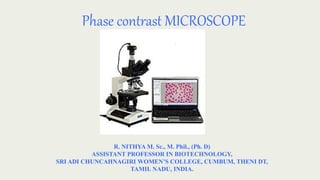
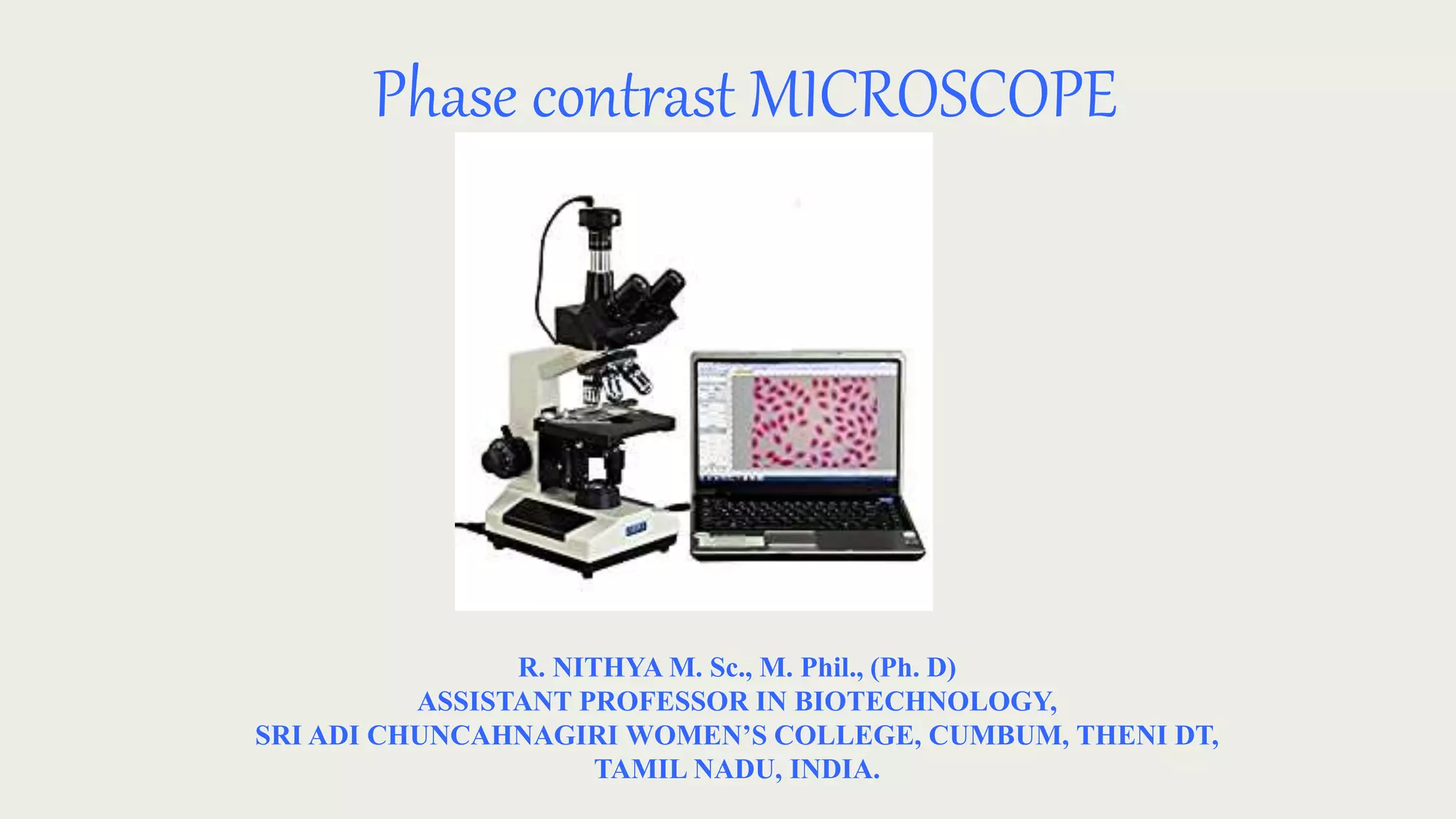
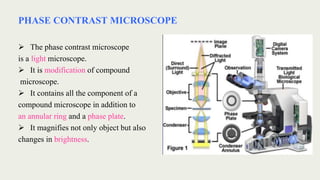
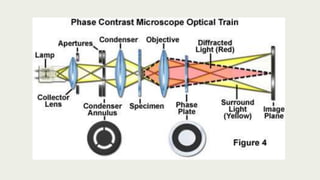
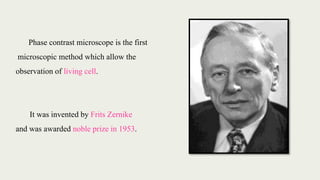
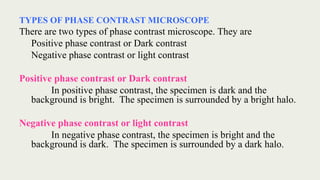
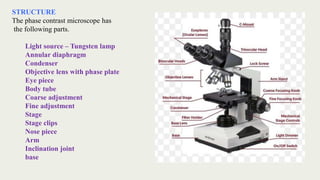
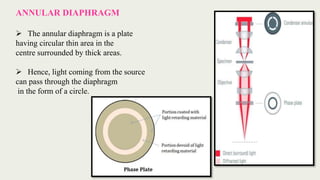
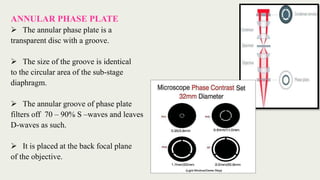
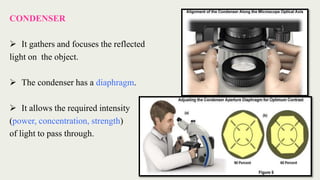
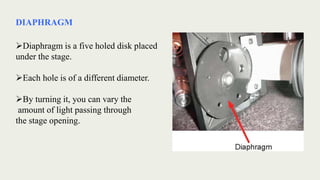
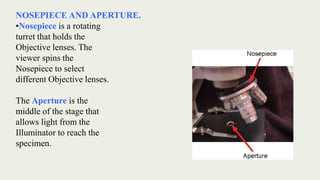
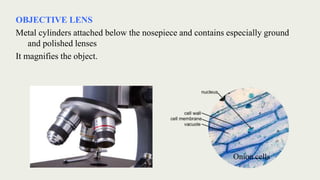
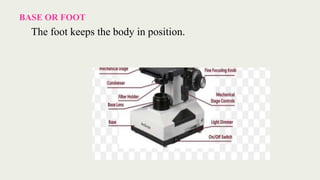
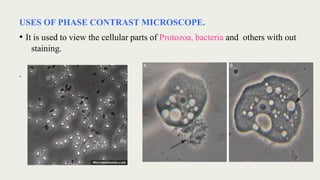
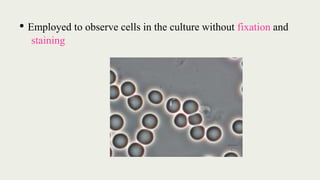
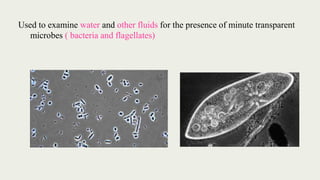
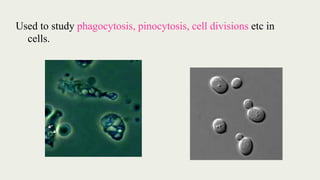
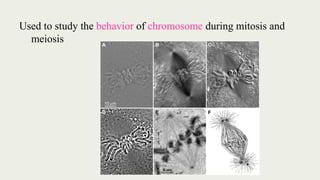
The phase contrast microscope is a specialized light microscope that enhances the observation of transparent biological specimens without staining by utilizing an annular ring and a phase plate. It was invented by Frits Zernike, who received a Nobel Prize for this advancement, which allows for detailed visualization of living cells and their processes. This microscope has two types: positive phase contrast, where the specimen appears dark against a bright background, and negative phase contrast, where the specimen is bright against a dark background.