IDENTIFICATION OF
MICROORGANISMS
 Species-level identification is necessary
to discriminate between two species from the
same genus, which is often essential in the
treatment of infectious diseases.
 For example, the bacterial genus Yersinia contains
approximately 15 species, some of which
form part of the normal human microflora, but
others of which are serious pathogens and
require medical treatment (e.g. Yersinia pestis is
the causative agent of bubonic plague).
Methods for Identifying Microbes
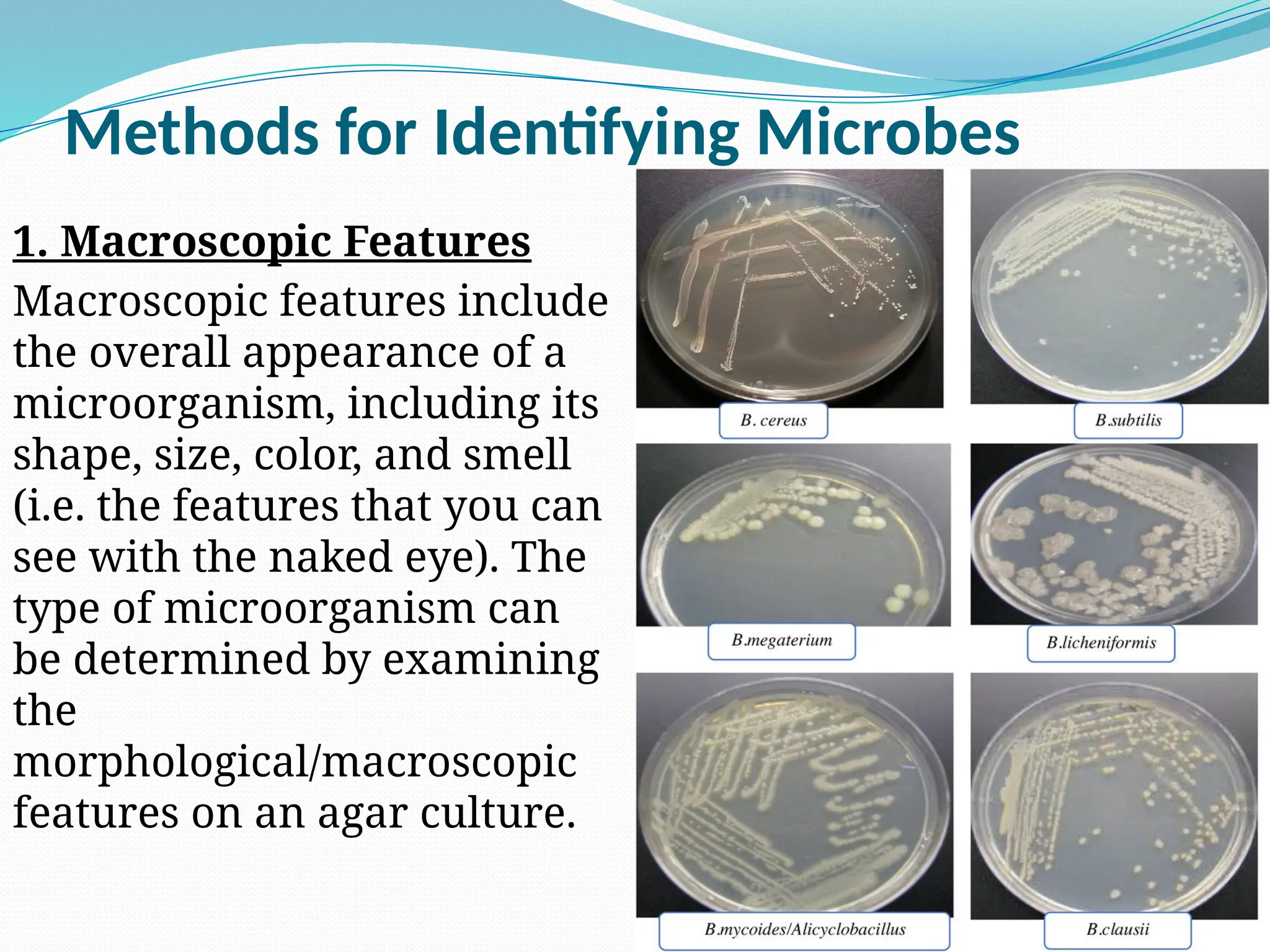
1. Macroscopic Features
Macroscopic features include
the overall appearance of a
microorganism, including its
shape, size, color, and smell
(i.e. the features that you can
see with the naked eye). The
type of microorganism can
be determined by examining
the
morphological/macroscopic
features on an agar culture.
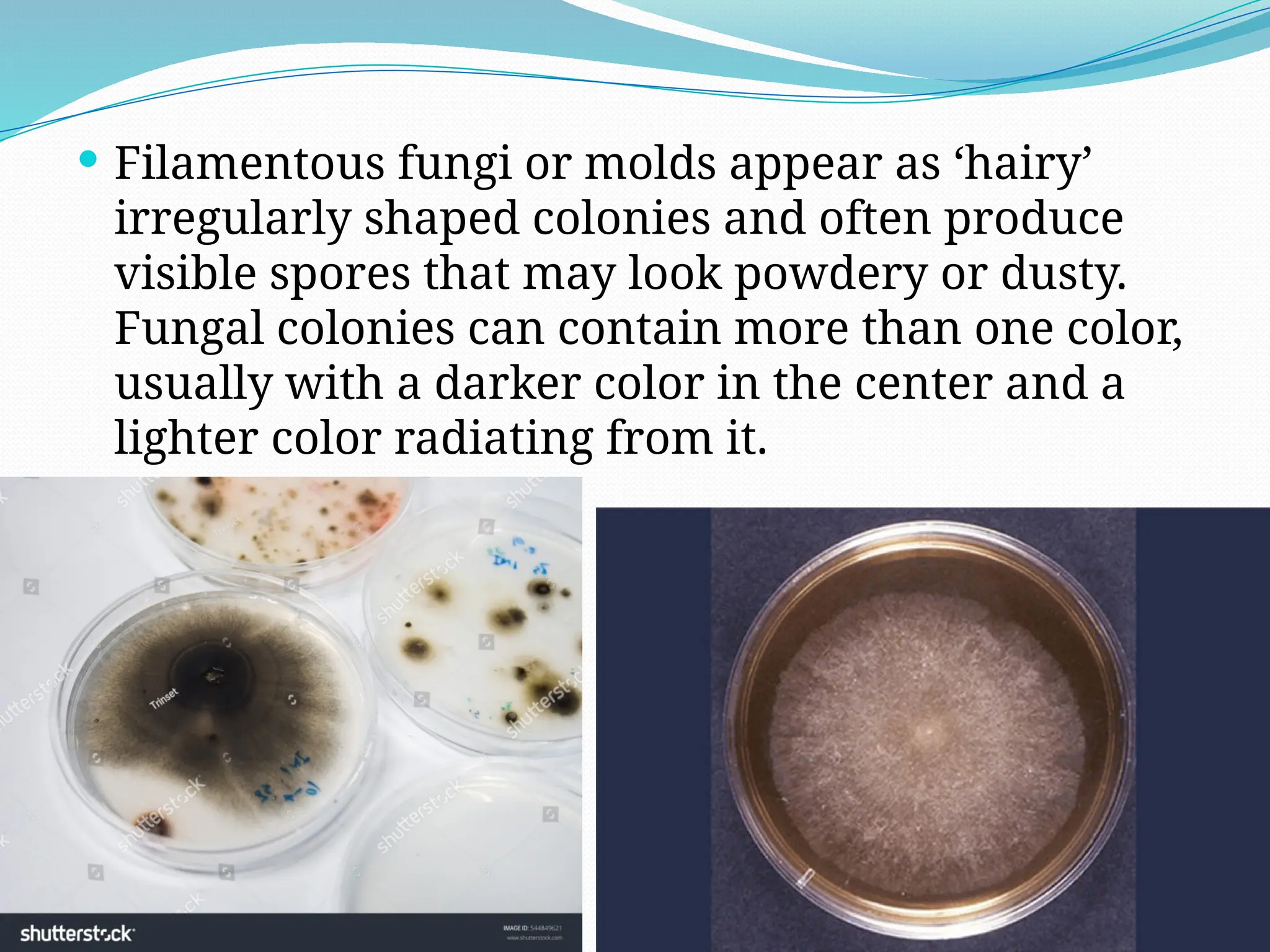
 Filamentous fungi or molds appear as ‘hairy’
irregularly shaped colonies and often produce
visible spores that may look powdery or dusty.
Fungal colonies can contain more than one color,
usually with a darker color in the center and a
lighter color radiating from it.
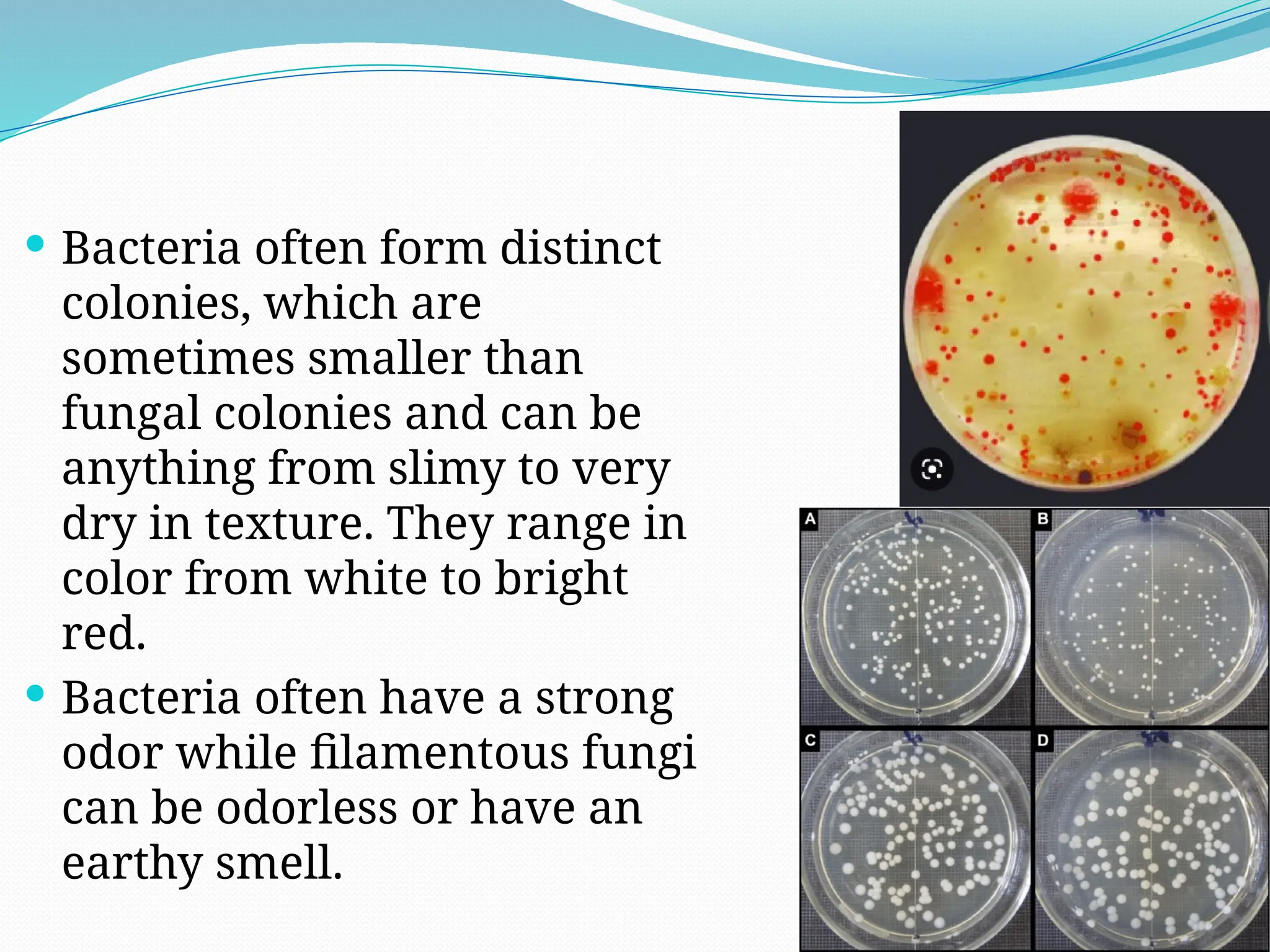
 Bacteria often form distinct
colonies, which are
sometimes smaller than
fungal colonies and can be
anything from slimy to very
dry in texture. They range in
color from white to bright
red.
 Bacteria often have a strong
odor while filamentous fungi
can be odorless or have an
earthy smell.
2. Staining and Microscopy
Stains enable easier visualization under a
microscope. Following are the most popular
microbiological stains.
Gram Staining
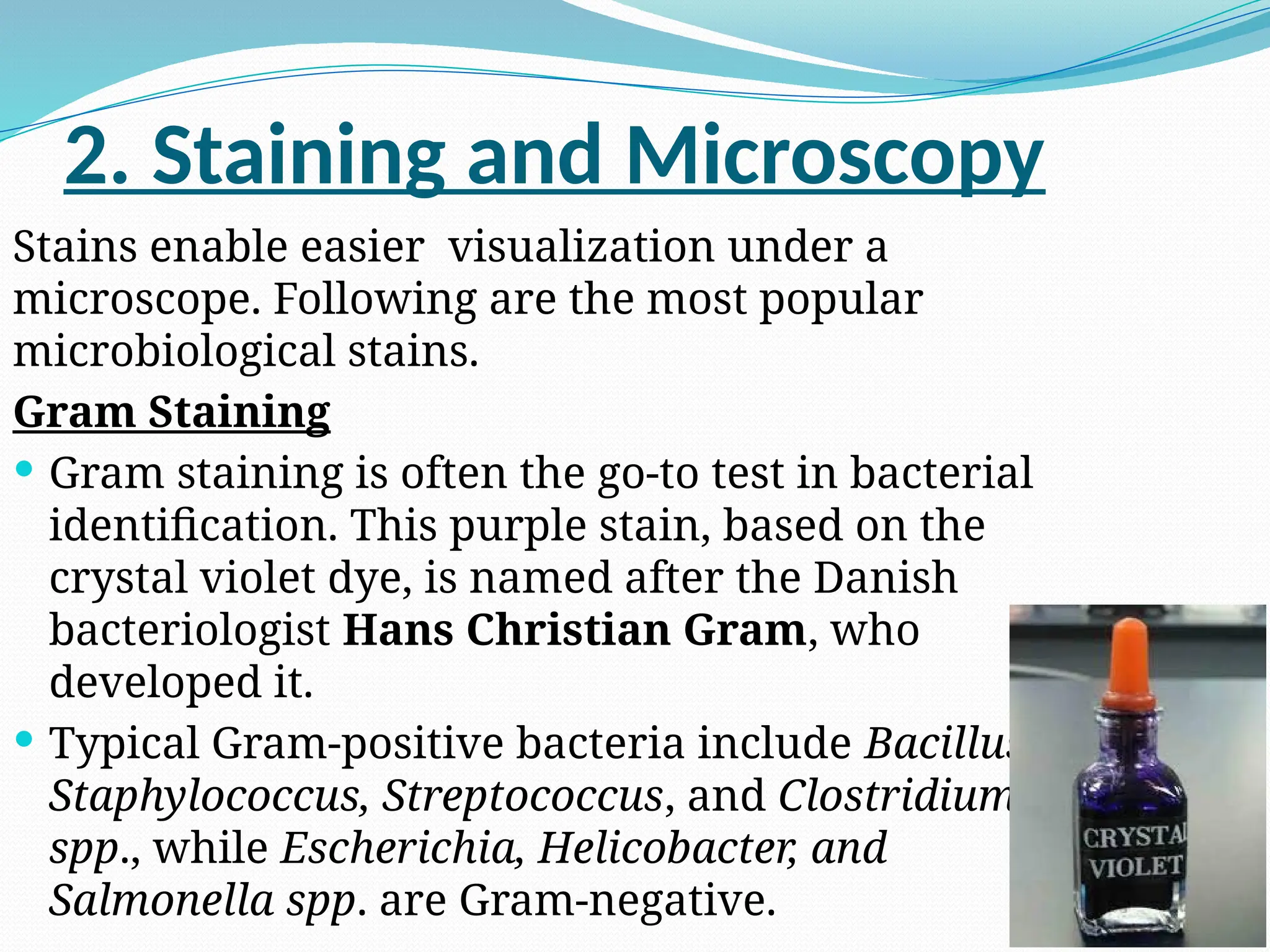
 Gram staining is often the go-to test in bacterial
identification. This purple stain, based on the
crystal violet dye, is named after the Danish
bacteriologist Hans Christian Gram, who
developed it.
 Typical Gram-positive bacteria include Bacillus,
Staphylococcus, Streptococcus, and Clostridium
spp., while Escherichia, Helicobacter, and
Salmonella spp. are Gram-negative.
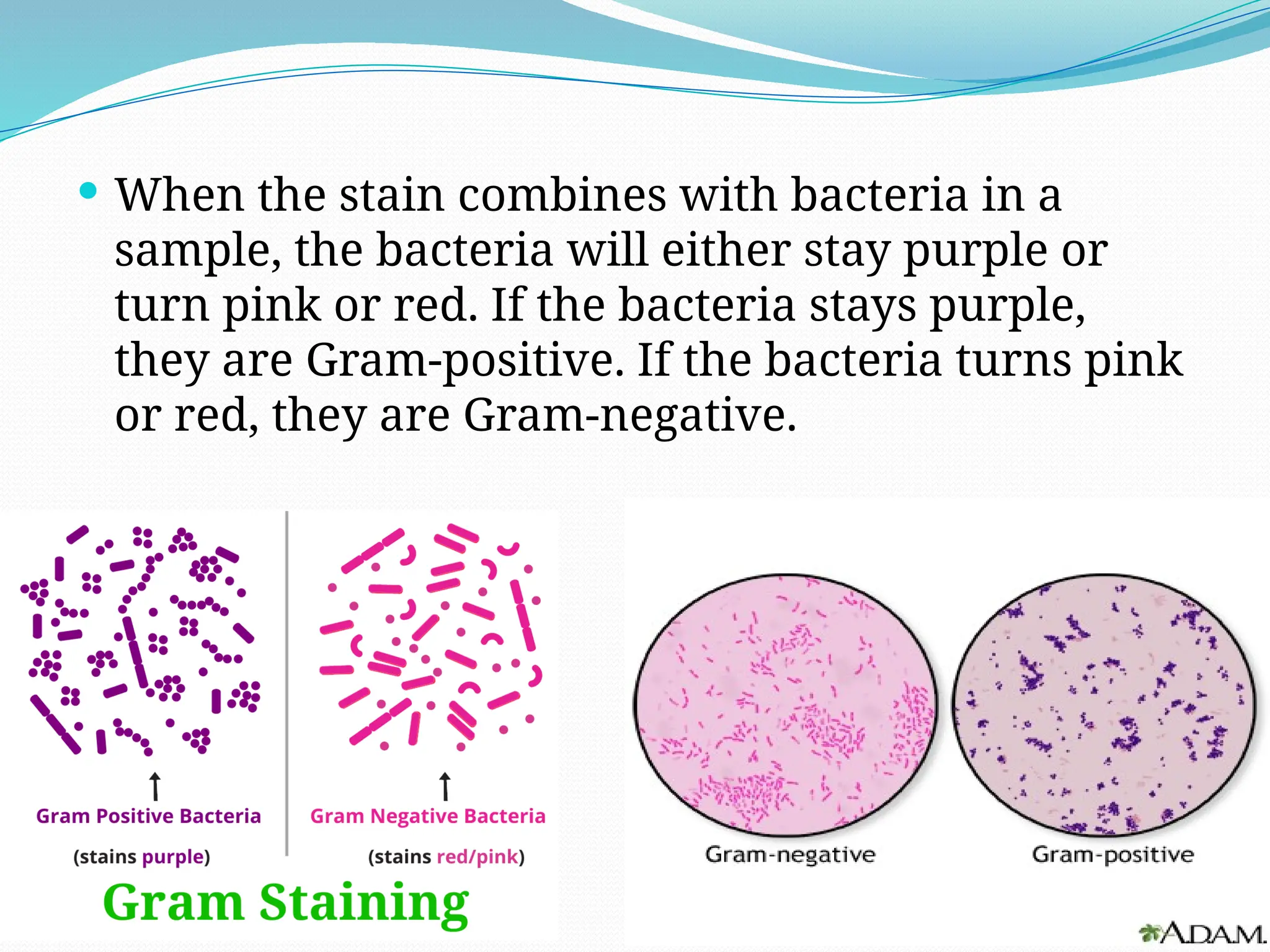
 When the stain combines with bacteria in a
sample, the bacteria will either stay purple or
turn pink or red. If the bacteria stays purple,
they are Gram-positive. If the bacteria turns pink
or red, they are Gram-negative.
Endospore Staining
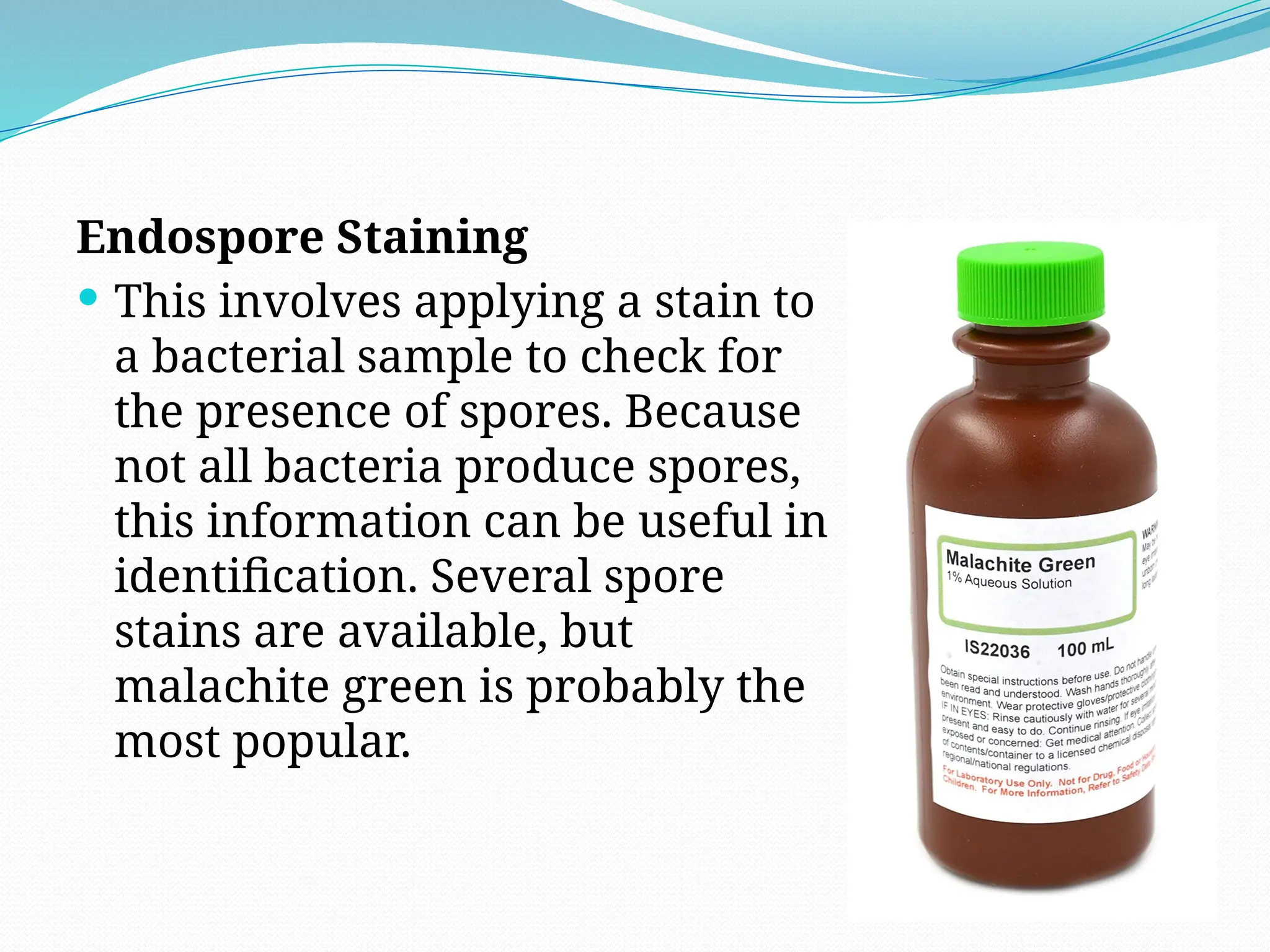
 This involves applying a stain to
a bacterial sample to check for
the presence of spores. Because
not all bacteria produce spores,
this information can be useful in
identification. Several spore
stains are available, but
malachite green is probably the
most popular.
Ziehl-Neelsen Staining
This is an important tool for the
staining of Mycobacterium tuberculosis
(TB), which can’t be Gram-stained. The
red stain carbol fuchsin is used first,
followed by a counterstain such as
methylene blue. M. tuberculosis stain
red while other bacteria stain blue.
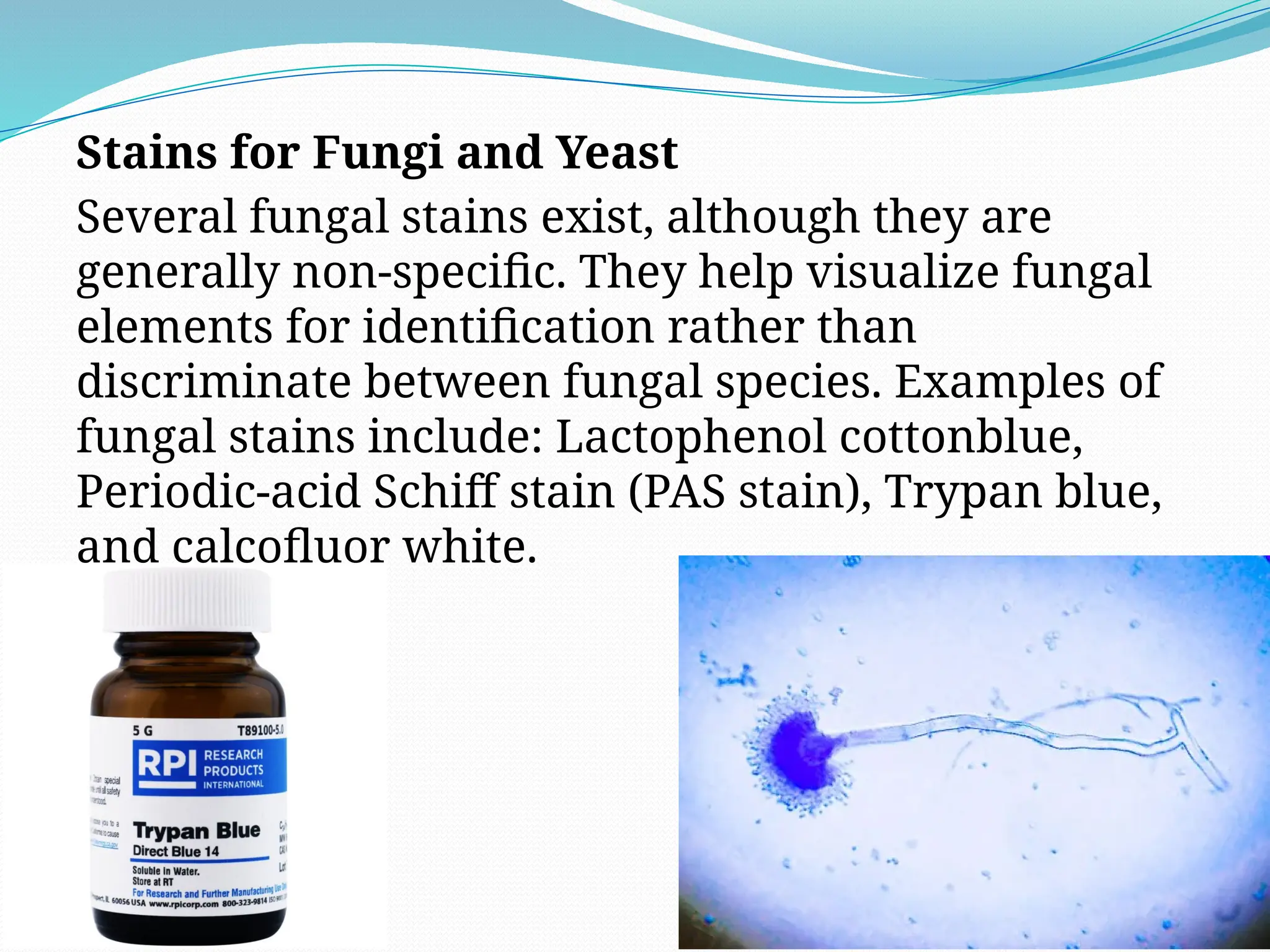
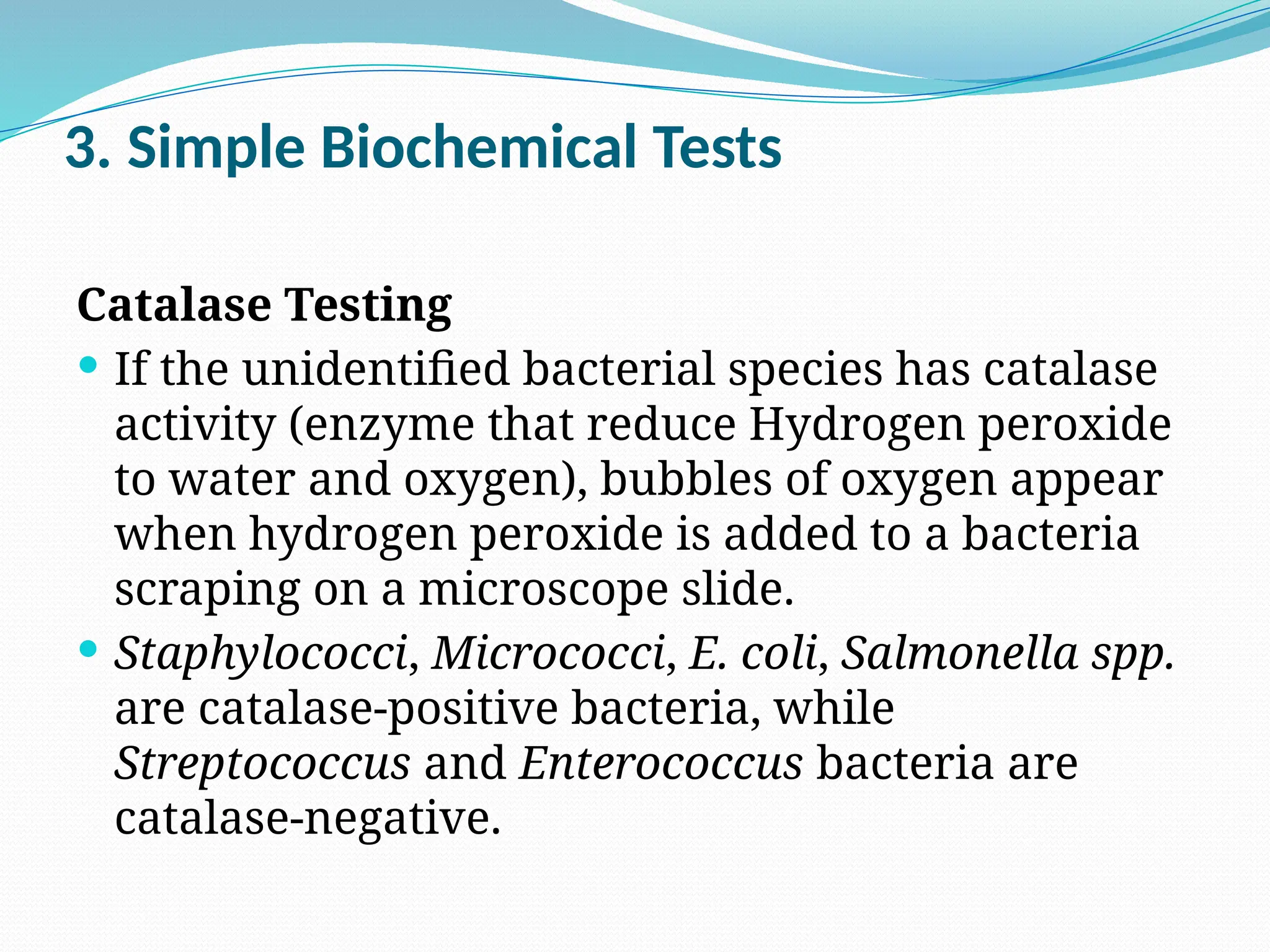
Stains for Fungi and Yeast
Several fungal stains exist, although they are
generally non-specific. They help visualize fungal
elements for identification rather than
discriminate between fungal species. Examples of
fungal stains include: Lactophenol cottonblue,
Periodic-acid Schiff stain (PAS stain), Trypan blue,
and calcofluor white.
3. Simple Biochemical Tests
Catalase Testing
 If the unidentified bacterial species has catalase
activity (enzyme that reduce Hydrogen peroxide
to water and oxygen), bubbles of oxygen appear
when hydrogen peroxide is added to a bacteria
scraping on a microscope slide.
 Staphylococci, Micrococci, E. coli, Salmonella spp.
are catalase-positive bacteria, while
Streptococcus and Enterococcus bacteria are
catalase-negative.
Oxidase Testing
 The oxidase test identifies bacteria with
cytochrome c oxidase (CCO) activity. This enzyme
forms part of the bacterial electron transport chain.
 When present, CCO oxidizes the reagent
(tetramethyl-p-phenylenediamine) to a purple-
colored product.
 When the enzyme is not present, the reagent
remains in the reduced state and is colorless.
 Bacteria with oxidase-positive include:
Actinobacillus, Aeromonas spp. Vibrio spp. Oxidase-
negative, on the other hand, includes E. coli,
Serratia spp. and Acinetobacter spp.
4. Identifying Microbes Using PCR
 PCR is probably the most widely used
molecular technique for identifying
microbes. Using PCR, one can rapidly
detect and identify microbial species
directly from clinical samples, thus
speeding up diagnostic procedures.
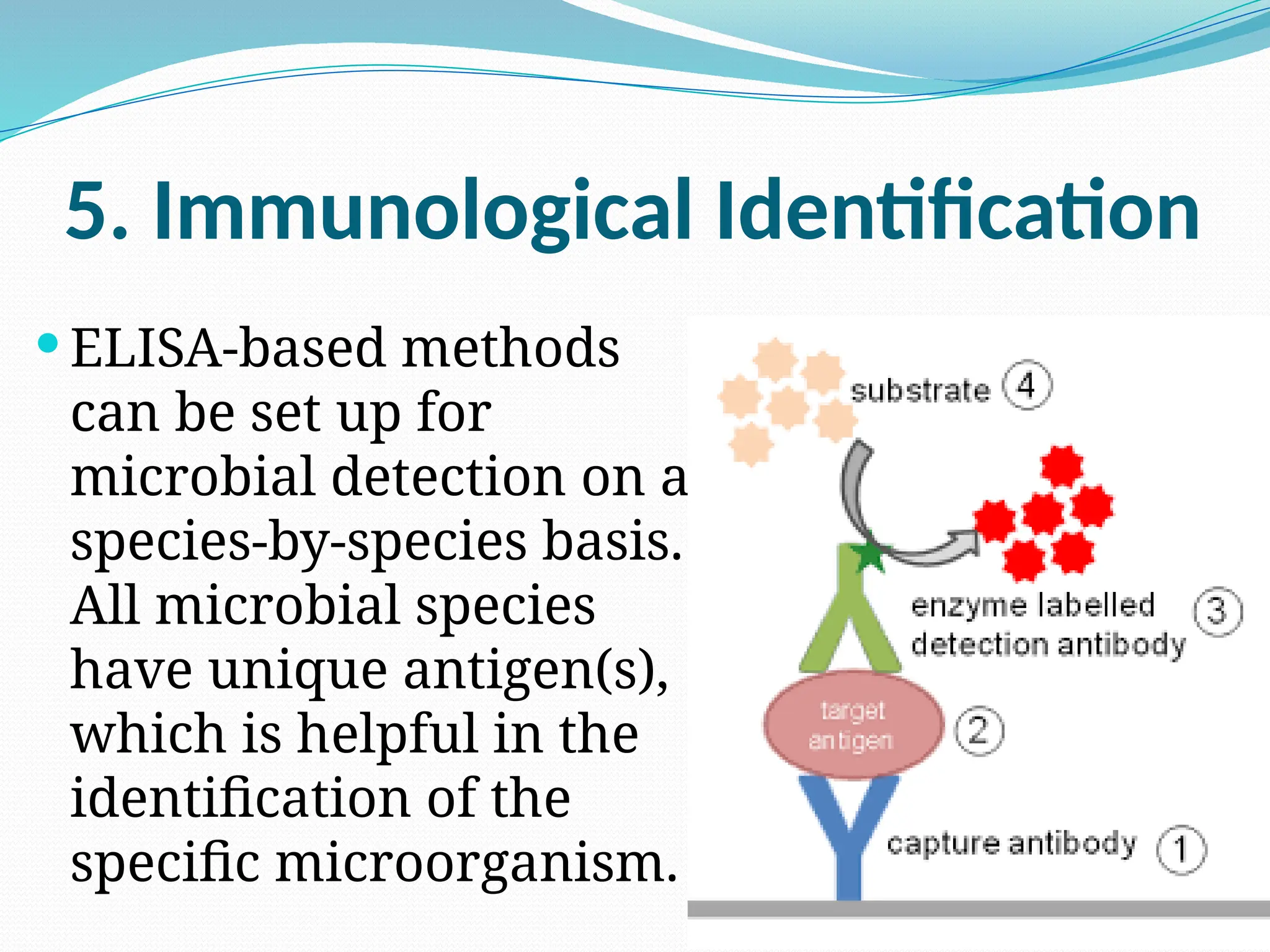
5. Immunological Identification
 ELISA-based methods
can be set up for
microbial detection on a
species-by-species basis.
All microbial species
have unique antigen(s),
which is helpful in the
identification of the
specific microorganism.

IDENTIFICATION OF MICROORGANISMS (Methods for identifying microbes).pptx

  • 1.
  • 2.
     Species-level identificationis necessary to discriminate between two species from the same genus, which is often essential in the treatment of infectious diseases.  For example, the bacterial genus Yersinia contains approximately 15 species, some of which form part of the normal human microflora, but others of which are serious pathogens and require medical treatment (e.g. Yersinia pestis is the causative agent of bubonic plague).
  • 3.
    Methods for IdentifyingMicrobes 1. Macroscopic Features Macroscopic features include the overall appearance of a microorganism, including its shape, size, color, and smell (i.e. the features that you can see with the naked eye). The type of microorganism can be determined by examining the morphological/macroscopic features on an agar culture.
  • 4.
     Filamentous fungior molds appear as ‘hairy’ irregularly shaped colonies and often produce visible spores that may look powdery or dusty. Fungal colonies can contain more than one color, usually with a darker color in the center and a lighter color radiating from it.
  • 5.
     Bacteria oftenform distinct colonies, which are sometimes smaller than fungal colonies and can be anything from slimy to very dry in texture. They range in color from white to bright red.  Bacteria often have a strong odor while filamentous fungi can be odorless or have an earthy smell.
  • 6.
    2. Staining andMicroscopy Stains enable easier visualization under a microscope. Following are the most popular microbiological stains. Gram Staining  Gram staining is often the go-to test in bacterial identification. This purple stain, based on the crystal violet dye, is named after the Danish bacteriologist Hans Christian Gram, who developed it.  Typical Gram-positive bacteria include Bacillus, Staphylococcus, Streptococcus, and Clostridium spp., while Escherichia, Helicobacter, and Salmonella spp. are Gram-negative.
  • 7.
     When thestain combines with bacteria in a sample, the bacteria will either stay purple or turn pink or red. If the bacteria stays purple, they are Gram-positive. If the bacteria turns pink or red, they are Gram-negative.
  • 8.
    Endospore Staining  Thisinvolves applying a stain to a bacterial sample to check for the presence of spores. Because not all bacteria produce spores, this information can be useful in identification. Several spore stains are available, but malachite green is probably the most popular.
  • 9.
    Ziehl-Neelsen Staining This isan important tool for the staining of Mycobacterium tuberculosis (TB), which can’t be Gram-stained. The red stain carbol fuchsin is used first, followed by a counterstain such as methylene blue. M. tuberculosis stain red while other bacteria stain blue.
  • 10.
    Stains for Fungiand Yeast Several fungal stains exist, although they are generally non-specific. They help visualize fungal elements for identification rather than discriminate between fungal species. Examples of fungal stains include: Lactophenol cottonblue, Periodic-acid Schiff stain (PAS stain), Trypan blue, and calcofluor white.
  • 11.
    3. Simple BiochemicalTests Catalase Testing  If the unidentified bacterial species has catalase activity (enzyme that reduce Hydrogen peroxide to water and oxygen), bubbles of oxygen appear when hydrogen peroxide is added to a bacteria scraping on a microscope slide.  Staphylococci, Micrococci, E. coli, Salmonella spp. are catalase-positive bacteria, while Streptococcus and Enterococcus bacteria are catalase-negative.
  • 12.
    Oxidase Testing  Theoxidase test identifies bacteria with cytochrome c oxidase (CCO) activity. This enzyme forms part of the bacterial electron transport chain.  When present, CCO oxidizes the reagent (tetramethyl-p-phenylenediamine) to a purple- colored product.  When the enzyme is not present, the reagent remains in the reduced state and is colorless.  Bacteria with oxidase-positive include: Actinobacillus, Aeromonas spp. Vibrio spp. Oxidase- negative, on the other hand, includes E. coli, Serratia spp. and Acinetobacter spp.
  • 13.
    4. Identifying MicrobesUsing PCR  PCR is probably the most widely used molecular technique for identifying microbes. Using PCR, one can rapidly detect and identify microbial species directly from clinical samples, thus speeding up diagnostic procedures.
  • 14.
    5. Immunological Identification ELISA-based methods can be set up for microbial detection on a species-by-species basis. All microbial species have unique antigen(s), which is helpful in the identification of the specific microorganism.