CORRELATION COEFFICIENT:

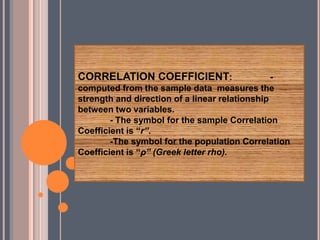
computed from the sample data measures the
strength and direction of a linear relationship
between two variables.
- The symbol for the sample Correlation
Coefficient is “r”.
-The symbol for the population Correlation
Coefficient is “ρ” (Greek letter rho).
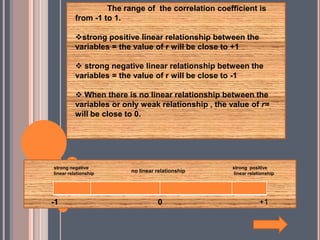
The range of the correlation coefficient is
from -1 to 1.
strong positive linear relationship between the
variables = the value of r will be close to +1
 strong negative linear relationship between the
variables = the value of r will be close to -1
 When there is no linear relationship between the
variables or only weak relationship , the value of r=
will be close to 0.

strong negative
linear relationship

-1

no linear relationship

0

strong positive
linear relationship

+1
Formula for the correlation
coefficient r

n ( ∑ xy) - ( ∑ x) ( ∑ y)
r=
√ [n ( ∑ x²) - ( ∑ x)² ] [n ( ∑ y²) - ( ∑ y)²
Where n is the number of data pairs.
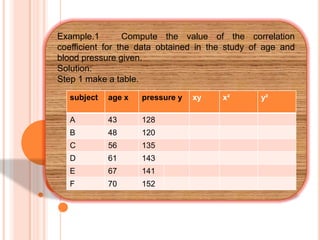
Example.1
Compute the value of the correlation
coefficient for the data obtained in the study of age and
blood pressure given.
Solution:
Step 1 make a table.
subject

age x

pressure y

A

43

128

B

48

120

C

56

135

D

61

143

E

67

141

F

70

152

xy

x²

y²
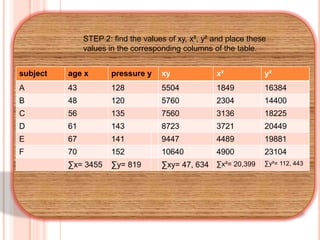
STEP 2: find the values of xy, x², y² and place these
values in the corresponding columns of the table.
subject

age x

pressure y

xy

x²

y²

A

43

128

5504

1849

16384

B

48

120

5760

2304

14400

C

56

135

7560

3136

18225

D

61

143

8723

3721

20449

E

67

141

9447

4489

19881

F

70

152

10640

4900

23104

∑x= 3455

∑y= 819

∑xy= 47, 634 ∑x²= 20,399

∑y²= 112, 443
Step 3 : Substitute in the formula and
solve for r.
n ( ∑ xy) - ( ∑ x) ( ∑ y)
r=

____
_______
[n ( ∑ x²) - ( ∑ x)² ] [n ( ∑ y²) - ( ∑ y)²]
6 ( 47,643) - ( 345) ( 819)

r=

___

[(6) (20,399) – (345)²] [(6) (112, 443) - (819) ²]

= 0.897
The correlation coefficient suggests a strong positive
relationship between age and blood pressure.
POSSIBLE RELATIONSHIPS BETWEEN VARIABLES:

1. There is a direct cause- and – effect
relationship between the variables.
2. There is a reverse cause- and – effect
relationship between the variables.
3. The relationship between the variables may
be caused by a third variable.
4. There may be complexity of
interrelationships among many variables.
5. The relationship may be coincidental .
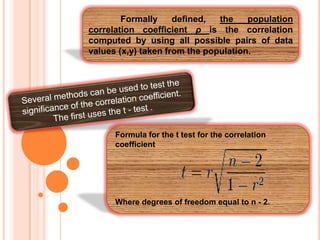
Formally
defined,
the
population
correlation coefficient ρ is the correlation
computed by using all possible pairs of data
values (x,y) taken from the population.

Formula for the t test for the correlation
coefficient

Where degrees of freedom equal to n - 2.
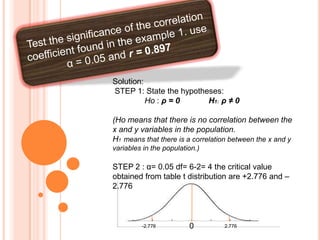
Solution:
STEP 1: State the hypotheses:
Hо : ρ = 0
H1: ρ ≠ 0
(Ho means that there is no correlation between the
x and y variables in the population.
H1 means that there is a correlation between the x and y
variables in the population.)

STEP 2 : α= 0.05 df= 6-2= 4 the critical value
obtained from table t distribution are +2.776 and –
2.776

-2.776

0

2.776
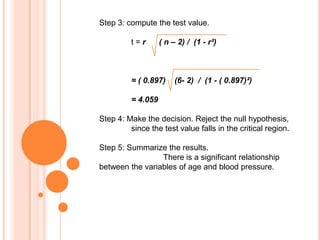
Step 3: compute the test value.
t=r

( n – 2) / (1 - r²)

= ( 0.897)

(6- 2) / (1 - ( 0.897)²)

= 4.059
Step 4: Make the decision. Reject the null hypothesis,
since the test value falls in the critical region.
Step 5: Summarize the results.
There is a significant relationship
between the variables of age and blood pressure.
The second method: to test the
significance of r is to use the Critical
Values for PPMC. It uses the same steps
except the step 3.
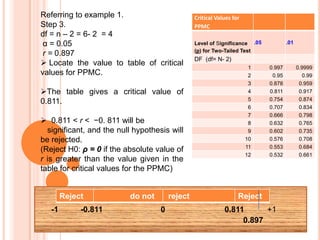
Referring to example 1.
Step 3.
df = n – 2 = 6- 2 = 4
α = 0.05
r = 0.897
 Locate the value to table of critical
values for PPMC.
The table gives a critical value of
0.811.
 0.811 < r < −0. 811 will be
significant, and the null hypothesis will
be rejected.
(Reject H0: ρ = 0 if the absolute value of
r is greater than the value given in the
table for critical values for the PPMC)

Reject
-1

-0.811

do not

reject
0

Critical Values for
PPMC
Level of Significance .05
(p) for Two-Tailed Test

.01

DF (df= N- 2)
1
2
3
4
5
6
7
8
9
10
11
12

0.997
0.95
0.878
0.811
0.754
0.707
0.666
0.632
0.602
0.576
0.553
0.532

Reject
0.811
+1
0.897

0.9999
0.99
0.959
0.917
0.874
0.834
0.798
0.765
0.735
0.708
0.684
0.661
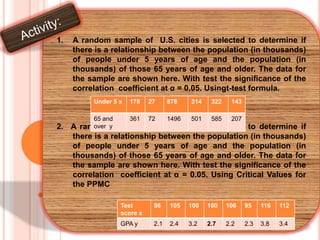
1.

A random sample of U.S. cities is selected to determine if
there is a relationship between the population (in thousands)
of people under 5 years of age and the population (in
thousands) of those 65 years of age and older. The data for
the sample are shown here. With test the significance of the
correlation coefficient at α = 0.05. Usingt-test formula.
Under 5 x

178

27

878

314

322

143

65 and
361
over
random y sample

72

1496

501

585

207

2. A
of U.S. cities is selected to determine if
there is a relationship between the population (in thousands)
of people under 5 years of age and the population (in
thousands) of those 65 years of age and older. The data for
the sample are shown here. With test the significance of the
correlation coefficient at α = 0.05. Using Critical Values for
the PPMC
Test
score x

98

105

100

100

106

95

116

112

GPA y

2.1

2.4

3.2

2.7

2.2

2.3

3.8

3.4
Pearson product moment correlation

Pearson product moment correlation

  • 2.
    CORRELATION COEFFICIENT: computed fromthe sample data measures the strength and direction of a linear relationship between two variables. - The symbol for the sample Correlation Coefficient is “r”. -The symbol for the population Correlation Coefficient is “ρ” (Greek letter rho).
  • 3.
    The range ofthe correlation coefficient is from -1 to 1. strong positive linear relationship between the variables = the value of r will be close to +1  strong negative linear relationship between the variables = the value of r will be close to -1  When there is no linear relationship between the variables or only weak relationship , the value of r= will be close to 0. strong negative linear relationship -1 no linear relationship 0 strong positive linear relationship +1
  • 4.
    Formula for thecorrelation coefficient r n ( ∑ xy) - ( ∑ x) ( ∑ y) r= √ [n ( ∑ x²) - ( ∑ x)² ] [n ( ∑ y²) - ( ∑ y)² Where n is the number of data pairs.
  • 5.
    Example.1 Compute the valueof the correlation coefficient for the data obtained in the study of age and blood pressure given. Solution: Step 1 make a table. subject age x pressure y A 43 128 B 48 120 C 56 135 D 61 143 E 67 141 F 70 152 xy x² y²
  • 6.
    STEP 2: findthe values of xy, x², y² and place these values in the corresponding columns of the table. subject age x pressure y xy x² y² A 43 128 5504 1849 16384 B 48 120 5760 2304 14400 C 56 135 7560 3136 18225 D 61 143 8723 3721 20449 E 67 141 9447 4489 19881 F 70 152 10640 4900 23104 ∑x= 3455 ∑y= 819 ∑xy= 47, 634 ∑x²= 20,399 ∑y²= 112, 443
  • 7.
    Step 3 :Substitute in the formula and solve for r. n ( ∑ xy) - ( ∑ x) ( ∑ y) r= ____ _______ [n ( ∑ x²) - ( ∑ x)² ] [n ( ∑ y²) - ( ∑ y)²] 6 ( 47,643) - ( 345) ( 819) r= ___ [(6) (20,399) – (345)²] [(6) (112, 443) - (819) ²] = 0.897 The correlation coefficient suggests a strong positive relationship between age and blood pressure.
  • 8.
    POSSIBLE RELATIONSHIPS BETWEENVARIABLES: 1. There is a direct cause- and – effect relationship between the variables. 2. There is a reverse cause- and – effect relationship between the variables. 3. The relationship between the variables may be caused by a third variable. 4. There may be complexity of interrelationships among many variables. 5. The relationship may be coincidental .
  • 9.
    Formally defined, the population correlation coefficient ρis the correlation computed by using all possible pairs of data values (x,y) taken from the population. Formula for the t test for the correlation coefficient Where degrees of freedom equal to n - 2.
  • 10.
    Solution: STEP 1: Statethe hypotheses: Hо : ρ = 0 H1: ρ ≠ 0 (Ho means that there is no correlation between the x and y variables in the population. H1 means that there is a correlation between the x and y variables in the population.) STEP 2 : α= 0.05 df= 6-2= 4 the critical value obtained from table t distribution are +2.776 and – 2.776 -2.776 0 2.776
  • 11.
    Step 3: computethe test value. t=r ( n – 2) / (1 - r²) = ( 0.897) (6- 2) / (1 - ( 0.897)²) = 4.059 Step 4: Make the decision. Reject the null hypothesis, since the test value falls in the critical region. Step 5: Summarize the results. There is a significant relationship between the variables of age and blood pressure.
  • 12.
    The second method:to test the significance of r is to use the Critical Values for PPMC. It uses the same steps except the step 3.
  • 13.
    Referring to example1. Step 3. df = n – 2 = 6- 2 = 4 α = 0.05 r = 0.897  Locate the value to table of critical values for PPMC. The table gives a critical value of 0.811.  0.811 < r < −0. 811 will be significant, and the null hypothesis will be rejected. (Reject H0: ρ = 0 if the absolute value of r is greater than the value given in the table for critical values for the PPMC) Reject -1 -0.811 do not reject 0 Critical Values for PPMC Level of Significance .05 (p) for Two-Tailed Test .01 DF (df= N- 2) 1 2 3 4 5 6 7 8 9 10 11 12 0.997 0.95 0.878 0.811 0.754 0.707 0.666 0.632 0.602 0.576 0.553 0.532 Reject 0.811 +1 0.897 0.9999 0.99 0.959 0.917 0.874 0.834 0.798 0.765 0.735 0.708 0.684 0.661
  • 14.
    1. A random sampleof U.S. cities is selected to determine if there is a relationship between the population (in thousands) of people under 5 years of age and the population (in thousands) of those 65 years of age and older. The data for the sample are shown here. With test the significance of the correlation coefficient at α = 0.05. Usingt-test formula. Under 5 x 178 27 878 314 322 143 65 and 361 over random y sample 72 1496 501 585 207 2. A of U.S. cities is selected to determine if there is a relationship between the population (in thousands) of people under 5 years of age and the population (in thousands) of those 65 years of age and older. The data for the sample are shown here. With test the significance of the correlation coefficient at α = 0.05. Using Critical Values for the PPMC Test score x 98 105 100 100 106 95 116 112 GPA y 2.1 2.4 3.2 2.7 2.2 2.3 3.8 3.4