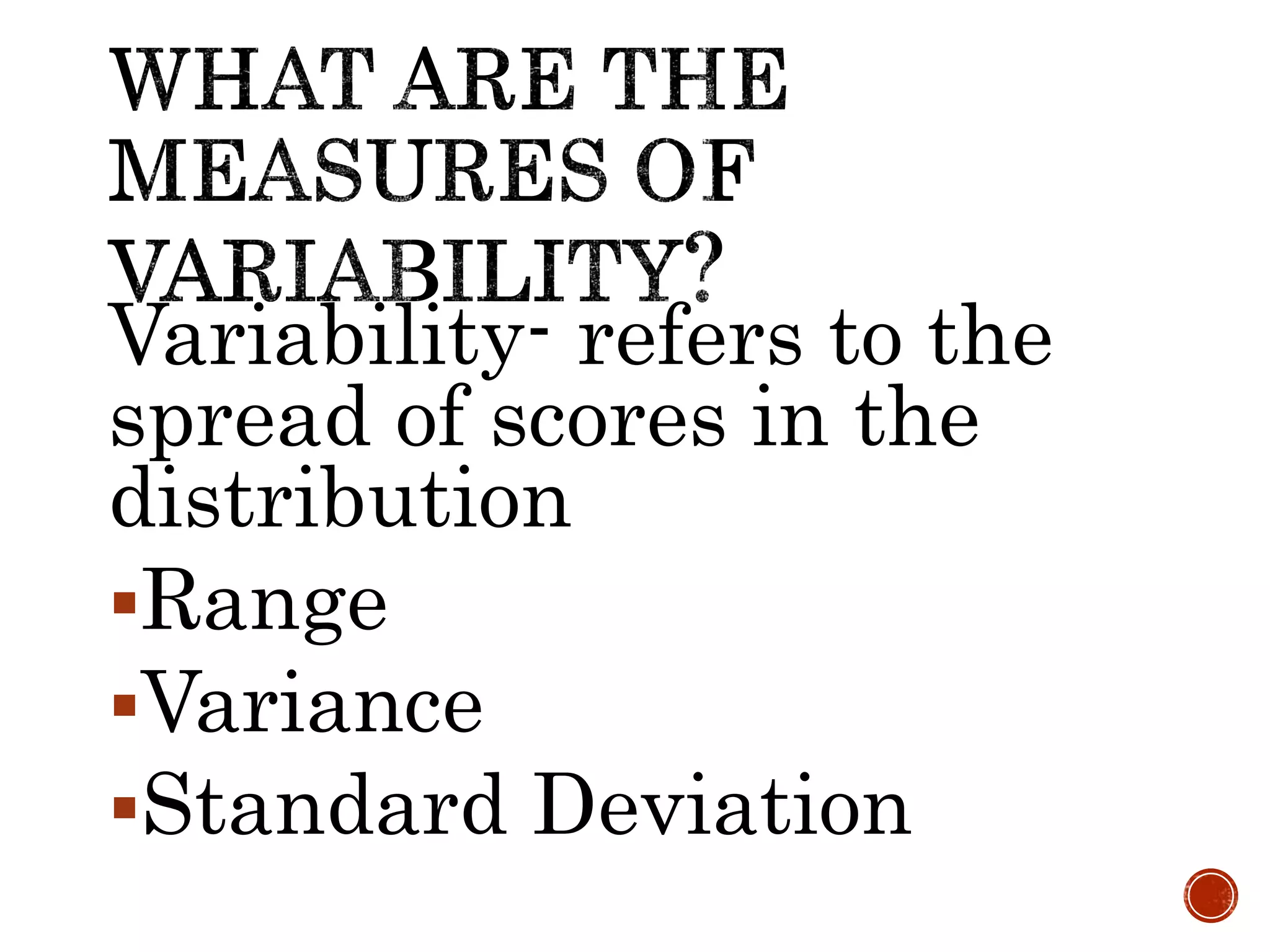
Variability- refers to the
spread of scores in the
distribution
Range
Variance
Standard Deviation
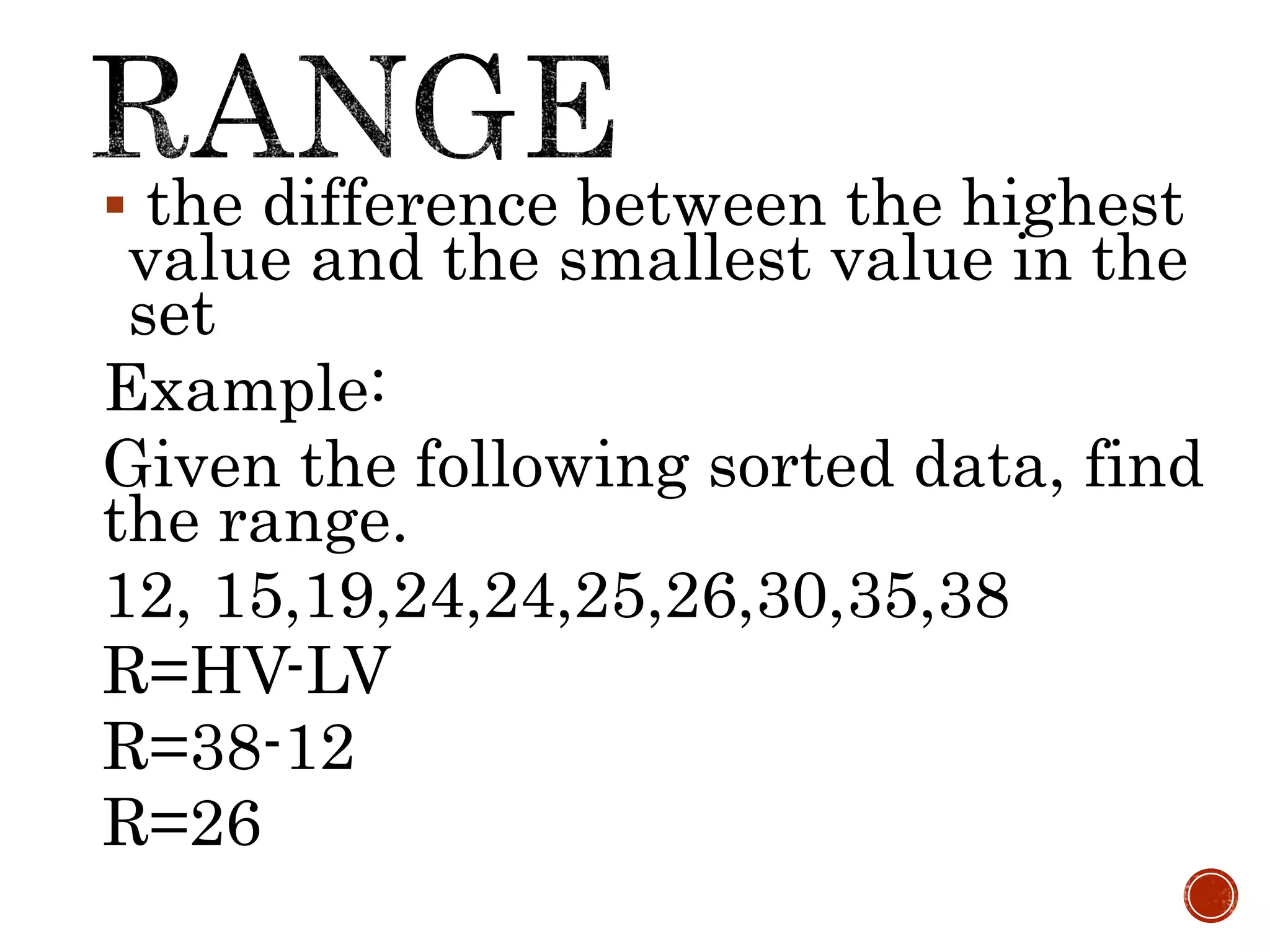
 the difference between the highest
value and the smallest value in the
set
Example:
Given the following sorted data, find
the range.
12, 15,19,24,24,25,26,30,35,38
R=HV-LV
R=38-12
R=26
Variance- it is the square of
the standard deviation
Note: The larger the variance,
the greater the variability or
the distance of scores from
the mean. The smaller the
variance, the lesser the
variability.
Variance of a sample
𝑠2 =
(𝑥 − 𝑥)2
𝑛 − 1
Where:
𝑠2 = variance of the set of scores
(𝑥 − 𝑥)2= sum of the squared
deviations from the mean
n = total number of classes
-Used to describe variability
when the mean is used to
describe the central tendency
Note: The mean is an average
of the scores in a set while the
standard deviation is a sort of
average of how distant the
individual scores are from the
mean
s =
(𝑥 − 𝑥)2
𝑛 − 1
Where
(𝑥 − 𝑥)- deviation from the mean
X – the original raw score
𝑥 − mean
n – total number of
observation/cases
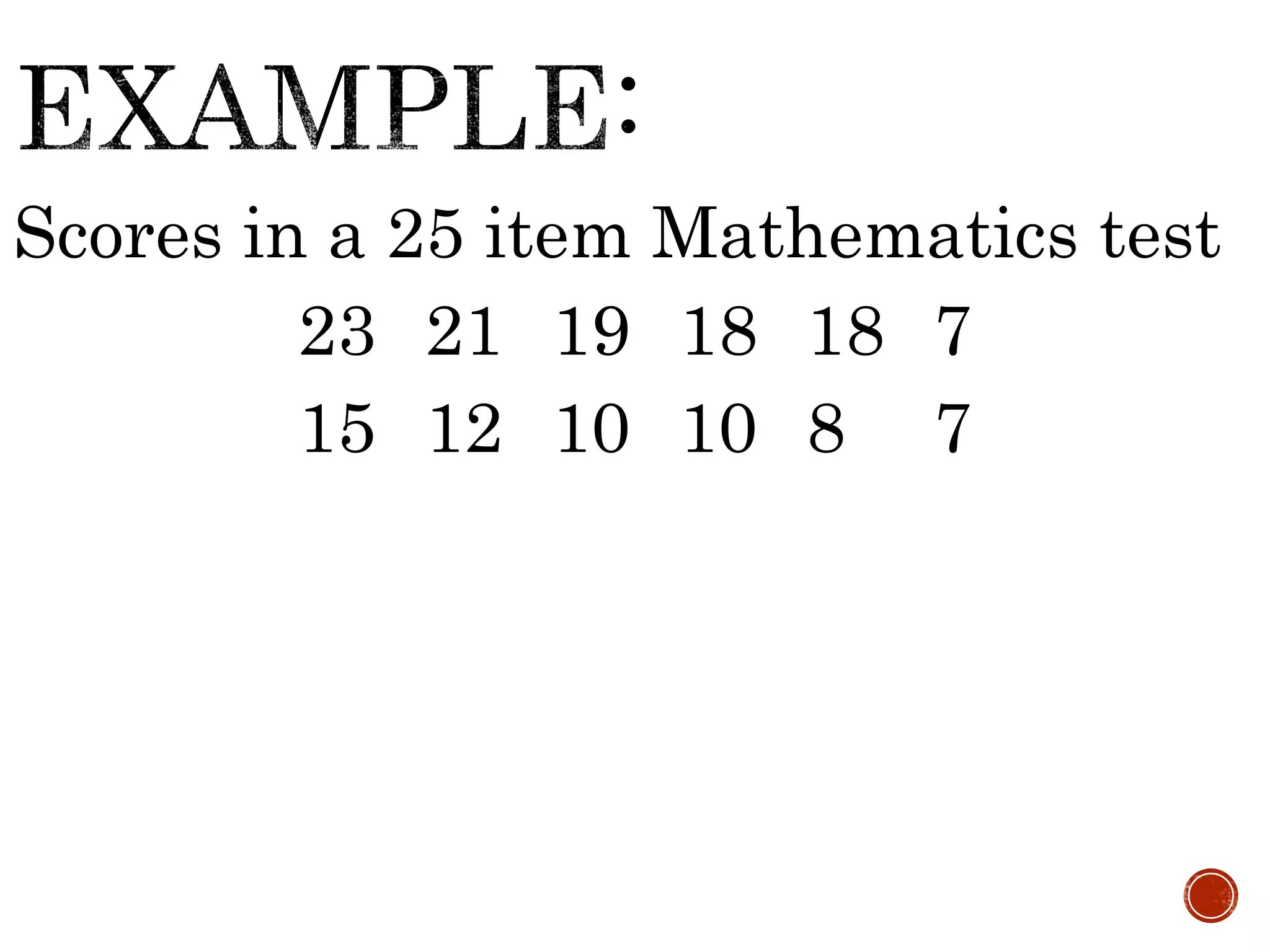
Scores in a 25 item Mathematics test
23 21 19 18 18 7
15 12 10 10 8 7
n = 12
𝑥 = 14
s = 5.7
1. The following are the
response times in seconds of
a smoke alarm after release
of smoke from a fixed source.
Find the range, variance,
and standard deviation.
12 16 12 14 19
20 10 9 15
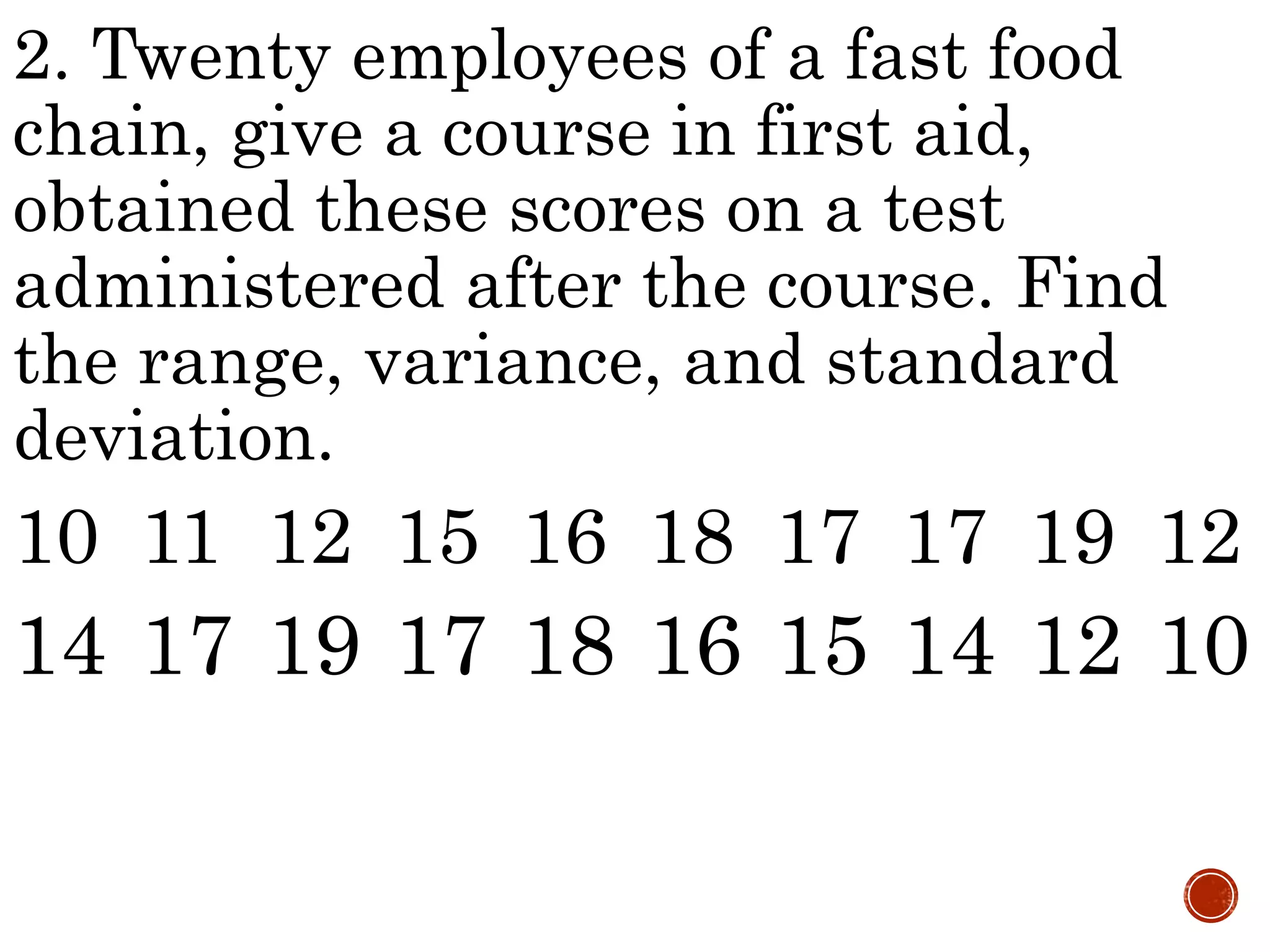
2. Twenty employees of a fast food
chain, give a course in first aid,
obtained these scores on a test
administered after the course. Find
the range, variance, and standard
deviation.
10 11 12 15 16 18 17 17 19 12
14 17 19 17 18 16 15 14 12 10
3. The following are the
stopping distances, for 20
drivers at 30 miles per hour.
Find the range, variance, and
standard deviation.
69 67 56 58 70 55 70 58 70 75
72 68 80 74 61 70 61 65 58 61
-expressed in percentage (%)
Uses of CRV:
-For comparing distributions
measured in the same units but
which have very different
means
-For comparing distributions
measured using different units
𝐶𝑅𝑉 =
𝑠
𝑥
(100)
Where
s = standard deviation
𝑥 = mean
Note: the final answer is always
expressed in percent form
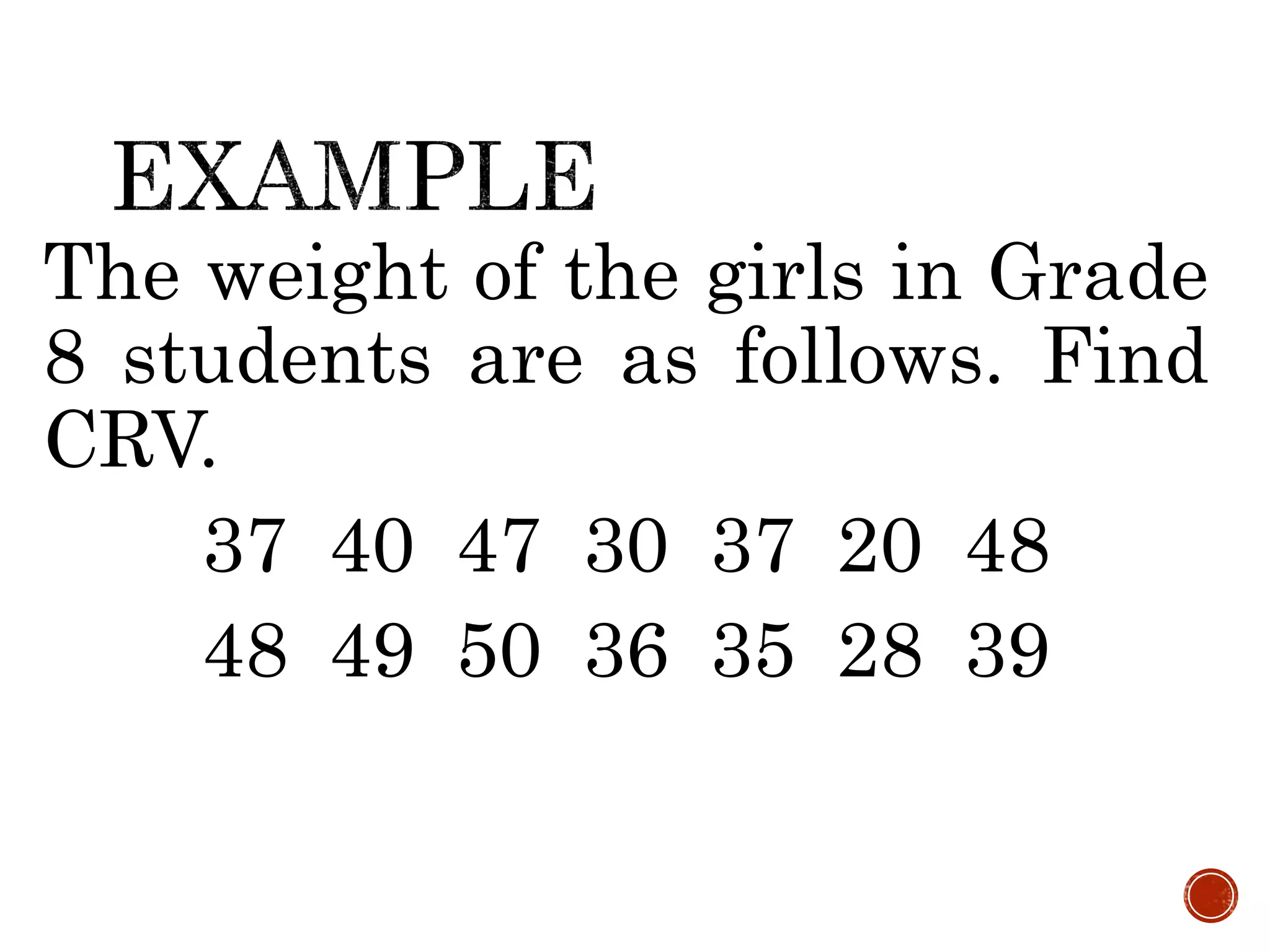
The weight of the girls in Grade
8 students are as follows. Find
CRV.
37 40 47 30 37 20 48
48 49 50 36 35 28 39
Determines the position of a
single value in relation to other
values in a sample or
population data set
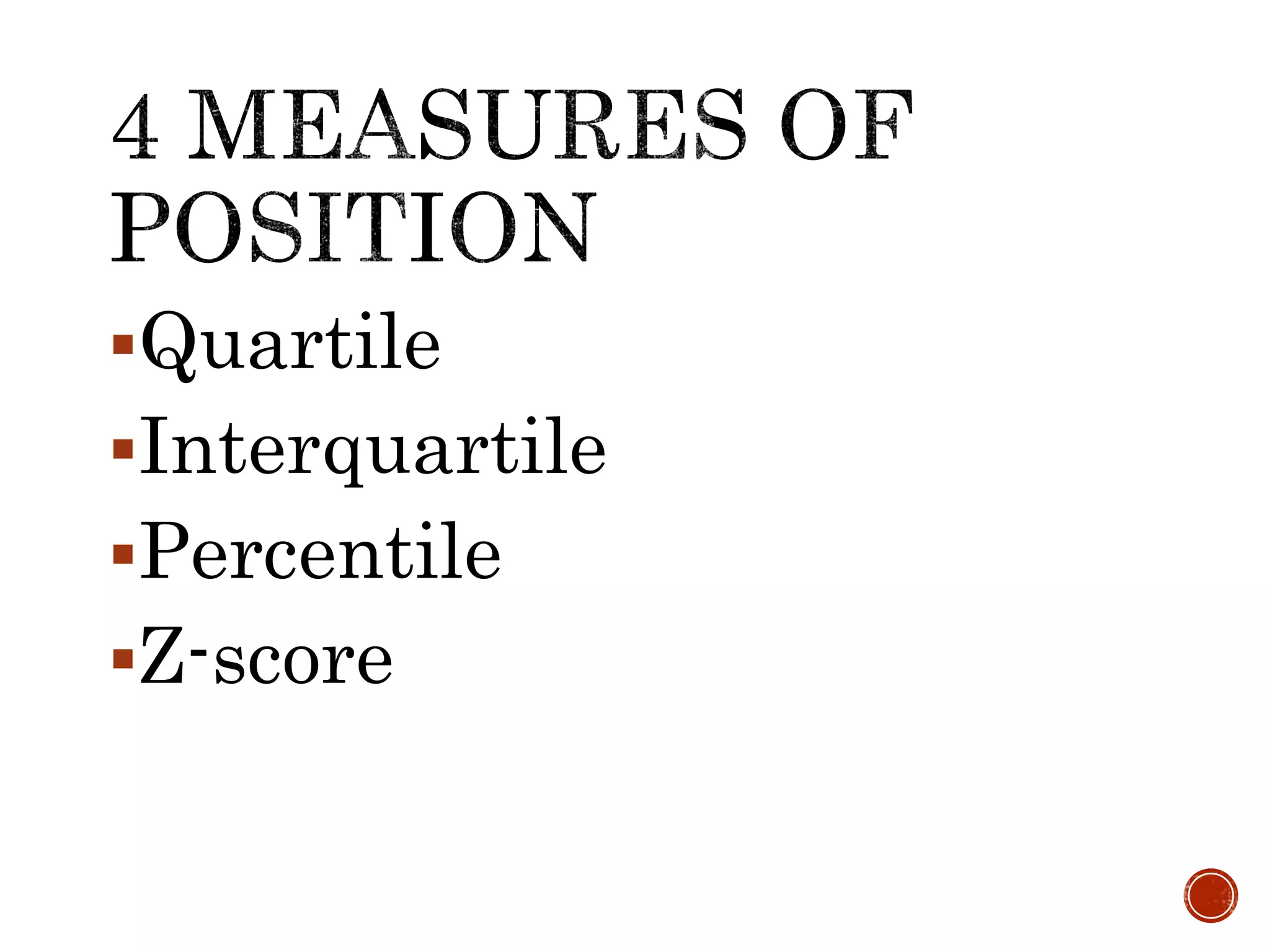
Quartile
Interquartile
Percentile
Z-score
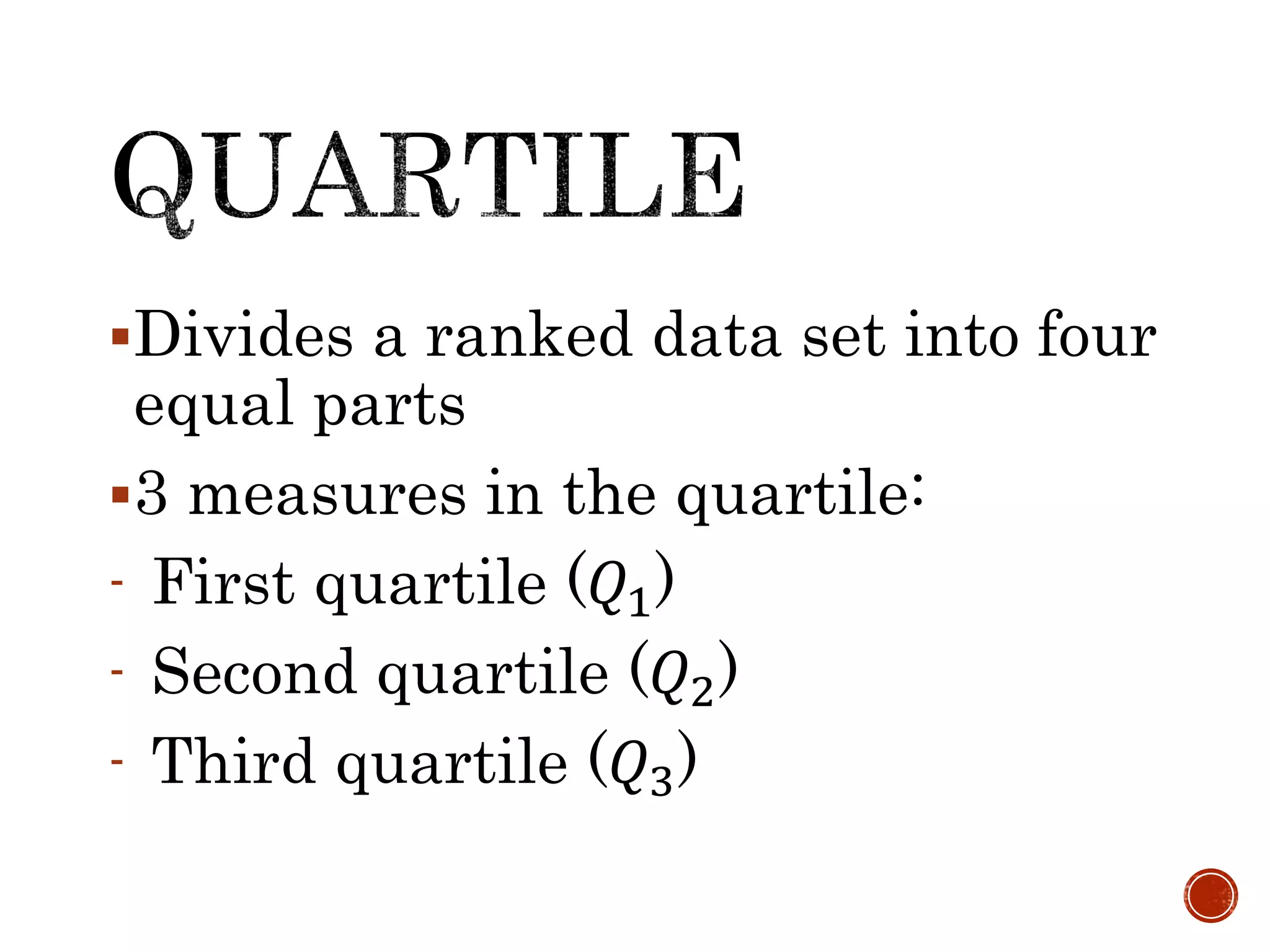
Divides a ranked data set into four
equal parts
3 measures in the quartile:
- First quartile (𝑄1)
- Second quartile (𝑄2)
- Third quartile (𝑄3)
Lower quartile
25% of the data
(lower 25%)
Median Quartile
50% of the data falls on 𝑄2
Upper Quartile or the upper
75%
Given the following set of measurements of
the grade point average of a Biology class
during the second grading period. Find the
quartiles
1.5 1.8 2.1 2.4 2.9
1.2 1.9 2.1 2.5 3
1.5 1.9 2.2 2.8 3
1.5 2 2.3 2.8 3.1
Measures the relative
standing of a particular
measurement in a data set.
Measures of variability

Measures of variability

  • 2.
    Variability- refers tothe spread of scores in the distribution Range Variance Standard Deviation
  • 3.
     the differencebetween the highest value and the smallest value in the set Example: Given the following sorted data, find the range. 12, 15,19,24,24,25,26,30,35,38 R=HV-LV R=38-12 R=26
  • 4.
    Variance- it isthe square of the standard deviation Note: The larger the variance, the greater the variability or the distance of scores from the mean. The smaller the variance, the lesser the variability.
  • 5.
    Variance of asample 𝑠2 = (𝑥 − 𝑥)2 𝑛 − 1 Where: 𝑠2 = variance of the set of scores (𝑥 − 𝑥)2= sum of the squared deviations from the mean n = total number of classes
  • 6.
    -Used to describevariability when the mean is used to describe the central tendency Note: The mean is an average of the scores in a set while the standard deviation is a sort of average of how distant the individual scores are from the mean
  • 7.
    s = (𝑥 −𝑥)2 𝑛 − 1 Where (𝑥 − 𝑥)- deviation from the mean X – the original raw score 𝑥 − mean n – total number of observation/cases
  • 8.
    Scores in a25 item Mathematics test 23 21 19 18 18 7 15 12 10 10 8 7
  • 9.
    n = 12 𝑥= 14 s = 5.7
  • 11.
    1. The followingare the response times in seconds of a smoke alarm after release of smoke from a fixed source. Find the range, variance, and standard deviation. 12 16 12 14 19 20 10 9 15
  • 12.
    2. Twenty employeesof a fast food chain, give a course in first aid, obtained these scores on a test administered after the course. Find the range, variance, and standard deviation. 10 11 12 15 16 18 17 17 19 12 14 17 19 17 18 16 15 14 12 10
  • 13.
    3. The followingare the stopping distances, for 20 drivers at 30 miles per hour. Find the range, variance, and standard deviation. 69 67 56 58 70 55 70 58 70 75 72 68 80 74 61 70 61 65 58 61
  • 14.
    -expressed in percentage(%) Uses of CRV: -For comparing distributions measured in the same units but which have very different means -For comparing distributions measured using different units
  • 15.
    𝐶𝑅𝑉 = 𝑠 𝑥 (100) Where s =standard deviation 𝑥 = mean Note: the final answer is always expressed in percent form
  • 16.
    The weight ofthe girls in Grade 8 students are as follows. Find CRV. 37 40 47 30 37 20 48 48 49 50 36 35 28 39
  • 18.
    Determines the positionof a single value in relation to other values in a sample or population data set
  • 19.
  • 20.
    Divides a rankeddata set into four equal parts 3 measures in the quartile: - First quartile (𝑄1) - Second quartile (𝑄2) - Third quartile (𝑄3)
  • 21.
    Lower quartile 25% ofthe data (lower 25%)
  • 22.
    Median Quartile 50% ofthe data falls on 𝑄2
  • 23.
    Upper Quartile orthe upper 75%
  • 24.
    Given the followingset of measurements of the grade point average of a Biology class during the second grading period. Find the quartiles 1.5 1.8 2.1 2.4 2.9 1.2 1.9 2.1 2.5 3 1.5 1.9 2.2 2.8 3 1.5 2 2.3 2.8 3.1
  • 25.
    Measures the relative standingof a particular measurement in a data set.

Editor's Notes

  • #18 Knowing the position of a certain measurement in the data set is another way of describing data