NUTRIGENOMICS


        More Sachin C.
"If we could give every individual the right amount
of nourishment and exercise, not too little and not
too much, we would have found the safest way to
health.”

"Leave your drugs in the chemist's pot if you can
heal the patient with food."
                                   - Hippocrates
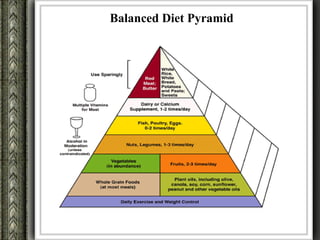
Balanced Diet Pyramid
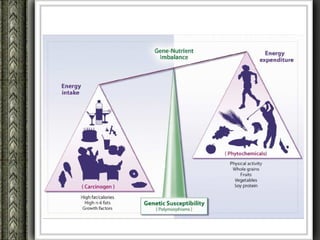
Family Health at Risk
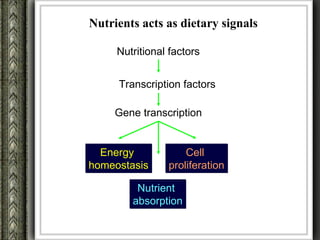
Nutrients acts as dietary signals

     Nutritional factors


     Transcription factors

     Gene transcription


  Energy            Cell
homeostasis     proliferation

         Nutrient
        absorption
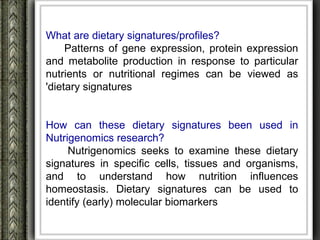
What are dietary signatures/profiles?
     Patterns of gene expression, protein expression
and metabolite production in response to particular
nutrients or nutritional regimes can be viewed as
'dietary signatures


How can these dietary signatures been used in
Nutrigenomics research?
     Nutrigenomics seeks to examine these dietary
signatures in specific cells, tissues and organisms,
and to understand how nutrition influences
homeostasis. Dietary signatures can be used to
identify (early) molecular biomarkers
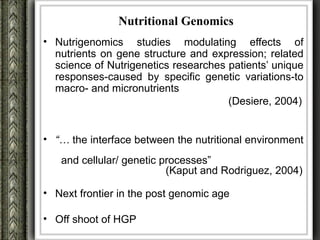
Nutritional Genomics
• Nutrigenomics studies modulating effects of
  nutrients on gene structure and expression; related
  science of Nutrigenetics researches patients’ unique
  responses-caused by specific genetic variations-to
  macro- and micronutrients
                                      (Desiere, 2004)


• “… the interface between the nutritional environment
   and cellular/ genetic processes”
                          (Kaput and Rodriguez, 2004)

• Next frontier in the post genomic age

• Off shoot of HGP
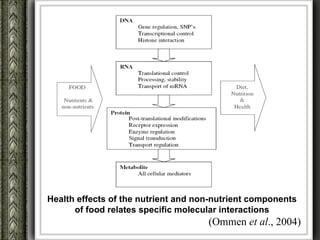
Health effects of the nutrient and non-nutrient components
      of food relates specific molecular interactions
                                     (Ommen et al., 2004)
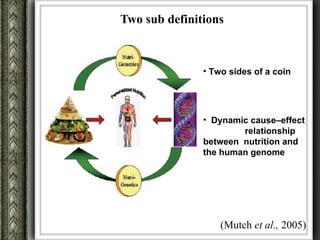
Two sub definitions


               • Two sides of a coin


               • Dynamic cause–effect
                       relationship
               between nutrition and
               the human genome


                   (Mutch et al., 2005)
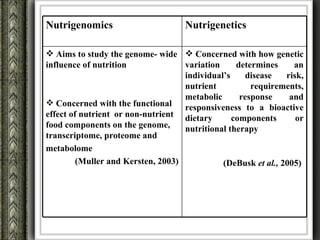
Nutrigenomics                       Nutrigenetics

 Aims to study the genome- wide  Concerned with how genetic
influence of nutrition              variation     determines     an
                                    individual’s    disease    risk,
                                    nutrient          requirements,
                                    metabolic      response     and
 Concerned with the functional
                                    responsiveness to a bioactive
effect of nutrient or non-nutrient dietary       components       or
food components on the genome,      nutritional therapy
transcriptome, proteome and
metabolome
         (Muller and Kersten, 2003)           (DeBusk et al., 2005)
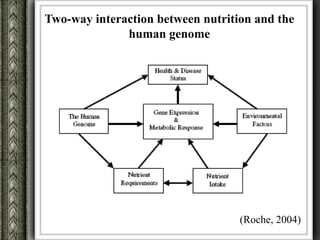
Two-way interaction between nutrition and the
              human genome


                                   (Roche, 2004)
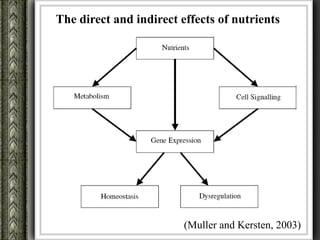
The direct and indirect effects of nutrients


                         (Muller and Kersten, 2003)
Challenge


• Common, polygenic, diet-related diseases which
  are composite of multiple genetic variants
  interacting with multiple environmental factors


• To develop and apply a robust nutritional genomics
  research approach that    is sensitive enough to
  take account of both genetic heterogeneity and
  diverse nutrient exposure
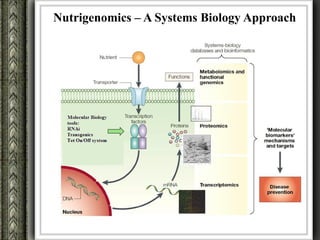
Nutrigenomics – A Systems Biology Approach
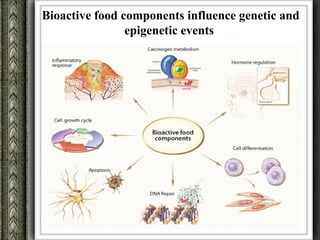
Bioactive food components influence genetic and
                epigenetic events
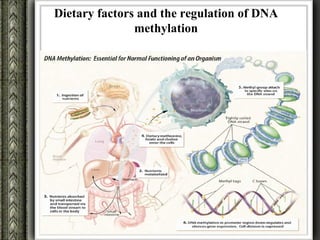
Dietary factors and the regulation of DNA
               methylation
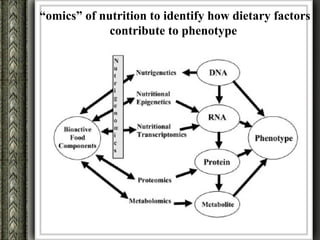
“omics” of nutrition to identify how dietary factors
             contribute to phenotype
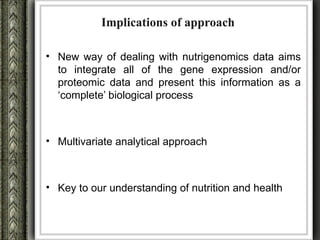
Implications of approach

• New way of dealing with nutrigenomics data aims
  to integrate all of the gene expression and/or
  proteomic data and present this information as a
  ‘complete’ biological process


• Multivariate analytical approach


• Key to our understanding of nutrition and health
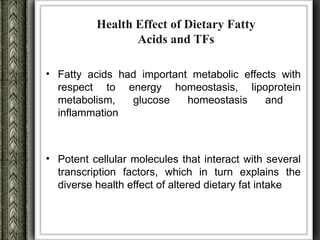
Health Effect of Dietary Fatty
                 Acids and TFs

• Fatty acids had important metabolic effects with
  respect to energy homeostasis, lipoprotein
  metabolism,   glucose    homeostasis     and
  inflammation


• Potent cellular molecules that interact with several
  transcription factors, which in turn explains the
  diverse health effect of altered dietary fat intake
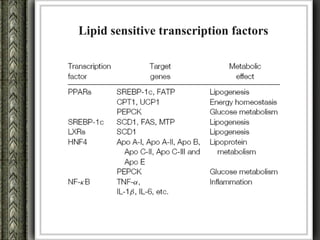
Lipid sensitive transcription factors
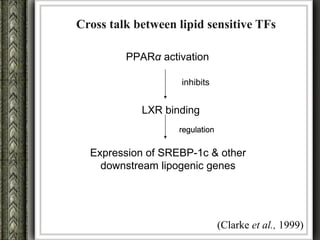
Cross talk between lipid sensitive TFs

         PPARα activation

                    inhibits


            LXR binding
                   regulation


  Expression of SREBP-1c & other
    downstream lipogenic genes


                                (Clarke et al., 1999)
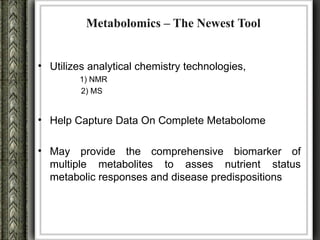
Metabolomics – The Newest Tool


• Utilizes analytical chemistry technologies,
         1) NMR
         2) MS


• Help Capture Data On Complete Metabolome

• May provide the comprehensive biomarker of
  multiple metabolites to asses nutrient status
  metabolic responses and disease predispositions
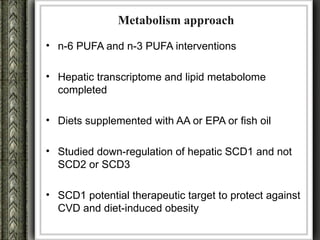
Metabolism approach
• n-6 PUFA and n-3 PUFA interventions

• Hepatic transcriptome and lipid metabolome
  completed

• Diets supplemented with AA or EPA or fish oil

• Studied down-regulation of hepatic SCD1 and not
  SCD2 or SCD3

• SCD1 potential therapeutic target to protect against
  CVD and diet-induced obesity
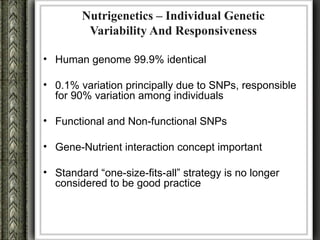
Nutrigenetics – Individual Genetic
         Variability And Responsiveness

• Human genome 99.9% identical

• 0.1% variation principally due to SNPs, responsible
  for 90% variation among individuals

• Functional and Non-functional SNPs

• Gene-Nutrient interaction concept important

• Standard “one-size-fits-all” strategy is no longer
  considered to be good practice
Interrelationships Among Specific Nutrients,
          Genes and Health Outcomes


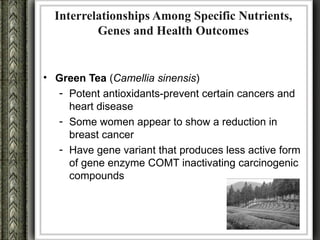
• Green Tea (Camellia sinensis)
  - Potent antioxidants-prevent certain cancers and
    heart disease
  - Some women appear to show a reduction in
    breast cancer
  - Have gene variant that produces less active form
    of gene enzyme COMT inactivating carcinogenic
    compounds
Contd…
• Curcumin:
    -yellow pigment from turmeric (Curcuma longa) -
     basic ingredient in Curries
    -produce suppressing genes for enzymes that
     produce inflammatory prostaglandins
                       e.g. cyclooxygenase-2 (COX-2)
• Prostaglandins linked to colon cancer, heart
  disease, arthritis, and Alzheimer’s disease

• “curry-eating people of India have the world’s lowest
  incidence of Alzheimer’s disease”
                                      - Sally A. Frautschy,
                                   Professor of Neurology,
                                    University of California
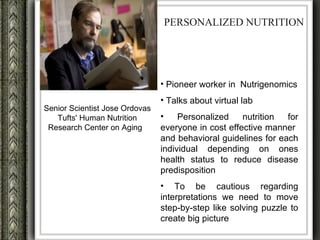
PERSONALIZED NUTRITION


                                • Pioneer worker in Nutrigenomics
                                • Talks about virtual lab
Senior Scientist Jose Ordovas
   Tufts' Human Nutrition       •    Personalized    nutrition  for
 Research Center on Aging       everyone in cost effective manner
                                and behavioral guidelines for each
                                individual depending on ones
                                health status to reduce disease
                                predisposition
                                • To be cautious regarding
                                interpretations we need to move
                                step-by-step like solving puzzle to
                                create big picture
Step 1


Collecting (patient) information

• Physical examination

• Questionnaire
   Diet
   Disease history
   Lifestyle
Step 2


Looking for genetic differences that mirror physical
  differences in patients

   – PCR
   – Gel electrophoresis
   – DNA sequencing
Step 3


Examining the foods

You can separate the different chemicals that make
  up a food using their different properties by:

   – Different solubility
   – Chromatography
Step 4

Test the effect of the food components on cells

• Cell lines (luminescence)
Step 5

Test the food components of the cells in vivo

• Animal models (micro-arrays)
What happens next?

• Make individualised dietary recommendations to
  patients?

• Produce dietary supplements to enhance individual
  genetic potential?

• Produce dietary supplements to suppress gene
  activity?
Commercialization


• http://www.mycellf.com/MyCellfProgram.aspx
• Sciona Inc. (www.sciona.com)
• Genelex Inc. (www.genelex.com)
CASE STUDIES
INTRODUCTION

•   (PPARs), α and Ƴ ligand-activated transcriptional factors
    regulating lipid and lipoprotein metabolism; glucose homeostasis,
    and inflammation
•   PPAR α- Expressed in liver
              -promotes microsomal ω-oxidation and peroxisomal β-
    oxidation of Fatty acids
             Ligands- Fatty acids and FFs
•   PPAR Ƴ- Expressed in Adipose tissue
               -Ligands- UFAs
•   Isohumulones generated from humulones in Hops imparting bitter
    taste to beer
•   Dual Agonists of both PPAR TFs

                                               (Yajimi et al., 2004)
Research Methodology

• Materials: IHE by extracting hops with supercritical co2;
  isomerised in alkaline condition
• Animals and Diets:
   -C57BL/6NCrj and PPAR α-/- /129S4/SvJae mice
   -AIN-76A Diet
• DNA Microarray analysis:
    -RNA extraction
    -cDNA labelling Cy3 or Cy5
• QPCR: primers designed with primer3 software
• Statistical Analysis: One way ANOVA
Results and Discussion
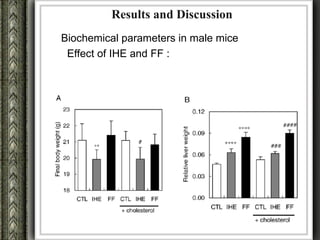
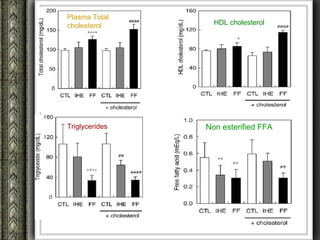
Biochemical parameters in male mice
 Effect of IHE and FF :
Plasma Total
cholesterol       HDL cholesterol


Triglycerides   Non esterified FFA
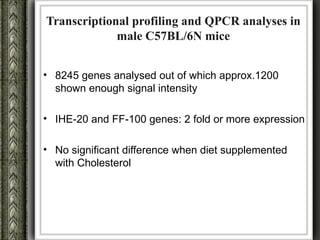
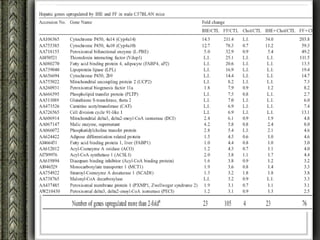
Transcriptional profiling and QPCR analyses in
             male C57BL/6N mice


• 8245 genes analysed out of which approx.1200
  shown enough signal intensity

• IHE-20 and FF-100 genes: 2 fold or more expression

• No significant difference when diet supplemented
  with Cholesterol
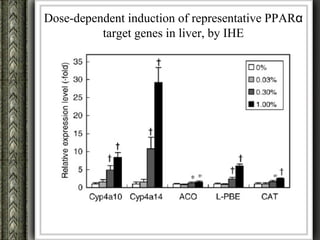
Dose-dependent induction of representative PPARα
          target genes in liver, by IHE
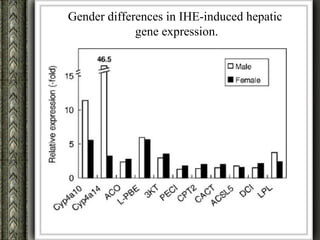
Gender differences in IHE-induced hepatic
             gene expression.
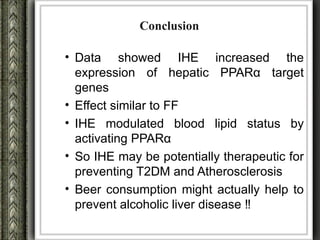
Conclusion

• Data showed IHE increased the
  expression of hepatic PPARα target
  genes
• Effect similar to FF
• IHE modulated blood lipid status by
  activating PPARα
• So IHE may be potentially therapeutic for
  preventing T2DM and Atherosclerosis
• Beer consumption might actually help to
  prevent alcoholic liver disease ‼
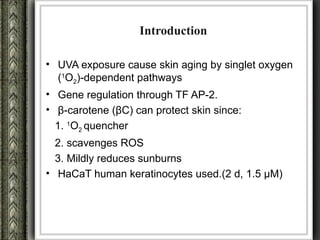
Introduction

• UVA exposure cause skin aging by singlet oxygen
  (1O2)-dependent pathways
• Gene regulation through TF AP-2.
• β-carotene (βC) can protect skin since:
  1. 1O2 quencher
  2. scavenges ROS
  3. Mildly reduces sunburns
• HaCaT human keratinocytes used.(2 d, 1.5 µM)
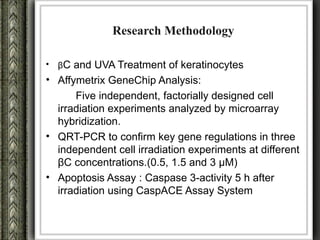
Research Methodology

• βC and UVA Treatment of keratinocytes
• Affymetrix GeneChip Analysis:
      Five independent, factorially designed cell
  irradiation experiments analyzed by microarray
  hybridization.
• QRT-PCR to confirm key gene regulations in three
  independent cell irradiation experiments at different
  βC concentrations.(0.5, 1.5 and 3 µM)
• Apoptosis Assay : Caspase 3-activity 5 h after
  irradiation using CaspACE Assay System
Results and Discussion


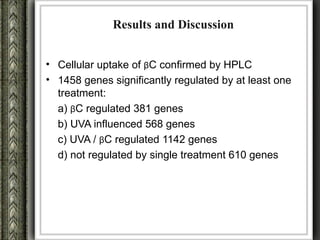
• Cellular uptake of βC confirmed by HPLC
• 1458 genes significantly regulated by at least one
  treatment:
  a) βC regulated 381 genes
  b) UVA influenced 568 genes
  c) UVA / βC regulated 1142 genes
  d) not regulated by single treatment 610 genes
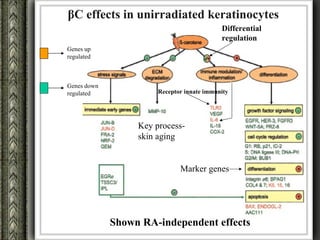
βC effects in unirradiated keratinocytes
                                            Differential
                                            regulation
Genes up
regulated


Genes down
regulated              Receptor innate immunity


                  Key process-
                  skin aging


                              Marker genes


             Shown RA-independent effects
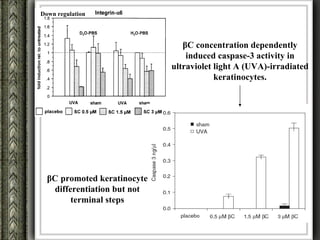
Down regulation


                                βC concentration dependently
                                 induced caspase-3 activity in
                             ultraviolet light A (UVA)-irradiated
                                         keratinocytes.


  βC promoted keratinocyte
   differentiation but not
        terminal steps
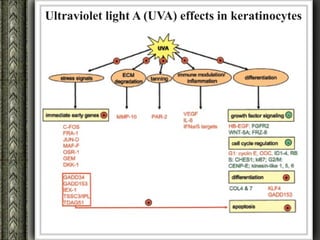
Ultraviolet light A (UVA) effects in keratinocytes
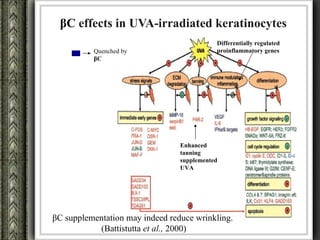
βC effects in UVA-irradiated keratinocytes
                                            Differentially regulated
          Quenched by                       proinflammatory genes
          βC


                                 Enhanced
                                 tanning
                                 supplemented
                                 UVA


βC supplementation may indeed reduce wrinkling.
           (Battistutta et al., 2000)
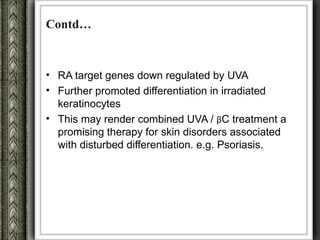
Contd…


• RA target genes down regulated by UVA
• Further promoted differentiation in irradiated
  keratinocytes
• This may render combined UVA / βC treatment a
  promising therapy for skin disorders associated
  with disturbed differentiation. e.g. Psoriasis.
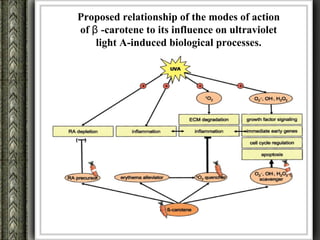
Proposed relationship of the modes of action
of β -carotene to its influence on ultraviolet
    light A-induced biological processes.
Conclusion
Discussion

Nutrigenomics

  • 1.
    NUTRIGENOMICS More Sachin C.
  • 2.
    "If we couldgive every individual the right amount of nourishment and exercise, not too little and not too much, we would have found the safest way to health.” "Leave your drugs in the chemist's pot if you can heal the patient with food." - Hippocrates
  • 3.
  • 5.
  • 6.
    Nutrients acts asdietary signals Nutritional factors Transcription factors Gene transcription Energy Cell homeostasis proliferation Nutrient absorption
  • 7.
    What are dietarysignatures/profiles? Patterns of gene expression, protein expression and metabolite production in response to particular nutrients or nutritional regimes can be viewed as 'dietary signatures How can these dietary signatures been used in Nutrigenomics research? Nutrigenomics seeks to examine these dietary signatures in specific cells, tissues and organisms, and to understand how nutrition influences homeostasis. Dietary signatures can be used to identify (early) molecular biomarkers
  • 8.
    Nutritional Genomics • Nutrigenomicsstudies modulating effects of nutrients on gene structure and expression; related science of Nutrigenetics researches patients’ unique responses-caused by specific genetic variations-to macro- and micronutrients (Desiere, 2004) • “… the interface between the nutritional environment and cellular/ genetic processes” (Kaput and Rodriguez, 2004) • Next frontier in the post genomic age • Off shoot of HGP
  • 9.
    Health effects ofthe nutrient and non-nutrient components of food relates specific molecular interactions (Ommen et al., 2004)
  • 10.
    Two sub definitions • Two sides of a coin • Dynamic cause–effect relationship between nutrition and the human genome (Mutch et al., 2005)
  • 11.
    Nutrigenomics Nutrigenetics  Aims to study the genome- wide  Concerned with how genetic influence of nutrition variation determines an individual’s disease risk, nutrient requirements, metabolic response and  Concerned with the functional responsiveness to a bioactive effect of nutrient or non-nutrient dietary components or food components on the genome, nutritional therapy transcriptome, proteome and metabolome (Muller and Kersten, 2003) (DeBusk et al., 2005)
  • 12.
    Two-way interaction betweennutrition and the human genome (Roche, 2004)
  • 13.
    The direct andindirect effects of nutrients (Muller and Kersten, 2003)
  • 14.
    Challenge • Common, polygenic,diet-related diseases which are composite of multiple genetic variants interacting with multiple environmental factors • To develop and apply a robust nutritional genomics research approach that is sensitive enough to take account of both genetic heterogeneity and diverse nutrient exposure
  • 15.
    Nutrigenomics – ASystems Biology Approach
  • 16.
    Bioactive food componentsinfluence genetic and epigenetic events
  • 17.
    Dietary factors andthe regulation of DNA methylation
  • 18.
    “omics” of nutritionto identify how dietary factors contribute to phenotype
  • 19.
    Implications of approach •New way of dealing with nutrigenomics data aims to integrate all of the gene expression and/or proteomic data and present this information as a ‘complete’ biological process • Multivariate analytical approach • Key to our understanding of nutrition and health
  • 20.
    Health Effect ofDietary Fatty Acids and TFs • Fatty acids had important metabolic effects with respect to energy homeostasis, lipoprotein metabolism, glucose homeostasis and inflammation • Potent cellular molecules that interact with several transcription factors, which in turn explains the diverse health effect of altered dietary fat intake
  • 21.
  • 22.
    Cross talk betweenlipid sensitive TFs PPARα activation inhibits LXR binding regulation Expression of SREBP-1c & other downstream lipogenic genes (Clarke et al., 1999)
  • 23.
    Metabolomics – TheNewest Tool • Utilizes analytical chemistry technologies, 1) NMR 2) MS • Help Capture Data On Complete Metabolome • May provide the comprehensive biomarker of multiple metabolites to asses nutrient status metabolic responses and disease predispositions
  • 24.
    Metabolism approach • n-6PUFA and n-3 PUFA interventions • Hepatic transcriptome and lipid metabolome completed • Diets supplemented with AA or EPA or fish oil • Studied down-regulation of hepatic SCD1 and not SCD2 or SCD3 • SCD1 potential therapeutic target to protect against CVD and diet-induced obesity
  • 25.
    Nutrigenetics – IndividualGenetic Variability And Responsiveness • Human genome 99.9% identical • 0.1% variation principally due to SNPs, responsible for 90% variation among individuals • Functional and Non-functional SNPs • Gene-Nutrient interaction concept important • Standard “one-size-fits-all” strategy is no longer considered to be good practice
  • 26.
    Interrelationships Among SpecificNutrients, Genes and Health Outcomes • Green Tea (Camellia sinensis) - Potent antioxidants-prevent certain cancers and heart disease - Some women appear to show a reduction in breast cancer - Have gene variant that produces less active form of gene enzyme COMT inactivating carcinogenic compounds
  • 27.
    Contd… • Curcumin: -yellow pigment from turmeric (Curcuma longa) - basic ingredient in Curries -produce suppressing genes for enzymes that produce inflammatory prostaglandins e.g. cyclooxygenase-2 (COX-2) • Prostaglandins linked to colon cancer, heart disease, arthritis, and Alzheimer’s disease • “curry-eating people of India have the world’s lowest incidence of Alzheimer’s disease” - Sally A. Frautschy, Professor of Neurology, University of California
  • 28.
    PERSONALIZED NUTRITION • Pioneer worker in Nutrigenomics • Talks about virtual lab Senior Scientist Jose Ordovas Tufts' Human Nutrition • Personalized nutrition for Research Center on Aging everyone in cost effective manner and behavioral guidelines for each individual depending on ones health status to reduce disease predisposition • To be cautious regarding interpretations we need to move step-by-step like solving puzzle to create big picture
  • 29.
    Step 1 Collecting (patient)information • Physical examination • Questionnaire  Diet  Disease history  Lifestyle
  • 30.
    Step 2 Looking forgenetic differences that mirror physical differences in patients – PCR – Gel electrophoresis – DNA sequencing
  • 31.
    Step 3 Examining thefoods You can separate the different chemicals that make up a food using their different properties by: – Different solubility – Chromatography
  • 32.
    Step 4 Test theeffect of the food components on cells • Cell lines (luminescence)
  • 33.
    Step 5 Test thefood components of the cells in vivo • Animal models (micro-arrays)
  • 34.
    What happens next? •Make individualised dietary recommendations to patients? • Produce dietary supplements to enhance individual genetic potential? • Produce dietary supplements to suppress gene activity?
  • 35.
    Commercialization • http://www.mycellf.com/MyCellfProgram.aspx • ScionaInc. (www.sciona.com) • Genelex Inc. (www.genelex.com)
  • 36.
  • 38.
    INTRODUCTION • (PPARs), α and Ƴ ligand-activated transcriptional factors regulating lipid and lipoprotein metabolism; glucose homeostasis, and inflammation • PPAR α- Expressed in liver -promotes microsomal ω-oxidation and peroxisomal β- oxidation of Fatty acids Ligands- Fatty acids and FFs • PPAR Ƴ- Expressed in Adipose tissue -Ligands- UFAs • Isohumulones generated from humulones in Hops imparting bitter taste to beer • Dual Agonists of both PPAR TFs (Yajimi et al., 2004)
  • 39.
    Research Methodology • Materials:IHE by extracting hops with supercritical co2; isomerised in alkaline condition • Animals and Diets: -C57BL/6NCrj and PPAR α-/- /129S4/SvJae mice -AIN-76A Diet • DNA Microarray analysis: -RNA extraction -cDNA labelling Cy3 or Cy5 • QPCR: primers designed with primer3 software • Statistical Analysis: One way ANOVA
  • 40.
    Results and Discussion Biochemicalparameters in male mice Effect of IHE and FF :
  • 41.
    Plasma Total cholesterol HDL cholesterol Triglycerides Non esterified FFA
  • 42.
    Transcriptional profiling andQPCR analyses in male C57BL/6N mice • 8245 genes analysed out of which approx.1200 shown enough signal intensity • IHE-20 and FF-100 genes: 2 fold or more expression • No significant difference when diet supplemented with Cholesterol
  • 44.
    Dose-dependent induction ofrepresentative PPARα target genes in liver, by IHE
  • 45.
    Gender differences inIHE-induced hepatic gene expression.
  • 46.
    Conclusion • Data showedIHE increased the expression of hepatic PPARα target genes • Effect similar to FF • IHE modulated blood lipid status by activating PPARα • So IHE may be potentially therapeutic for preventing T2DM and Atherosclerosis • Beer consumption might actually help to prevent alcoholic liver disease ‼
  • 48.
    Introduction • UVA exposurecause skin aging by singlet oxygen (1O2)-dependent pathways • Gene regulation through TF AP-2. • β-carotene (βC) can protect skin since: 1. 1O2 quencher 2. scavenges ROS 3. Mildly reduces sunburns • HaCaT human keratinocytes used.(2 d, 1.5 µM)
  • 49.
    Research Methodology • βCand UVA Treatment of keratinocytes • Affymetrix GeneChip Analysis: Five independent, factorially designed cell irradiation experiments analyzed by microarray hybridization. • QRT-PCR to confirm key gene regulations in three independent cell irradiation experiments at different βC concentrations.(0.5, 1.5 and 3 µM) • Apoptosis Assay : Caspase 3-activity 5 h after irradiation using CaspACE Assay System
  • 50.
    Results and Discussion •Cellular uptake of βC confirmed by HPLC • 1458 genes significantly regulated by at least one treatment: a) βC regulated 381 genes b) UVA influenced 568 genes c) UVA / βC regulated 1142 genes d) not regulated by single treatment 610 genes
  • 51.
    βC effects inunirradiated keratinocytes Differential regulation Genes up regulated Genes down regulated Receptor innate immunity Key process- skin aging Marker genes Shown RA-independent effects
  • 52.
    Down regulation βC concentration dependently induced caspase-3 activity in ultraviolet light A (UVA)-irradiated keratinocytes. βC promoted keratinocyte differentiation but not terminal steps
  • 53.
    Ultraviolet light A(UVA) effects in keratinocytes
  • 54.
    βC effects inUVA-irradiated keratinocytes Differentially regulated Quenched by proinflammatory genes βC Enhanced tanning supplemented UVA βC supplementation may indeed reduce wrinkling. (Battistutta et al., 2000)
  • 55.
    Contd… • RA targetgenes down regulated by UVA • Further promoted differentiation in irradiated keratinocytes • This may render combined UVA / βC treatment a promising therapy for skin disorders associated with disturbed differentiation. e.g. Psoriasis.
  • 56.
    Proposed relationship ofthe modes of action of β -carotene to its influence on ultraviolet light A-induced biological processes.
  • 57.
  • 58.