NUTRIGENOMICS
CH.VENNELA
1175-22-520-014
CONTENTS:
NUTRIGENOMICS
2
1. INTRODUCTION
2. BASICS OF GENETICS
3. NUTRIGENOMICS AND HGP
4. NUTRITIONAL GENOMICS
5. NUTRIGENETICS
6. NUTRIGENOMICS
7. METHODS OF NUTRIGENOMICS
8. NUTRIGENOMICS APPROACH TO
FUNCTIONAL FOODS:
9. ROLE OF PERSONALIZED DIET IN
NUTRIGENOMICS
10. NUTRIGENOMICS AND CHRONIC DISEASES
11. NUTRIGENOMICS TESTING
12. CONCLUSION
13. REFERENCES
3
PRESENTATION
TITLE
INTRODUCTION:
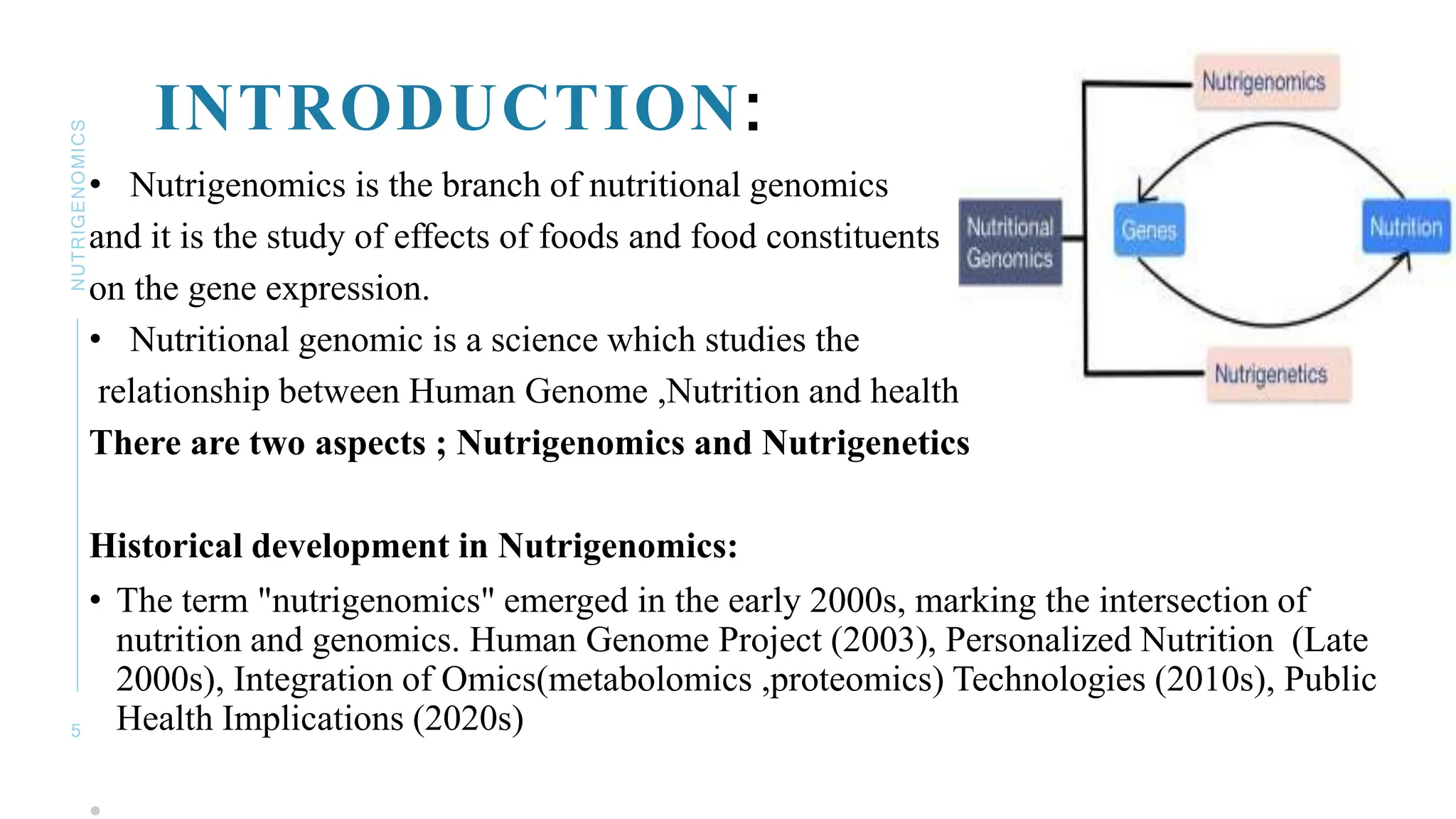
• Nutrigenomics is the branch of nutritional genomics
and it is the study of effects of foods and food constituents
on the gene expression.
• Nutritional genomic is a science which studies the
relationship between Human Genome ,Nutrition and health.
There are two aspects ; Nutrigenomics and Nutrigenetics
Historical development in Nutrigenomics:
• The term "nutrigenomics" emerged in the early 2000s, marking the intersection of
nutrition and genomics. Human Genome Project (2003), Personalized Nutrition (Late
2000s), Integration of Omics(metabolomics ,proteomics) Technologies (2010s), Public
Health Implications (2020s)
5
NUTRIGENOMICS
6
NUTRIGENOMICS
BASICS OF GENETICS:
GENOME: The entire set of DNA found in a cell.
CHROMOSOME: Thread like structures located inside the cell. Made of
protein and nucleic acids.
GENES: Small sections of DNA that code for proteins.
NUCLEOTIDES: Basic building blocks of nucleic acids that composed of
nitrogeneous base, sugar, phosphate group.
Genetics plays a fundamental role in the development of organisms by
determining the characteristics and traits that are passed down from one
generation to the next. The genetic information of an organism is stored in its
DNA, which contains the instructions for the synthesis of all the proteins and
other molecules that are necessary for the development and function of the
organism.
HUMAN GENOME PROJECT :
7
NUTRIGENOMICS
• The Human Genome Project was an international scientific research
project with the goal of determining the base pairs that make up human
DNA, and of identifying, mapping and sequencing all of the genes of the
human genome from both a physical and a functional standpoint. It
started in 1990 and was completed in 2003.
BENEFITS OF HGP:
• In the field of molecular medicine; include better diagnosis of disease,
early detection of certain diseases, and gene therapy and control systems
for drugs .
• It can also be very useful for the understanding of human evolution
and human migration. It may help lead scientists to find out how humans
have evolved and how humans are evolving today. It will also help to
understand the common biology that we share with all life on earth.
• In the field of agriculture and livestock breeding. This technology
could help to develop disease, insect, and drought resistant crops thus
being able to produce more for the world. It would also help to produce
healthier, more productive, and possibly disease resistant animals to be
sent to market.
HUMAN GENOME PROJECT AND
NUTRIGENOMICS:
• The Human Genome Project laid the foundation by providing a comprehensive map of the human
genome, while nutrigenomics builds upon this knowledge to explore the relationship between genetics
and nutrition.
• Both the Human Genome Project and Nutrigenomics
contribute to the understanding of genetics factors
involved in disease susceptibility.
• The data generated by the Human Genome Project
provides a valuable resource for researchers in the
field of Nutrigenomics.
8
NUTRIGENOMICS
NUTRITIONAL GENOMICS:
NUTRITIGENOMICS
9
Nutritional genomics focuses on the interaction between the bioactive
components of food and the genome, and includes nutrigenetics and
nutrigenomics.
Nutrigenetics describes that the genetic profile has an impact on the
body’s response to bioactive food components by influencing their
absorption, metabolism and site of action. In addition, it analyses genetic
variants (polymorphisms or SNPs) in DNA that are associated with
nutrition-related diseases.
Nutrigenomics studies how nutrients affect gene expression. In other
words, nutrigenomics provides a genetic understanding of how common
dietary components affect the balance between health and disease by
altering the expression and/or structure of an individual’s genetic
make-up.
1 0
NUTRIGENOMICS
(genetic modifications that impact gene activity
without changing the DNA sequence)
1 1
NUTRIGENETICS:
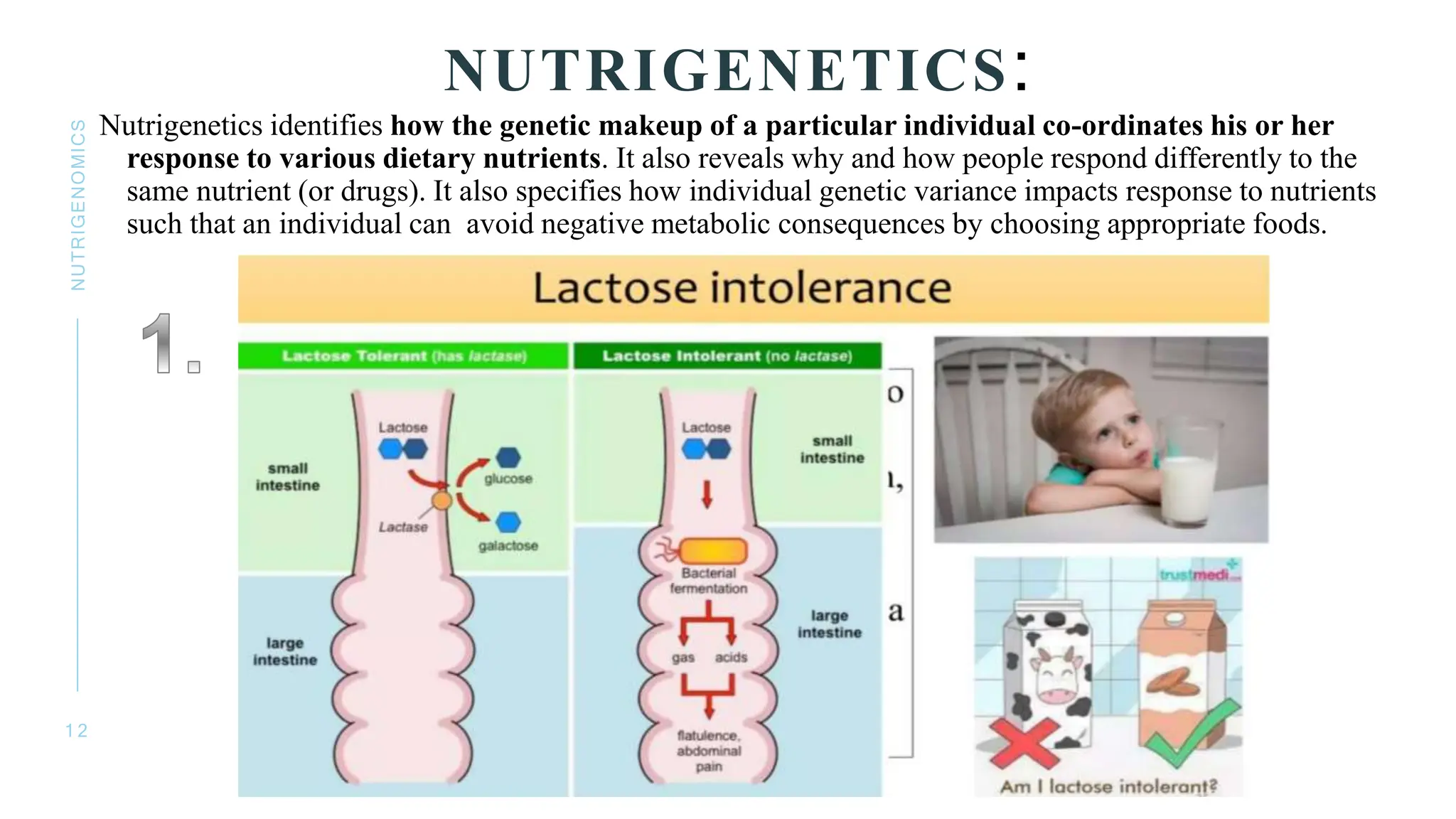
Nutrigenetics identifies how the genetic makeup of a particular individual co-ordinates his or her
response to various dietary nutrients. It also reveals why and how people respond differently to the
same nutrient (or drugs). It also specifies how individual genetic variance impacts response to nutrients
such that an individual can avoid negative metabolic consequences by choosing appropriate foods.
1 2
NUTRIGENOMICS
1 3
NUTRIGENOMICS
MTHFR POLYMORPHISM
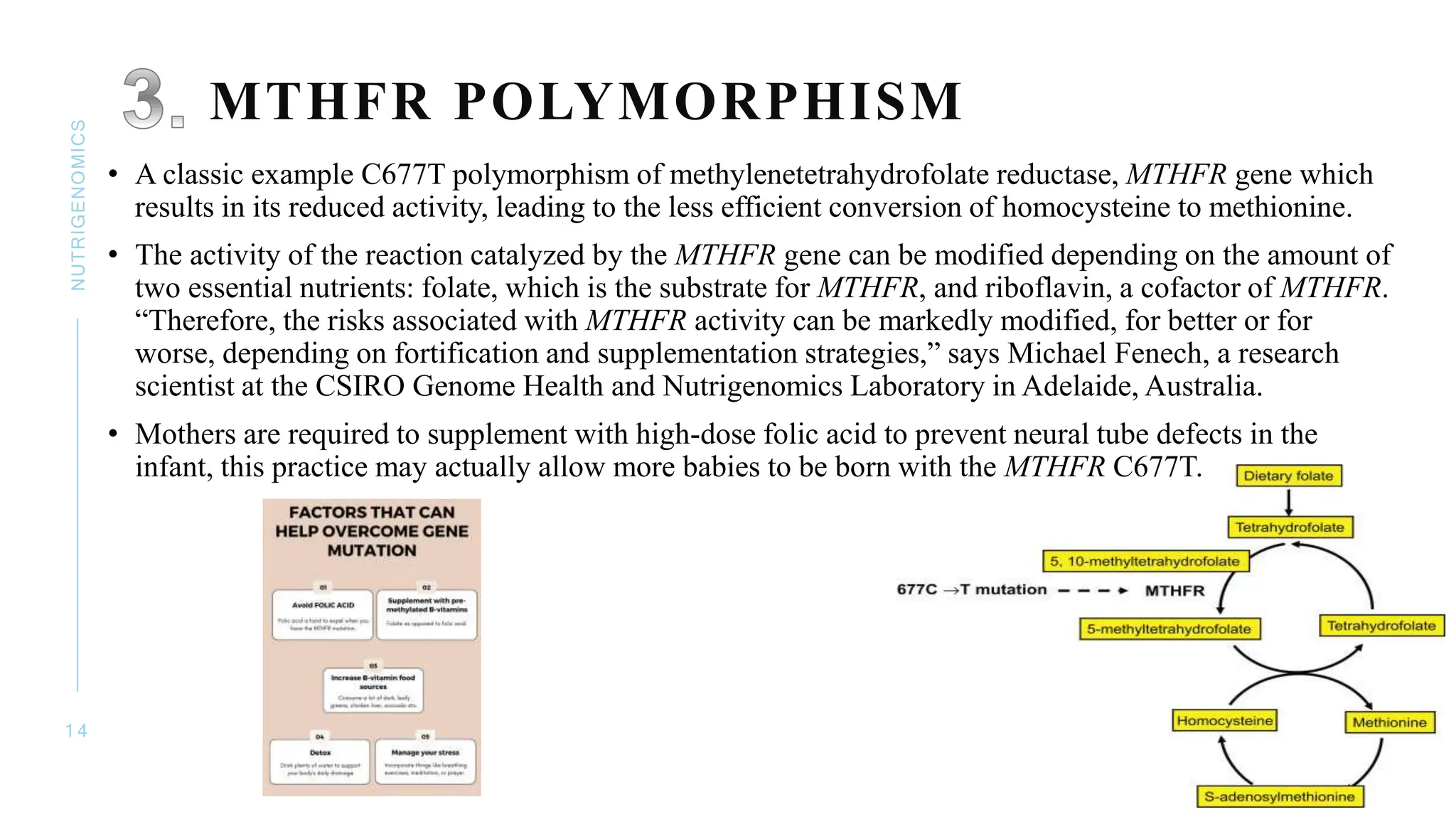
• A classic example C677T polymorphism of methylenetetrahydrofolate reductase, MTHFR gene which
results in its reduced activity, leading to the less efficient conversion of homocysteine to methionine.
• The activity of the reaction catalyzed by the MTHFR gene can be modified depending on the amount of
two essential nutrients: folate, which is the substrate for MTHFR, and riboflavin, a cofactor of MTHFR.
“Therefore, the risks associated with MTHFR activity can be markedly modified, for better or for
worse, depending on fortification and supplementation strategies,” says Michael Fenech, a research
scientist at the CSIRO Genome Health and Nutrigenomics Laboratory in Adelaide, Australia.
• Mothers are required to supplement with high-dose folic acid to prevent neural tube defects in the
infant, this practice may actually allow more babies to be born with the MTHFR C677T.
1 4
NUTRIGENOMICS
NUTRIGENOMICS:
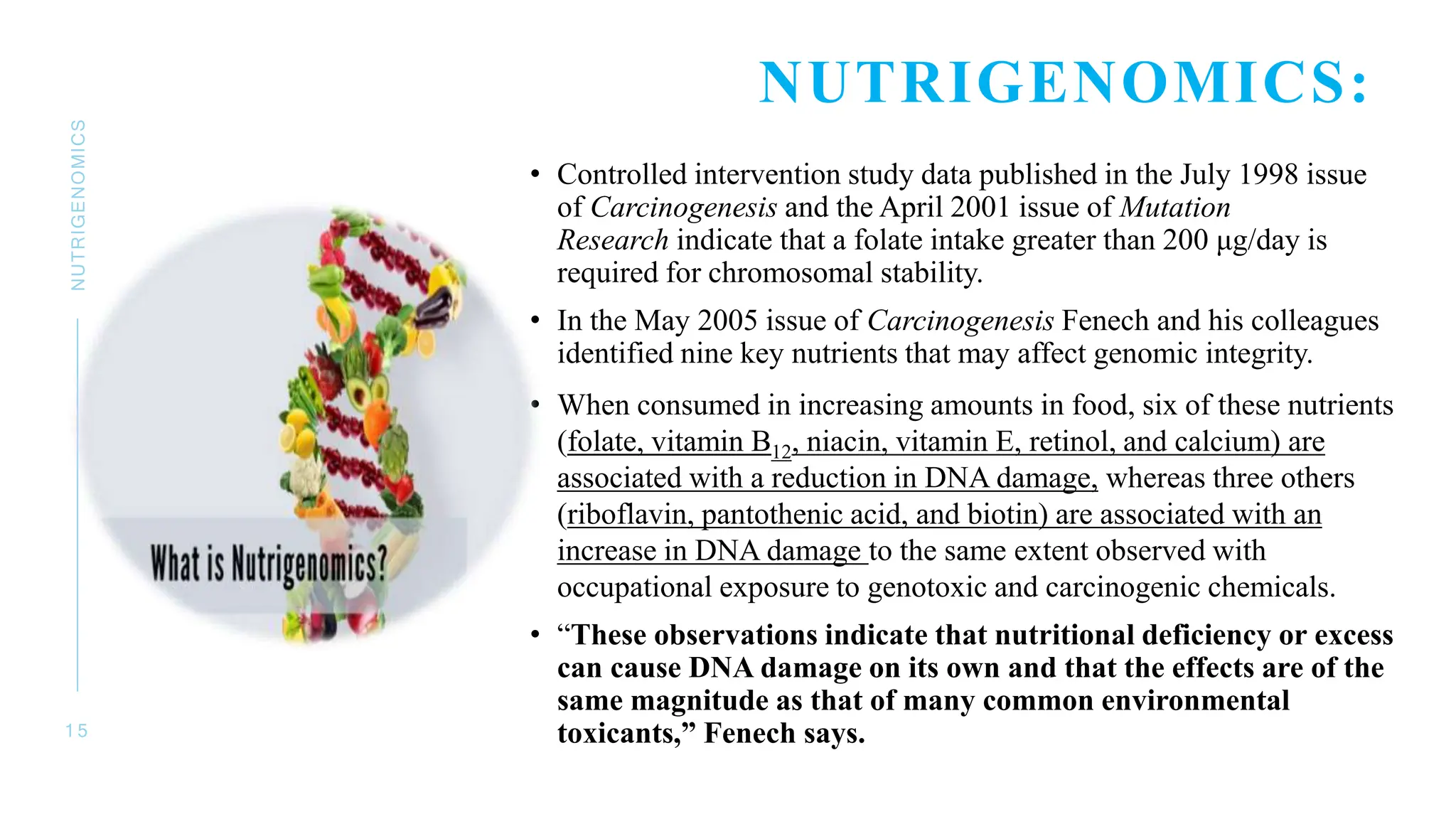
• Controlled intervention study data published in the July 1998 issue
of Carcinogenesis and the April 2001 issue of Mutation
Research indicate that a folate intake greater than 200 μg/day is
required for chromosomal stability.
• In the May 2005 issue of Carcinogenesis Fenech and his colleagues
identified nine key nutrients that may affect genomic integrity.
• When consumed in increasing amounts in food, six of these nutrients
(folate, vitamin B12, niacin, vitamin E, retinol, and calcium) are
associated with a reduction in DNA damage, whereas three others
(riboflavin, pantothenic acid, and biotin) are associated with an
increase in DNA damage to the same extent observed with
occupational exposure to genotoxic and carcinogenic chemicals.
• “These observations indicate that nutritional deficiency or excess
can cause DNA damage on its own and that the effects are of the
same magnitude as that of many common environmental
toxicants,” Fenech says.
1 5
NUTRIGENOMICS
SICKLE CELL ANEMIA:
1 6
NUTRIGENOMICS
•Sickle cell Anemia a “Molecular disease”.
•Just one damaged molecule(genetic mutations) leads to
a genetic disease.
CAN FOOD IMPROVES THE EXPRESSION:
•Intrauterine, fetal hemoglobin has high affinity to capture oxygen from
the mother’s blood.
•After birth, the genetic message for the production of this type of
hemoglobin goes silent and replaced by the message for the production of
adult hemoglobin.
•The fetal hemoglobin message is still on the genome; it is just not being
expressed.
•Administering Hydroxyurea or butyrate to an individual who carries the
genetic message for the production of sickle hemoglobin awakens the
message to produce the normal fetal hemoglobin that dilutes the sickle
hemoglobin ,preventing its aggregation.
•This nutritional intervention is a classical example of the genetic
nutritioneering approach.
OTHER EXAMPLES :
NUTRIGENOMICS
1 7
METHODS OF
NUTRIGENOMICS:
1 8
NUTRIGENOMICS
NUTRIGENOMICS APPROACH TO
FUNCTIONAL FOODS:
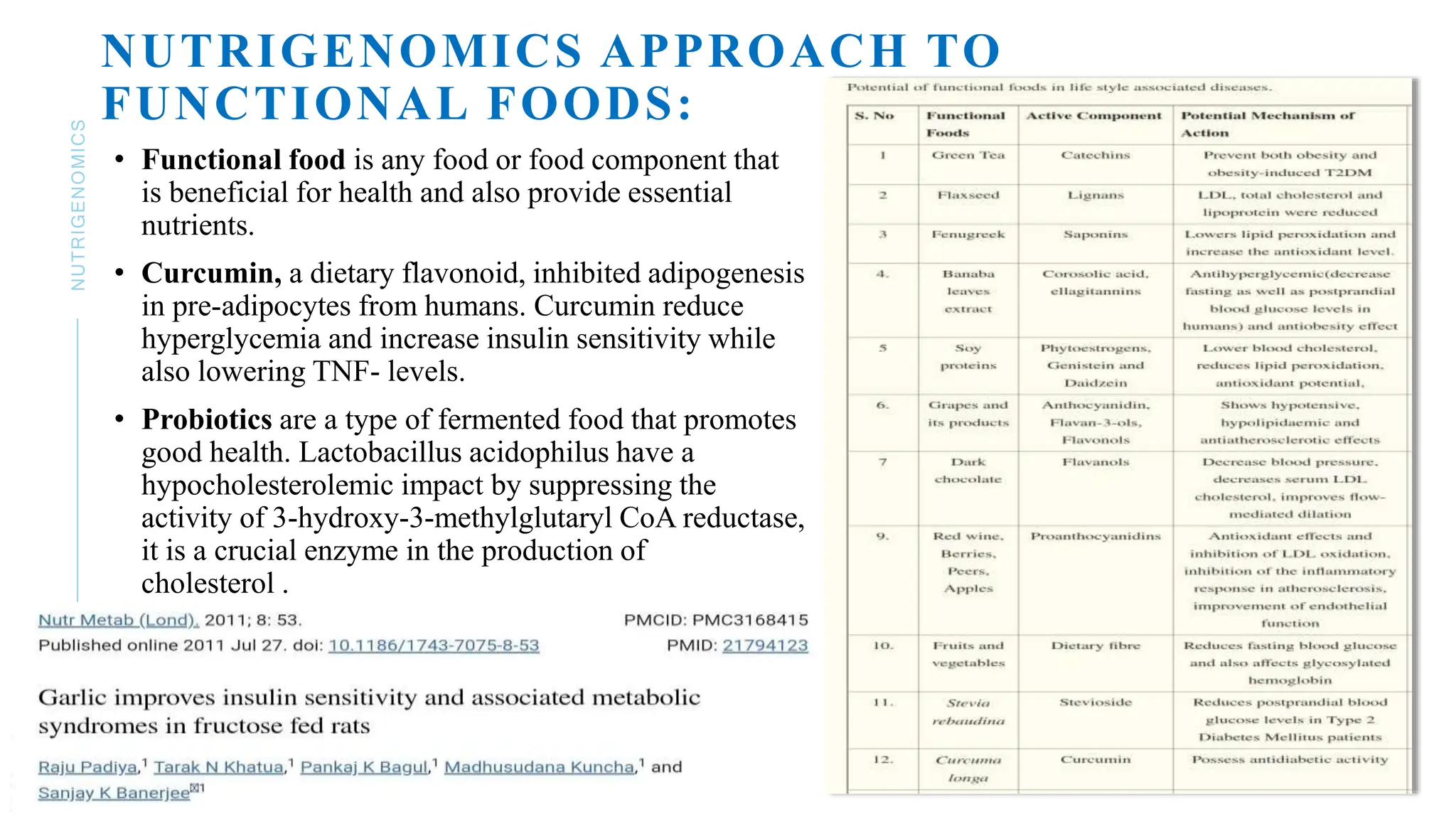
• Functional food is any food or food component that
is beneficial for health and also provide essential
nutrients.
• Curcumin, a dietary flavonoid, inhibited adipogenesis
in pre-adipocytes from humans. Curcumin reduce
hyperglycemia and increase insulin sensitivity while
also lowering TNF- levels.
• Probiotics are a type of fermented food that promotes
good health. Lactobacillus acidophilus have a
hypocholesterolemic impact by suppressing the
activity of 3-hydroxy-3-methylglutaryl CoA reductase,
it is a crucial enzyme in the production of
cholesterol .
1 9
NUTRIGENOMICS
ROLE OF PERSONALIZED DIET IN
NUTRIGENOMICS:
NUTRIGENOMICS
2 0
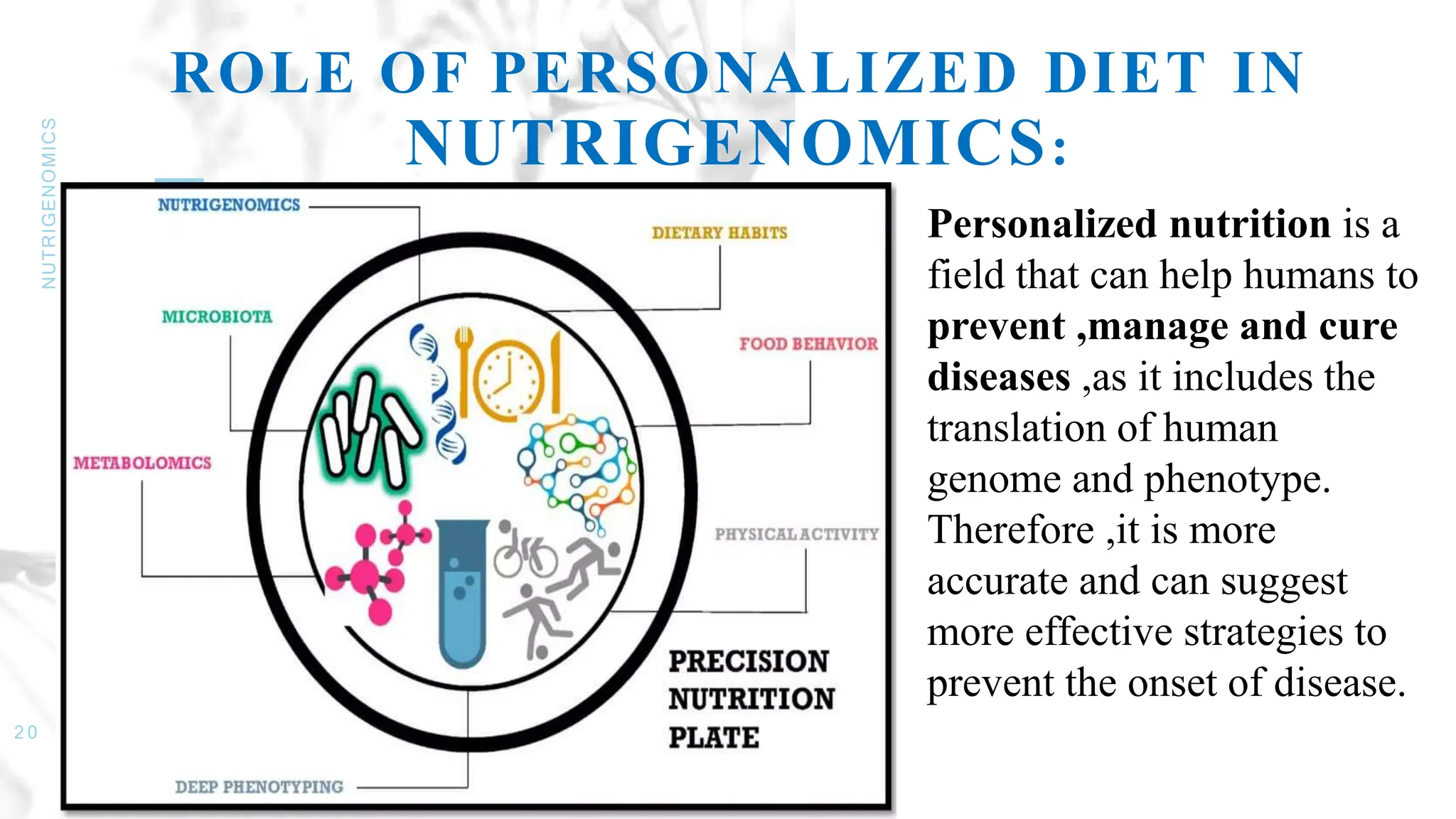
Personalized nutrition is a
field that can help humans to
prevent ,manage and cure
diseases ,as it includes the
translation of human
genome and phenotype.
Therefore ,it is more
accurate and can suggest
more effective strategies to
prevent the onset of disease.
NUTRIGENOMICS AND CHRONIC DISEASES:
NUTRIGENOMICS
2 1
•Nutrigenomics has received much attention recently because of its potentiality for preventing,
mitigating or treating chronic disease and certain cancers. It is already established that human genomes
are identical about 99.9% and there is only 0.01% difference that occurs due to SNPs.
•Several research groups are engaged in seeking to understand the relationship between
dietary/nutritional factors and the expression of genes, metabolic and physiological changes in the body.
2 2
NUTRIGENOMICS
2 3
NUTRIGENOMICS
NUTRIGENOMIC TESTING:
• Genetic testing analyzes DNA to reveal variations in the genes that may cause illness or disease.
• Nutrigenomic testing is a specific genetic test showing an individual's unique nutritional needs. The test
requires a cheek swab sent to a lab that examines about 70 or more particular genes.
• Once the genes are sequenced, lab companies and nutrigenomic healthcare practitioners typically run the
genetic results through a database to understand the clinical meaning behind the findings.
• The database will give clinical information about the specific Single Nucleotide Polymorphisms (SNP -
pronounced as "snip") identified in the sample based on current research. These SNPs are the variations
found in a genetic sequence where a single nucleotide, the chemical composition of our genes, is altered.
• In other words, we only inherit the predisposition, but not the disease. Therefore, the sooner we learn
about the possible risk we are exposed to, the sooner we take the necessary precautions.
• The pricing costs approximately 95 thousand rupees and above.
2 4
NUTRIGENOMICS
2 5
GENETIC TESTING CENTERS IN
HYDERABAD:
Source: The Times of India, "Cheaper, faster DNA
tests make diagnosis better" (May 7, 2018)
2 6
NUTRIGENOMICS
1. BioAxis DNA Research Centre Pvt Ltd, Hayatnagar,
Hyderabad, Telangana
2. Mapmygenome India LTD- Madhapur,Hyderabad, Telangana
3. GenepoweRx, Jubilee Hills, Hyderabad, Telangana
4. DNA Labs India, Amberpet, Hyderabad, Telangana
5. Nutrigene Healthcare Services, Kukatpally, Hyderabad,
Telangana
6. GeneTech, Banjara Hills, Hyderabad, Telangana
CONCLUSION:
NUTRIGENOMICS
2 7
Nutrigenomics can also help in assessing the interindividual variability of nutrient absorption
and utilization, thus facilitating personalized dietary recommendations for specific health
outcomes. Therefore, nutrigenomics will be an important area of nutrition research in future.
Some of the potential implications of nutrigenomics on public health are as follows:
(i) RDA or safe upper limits for population subgroups/individuals;
(ii) match the nutrient intake combination (nutriome) with the genome profile so that DNA stability,
genomic and proteomic profile, metabolism and cellular functions occur in a homeostatic ally
sustainable manner;
(iii) will give better understanding of data from epidemiological and clinical intervention studies with
respect to health impacts of dietary factors;
(iv) designing optimized intervention strategies;
(v) appropriate diagnostic tools to assess and monitor micronutrient status and response to intervention.
2 8
NUTRIGENOMICS
•Goutam Banerjee, Rounak Pal and Arun Kumar Ray, 2015. Applications of Nutrigenomics in
Animal Sectors: A Review. Asian Journal of Animal and Veterinary Advances, 10: 489-499.
•Neeha VS, Kinth P. Nutrigenomics research: a review. J Food Sci Technol. 2013 Jun;50(3):415-28.
•Mead MN. Nutrigenomics: the genome--food interface. Environ Health Perspect. 2007
Dec;115(12):A582-9.
•German JB, Zivkovic AM, Dallas DC, Smilowitz JT. Nutrigenomics and personalized diets: What
will they mean for food? Annu Rev Food Sci Technol. 2011;2:97-123.
•https://www.nutritionsociety.org
•Ordovás J (2024) A Multifaceted Approach to Precision Nutrition: The Genome, Epigenome, and
Microbiome in the Prevention and Therapy of Cardiovascular Diseases Precision
Nutrition, 10.1016/B978-0-443-15315-0.00019-5, (181-200).
•Batool, A., Farooq, U., Shafi, A., & Khan, Z. (2022)Nutrigenomics: Challenges and Opportunities.
REFERENCES:
THANK YOU

Nutrigenomics

  • 1.
  • 2.
    CONTENTS: NUTRIGENOMICS 2 1. INTRODUCTION 2. BASICSOF GENETICS 3. NUTRIGENOMICS AND HGP 4. NUTRITIONAL GENOMICS 5. NUTRIGENETICS 6. NUTRIGENOMICS 7. METHODS OF NUTRIGENOMICS 8. NUTRIGENOMICS APPROACH TO FUNCTIONAL FOODS: 9. ROLE OF PERSONALIZED DIET IN NUTRIGENOMICS 10. NUTRIGENOMICS AND CHRONIC DISEASES 11. NUTRIGENOMICS TESTING 12. CONCLUSION 13. REFERENCES
  • 3.
  • 5.
    INTRODUCTION: • Nutrigenomics isthe branch of nutritional genomics and it is the study of effects of foods and food constituents on the gene expression. • Nutritional genomic is a science which studies the relationship between Human Genome ,Nutrition and health. There are two aspects ; Nutrigenomics and Nutrigenetics Historical development in Nutrigenomics: • The term "nutrigenomics" emerged in the early 2000s, marking the intersection of nutrition and genomics. Human Genome Project (2003), Personalized Nutrition (Late 2000s), Integration of Omics(metabolomics ,proteomics) Technologies (2010s), Public Health Implications (2020s) 5 NUTRIGENOMICS
  • 6.
    6 NUTRIGENOMICS BASICS OF GENETICS: GENOME:The entire set of DNA found in a cell. CHROMOSOME: Thread like structures located inside the cell. Made of protein and nucleic acids. GENES: Small sections of DNA that code for proteins. NUCLEOTIDES: Basic building blocks of nucleic acids that composed of nitrogeneous base, sugar, phosphate group. Genetics plays a fundamental role in the development of organisms by determining the characteristics and traits that are passed down from one generation to the next. The genetic information of an organism is stored in its DNA, which contains the instructions for the synthesis of all the proteins and other molecules that are necessary for the development and function of the organism.
  • 7.
    HUMAN GENOME PROJECT: 7 NUTRIGENOMICS • The Human Genome Project was an international scientific research project with the goal of determining the base pairs that make up human DNA, and of identifying, mapping and sequencing all of the genes of the human genome from both a physical and a functional standpoint. It started in 1990 and was completed in 2003. BENEFITS OF HGP: • In the field of molecular medicine; include better diagnosis of disease, early detection of certain diseases, and gene therapy and control systems for drugs . • It can also be very useful for the understanding of human evolution and human migration. It may help lead scientists to find out how humans have evolved and how humans are evolving today. It will also help to understand the common biology that we share with all life on earth. • In the field of agriculture and livestock breeding. This technology could help to develop disease, insect, and drought resistant crops thus being able to produce more for the world. It would also help to produce healthier, more productive, and possibly disease resistant animals to be sent to market.
  • 8.
    HUMAN GENOME PROJECTAND NUTRIGENOMICS: • The Human Genome Project laid the foundation by providing a comprehensive map of the human genome, while nutrigenomics builds upon this knowledge to explore the relationship between genetics and nutrition. • Both the Human Genome Project and Nutrigenomics contribute to the understanding of genetics factors involved in disease susceptibility. • The data generated by the Human Genome Project provides a valuable resource for researchers in the field of Nutrigenomics. 8 NUTRIGENOMICS
  • 9.
    NUTRITIONAL GENOMICS: NUTRITIGENOMICS 9 Nutritional genomicsfocuses on the interaction between the bioactive components of food and the genome, and includes nutrigenetics and nutrigenomics. Nutrigenetics describes that the genetic profile has an impact on the body’s response to bioactive food components by influencing their absorption, metabolism and site of action. In addition, it analyses genetic variants (polymorphisms or SNPs) in DNA that are associated with nutrition-related diseases. Nutrigenomics studies how nutrients affect gene expression. In other words, nutrigenomics provides a genetic understanding of how common dietary components affect the balance between health and disease by altering the expression and/or structure of an individual’s genetic make-up.
  • 10.
    1 0 NUTRIGENOMICS (genetic modificationsthat impact gene activity without changing the DNA sequence)
  • 11.
  • 12.
    NUTRIGENETICS: Nutrigenetics identifies howthe genetic makeup of a particular individual co-ordinates his or her response to various dietary nutrients. It also reveals why and how people respond differently to the same nutrient (or drugs). It also specifies how individual genetic variance impacts response to nutrients such that an individual can avoid negative metabolic consequences by choosing appropriate foods. 1 2 NUTRIGENOMICS
  • 13.
  • 14.
    MTHFR POLYMORPHISM • Aclassic example C677T polymorphism of methylenetetrahydrofolate reductase, MTHFR gene which results in its reduced activity, leading to the less efficient conversion of homocysteine to methionine. • The activity of the reaction catalyzed by the MTHFR gene can be modified depending on the amount of two essential nutrients: folate, which is the substrate for MTHFR, and riboflavin, a cofactor of MTHFR. “Therefore, the risks associated with MTHFR activity can be markedly modified, for better or for worse, depending on fortification and supplementation strategies,” says Michael Fenech, a research scientist at the CSIRO Genome Health and Nutrigenomics Laboratory in Adelaide, Australia. • Mothers are required to supplement with high-dose folic acid to prevent neural tube defects in the infant, this practice may actually allow more babies to be born with the MTHFR C677T. 1 4 NUTRIGENOMICS
  • 15.
    NUTRIGENOMICS: • Controlled interventionstudy data published in the July 1998 issue of Carcinogenesis and the April 2001 issue of Mutation Research indicate that a folate intake greater than 200 μg/day is required for chromosomal stability. • In the May 2005 issue of Carcinogenesis Fenech and his colleagues identified nine key nutrients that may affect genomic integrity. • When consumed in increasing amounts in food, six of these nutrients (folate, vitamin B12, niacin, vitamin E, retinol, and calcium) are associated with a reduction in DNA damage, whereas three others (riboflavin, pantothenic acid, and biotin) are associated with an increase in DNA damage to the same extent observed with occupational exposure to genotoxic and carcinogenic chemicals. • “These observations indicate that nutritional deficiency or excess can cause DNA damage on its own and that the effects are of the same magnitude as that of many common environmental toxicants,” Fenech says. 1 5 NUTRIGENOMICS
  • 16.
    SICKLE CELL ANEMIA: 16 NUTRIGENOMICS •Sickle cell Anemia a “Molecular disease”. •Just one damaged molecule(genetic mutations) leads to a genetic disease. CAN FOOD IMPROVES THE EXPRESSION: •Intrauterine, fetal hemoglobin has high affinity to capture oxygen from the mother’s blood. •After birth, the genetic message for the production of this type of hemoglobin goes silent and replaced by the message for the production of adult hemoglobin. •The fetal hemoglobin message is still on the genome; it is just not being expressed. •Administering Hydroxyurea or butyrate to an individual who carries the genetic message for the production of sickle hemoglobin awakens the message to produce the normal fetal hemoglobin that dilutes the sickle hemoglobin ,preventing its aggregation. •This nutritional intervention is a classical example of the genetic nutritioneering approach.
  • 17.
  • 18.
  • 19.
    NUTRIGENOMICS APPROACH TO FUNCTIONALFOODS: • Functional food is any food or food component that is beneficial for health and also provide essential nutrients. • Curcumin, a dietary flavonoid, inhibited adipogenesis in pre-adipocytes from humans. Curcumin reduce hyperglycemia and increase insulin sensitivity while also lowering TNF- levels. • Probiotics are a type of fermented food that promotes good health. Lactobacillus acidophilus have a hypocholesterolemic impact by suppressing the activity of 3-hydroxy-3-methylglutaryl CoA reductase, it is a crucial enzyme in the production of cholesterol . 1 9 NUTRIGENOMICS
  • 20.
    ROLE OF PERSONALIZEDDIET IN NUTRIGENOMICS: NUTRIGENOMICS 2 0 Personalized nutrition is a field that can help humans to prevent ,manage and cure diseases ,as it includes the translation of human genome and phenotype. Therefore ,it is more accurate and can suggest more effective strategies to prevent the onset of disease.
  • 21.
    NUTRIGENOMICS AND CHRONICDISEASES: NUTRIGENOMICS 2 1 •Nutrigenomics has received much attention recently because of its potentiality for preventing, mitigating or treating chronic disease and certain cancers. It is already established that human genomes are identical about 99.9% and there is only 0.01% difference that occurs due to SNPs. •Several research groups are engaged in seeking to understand the relationship between dietary/nutritional factors and the expression of genes, metabolic and physiological changes in the body.
  • 22.
  • 23.
  • 24.
    NUTRIGENOMIC TESTING: • Genetictesting analyzes DNA to reveal variations in the genes that may cause illness or disease. • Nutrigenomic testing is a specific genetic test showing an individual's unique nutritional needs. The test requires a cheek swab sent to a lab that examines about 70 or more particular genes. • Once the genes are sequenced, lab companies and nutrigenomic healthcare practitioners typically run the genetic results through a database to understand the clinical meaning behind the findings. • The database will give clinical information about the specific Single Nucleotide Polymorphisms (SNP - pronounced as "snip") identified in the sample based on current research. These SNPs are the variations found in a genetic sequence where a single nucleotide, the chemical composition of our genes, is altered. • In other words, we only inherit the predisposition, but not the disease. Therefore, the sooner we learn about the possible risk we are exposed to, the sooner we take the necessary precautions. • The pricing costs approximately 95 thousand rupees and above. 2 4 NUTRIGENOMICS
  • 25.
  • 26.
    GENETIC TESTING CENTERSIN HYDERABAD: Source: The Times of India, "Cheaper, faster DNA tests make diagnosis better" (May 7, 2018) 2 6 NUTRIGENOMICS 1. BioAxis DNA Research Centre Pvt Ltd, Hayatnagar, Hyderabad, Telangana 2. Mapmygenome India LTD- Madhapur,Hyderabad, Telangana 3. GenepoweRx, Jubilee Hills, Hyderabad, Telangana 4. DNA Labs India, Amberpet, Hyderabad, Telangana 5. Nutrigene Healthcare Services, Kukatpally, Hyderabad, Telangana 6. GeneTech, Banjara Hills, Hyderabad, Telangana
  • 27.
    CONCLUSION: NUTRIGENOMICS 2 7 Nutrigenomics canalso help in assessing the interindividual variability of nutrient absorption and utilization, thus facilitating personalized dietary recommendations for specific health outcomes. Therefore, nutrigenomics will be an important area of nutrition research in future. Some of the potential implications of nutrigenomics on public health are as follows: (i) RDA or safe upper limits for population subgroups/individuals; (ii) match the nutrient intake combination (nutriome) with the genome profile so that DNA stability, genomic and proteomic profile, metabolism and cellular functions occur in a homeostatic ally sustainable manner; (iii) will give better understanding of data from epidemiological and clinical intervention studies with respect to health impacts of dietary factors; (iv) designing optimized intervention strategies; (v) appropriate diagnostic tools to assess and monitor micronutrient status and response to intervention.
  • 28.
    2 8 NUTRIGENOMICS •Goutam Banerjee,Rounak Pal and Arun Kumar Ray, 2015. Applications of Nutrigenomics in Animal Sectors: A Review. Asian Journal of Animal and Veterinary Advances, 10: 489-499. •Neeha VS, Kinth P. Nutrigenomics research: a review. J Food Sci Technol. 2013 Jun;50(3):415-28. •Mead MN. Nutrigenomics: the genome--food interface. Environ Health Perspect. 2007 Dec;115(12):A582-9. •German JB, Zivkovic AM, Dallas DC, Smilowitz JT. Nutrigenomics and personalized diets: What will they mean for food? Annu Rev Food Sci Technol. 2011;2:97-123. •https://www.nutritionsociety.org •Ordovás J (2024) A Multifaceted Approach to Precision Nutrition: The Genome, Epigenome, and Microbiome in the Prevention and Therapy of Cardiovascular Diseases Precision Nutrition, 10.1016/B978-0-443-15315-0.00019-5, (181-200). •Batool, A., Farooq, U., Shafi, A., & Khan, Z. (2022)Nutrigenomics: Challenges and Opportunities. REFERENCES:
  • 29.