ICN Cascade lecture Oct-7-2009
Nutrigenomics: The path towards nutritional science 2.0

                      Michael Müller
                   Netherlands Nutrigenomics Consortium, TIFN
                   & Nutrition, Metabolism and Genomics Group
                Division of Human Nutrition, Wageningen University
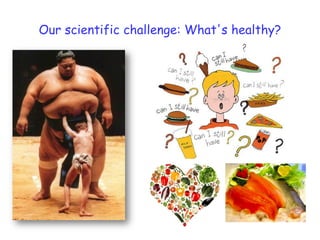
Our scientific challenge: What's healthy?
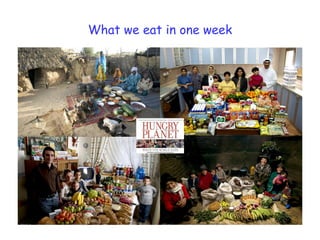
What we eat in one week
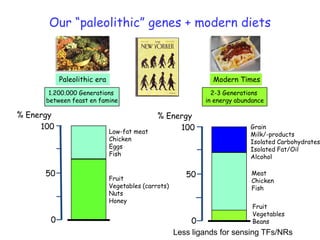
Our “paleolithic” genes + modern diets


           Paleolithic era                                    Modern Times
       1.200.000 Generations                                  2-3 Generations
      between feast en famine                               in energy abundance

% Energy                                     % Energy
     100                                          100                     Grain
                             Low-fat meat                                 Milk/-products
                             Chicken                                      Isolated Carbohydrates
                             Eggs                                         Isolated Fat/Oil
                             Fish                                         Alcohol

      50                                               50                 Meat
                             Fruit                                        Chicken
                             Vegetables (carrots)                         Fish
                             Nuts
                             Honey
                                                                           Fruit
                                                                           Vegetables
       0                                                 0                 Beans
                                                    Less ligands for sensing TFs/NRs
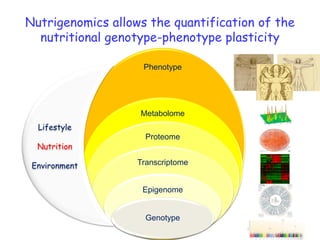
Nutrigenomics allows the quantification of the
  nutritional genotype-phenotype plasticity

                    Phenotype


                   Metabolome
  Lifestyle
                     Proteome
  Nutrition

 Environment       Transcriptome


                    Epigenome


                     Genotype
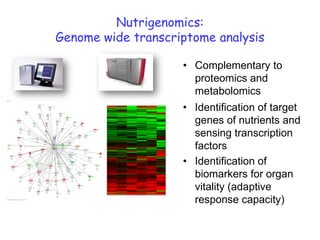
Nutrigenomics:
Genome wide transcriptome analysis

                                                                                                • Complementary to
                                                                                                  proteomics and
                                                                                                  metabolomics
                                                                                                • Identification of target
     1      3   6   33 3057

     9.99                 0


                                                                                                  genes of nutrients and
                                                                                                  sensing transcription
                                                                                                  factors
                                                                                                • Identification of
                                                                                                  biomarkers for organ
                                                                                                  vitality (adaptive
                                                                                                  response capacity)
                              SL_W1H_L   SL_W2_HL   SL_W3_HL   SL_W4_HL   SL_10_HL   SL_16_HL
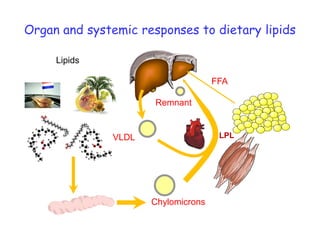
Organ and systemic responses to dietary lipids

     Lipids

                                     FFA

                      Remnant


               VLDL                   LPL


                      Chylomicrons
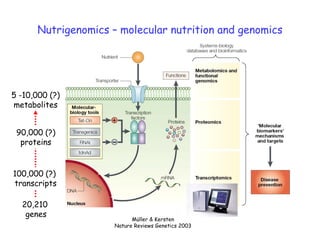
Nutrigenomics – molecular nutrition and genomics


5 -10,000 (?)
metabolites


 90,000 (?)
  proteins


100,000 (?)
transcripts

  20,210
   genes
                           Müller & Kersten
                     Nature Reviews Genetics 2003
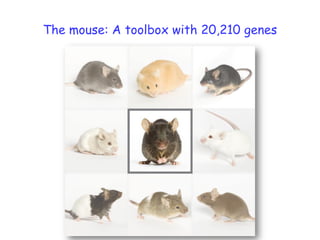
The mouse: A toolbox with 20,210 genes
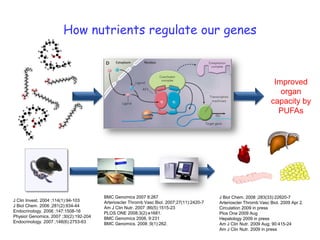
How nutrients regulate our genes


                                                                                                                      Improved
                                                                                                                        organ
                                                                                                                     capacity by
                                                                                                                       PUFAs


                                        BMC Genomics 2007 8:267                             J Biol Chem. 2008 ;283(33):22620-7
J Clin Invest. 2004 ;114(1):94-103      Arterioscler Thromb Vasc Biol. 2007;27(11):2420-7   Arterioscler Thromb Vasc Biol. 2009 Apr 2.
J Biol Chem. 2006 ;281(2):934-44        Am J Clin Nutr. 2007 ;86(5):1515-23                 Circulation 2009 in press
Endocrinology. 2006 ;147:1508-16        PLOS ONE 2008;3(2):e1681.                           Plos One 2009 Aug
Physiol Genomics. 2007 ;30(2):192-204   BMC Genomics 2008, 9:231                            Hepatology 2009 in press
Endocrinology. 2007 ;148(6):2753-63     BMC Genomics. 2008 ;9(1):262.                       Am J Clin Nutr. 2009 Aug; 90:415-24
                                                                                            Am J Clin Nutr. 2009 in press
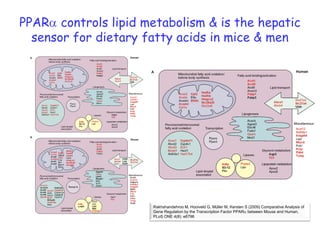
PPAR controls lipid metabolism & is the hepatic
  sensor for dietary fatty acids in mice & men


                      Rakhshandehroo M, Hooiveld G, Müller M, Kersten S (2009) Comparative Analysis of
                      Gene Regulation by the Transcription Factor PPAR between Mouse and Human.
                      PLoS ONE 4(8): e6796
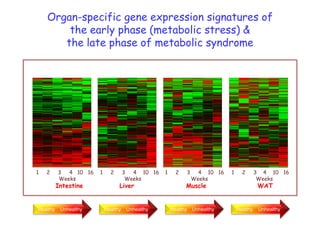
Organ-specific gene expression signatures of
                                           the early phase (metabolic stress) &
                                          the late phase of metabolic syndrome

                                                                                                                                                                                                                                           1      5   20   14464
1      3   6   33 3057                                                          1      3   10     50 2636                                                      1   12   87       6375

9.99                 0                                                                                                                                         8.69                 0                                                      15.2                0
                                                                                8.28                    0


                         SL_W1H_L   SL_W2_HL   SL_W3_HL   SL_W4_HL   SL_10_HL          SL_16_HL             SL_W1H_L   SL_W2_H_   SL_W3_H_   SL_W4HH_   SL_10_H_      SL_16_H_          SL_W1H_L   SL_W2_H_   SL_W3_H_   SL_W4_H_   SL_10_H_      SL_16_H_


                           1           2           3  4 10 16                                                1          2            3  4 10 16                                          1           2           3     4 10 16                                     1     2       3 4 10 16
                                                   Weeks                                                                              Weeks                                                                          Weeks                                                        Weeks
                                                Intestine                                                                         Liver                                                                         Muscle                                                            WAT


                              Healthy                 Unhealthy                                                   Healthy                    Unhealthy                                        Healthy                    Unhealthy                                     Healthy    Unhealthy
Conclusions

• Whole genome transcriptome analysis is a
  powerful tool
  – For high through-put screening of target genes of
    nutrients and sensing transcription factors.
  – For genome wide searches for biomarkers of
    homeostasis and resilience capacity.
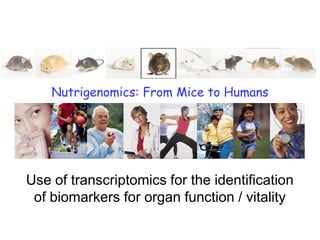
Nutrigenomics: From Mice to Humans


Use of transcriptomics for the identification
 of biomarkers for organ function / vitality
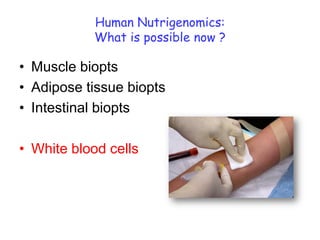
Human Nutrigenomics:
           What is possible now ?

• Muscle biopts
• Adipose tissue biopts
• Intestinal biopts

• White blood cells
You are what you (not) eat
                                                                                        24h                           48h
                         PATHWAYS                                              up             down           up             down
                         carnitine O-palmitoyltransferase activity
                         O-palmitoyltransferase activity
                         palmitoyltransferase activity
                         3-oxoacyl-[acyl-carrier protein] reductase activity
Fatty acid metabolism    fatty-acid synthase activity
                         carnitine O-acyltransferase activity
                         fatty acid beta-oxidation
                         fatty acid oxidation
                         acetyl-CoA C-acyltransferase activity
                         lipoate biosynthesis
 Pyruvate metabolism     pyruvate transporter activity
                         heterogeneous nuclear ribonucleoprotein complex
                         regulation of viral genome replication
                         RNA processing
RNA/DNA metabolism       B-cell differentiation
                         negative regulation of transcription
                         small ribosomal subunit
                         cytoplasmic microtubule
                         glyoxylate metabolism
                         heme biosynthesis
      Other              histone-lysine N-methyltransferase activity
                         procollagen N-endopeptidase activity
                         alpha-ketoglutarate dehydrogenase complex
     TCA cycle           TCA cycle enzyme complex (sensu Eukarya)
                                                                               up_24h         down_24h neg   up_48h         down_48h neg


                                 Bouwens et al. Am J Clin Nutr. 2007
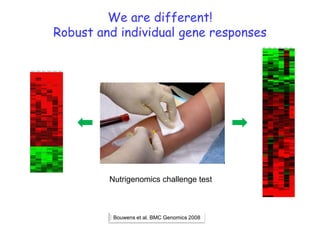
We are different!
Robust and individual gene responses


         Nutrigenomics challenge test


          Bouwens et al. BMC Genomics 2008
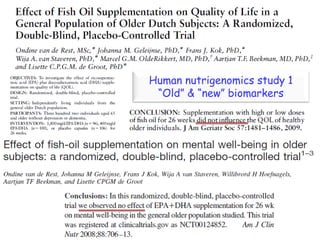
Human nutrigenomics study 1
 “Old” & “new” biomarkers
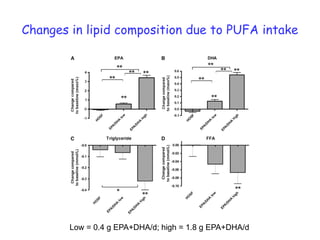
Changes in lipid composition due to PUFA intake


        Low = 0.4 g EPA+DHA/d; high = 1.8 g EPA+DHA/d
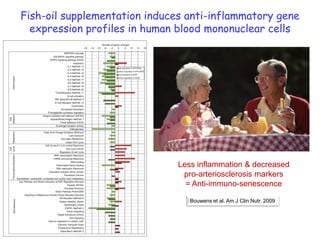
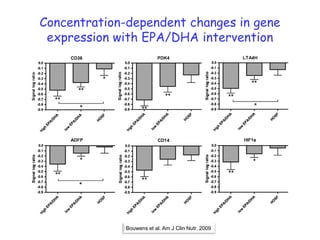
Fish-oil supplementation induces anti-inflammatory gene
  expression profiles in human blood mononuclear cells


                               Less inflammation & decreased
                                pro-arteriosclerosis markers
                                 = Anti-immuno-senescence

                                  Bouwens et al. Am J Clin Nutr. 2009
Concentration-dependent changes in gene
 expression with EPA/DHA intervention


              Bouwens et al. Am J Clin Nutr. 2009
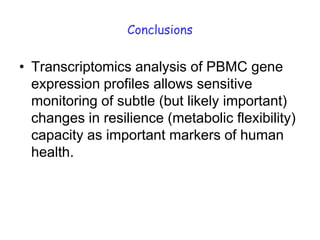
Conclusions


• Transcriptomics analysis of PBMC gene
  expression profiles allows sensitive
  monitoring of subtle (but likely important)
  changes in resilience (metabolic flexibility)
  capacity as important markers of human
  health.
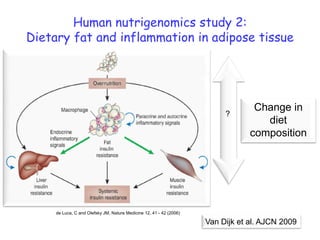
Human nutrigenomics study 2:
Dietary fat and inflammation in adipose tissue


                                                                                  Change in
                                                                          ?
                                                                                    diet
                                                                                 composition


     de Luca, C and Olefsky JM, Nature Medicine 12, 41 - 42 (2006)

                                                                     Van Dijk et al. AJCN 2009
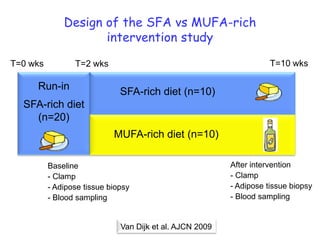
Design of the SFA vs MUFA-rich
                     intervention study

T=0 wks          T=2 wks                                             T=10 wks

     Run-in                   SFA-rich diet (n=10)
  SFA-rich diet
    (n=20)
                            MUFA-rich diet (n=10)

          Baseline                                        After intervention
          - Clamp                                         - Clamp
          - Adipose tissue biopsy                         - Adipose tissue biopsy
          - Blood sampling                                - Blood sampling


                              Van Dijk et al. AJCN 2009
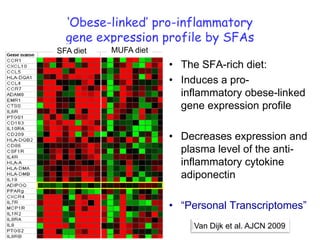
„Obese-linked‟ pro-inflammatory
  gene expression profile by SFAs
SFA diet   MUFA diet
                       • The SFA-rich diet:
                       • Induces a pro-
                         inflammatory obese-linked
                         gene expression profile

                       • Decreases expression and
                         plasma level of the anti-
                         inflammatory cytokine
                         adiponectin

                       • “Personal Transcriptomes”
                           Van Dijk et al. AJCN 2009
Human intervention study 3:
         Caloric restriction in patients
           with metabolic syndrome
• Do metabolic syndrome patients
  differentially respond to a challenge of
  CR compared to healthy controls?

• Does a challenge of CR increase
  differences in gene expression profiles?
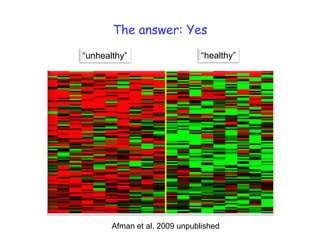
The answer: Yes
“unhealthy”                    “healthy”


       Afman et al. 2009 unpublished
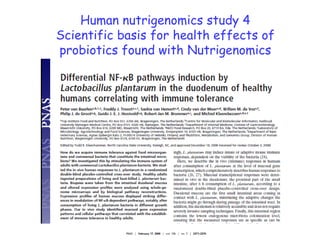
Human nutrigenomics study 4
Scientific basis for health effects of
probiotics found with Nutrigenomics
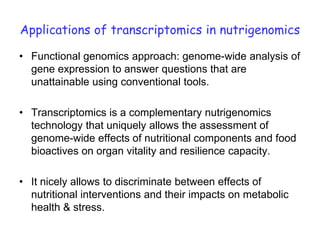
Applications of transcriptomics in nutrigenomics

• Functional genomics approach: genome-wide analysis of
  gene expression to answer questions that are
  unattainable using conventional tools.

• Transcriptomics is a complementary nutrigenomics
  technology that uniquely allows the assessment of
  genome-wide effects of nutritional components and food
  bioactives on organ vitality and resilience capacity.

• It nicely allows to discriminate between effects of
  nutritional interventions and their impacts on metabolic
  health & stress.
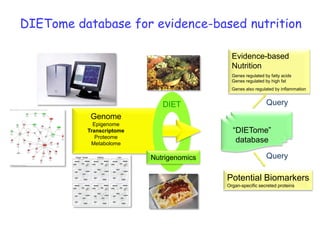
DIETome database for evidence-based nutrition

                                            Evidence-based
                                            Nutrition
                                            Genes regulated by fatty acids
                                            Genes regulated by high fat
                                            Genes also regulated by inflammation


                             DIET                            Query
           Genome
            Epigenome
          Transcriptome                     “DIETome”
             Proteome
           Metabolome
                                             database

                          Nutrigenomics                      Query

                                          Potential Biomarkers
                                          Organ-specific secreted proteins
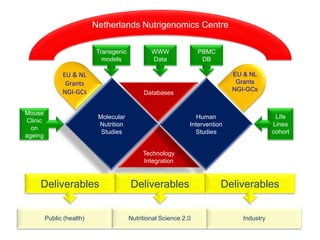
Netherlands Nutrigenomics Centre

                           Transgenic           WWW               PBMC
                             models             Data               DB

               EU & NL                                                       EU & NL
                Grants                                                        Grants
               NGI-GCs                                                       NGI-GCs
                                             Databases


Mouse
                            Molecular                            Human                      Life
Clinic
                            Nutrition                         Intervention                 Lines
  on
                             Studies                            Studies                    cohort
ageing

                                             Technology
                                             Integration


     Deliverables                       Deliverables                     Deliverables


         Public (health)                Nutritional Science 2.0                 Industry
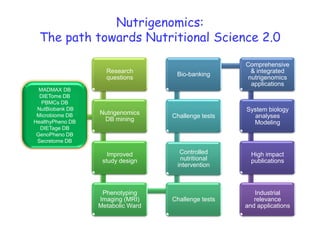
Nutrigenomics:
  The path towards Nutritional Science 2.0

                                                     Comprehensive
                    Research                           & integrated
                                    Bio-banking
                    questions                         nutrigenomics
                                                       applications
  MADMAX DB
  DIETome DB
   PBMCs DB
 NutBiobank DB                                       System biology
 Microbiome DB    Nutrigenomics
                                   Challenge tests     analyses
HealthyPheno DB    DB mining
                                                       Modeling
  DIETage DB
 GenoPheno DB
 Secretome DB

                     Improved        Controlled        High impact
                   study design      nutritional       publications
                                    intervention


                   Phenotyping                          Industrial
                  Imaging (MRI)    Challenge tests      relevance
                  Metabolic Ward                     and applications
Nutrigenomics enables us

 To understand how nutrition precisely works
  (evidence-based nutrition);
 To quantify the nutritional needs for optimized fitness at
  different life stages (“personalized” nutrition);
 To improve early diagnostics of nutrition related
  disorders (“challenge tests”);
 To support the development of “smart foods” for modern
  mankind (healthy and tasty, sustainable, affordable)
 To enable the transition of nutritional science to
  nutritional science 2.0.
Sander Kersten
Linda Sanderson
Natasha Georgiadi
Mark Bouwens
Lydia Afman
Guido Hooiveld
Meike Bunger
Philip de Groot
Mark Boekschoten
Lisette de Groot
Marianne Geleijnse
Caroline Duval
Nicole de Wit
Edith Feskens

Christian Trautwein
Folkert Kuipers
Ben van Ommen + many more


                            More info: michael.muller@wur.nl

Nutrigenomics: The path towards nutritional science 2.0

  • 1.
    ICN Cascade lectureOct-7-2009 Nutrigenomics: The path towards nutritional science 2.0 Michael Müller Netherlands Nutrigenomics Consortium, TIFN & Nutrition, Metabolism and Genomics Group Division of Human Nutrition, Wageningen University
  • 2.
  • 3.
    What we eatin one week
  • 4.
    Our “paleolithic” genes+ modern diets Paleolithic era Modern Times 1.200.000 Generations 2-3 Generations between feast en famine in energy abundance % Energy % Energy 100 100 Grain Low-fat meat Milk/-products Chicken Isolated Carbohydrates Eggs Isolated Fat/Oil Fish Alcohol 50 50 Meat Fruit Chicken Vegetables (carrots) Fish Nuts Honey Fruit Vegetables 0 0 Beans Less ligands for sensing TFs/NRs
  • 5.
    Nutrigenomics allows thequantification of the nutritional genotype-phenotype plasticity Phenotype Metabolome Lifestyle Proteome Nutrition Environment Transcriptome Epigenome Genotype
  • 6.
    Nutrigenomics: Genome wide transcriptomeanalysis • Complementary to proteomics and metabolomics • Identification of target 1 3 6 33 3057 9.99 0 genes of nutrients and sensing transcription factors • Identification of biomarkers for organ vitality (adaptive response capacity) SL_W1H_L SL_W2_HL SL_W3_HL SL_W4_HL SL_10_HL SL_16_HL
  • 7.
    Organ and systemicresponses to dietary lipids Lipids FFA Remnant VLDL LPL Chylomicrons
  • 8.
    Nutrigenomics – molecularnutrition and genomics 5 -10,000 (?) metabolites 90,000 (?) proteins 100,000 (?) transcripts 20,210 genes Müller & Kersten Nature Reviews Genetics 2003
  • 9.
    The mouse: Atoolbox with 20,210 genes
  • 10.
    How nutrients regulateour genes Improved organ capacity by PUFAs BMC Genomics 2007 8:267 J Biol Chem. 2008 ;283(33):22620-7 J Clin Invest. 2004 ;114(1):94-103 Arterioscler Thromb Vasc Biol. 2007;27(11):2420-7 Arterioscler Thromb Vasc Biol. 2009 Apr 2. J Biol Chem. 2006 ;281(2):934-44 Am J Clin Nutr. 2007 ;86(5):1515-23 Circulation 2009 in press Endocrinology. 2006 ;147:1508-16 PLOS ONE 2008;3(2):e1681. Plos One 2009 Aug Physiol Genomics. 2007 ;30(2):192-204 BMC Genomics 2008, 9:231 Hepatology 2009 in press Endocrinology. 2007 ;148(6):2753-63 BMC Genomics. 2008 ;9(1):262. Am J Clin Nutr. 2009 Aug; 90:415-24 Am J Clin Nutr. 2009 in press
  • 11.
    PPAR controls lipidmetabolism & is the hepatic sensor for dietary fatty acids in mice & men Rakhshandehroo M, Hooiveld G, Müller M, Kersten S (2009) Comparative Analysis of Gene Regulation by the Transcription Factor PPAR between Mouse and Human. PLoS ONE 4(8): e6796
  • 12.
    Organ-specific gene expressionsignatures of the early phase (metabolic stress) & the late phase of metabolic syndrome 1 5 20 14464 1 3 6 33 3057 1 3 10 50 2636 1 12 87 6375 9.99 0 8.69 0 15.2 0 8.28 0 SL_W1H_L SL_W2_HL SL_W3_HL SL_W4_HL SL_10_HL SL_16_HL SL_W1H_L SL_W2_H_ SL_W3_H_ SL_W4HH_ SL_10_H_ SL_16_H_ SL_W1H_L SL_W2_H_ SL_W3_H_ SL_W4_H_ SL_10_H_ SL_16_H_ 1 2 3 4 10 16 1 2 3 4 10 16 1 2 3 4 10 16 1 2 3 4 10 16 Weeks Weeks Weeks Weeks Intestine Liver Muscle WAT Healthy Unhealthy Healthy Unhealthy Healthy Unhealthy Healthy Unhealthy
  • 13.
    Conclusions • Whole genometranscriptome analysis is a powerful tool – For high through-put screening of target genes of nutrients and sensing transcription factors. – For genome wide searches for biomarkers of homeostasis and resilience capacity.
  • 14.
    Nutrigenomics: From Miceto Humans Use of transcriptomics for the identification of biomarkers for organ function / vitality
  • 15.
    Human Nutrigenomics: What is possible now ? • Muscle biopts • Adipose tissue biopts • Intestinal biopts • White blood cells
  • 16.
    You are whatyou (not) eat 24h 48h PATHWAYS up down up down carnitine O-palmitoyltransferase activity O-palmitoyltransferase activity palmitoyltransferase activity 3-oxoacyl-[acyl-carrier protein] reductase activity Fatty acid metabolism fatty-acid synthase activity carnitine O-acyltransferase activity fatty acid beta-oxidation fatty acid oxidation acetyl-CoA C-acyltransferase activity lipoate biosynthesis Pyruvate metabolism pyruvate transporter activity heterogeneous nuclear ribonucleoprotein complex regulation of viral genome replication RNA processing RNA/DNA metabolism B-cell differentiation negative regulation of transcription small ribosomal subunit cytoplasmic microtubule glyoxylate metabolism heme biosynthesis Other histone-lysine N-methyltransferase activity procollagen N-endopeptidase activity alpha-ketoglutarate dehydrogenase complex TCA cycle TCA cycle enzyme complex (sensu Eukarya) up_24h down_24h neg up_48h down_48h neg Bouwens et al. Am J Clin Nutr. 2007
  • 17.
    We are different! Robustand individual gene responses Nutrigenomics challenge test Bouwens et al. BMC Genomics 2008
  • 18.
    Human nutrigenomics study1 “Old” & “new” biomarkers
  • 19.
    Changes in lipidcomposition due to PUFA intake Low = 0.4 g EPA+DHA/d; high = 1.8 g EPA+DHA/d
  • 20.
    Fish-oil supplementation inducesanti-inflammatory gene expression profiles in human blood mononuclear cells Less inflammation & decreased pro-arteriosclerosis markers = Anti-immuno-senescence Bouwens et al. Am J Clin Nutr. 2009
  • 21.
    Concentration-dependent changes ingene expression with EPA/DHA intervention Bouwens et al. Am J Clin Nutr. 2009
  • 22.
    Conclusions • Transcriptomics analysisof PBMC gene expression profiles allows sensitive monitoring of subtle (but likely important) changes in resilience (metabolic flexibility) capacity as important markers of human health.
  • 23.
    Human nutrigenomics study2: Dietary fat and inflammation in adipose tissue Change in ? diet composition de Luca, C and Olefsky JM, Nature Medicine 12, 41 - 42 (2006) Van Dijk et al. AJCN 2009
  • 24.
    Design of theSFA vs MUFA-rich intervention study T=0 wks T=2 wks T=10 wks Run-in SFA-rich diet (n=10) SFA-rich diet (n=20) MUFA-rich diet (n=10) Baseline After intervention - Clamp - Clamp - Adipose tissue biopsy - Adipose tissue biopsy - Blood sampling - Blood sampling Van Dijk et al. AJCN 2009
  • 25.
    „Obese-linked‟ pro-inflammatory gene expression profile by SFAs SFA diet MUFA diet • The SFA-rich diet: • Induces a pro- inflammatory obese-linked gene expression profile • Decreases expression and plasma level of the anti- inflammatory cytokine adiponectin • “Personal Transcriptomes” Van Dijk et al. AJCN 2009
  • 26.
    Human intervention study3: Caloric restriction in patients with metabolic syndrome • Do metabolic syndrome patients differentially respond to a challenge of CR compared to healthy controls? • Does a challenge of CR increase differences in gene expression profiles?
  • 27.
    The answer: Yes “unhealthy” “healthy” Afman et al. 2009 unpublished
  • 28.
    Human nutrigenomics study4 Scientific basis for health effects of probiotics found with Nutrigenomics
  • 29.
    Applications of transcriptomicsin nutrigenomics • Functional genomics approach: genome-wide analysis of gene expression to answer questions that are unattainable using conventional tools. • Transcriptomics is a complementary nutrigenomics technology that uniquely allows the assessment of genome-wide effects of nutritional components and food bioactives on organ vitality and resilience capacity. • It nicely allows to discriminate between effects of nutritional interventions and their impacts on metabolic health & stress.
  • 30.
    DIETome database forevidence-based nutrition Evidence-based Nutrition Genes regulated by fatty acids Genes regulated by high fat Genes also regulated by inflammation DIET Query Genome Epigenome Transcriptome “DIETome” Proteome Metabolome database Nutrigenomics Query Potential Biomarkers Organ-specific secreted proteins
  • 31.
    Netherlands Nutrigenomics Centre Transgenic WWW PBMC models Data DB EU & NL EU & NL Grants Grants NGI-GCs NGI-GCs Databases Mouse Molecular Human Life Clinic Nutrition Intervention Lines on Studies Studies cohort ageing Technology Integration Deliverables Deliverables Deliverables Public (health) Nutritional Science 2.0 Industry
  • 32.
    Nutrigenomics: Thepath towards Nutritional Science 2.0 Comprehensive Research & integrated Bio-banking questions nutrigenomics applications MADMAX DB DIETome DB PBMCs DB NutBiobank DB System biology Microbiome DB Nutrigenomics Challenge tests analyses HealthyPheno DB DB mining Modeling DIETage DB GenoPheno DB Secretome DB Improved Controlled High impact study design nutritional publications intervention Phenotyping Industrial Imaging (MRI) Challenge tests relevance Metabolic Ward and applications
  • 33.
    Nutrigenomics enables us To understand how nutrition precisely works (evidence-based nutrition);  To quantify the nutritional needs for optimized fitness at different life stages (“personalized” nutrition);  To improve early diagnostics of nutrition related disorders (“challenge tests”);  To support the development of “smart foods” for modern mankind (healthy and tasty, sustainable, affordable)  To enable the transition of nutritional science to nutritional science 2.0.
  • 34.
    Sander Kersten Linda Sanderson NatashaGeorgiadi Mark Bouwens Lydia Afman Guido Hooiveld Meike Bunger Philip de Groot Mark Boekschoten Lisette de Groot Marianne Geleijnse Caroline Duval Nicole de Wit Edith Feskens Christian Trautwein Folkert Kuipers Ben van Ommen + many more More info: michael.muller@wur.nl