PERSONALIZED NUTRITION THE WAVE OF FUTURE
1
Personalized Nutrition:
Personalized nutrition (PN) is also termed “as nutritional genomics and personalized or
customized nutrition”. Personalized nutrition directs the consumption of diet for health
optimization and wellbeing.
Factors:
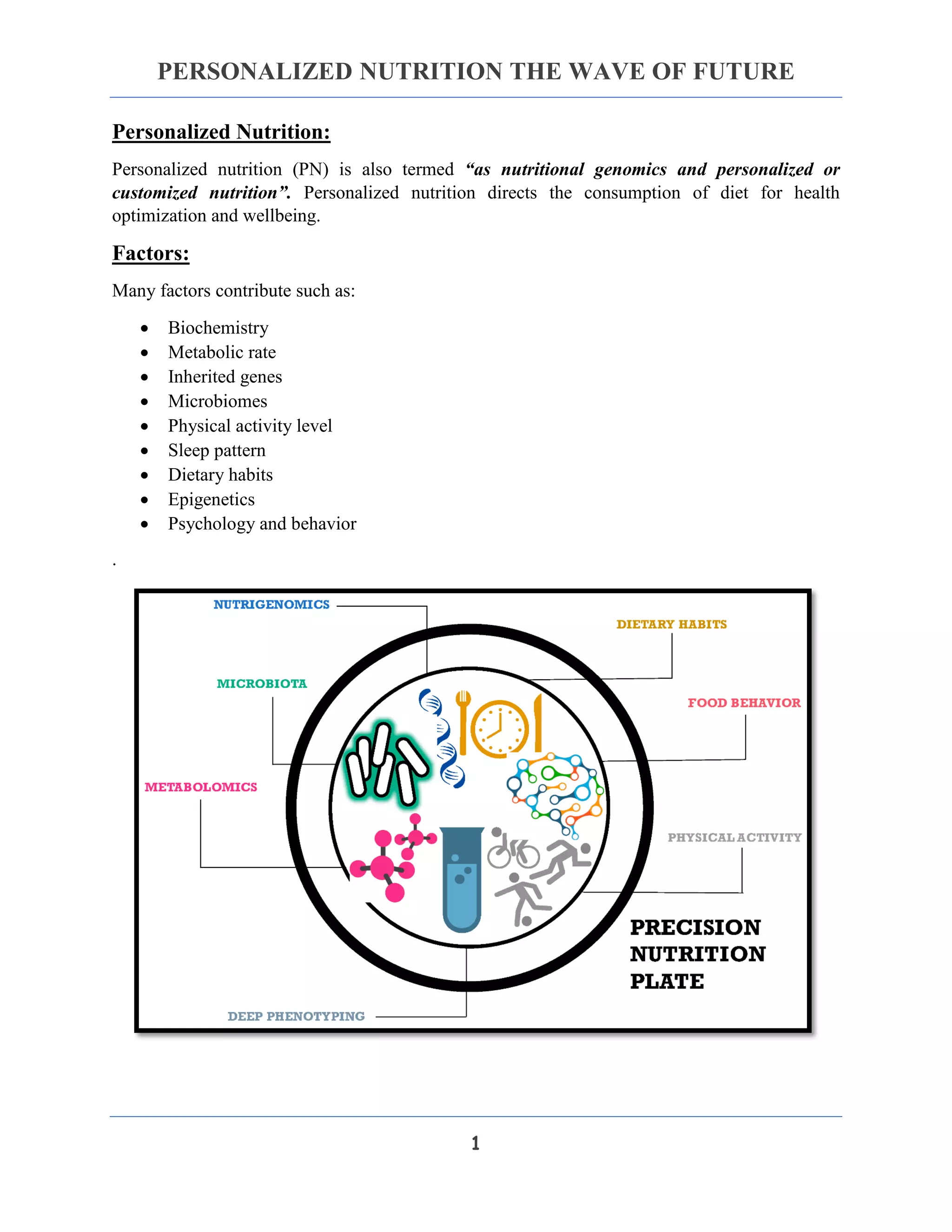
Many factors contribute such as:
 Biochemistry
 Metabolic rate
 Inherited genes
 Microbiomes
 Physical activity level
 Sleep pattern
 Dietary habits
 Epigenetics
 Psychology and behavior
.
PERSONALIZED NUTRITION THE WAVE OF FUTURE
2
Need of Personalized Nutrition:
 As it has been stated according to many researches that chronic diseases are the main leading
cause of death in worldwide. Moreover, it has also been deduced that consumption of poor diet
sources is a risk factor for chronic diseases.
 It has been investigated that the diseases such as obesity, cardiovascular and cancer can
originate in the first two years of life due to lack of nutrient rich diet. Thus, PN has been noticed
to explicate and positively influence that diet figures an individual’s response to nutrients and,
mutually, that genetic composition influences the metabolism of nutrients and requirements of
nutrients in regard to optimize the capability and health.
 Weight management
 Improve mood and productivity
 For diabetes
 Cancer, cardiovascular and arthritis
 For hormone imbalancenment
 Individuals with GI complaints
Elements of personalized nutrition:
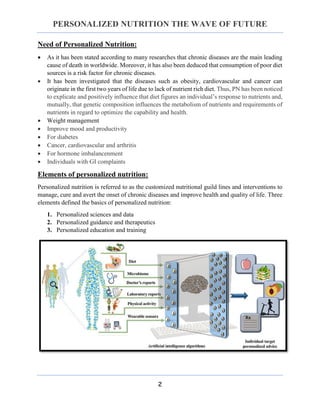
Personalized nutrition is referred to as the customized nutritional guild lines and interventions to
manage, cure and avert the onset of chronic diseases and improve health and quality of life. Three
elements defined the basics of personalized nutrition:
1. Personalized sciences and data
2. Personalized guidance and therapeutics
3. Personalized education and training
PERSONALIZED NUTRITION THE WAVE OF FUTURE
3
Personalized nutrition care model:
Personalized nutrition care models represent s as framework which enables the practitioners to
design the more personalized dietary intervention to prevent the onset of disease and to combat
disease related complications. This care models mainly illuminate the aspect such as:
1. Assessment:
The in-depth detail of qualitative and quantitative data, it can be nutrition screening which usually
covers the aspects such as:
 Biochemical analysis
 Examination of inflammatory responses in the body
 Level of gut microbiomes
 Oxidation level
 Reports of nutritional genomics
 Clinical manifestation of diseases
 Cultural and religious preferences
2. Interpretation:
The interpretation of the collected data is being done to assess the rate of functioning of an
individual. To examine the root causes of dysfunction in an individual and estimate the nutritional
status and the prevailing diseases.
3. Intervention:
Strategies designed by the practitioners to combat the underlying root cause of diseases. Such
intervention may include:
 Modification in dietary habits
 Improvement in sleep pattern
 Managing stress
 Alteration in lifestyle
 Preferring nutrient dense foods
 Improving food handling and storage techniques
 Opting good cooking method to preserve the nutrients in food
4. Monitoring and evaluation:
Monitoring the care process is required to check the efficiency of designed intervention applied on
an individual in order to improve the health and wellbeing.
It may help to modify the exiting strategies to enhance the effectiveness of plan on an individual.
PERSONALIZED NUTRITION THE WAVE OF FUTURE
4
Relation of omics and personalized nutrition:
 Genomics the study of hereditary genes helps to determine the incidence of mutation in genes
or provide the knowledge of genetic disorders in order to design more effective nutritional
strategies or guidelines to optimize the well-being. Hence, decoding the gene expression can
help to diagnose the underlying cause of disorders. Therefore, translation of omics data can
facilitate to develop clinical and personalized interventions. This may include:
 Proteomics: it defines the encoding of protein within the genetic material of human being and
characterizing the protein functions.
 Metabolomics: it refers to the metabolites produced as a result of protein action.it ensures the
level of concentrated metabolites.
 Microbiomes: this discipline refers to the gut microbiomes activity within their respective
cavities such as oral, vagina or intestinal lumen. The colonization of these microbiomes
influences the digestion and absorption of food. They play a role in defining the biological
processes and indicate the health issues such as diabetes, inflammation in brain or host immune
function modulation. Hence, study of genome and microbiome help to design more
personalized nutritional interventions to manage, prevent and cure the disease.
Nutritional genomics:
The branch of nutrition which usually involve:
 Nutritional genomic
 Nutri-genetics
 Epigenetics
Nutritional genomics:
It mainly emphasizes on diet disorders and lifestyle disorders and also defines the interaction
between the inherited genes and environmental factors like bioactive components in food,
containments, stress and sleep.
Nutri-genetics:
It identifies the variation in genetics which impacts the functioning of organs. For an instance the
mutation in gene 5,10-methylenetetrahydrofolate reductase (MTHFR) which is convert folate or
folic acid into 5-methyl folate which is the active form of folic acid can result in the low activity
of enzymes. Hence, no activation of folic acid therefore, these individuals require active form of
folic acid to optimize their health.
PERSONALIZED NUTRITION THE WAVE OF FUTURE
5
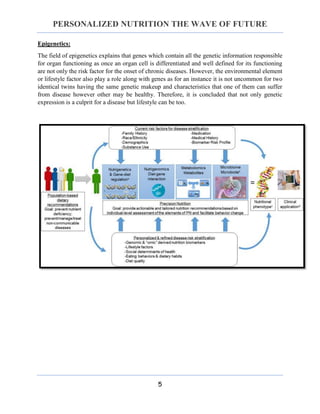
Epigenetics:
The field of epigenetics explains that genes which contain all the genetic information responsible
for organ functioning as once an organ cell is differentiated and well defined for its functioning
are not only the risk factor for the onset of chronic diseases. However, the environmental element
or lifestyle factor also play a role along with genes as for an instance it is not uncommon for two
identical twins having the same genetic makeup and characteristics that one of them can suffer
from disease however other may be healthy. Therefore, it is concluded that not only genetic
expression is a culprit for a disease but lifestyle can be too.
PERSONALIZED NUTRITION THE WAVE OF FUTURE
6
Genetics and Nutrition Therapy:
The gene expression can be controlled at two levels mainly referred as:
 Genomic
 Epigenomics
 Transcription of DNA occur by several transcription factors in which ligand and specialized
proteins, RNA polymerase attaches to promoter and initiate the process of transcription.it has
been deduced that any ligand or any mutation can initiate or inhibit the process of transcription.
Hence, bioactive components of food such as omega-3 or omega-6, curcumin, resveratrol,
genistein or quercetin can act as a ligand and can activate the process of transcription in a well-
defined manner.
 However, some pro-inflammatory gens can inhibit the process therefore, it is concluded that
these bioactive components of foods can inhibit proinflammatory transcription such as
interleukin -1 or nuclear factor kappa B, which in return reduces the chance of genetic mutation
or cancer.
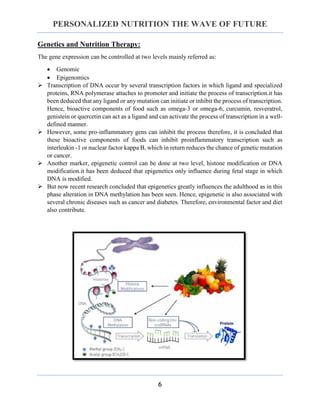
 Another marker, epigenetic control can be done at two level, histone modification or DNA
modification.it has been deduced that epigenetics only influence during fetal stage in which
DNA is modified.
 But now recent research concluded that epigenetics greatly influences the adulthood as in this
phase alteration in DNA methylation has been seen. Hence, epigenetic is also associated with
several chronic diseases such as cancer and diabetes. Therefore, environmental factor and diet
also contribute.
PERSONALIZED NUTRITION THE WAVE OF FUTURE
7
Allergen free diet:
Every human body immune system responds differently for an instance, some people may have
severe allergic reactions called as anaphylaxis due to some food allergen and symptoms may
include:
 Shortness of breath
 Redness
 Swelling
 Sneezing
 Rhinitis
 Ulceration
 Dermatitis
 Skin reactions
 Itching
 Wheezing
 coughing
Practitioners recommend allergen free diet to those individuals who show Ig E mediated response
to some food allergens. Such diet includes peanut free die, tree nut free diet, gluten free diet, casein
free milk or yogurt or low FODMAP.
Glycemic response:
 Personalized nutrition is important in case of diabetes myelitis as according to a research seen
in individuals suffering from diabetes different post prandial glycemic response was observed
when given same meals. Therefore, it was decided that personalized diet should be prescribed
which depend upon physical activity, sleep, dietary pattern and stress. Hence, personalized
nutrition helps to control glycemic ratio and prevent hyperglycemia which when progress for
long-term can cause kidney failure or cardiovascular disease.
 For an instance in a research it was investigated that one group consisting of 20 healthy males
and the other group consisting of 20 males suffering from diabetes type 2 where tested by
giving them glucose drink. The result suggested that there was difference in two group due to
different metabolic response
 Another study in which individuals were given two kinds of bread some show high glycemic
index to one bread and some show low glycemic index.
PERSONALIZED NUTRITION THE WAVE OF FUTURE
8
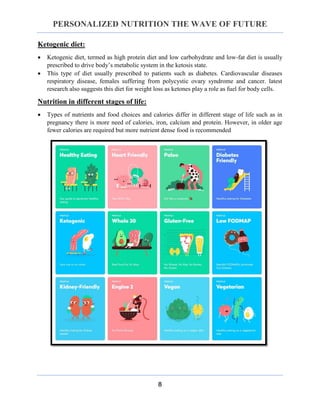
Ketogenic diet:
 Ketogenic diet, termed as high protein diet and low carbohydrate and low-fat diet is usually
prescribed to drive body’s metabolic system in the ketosis state.
 This type of diet usually prescribed to patients such as diabetes. Cardiovascular diseases
respiratory disease, females suffering from polycystic ovary syndrome and cancer. latest
research also suggests this diet for weight loss as ketones play a role as fuel for body cells.
Nutrition in different stages of life:
 Types of nutrients and food choices and calories differ in different stage of life such as in
pregnancy there is more need of calories, iron, calcium and protein. However, in older age
fewer calories are required but more nutrient dense food is recommended
PERSONALIZED NUTRITION THE WAVE OF FUTURE
9
Nutrition in different diseases:
Type of nutrient vary in different disorder or diseases for an instance
 In kidney failure low phosphate and low protein diet is recommended
 In cardiovascular diseases low sodium and triglyceride diet is given
 In diabetes low glycemic index food is recommended however, this diet vary from person to
person due to other factors
 Microbiota level
 Sleep pattern
 Physical activity
 Genetics
 Stress level
 Age factor
 Food preferences
 Psychology
Personalized nutrition for weight loss:
 In research conducted in UK on obese individuals. Seventy-five individuals were divided into
three sections and different eating pattern were implemented on them.
 One of these sections, individuals who found difficult to stop eating due to lack of sensation
of feeling of fulness which usually result from the hormone dysfunction, were recommended
to consume high protein rich diet and low carbohydrate diet to help them feel satiety.
 In other group fasting technique was applied in 5:2 days.in this technique people having the
genes which prevent the brain to send satiety signals were recommended to have 12 to 16-hour
gap between meals to reduce the consumption of calories. it was done in such such am way
that two days fasting and eating normally for five days.
 Last group, emotional eaters were treated through cognitive and psychological therapy to
overcome the habit of emotional eating and in return decreasing weight.
 It was concluded that individual who consume more protein and less carbohydrate lose 8%of
their body mass. therefore, metabolic rate differs from person to person hence, personalized
diet is recommended.
Benefits:
 Long term weight loss
 It slow down aging process
 It improves mood and increase productivity
 It enhances fertility rate
 Reduce chronic diseases such as diabetes, cancer and cardiovascular
 Reduce pain and stiffness in arthritis
PERSONALIZED NUTRITION THE WAVE OF FUTURE
10
Challenges of personalized nutrition:
1. Nutrition research:
The main challenge faced by many practioniors are as the translated data of human genome is
unable to implement as clinical intervention. As the data collection can be costly, may require
techniqnesians to operate devices and DNA testing equipment’s which are not affordable for
everyone. However, there are many apps for identifying the parameters of health but they are not
likely to produce accurate results. Therefore, there is a need for policy making to initiate the
platform for public health and wellbeing by installing the technologies and devices or artificial
intelligence.
2. Practitioners:
Many researchers concluded that many practitioners faced problems in providing personalized
strategies according to omics data.
3. Professional education:
For an education and training of public, the personalized nutrtion should be included in the
curriculum of students. institutions should develop policy to educate individual and aware them
about recent research of health care.
Conclusion:
Personalized nutrtion is a field that can help humans to prevent, manage and cure the disease.as it
includes the translation of human genome and phenotype therefore, is more accurate and can
suggest more effective strategies to prevent the onset of disease.
However, challenges faced by practitioners can be overcome by developing policies for health
care and by providing nutrtion education to the public.
NAME: MARRIAM ASHFAQ
REGISTRATION NO: DND-FA16-081
SEMESTER: DND-8

Personalized Nutrition

  • 1.
    PERSONALIZED NUTRITION THEWAVE OF FUTURE 1 Personalized Nutrition: Personalized nutrition (PN) is also termed “as nutritional genomics and personalized or customized nutrition”. Personalized nutrition directs the consumption of diet for health optimization and wellbeing. Factors: Many factors contribute such as:  Biochemistry  Metabolic rate  Inherited genes  Microbiomes  Physical activity level  Sleep pattern  Dietary habits  Epigenetics  Psychology and behavior .
  • 2.
    PERSONALIZED NUTRITION THEWAVE OF FUTURE 2 Need of Personalized Nutrition:  As it has been stated according to many researches that chronic diseases are the main leading cause of death in worldwide. Moreover, it has also been deduced that consumption of poor diet sources is a risk factor for chronic diseases.  It has been investigated that the diseases such as obesity, cardiovascular and cancer can originate in the first two years of life due to lack of nutrient rich diet. Thus, PN has been noticed to explicate and positively influence that diet figures an individual’s response to nutrients and, mutually, that genetic composition influences the metabolism of nutrients and requirements of nutrients in regard to optimize the capability and health.  Weight management  Improve mood and productivity  For diabetes  Cancer, cardiovascular and arthritis  For hormone imbalancenment  Individuals with GI complaints Elements of personalized nutrition: Personalized nutrition is referred to as the customized nutritional guild lines and interventions to manage, cure and avert the onset of chronic diseases and improve health and quality of life. Three elements defined the basics of personalized nutrition: 1. Personalized sciences and data 2. Personalized guidance and therapeutics 3. Personalized education and training
  • 3.
    PERSONALIZED NUTRITION THEWAVE OF FUTURE 3 Personalized nutrition care model: Personalized nutrition care models represent s as framework which enables the practitioners to design the more personalized dietary intervention to prevent the onset of disease and to combat disease related complications. This care models mainly illuminate the aspect such as: 1. Assessment: The in-depth detail of qualitative and quantitative data, it can be nutrition screening which usually covers the aspects such as:  Biochemical analysis  Examination of inflammatory responses in the body  Level of gut microbiomes  Oxidation level  Reports of nutritional genomics  Clinical manifestation of diseases  Cultural and religious preferences 2. Interpretation: The interpretation of the collected data is being done to assess the rate of functioning of an individual. To examine the root causes of dysfunction in an individual and estimate the nutritional status and the prevailing diseases. 3. Intervention: Strategies designed by the practitioners to combat the underlying root cause of diseases. Such intervention may include:  Modification in dietary habits  Improvement in sleep pattern  Managing stress  Alteration in lifestyle  Preferring nutrient dense foods  Improving food handling and storage techniques  Opting good cooking method to preserve the nutrients in food 4. Monitoring and evaluation: Monitoring the care process is required to check the efficiency of designed intervention applied on an individual in order to improve the health and wellbeing. It may help to modify the exiting strategies to enhance the effectiveness of plan on an individual.
  • 4.
    PERSONALIZED NUTRITION THEWAVE OF FUTURE 4 Relation of omics and personalized nutrition:  Genomics the study of hereditary genes helps to determine the incidence of mutation in genes or provide the knowledge of genetic disorders in order to design more effective nutritional strategies or guidelines to optimize the well-being. Hence, decoding the gene expression can help to diagnose the underlying cause of disorders. Therefore, translation of omics data can facilitate to develop clinical and personalized interventions. This may include:  Proteomics: it defines the encoding of protein within the genetic material of human being and characterizing the protein functions.  Metabolomics: it refers to the metabolites produced as a result of protein action.it ensures the level of concentrated metabolites.  Microbiomes: this discipline refers to the gut microbiomes activity within their respective cavities such as oral, vagina or intestinal lumen. The colonization of these microbiomes influences the digestion and absorption of food. They play a role in defining the biological processes and indicate the health issues such as diabetes, inflammation in brain or host immune function modulation. Hence, study of genome and microbiome help to design more personalized nutritional interventions to manage, prevent and cure the disease. Nutritional genomics: The branch of nutrition which usually involve:  Nutritional genomic  Nutri-genetics  Epigenetics Nutritional genomics: It mainly emphasizes on diet disorders and lifestyle disorders and also defines the interaction between the inherited genes and environmental factors like bioactive components in food, containments, stress and sleep. Nutri-genetics: It identifies the variation in genetics which impacts the functioning of organs. For an instance the mutation in gene 5,10-methylenetetrahydrofolate reductase (MTHFR) which is convert folate or folic acid into 5-methyl folate which is the active form of folic acid can result in the low activity of enzymes. Hence, no activation of folic acid therefore, these individuals require active form of folic acid to optimize their health.
  • 5.
    PERSONALIZED NUTRITION THEWAVE OF FUTURE 5 Epigenetics: The field of epigenetics explains that genes which contain all the genetic information responsible for organ functioning as once an organ cell is differentiated and well defined for its functioning are not only the risk factor for the onset of chronic diseases. However, the environmental element or lifestyle factor also play a role along with genes as for an instance it is not uncommon for two identical twins having the same genetic makeup and characteristics that one of them can suffer from disease however other may be healthy. Therefore, it is concluded that not only genetic expression is a culprit for a disease but lifestyle can be too.
  • 6.
    PERSONALIZED NUTRITION THEWAVE OF FUTURE 6 Genetics and Nutrition Therapy: The gene expression can be controlled at two levels mainly referred as:  Genomic  Epigenomics  Transcription of DNA occur by several transcription factors in which ligand and specialized proteins, RNA polymerase attaches to promoter and initiate the process of transcription.it has been deduced that any ligand or any mutation can initiate or inhibit the process of transcription. Hence, bioactive components of food such as omega-3 or omega-6, curcumin, resveratrol, genistein or quercetin can act as a ligand and can activate the process of transcription in a well- defined manner.  However, some pro-inflammatory gens can inhibit the process therefore, it is concluded that these bioactive components of foods can inhibit proinflammatory transcription such as interleukin -1 or nuclear factor kappa B, which in return reduces the chance of genetic mutation or cancer.  Another marker, epigenetic control can be done at two level, histone modification or DNA modification.it has been deduced that epigenetics only influence during fetal stage in which DNA is modified.  But now recent research concluded that epigenetics greatly influences the adulthood as in this phase alteration in DNA methylation has been seen. Hence, epigenetic is also associated with several chronic diseases such as cancer and diabetes. Therefore, environmental factor and diet also contribute.
  • 7.
    PERSONALIZED NUTRITION THEWAVE OF FUTURE 7 Allergen free diet: Every human body immune system responds differently for an instance, some people may have severe allergic reactions called as anaphylaxis due to some food allergen and symptoms may include:  Shortness of breath  Redness  Swelling  Sneezing  Rhinitis  Ulceration  Dermatitis  Skin reactions  Itching  Wheezing  coughing Practitioners recommend allergen free diet to those individuals who show Ig E mediated response to some food allergens. Such diet includes peanut free die, tree nut free diet, gluten free diet, casein free milk or yogurt or low FODMAP. Glycemic response:  Personalized nutrition is important in case of diabetes myelitis as according to a research seen in individuals suffering from diabetes different post prandial glycemic response was observed when given same meals. Therefore, it was decided that personalized diet should be prescribed which depend upon physical activity, sleep, dietary pattern and stress. Hence, personalized nutrition helps to control glycemic ratio and prevent hyperglycemia which when progress for long-term can cause kidney failure or cardiovascular disease.  For an instance in a research it was investigated that one group consisting of 20 healthy males and the other group consisting of 20 males suffering from diabetes type 2 where tested by giving them glucose drink. The result suggested that there was difference in two group due to different metabolic response  Another study in which individuals were given two kinds of bread some show high glycemic index to one bread and some show low glycemic index.
  • 8.
    PERSONALIZED NUTRITION THEWAVE OF FUTURE 8 Ketogenic diet:  Ketogenic diet, termed as high protein diet and low carbohydrate and low-fat diet is usually prescribed to drive body’s metabolic system in the ketosis state.  This type of diet usually prescribed to patients such as diabetes. Cardiovascular diseases respiratory disease, females suffering from polycystic ovary syndrome and cancer. latest research also suggests this diet for weight loss as ketones play a role as fuel for body cells. Nutrition in different stages of life:  Types of nutrients and food choices and calories differ in different stage of life such as in pregnancy there is more need of calories, iron, calcium and protein. However, in older age fewer calories are required but more nutrient dense food is recommended
  • 9.
    PERSONALIZED NUTRITION THEWAVE OF FUTURE 9 Nutrition in different diseases: Type of nutrient vary in different disorder or diseases for an instance  In kidney failure low phosphate and low protein diet is recommended  In cardiovascular diseases low sodium and triglyceride diet is given  In diabetes low glycemic index food is recommended however, this diet vary from person to person due to other factors  Microbiota level  Sleep pattern  Physical activity  Genetics  Stress level  Age factor  Food preferences  Psychology Personalized nutrition for weight loss:  In research conducted in UK on obese individuals. Seventy-five individuals were divided into three sections and different eating pattern were implemented on them.  One of these sections, individuals who found difficult to stop eating due to lack of sensation of feeling of fulness which usually result from the hormone dysfunction, were recommended to consume high protein rich diet and low carbohydrate diet to help them feel satiety.  In other group fasting technique was applied in 5:2 days.in this technique people having the genes which prevent the brain to send satiety signals were recommended to have 12 to 16-hour gap between meals to reduce the consumption of calories. it was done in such such am way that two days fasting and eating normally for five days.  Last group, emotional eaters were treated through cognitive and psychological therapy to overcome the habit of emotional eating and in return decreasing weight.  It was concluded that individual who consume more protein and less carbohydrate lose 8%of their body mass. therefore, metabolic rate differs from person to person hence, personalized diet is recommended. Benefits:  Long term weight loss  It slow down aging process  It improves mood and increase productivity  It enhances fertility rate  Reduce chronic diseases such as diabetes, cancer and cardiovascular  Reduce pain and stiffness in arthritis
  • 10.
    PERSONALIZED NUTRITION THEWAVE OF FUTURE 10 Challenges of personalized nutrition: 1. Nutrition research: The main challenge faced by many practioniors are as the translated data of human genome is unable to implement as clinical intervention. As the data collection can be costly, may require techniqnesians to operate devices and DNA testing equipment’s which are not affordable for everyone. However, there are many apps for identifying the parameters of health but they are not likely to produce accurate results. Therefore, there is a need for policy making to initiate the platform for public health and wellbeing by installing the technologies and devices or artificial intelligence. 2. Practitioners: Many researchers concluded that many practitioners faced problems in providing personalized strategies according to omics data. 3. Professional education: For an education and training of public, the personalized nutrtion should be included in the curriculum of students. institutions should develop policy to educate individual and aware them about recent research of health care. Conclusion: Personalized nutrtion is a field that can help humans to prevent, manage and cure the disease.as it includes the translation of human genome and phenotype therefore, is more accurate and can suggest more effective strategies to prevent the onset of disease. However, challenges faced by practitioners can be overcome by developing policies for health care and by providing nutrtion education to the public. NAME: MARRIAM ASHFAQ REGISTRATION NO: DND-FA16-081 SEMESTER: DND-8