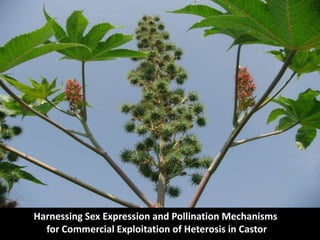
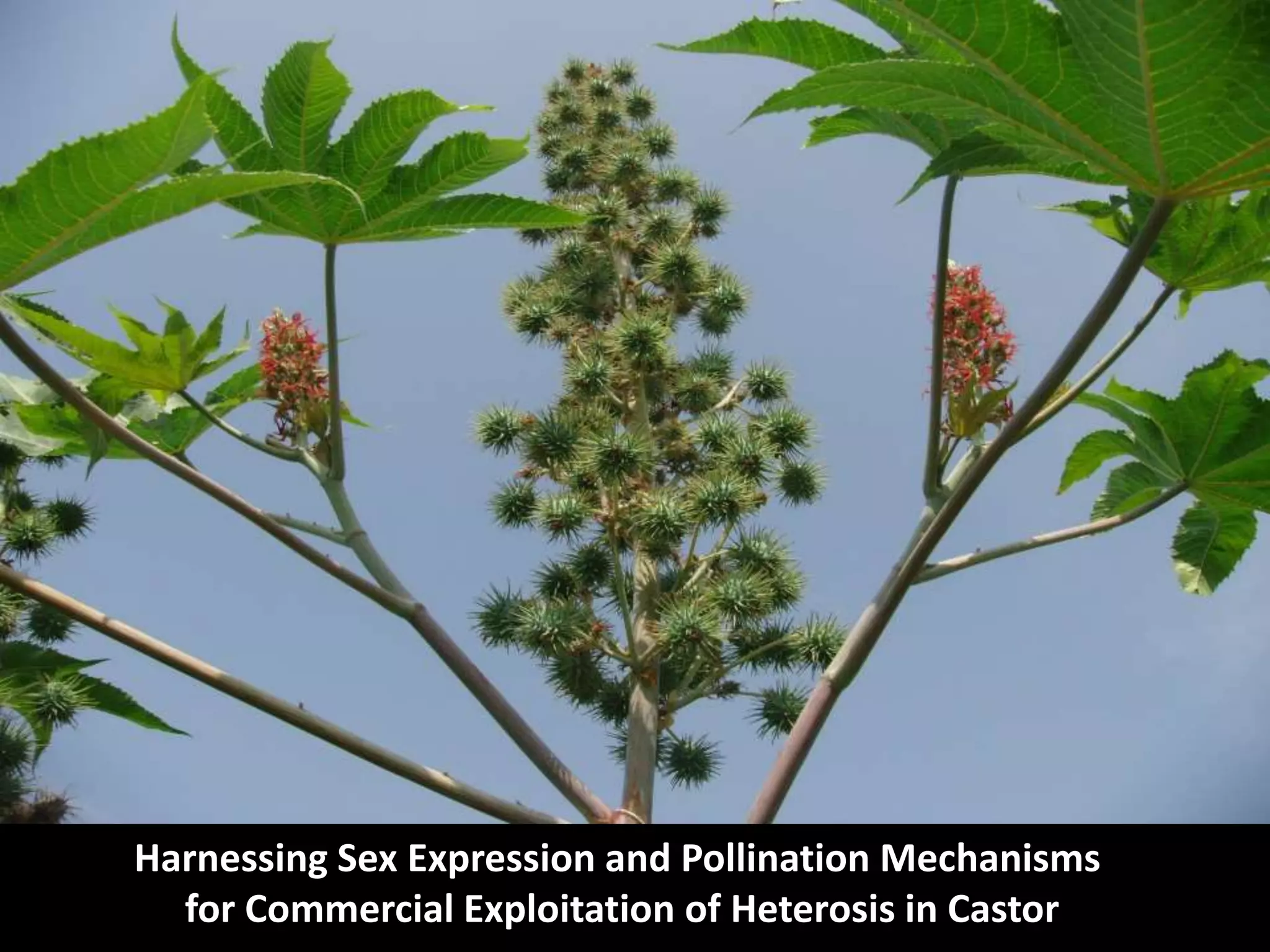
Harnessing Sex Expression and Pollination Mechanisms
for Commercial Exploitation of Heterosis in Castor
0
200
400
600
800
1000
1200
1400
1600
1800
0
0.5
1
1.5
2
2.5
3
1949-50
1952-53
1955-56
1958-59
1961-62
1964-65
1967-68
1970-71
1973-74
1976-77
1979-80
1982-83
1985-86
1988-89
1991-92
1994-95
1997-98
2000-01
2003-04
2005-06
2007-08
2009-10
2012-13
Yield(kg/ha)
Area(m.ha)andProduction(m.t.)
Years
Area (m. ha.) Production (m.t.) Yield (kg/ha)
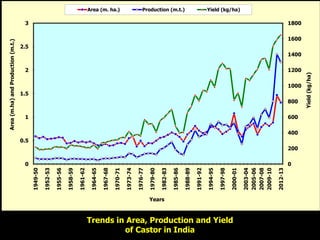
Trends in Area, Production and Yield
of Castor in India
Hybrid Year Yield
(kg/ha)
Maturity Oil content
(%)
Adaptability Salient features Pedigree
GCH-3 1986 1700 200-210 48 Gujarat For irrigated condition VP-1 x JI 35
GCH-4 1988 2200 150-180 50 Gujarat Dry & irrigated
conditions
VP-1 x 48-1
GCH-5 (SHB-145) 1996 1740(rf)/
2820(i)
120-240 50 All India Resistant to wilt,
jassids
Geetha x SH-72
DCH-32 (Deepti) 1998 1800(rf)/
2800(i)
100 49 All India Resistant to sucking
pests & tolerant to wilt
LRES-17 x DCS-5
GCH-6(JHB-665) 1999 1398(rf)/
2323(i)
120-240 48 Gujarat, Rajasthan,
Maharashtra
Resistant to root rot
and white flies
JP 65 x JI 96
DCH 177(Deepak) 2000 1500(rf)/
2000(I)
90-180 49 Rainfed areas of
Deccan plateau
Resistant to white fly,
Resistant to wilt
DPC-9 xDCS-9
DCH-519 2004 1736 105-110 49 All India Resistant to Fusarium
wilt, leaf hoppers
M574 Xdcs-78
PCH-1 1999 2000 (rf) 180 48 Rainfed areas of AP Resistant to leaf
hoppers
VP-1 x PCS 124
TMVCH-1 1999 1403 90-170 52 Tamil Nadu Moderately resistant
to wilt and gray mold
LRES-17 x TMV-5
RHC-1 2002 2000(i)/
1200 (rf)
180 48 Irrigated and Rainfed
areas of Rajasthan
Tolerant to wilt and
resistant to jassids
Vp-1 x TMV5-1
GCH-7 2007 3500 180-210 48-49 Gujarat Res. to wilt and tol. to
white fly, jassids and
thrips
SKP 84 x SKII 215
YRCH 1 2009 1500(rf)/
2000(I)
90-180 49 Rainfed areas of
Tamil Nadu
Resistant to wilt DPC-9 x TMV 5
PCH 111 2014 1500(rf)/
2000(I)
90-180 49 Rainfed areas of
Telangana
Resistant to wilt DPC-9 x CS 1
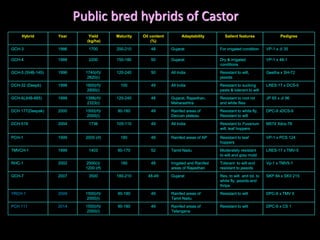
Public bred hybrids of Castor
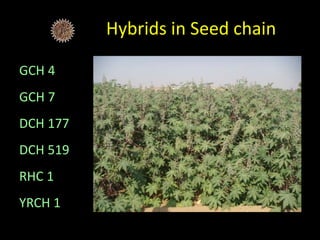
Hybrids in Seed chain
GCH 4
GCH 7
DCH 177
DCH 519
RHC 1
YRCH 1
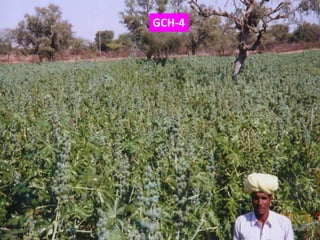
GCH-4
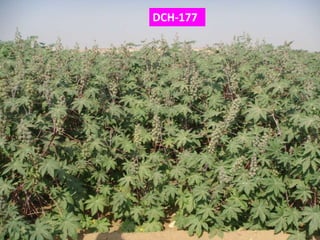
DCH-177
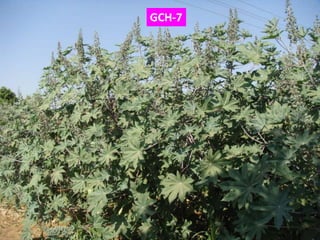
GCH-7
Hybrid Castor
• Heterosis & identification of parents
Inbreeding
• Economically feasible seed production
» Emasculation / Male suppression
» Pollination
» Seed set
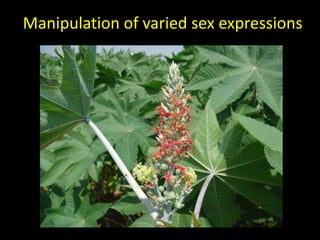
Manipulation of varied sex expressions
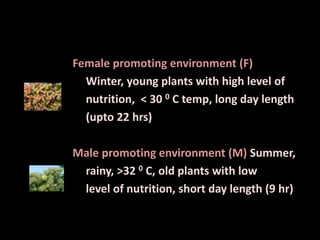
Female promoting environment (F)
Winter, young plants with high level of
nutrition, < 30 0 C temp, long day length
(upto 22 hrs)
Male promoting environment (M) Summer,
rainy, >32 0 C, old plants with low
level of nutrition, short day length (9 hr)
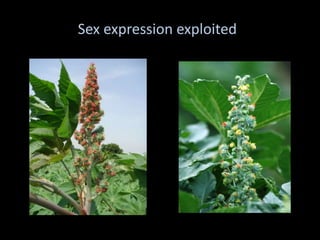
Sex expression exploited
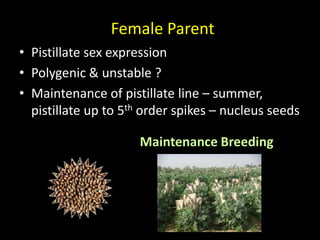
• Pistillate sex expression
• Polygenic & unstable ?
• Maintenance of pistillate line – summer,
pistillate up to 5th order spikes – nucleus seeds
Female Parent
Maintenance Breeding
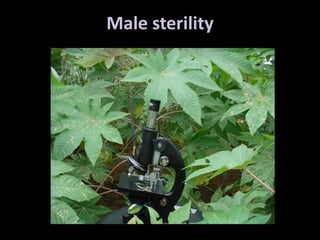
Male sterility
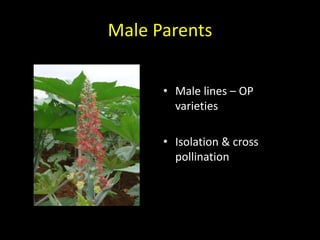
Male Parents
• Male lines – OP
varieties
• Isolation & cross
pollination
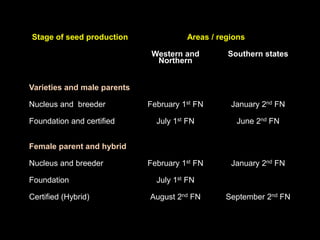
Stage of seed production Areas / regions
Western and
Northern
Southern states
Varieties and male parents
Nucleus and breeder February 1st FN January 2nd FN
Foundation and certified July 1st FN June 2nd FN
Female parent and hybrid
Nucleus and breeder February 1st FN January 2nd FN
Foundation July 1st FN
Certified (Hybrid) August 2nd FN September 2nd FN
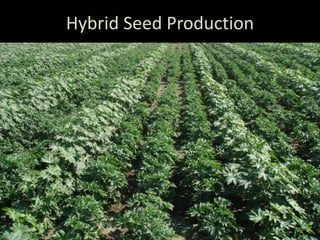
Hybrid Seed Production
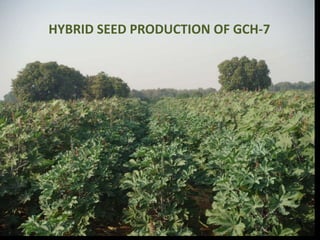
HYBRID SEED PRODUCTION OF GCH-7
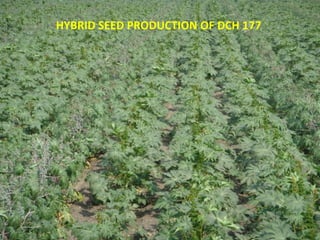
HYBRID SEED PRODUCTION OF DCH 177
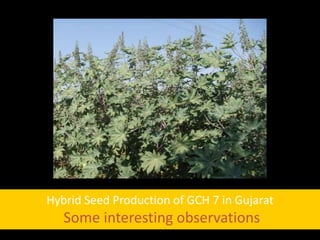
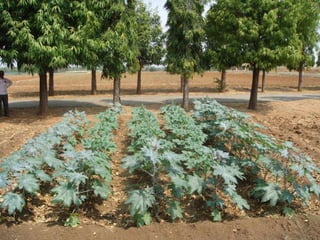
Hybrid Seed Production of GCH 7 in Gujarat
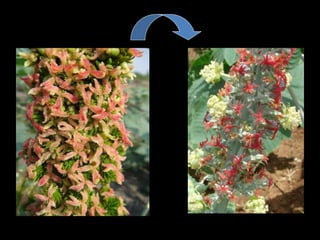
Some interesting observations
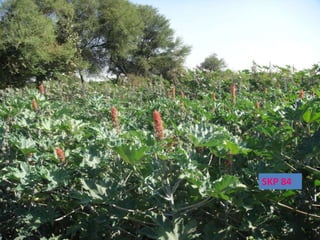
SKP 84
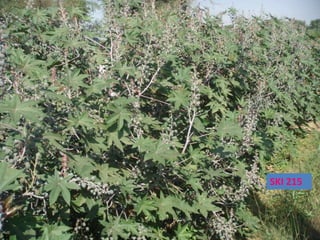
SKI 215
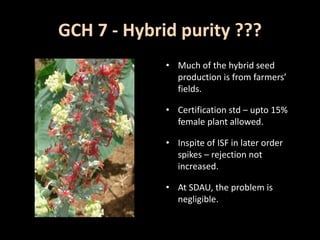
GCH 7 - Hybrid purity ???
• Much of the hybrid seed
production is from farmers’
fields.
• Certification std – upto 15%
female plant allowed.
• Inspite of ISF in later order
spikes – rejection not
increased.
• At SDAU, the problem is
negligible.
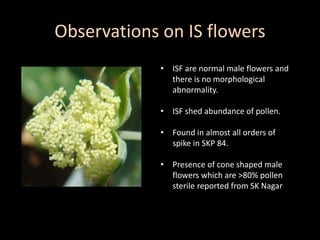
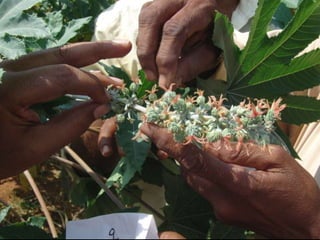
Observations on IS flowers
• ISF are normal male flowers and
there is no morphological
abnormality.
• ISF shed abundance of pollen.
• Found in almost all orders of
spike in SKP 84.
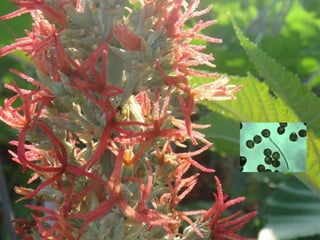
• Presence of cone shaped male
flowers which are >80% pollen
sterile reported from SK Nagar
X
?
Is it restricted to only SKP 84?
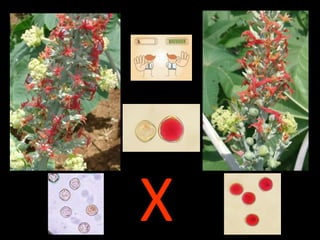
Field experiments
• SKP 84 & DPC 9
• Heavy & few male flower producing
monoecious lines
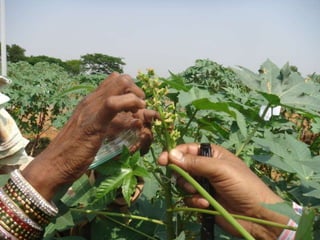
• Open and forced cross pollination in ISF spikes
in females
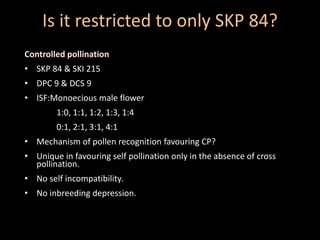
Is it restricted to only SKP 84?
Controlled pollination
• SKP 84 & SKI 215
• DPC 9 & DCS 9
• ISF:Monoecious male flower
1:0, 1:1, 1:2, 1:3, 1:4
0:1, 2:1, 3:1, 4:1
• Mechanism of pollen recognition favouring CP?
• Unique in favouring self pollination only in the absence of cross
pollination.
• No self incompatibility.
• No inbreeding depression.
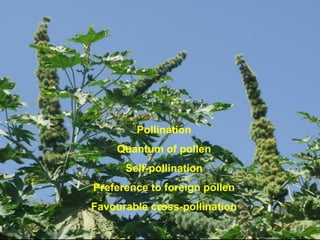
Pollination
Quantum of pollen
Self-pollination
Preference to foreign pollen
Favourable cross-pollination
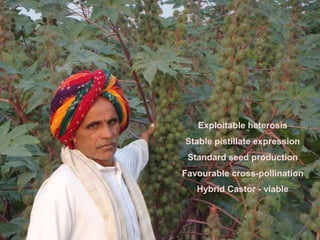
Exploitable heterosis
Stable pistillate expression
Standard seed production
Favourable cross-pollination
Hybrid Castor - viable
Thank you

Caster pollination

  • 1.
    Harnessing Sex Expressionand Pollination Mechanisms for Commercial Exploitation of Heterosis in Castor
  • 2.
  • 3.
    Hybrid Year Yield (kg/ha) MaturityOil content (%) Adaptability Salient features Pedigree GCH-3 1986 1700 200-210 48 Gujarat For irrigated condition VP-1 x JI 35 GCH-4 1988 2200 150-180 50 Gujarat Dry & irrigated conditions VP-1 x 48-1 GCH-5 (SHB-145) 1996 1740(rf)/ 2820(i) 120-240 50 All India Resistant to wilt, jassids Geetha x SH-72 DCH-32 (Deepti) 1998 1800(rf)/ 2800(i) 100 49 All India Resistant to sucking pests & tolerant to wilt LRES-17 x DCS-5 GCH-6(JHB-665) 1999 1398(rf)/ 2323(i) 120-240 48 Gujarat, Rajasthan, Maharashtra Resistant to root rot and white flies JP 65 x JI 96 DCH 177(Deepak) 2000 1500(rf)/ 2000(I) 90-180 49 Rainfed areas of Deccan plateau Resistant to white fly, Resistant to wilt DPC-9 xDCS-9 DCH-519 2004 1736 105-110 49 All India Resistant to Fusarium wilt, leaf hoppers M574 Xdcs-78 PCH-1 1999 2000 (rf) 180 48 Rainfed areas of AP Resistant to leaf hoppers VP-1 x PCS 124 TMVCH-1 1999 1403 90-170 52 Tamil Nadu Moderately resistant to wilt and gray mold LRES-17 x TMV-5 RHC-1 2002 2000(i)/ 1200 (rf) 180 48 Irrigated and Rainfed areas of Rajasthan Tolerant to wilt and resistant to jassids Vp-1 x TMV5-1 GCH-7 2007 3500 180-210 48-49 Gujarat Res. to wilt and tol. to white fly, jassids and thrips SKP 84 x SKII 215 YRCH 1 2009 1500(rf)/ 2000(I) 90-180 49 Rainfed areas of Tamil Nadu Resistant to wilt DPC-9 x TMV 5 PCH 111 2014 1500(rf)/ 2000(I) 90-180 49 Rainfed areas of Telangana Resistant to wilt DPC-9 x CS 1 Public bred hybrids of Castor
  • 4.
    Hybrids in Seedchain GCH 4 GCH 7 DCH 177 DCH 519 RHC 1 YRCH 1
  • 5.
  • 6.
  • 7.
  • 8.
    Hybrid Castor • Heterosis& identification of parents Inbreeding • Economically feasible seed production » Emasculation / Male suppression » Pollination » Seed set
  • 9.
    Manipulation of variedsex expressions
  • 10.
    Female promoting environment(F) Winter, young plants with high level of nutrition, < 30 0 C temp, long day length (upto 22 hrs) Male promoting environment (M) Summer, rainy, >32 0 C, old plants with low level of nutrition, short day length (9 hr)
  • 12.
  • 13.
    • Pistillate sexexpression • Polygenic & unstable ? • Maintenance of pistillate line – summer, pistillate up to 5th order spikes – nucleus seeds Female Parent Maintenance Breeding
  • 15.
  • 16.
    Male Parents • Malelines – OP varieties • Isolation & cross pollination
  • 17.
    Stage of seedproduction Areas / regions Western and Northern Southern states Varieties and male parents Nucleus and breeder February 1st FN January 2nd FN Foundation and certified July 1st FN June 2nd FN Female parent and hybrid Nucleus and breeder February 1st FN January 2nd FN Foundation July 1st FN Certified (Hybrid) August 2nd FN September 2nd FN
  • 18.
  • 19.
  • 20.
  • 21.
    Hybrid Seed Productionof GCH 7 in Gujarat Some interesting observations
  • 22.
  • 23.
  • 25.
    GCH 7 -Hybrid purity ??? • Much of the hybrid seed production is from farmers’ fields. • Certification std – upto 15% female plant allowed. • Inspite of ISF in later order spikes – rejection not increased. • At SDAU, the problem is negligible.
  • 26.
    Observations on ISflowers • ISF are normal male flowers and there is no morphological abnormality. • ISF shed abundance of pollen. • Found in almost all orders of spike in SKP 84. • Presence of cone shaped male flowers which are >80% pollen sterile reported from SK Nagar
  • 27.
  • 28.
  • 30.
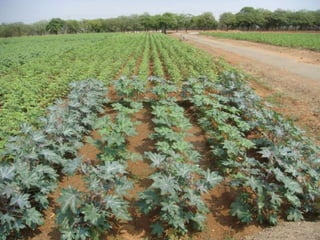
    Is it restrictedto only SKP 84? Field experiments • SKP 84 & DPC 9 • Heavy & few male flower producing monoecious lines • Open and forced cross pollination in ISF spikes in females
  • 33.
    Is it restrictedto only SKP 84? Controlled pollination • SKP 84 & SKI 215 • DPC 9 & DCS 9 • ISF:Monoecious male flower 1:0, 1:1, 1:2, 1:3, 1:4 0:1, 2:1, 3:1, 4:1 • Mechanism of pollen recognition favouring CP? • Unique in favouring self pollination only in the absence of cross pollination. • No self incompatibility. • No inbreeding depression.
  • 36.
    Pollination Quantum of pollen Self-pollination Preferenceto foreign pollen Favourable cross-pollination
  • 37.
    Exploitable heterosis Stable pistillateexpression Standard seed production Favourable cross-pollination Hybrid Castor - viable
  • 38.