Classification of Bacteria
Presented by:
Vinay Kumar Dhiman (F-2016-45-M)
Principles of Microbiology
MICRO-501
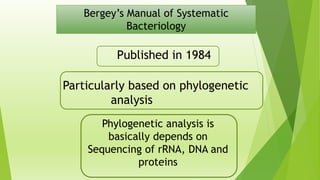
Bergey’s Manual of Systematic
Bacteriology
Published in 1984
Particularly based on phylogenetic
analysis
Phylogenetic analysis is
basically depends on
Sequencing of rRNA, DNA and
proteins
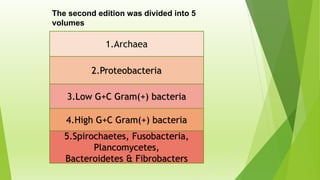
1.Archaea
2.Proteobacteria
3.Low G+C Gram(+) bacteria
4.High G+C Gram(+) bacteria
5.Spirochaetes, Fusobacteria,
Plancomycetes,
Bacteroidetes & Fibrobacters
The second edition was divided into 5
volumes
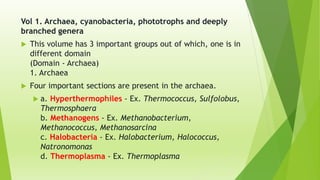
Vol 1. Archaea, cyanobacteria, phototrophs and deeply
branched genera
 This volume has 3 important groups out of which, one is in
different domain
(Domain - Archaea)
1. Archaea
 Four important sections are present in the archaea.
 a. Hyperthermophiles - Ex. Thermococcus, Sulfolobus,
Thermosphaera
b. Methanogens - Ex. Methanobacterium,
Methanococcus, Methanosarcina
c. Halobacteria - Ex. Halobacterium, Halococcus,
Natronomonas
d. Thermoplasma - Ex. Thermoplasma
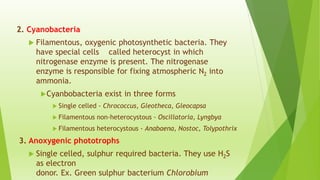
2. Cyanobacteria
 Filamentous, oxygenic photosynthetic bacteria. They
have special cells called heterocyst in which
nitrogenase enzyme is present. The nitrogenase
enzyme is responsible for fixing atmospheric N2 into
ammonia.
Cyanbobacteria exist in three forms
 Single celled - Chrococcus, Gleotheca, Gleocapsa
 Filamentous non-heterocystous - Oscillatoria, Lyngbya
 Filamentous heterocystous - Anabaena, Nostoc, Tolypothrix
3. Anoxygenic phototrophs
 Single celled, sulphur required bacteria. They use H2S
as electron
donor. Ex. Green sulphur bacterium Chlorobium
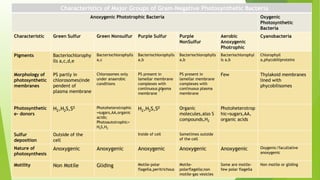
Characteristics of Major Groups of Gram-Negative Photosynthetic Bacteria
Anoxygenic Phototrophic Bacteria Oxygenic
Photosynthetic
Bacteria
Characteristic Green Sulfur Green Nonsulfur Purple Sulfur Purple
NonSulfur
Aerobic
Anoxygenic
Photrophic
Cyanobacteria
Pigments Bacteriochlorophy
lls a,c,d,e
Bacteriochlorophylls
a,c
Bacteriochlorophylls
a,b
Bacteriochlorophylls
a,b
Bacteriochlorophyl
ls a,b
Chlorophyll
a,phycobiliproteins
Morphology of
photosynthetic
membranes
PS partly in
chlorosomes(inde
pendent of
plasma membrane
Chlorosomes only
under anaerobic
conditions
PS present in
lamellar membrane
complexes with
continuous plasma
membrane
PS present in
lamellar membrane
complexes with
continuous plasma
membrane
Few Thylakoid membranes
lined with
phycobilisomes
Photosynthetic
e- donors
H2,H2S,S0 Photoheterotrophic
=sugars,AA,organic
acids;
Photoautotrophic=
H2S,H2
H2,H2S,S0 Organic
molecules,also S
compounds,H2
Photoheterotrop
hic=sugars,AA,
organic acids
Sulfur
deposition
Outside of the
cell
Inside of cell Sometimes outside
of the cell
Nature of
photosynthesis
Anoxygenic Anoxygenic Anoxygenic Anoxygenic Anoxygenic Oxygenic/facultative
anoxygenic
Motility Non Motile Gliding Motile-polar
flagella,peritrichous
Motile-
polarflagella;non
motile-gas vesicles
Some are motile-
few polar flagella
Non motile or gliding
 
The Deinococci , Mollicutes, and Non-proteobacterial Gram-
Negative Bacteria
Deinococci
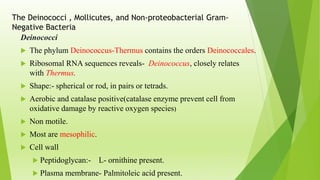
 The phylum Deinococcus-Thermus contains the orders Deinococcales.
 Ribosomal RNA sequences reveals- Deinococcus, closely relates
with Thermus.
 Shape:- spherical or rod, in pairs or tetrads.
 Aerobic and catalase positive(catalase enzyme prevent cell from
oxidative damage by reactive oxygen species)
 Non motile.
 Most are mesophilic.
 Cell wall
 Peptidoglycan:- L- ornithine present.
 Plasma membrane- Palmitoleic acid present.
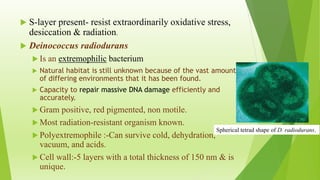
 S-layer present- resist extraordinarily oxidative stress,
desiccation & radiation.
 Deinococcus radiodurans
 Is an extremophilic bacterium.
 Natural habitat is still unknown because of the vast amount
of differing environments that it has been found.
 Capacity to repair massive DNA damage efficiently and
accurately.
 Gram positive, red pigmented, non motile.
 Most radiation-resistant organism known.
 Polyextremophile :-Can survive cold, dehydration,
vacuum, and acids.
 Cell wall:-5 layers with a total thickness of 150 nm & is
unique.
Spherical tetrad shape of D. radiodurans.
 D. radiodurans has been isolated include meat, sewage, filtered
air, animal feces, soil, weathered granite in Antarctica, and
room dust.
 It grow best in 30°C & cease at 4°C.
 D. radiodurans is an obligatory heterotroph.
 Its main source of energy production uses the vacuolar type of
proton ATP synthase.
 D. radiodurans is Gram positive, the cell envelope is resembles
of Gram-negative bacteria due to its multilayered structure and
lipid composition.
 D. radiodurans can withstand 5,000 Gy with no loss of viability,
making it the most radiation resistant organism known.
 RecA-dependent homologous recombination DNA repair plays a
vital role in the genome restitution of this organism.
Mollicutes
 Bacteria lack walls (peptidoglycan precursors
absent).
 Called as Mycoplasmas(smallest bacteria):-
small genomes,simplifed metabolic pathways.
 Only plasma membrane present.
 Shape:-Pleomorphic,appears spherical or pear-
shaped to slender branched,helical.
 Mostly facultative anaerobes, few obligate
anaerobes.
Ex:-Mycoplasma genitalium, M. pneumoniae,
and
Ureaplasma urealyticum .
Mycoplasmas. A scanning electron micrograph of
Mycoplasma pneumoniae shows its pleomorphic nature (X
26.000).
Mycoplasma Colonies. Note the fried egg
appearance;
colonies stained before photographing (X100).
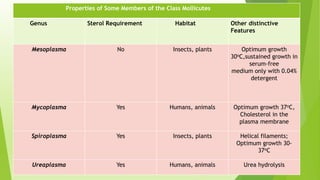
Properties of Some Members of the Class Mollicutes
Genus Sterol Requirement Habitat Other distinctive
Features
Mesoplasma No Insects, plants Optimum growth
30оC,sustained growth in
serum-free
medium only with 0.04%
detergent
Mycoplasma Yes Humans, animals Optimum growth 37оC,
Cholesterol in the
plasma membrane
Spiroplasma Yes Insects, plants Helical filaments;
Optimum growth 30-
37оC
Ureaplasma Yes Humans, animals Urea hydrolysis
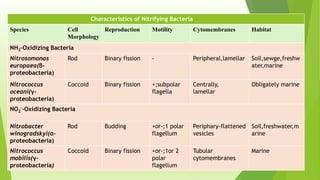
Characteristics of Nitrifying Bacteria
Species Cell
Morphology
Reproduction Motility Cytomembranes Habitat
NH3-Oxidizing Bacteria
Nitrosomonas
europaea(β-
proteobacteria)
Rod Binary fission - Peripheral,lamellar Soil,sewge,freshw
ater,marine
Nitrococcus
oceani(γ-
proteobacteria)
Coccoid Binary fission +;subpolar
flagella
Centrally,
lamellar
Obligately marine
NO2
--Oxidizing Bacteria
Nitrobacter
winogradskyi(α-
proteobacteria)
Rod Budding +or-;1 polar
flagellum
Periphary-flattened
vesicles
Soil,freshwater,m
arine
Nitrococcus
mobilis(γ-
proteobacteria)
Coccoid Binary fission +or-;1or 2
polar
flagellum
Tubular
cytomembranes
Marine
Vol 2. Proteobacteria
This volume has gram negative bacteria. They were further
divided into 5 subgroups as
Phylum Proteobacteria
 A major lineage (phyla) of Bacteria
 Includes many of the most commonly encountered bacteria
 Most metabolically diverse of all domain Bacteria
 E.g., Chemolithotrophy, Chemoorganotrophy, Phototrophy
 Morphologically diverse
 Divided into five classes
 Alpha-, Beta-, Gamma-, Delta-, Epsilon
Proteobacteria
 Alpha: Parasitic bacteria
 Tick borne diseases
 Flea vector
 Beta:Gram negative cocci
 Gamma
 Largest Group
 Enterics
 Delta
 Sulfur reducing bacteria in soli/water
 Predatory(attack other bacteria)
 Epsilon:Gastro intertine
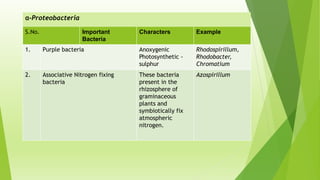
α-Proteobacteria
S.No. Important
Bacteria
Characters Example
1. Purple bacteria Anoxygenic
Photosynthetic -
sulphur
Rhodospirillum,
Rhodobacter,
Chromatium
2. Associative Nitrogen fixing
bacteria
These bacteria
present in the
rhizosphere of
graminaceous
plants and
symbiotically fix
atmospheric
nitrogen.
Azospirillum
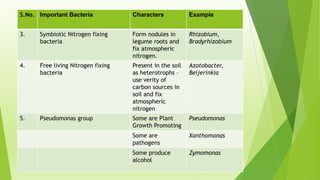
S.No. Important Bacteria Characters Example
3. Symbiotic Nitrogen fixing
bacteria
Form nodules in
legume roots and
fix atmospheric
nitrogen.
Rhizobium,
Bradyrhizobium
4. Free living Nitrogen fixing
bacteria
Present in the soil
as heterotrophs –
use verity of
carbon sources in
soil and fix
atmospheric
nitrogen
Azotobacter,
Beijerinkia
5. Pseudomonas group Some are Plant
Growth Promoting
Pseudomonas
Some are
pathogens
Xanthomonas
Some produce
alcohol
Zymomonas
S.No. Important Bacteria Characters Example
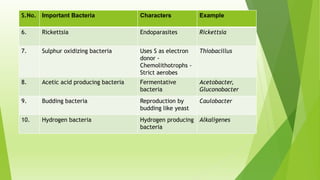
6. Rickettsia Endoparasites Rickettsia
7. Sulphur oxidizing bacteria Uses S as electron
donor -
Chemolithotrophs -
Strict aerobes
Thiobacillus
8. Acetic acid producing bacteria Fermentative
bacteria
Acetobacter,
Gluconobacter
9. Budding bacteria Reproduction by
budding like yeast
Caulobacter
10. Hydrogen bacteria Hydrogen producing
bacteria
Alkaligenes
S.No. Important
Bacteria
Characters Example
β-Proteobacteria
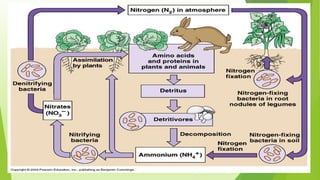
1. Nitrifying bacteria Chemolithotroph -
strict aerobe - soil
bacteria -
important form N
cycle
Ammonia to nitrite
-Nitrosomonas,
Nitrite to nitrate -
Nitrobacter
2. Neisseria & relatives Parasitic
bacteria,pairs as
tetrads
Neisseria
3. Spirillum Large,elongate,
spiral, rigid
cells,lophotricous
Spirillum sp.
4. Sheathed bacteria Enclosed within a
tube or
extracellualr
material
Sphaerotilus
S.No. Important
Bacteria
Characters Example
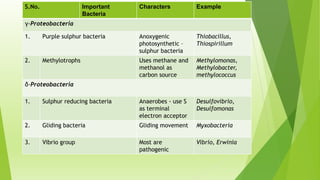
γ-Proteobacteria
1. Purple sulphur bacteria Anoxygenic
photosynthetic –
sulphur bacteria
Thiobacillus,
Thiospirillum
2. Methylotrophs Uses methane and
methanol as
carbon source
Methylomonas,
Methylobacter,
methylococcus
δ-Proteobacteria
1. Sulphur reducing bacteria Anaerobes - use S
as terminal
electron acceptor
Desulfovibrio,
Desulfomonas
2. Gliding bacteria Gliding movement Myxobacteria
3. Vibrio group Most are
pathogenic
Vibrio, Erwinia
Alphaproteobacteria
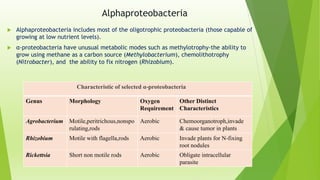
 Alphaproteobacteria includes most of the oligotrophic proteobacteria (those capable of
growing at low nutrient levels).
 α-proteobacteria have unusual metabolic modes such as methylotrophy-the ability to
grow using methane as a carbon source (Methylobacterium), chemolithotrophy
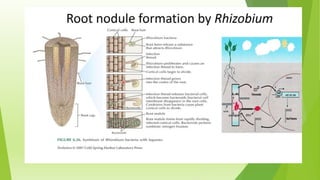
(Nitrobacter), and the ability to fix nitrogen (Rhizobium).
Characteristic of selected α-proteobacteria
Genus Morphology Oxygen
Requirement
Other Distinct
Characteristics
Agrobacterium Motile,peritrichous,nonspo
rulating,rods
Aerobic Chemoorganotroph,invade
& cause tumor in plants
Rhizobium Motile with flagella,rods Aerobic Invade plants for N-fixing
root nodules
Rickettsia Short non motile rods Aerobic Obligate intracellular
parasite
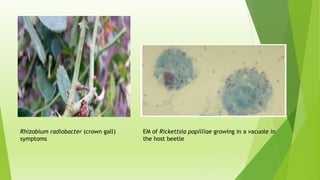
Rhizobium radiobacter (crown gall)
symptoms
EM of Rickettsia popilliae growing in a vacuole in
the host beetle
Betaproteobacteria
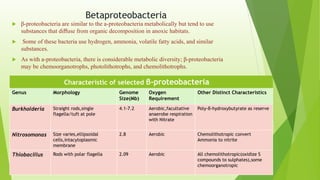
 β-proteobacteria are similar to the a-proteobacteria metabolically but tend to use
substances that diffuse from organic decomposition in anoxic habitats.
 Some of these bacteria use hydrogen, ammonia, volatile fatty acids, and similar
substances.
 As with a-proteobacteria, there is considerable metabolic diversity; β-proteobacteria
may be chemoorganotrophs, photolithotrophs, and chemolithotrophs.
Characteristic of selected β-proteobacteria
Genus Morphology Genome
Size(Mb)
Oxygen
Requirement
Other Distinct Characteristics
Burkholderia Straight rods,single
flagella/tuft at pole
4.1-7.2 Aerobic,facultative
anaerobe respiration
with Nitrate
Poly-β-hydroxybutyrate as reserve
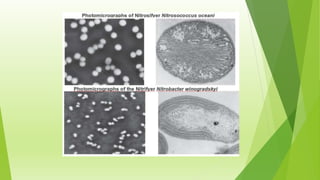
Nitrosomonas Size varies,ellipsoidal
cells,intacytoplasmic
membrane
2.8 Aerobic Chemolithotropic convert
Ammonia to nitrite
Thiobacillus Rods with polar flagella 2.09 Aerobic All chemolithotropic(oxidize S
compounds to sulphates),some
chemoorganotropic
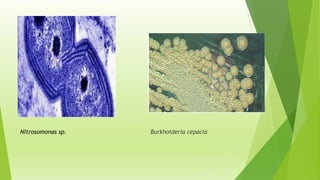
Nitrosomonas sp. Burkholderia cepacia
Gammaproteobacteria
 Gammaproteobacteria is composed of several deeply
branching groups.
 Gammaproteobacteria include an exceeding number of
important pathogens, e.g. Salmonella,
Yersinia, Pseudomonas aeruginosa.
 Gammaproteobacteria are Gram-negative.
 Some Gammaproteobacteria are methane oxidizers, and many
of them are in symbiosis with geothermic ocean vent dwelling
animals.
 Gammaproteobacteria is a class of several medically,
ecologically and scientifically important groups of bacteria,
such as the Enterobacteriaceae (Escherichia coli),
Vibrionaceae and Pseudomonadaceae.
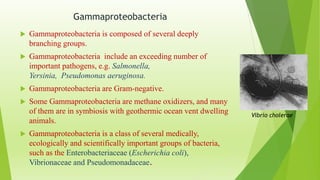
Vibrio cholerae
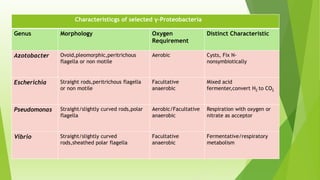
Characteristicgs of selected γ-Proteobacteria
Genus Morphology Oxygen
Requirement
Distinct Characteristic
Azotobacter Ovoid,pleomorphic,peritrichous
flagella or non motile
Aerobic Cysts, Fix N-
nonsymbiotically
Escherichia Straight rods,peritrichous flagella
or non motile
Facultative
anaerobic
Mixed acid
fermenter,convert H2 to CO2
Pseudomonas Straight/slightly curved rods,polar
flagella
Aerobic/Facultative
anaerobic
Respiration with oxygen or
nitrate as acceptor
Vibrio Straight/slightly curved
rods,sheathed polar flagella
Facultative
anaerobic
Fermentative/respiratory
metabolism
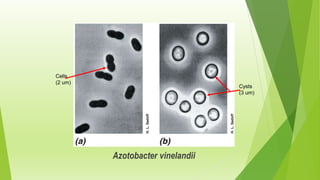
Azotobacter vinelandii
Cysts
(3 um)
Cells
(2 um)
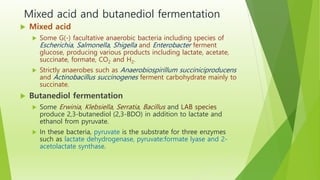
Mixed acid and butanediol fermentation
 Mixed acid
 Some G(-) facultative anaerobic bacteria including species of
Escherichia, Salmonella, Shigella and Enterobacter ferment
glucose, producing various products including lactate, acetate,
succinate, formate, CO2 and H2.
 Strictly anaerobes such as Anaerobiospirillum succiniciproducens
and Actinobacillus succinogenes ferment carbohydrate mainly to
succinate.
 Butanediol fermentation
 Some Erwinia, Klebsiella, Serratia, Bacillus and LAB species
produce 2,3-butanediol (2,3-BDO) in addition to lactate and
ethanol from pyruvate.
 In these bacteria, pyruvate is the substrate for three enzymes
such as lactate dehydrogenase, pyruvate:formate lyase and 2-
acetolactate synthase.
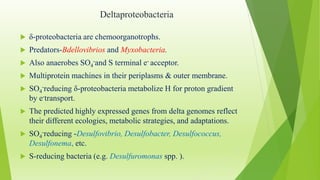
Deltaproteobacteria
 δ-proteobacteria are chemoorganotrophs.
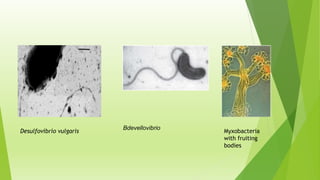
 Predators-Bdellovibrios and Myxobacteria.
 Also anaerobes SO4
-and S terminal e- acceptor.
 Multiprotein machines in their periplasms & outer membrane.
 SO4
-reducing δ-proteobacteria metabolize H for proton gradient
by e-transport.
 The predicted highly expressed genes from delta genomes reflect
their different ecologies, metabolic strategies, and adaptations.
 SO4
-reducing -Desulfovibrio, Desulfobacter, Desulfococcus,
Desulfonema, etc.
 S-reducing bacteria (e.g. Desulfuromonas spp. ).
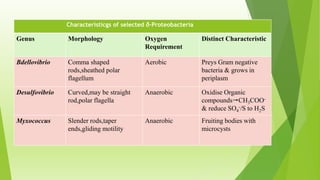
Characteristicgs of selected δ-Proteobacteria
Genus Morphology Oxygen
Requirement
Distinct Characteristic
Bdellovibrio Comma shaped
rods,sheathed polar
flagellum
Aerobic Preys Gram negative
bacteria & grows in
periplasm
Desulfovibrio Curved,may be straight
rod,polar flagella
Anaerobic Oxidise Organic
compoundsCH3COO-
& reduce SO4
-/S to H2S
Myxococcus Slender rods,taper
ends,gliding motility
Anaerobic Fruiting bodies with
microcysts
Bdevellovibrio
Desulfovibrio vulgaris Myxobacteria
with fruiting
bodies
Bdellovibrio Life Cycle
Epsilonproteobacteria
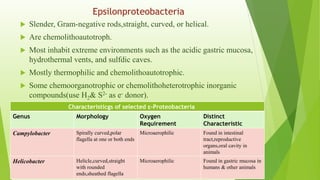
 Slender, Gram-negative rods,straight, curved, or helical.
 Are chemolithoautotroph.
 Most inhabit extreme environments such as the acidic gastric mucosa,
hydrothermal vents, and sulfdic caves.
 Mostly thermophilic and chemolithoautotrophic.
 Some chemoorganotrophic or chemolithoheterotrophic inorganic
compounds(use H2& S2- as e- donor).
Characteristicgs of selected ε-Proteobacteria
Genus Morphology Oxygen
Requirement
Distinct
Characteristic
Campylobacter Spirally curved,polar
flagella at one or both ends
Microaerophilic Found in intestinal
tract,reproductive
organs,oral cavity in
animals
Helicobacter Helicle,curved,straight
with rounded
ends,sheathed flagella
Microaerophilic Found in gastric mucosa in
humans & other animals
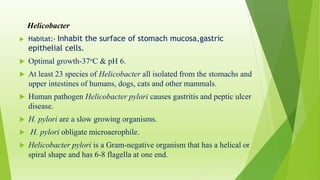
Helicobacter
 Habitat:- Inhabit the surface of stomach mucosa,gastric
epithelial cells.
 Optimal growth-37οC & pH 6.
 At least 23 species of Helicobacter all isolated from the stomachs and
upper intestines of humans, dogs, cats and other mammals.
 Human pathogen Helicobacter pylori causes gastritis and peptic ulcer
disease.
 H. pylori are a slow growing organisms.
 H. pylori obligate microaerophile.
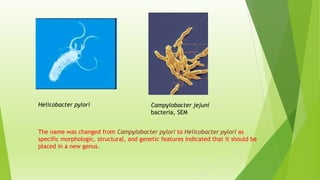
 Helicobacter pylori is a Gram-negative organism that has a helical or
spiral shape and has 6-8 flagella at one end.
Helicobacter pylori Campylobacter jejuni
bacteria, SEM
The name was changed from Campylobacter pylori to Helicobacter pylori as
specific morphologic, structural, and genetic features indicated that it should be
placed in a new genus.
 Vol 3. Low G+C gram positives
S.No Group Characters Example
1. Clostridia group Strict anaerobes –
mostly fermentative
nutrition - few
thermo tolerant -
endospore
producers
Clostridium,
Thermoanaerobacteriu,
Thermoanaerobium
2. Mycoplasma group Absence of cell wall Mycoplasma,
Mesoplasma,
Spiroplasma
3. Bacilli and Lactobacilli
group
Lactic acid producing
bacteria - endospore
producers - aerobes -
aerotolerant -
fermentative
nutrition
Leuconostoc,
Lactococcus,
Streptococcus
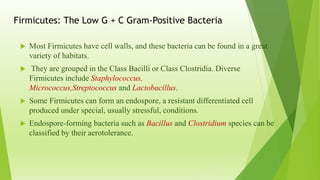
Firmicutes: The Low G + C Gram-Positive Bacteria
 Most Firmicutes have cell walls, and these bacteria can be found in a great
variety of habitats.
 They are grouped in the Class Bacilli or Class Clostridia. Diverse
Firmicutes include Staphylococcus,
Micrococcus,Streptococcus and Lactobacillus.
 Some Firmicutes can form an endospore, a resistant differentiated cell
produced under special, usually stressful, conditions.
 Endospore-forming bacteria such as Bacillus and Clostridium species can be
classified by their aerotolerance.
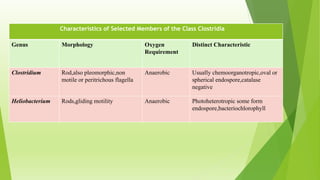
Characteristics of Selected Members of the Class Clostridia
Genus Morphology Oxygen
Requirement
Distinct Characteristic
Clostridium Rod,also pleomorphic,non
motile or peritrichous flagella
Anaerobic Usually chemoorganotropic,oval or
spherical endospore,catalase
negative
Heliobacterium Rods,gliding motility Anaerobic Photoheterotropic some form
endospore,bacteriochlorophyll
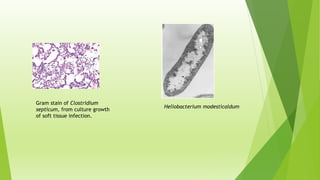
Gram stain of Clostridium
septicum, from culture growth
of soft tissue infection.
Heliobacterium modesticaldum
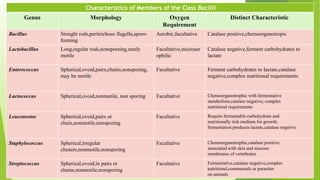
Characteristics of Members of the Class Bacilli
Genus Morphology Oxygen
Requirement
Distinct Characteristic
Bacillus Straight rods,peritrichous flagella,spore-
forming
Aerobic,facultative Catalase positive,chemoorganotropic
Lactobacillus Long,regular rods,nonsporeing,rarely
motile
Facultative,microaer
ophilic
Catalase negative,ferment carbohydrates to
lactate
Enterococcus Spherical,ovoid,pairs,chains,nonsporing,
may be motile
Facultative Ferment carbohydrates to lactate,catalase
negative,complex nutritional requirements
Lactococcus Spherical,ovoid,nonmotile, non sporing Facultative Chemoorganotrophic with fermentative
metabolism,catalase negative; complex
nutritional requirements
Leuconostoc Spherical,ovoid,pairs or
chain,nonmotile,nonsporing
Facultative Require fermentable carbohydrate and
nutritionally rich medium for growth;
fermentation produces lactate,catalase negative
Staphylococcus Spherical,irregular
clusters,nonmotile,nonsporing
Facultative Chemoorganotrophic,catalase positive;
associated with skin and mucous
membranes of vertebrates
Streptococcus Spherical,ovoid,in pairs or
chains,nonmotile,nonsporing
Facultative Fermentative,catalase negative,complex
nutritional,commensals or parasites
on animals
LACTIC ACID BACTERIA
They share a number of common features:
 they are Gram-positive
 non-spore forming rods or cocci
 non-motile
 resistant to acid and high fermentative ability
 Most are aerotolerant anaerobes,catalase- and
oxidase-negative
 Some do take up oxygen through the mediation of
flavoprotein oxidases and this is used to produce
hydrogen peroxide and/or to re-oxidize NADH
produced during the dehydrogenation of sugars.
 Vol 4. High G+C gram positives
S.No Group Characters Example
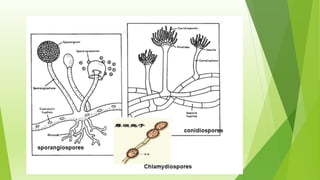
1. Actinomycetes Filamentous -
sporangiospores -
conidiospores - soil
habitat -
antibiotics producers
Actinomyces, Nocardia,
Sreptomyces
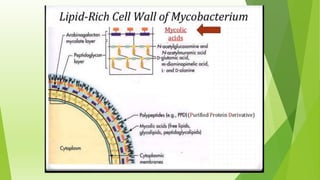
2. Mycobacterium Presence of mycolic
acid in the cell wall -
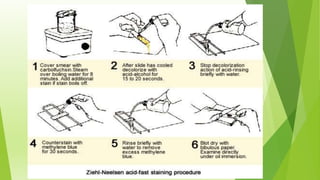
acid fast staining -
human pathogens
Mycobacterium lepri
3. Corynebacterium Human pathogens,
club-shaped
Corynebacterium
diptheriaea
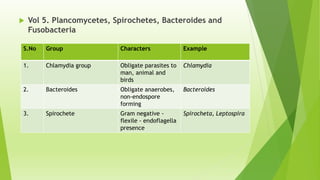
 Vol 5. Plancomycetes, Spirochetes, Bacteroides and
Fusobacteria
S.No Group Characters Example
1. Chlamydia group Obligate parasites to
man, animal and
birds
Chlamydia
2. Bacteroides Obligate anaerobes,
non-endospore
forming
Bacteroides
3. Spirochete Gram negative -
flexile - endoflagella
presence
Spirocheta, Leptospira
Classification of Bacteria microbiology

Classification of Bacteria microbiology

  • 1.
    Classification of Bacteria Presentedby: Vinay Kumar Dhiman (F-2016-45-M) Principles of Microbiology MICRO-501
  • 2.
    Bergey’s Manual ofSystematic Bacteriology Published in 1984 Particularly based on phylogenetic analysis Phylogenetic analysis is basically depends on Sequencing of rRNA, DNA and proteins
  • 3.
    1.Archaea 2.Proteobacteria 3.Low G+C Gram(+)bacteria 4.High G+C Gram(+) bacteria 5.Spirochaetes, Fusobacteria, Plancomycetes, Bacteroidetes & Fibrobacters The second edition was divided into 5 volumes
  • 4.
    Vol 1. Archaea,cyanobacteria, phototrophs and deeply branched genera  This volume has 3 important groups out of which, one is in different domain (Domain - Archaea) 1. Archaea  Four important sections are present in the archaea.  a. Hyperthermophiles - Ex. Thermococcus, Sulfolobus, Thermosphaera b. Methanogens - Ex. Methanobacterium, Methanococcus, Methanosarcina c. Halobacteria - Ex. Halobacterium, Halococcus, Natronomonas d. Thermoplasma - Ex. Thermoplasma
  • 5.
    2. Cyanobacteria  Filamentous,oxygenic photosynthetic bacteria. They have special cells called heterocyst in which nitrogenase enzyme is present. The nitrogenase enzyme is responsible for fixing atmospheric N2 into ammonia. Cyanbobacteria exist in three forms  Single celled - Chrococcus, Gleotheca, Gleocapsa  Filamentous non-heterocystous - Oscillatoria, Lyngbya  Filamentous heterocystous - Anabaena, Nostoc, Tolypothrix 3. Anoxygenic phototrophs  Single celled, sulphur required bacteria. They use H2S as electron donor. Ex. Green sulphur bacterium Chlorobium
  • 6.
    Characteristics of MajorGroups of Gram-Negative Photosynthetic Bacteria Anoxygenic Phototrophic Bacteria Oxygenic Photosynthetic Bacteria Characteristic Green Sulfur Green Nonsulfur Purple Sulfur Purple NonSulfur Aerobic Anoxygenic Photrophic Cyanobacteria Pigments Bacteriochlorophy lls a,c,d,e Bacteriochlorophylls a,c Bacteriochlorophylls a,b Bacteriochlorophylls a,b Bacteriochlorophyl ls a,b Chlorophyll a,phycobiliproteins Morphology of photosynthetic membranes PS partly in chlorosomes(inde pendent of plasma membrane Chlorosomes only under anaerobic conditions PS present in lamellar membrane complexes with continuous plasma membrane PS present in lamellar membrane complexes with continuous plasma membrane Few Thylakoid membranes lined with phycobilisomes Photosynthetic e- donors H2,H2S,S0 Photoheterotrophic =sugars,AA,organic acids; Photoautotrophic= H2S,H2 H2,H2S,S0 Organic molecules,also S compounds,H2 Photoheterotrop hic=sugars,AA, organic acids Sulfur deposition Outside of the cell Inside of cell Sometimes outside of the cell Nature of photosynthesis Anoxygenic Anoxygenic Anoxygenic Anoxygenic Anoxygenic Oxygenic/facultative anoxygenic Motility Non Motile Gliding Motile-polar flagella,peritrichous Motile- polarflagella;non motile-gas vesicles Some are motile- few polar flagella Non motile or gliding  
  • 7.
    The Deinococci ,Mollicutes, and Non-proteobacterial Gram- Negative Bacteria Deinococci  The phylum Deinococcus-Thermus contains the orders Deinococcales.  Ribosomal RNA sequences reveals- Deinococcus, closely relates with Thermus.  Shape:- spherical or rod, in pairs or tetrads.  Aerobic and catalase positive(catalase enzyme prevent cell from oxidative damage by reactive oxygen species)  Non motile.  Most are mesophilic.  Cell wall  Peptidoglycan:- L- ornithine present.  Plasma membrane- Palmitoleic acid present.
  • 8.
     S-layer present-resist extraordinarily oxidative stress, desiccation & radiation.  Deinococcus radiodurans  Is an extremophilic bacterium.  Natural habitat is still unknown because of the vast amount of differing environments that it has been found.  Capacity to repair massive DNA damage efficiently and accurately.  Gram positive, red pigmented, non motile.  Most radiation-resistant organism known.  Polyextremophile :-Can survive cold, dehydration, vacuum, and acids.  Cell wall:-5 layers with a total thickness of 150 nm & is unique. Spherical tetrad shape of D. radiodurans.
  • 9.
     D. radioduranshas been isolated include meat, sewage, filtered air, animal feces, soil, weathered granite in Antarctica, and room dust.  It grow best in 30°C & cease at 4°C.  D. radiodurans is an obligatory heterotroph.  Its main source of energy production uses the vacuolar type of proton ATP synthase.  D. radiodurans is Gram positive, the cell envelope is resembles of Gram-negative bacteria due to its multilayered structure and lipid composition.  D. radiodurans can withstand 5,000 Gy with no loss of viability, making it the most radiation resistant organism known.  RecA-dependent homologous recombination DNA repair plays a vital role in the genome restitution of this organism.
  • 10.
    Mollicutes  Bacteria lackwalls (peptidoglycan precursors absent).  Called as Mycoplasmas(smallest bacteria):- small genomes,simplifed metabolic pathways.  Only plasma membrane present.  Shape:-Pleomorphic,appears spherical or pear- shaped to slender branched,helical.  Mostly facultative anaerobes, few obligate anaerobes. Ex:-Mycoplasma genitalium, M. pneumoniae, and Ureaplasma urealyticum . Mycoplasmas. A scanning electron micrograph of Mycoplasma pneumoniae shows its pleomorphic nature (X 26.000). Mycoplasma Colonies. Note the fried egg appearance; colonies stained before photographing (X100).
  • 11.
    Properties of SomeMembers of the Class Mollicutes Genus Sterol Requirement Habitat Other distinctive Features Mesoplasma No Insects, plants Optimum growth 30оC,sustained growth in serum-free medium only with 0.04% detergent Mycoplasma Yes Humans, animals Optimum growth 37оC, Cholesterol in the plasma membrane Spiroplasma Yes Insects, plants Helical filaments; Optimum growth 30- 37оC Ureaplasma Yes Humans, animals Urea hydrolysis
  • 13.
    Characteristics of NitrifyingBacteria Species Cell Morphology Reproduction Motility Cytomembranes Habitat NH3-Oxidizing Bacteria Nitrosomonas europaea(β- proteobacteria) Rod Binary fission - Peripheral,lamellar Soil,sewge,freshw ater,marine Nitrococcus oceani(γ- proteobacteria) Coccoid Binary fission +;subpolar flagella Centrally, lamellar Obligately marine NO2 --Oxidizing Bacteria Nitrobacter winogradskyi(α- proteobacteria) Rod Budding +or-;1 polar flagellum Periphary-flattened vesicles Soil,freshwater,m arine Nitrococcus mobilis(γ- proteobacteria) Coccoid Binary fission +or-;1or 2 polar flagellum Tubular cytomembranes Marine
  • 15.
    Vol 2. Proteobacteria Thisvolume has gram negative bacteria. They were further divided into 5 subgroups as Phylum Proteobacteria  A major lineage (phyla) of Bacteria  Includes many of the most commonly encountered bacteria  Most metabolically diverse of all domain Bacteria  E.g., Chemolithotrophy, Chemoorganotrophy, Phototrophy  Morphologically diverse  Divided into five classes  Alpha-, Beta-, Gamma-, Delta-, Epsilon
  • 16.
    Proteobacteria  Alpha: Parasiticbacteria  Tick borne diseases  Flea vector  Beta:Gram negative cocci  Gamma  Largest Group  Enterics  Delta  Sulfur reducing bacteria in soli/water  Predatory(attack other bacteria)  Epsilon:Gastro intertine
  • 17.
    α-Proteobacteria S.No. Important Bacteria Characters Example 1.Purple bacteria Anoxygenic Photosynthetic - sulphur Rhodospirillum, Rhodobacter, Chromatium 2. Associative Nitrogen fixing bacteria These bacteria present in the rhizosphere of graminaceous plants and symbiotically fix atmospheric nitrogen. Azospirillum
  • 18.
    S.No. Important BacteriaCharacters Example 3. Symbiotic Nitrogen fixing bacteria Form nodules in legume roots and fix atmospheric nitrogen. Rhizobium, Bradyrhizobium 4. Free living Nitrogen fixing bacteria Present in the soil as heterotrophs – use verity of carbon sources in soil and fix atmospheric nitrogen Azotobacter, Beijerinkia 5. Pseudomonas group Some are Plant Growth Promoting Pseudomonas Some are pathogens Xanthomonas Some produce alcohol Zymomonas
  • 19.
    S.No. Important BacteriaCharacters Example 6. Rickettsia Endoparasites Rickettsia 7. Sulphur oxidizing bacteria Uses S as electron donor - Chemolithotrophs - Strict aerobes Thiobacillus 8. Acetic acid producing bacteria Fermentative bacteria Acetobacter, Gluconobacter 9. Budding bacteria Reproduction by budding like yeast Caulobacter 10. Hydrogen bacteria Hydrogen producing bacteria Alkaligenes
  • 20.
    S.No. Important Bacteria Characters Example β-Proteobacteria 1.Nitrifying bacteria Chemolithotroph - strict aerobe - soil bacteria - important form N cycle Ammonia to nitrite -Nitrosomonas, Nitrite to nitrate - Nitrobacter 2. Neisseria & relatives Parasitic bacteria,pairs as tetrads Neisseria 3. Spirillum Large,elongate, spiral, rigid cells,lophotricous Spirillum sp. 4. Sheathed bacteria Enclosed within a tube or extracellualr material Sphaerotilus
  • 21.
    S.No. Important Bacteria Characters Example γ-Proteobacteria 1.Purple sulphur bacteria Anoxygenic photosynthetic – sulphur bacteria Thiobacillus, Thiospirillum 2. Methylotrophs Uses methane and methanol as carbon source Methylomonas, Methylobacter, methylococcus δ-Proteobacteria 1. Sulphur reducing bacteria Anaerobes - use S as terminal electron acceptor Desulfovibrio, Desulfomonas 2. Gliding bacteria Gliding movement Myxobacteria 3. Vibrio group Most are pathogenic Vibrio, Erwinia
  • 22.
    Alphaproteobacteria  Alphaproteobacteria includesmost of the oligotrophic proteobacteria (those capable of growing at low nutrient levels).  α-proteobacteria have unusual metabolic modes such as methylotrophy-the ability to grow using methane as a carbon source (Methylobacterium), chemolithotrophy (Nitrobacter), and the ability to fix nitrogen (Rhizobium). Characteristic of selected α-proteobacteria Genus Morphology Oxygen Requirement Other Distinct Characteristics Agrobacterium Motile,peritrichous,nonspo rulating,rods Aerobic Chemoorganotroph,invade & cause tumor in plants Rhizobium Motile with flagella,rods Aerobic Invade plants for N-fixing root nodules Rickettsia Short non motile rods Aerobic Obligate intracellular parasite
  • 23.
    Rhizobium radiobacter (crowngall) symptoms EM of Rickettsia popilliae growing in a vacuole in the host beetle
  • 25.
    Betaproteobacteria  β-proteobacteria aresimilar to the a-proteobacteria metabolically but tend to use substances that diffuse from organic decomposition in anoxic habitats.  Some of these bacteria use hydrogen, ammonia, volatile fatty acids, and similar substances.  As with a-proteobacteria, there is considerable metabolic diversity; β-proteobacteria may be chemoorganotrophs, photolithotrophs, and chemolithotrophs. Characteristic of selected β-proteobacteria Genus Morphology Genome Size(Mb) Oxygen Requirement Other Distinct Characteristics Burkholderia Straight rods,single flagella/tuft at pole 4.1-7.2 Aerobic,facultative anaerobe respiration with Nitrate Poly-β-hydroxybutyrate as reserve Nitrosomonas Size varies,ellipsoidal cells,intacytoplasmic membrane 2.8 Aerobic Chemolithotropic convert Ammonia to nitrite Thiobacillus Rods with polar flagella 2.09 Aerobic All chemolithotropic(oxidize S compounds to sulphates),some chemoorganotropic
  • 26.
  • 27.
    Gammaproteobacteria  Gammaproteobacteria iscomposed of several deeply branching groups.  Gammaproteobacteria include an exceeding number of important pathogens, e.g. Salmonella, Yersinia, Pseudomonas aeruginosa.  Gammaproteobacteria are Gram-negative.  Some Gammaproteobacteria are methane oxidizers, and many of them are in symbiosis with geothermic ocean vent dwelling animals.  Gammaproteobacteria is a class of several medically, ecologically and scientifically important groups of bacteria, such as the Enterobacteriaceae (Escherichia coli), Vibrionaceae and Pseudomonadaceae. Vibrio cholerae
  • 28.
    Characteristicgs of selectedγ-Proteobacteria Genus Morphology Oxygen Requirement Distinct Characteristic Azotobacter Ovoid,pleomorphic,peritrichous flagella or non motile Aerobic Cysts, Fix N- nonsymbiotically Escherichia Straight rods,peritrichous flagella or non motile Facultative anaerobic Mixed acid fermenter,convert H2 to CO2 Pseudomonas Straight/slightly curved rods,polar flagella Aerobic/Facultative anaerobic Respiration with oxygen or nitrate as acceptor Vibrio Straight/slightly curved rods,sheathed polar flagella Facultative anaerobic Fermentative/respiratory metabolism
  • 29.
  • 33.
    Mixed acid andbutanediol fermentation  Mixed acid  Some G(-) facultative anaerobic bacteria including species of Escherichia, Salmonella, Shigella and Enterobacter ferment glucose, producing various products including lactate, acetate, succinate, formate, CO2 and H2.  Strictly anaerobes such as Anaerobiospirillum succiniciproducens and Actinobacillus succinogenes ferment carbohydrate mainly to succinate.  Butanediol fermentation  Some Erwinia, Klebsiella, Serratia, Bacillus and LAB species produce 2,3-butanediol (2,3-BDO) in addition to lactate and ethanol from pyruvate.  In these bacteria, pyruvate is the substrate for three enzymes such as lactate dehydrogenase, pyruvate:formate lyase and 2- acetolactate synthase.
  • 34.
    Deltaproteobacteria  δ-proteobacteria arechemoorganotrophs.  Predators-Bdellovibrios and Myxobacteria.  Also anaerobes SO4 -and S terminal e- acceptor.  Multiprotein machines in their periplasms & outer membrane.  SO4 -reducing δ-proteobacteria metabolize H for proton gradient by e-transport.  The predicted highly expressed genes from delta genomes reflect their different ecologies, metabolic strategies, and adaptations.  SO4 -reducing -Desulfovibrio, Desulfobacter, Desulfococcus, Desulfonema, etc.  S-reducing bacteria (e.g. Desulfuromonas spp. ).
  • 35.
    Characteristicgs of selectedδ-Proteobacteria Genus Morphology Oxygen Requirement Distinct Characteristic Bdellovibrio Comma shaped rods,sheathed polar flagellum Aerobic Preys Gram negative bacteria & grows in periplasm Desulfovibrio Curved,may be straight rod,polar flagella Anaerobic Oxidise Organic compoundsCH3COO- & reduce SO4 -/S to H2S Myxococcus Slender rods,taper ends,gliding motility Anaerobic Fruiting bodies with microcysts
  • 36.
  • 37.
  • 38.
    Epsilonproteobacteria  Slender, Gram-negativerods,straight, curved, or helical.  Are chemolithoautotroph.  Most inhabit extreme environments such as the acidic gastric mucosa, hydrothermal vents, and sulfdic caves.  Mostly thermophilic and chemolithoautotrophic.  Some chemoorganotrophic or chemolithoheterotrophic inorganic compounds(use H2& S2- as e- donor). Characteristicgs of selected ε-Proteobacteria Genus Morphology Oxygen Requirement Distinct Characteristic Campylobacter Spirally curved,polar flagella at one or both ends Microaerophilic Found in intestinal tract,reproductive organs,oral cavity in animals Helicobacter Helicle,curved,straight with rounded ends,sheathed flagella Microaerophilic Found in gastric mucosa in humans & other animals
  • 39.
    Helicobacter  Habitat:- Inhabitthe surface of stomach mucosa,gastric epithelial cells.  Optimal growth-37οC & pH 6.  At least 23 species of Helicobacter all isolated from the stomachs and upper intestines of humans, dogs, cats and other mammals.  Human pathogen Helicobacter pylori causes gastritis and peptic ulcer disease.  H. pylori are a slow growing organisms.  H. pylori obligate microaerophile.  Helicobacter pylori is a Gram-negative organism that has a helical or spiral shape and has 6-8 flagella at one end.
  • 40.
    Helicobacter pylori Campylobacterjejuni bacteria, SEM The name was changed from Campylobacter pylori to Helicobacter pylori as specific morphologic, structural, and genetic features indicated that it should be placed in a new genus.
  • 41.
     Vol 3.Low G+C gram positives S.No Group Characters Example 1. Clostridia group Strict anaerobes – mostly fermentative nutrition - few thermo tolerant - endospore producers Clostridium, Thermoanaerobacteriu, Thermoanaerobium 2. Mycoplasma group Absence of cell wall Mycoplasma, Mesoplasma, Spiroplasma 3. Bacilli and Lactobacilli group Lactic acid producing bacteria - endospore producers - aerobes - aerotolerant - fermentative nutrition Leuconostoc, Lactococcus, Streptococcus
  • 42.
    Firmicutes: The LowG + C Gram-Positive Bacteria  Most Firmicutes have cell walls, and these bacteria can be found in a great variety of habitats.  They are grouped in the Class Bacilli or Class Clostridia. Diverse Firmicutes include Staphylococcus, Micrococcus,Streptococcus and Lactobacillus.  Some Firmicutes can form an endospore, a resistant differentiated cell produced under special, usually stressful, conditions.  Endospore-forming bacteria such as Bacillus and Clostridium species can be classified by their aerotolerance.
  • 43.
    Characteristics of SelectedMembers of the Class Clostridia Genus Morphology Oxygen Requirement Distinct Characteristic Clostridium Rod,also pleomorphic,non motile or peritrichous flagella Anaerobic Usually chemoorganotropic,oval or spherical endospore,catalase negative Heliobacterium Rods,gliding motility Anaerobic Photoheterotropic some form endospore,bacteriochlorophyll
  • 44.
    Gram stain ofClostridium septicum, from culture growth of soft tissue infection. Heliobacterium modesticaldum
  • 45.
    Characteristics of Membersof the Class Bacilli Genus Morphology Oxygen Requirement Distinct Characteristic Bacillus Straight rods,peritrichous flagella,spore- forming Aerobic,facultative Catalase positive,chemoorganotropic Lactobacillus Long,regular rods,nonsporeing,rarely motile Facultative,microaer ophilic Catalase negative,ferment carbohydrates to lactate Enterococcus Spherical,ovoid,pairs,chains,nonsporing, may be motile Facultative Ferment carbohydrates to lactate,catalase negative,complex nutritional requirements Lactococcus Spherical,ovoid,nonmotile, non sporing Facultative Chemoorganotrophic with fermentative metabolism,catalase negative; complex nutritional requirements Leuconostoc Spherical,ovoid,pairs or chain,nonmotile,nonsporing Facultative Require fermentable carbohydrate and nutritionally rich medium for growth; fermentation produces lactate,catalase negative Staphylococcus Spherical,irregular clusters,nonmotile,nonsporing Facultative Chemoorganotrophic,catalase positive; associated with skin and mucous membranes of vertebrates Streptococcus Spherical,ovoid,in pairs or chains,nonmotile,nonsporing Facultative Fermentative,catalase negative,complex nutritional,commensals or parasites on animals
  • 46.
    LACTIC ACID BACTERIA Theyshare a number of common features:  they are Gram-positive  non-spore forming rods or cocci  non-motile  resistant to acid and high fermentative ability  Most are aerotolerant anaerobes,catalase- and oxidase-negative  Some do take up oxygen through the mediation of flavoprotein oxidases and this is used to produce hydrogen peroxide and/or to re-oxidize NADH produced during the dehydrogenation of sugars.
  • 47.
     Vol 4.High G+C gram positives S.No Group Characters Example 1. Actinomycetes Filamentous - sporangiospores - conidiospores - soil habitat - antibiotics producers Actinomyces, Nocardia, Sreptomyces 2. Mycobacterium Presence of mycolic acid in the cell wall - acid fast staining - human pathogens Mycobacterium lepri 3. Corynebacterium Human pathogens, club-shaped Corynebacterium diptheriaea
  • 51.
     Vol 5.Plancomycetes, Spirochetes, Bacteroides and Fusobacteria S.No Group Characters Example 1. Chlamydia group Obligate parasites to man, animal and birds Chlamydia 2. Bacteroides Obligate anaerobes, non-endospore forming Bacteroides 3. Spirochete Gram negative - flexile - endoflagella presence Spirocheta, Leptospira