Downloaded 174 times



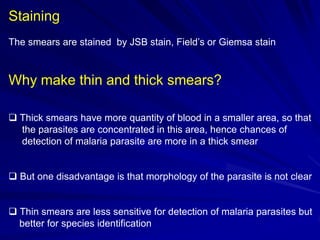


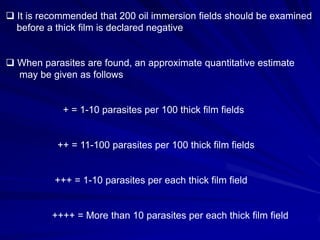


This document provides information about malaria, including what it is, the species that cause it in humans, its prevalence and severity, symptoms, life cycle, transmission, immunity, diagnosis and treatment. Malaria is a mosquito-borne infectious disease caused by Plasmodium parasites. Four species infect humans: P. vivax, P. malariae, P. falciparum, and P. ovale. It is very common in developing countries, with 300-500 million cases and over 1 million deaths per year. Symptoms include periodic fevers, chills, sweating and flu-like illness. The parasite has stages in both humans and mosquitoes during its life cycle. Diagnosis is by blood smear microscopy


