EVASION MECHANISM BY VIRUS
Presented by
T.Ananthakumar , 3rd year
M.Sc Biomedical Science
SYNOPSIS
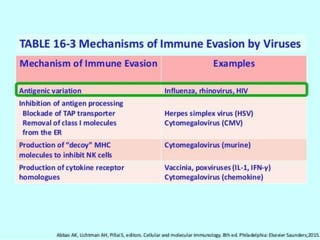
Antigenic variation
• Viruses can alter their antigens by point
mutations or by reassortment of RNA
genomes in RNA viruses.
• Because of antigenic variation a virus may
become resistant to immunity generated in
the population by previous infections.
• There are so many serotypes of rhinovirus
that specific immunization against the
common cold may not be a feasible
preventive strategy.
PROPERTIES OF THE INFLUENZA VIRUS
• Influenza viral particles are roughly spherical or ovoid in
shape, with an average diameter of 90–100 nm.
• Inserted into the envelope are two glycoproteins,
hemagglutinin (HA) and neuraminidase (NA)
• The hemagglutinin projections,in the form of trimers, are
responsible for the attachment of the virus to host cells
• Neuraminidase, as its name indicates, cleaves N-
acetylneuraminic (sialic) acid from nascent viral
glycoproteins and host-cell membrane glycoproteins, an
activity that presumably facilitates viral budding from the
infected host cell.
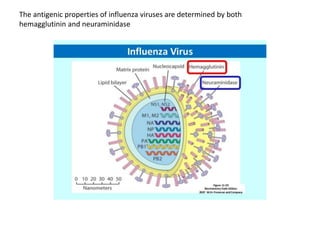
The antigenic properties of influenza viruses are determined by both
hemagglutinin and neuraminidase
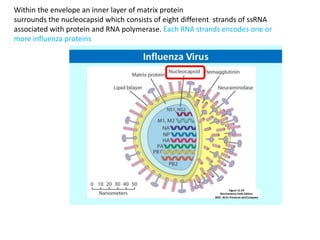
Within the envelope an inner layer of matrix protein
surrounds the nucleocapsid which consists of eight different strands of ssRNA
associated with protein and RNA polymerase. Each RNA strands encodes one or
more influenza proteins
CONT..
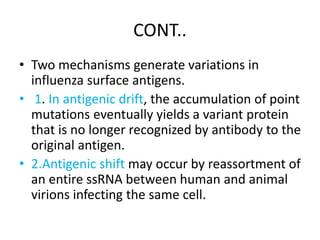
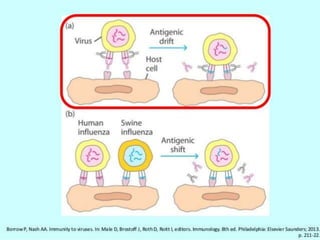
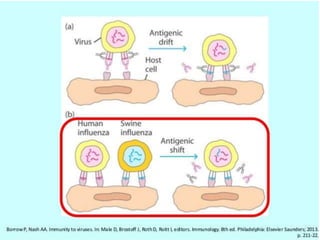
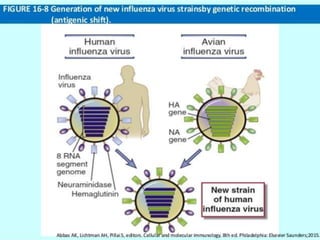
• Two mechanisms generate variations in
influenza surface antigens.
• 1. In antigenic drift, the accumulation of point
mutations eventually yields a variant protein
that is no longer recognized by antibody to the
original antigen.
• 2.Antigenic shift may occur by reassortment of
an entire ssRNA between human and animal
virions infecting the same cell.
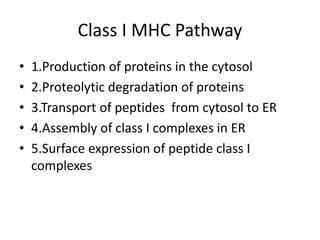
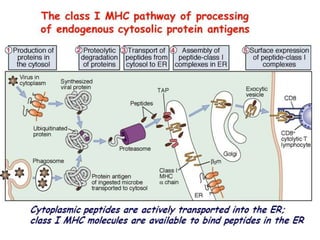
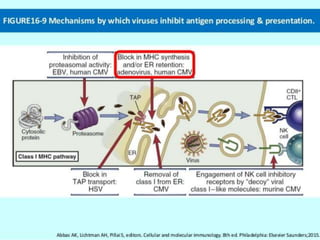
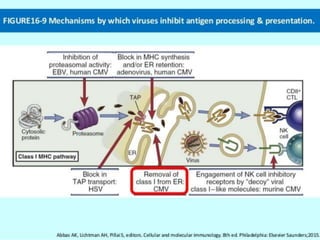
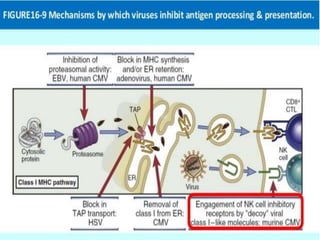
Class I MHC Pathway
• 1.Production of proteins in the cytosol
• 2.Proteolytic degradation of proteins
• 3.Transport of peptides from cytosol to ER
• 4.Assembly of class I complexes in ER
• 5.Surface expression of peptide class I
complexes
Cont..
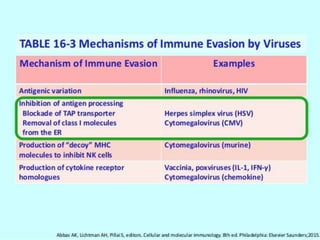
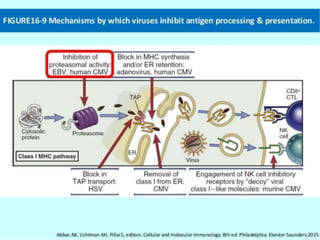
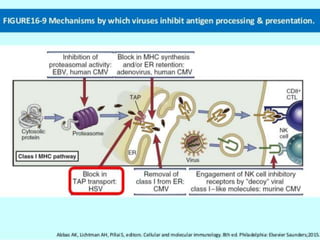
• Herpes simplex viruses 1 and 2 produce a protein called ICP-
47,that binds to the peptide binding site of the TAP
transporter and prevents and transporting them into the
endoplasmic reticulum for binding to class I molecules.
• The consequence of blocking class I peptide association
in all these cases in that infected cells show reduced
expression of stable class I molecules on the surface and
do not display viral peptides to prove that the viral genes
encoding proteins that inhibit antigen presentation are
actually virulence genes required for the infectivity or
pathogencity of the virus
Evasion Mechanism By Virus

Evasion Mechanism By Virus

  • 1.
    EVASION MECHANISM BYVIRUS Presented by T.Ananthakumar , 3rd year M.Sc Biomedical Science
  • 2.
  • 3.
    Antigenic variation • Virusescan alter their antigens by point mutations or by reassortment of RNA genomes in RNA viruses. • Because of antigenic variation a virus may become resistant to immunity generated in the population by previous infections. • There are so many serotypes of rhinovirus that specific immunization against the common cold may not be a feasible preventive strategy.
  • 4.
    PROPERTIES OF THEINFLUENZA VIRUS • Influenza viral particles are roughly spherical or ovoid in shape, with an average diameter of 90–100 nm. • Inserted into the envelope are two glycoproteins, hemagglutinin (HA) and neuraminidase (NA) • The hemagglutinin projections,in the form of trimers, are responsible for the attachment of the virus to host cells • Neuraminidase, as its name indicates, cleaves N- acetylneuraminic (sialic) acid from nascent viral glycoproteins and host-cell membrane glycoproteins, an activity that presumably facilitates viral budding from the infected host cell.
  • 5.
    The antigenic propertiesof influenza viruses are determined by both hemagglutinin and neuraminidase
  • 6.
    Within the envelopean inner layer of matrix protein surrounds the nucleocapsid which consists of eight different strands of ssRNA associated with protein and RNA polymerase. Each RNA strands encodes one or more influenza proteins
  • 7.
    CONT.. • Two mechanismsgenerate variations in influenza surface antigens. • 1. In antigenic drift, the accumulation of point mutations eventually yields a variant protein that is no longer recognized by antibody to the original antigen. • 2.Antigenic shift may occur by reassortment of an entire ssRNA between human and animal virions infecting the same cell.
  • 13.
    Class I MHCPathway • 1.Production of proteins in the cytosol • 2.Proteolytic degradation of proteins • 3.Transport of peptides from cytosol to ER • 4.Assembly of class I complexes in ER • 5.Surface expression of peptide class I complexes
  • 16.
    Cont.. • Herpes simplexviruses 1 and 2 produce a protein called ICP- 47,that binds to the peptide binding site of the TAP transporter and prevents and transporting them into the endoplasmic reticulum for binding to class I molecules. • The consequence of blocking class I peptide association in all these cases in that infected cells show reduced expression of stable class I molecules on the surface and do not display viral peptides to prove that the viral genes encoding proteins that inhibit antigen presentation are actually virulence genes required for the infectivity or pathogencity of the virus