Downloaded 965 times

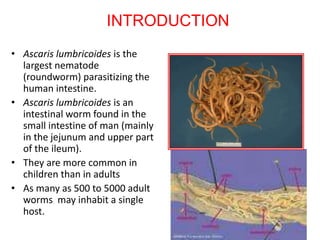


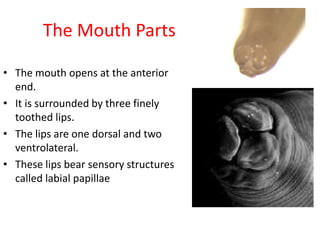
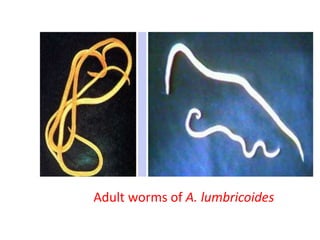


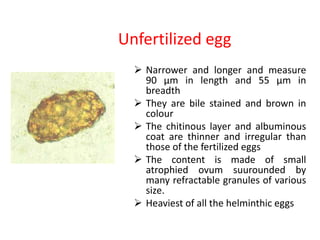








This document describes ascariasis, caused by the roundworm Ascaris lumbricoides. It is most common in children in tropical areas with poor sanitation. The worms live in the small intestine and the female can lay up to 200,000 eggs daily that are passed in feces. When eggs are ingested, they hatch in the intestines releasing larvae that migrate through organs before maturing in the lungs and being swallowed to the intestines. Heavy infections can cause malnutrition, obstruction, and other complications. Diagnosis involves finding eggs in stool or worms. Treatment includes mebendazole or pyrantel pamoate. Prevention relies on proper sanitation and hygiene.


