By Chloe

MALARIA
MALARIA
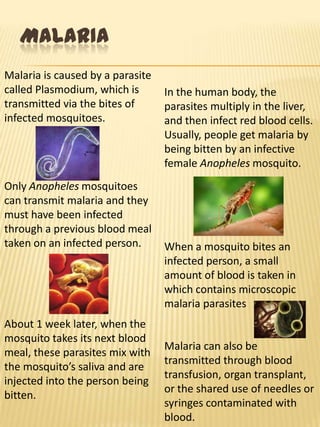
Malaria is caused by a parasite
called Plasmodium, which is       In the human body, the
transmitted via the bites of      parasites multiply in the liver,
infected mosquitoes.              and then infect red blood cells.
                                  Usually, people get malaria by
                                  being bitten by an infective
                                  female Anopheles mosquito.
Only Anopheles mosquitoes
can transmit malaria and they
must have been infected
through a previous blood meal
taken on an infected person.      When a mosquito bites an
                                  infected person, a small
                                  amount of blood is taken in
                                  which contains microscopic
                                  malaria parasites
About 1 week later, when the
mosquito takes its next blood
                                  Malaria can also be
meal, these parasites mix with
                                  transmitted through blood
the mosquito’s saliva and are
                                  transfusion, organ transplant,
injected into the person being
                                  or the shared use of needles or
bitten.
                                  syringes contaminated with
                                  blood.
INFECTIOUS OR UNINFECTIOUS


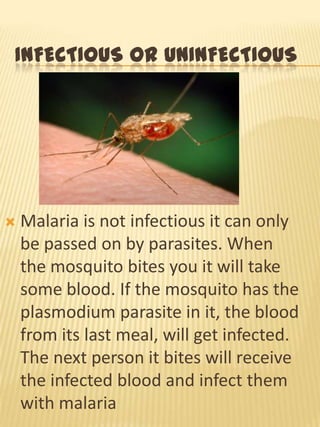
   Malaria is not infectious it can only
    be passed on by parasites. When
    the mosquito bites you it will take
    some blood. If the mosquito has the
    plasmodium parasite in it, the blood
    from its last meal, will get infected.
    The next person it bites will receive
    the infected blood and infect them
    with malaria
WHERE DOES MALARIA
         COMMONLY OCCUR


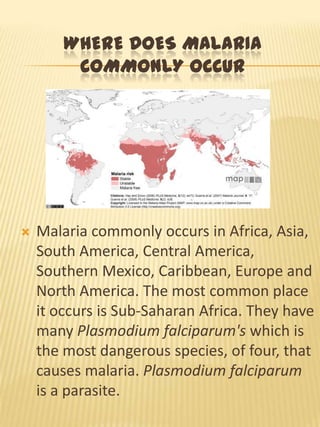
   Malaria commonly occurs in Africa, Asia,
    South America, Central America,
    Southern Mexico, Caribbean, Europe and
    North America. The most common place
    it occurs is Sub-Saharan Africa. They have
    many Plasmodium falciparum's which is
    the most dangerous species, of four, that
    causes malaria. Plasmodium falciparum
    is a parasite.
MALARIA SYMPTOMS


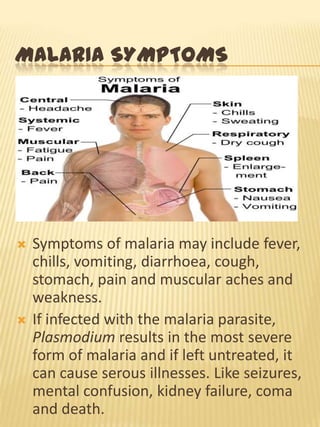
   Symptoms of malaria may include fever,
    chills, vomiting, diarrhoea, cough,
    stomach, pain and muscular aches and
    weakness.
   If infected with the malaria parasite,
    Plasmodium results in the most severe
    form of malaria and if left untreated, it
    can cause serous illnesses. Like seizures,
    mental confusion, kidney failure, coma
    and death.
WHAT CAUSES MALARIA


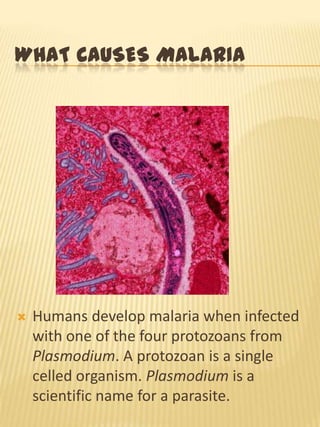
   Humans develop malaria when infected
    with one of the four protozoans from
    Plasmodium. A protozoan is a single
    celled organism. Plasmodium is a
    scientific name for a parasite.
IS MALARIA SPREAD BY
    VECTORS


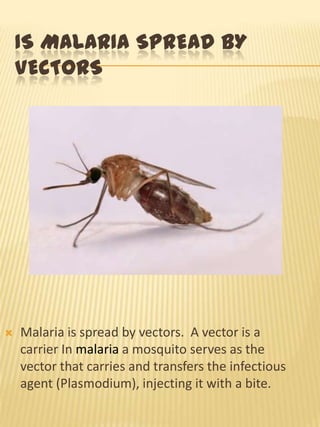
   Malaria is spread by vectors. A vector is a
    carrier In malaria a mosquito serves as the
    vector that carries and transfers the infectious
    agent (Plasmodium), injecting it with a bite.
HOW CAN MALARIA BE
TREATED


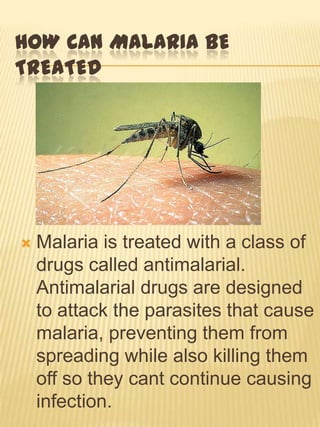
   Malaria is treated with a class of
    drugs called antimalarial.
    Antimalarial drugs are designed
    to attack the parasites that cause
    malaria, preventing them from
    spreading while also killing them
    off so they cant continue causing
    infection.
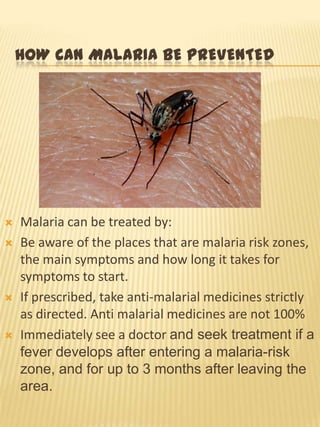
HOW CAN MALARIA BE PREVENTED


   Malaria can be treated by:
   Be aware of the places that are malaria risk zones,
    the main symptoms and how long it takes for
    symptoms to start.
   If prescribed, take anti-malarial medicines strictly
    as directed. Anti malarial medicines are not 100%
   Immediately see a doctor and seek treatment if a
    fever develops after entering a malaria-risk
    zone, and for up to 3 months after leaving the
    area.
REFERENCES


  http://www.malaria.com/overvie
  w/malaria-symptoms-causes


         http://www.parasitemuseum.co
         m/plasmodium/


        http://club.coolamonrotary.com/
        ?p=69


         http://www.myvaccination.com.
         au/malaria.aspx?utm_source=G
         oogle&utm_medium=CPC&utm
         _term=malaria&utm_campaign
         =General%20Malaria&gclid=C
         O-
         Qndrd7qwCFU2GpAodAHBdK
         A

Malaria powerpoint

  • 1.
  • 2.
    MALARIA Malaria is causedby a parasite called Plasmodium, which is In the human body, the transmitted via the bites of parasites multiply in the liver, infected mosquitoes. and then infect red blood cells. Usually, people get malaria by being bitten by an infective female Anopheles mosquito. Only Anopheles mosquitoes can transmit malaria and they must have been infected through a previous blood meal taken on an infected person. When a mosquito bites an infected person, a small amount of blood is taken in which contains microscopic malaria parasites About 1 week later, when the mosquito takes its next blood Malaria can also be meal, these parasites mix with transmitted through blood the mosquito’s saliva and are transfusion, organ transplant, injected into the person being or the shared use of needles or bitten. syringes contaminated with blood.
  • 3.
    INFECTIOUS OR UNINFECTIOUS  Malaria is not infectious it can only be passed on by parasites. When the mosquito bites you it will take some blood. If the mosquito has the plasmodium parasite in it, the blood from its last meal, will get infected. The next person it bites will receive the infected blood and infect them with malaria
  • 4.
    WHERE DOES MALARIA COMMONLY OCCUR  Malaria commonly occurs in Africa, Asia, South America, Central America, Southern Mexico, Caribbean, Europe and North America. The most common place it occurs is Sub-Saharan Africa. They have many Plasmodium falciparum's which is the most dangerous species, of four, that causes malaria. Plasmodium falciparum is a parasite.
  • 5.
    MALARIA SYMPTOMS  Symptoms of malaria may include fever, chills, vomiting, diarrhoea, cough, stomach, pain and muscular aches and weakness.  If infected with the malaria parasite, Plasmodium results in the most severe form of malaria and if left untreated, it can cause serous illnesses. Like seizures, mental confusion, kidney failure, coma and death.
  • 6.
    WHAT CAUSES MALARIA  Humans develop malaria when infected with one of the four protozoans from Plasmodium. A protozoan is a single celled organism. Plasmodium is a scientific name for a parasite.
  • 7.
    IS MALARIA SPREADBY VECTORS  Malaria is spread by vectors. A vector is a carrier In malaria a mosquito serves as the vector that carries and transfers the infectious agent (Plasmodium), injecting it with a bite.
  • 8.
    HOW CAN MALARIABE TREATED  Malaria is treated with a class of drugs called antimalarial. Antimalarial drugs are designed to attack the parasites that cause malaria, preventing them from spreading while also killing them off so they cant continue causing infection.
  • 9.
    HOW CAN MALARIABE PREVENTED  Malaria can be treated by:  Be aware of the places that are malaria risk zones, the main symptoms and how long it takes for symptoms to start.  If prescribed, take anti-malarial medicines strictly as directed. Anti malarial medicines are not 100%  Immediately see a doctor and seek treatment if a fever develops after entering a malaria-risk zone, and for up to 3 months after leaving the area.
  • 10.
    REFERENCES http://www.malaria.com/overvie w/malaria-symptoms-causes http://www.parasitemuseum.co m/plasmodium/ http://club.coolamonrotary.com/ ?p=69 http://www.myvaccination.com. au/malaria.aspx?utm_source=G oogle&utm_medium=CPC&utm _term=malaria&utm_campaign =General%20Malaria&gclid=C O- Qndrd7qwCFU2GpAodAHBdK A