Pathogenesis and Lab diagnosis 
of Ebola virus 
Dr. Pendru Raghunath
Pathogenesis 
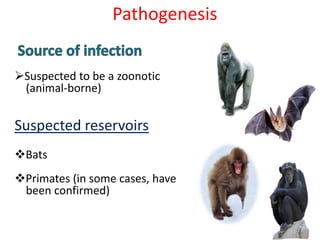
Suspected to be a zoonotic 
(animal-borne) 
Suspected reservoirs 
Bats 
Primates (in some cases, have 
been confirmed)
Mode of infection 
1. Direct contact with contaminated human body fluids such as 
blood, urine, vomitus, faeces and semen 
2. Contact with contaminated medical products such as 
syringe needles 
3. Consumption of wild animal meat (“bush meat”)
Pathogenesis
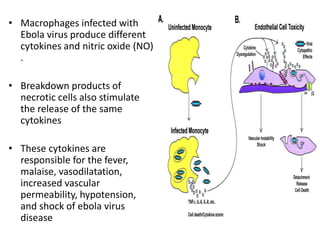
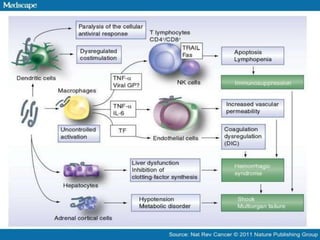
• Macrophages infected with 
Ebola virus produce different 
cytokines and nitric oxide (NO) 
. 
• Breakdown products of 
necrotic cells also stimulate 
the release of the same 
cytokines 
• These cytokines are 
responsible for the fever, 
malaise, vasodilatation, 
increased vascular 
permeability, hypotension, 
and shock of ebola virus 
disease
• Virus-infected macrophages 
synthesize cell-surface tissue 
factor (TF), triggering the 
extrinsic coagulation pathway 
• Liver dysfunction and protein 
C synthesis inhibited 
• Small blood clots form in 
vessels 
• Consume all the available 
coagulation proteins and 
platelets 
• Normal coagulation is 
disrupted, this leads to 
abnormal bleeding 
• Disruption of normal blood 
flow to organs and multi organ 
failure
Incubation period 
• Patients with Ebola virus disease typically have an abrupt 
onset of symptoms 8 to 10 days after exposure (range 2 to 
21 days) 
• The incubation period for the individual patient depends, in 
part, upon the type of exposure (eg, approximately 6 days 
for percutaneous exposure versus 10 days for contact 
exposure).
Clinical manifestations 
 Patients with Ebola virus disease initially present with non-specific 
influenza-like symptoms and can progress to 
multiorgan failure and septic shock 
• Stage I (unspecific): 
-Extreme asthenia (body weakness) 
- headache 
- arthralgia (neuralgic pain in joints) 
- myalgia (muscular pain or tenderness), back pain 
-High fever 
- Nonproductive cough and pharyngitis 
-diarrhea, nausea and vomiting, anorexia 
abdominal pain 
- dysphagia (difficulty in swallowing)
Late Symptoms 
Stage II (specific) 
 Bleeding from eyes, ears, and nose 
 Bleeding from the mouth and rectum (gastrointestinal bleeding) 
 Neuropsychiatric abnormalities (depression) 
 Anuria (the absence of urine formation) 
 Hiccups 
 Eye inflammation (conjunctivitis) 
 Genital swelling (labia and scrotum) 
 Increased feeling of pain in skin 
 Rash over the entire body that often contains blood 
 Mucosal redness of the oral cavity 
 Seizures, coma, delirium
Laboratory diagnosis 
• Non-specific methods 
• Specific methods
Non-specific methods 
• Leukopenia — Leukopenia usually presents as lymphopenia 
and is then followed by an elevated neutrophil count, with an 
increased percentage of immature forms 
• Thrombocytopenia — Platelet counts are usually in the range 
of 50,000 to 100,000/μl 
• Transaminitis —Elevated serum aspartate aminotransferase 
(AST) and alanine aminotransferase (ALT) levels 
• Coagulation abnormalities — Prothrombin (PT) and partial 
thromboplastin times (PTT) are prolonged 
• Renal abnormalities — Proteinuria is a common finding, and 
renal insufficiency occurs with progression of illness.
Specific methods 
• The diagnosis is confirmed by isolating the virus, detecting its 
RNA or proteins, or detecting antibodies against the virus in a 
person's blood 
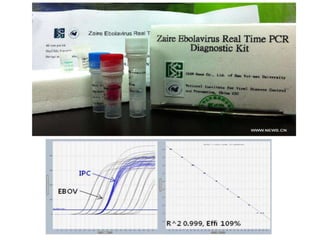
• Isolating the virus by cell culture, detecting the viral RNA 
by polymerase chain reaction (PCR) and detecting proteins 
by ELISA is effective early and in those who have died from the 
disease 
• Virions can be seen and identified in cell culture by electron 
microscopy due to their unique filamentous shapes, but 
electron microscopy cannot tell the difference between the 
various filoviruses despite there being some length differences. 
• Detecting antibodies against the virus is effective late in the 
disease and in those who recover.
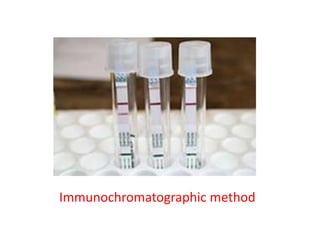
Immunochromatographic method
Ebola virus pathogenesis, lab diagnosis

Ebola virus pathogenesis, lab diagnosis

  • 1.
    Pathogenesis and Labdiagnosis of Ebola virus Dr. Pendru Raghunath
  • 2.
    Pathogenesis Suspected tobe a zoonotic (animal-borne) Suspected reservoirs Bats Primates (in some cases, have been confirmed)
  • 3.
    Mode of infection 1. Direct contact with contaminated human body fluids such as blood, urine, vomitus, faeces and semen 2. Contact with contaminated medical products such as syringe needles 3. Consumption of wild animal meat (“bush meat”)
  • 4.
  • 5.
    • Macrophages infectedwith Ebola virus produce different cytokines and nitric oxide (NO) . • Breakdown products of necrotic cells also stimulate the release of the same cytokines • These cytokines are responsible for the fever, malaise, vasodilatation, increased vascular permeability, hypotension, and shock of ebola virus disease
  • 6.
    • Virus-infected macrophages synthesize cell-surface tissue factor (TF), triggering the extrinsic coagulation pathway • Liver dysfunction and protein C synthesis inhibited • Small blood clots form in vessels • Consume all the available coagulation proteins and platelets • Normal coagulation is disrupted, this leads to abnormal bleeding • Disruption of normal blood flow to organs and multi organ failure
  • 8.
    Incubation period •Patients with Ebola virus disease typically have an abrupt onset of symptoms 8 to 10 days after exposure (range 2 to 21 days) • The incubation period for the individual patient depends, in part, upon the type of exposure (eg, approximately 6 days for percutaneous exposure versus 10 days for contact exposure).
  • 9.
    Clinical manifestations Patients with Ebola virus disease initially present with non-specific influenza-like symptoms and can progress to multiorgan failure and septic shock • Stage I (unspecific): -Extreme asthenia (body weakness) - headache - arthralgia (neuralgic pain in joints) - myalgia (muscular pain or tenderness), back pain -High fever - Nonproductive cough and pharyngitis -diarrhea, nausea and vomiting, anorexia abdominal pain - dysphagia (difficulty in swallowing)
  • 10.
    Late Symptoms StageII (specific)  Bleeding from eyes, ears, and nose  Bleeding from the mouth and rectum (gastrointestinal bleeding)  Neuropsychiatric abnormalities (depression)  Anuria (the absence of urine formation)  Hiccups  Eye inflammation (conjunctivitis)  Genital swelling (labia and scrotum)  Increased feeling of pain in skin  Rash over the entire body that often contains blood  Mucosal redness of the oral cavity  Seizures, coma, delirium
  • 11.
    Laboratory diagnosis •Non-specific methods • Specific methods
  • 12.
    Non-specific methods •Leukopenia — Leukopenia usually presents as lymphopenia and is then followed by an elevated neutrophil count, with an increased percentage of immature forms • Thrombocytopenia — Platelet counts are usually in the range of 50,000 to 100,000/μl • Transaminitis —Elevated serum aspartate aminotransferase (AST) and alanine aminotransferase (ALT) levels • Coagulation abnormalities — Prothrombin (PT) and partial thromboplastin times (PTT) are prolonged • Renal abnormalities — Proteinuria is a common finding, and renal insufficiency occurs with progression of illness.
  • 13.
    Specific methods •The diagnosis is confirmed by isolating the virus, detecting its RNA or proteins, or detecting antibodies against the virus in a person's blood • Isolating the virus by cell culture, detecting the viral RNA by polymerase chain reaction (PCR) and detecting proteins by ELISA is effective early and in those who have died from the disease • Virions can be seen and identified in cell culture by electron microscopy due to their unique filamentous shapes, but electron microscopy cannot tell the difference between the various filoviruses despite there being some length differences. • Detecting antibodies against the virus is effective late in the disease and in those who recover.
  • 14.