MR.J.G. Sambad
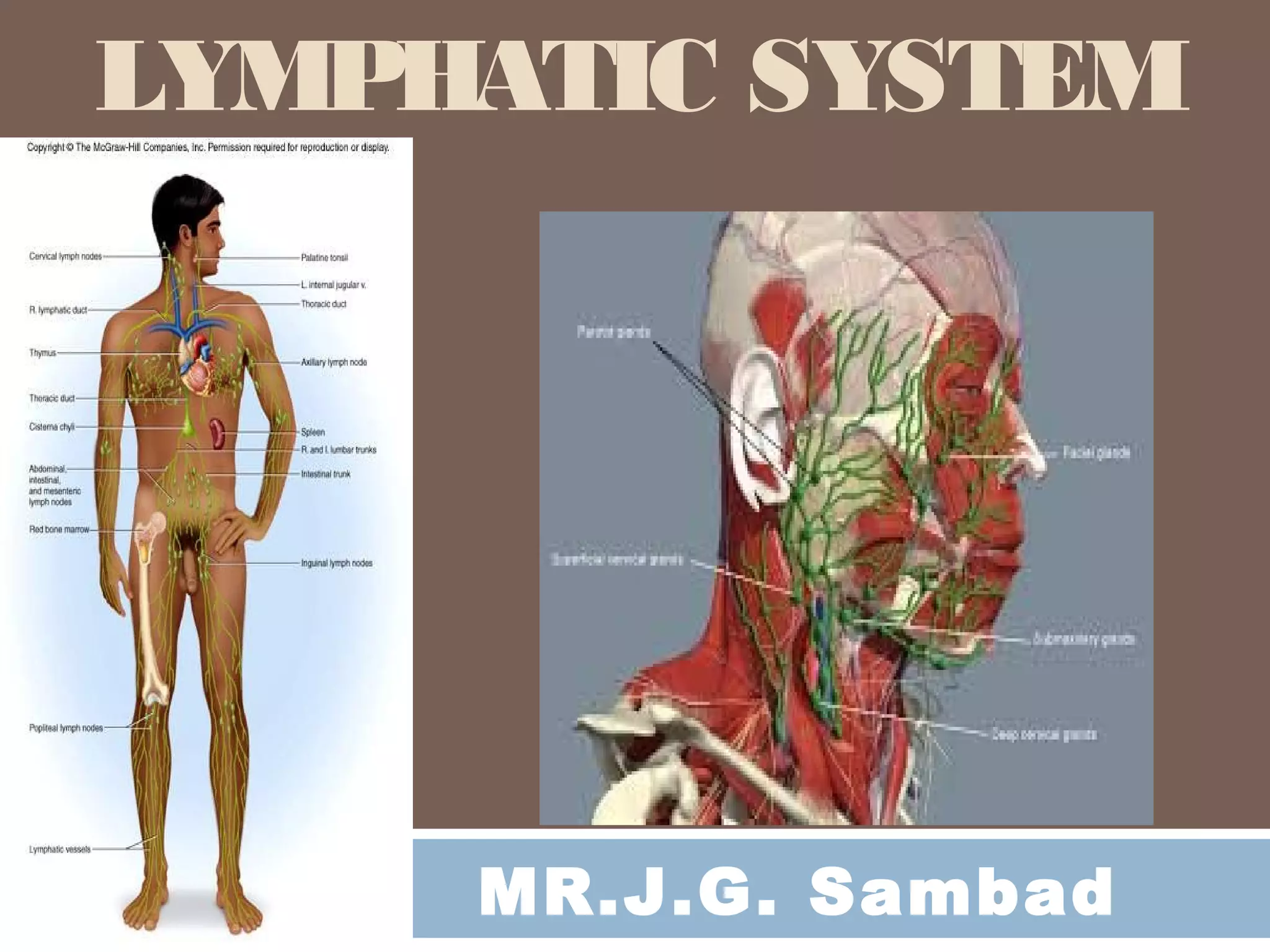
LYMPHATIC SYSTEM
LYMPH
 What is lymph ?
Tissue fluid (interstitial fluid) that
enters the lymphatic vessels
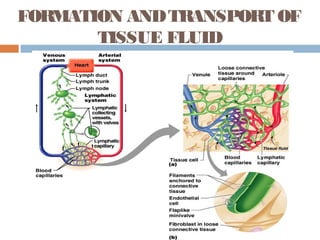
FORMATION ANDTRANSPORT OF
TISSUE FLUID
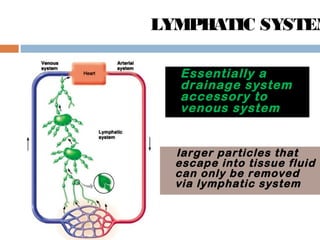
Essentially a
drainage system
accessory to
venous system
larger particles that
escape into tissue fluid
can only be removed
via lymphatic system
LYMPHATIC SYSTEM
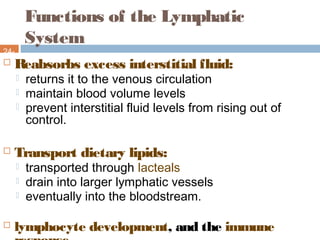
Functions of the Lymphatic
System
24-
5 Reabsorbs excess interstitial fluid:
 returns it to the venous circulation
 maintain blood volume levels
 prevent interstitial fluid levels from rising out of
control.
 Transport dietary lipids:
 transported through lacteals
 drain into larger lymphatic vessels
 eventually into the bloodstream.
 lymphocyte development, and the immune
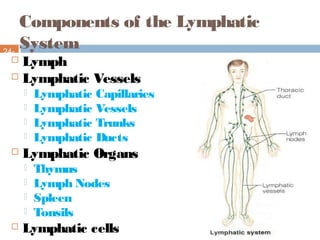
Components of the Lymphatic
System24-
6  Lymph
 Lymphatic Vessels
 Lymphatic Capillaries
 Lymphatic Vessels
 Lymphatic Trunks
 Lymphatic Ducts
 Lymphatic Organs
 Thymus
 Lymph Nodes
 Spleen
 Tonsils
 Lymphatic cells
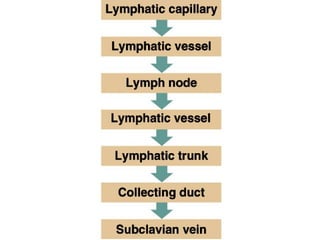
Lymph Vessels
 Lymphatic capillaries –
 Lymphatic collecting vessels
 Lymphatic trunks –
 Lymphatic ducts –
Lymphatic Capillaries
24-
9
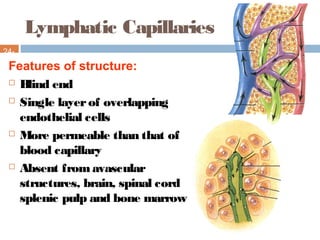
Features of structure:
 Blind end
 Single layerof overlapping
endothelial cells
 More permeable than that of
blood capillary
 Absent fromavascular
structures, brain, spinal cord
splenic pulp and bone marrow
04/12/18
Lymphatic Capillaries – Lacteals
24-
11
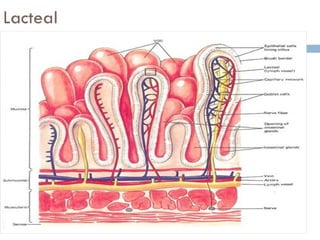
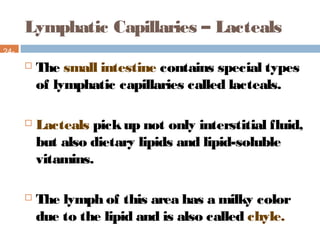
 The small intestine contains special types
of lymphatic capillaries called lacteals.
 Lacteals pickup not only interstitial fluid,
but also dietary lipids and lipid-soluble
vitamins.
 The lymph of this area has a milky color
due to the lipid and is also called chyle.
Lymphatic Vessels
24-
12
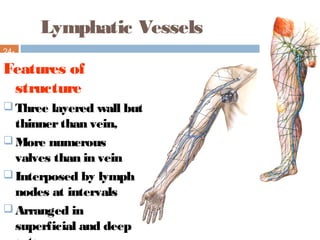
Features of
structure
Three layered wall but
thinnerthan vein,
More numerous
valves than in vein
Interposed by lymph
nodes at intervals
Arranged in
superficial and deep
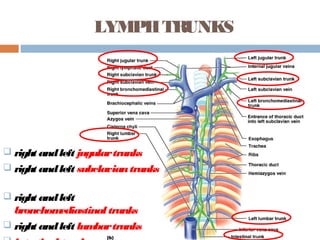
LYMPHTRUNKS
 right andleft jugulartrunks
 right andleft subclaviantrunks
 right andleft
bronchomediastinal trunks
 right andleft lumbartrunks
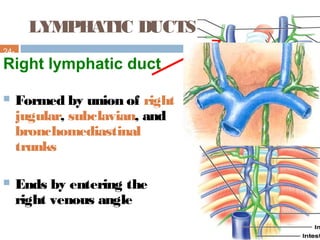
LYMPHATIC DUCTS
24-
14
Right lymphatic duct
 Formed by union of right
jugular, subclavian, and
bronchomediastinal
trunks
 Ends by entering the
right venous angle
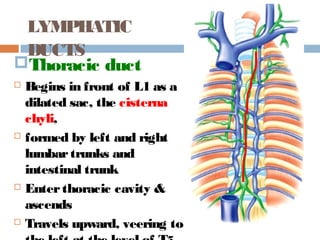
Thoracic duct
 Begins in front of L1 as a
dilated sac, the cisterna
chyli,
 formed by left and right
lumbartrunks and
intestinal trunk
 Enterthoracic cavity &
ascends
 Travels upward, veering to
LYMPHATIC
DUCTS
16
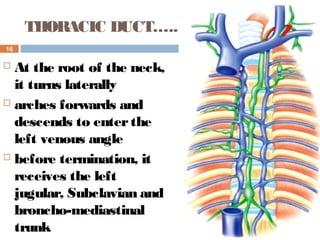
THORACIC DUCT…..
 At the root of the neck,
it turns laterally
 arches forwards and
descends to enterthe
left venous angle
 before termination, it
receives the left
jugular, Subclavian and
broncho-mediastinal
trunk
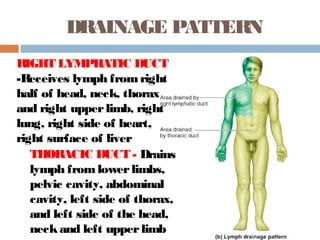
DRAINAGE PATTERN
THORACIC DUCT - Drains
lymph fromlowerlimbs,
pelvic cavity, abdominal
cavity, left side of thorax,
and left side of the head,
neckand left upperlimb
RIGHT LYMPHATIC DUCT
-Receives lymph fromright
half of head, neck, thorax
and right upperlimb, right
lung, right side of heart,
right surface of liver
Lymphatic Cells
24-
18
 Also called lymphoid cells.
 Located in both the lymphatic systemand
the cardiovascularsystem.
 Worktogetherto elicit an immune
response.
 Types of lymphatic cells are:
 macrophages
 epithelial cells
 dendritic cells
 lymphocytes
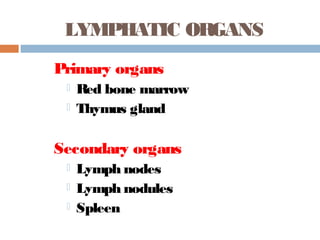
LYMPHATIC ORGANS
Primary organs
 Red bone marrow
 Thymus gland
Secondary organs
 Lymph nodes
 Lymph nodules
 Spleen
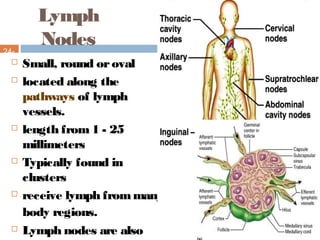
Lymph
Nodes24-
20 Small, round oroval
 located along the
pathways of lymph
vessels.
 length from1 - 25
millimeters
 Typically found in
clusters
 receive lymph frommany
body regions.
 Lymph nodes are also
Lymph node
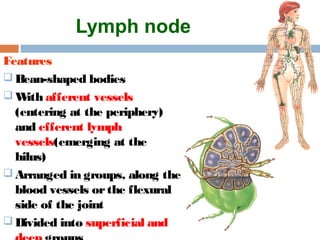
Features
 Bean-shaped bodies
 With afferent vessels
(entering at the periphery)
and efferent lymph
vessels(emerging at the
hilus)
 Arranged in groups, along the
blood vessels orthe flexural
side of the joint
 Divided into superficial and
22
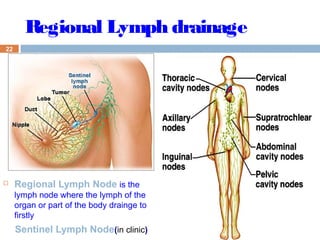
 Regional Lymph Node is the
lymph node where the lymph of the
organ or part of the body drainge to
firstly
Sentinel Lymph Node(in clinic)
Regional Lymph drainage
23
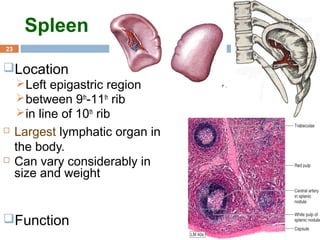
Spleen
Location
Left epigastric region
between 9th
-11th
rib
in line of 10th
rib
 Largest lymphatic organ in
the body.
 Can vary considerably in
size and weight
Function
24
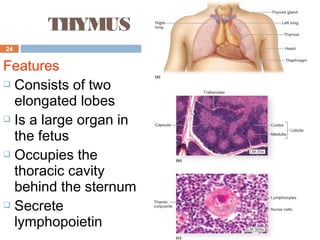
THYMUS
Features
 Consists of two
elongated lobes
 Is a large organ in
the fetus
 Occupies the
thoracic cavity
behind the sternum
 Secrete
lymphopoietin
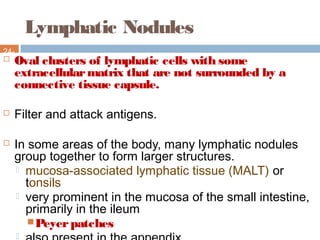
Lymphatic Nodules
24-
25 Oval clusters of lymphatic cells with some
extracellularmatrix that are not surrounded by a
connective tissue capsule.
 Filter and attack antigens.
 In some areas of the body, many lymphatic nodules
group together to form larger structures.
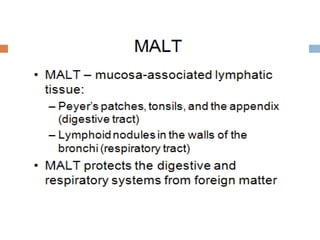
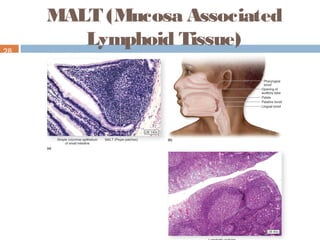
 mucosa-associated lymphatic tissue (MALT) or
tonsils
 very prominent in the mucosa of the small intestine,
primarily in the ileum
Peyerpatches

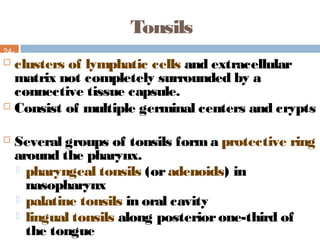
Tonsils
24-
27 clusters of lymphatic cells and extracellular
matrix not completely surrounded by a
connective tissue capsule.
 Consist of multiple germinal centers and crypts
 Several groups of tonsils forma protective ring
around the pharynx.
 pharyngeal tonsils (oradenoids) in
nasopharynx
 palatine tonsils in oral cavity
 lingual tonsils along posteriorone-third of
the tongue
MALT (Mucosa Associated
Lymphoid Tissue)28
APPLIED
ANATOMY
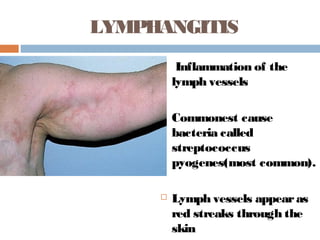
LYMPHANGITIS
  Inflammation of the
lymph vessels
 Commonest cause
bacteria called
streptococcus
pyogenes(most common).
 Lymph vessels appearas
red streaks through the
skin
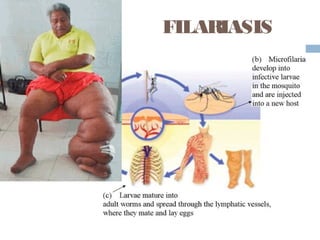
FILARIASIS
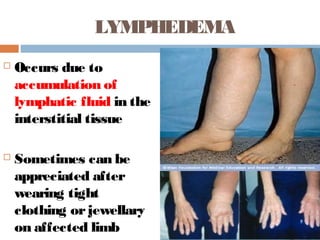
LYMPHEDEMA
 Occurs due to
accumulation of
lymphatic fluid in the
interstitial tissue
 Sometimes can be
appreciated after
wearing tight
clothing orjewellary
on affected limb
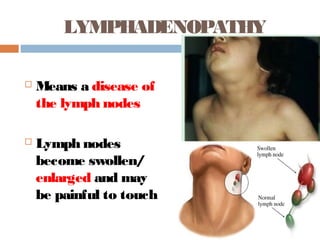
LYMPHADENOPATHY
 Means a disease of
the lymph nodes
 Lymph nodes
become swollen/
enlarged and may
be painful to touch
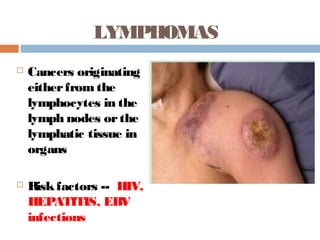
LYMPHOMAS
 Cancers originating
eitherfrom the
lymphocytes in the
lymph nodes orthe
lymphatic tissue in
organs
 Riskfactors -- HIV,
HEPATITIS, EBV
infections
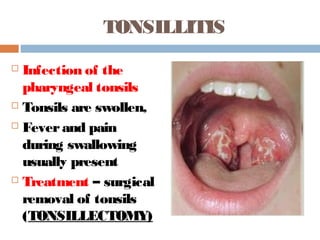
TONSILLITIS
 Infection of the
pharyngeal tonsils
 Tonsils are swollen,
 Feverand pain
during swallowing
usually present
 Treatment – surgical
removal of tonsils
(TONSILLECTOMY)
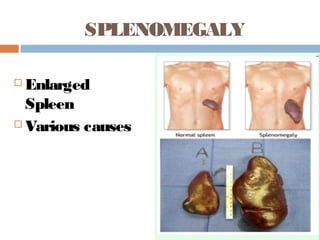
SPLENOMEGALY
 Enlarged
Spleen
 Various causes
LET’S REVISE SOME
IMPORTANT FACTS
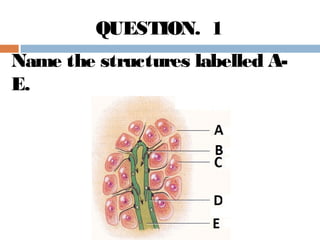
Name the structures labelled A-
E.
QUESTION. 1
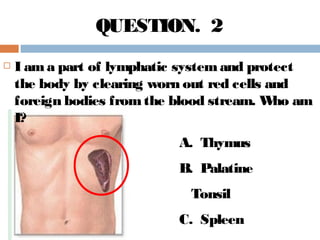
 I ama part of lymphatic systemand protect
the body by clearing worn out red cells and
foreign bodies fromthe blood stream. Who am
I?
A. Thymus
B. Palatine
Tonsil
C. Spleen
QUESTION. 2
Which is the correct statement about the
Lymphatic system?
A. It Reabsorbs excess interstitial fluid and
returns it to the venous circulation.
B. Transports dietary lipids through lacteals.
C. Helps in lymphocyte development, and the
immune response.
D. All of the above
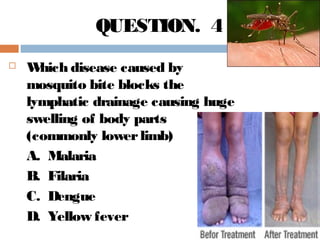
QUESTION. 3
 Which disease caused by
mosquito bite blocks the
lymphatic drainage causing huge
swelling of body parts
(commonly lowerlimb)
A. Malaria
B. Filaria
C. Dengue
D. Yellow fever
QUESTION. 4
 Which of these is a primary lymphoid
organ ?
A. Lymph Node
B. Spleen
C. Tonsil
D. Bone Marrow
QUESTION. 5

Lymphatic system

  • 1.
  • 2.
    LYMPH  What islymph ? Tissue fluid (interstitial fluid) that enters the lymphatic vessels
  • 3.
  • 4.
    Essentially a drainage system accessoryto venous system larger particles that escape into tissue fluid can only be removed via lymphatic system LYMPHATIC SYSTEM
  • 5.
    Functions of theLymphatic System 24- 5 Reabsorbs excess interstitial fluid:  returns it to the venous circulation  maintain blood volume levels  prevent interstitial fluid levels from rising out of control.  Transport dietary lipids:  transported through lacteals  drain into larger lymphatic vessels  eventually into the bloodstream.  lymphocyte development, and the immune
  • 6.
    Components of theLymphatic System24- 6  Lymph  Lymphatic Vessels  Lymphatic Capillaries  Lymphatic Vessels  Lymphatic Trunks  Lymphatic Ducts  Lymphatic Organs  Thymus  Lymph Nodes  Spleen  Tonsils  Lymphatic cells
  • 7.
    Lymph Vessels  Lymphaticcapillaries –  Lymphatic collecting vessels  Lymphatic trunks –  Lymphatic ducts –
  • 9.
    Lymphatic Capillaries 24- 9 Features ofstructure:  Blind end  Single layerof overlapping endothelial cells  More permeable than that of blood capillary  Absent fromavascular structures, brain, spinal cord splenic pulp and bone marrow
  • 10.
  • 11.
    Lymphatic Capillaries –Lacteals 24- 11  The small intestine contains special types of lymphatic capillaries called lacteals.  Lacteals pickup not only interstitial fluid, but also dietary lipids and lipid-soluble vitamins.  The lymph of this area has a milky color due to the lipid and is also called chyle.
  • 12.
    Lymphatic Vessels 24- 12 Features of structure Threelayered wall but thinnerthan vein, More numerous valves than in vein Interposed by lymph nodes at intervals Arranged in superficial and deep
  • 13.
    LYMPHTRUNKS  right andleftjugulartrunks  right andleft subclaviantrunks  right andleft bronchomediastinal trunks  right andleft lumbartrunks
  • 14.
    LYMPHATIC DUCTS 24- 14 Right lymphaticduct  Formed by union of right jugular, subclavian, and bronchomediastinal trunks  Ends by entering the right venous angle
  • 15.
    Thoracic duct  Beginsin front of L1 as a dilated sac, the cisterna chyli,  formed by left and right lumbartrunks and intestinal trunk  Enterthoracic cavity & ascends  Travels upward, veering to LYMPHATIC DUCTS
  • 16.
    16 THORACIC DUCT…..  Atthe root of the neck, it turns laterally  arches forwards and descends to enterthe left venous angle  before termination, it receives the left jugular, Subclavian and broncho-mediastinal trunk
  • 17.
    DRAINAGE PATTERN THORACIC DUCT- Drains lymph fromlowerlimbs, pelvic cavity, abdominal cavity, left side of thorax, and left side of the head, neckand left upperlimb RIGHT LYMPHATIC DUCT -Receives lymph fromright half of head, neck, thorax and right upperlimb, right lung, right side of heart, right surface of liver
  • 18.
    Lymphatic Cells 24- 18  Alsocalled lymphoid cells.  Located in both the lymphatic systemand the cardiovascularsystem.  Worktogetherto elicit an immune response.  Types of lymphatic cells are:  macrophages  epithelial cells  dendritic cells  lymphocytes
  • 19.
    LYMPHATIC ORGANS Primary organs Red bone marrow  Thymus gland Secondary organs  Lymph nodes  Lymph nodules  Spleen
  • 20.
    Lymph Nodes24- 20 Small, roundoroval  located along the pathways of lymph vessels.  length from1 - 25 millimeters  Typically found in clusters  receive lymph frommany body regions.  Lymph nodes are also
  • 21.
    Lymph node Features  Bean-shapedbodies  With afferent vessels (entering at the periphery) and efferent lymph vessels(emerging at the hilus)  Arranged in groups, along the blood vessels orthe flexural side of the joint  Divided into superficial and
  • 22.
    22  Regional LymphNode is the lymph node where the lymph of the organ or part of the body drainge to firstly Sentinel Lymph Node(in clinic) Regional Lymph drainage
  • 23.
    23 Spleen Location Left epigastric region between9th -11th rib in line of 10th rib  Largest lymphatic organ in the body.  Can vary considerably in size and weight Function
  • 24.
    24 THYMUS Features  Consists oftwo elongated lobes  Is a large organ in the fetus  Occupies the thoracic cavity behind the sternum  Secrete lymphopoietin
  • 25.
    Lymphatic Nodules 24- 25 Ovalclusters of lymphatic cells with some extracellularmatrix that are not surrounded by a connective tissue capsule.  Filter and attack antigens.  In some areas of the body, many lymphatic nodules group together to form larger structures.  mucosa-associated lymphatic tissue (MALT) or tonsils  very prominent in the mucosa of the small intestine, primarily in the ileum Peyerpatches 
  • 27.
    Tonsils 24- 27 clusters oflymphatic cells and extracellular matrix not completely surrounded by a connective tissue capsule.  Consist of multiple germinal centers and crypts  Several groups of tonsils forma protective ring around the pharynx.  pharyngeal tonsils (oradenoids) in nasopharynx  palatine tonsils in oral cavity  lingual tonsils along posteriorone-third of the tongue
  • 28.
  • 29.
  • 30.
    LYMPHANGITIS   Inflammation ofthe lymph vessels  Commonest cause bacteria called streptococcus pyogenes(most common).  Lymph vessels appearas red streaks through the skin
  • 31.
  • 32.
    LYMPHEDEMA  Occurs dueto accumulation of lymphatic fluid in the interstitial tissue  Sometimes can be appreciated after wearing tight clothing orjewellary on affected limb
  • 33.
    LYMPHADENOPATHY  Means adisease of the lymph nodes  Lymph nodes become swollen/ enlarged and may be painful to touch
  • 34.
    LYMPHOMAS  Cancers originating eitherfromthe lymphocytes in the lymph nodes orthe lymphatic tissue in organs  Riskfactors -- HIV, HEPATITIS, EBV infections
  • 35.
    TONSILLITIS  Infection ofthe pharyngeal tonsils  Tonsils are swollen,  Feverand pain during swallowing usually present  Treatment – surgical removal of tonsils (TONSILLECTOMY)
  • 36.
  • 37.
  • 38.
    Name the structureslabelled A- E. QUESTION. 1
  • 39.
     I amapart of lymphatic systemand protect the body by clearing worn out red cells and foreign bodies fromthe blood stream. Who am I? A. Thymus B. Palatine Tonsil C. Spleen QUESTION. 2
  • 40.
    Which is thecorrect statement about the Lymphatic system? A. It Reabsorbs excess interstitial fluid and returns it to the venous circulation. B. Transports dietary lipids through lacteals. C. Helps in lymphocyte development, and the immune response. D. All of the above QUESTION. 3
  • 41.
     Which diseasecaused by mosquito bite blocks the lymphatic drainage causing huge swelling of body parts (commonly lowerlimb) A. Malaria B. Filaria C. Dengue D. Yellow fever QUESTION. 4
  • 42.
     Which ofthese is a primary lymphoid organ ? A. Lymph Node B. Spleen C. Tonsil D. Bone Marrow QUESTION. 5