The Lymphatic System
Mr. Visanth V S
Principal
Mayo School of Nursing,
Lucknow
The Lymphatic System
 A circulatory system for fluids
 Returns fluid to the blood
 Removes antigens from the body
 Exposes antigens to the immune system
 Main structures of the lymphatic system
Lymph
Lymphatic vessels
Lymph nodes
Diffuse Lymphoid tissue, Eg: tonsils
Lymphoid organs, Eg: spleen &Thymus
Bone marrow
Lymph
 Lymph is a clear watery fluid, similar in composition to
plasma , with important exception of plasma proteins and
identical in composition to interstitial fluid.
 Transports the plasma proteins that seep out of the
capillary beds back to the bloodstream.
 It also carries away larger particles, Eg. Bacteria, Cell
debris etc.
 Contains lymphocytes which circulates in the lymphatic
system allowing them to patrol the different regions of
the body.
The Lymphatic System
 Lymphatic vessels
collect tissue fluid
from loose connective
tissue
 Carry fluid to great
veins in the neck
 Fluid flows only
toward the heart
 Collect excess tissue
fluid and blood
proteins
Orders of Lymphatic Vessels
 Lymph capillaries
 Smallest lymph vessels
 First to receive lymph
 Lymphatic collecting vessels
 Collect from lymph capillaries
 Lymph nodes
 Scattered along collecting
vessels
 Lymph trunks
 Collect lymph from collecting
vessels
 Lymph ducts
 Empty into veins of the neck
Lymphatic Capillaries
 Located near blood capillaries
 Receive tissue fluid from CT
 Increased volume of tissue fluid
Minivalve flaps open and allow fluid to enter
 Highly permeability allows entrance of
 Tissue fluid
 Bacteria, viruses, and cancer cells
 Lacteals – specialized lymphatic capillaries
 Located in the villi of the small intestines
Receive digested fats
Fatty lymph – chyle
Location and Structure of Lymphatic Capillaries
Figure 20.2a, b
Lymphatic Collecting Vessels
 Accompany blood vessels
 Composed of the same three tunics as blood
vessels
 Contain more valves than veins do
 Helps direct the flow of blood
 Lymph propelled by
 Bulging of skeletal muscles
 Pulsing of nearby arteries
 Tunica media of the lymph vessels
Lymph Nodes
 Lymph nodes are bean shaped organs along with
lymphatic collecting vessels
 Up to 1 inch in size
 Cleanse the lymph of pathogens
 Human body contains around 500
 Lymph nodes are organized in clusters
 These nodes are considerably in size: some are as small
as a pin head & the largest are about the size of an
almond
Lymph Nodes
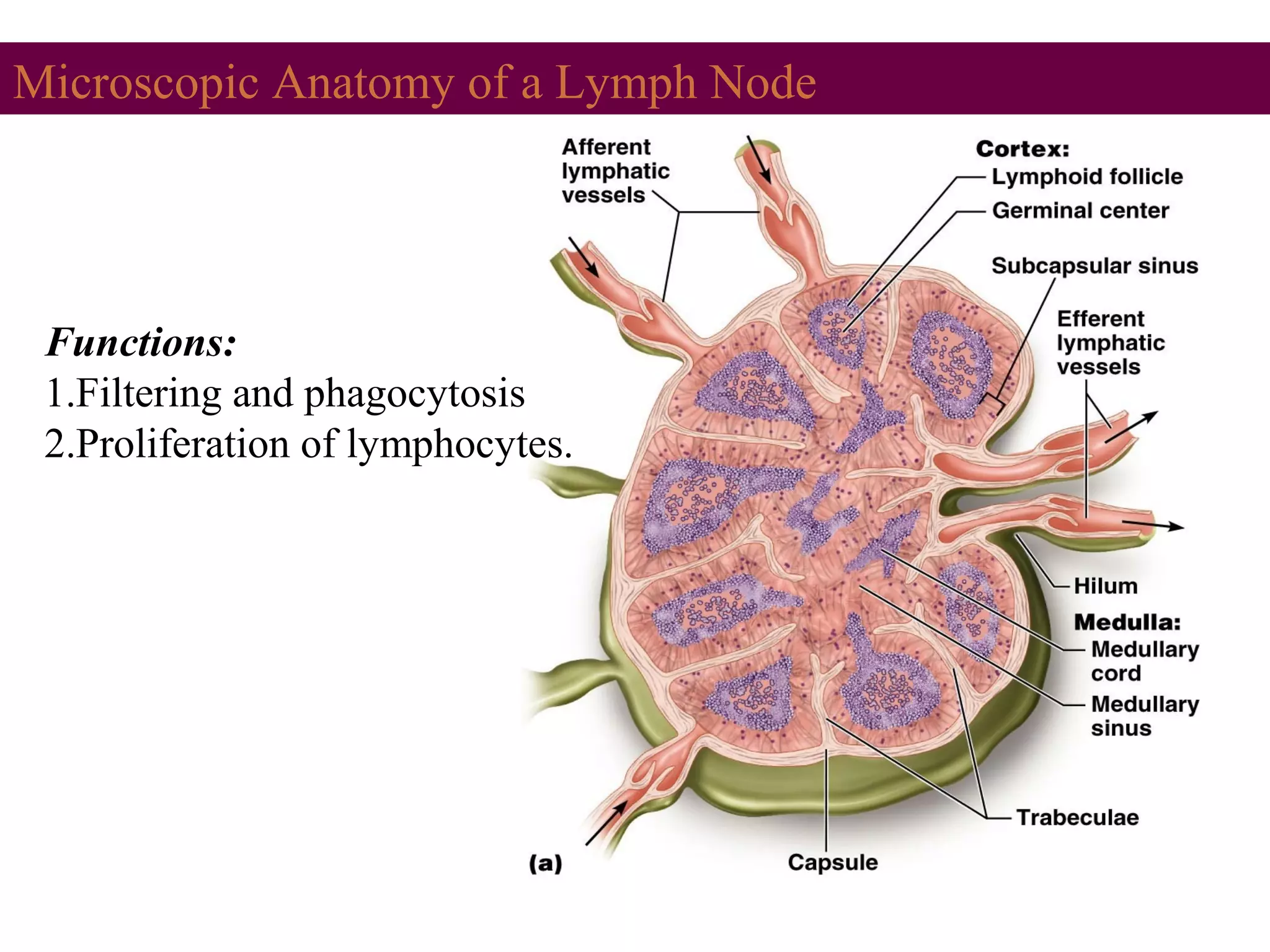
Microscopic Anatomy of a Lymph Node
 Outer Fibrous capsule – surrounds lymph nodes
 Trabeculae – connective tissue strands
 The main substance of the node consists of reticular and
lymphatic tissue containing many lymphocytes and
macrophages.
 Each node has a concave surface called hilum, where an
artery enters & a vein and efferent vessel leaves.
 Lymph vessels
 Afferent lymphatic vessels
 Efferent lymphatic vessels
Microscopic Anatomy of a Lymph Node
Functions:
1.Filtering and phagocytosis
2.Proliferation of lymphocytes.
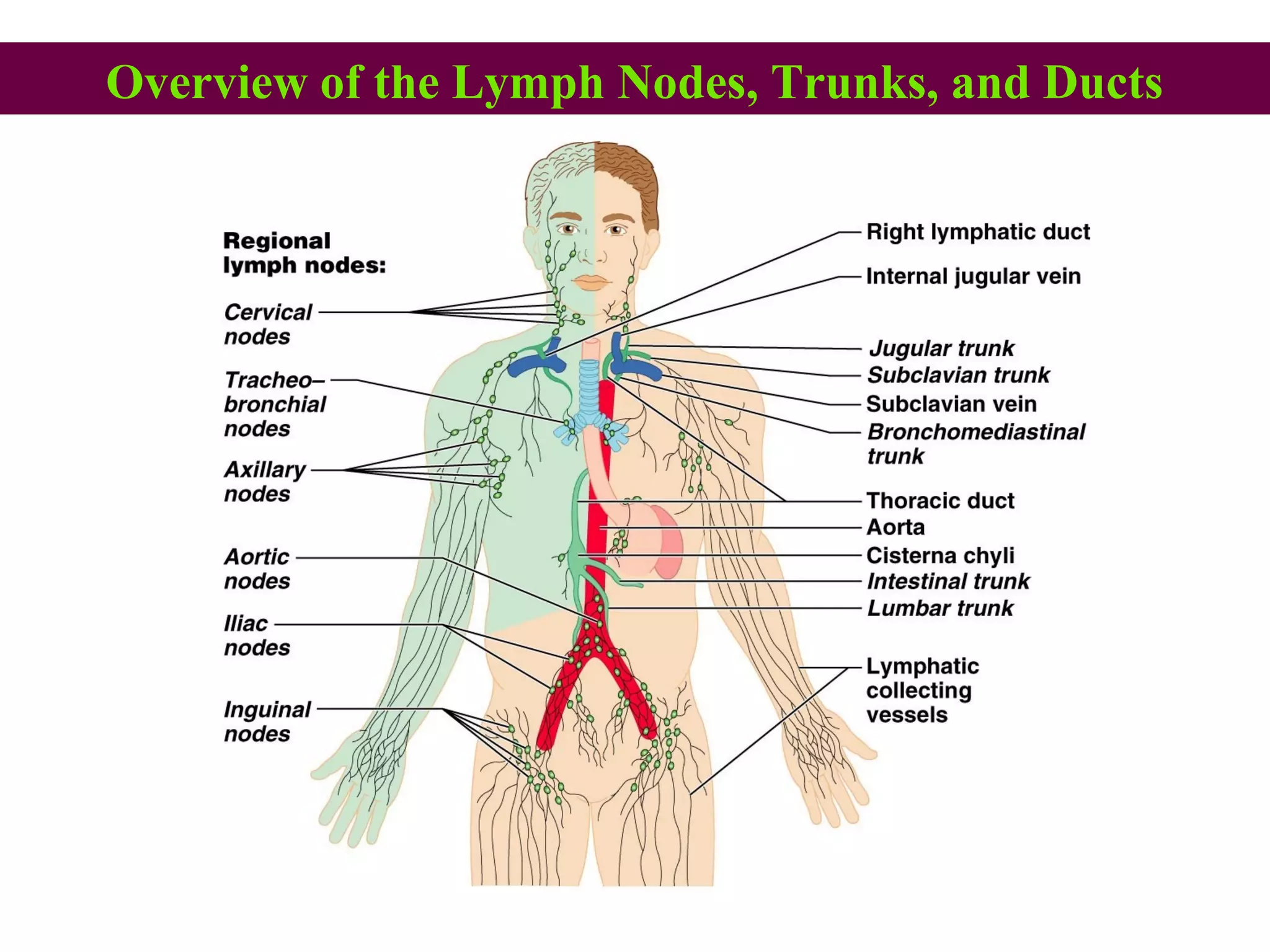
Lymph Trunks
 Lymphatic collecting vessels converge
 Five major lymph trunks
 Lumbar trunks
 Receives lymph from lower limbs
 Intestinal trunk
 Receives chyle from digestive organs
 Bronchomediastinal trunks
 Collects lymph from thoracic viscera
 Subclavian trunks
 Receive lymph from upper limbs and thoracic wall
 Jugular trunks
 Drain lymph from the head and neck
Overview of the Lymph Nodes, Trunks, and Ducts
The Lymphatic Trunks
Lymph Ducts
 Cisterna chyli
 Located at the union of lumbar and intestinal trunks
 Thoracic duct
 Ascends along vertebral bodies
 Empties into venous circulation
Junction of left internal jugular and left subclavian veins
 Drains three quarters of the body
 Right lymphatic duct
 Empties into right internal jugular and subclavian veins
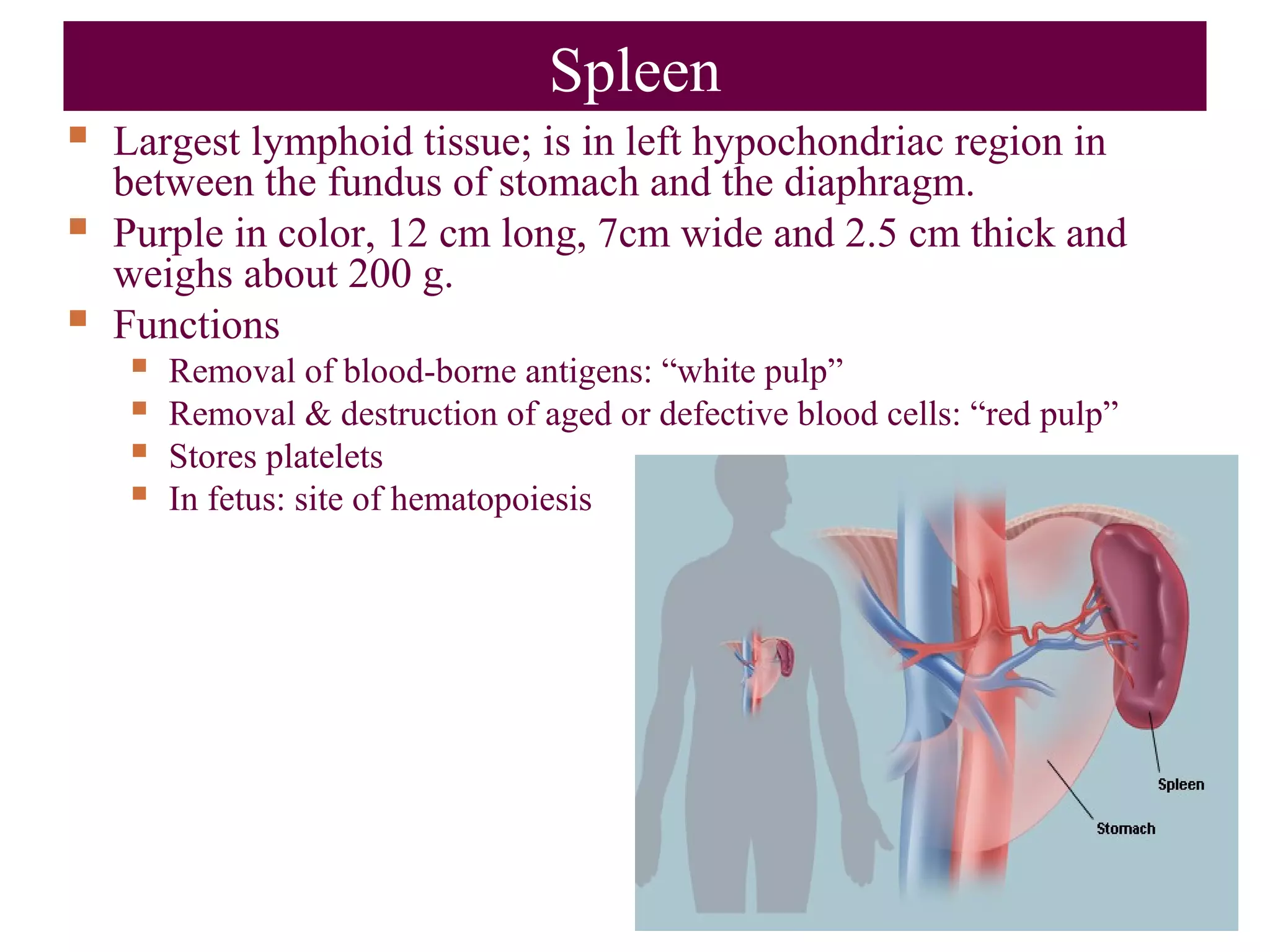
Spleen
 Largest lymphoid tissue; is in left hypochondriac region in
between the fundus of stomach and the diaphragm.
 Purple in color, 12 cm long, 7cm wide and 2.5 cm thick and
weighs about 200 g.
 Functions
 Removal of blood-borne antigens: “white pulp”
 Removal & destruction of aged or defective blood cells: “red pulp”
 Stores platelets
 In fetus: site of hematopoiesis
18
Spleen
19
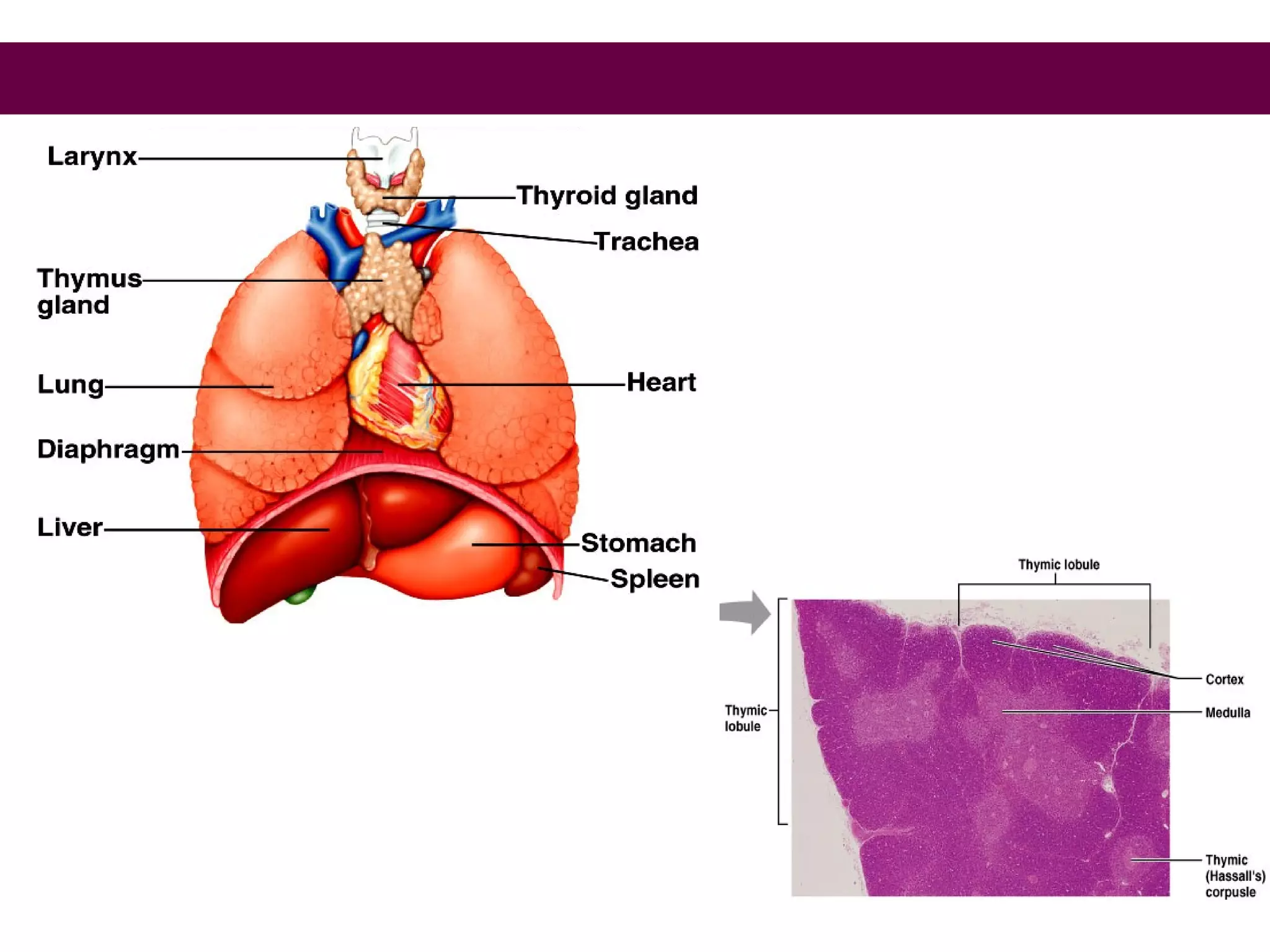
Thymus
 Lies in the upper part of the medistinum behind the sternum &
extends upwards into the root of the neck.
 Weighs about 10-15 g at birth and grows until the individual
reaches puberty. 30-40g by middle age .
 Prominent in newborns, almost disappears by old age
 Function: T lymphocyte maturation (immunocompetence)
 Has no follicles because no B cells
 Structure:
 Consists of two lobes joined by areolar tissue.
 Lobes are enclosed by a fibrous capsule which dips into their
substances, dividing them into lobules that consist of an irregular
branching framework of epithelial cells and lymphocytes.
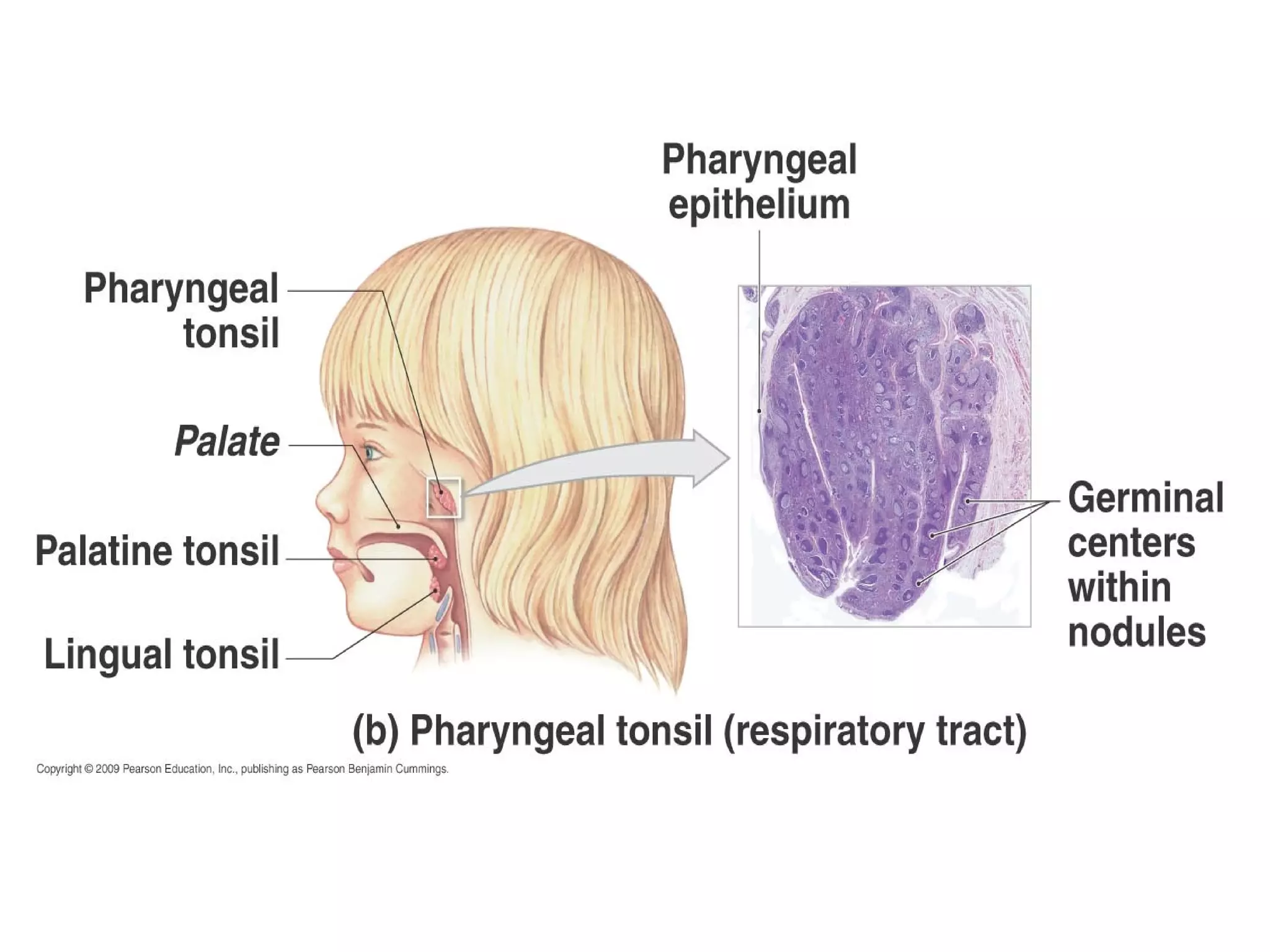
Palatine (usual
tonsillitis)
Lingual (tongue)
Pharyngeal
(“adenoids”)
Tubal
Tonsils
*
*
*
Simplest
lymphoid
tissue:
swellings of
mucosa, form a
circle
Crypts get
infected
in
childhood
 Aggregated lymphoid
nodules (“Peyer’s Patches”)
 About 40 follicles, 1 cm
wide
 Distal small intestine
(ileum)
 Appendix
Parts of the intestine are so densely packed with
MALT (mucosa-associated lymphoid tissue) that
they are considered lymphoid organs
Anatomy of lymphatic system ppt

Anatomy of lymphatic system ppt

  • 1.
    The Lymphatic System Mr.Visanth V S Principal Mayo School of Nursing, Lucknow
  • 2.
    The Lymphatic System A circulatory system for fluids  Returns fluid to the blood  Removes antigens from the body  Exposes antigens to the immune system  Main structures of the lymphatic system Lymph Lymphatic vessels Lymph nodes Diffuse Lymphoid tissue, Eg: tonsils Lymphoid organs, Eg: spleen &Thymus Bone marrow
  • 3.
    Lymph  Lymph isa clear watery fluid, similar in composition to plasma , with important exception of plasma proteins and identical in composition to interstitial fluid.  Transports the plasma proteins that seep out of the capillary beds back to the bloodstream.  It also carries away larger particles, Eg. Bacteria, Cell debris etc.  Contains lymphocytes which circulates in the lymphatic system allowing them to patrol the different regions of the body.
  • 4.
    The Lymphatic System Lymphatic vessels collect tissue fluid from loose connective tissue  Carry fluid to great veins in the neck  Fluid flows only toward the heart  Collect excess tissue fluid and blood proteins
  • 5.
    Orders of LymphaticVessels  Lymph capillaries  Smallest lymph vessels  First to receive lymph  Lymphatic collecting vessels  Collect from lymph capillaries  Lymph nodes  Scattered along collecting vessels  Lymph trunks  Collect lymph from collecting vessels  Lymph ducts  Empty into veins of the neck
  • 6.
    Lymphatic Capillaries  Locatednear blood capillaries  Receive tissue fluid from CT  Increased volume of tissue fluid Minivalve flaps open and allow fluid to enter  Highly permeability allows entrance of  Tissue fluid  Bacteria, viruses, and cancer cells  Lacteals – specialized lymphatic capillaries  Located in the villi of the small intestines Receive digested fats Fatty lymph – chyle
  • 7.
    Location and Structureof Lymphatic Capillaries Figure 20.2a, b
  • 8.
    Lymphatic Collecting Vessels Accompany blood vessels  Composed of the same three tunics as blood vessels  Contain more valves than veins do  Helps direct the flow of blood  Lymph propelled by  Bulging of skeletal muscles  Pulsing of nearby arteries  Tunica media of the lymph vessels
  • 9.
    Lymph Nodes  Lymphnodes are bean shaped organs along with lymphatic collecting vessels  Up to 1 inch in size  Cleanse the lymph of pathogens  Human body contains around 500  Lymph nodes are organized in clusters  These nodes are considerably in size: some are as small as a pin head & the largest are about the size of an almond
  • 10.
  • 11.
    Microscopic Anatomy ofa Lymph Node  Outer Fibrous capsule – surrounds lymph nodes  Trabeculae – connective tissue strands  The main substance of the node consists of reticular and lymphatic tissue containing many lymphocytes and macrophages.  Each node has a concave surface called hilum, where an artery enters & a vein and efferent vessel leaves.  Lymph vessels  Afferent lymphatic vessels  Efferent lymphatic vessels
  • 12.
    Microscopic Anatomy ofa Lymph Node Functions: 1.Filtering and phagocytosis 2.Proliferation of lymphocytes.
  • 13.
    Lymph Trunks  Lymphaticcollecting vessels converge  Five major lymph trunks  Lumbar trunks  Receives lymph from lower limbs  Intestinal trunk  Receives chyle from digestive organs  Bronchomediastinal trunks  Collects lymph from thoracic viscera  Subclavian trunks  Receive lymph from upper limbs and thoracic wall  Jugular trunks  Drain lymph from the head and neck
  • 14.
    Overview of theLymph Nodes, Trunks, and Ducts
  • 15.
  • 16.
    Lymph Ducts  Cisternachyli  Located at the union of lumbar and intestinal trunks  Thoracic duct  Ascends along vertebral bodies  Empties into venous circulation Junction of left internal jugular and left subclavian veins  Drains three quarters of the body  Right lymphatic duct  Empties into right internal jugular and subclavian veins
  • 17.
    Spleen  Largest lymphoidtissue; is in left hypochondriac region in between the fundus of stomach and the diaphragm.  Purple in color, 12 cm long, 7cm wide and 2.5 cm thick and weighs about 200 g.  Functions  Removal of blood-borne antigens: “white pulp”  Removal & destruction of aged or defective blood cells: “red pulp”  Stores platelets  In fetus: site of hematopoiesis
  • 18.
  • 19.
    19 Thymus  Lies inthe upper part of the medistinum behind the sternum & extends upwards into the root of the neck.  Weighs about 10-15 g at birth and grows until the individual reaches puberty. 30-40g by middle age .  Prominent in newborns, almost disappears by old age  Function: T lymphocyte maturation (immunocompetence)  Has no follicles because no B cells  Structure:  Consists of two lobes joined by areolar tissue.  Lobes are enclosed by a fibrous capsule which dips into their substances, dividing them into lobules that consist of an irregular branching framework of epithelial cells and lymphocytes.
  • 21.
  • 23.
     Aggregated lymphoid nodules(“Peyer’s Patches”)  About 40 follicles, 1 cm wide  Distal small intestine (ileum)  Appendix Parts of the intestine are so densely packed with MALT (mucosa-associated lymphoid tissue) that they are considered lymphoid organs