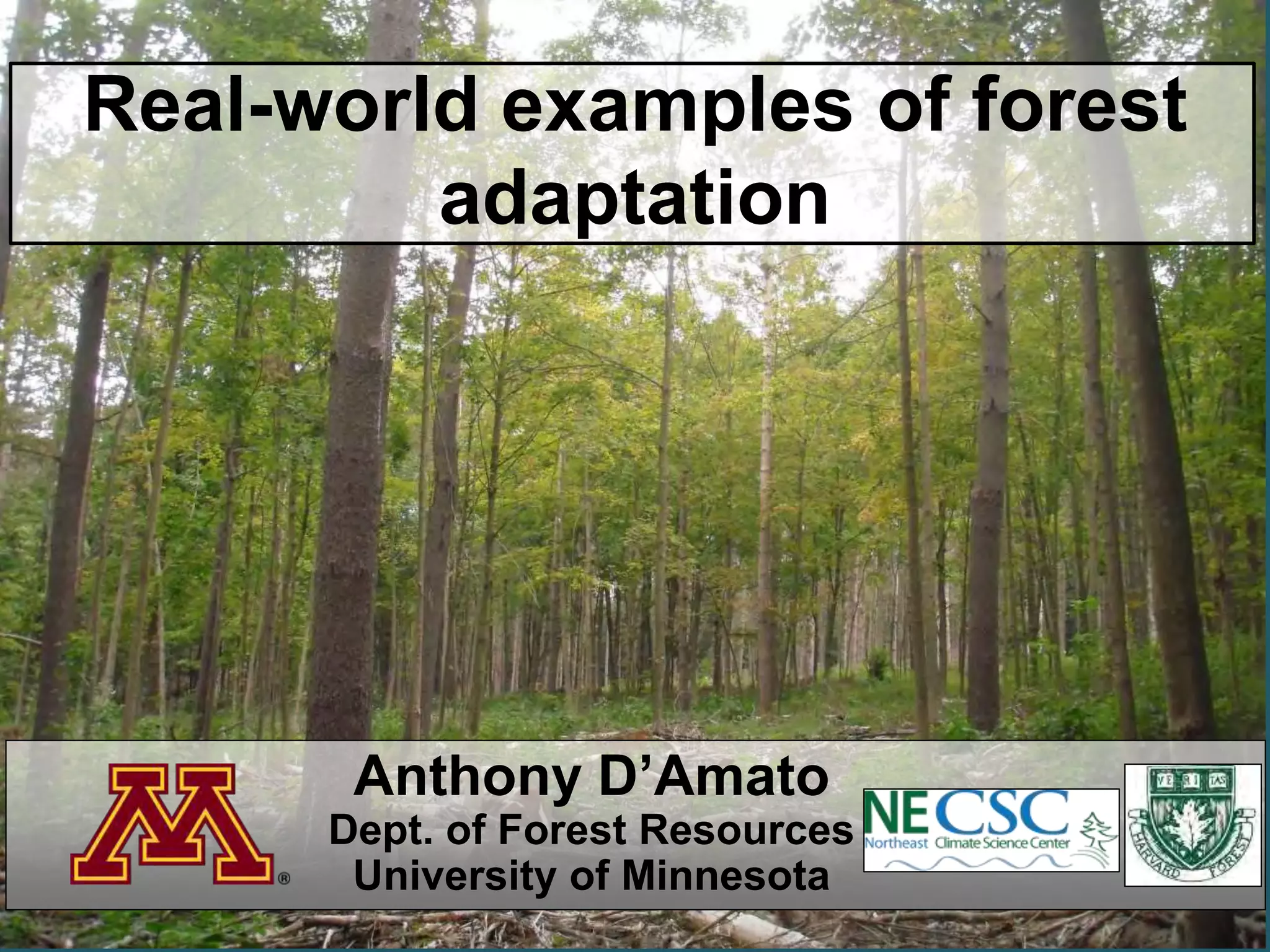
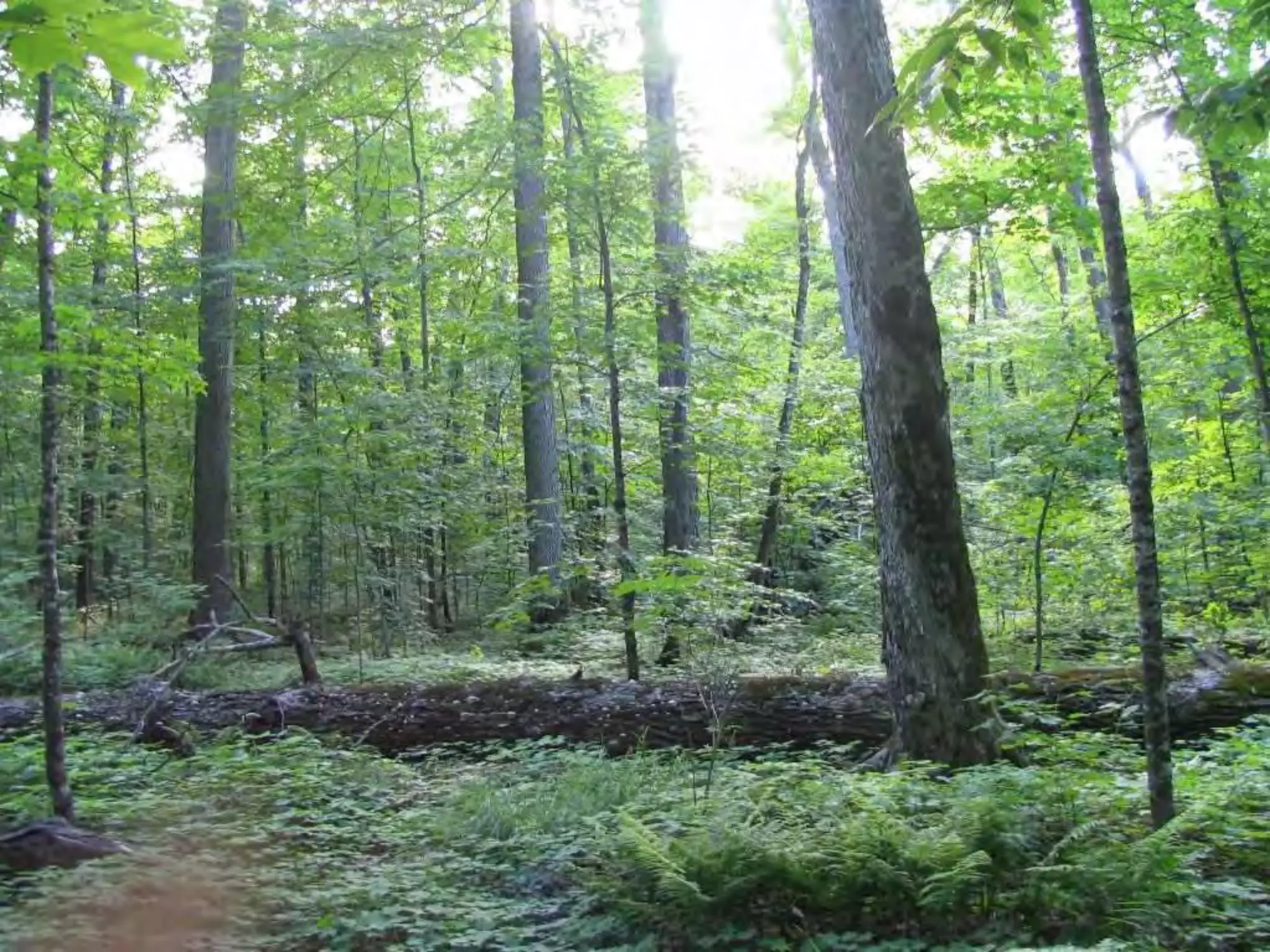
Real-world examples of forest 
adaptation 
Anthony D’Amato 
Dept. of Forest Resources 
University of Minnesota
Context for forest adaptation in practice 
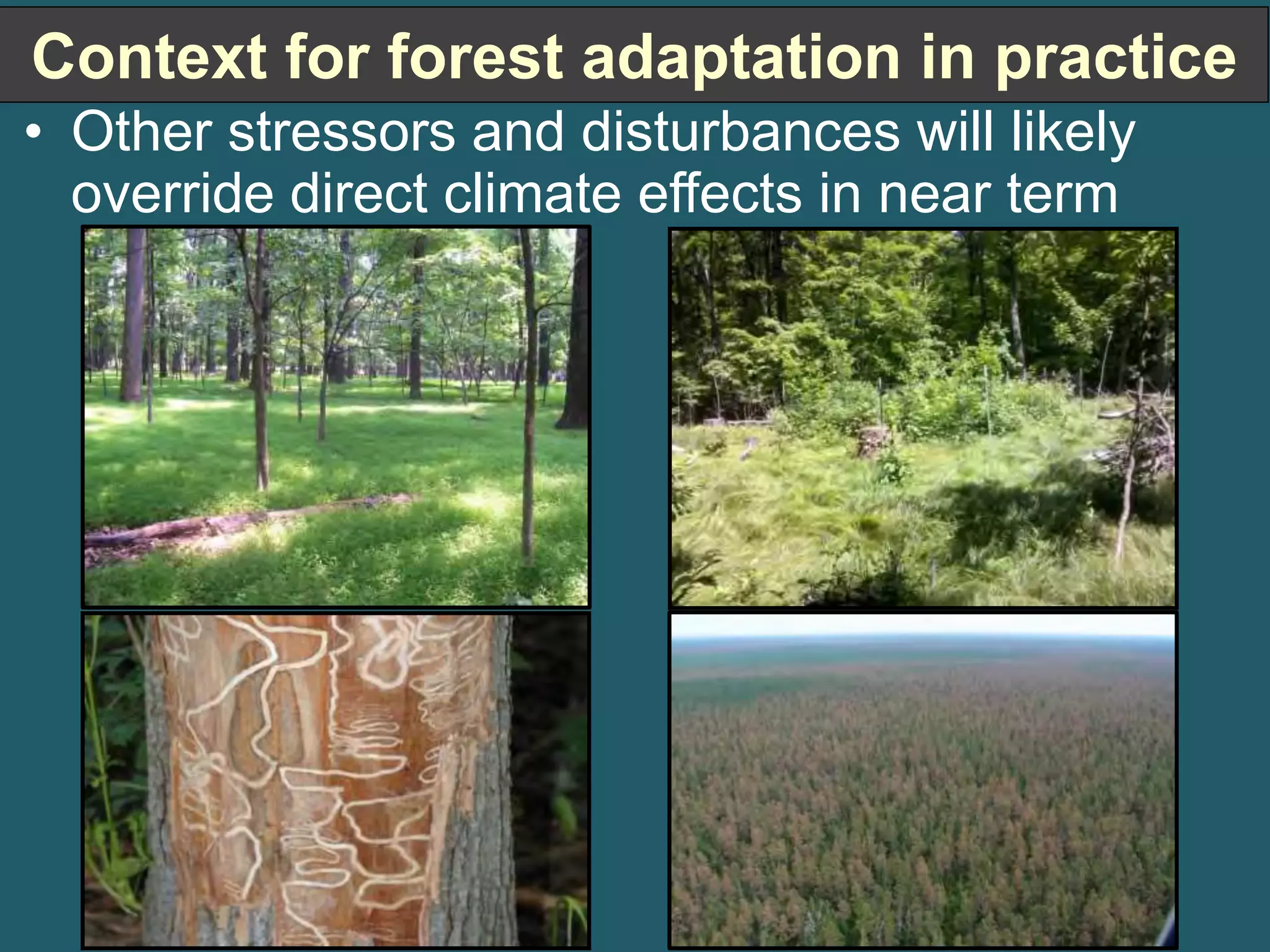
• Other stressors and disturbances will likely 
override direct climate effects in near term
Context for forest adaptation in practice 
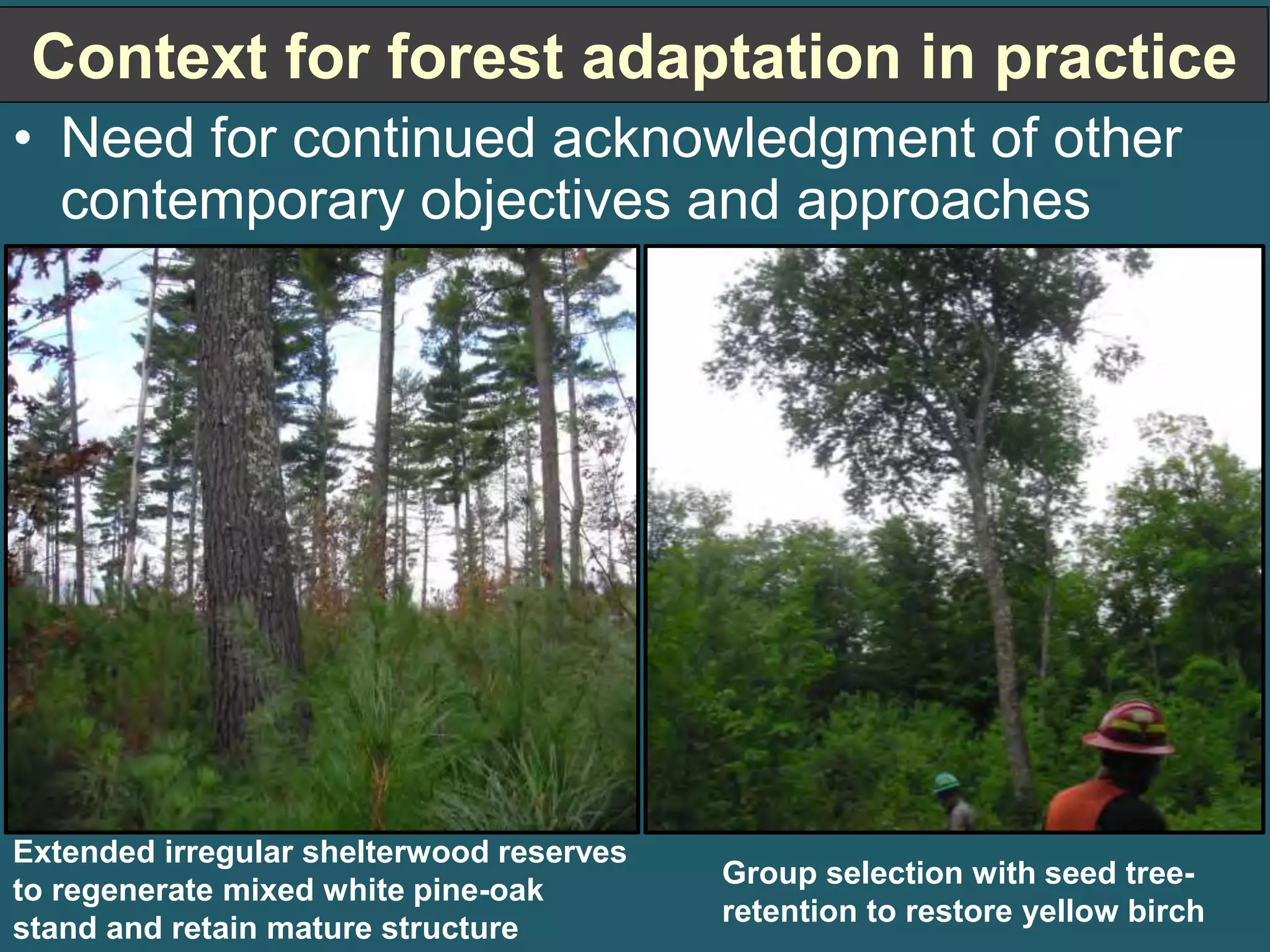
• Need for continued acknowledgment of other 
contemporary objectives and approaches 
Group selection with seed tree-retention 
to restore yellow birch 
Extended irregular shelterwood reserves 
to regenerate mixed white pine-oak 
stand and retain mature structure
Context for forest adaptation in practice 
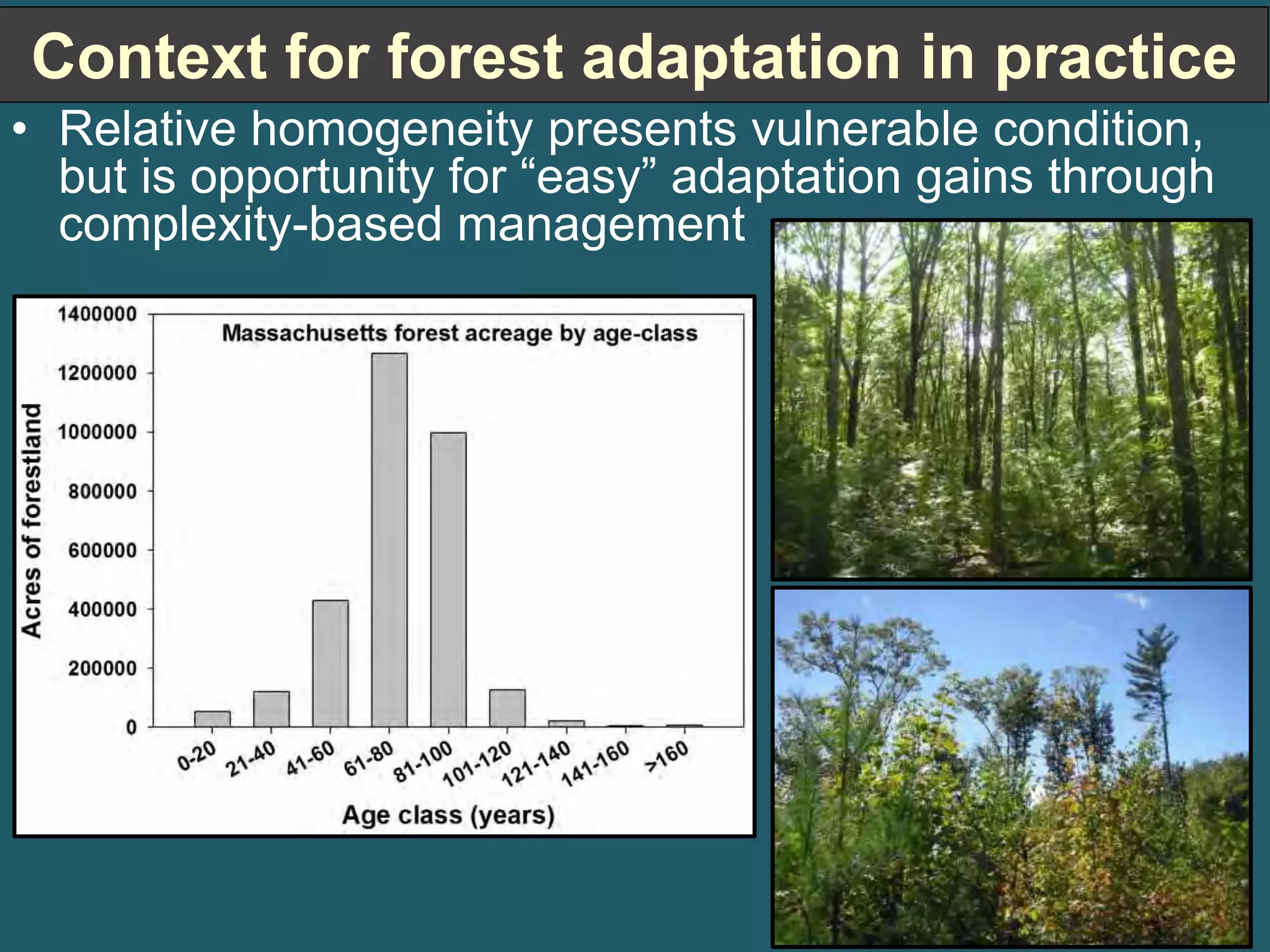
• Relative homogeneity presents vulnerable condition, 
but is opportunity for “easy” adaptation gains through 
complexity-based management
Context for forest adaptation in practice 
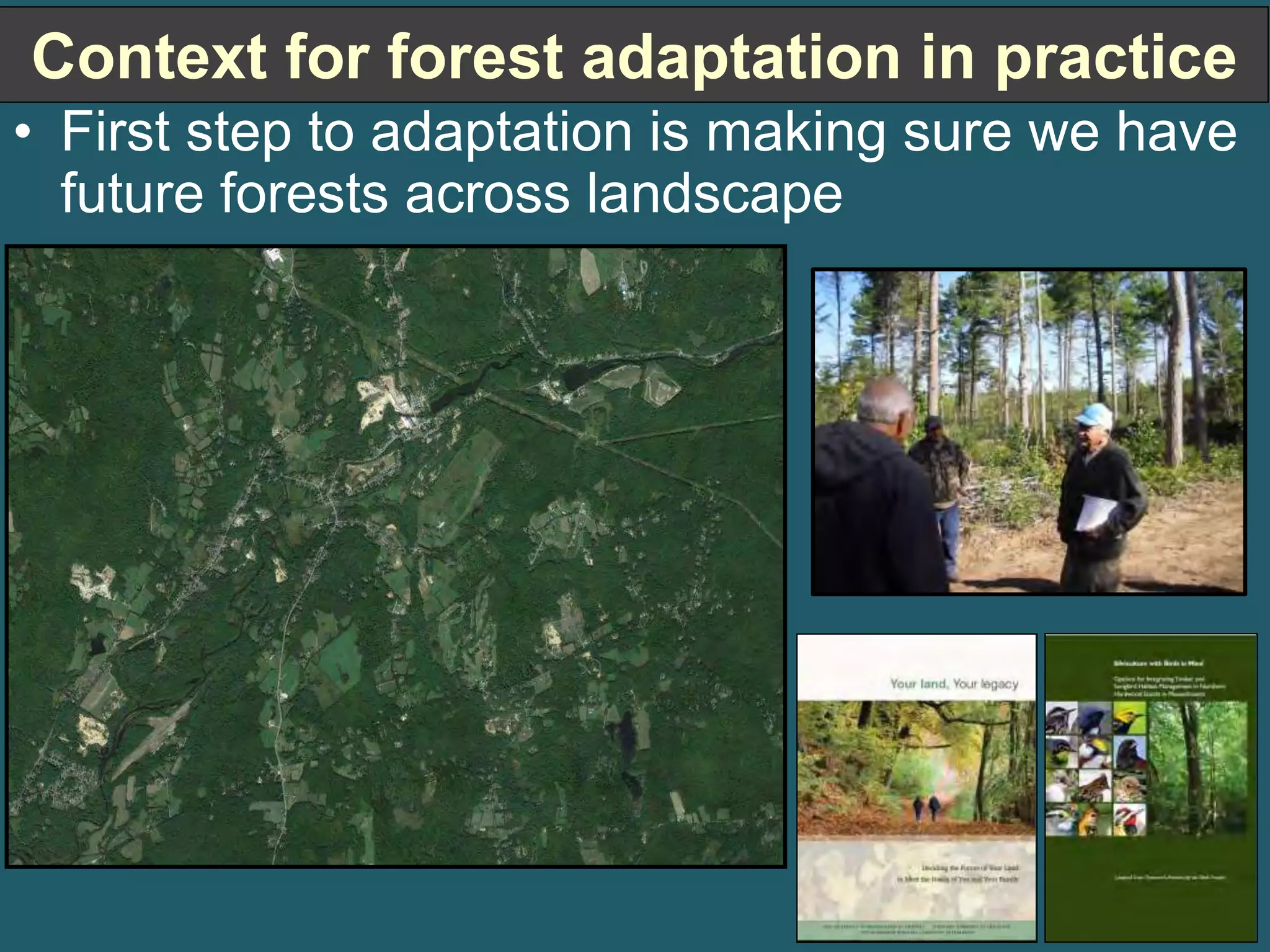
• First step to adaptation is making sure we have 
future forests across landscape
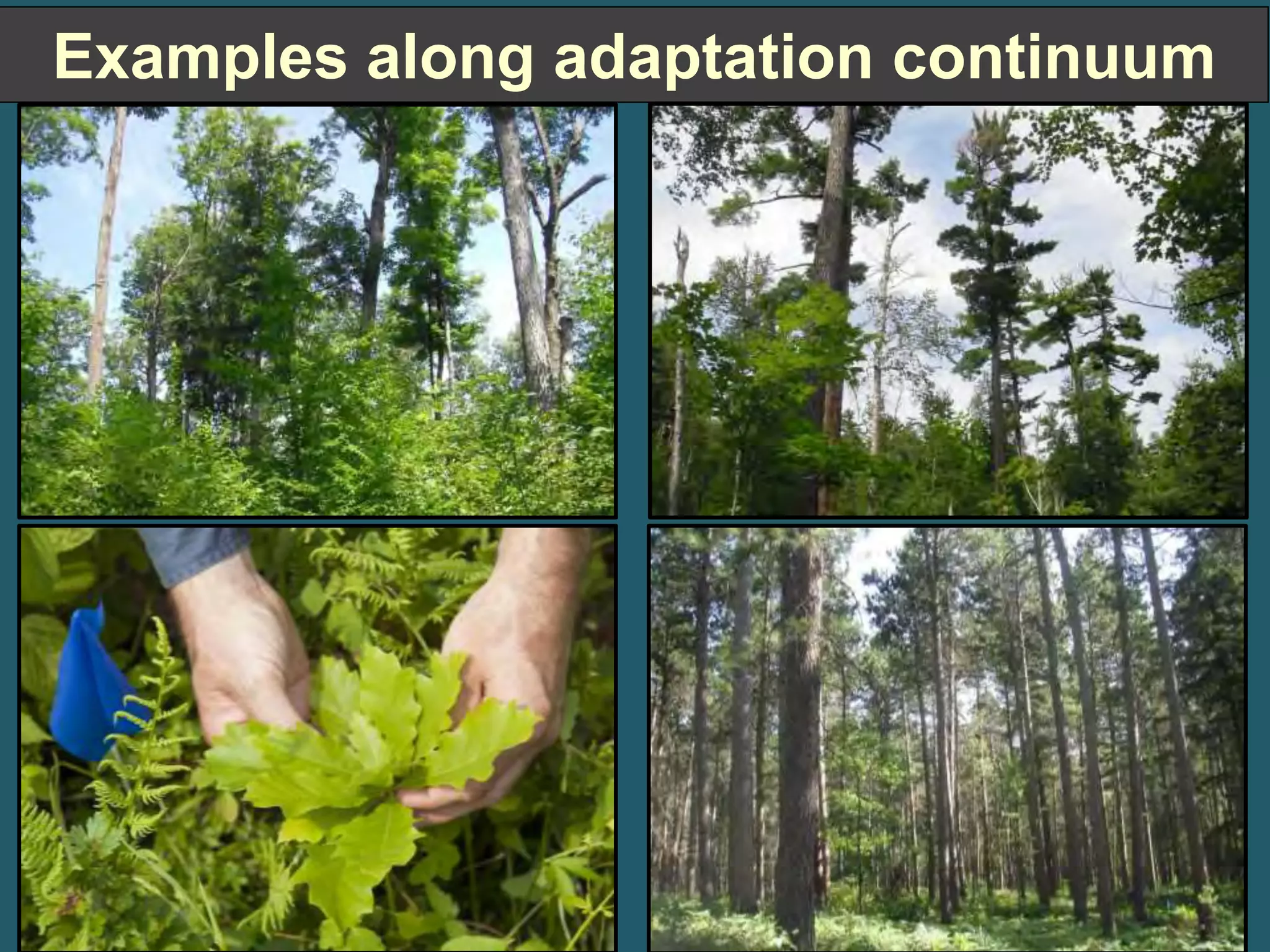
Examples along adaptation continuum
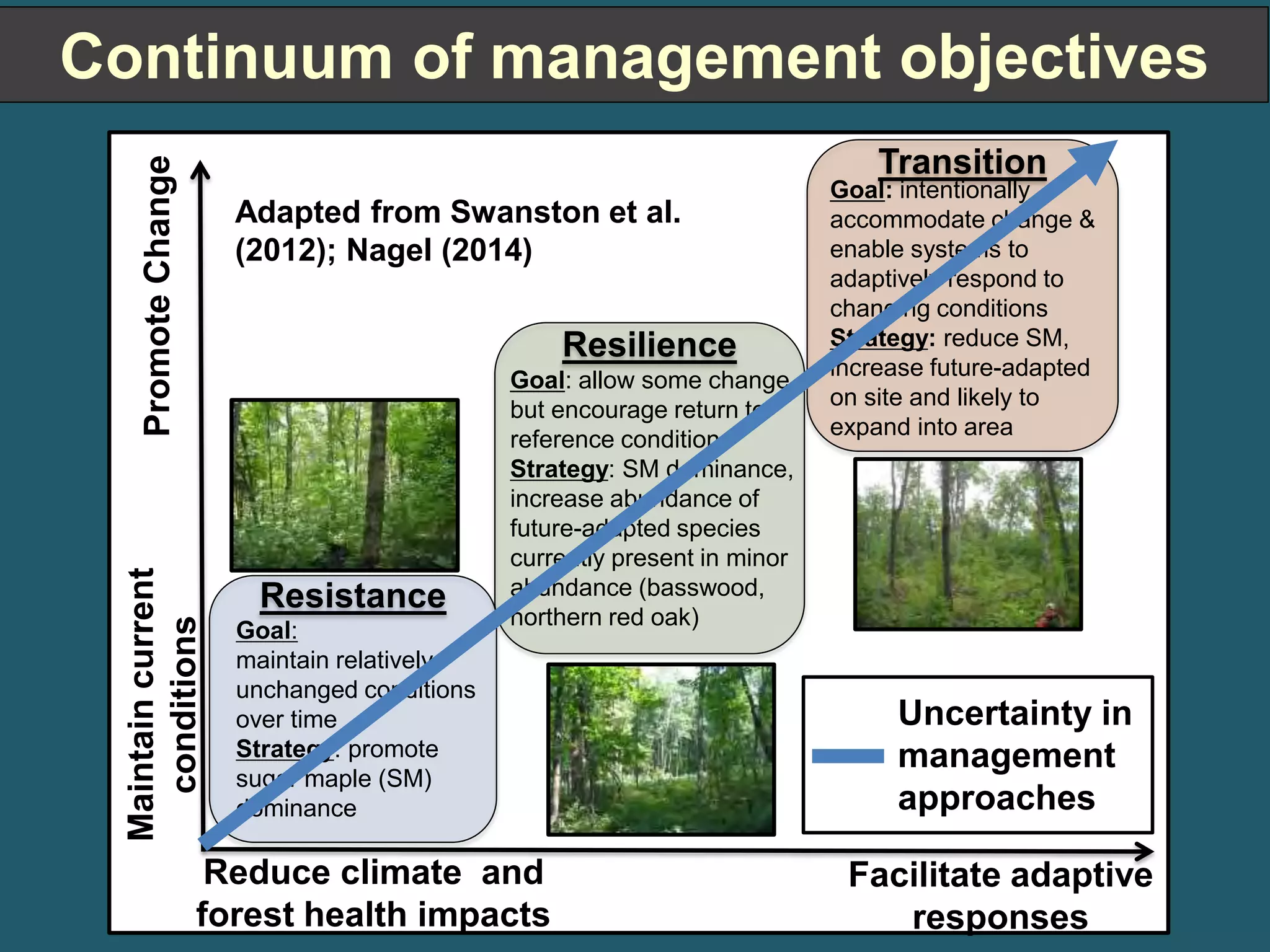
Continuum of management objectives 
Maintain current Promote Change 
conditions 
Adapted from Swanston et al. 
(2012); Nagel (2014) 
Reduce climate and 
forest health impacts 
Facilitate adaptive 
responses 
Resistance 
Goal: 
maintain relatively 
unchanged conditions 
over time 
Strategy: promote 
sugar maple (SM) 
dominance 
Transition 
Goal: intentionally 
accommodate change & 
enable systems to 
adaptively respond to 
changing conditions 
Strategy: reduce SM, 
increase future-adapted 
on site and likely to 
expand into area 
Resilience 
Goal: allow some change, 
but encourage return to 
reference conditions 
Strategy: SM dominance, 
increase abundance of 
future-adapted species 
currently present in minor 
abundance (basswood, 
northern red oak) 
Uncertainty in 
management 
approaches
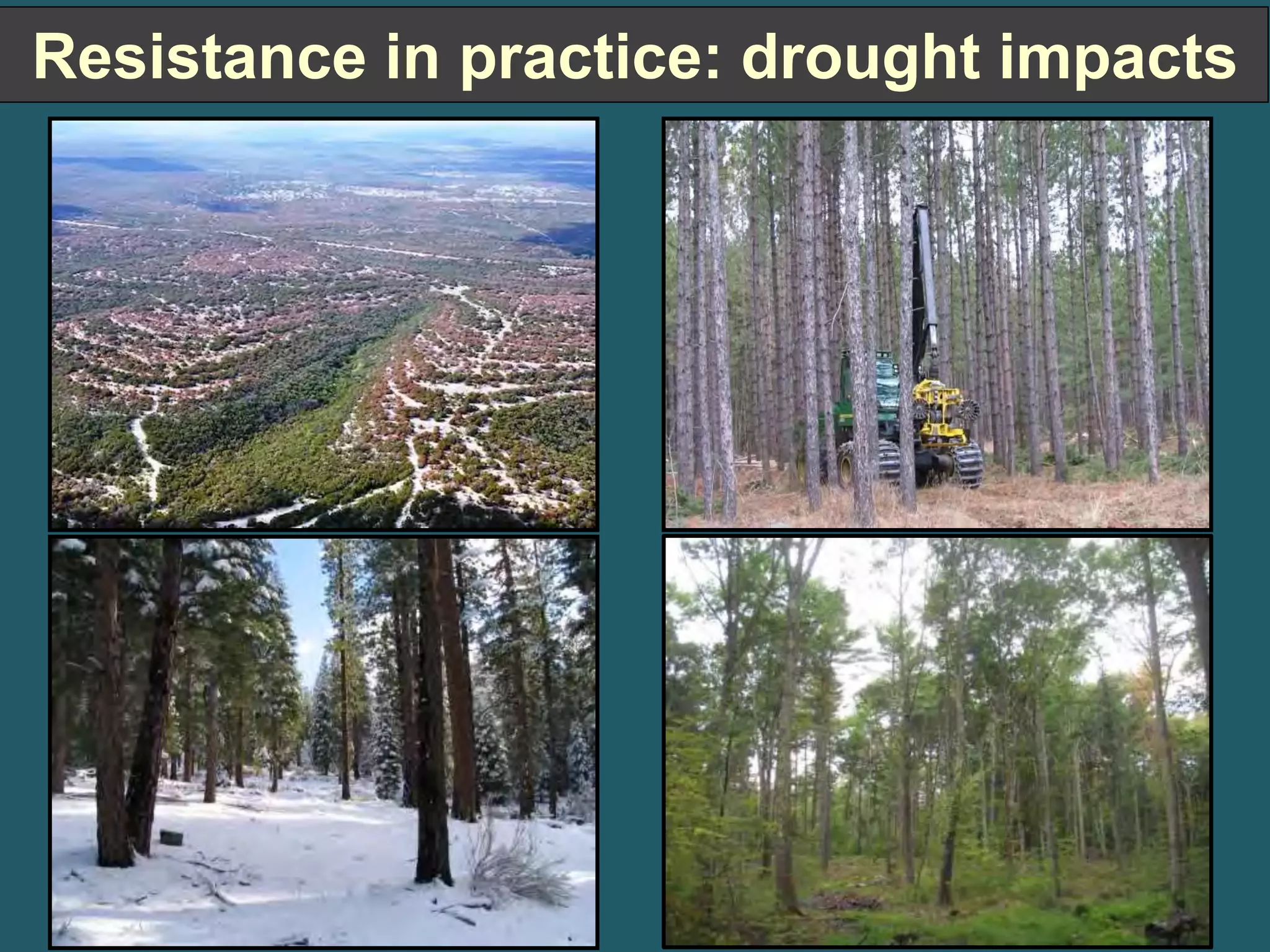
Resistance in practice: drought impacts
Resistance in practice: drought impacts 
• Interest in use of thinning treatments to 
minimize impacts of predicted changes in 
climate and extreme weather (e.g., drought) 
• Thinning represents near-term resistance 
strategy versus long-term adaptation approach 
(e.g., shifting composition)
Resistance in practice: drought impacts 
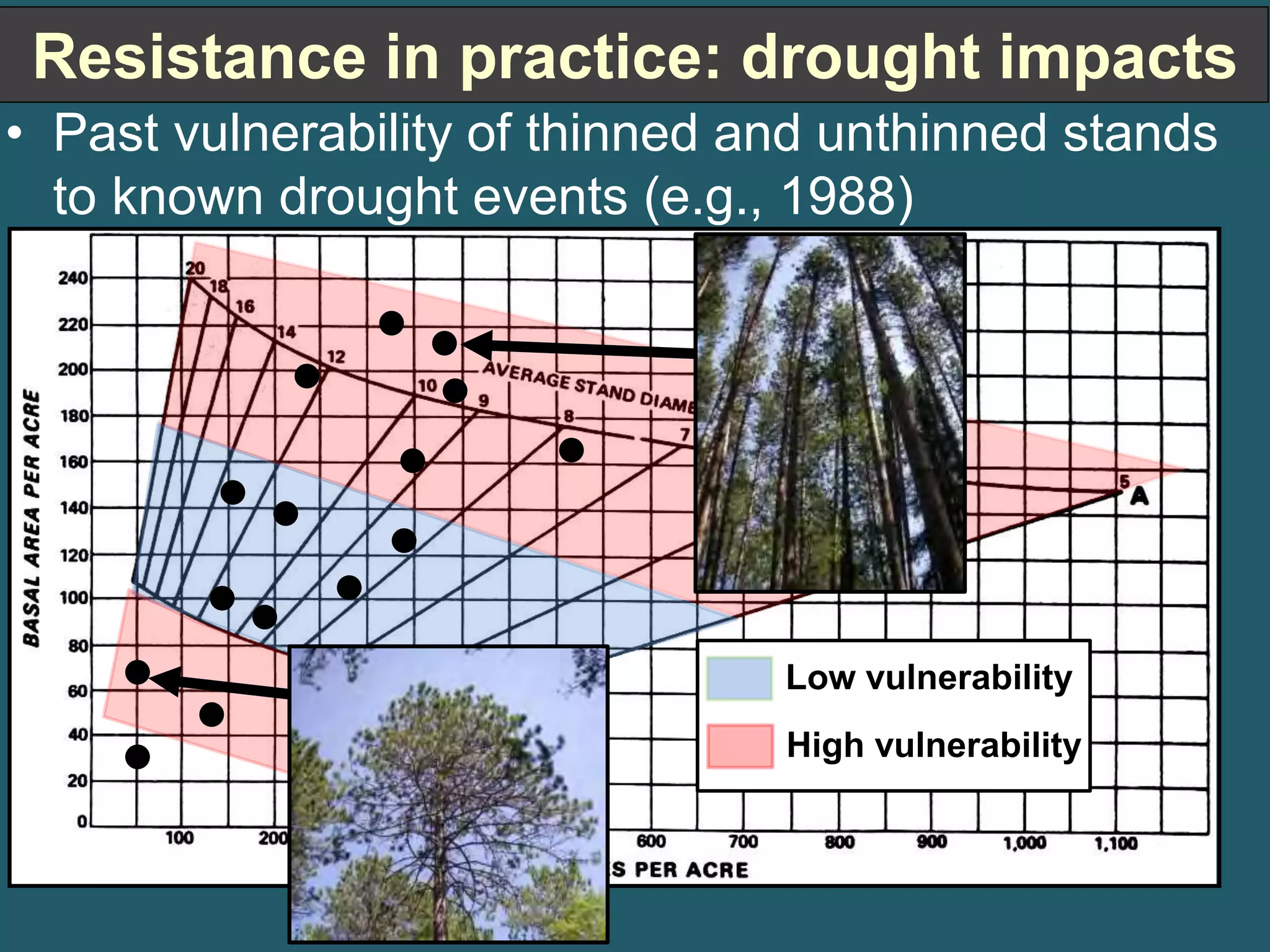
• Past vulnerability of thinned and unthinned stands 
to known drought events (e.g., 1988) 
Low vulnerability 
High vulnerability
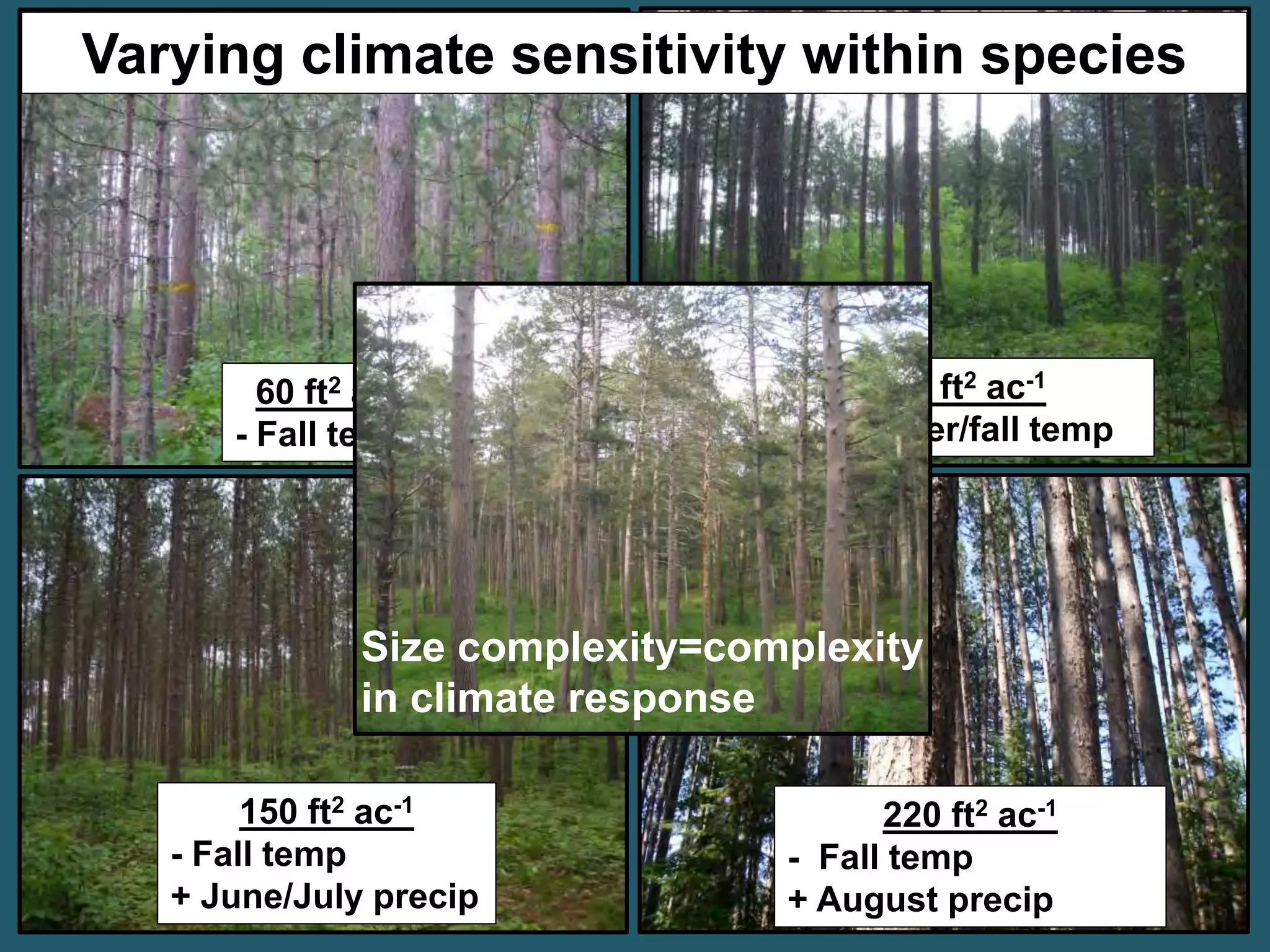
Varying climate sensitivity within species 
60 ft2 ac-1 
- Fall temp 
90 ft2 ac-1 
- Summer/fall temp 
Size complexity=complexity 
in climate response 
150 ft2 ac-1 
- Fall temp 
+ June/July precip 
220 ft2 ac-1 
- Fall temp 
+ August precip
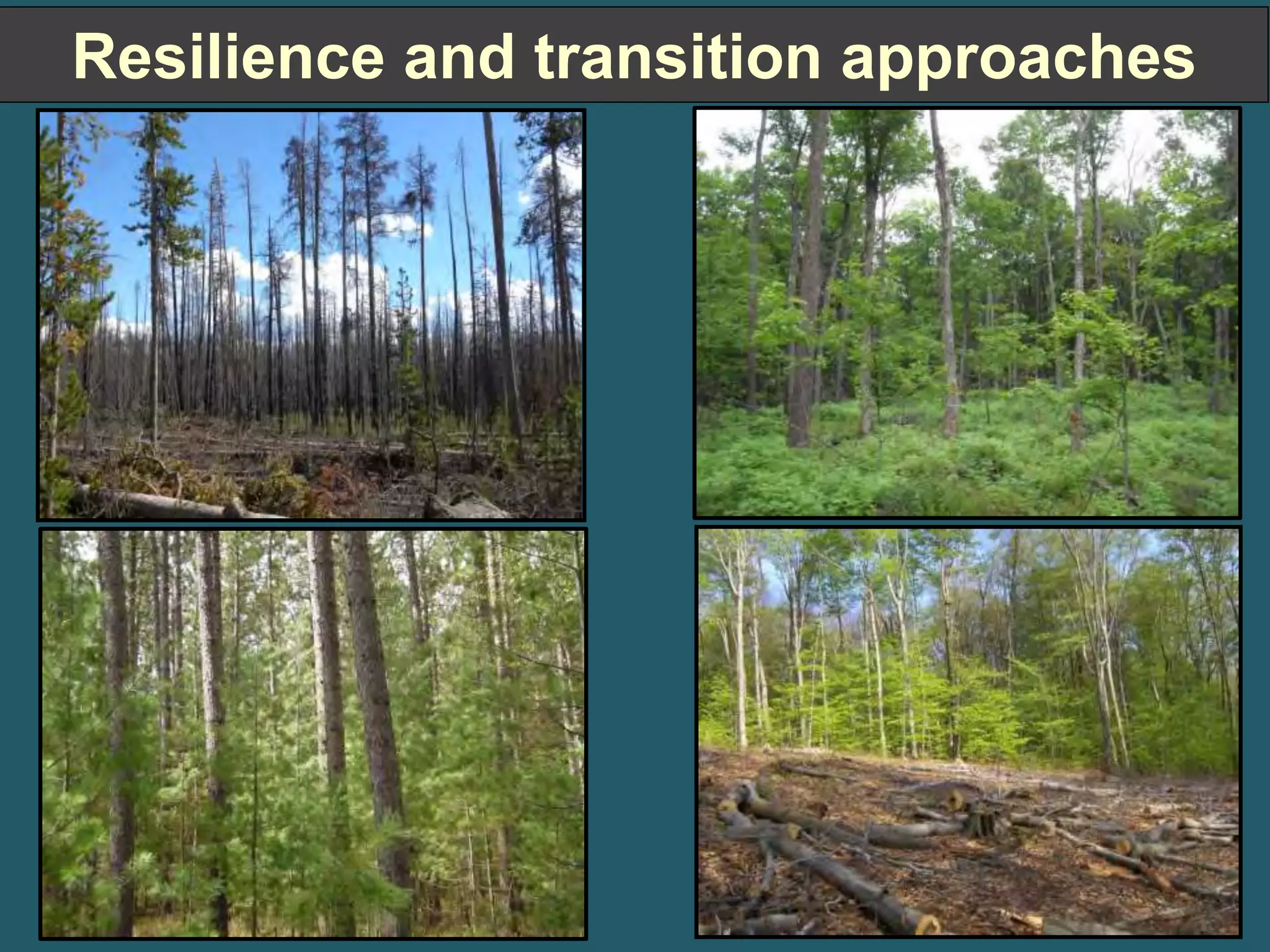
Resilience and transition approaches
Resilience and transition approaches 
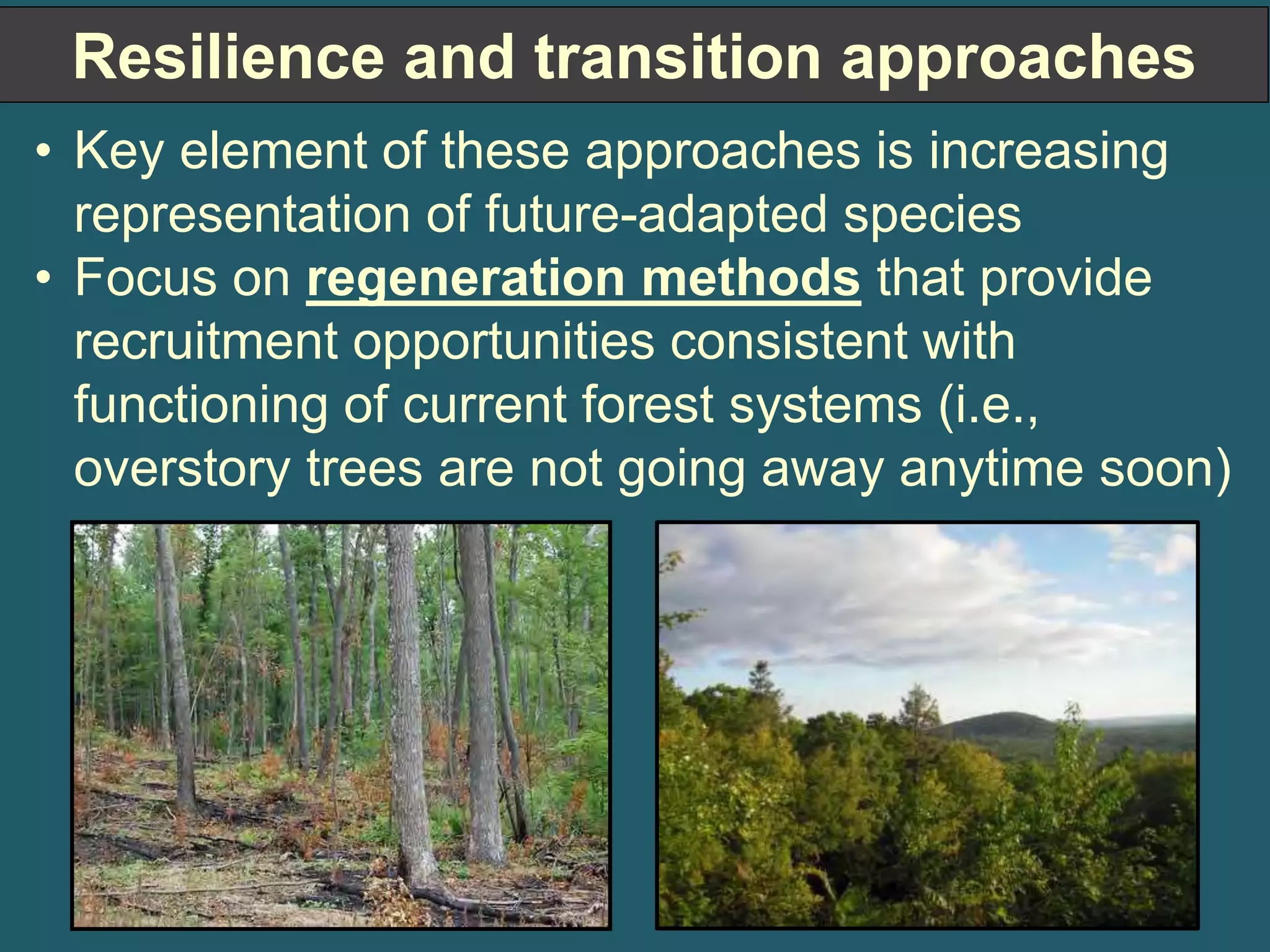
• Key element of these approaches is increasing 
representation of future-adapted species 
• Focus on regeneration methods that provide 
recruitment opportunities consistent with 
functioning of current forest systems (i.e., 
overstory trees are not going away anytime soon)
Resilience and transition approaches 
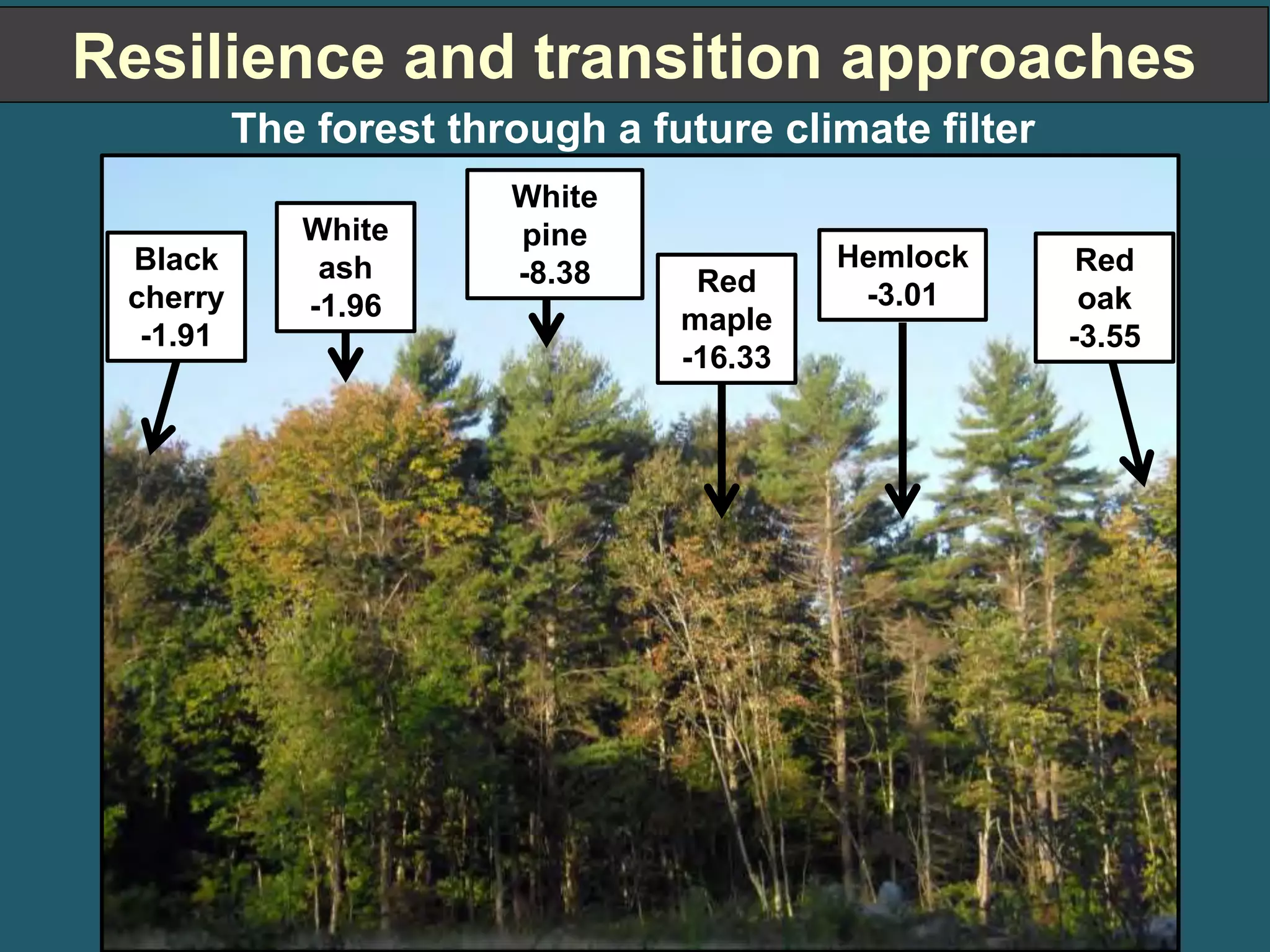
White 
ash 
-1.96 
White 
pine 
-8.38 Red 
maple 
-16.33 
Black 
cherry 
-1.91 
Hemlock 
-3.01 
Red 
oak 
-3.55 
The forest through a future climate filter
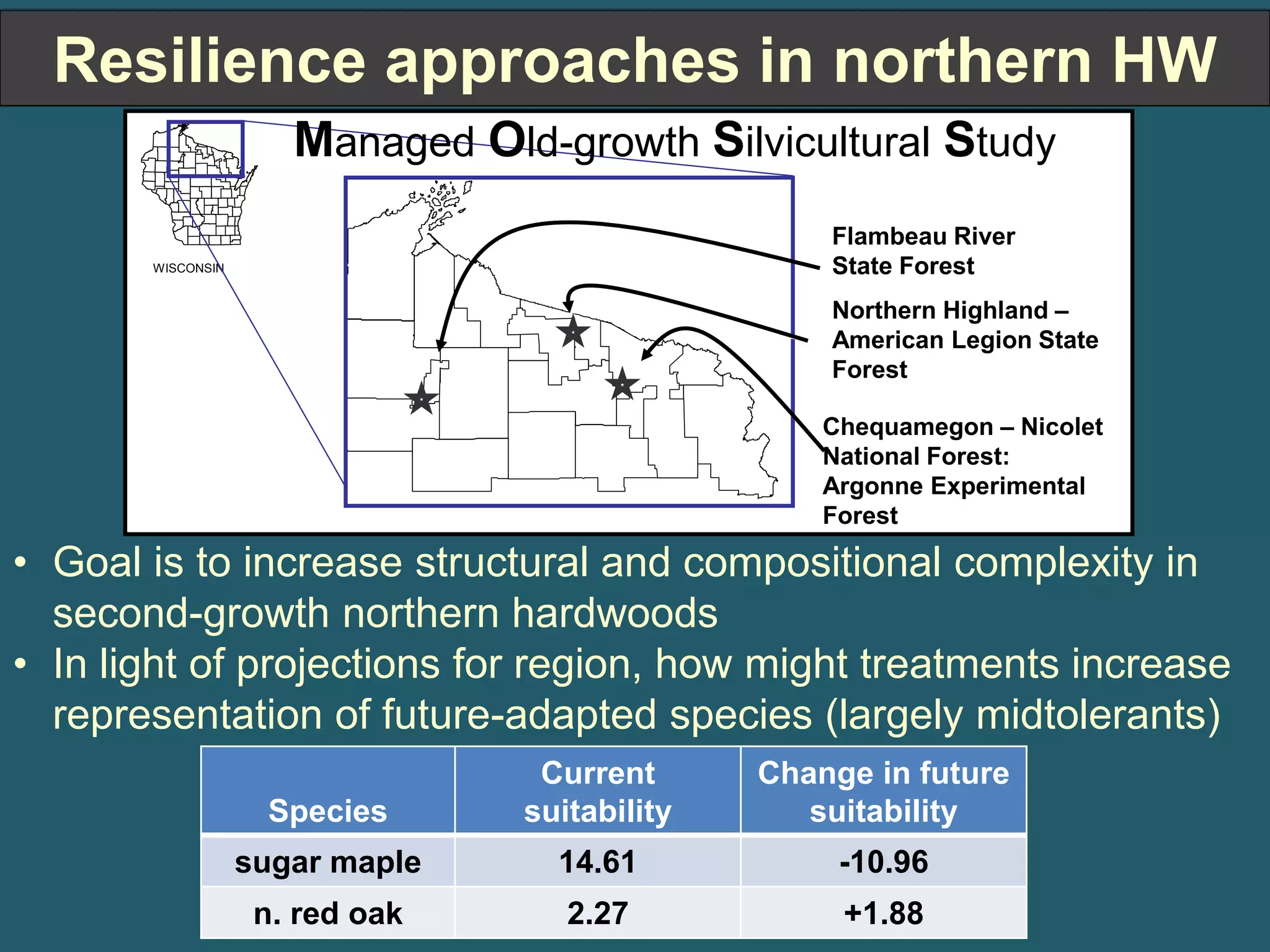
Resilience approaches in northern HW 
WISCONSIN 
Managed Old-growth Silvicultural Study 
Flambeau River 
State Forest 
Northern Highland – 
American Legion State 
Forest 
C hequamegon – Nicolet 
National Forest: 
Argonne Experimental 
Forest 
• Goal is to increase structural and compositional complexity in 
second-growth northern hardwoods 
• In light of projections for region, how might treatments increase 
representation of future-adapted species (largely midtolerants) 
Species 
Current 
suitability 
Change in future 
suitability 
sugar maple 14.61 -10.96 
n. red oak 2.27 +1.88
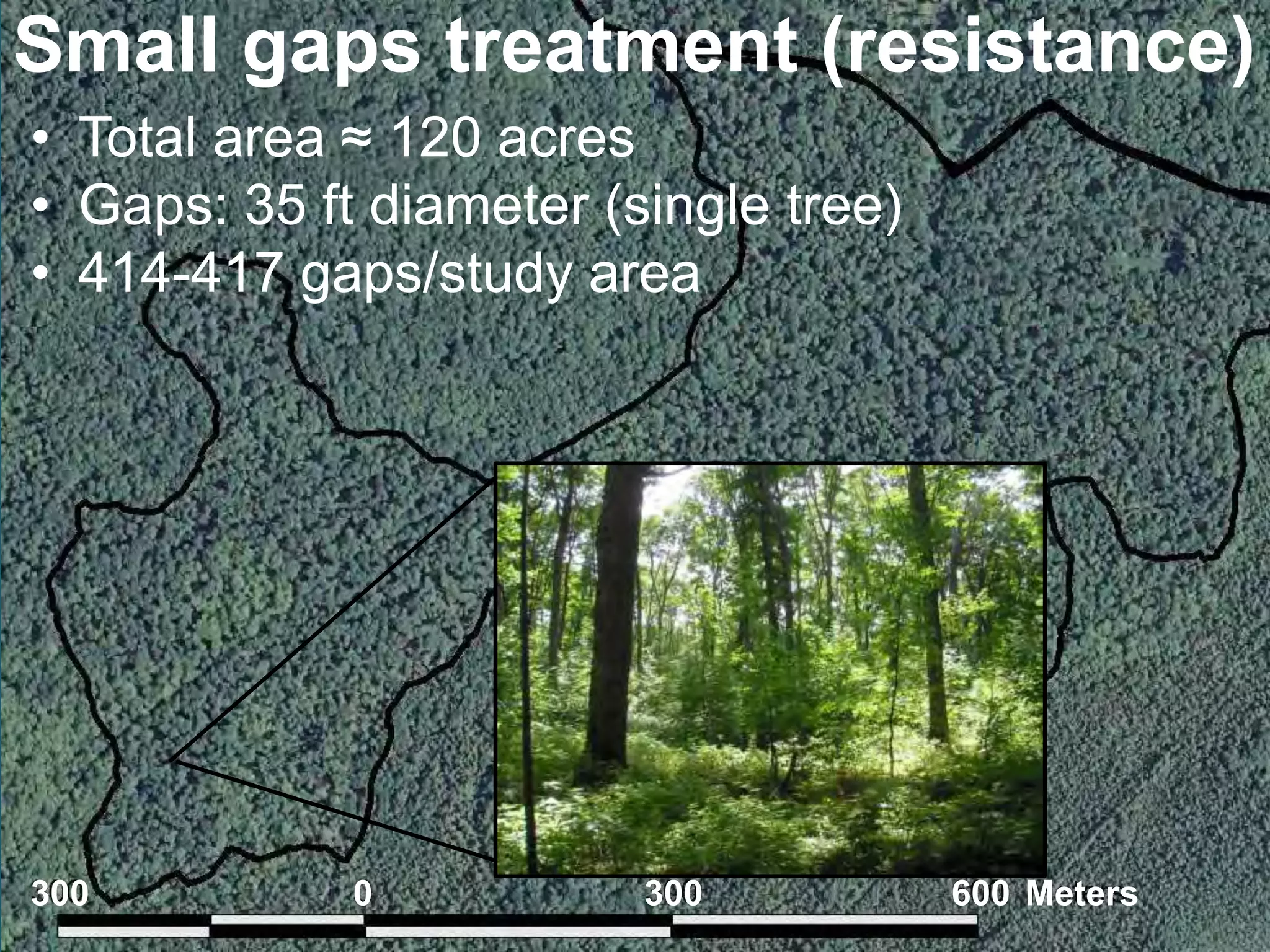
Small gaps treatment (resistance) 
• Total area ≈ 120 acres 
• Gaps: 35 ft diameter (single tree) 
• • 414-ARG4 417 Aeial 
gaps/study area 
300 0 300 600 Meters
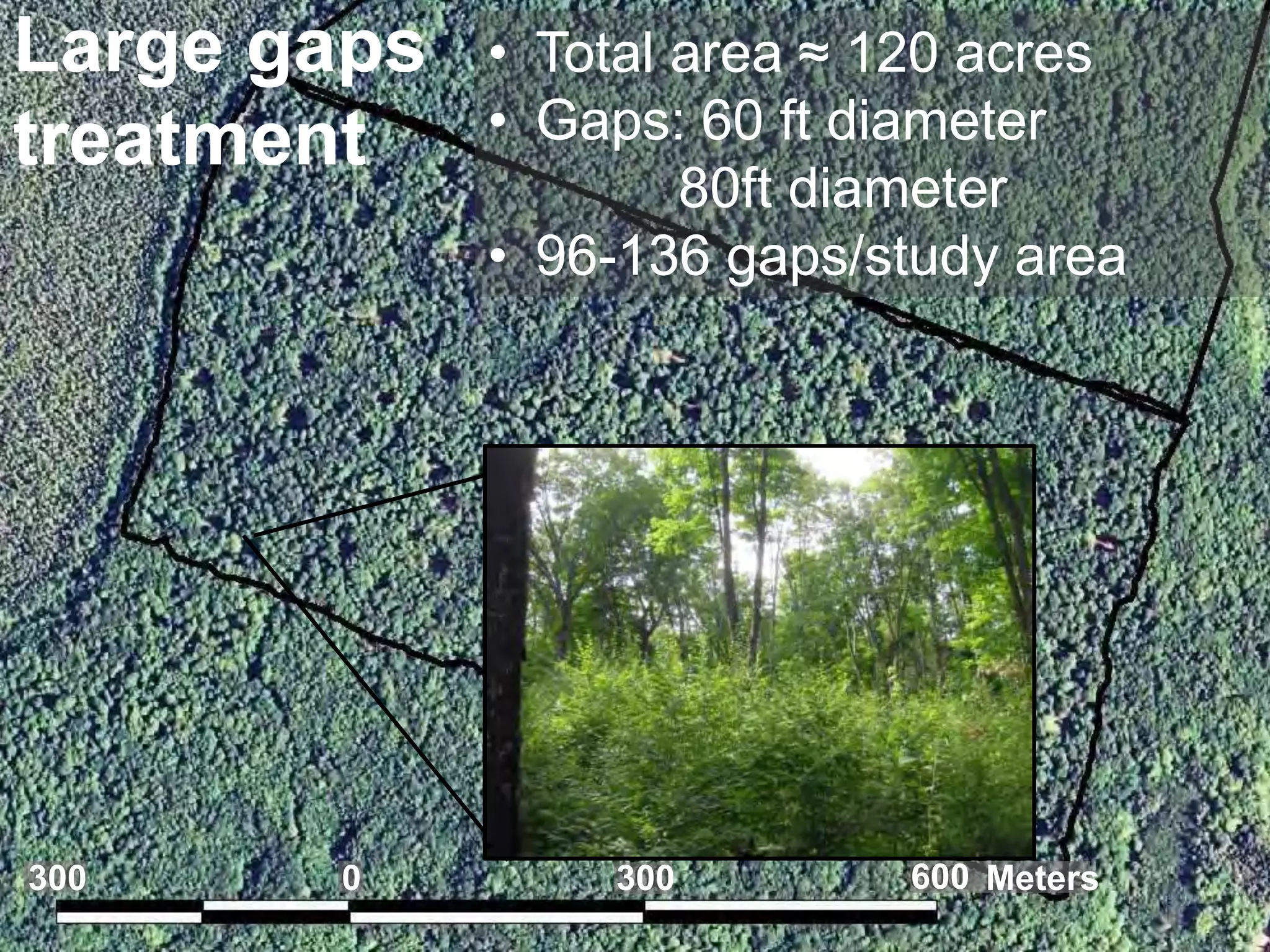
Large gaps 
treatment 
• Total area ≈ 120 acres 
• Gaps: 60 ft diameter 
80ft diameter 
• 96-136 gaps/study area 
300 0 300 600 Meters
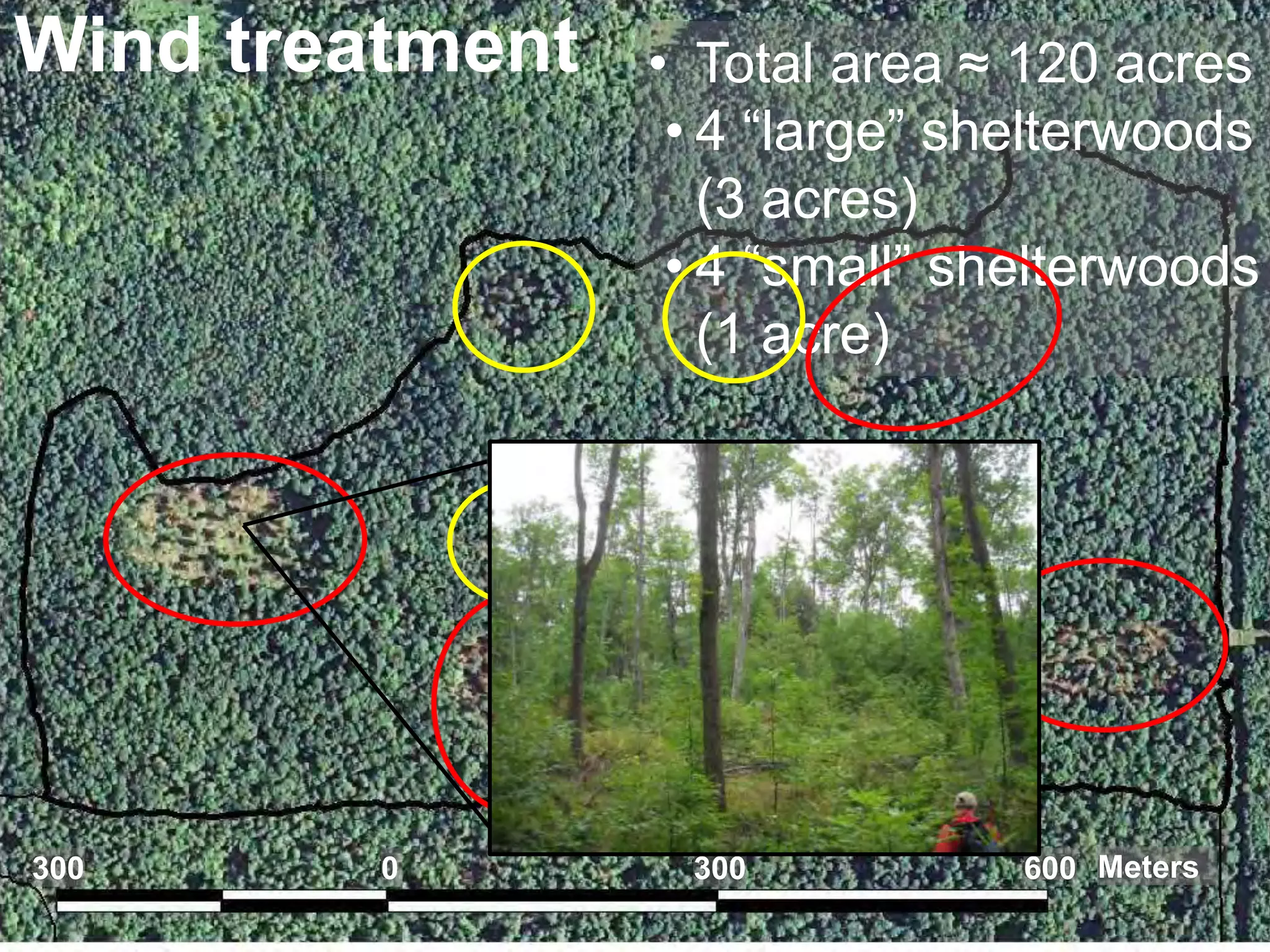
Wind treatment 
• Total area ≈ 120 acres 
• 4 “large” shelterwoods 
(3 acres) 
• 4 “small” shelterwoods 
(1 acre) 
300 0 300 600 
Meters
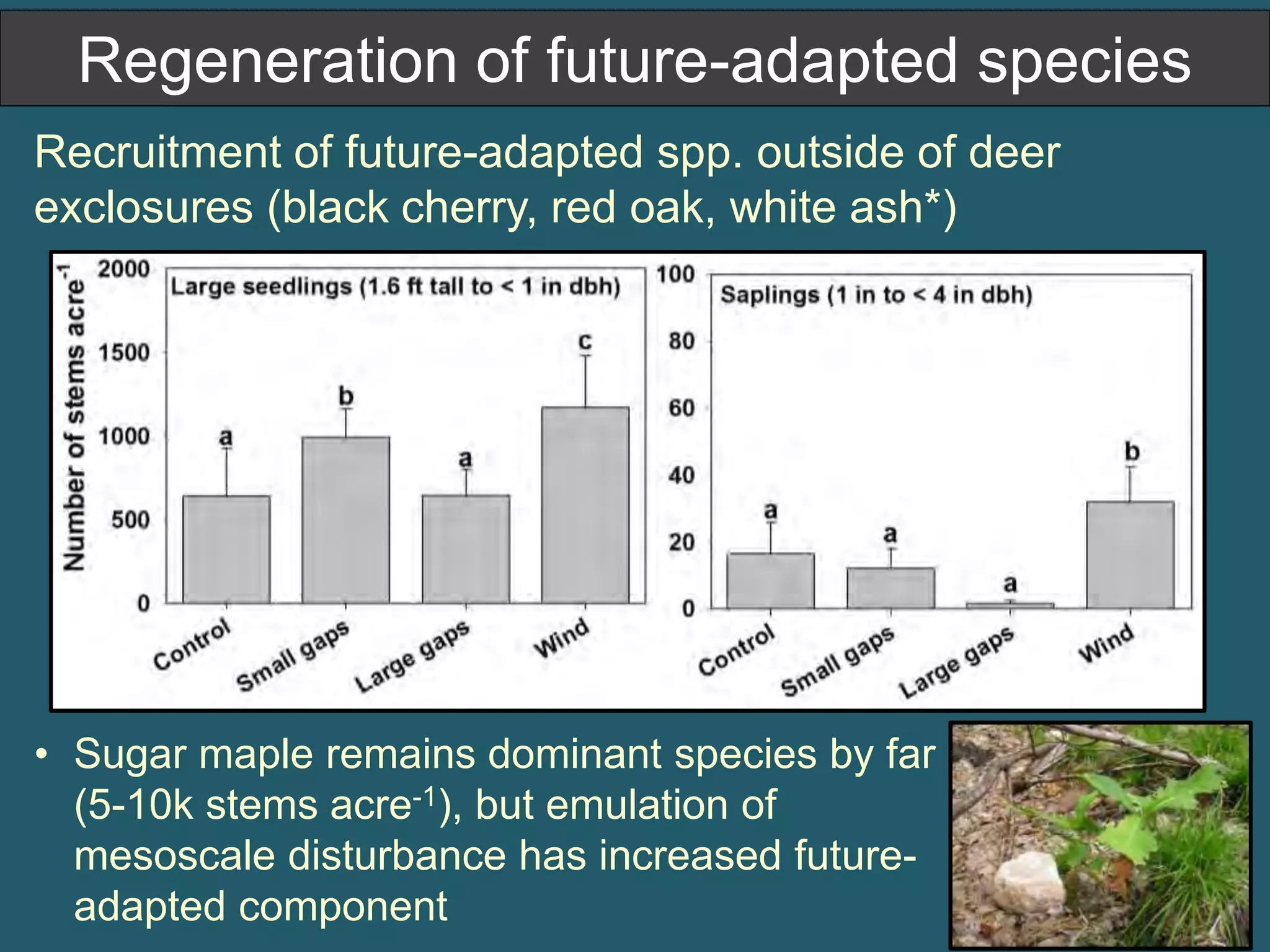
Regeneration of future-adapted species 
Recruitment of future-adapted spp. outside of deer 
exclosures (black cherry, red oak, white ash*) 
• Sugar maple remains dominant species by far 
(5-10k stems acre-1), but emulation of 
mesoscale disturbance has increased future-adapted 
component
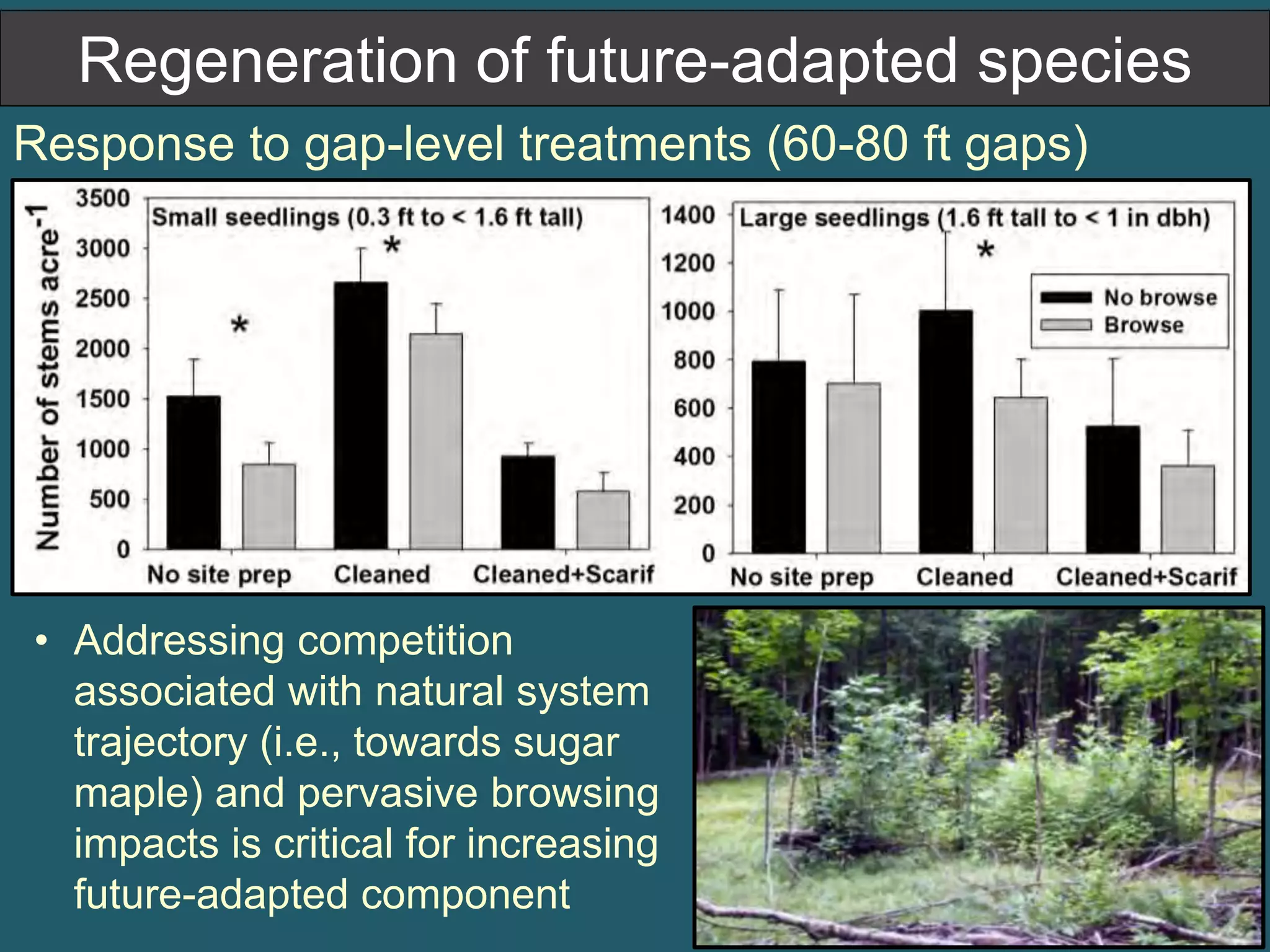
Regeneration of future-adapted species 
Response to gap-level treatments (60-80 ft gaps) 
• Addressing competition 
associated with natural system 
trajectory (i.e., towards sugar 
maple) and pervasive browsing 
impacts is critical for increasing 
future-adapted component
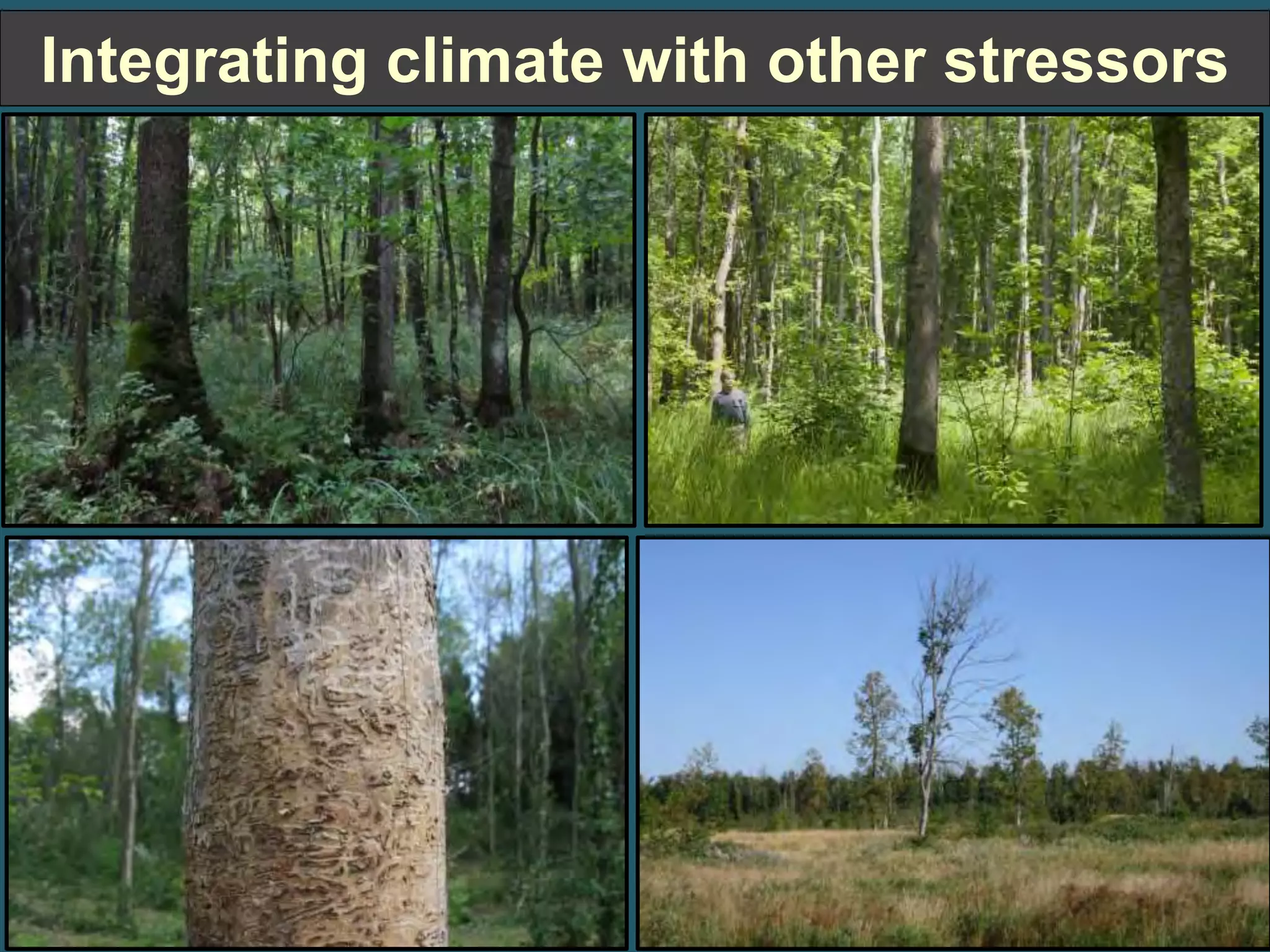
Integrating climate with other stressors
Transition approaches to address EAB 
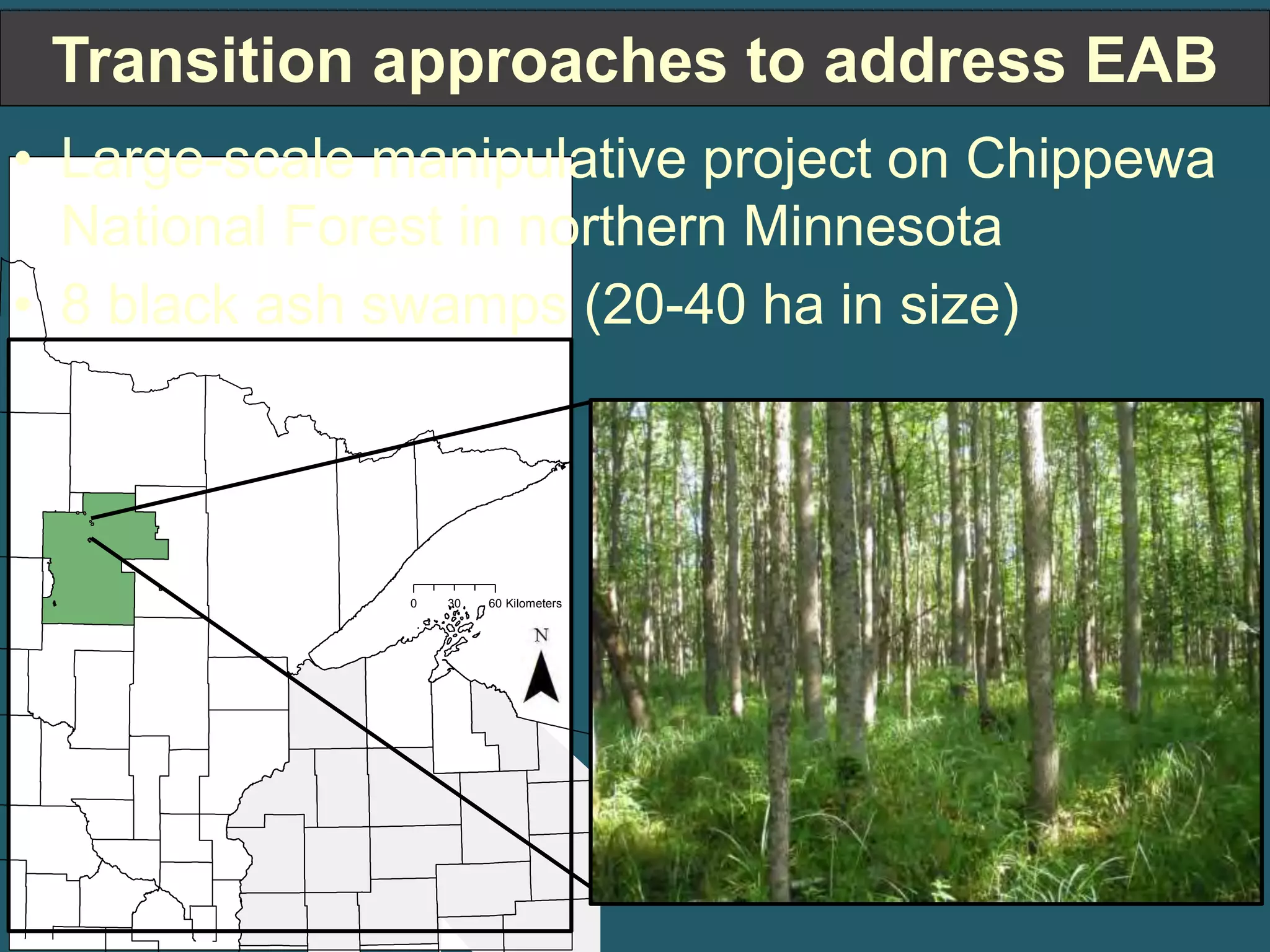
• Large-scale manipulative project on Chippewa 
National Forest in northern Minnesota 
• 8 black ash swamps (20-40 ha in size) 
0 30 60 Kilometers
Transition approaches to address EAB 
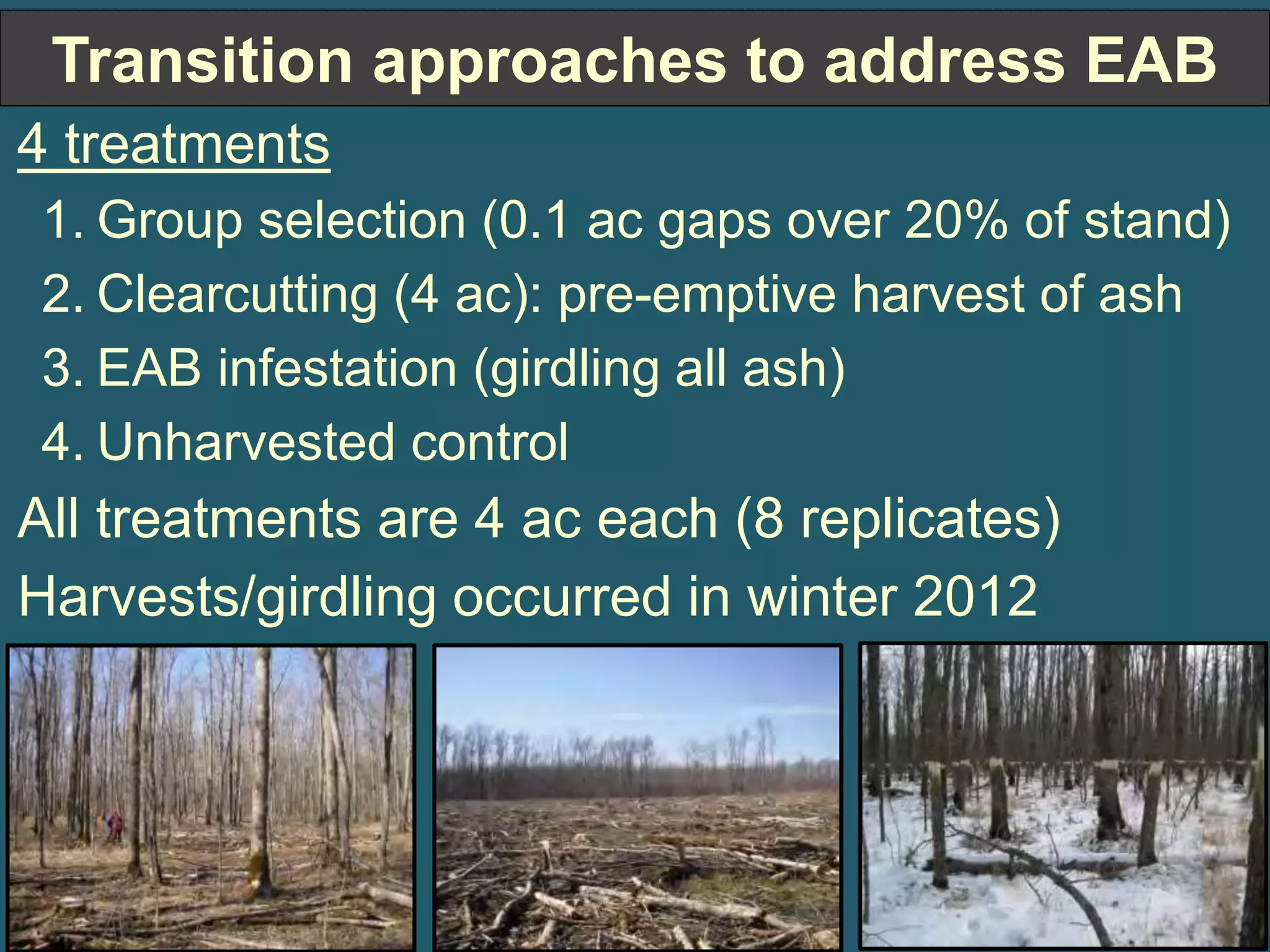
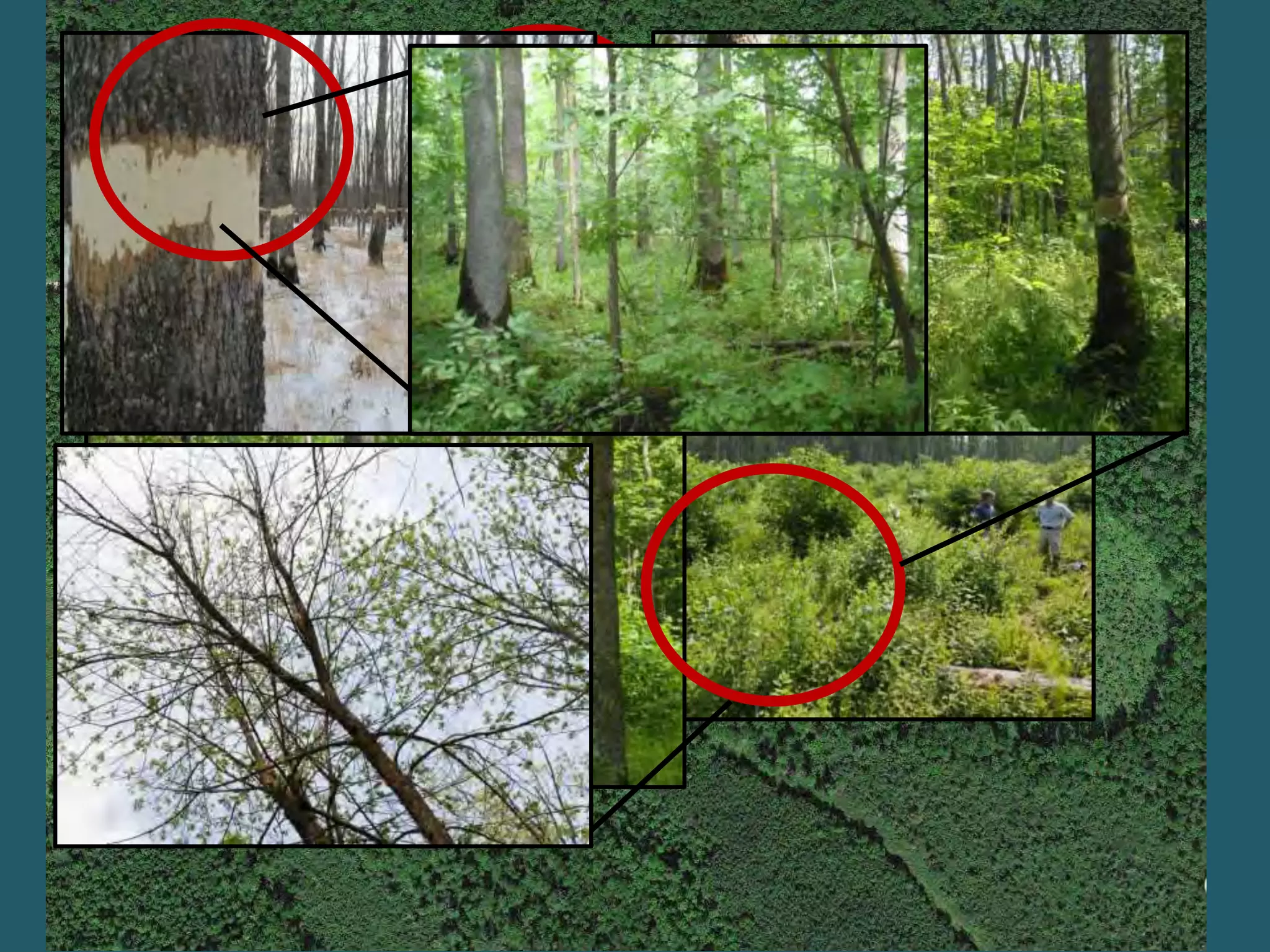
4 treatments 
1. Group selection (0.1 ac gaps over 20% of stand) 
2. Clearcutting (4 ac): pre-emptive harvest of ash 
3. EAB infestation (girdling all ash) 
4. Unharvested control 
All treatments are 4 ac each (8 replicates) 
Harvests/girdling occurred in winter 2012
Transition approaches to address EAB 
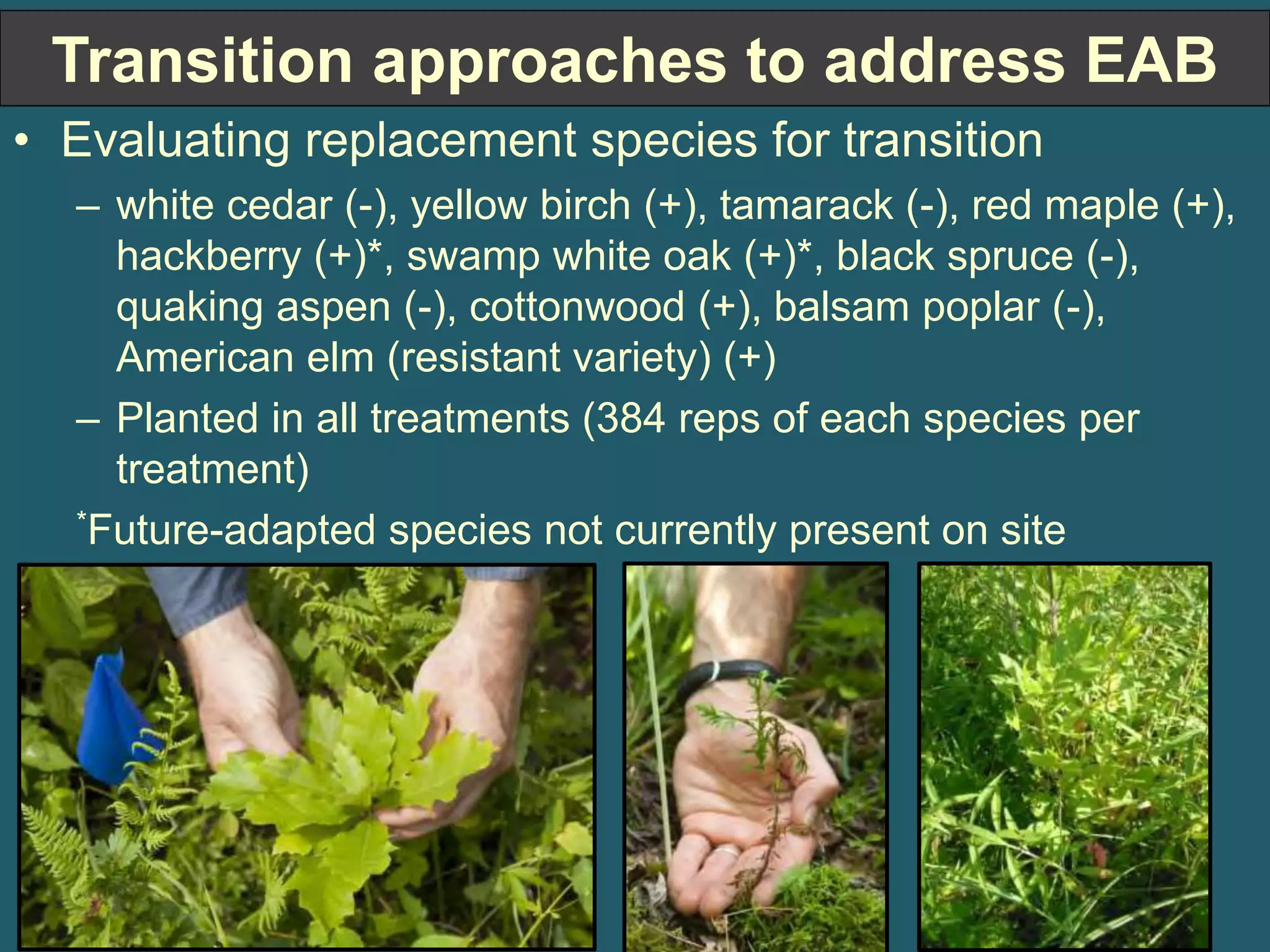
• Evaluating replacement species for transition 
– white cedar (-), yellow birch (+), tamarack (-), red maple (+), 
hackberry (+)*, swamp white oak (+)*, black spruce (-), 
quaking aspen (-), cottonwood (+), balsam poplar (-), 
American elm (resistant variety) (+) 
– Planted in all treatments (384 reps of each species per 
treatment) 
*Future-adapted species not currently present on site
Transition approaches to address EAB 
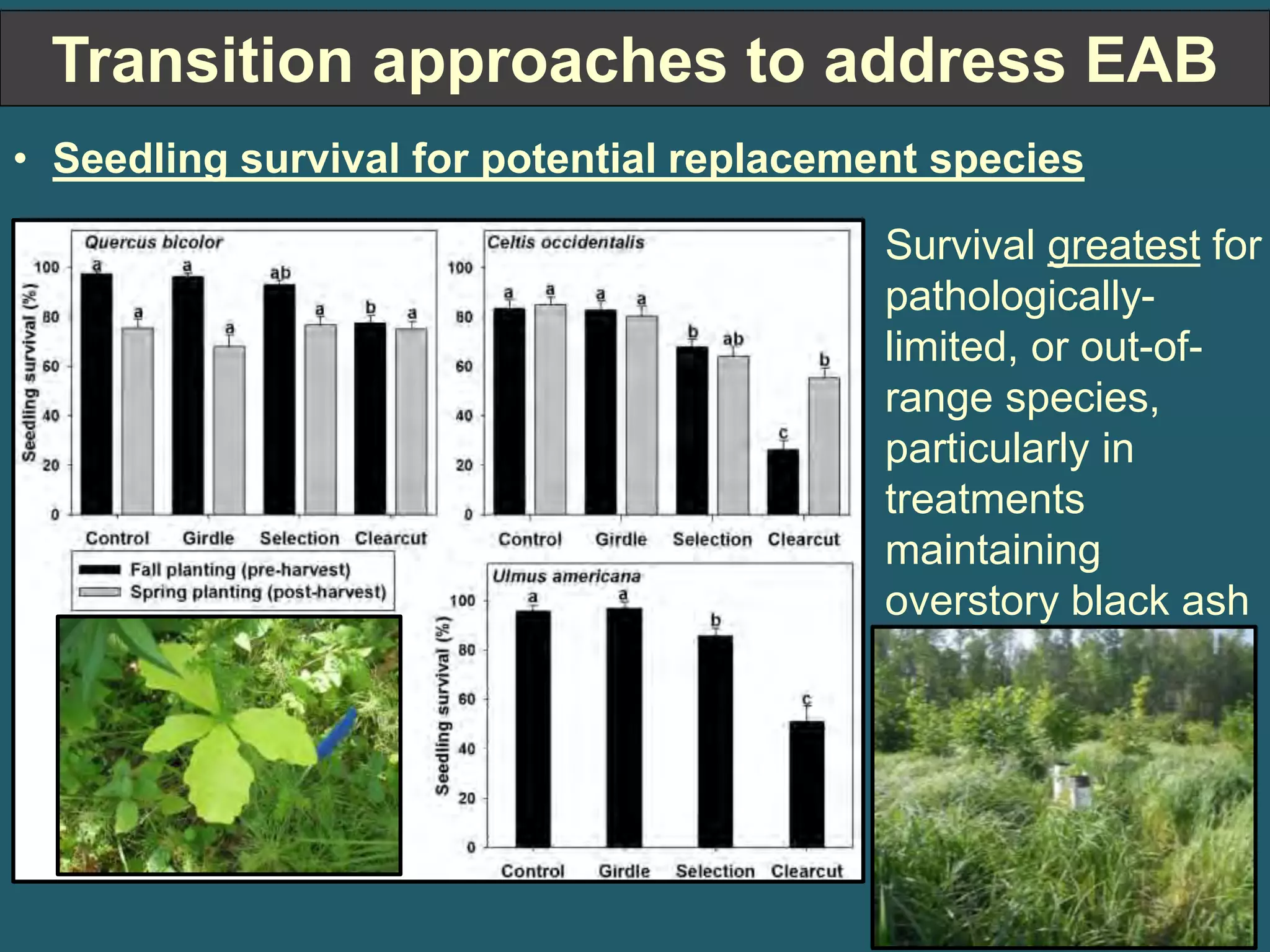
• Seedling survival for potential replacement species 
Survival greatest for 
pathologically-limited, 
or out-of-range 
species, 
particularly in 
treatments 
maintaining 
overstory black ash
Take-home points and conclusions 
• Adaptation efforts should account for underlying 
processes and dynamics in system to inform site-level, 
silvicultural recommendations 
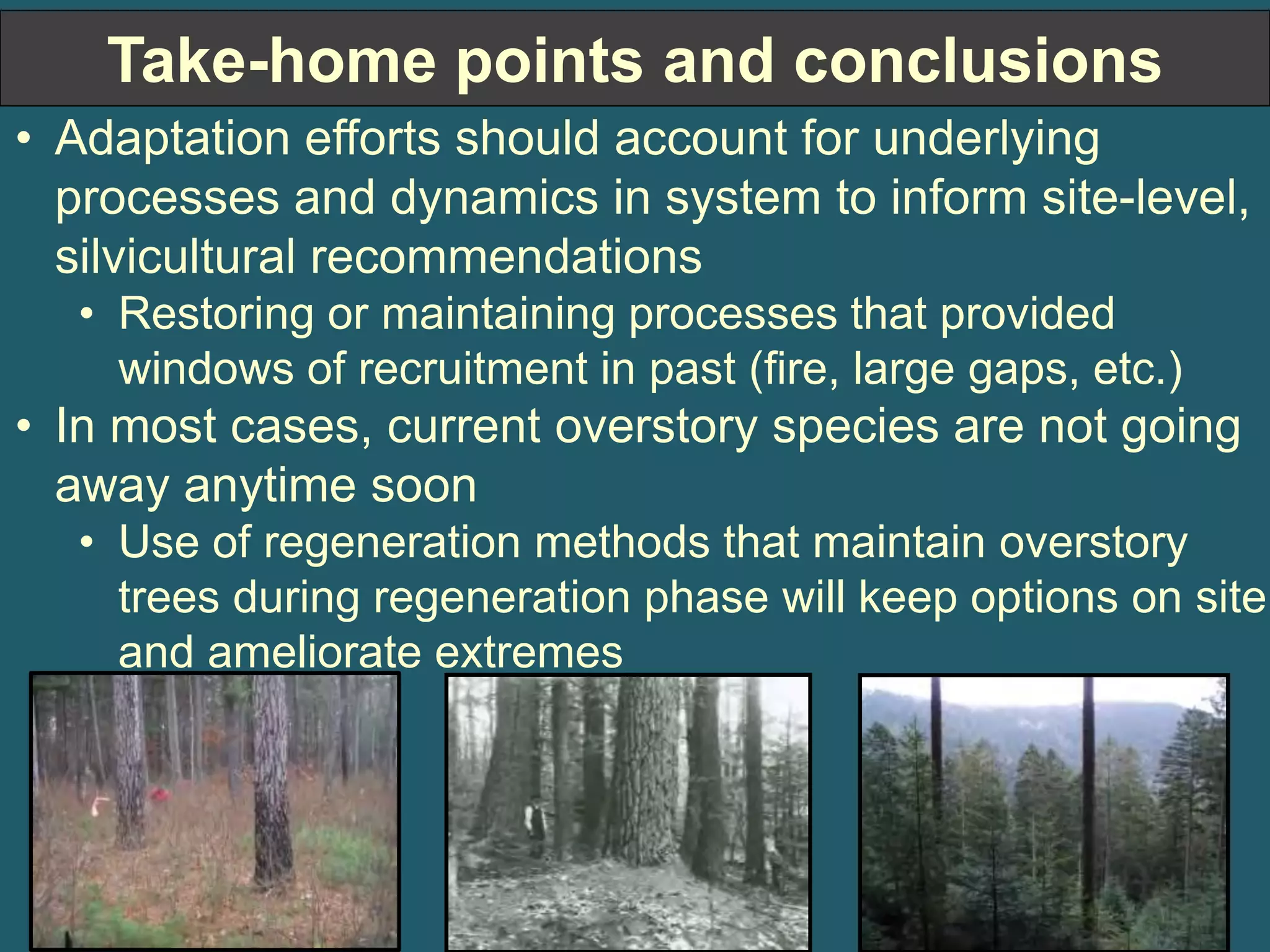
• Restoring or maintaining processes that provided 
windows of recruitment in past (fire, large gaps, etc.) 
• In most cases, current overstory species are not going 
away anytime soon 
• Use of regeneration methods that maintain overstory 
trees during regeneration phase will keep options on site 
and ameliorate extremes
Take-home points and conclusions 
• Continue to encourage, restore, and maintain system 
complexity using ecologically-based approaches 
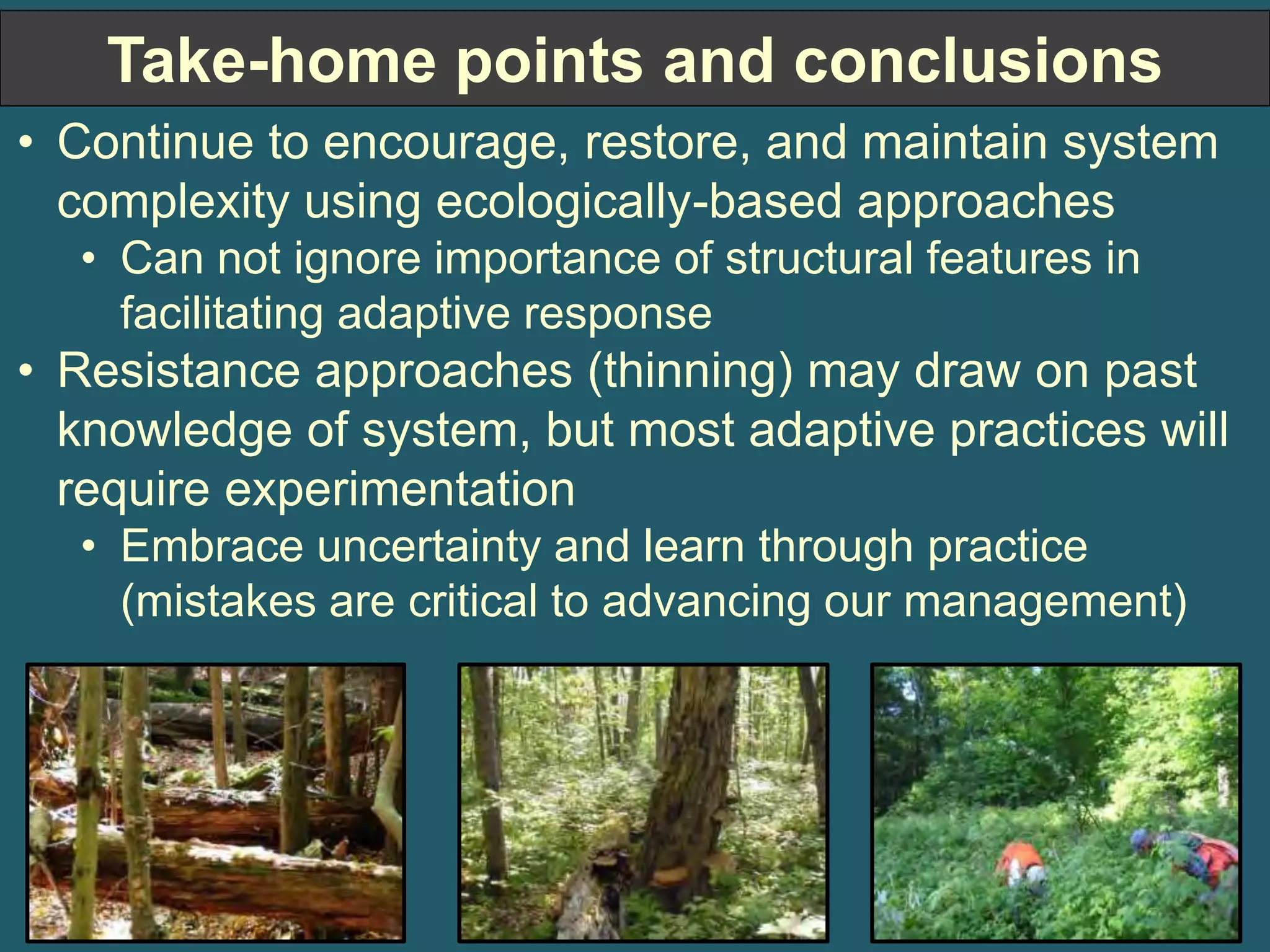
• Can not ignore importance of structural features in 
facilitating adaptive response 
• Resistance approaches (thinning) may draw on past 
knowledge of system, but most adaptive practices will 
require experimentation 
• Embrace uncertainty and learn through practice 
(mistakes are critical to advancing our management)
Acknowledgements 
• USFS NRS: B. Palik, C. Woodall, R. Kolka, M. Slater, 
D. Kastendick, J. Elioff 
• Chippewa NF: G. Swanson, S. Klinkhammer 
• UMN: L. Nagel, M. Reinikainen, K. Gill, P. Klockow 
• UMaine: S. Fraver 
• USGS: J. Bradford 
• MN DNR: J. Almendinger, K. Rusterholz, G. Mehmel 
• NIACS: S. Handler, M. Janowiak, C. Swanston 
• St. Louis County: J. Meyer, M. Pannkuk, T. Lindgren 
• Funding: MN Environment and Natural Resources 
Trust Fund, Northeast Climate Science Center, USFS-Northern 
Research Station, Harvard Forest
Real-World Examples of Forest Adaptation

Real-World Examples of Forest Adaptation

  • 1.
    Real-world examples offorest adaptation Anthony D’Amato Dept. of Forest Resources University of Minnesota
  • 2.
    Context for forestadaptation in practice • Other stressors and disturbances will likely override direct climate effects in near term
  • 3.
    Context for forestadaptation in practice • Need for continued acknowledgment of other contemporary objectives and approaches Group selection with seed tree-retention to restore yellow birch Extended irregular shelterwood reserves to regenerate mixed white pine-oak stand and retain mature structure
  • 4.
    Context for forestadaptation in practice • Relative homogeneity presents vulnerable condition, but is opportunity for “easy” adaptation gains through complexity-based management
  • 5.
    Context for forestadaptation in practice • First step to adaptation is making sure we have future forests across landscape
  • 6.
  • 7.
    Continuum of managementobjectives Maintain current Promote Change conditions Adapted from Swanston et al. (2012); Nagel (2014) Reduce climate and forest health impacts Facilitate adaptive responses Resistance Goal: maintain relatively unchanged conditions over time Strategy: promote sugar maple (SM) dominance Transition Goal: intentionally accommodate change & enable systems to adaptively respond to changing conditions Strategy: reduce SM, increase future-adapted on site and likely to expand into area Resilience Goal: allow some change, but encourage return to reference conditions Strategy: SM dominance, increase abundance of future-adapted species currently present in minor abundance (basswood, northern red oak) Uncertainty in management approaches
  • 8.
    Resistance in practice:drought impacts
  • 9.
    Resistance in practice:drought impacts • Interest in use of thinning treatments to minimize impacts of predicted changes in climate and extreme weather (e.g., drought) • Thinning represents near-term resistance strategy versus long-term adaptation approach (e.g., shifting composition)
  • 10.
    Resistance in practice:drought impacts • Past vulnerability of thinned and unthinned stands to known drought events (e.g., 1988) Low vulnerability High vulnerability
  • 11.
    Varying climate sensitivitywithin species 60 ft2 ac-1 - Fall temp 90 ft2 ac-1 - Summer/fall temp Size complexity=complexity in climate response 150 ft2 ac-1 - Fall temp + June/July precip 220 ft2 ac-1 - Fall temp + August precip
  • 12.
  • 13.
    Resilience and transitionapproaches • Key element of these approaches is increasing representation of future-adapted species • Focus on regeneration methods that provide recruitment opportunities consistent with functioning of current forest systems (i.e., overstory trees are not going away anytime soon)
  • 14.
    Resilience and transitionapproaches White ash -1.96 White pine -8.38 Red maple -16.33 Black cherry -1.91 Hemlock -3.01 Red oak -3.55 The forest through a future climate filter
  • 15.
    Resilience approaches innorthern HW WISCONSIN Managed Old-growth Silvicultural Study Flambeau River State Forest Northern Highland – American Legion State Forest C hequamegon – Nicolet National Forest: Argonne Experimental Forest • Goal is to increase structural and compositional complexity in second-growth northern hardwoods • In light of projections for region, how might treatments increase representation of future-adapted species (largely midtolerants) Species Current suitability Change in future suitability sugar maple 14.61 -10.96 n. red oak 2.27 +1.88
  • 16.
    Small gaps treatment(resistance) • Total area ≈ 120 acres • Gaps: 35 ft diameter (single tree) • • 414-ARG4 417 Aeial gaps/study area 300 0 300 600 Meters
  • 17.
    Large gaps treatment • Total area ≈ 120 acres • Gaps: 60 ft diameter 80ft diameter • 96-136 gaps/study area 300 0 300 600 Meters
  • 18.
    Wind treatment •Total area ≈ 120 acres • 4 “large” shelterwoods (3 acres) • 4 “small” shelterwoods (1 acre) 300 0 300 600 Meters
  • 19.
    Regeneration of future-adaptedspecies Recruitment of future-adapted spp. outside of deer exclosures (black cherry, red oak, white ash*) • Sugar maple remains dominant species by far (5-10k stems acre-1), but emulation of mesoscale disturbance has increased future-adapted component
  • 20.
    Regeneration of future-adaptedspecies Response to gap-level treatments (60-80 ft gaps) • Addressing competition associated with natural system trajectory (i.e., towards sugar maple) and pervasive browsing impacts is critical for increasing future-adapted component
  • 21.
    Integrating climate withother stressors
  • 22.
    Transition approaches toaddress EAB • Large-scale manipulative project on Chippewa National Forest in northern Minnesota • 8 black ash swamps (20-40 ha in size) 0 30 60 Kilometers
  • 23.
    Transition approaches toaddress EAB 4 treatments 1. Group selection (0.1 ac gaps over 20% of stand) 2. Clearcutting (4 ac): pre-emptive harvest of ash 3. EAB infestation (girdling all ash) 4. Unharvested control All treatments are 4 ac each (8 replicates) Harvests/girdling occurred in winter 2012
  • 25.
    Transition approaches toaddress EAB • Evaluating replacement species for transition – white cedar (-), yellow birch (+), tamarack (-), red maple (+), hackberry (+)*, swamp white oak (+)*, black spruce (-), quaking aspen (-), cottonwood (+), balsam poplar (-), American elm (resistant variety) (+) – Planted in all treatments (384 reps of each species per treatment) *Future-adapted species not currently present on site
  • 26.
    Transition approaches toaddress EAB • Seedling survival for potential replacement species Survival greatest for pathologically-limited, or out-of-range species, particularly in treatments maintaining overstory black ash
  • 27.
    Take-home points andconclusions • Adaptation efforts should account for underlying processes and dynamics in system to inform site-level, silvicultural recommendations • Restoring or maintaining processes that provided windows of recruitment in past (fire, large gaps, etc.) • In most cases, current overstory species are not going away anytime soon • Use of regeneration methods that maintain overstory trees during regeneration phase will keep options on site and ameliorate extremes
  • 28.
    Take-home points andconclusions • Continue to encourage, restore, and maintain system complexity using ecologically-based approaches • Can not ignore importance of structural features in facilitating adaptive response • Resistance approaches (thinning) may draw on past knowledge of system, but most adaptive practices will require experimentation • Embrace uncertainty and learn through practice (mistakes are critical to advancing our management)
  • 29.
    Acknowledgements • USFSNRS: B. Palik, C. Woodall, R. Kolka, M. Slater, D. Kastendick, J. Elioff • Chippewa NF: G. Swanson, S. Klinkhammer • UMN: L. Nagel, M. Reinikainen, K. Gill, P. Klockow • UMaine: S. Fraver • USGS: J. Bradford • MN DNR: J. Almendinger, K. Rusterholz, G. Mehmel • NIACS: S. Handler, M. Janowiak, C. Swanston • St. Louis County: J. Meyer, M. Pannkuk, T. Lindgren • Funding: MN Environment and Natural Resources Trust Fund, Northeast Climate Science Center, USFS-Northern Research Station, Harvard Forest