CARING FOR OUR FORESTS
WITH CLIMATE IN MIND
Maria Janowiak mjanowiak02@fs.fed.us
Northern Institute of Applied Climate Science
USDA Forest Service
Climate Change Response Framework
www.forestadaptation.org
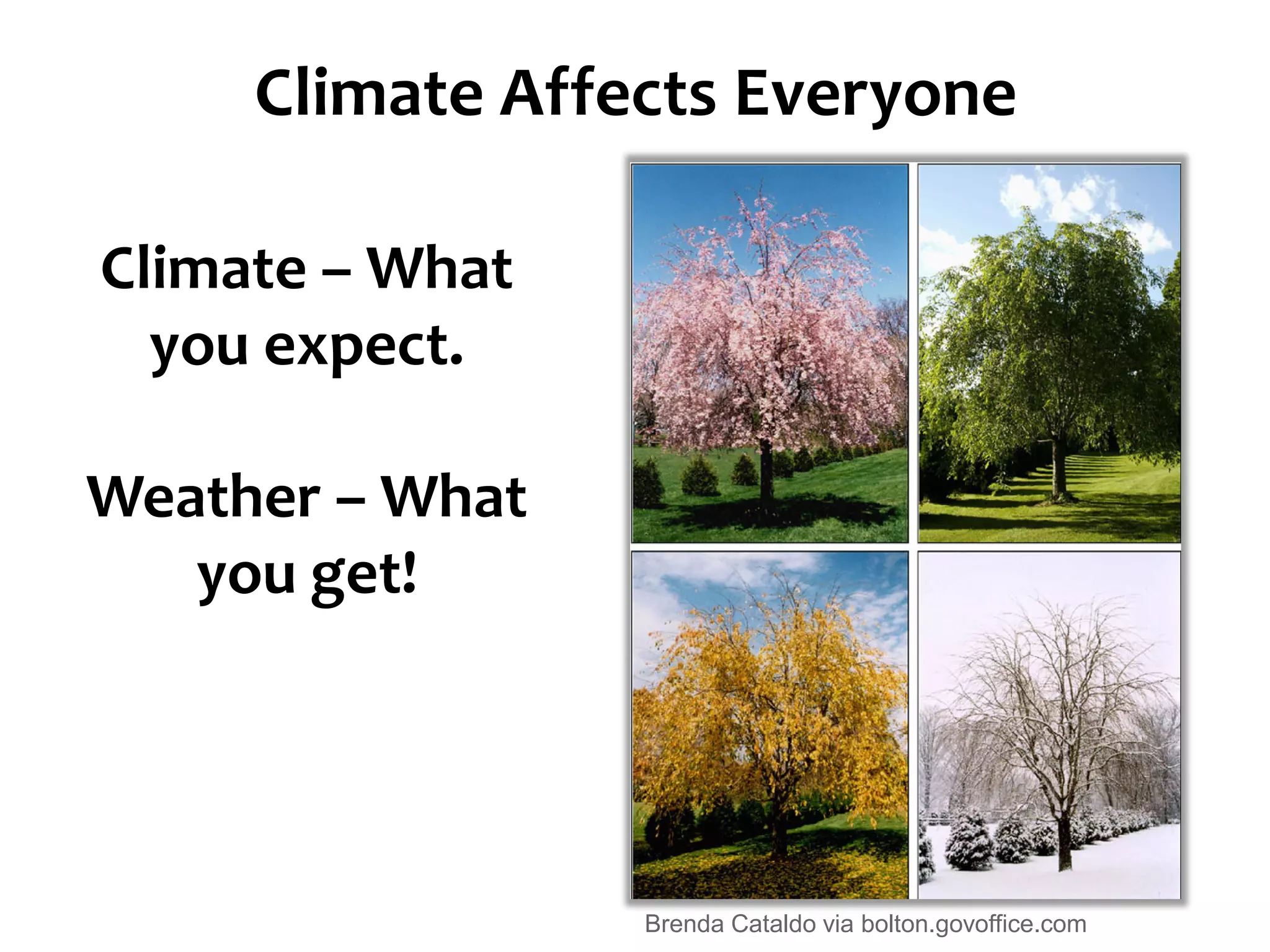
Climate Affects Everyone
Brenda Cataldo via bolton.govoffice.com
Climate – What
you expect.
Weather – What
you get!
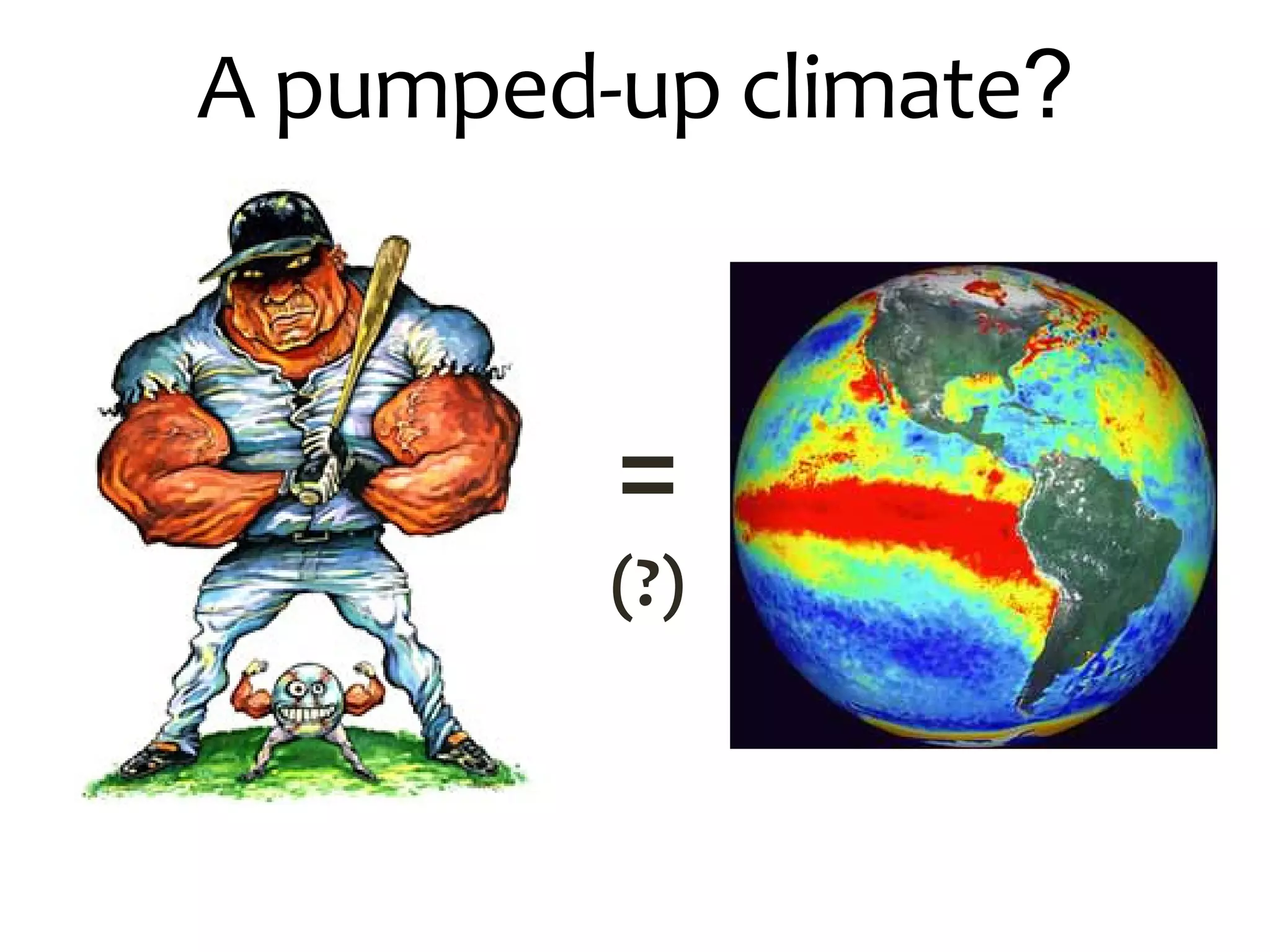
A pumped-up climate?
=
(?)
Variableweather
Waterchanges
Specieschanges
Threatmultiplier
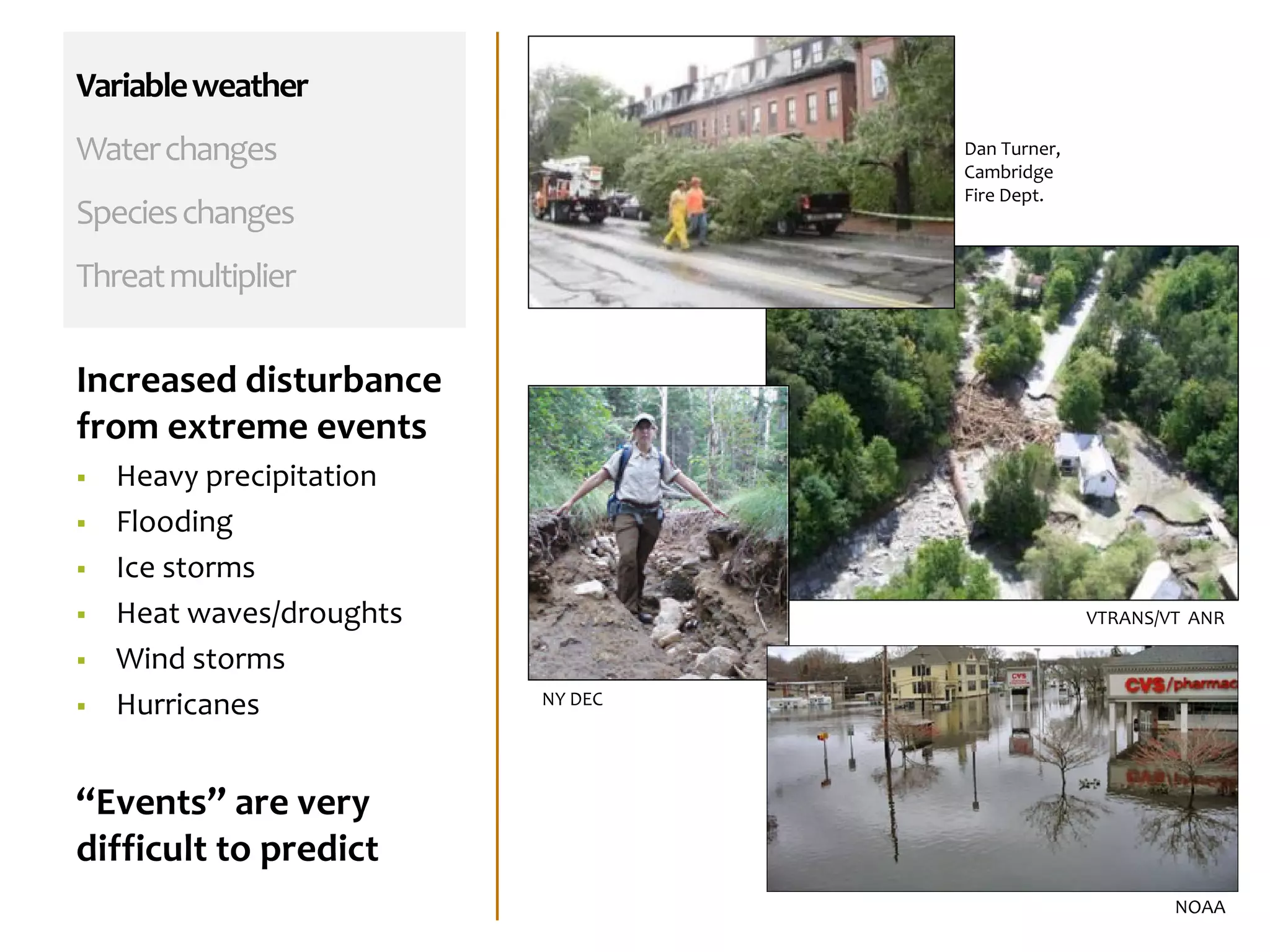
Increased disturbance
from extreme events
 Heavy precipitation
 Flooding
 Ice storms
 Heat waves/droughts
 Wind storms
 Hurricanes
“Events” are very
difficult to predict
VTRANS/VT ANR
NY DEC
Dan Turner,
Cambridge
Fire Dept.
NOAA
Variableweather
Waterchanges
Specieschanges
Threatmultiplier
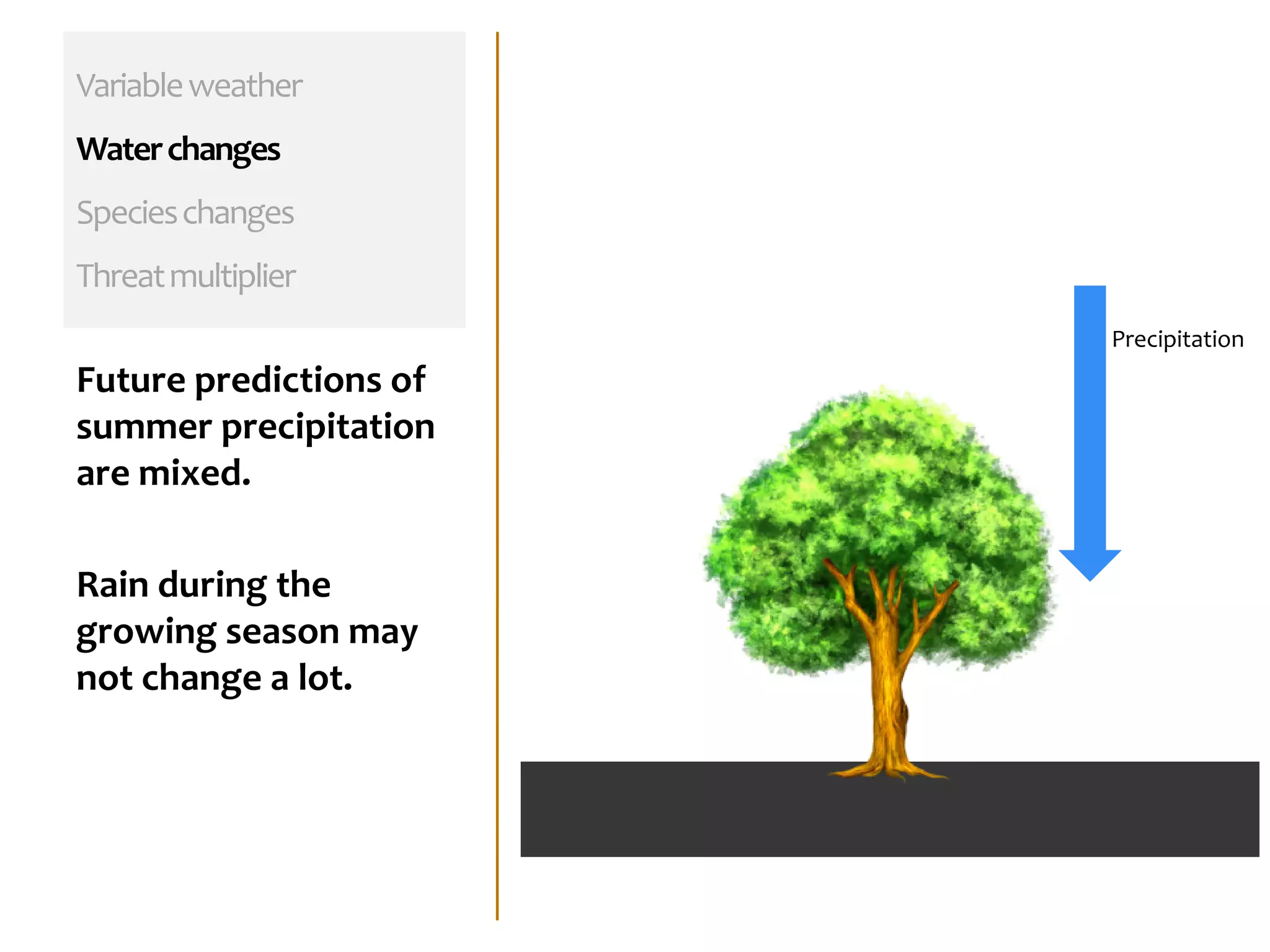
Future predictions of
summer precipitation
are mixed.
Rain during the
growing season may
not change a lot.
Precipitation
Variableweather
Waterchanges
Specieschanges
Threatmultiplier
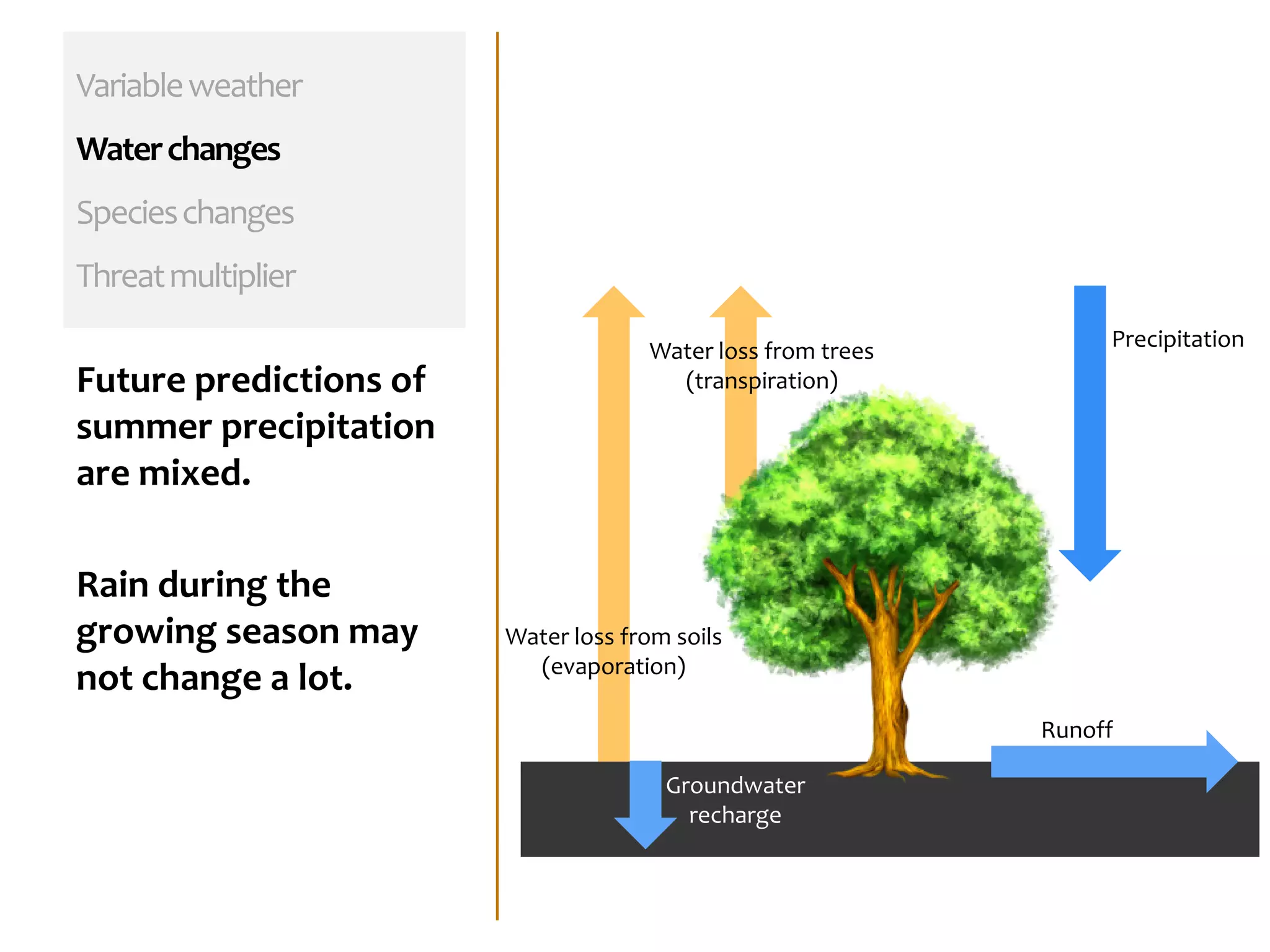
Future predictions of
summer precipitation
are mixed.
Rain during the
growing season may
not change a lot.
Water loss from soils
(evaporation)
Groundwater
recharge
Runoff
PrecipitationWater loss from trees
(transpiration)
Variableweather
Waterchanges
Specieschanges
Threatmultiplier
Future predictions of
summer precipitation
are mixed.
Rain during the
growing season may
not change a lot.
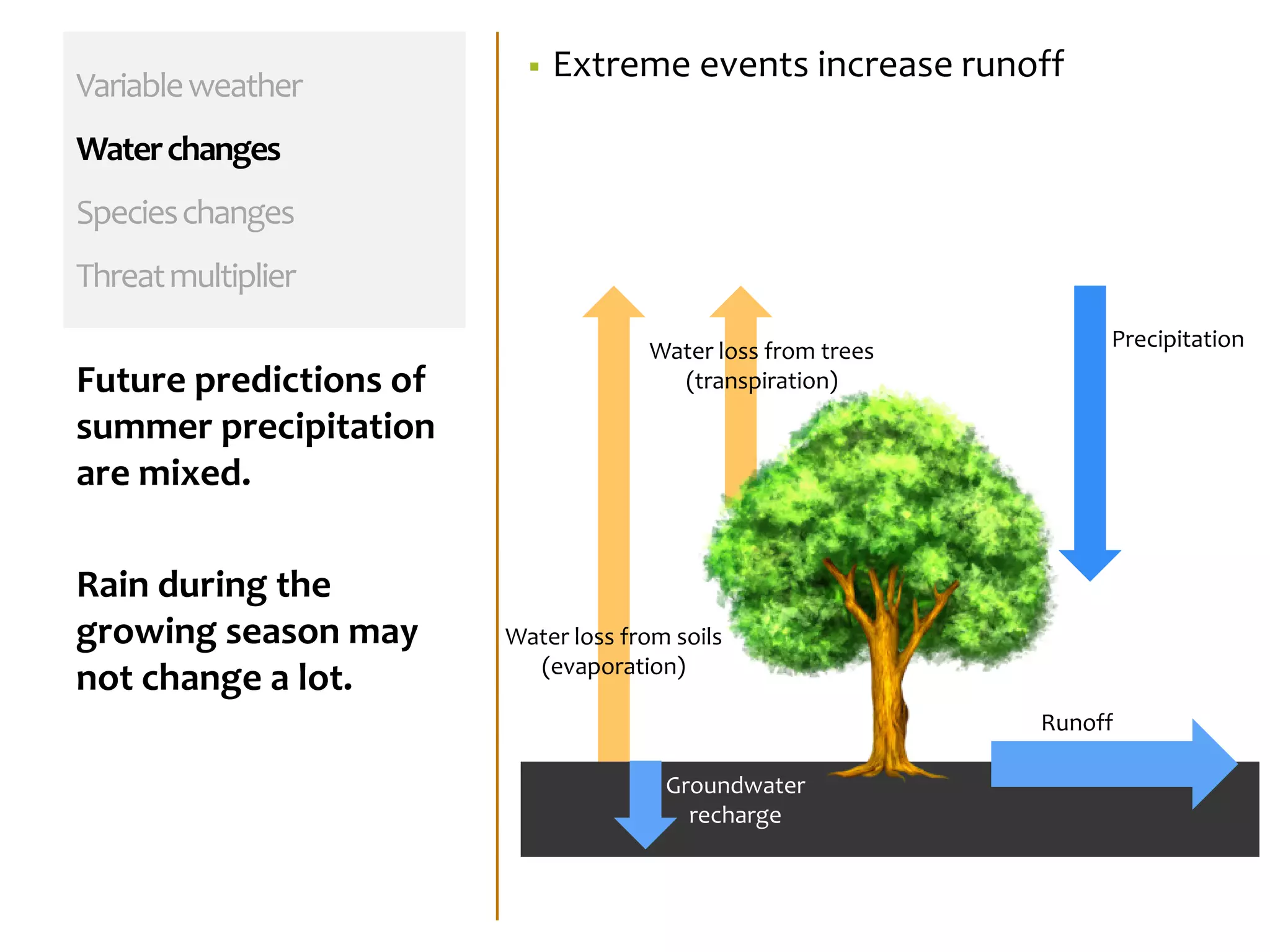
Water loss from soils
(evaporation)
Groundwater
recharge
PrecipitationWater loss from trees
(transpiration)
Runoff
 Extreme events increase runoff
Variableweather
Waterchanges
Specieschanges
Threatmultiplier
Future predictions of
summer precipitation
are mixed.
Rain during the
growing season may
not change a lot.
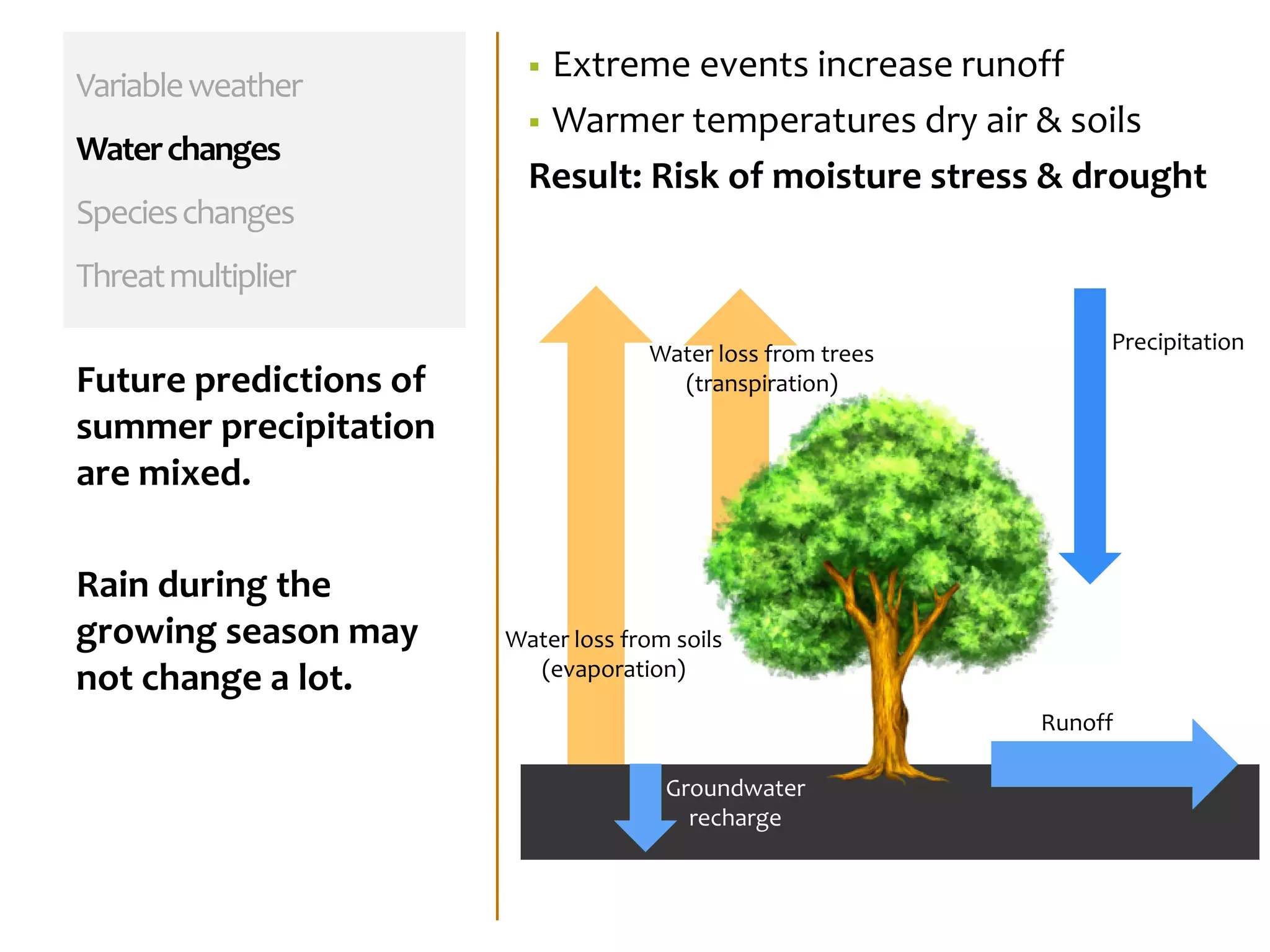
 Extreme events increase runoff
 Warmer temperatures dry air & soils
Result: Risk of moisture stress & drought
Water loss from soils
(evaporation)
Water loss from trees
(transpiration)
Groundwater
recharge
Runoff
Precipitation
Variableweather
Waterchanges
Specieschanges
Threatmultiplier
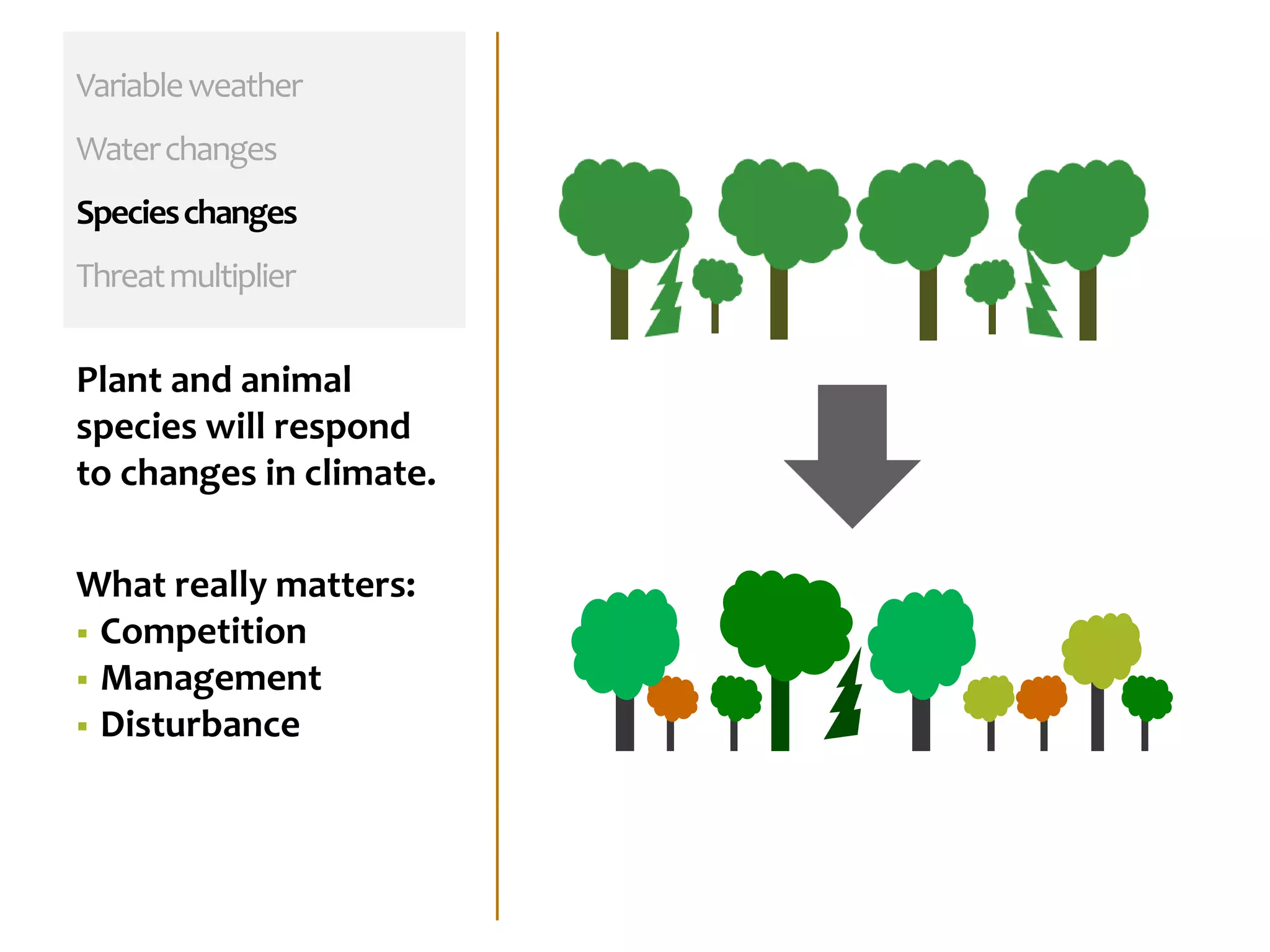
Plant and animal
species will respond
to changes in climate.
What really matters:
 Competition
 Management
 Disturbance
Variableweather
Waterchanges
Specieschanges
Threatmultiplier
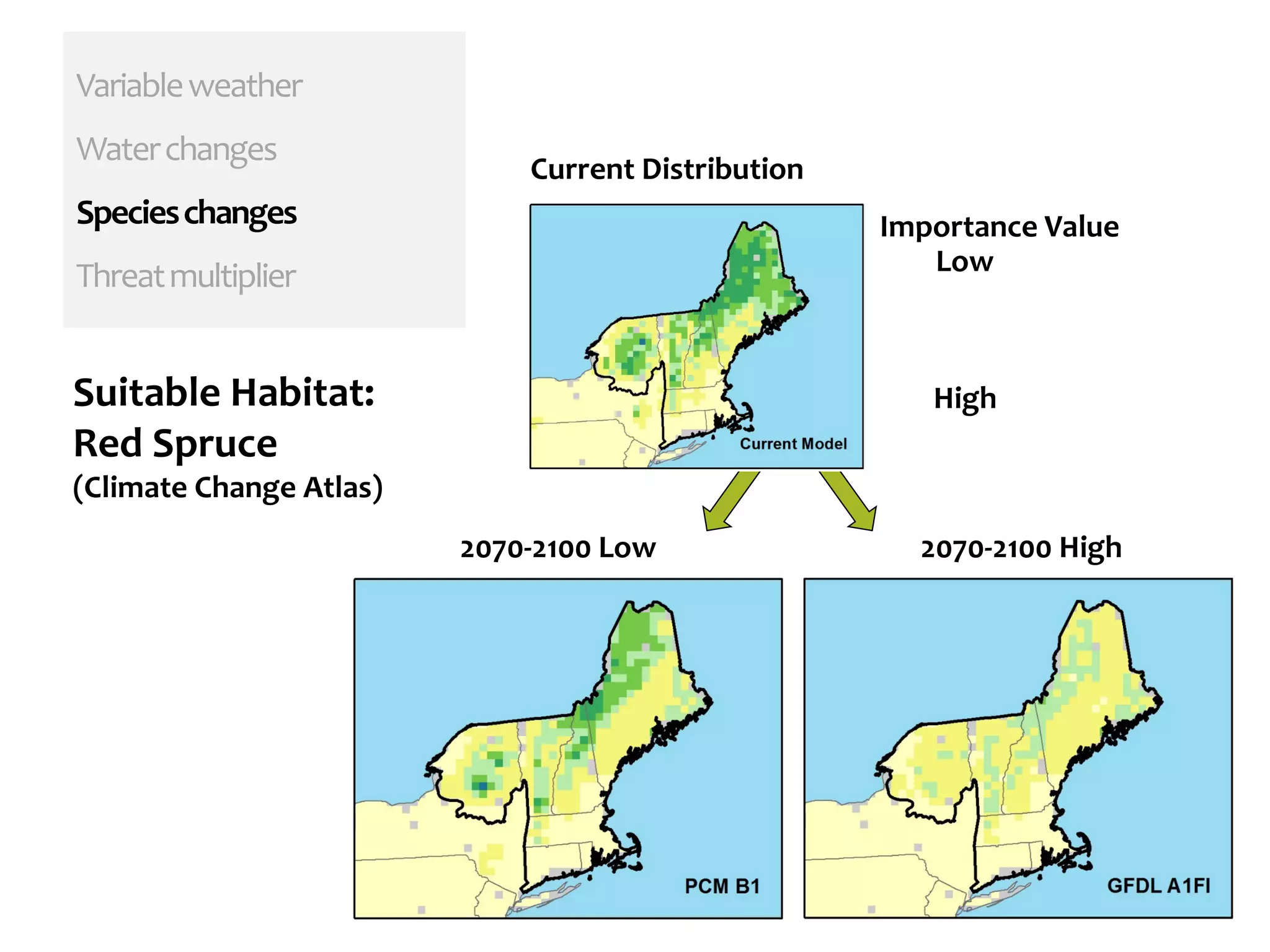
2070-2100 Low 2070-2100 High
Current Distribution
Importance Value
Low
HighSuitable Habitat:
Red Spruce
(Climate Change Atlas)
Variableweather
Waterchanges
Specieschanges
Threatmultiplier
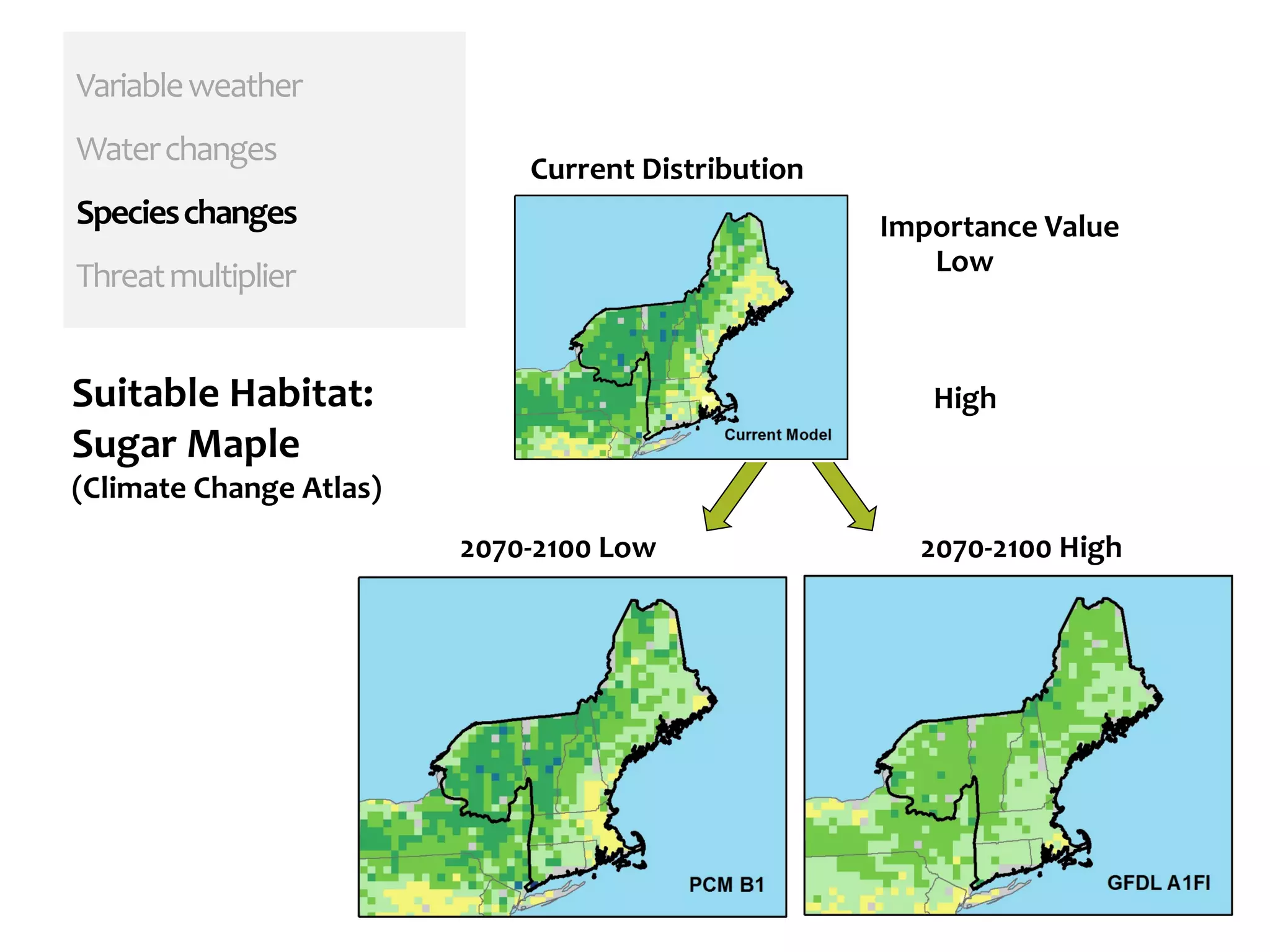
2070-2100 Low 2070-2100 High
Current Distribution
Importance Value
Low
HighSuitable Habitat:
Sugar Maple
(Climate Change Atlas)
Variableweather
Waterchanges
Specieschanges
Threatmultiplier
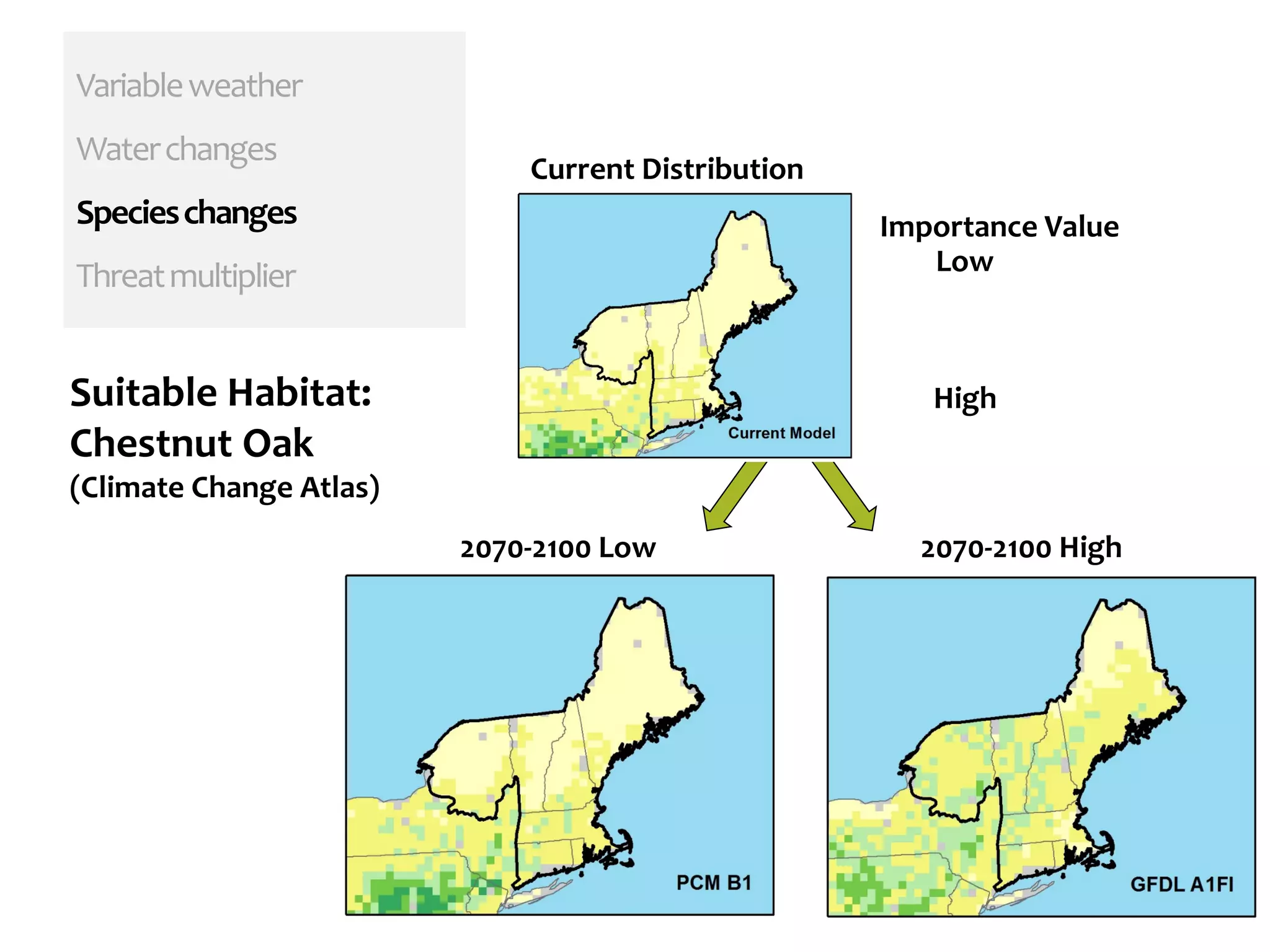
2070-2100 Low 2070-2100 High
Current Distribution
Importance Value
Low
HighSuitable Habitat:
Chestnut Oak
(Climate Change Atlas)
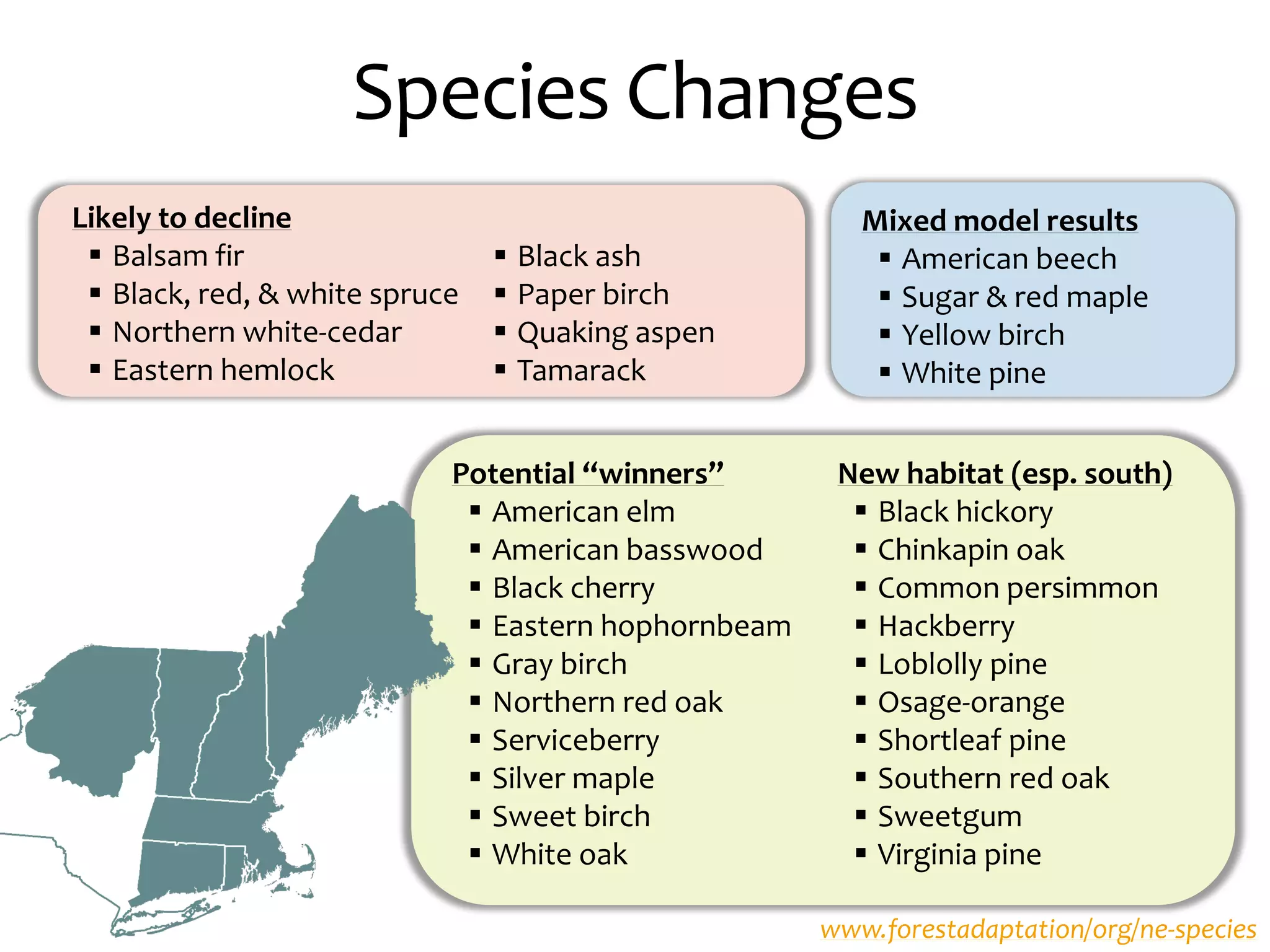
Likely to decline
 Balsam fir
 Black, red, & white spruce
 Northern white-cedar
 Eastern hemlock
 Black ash
 Paper birch
 Quaking aspen
 Tamarack
Mixed model results
 American beech
 Sugar & red maple
 Yellow birch
 White pine
Potential “winners”
 American elm
 American basswood
 Black cherry
 Eastern hophornbeam
 Gray birch
 Northern red oak
 Serviceberry
 Silver maple
 Sweet birch
 White oak
New habitat (esp. south)
 Black hickory
 Chinkapin oak
 Common persimmon
 Hackberry
 Loblolly pine
 Osage-orange
 Shortleaf pine
 Southern red oak
 Sweetgum
 Virginia pine
www.forestadaptation/org/ne-species
Species Changes
Variableweather
Waterchanges
Specieschanges
Threatmultiplier
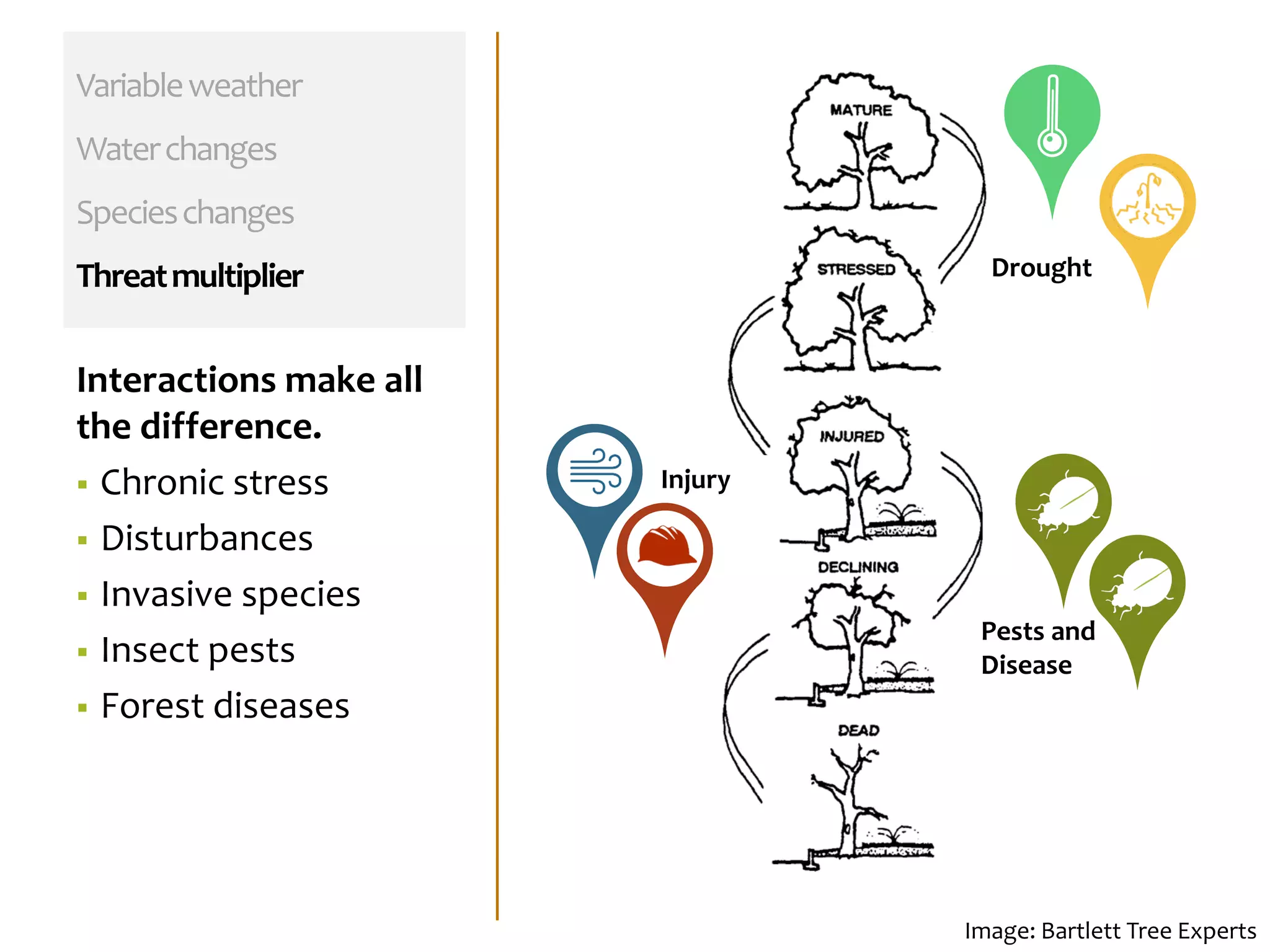
Interactions make all
the difference.
 Chronic stress
 Disturbances
 Invasive species
 Insect pests
 Forest diseases
Image: Bartlett Tree Experts
Drought
Injury
Pests and
Disease
Variableweather
Waterchanges
Specieschanges
Threatmultiplier
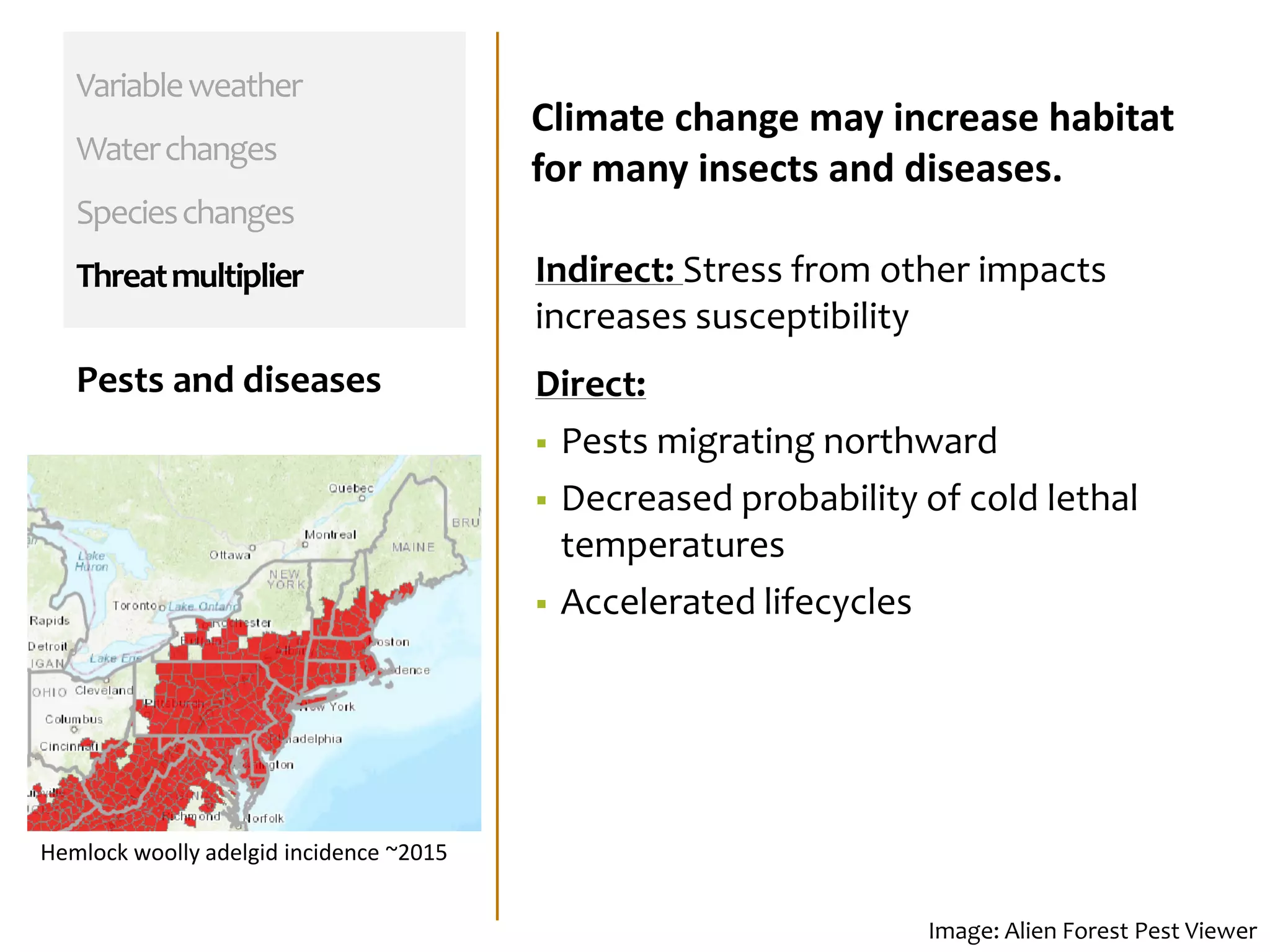
Pests and diseases
Image: Alien Forest Pest Viewer
Indirect: Stress from other impacts
increases susceptibility
Direct:
 Pests migrating northward
 Decreased probability of cold lethal
temperatures
 Accelerated lifecycles
Climate change may increase habitat
for many insects and diseases.
Hemlock woolly adelgid incidence ~2015
Variableweather
Waterchanges
Specieschanges
Threatmultiplier
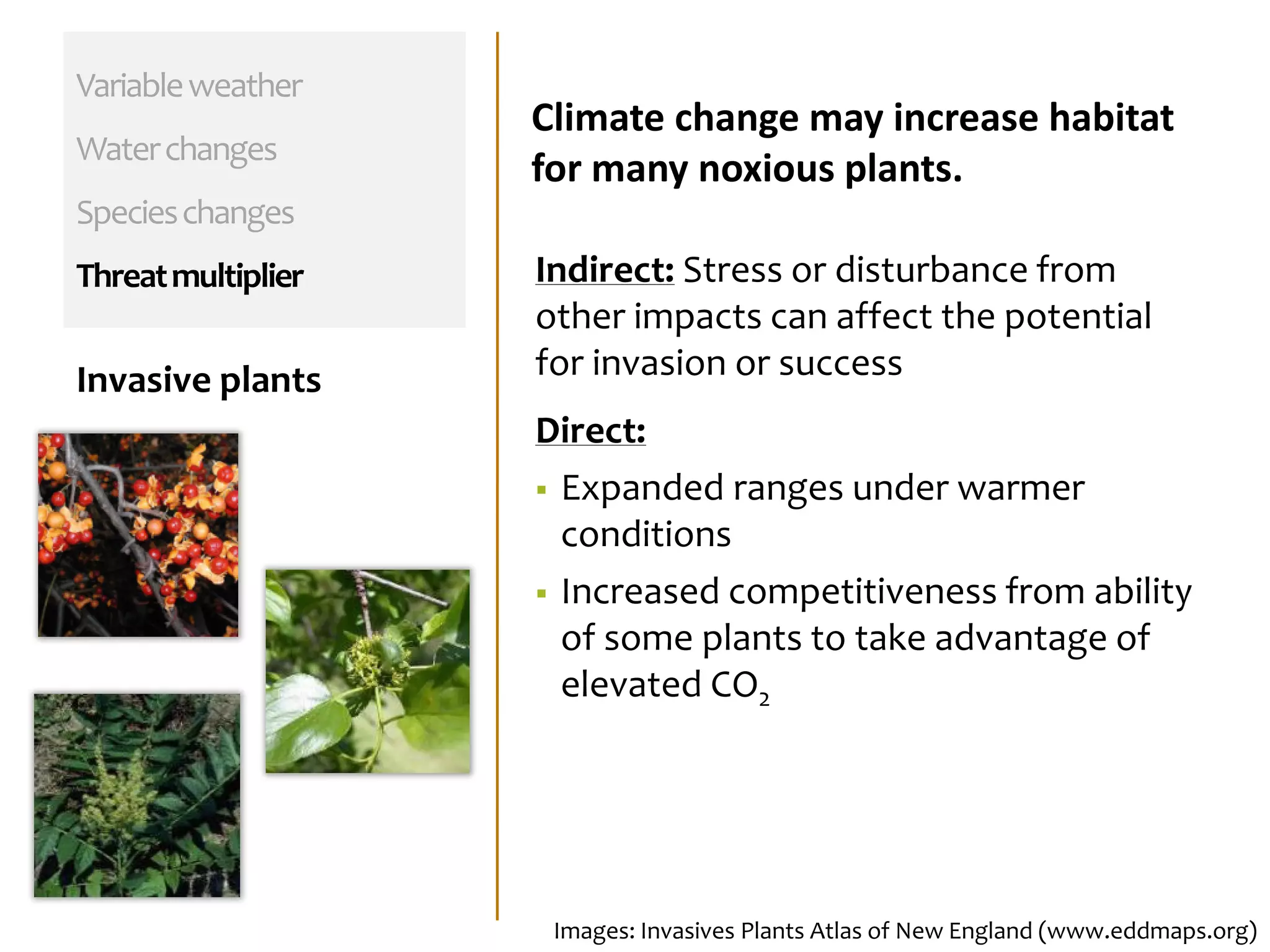
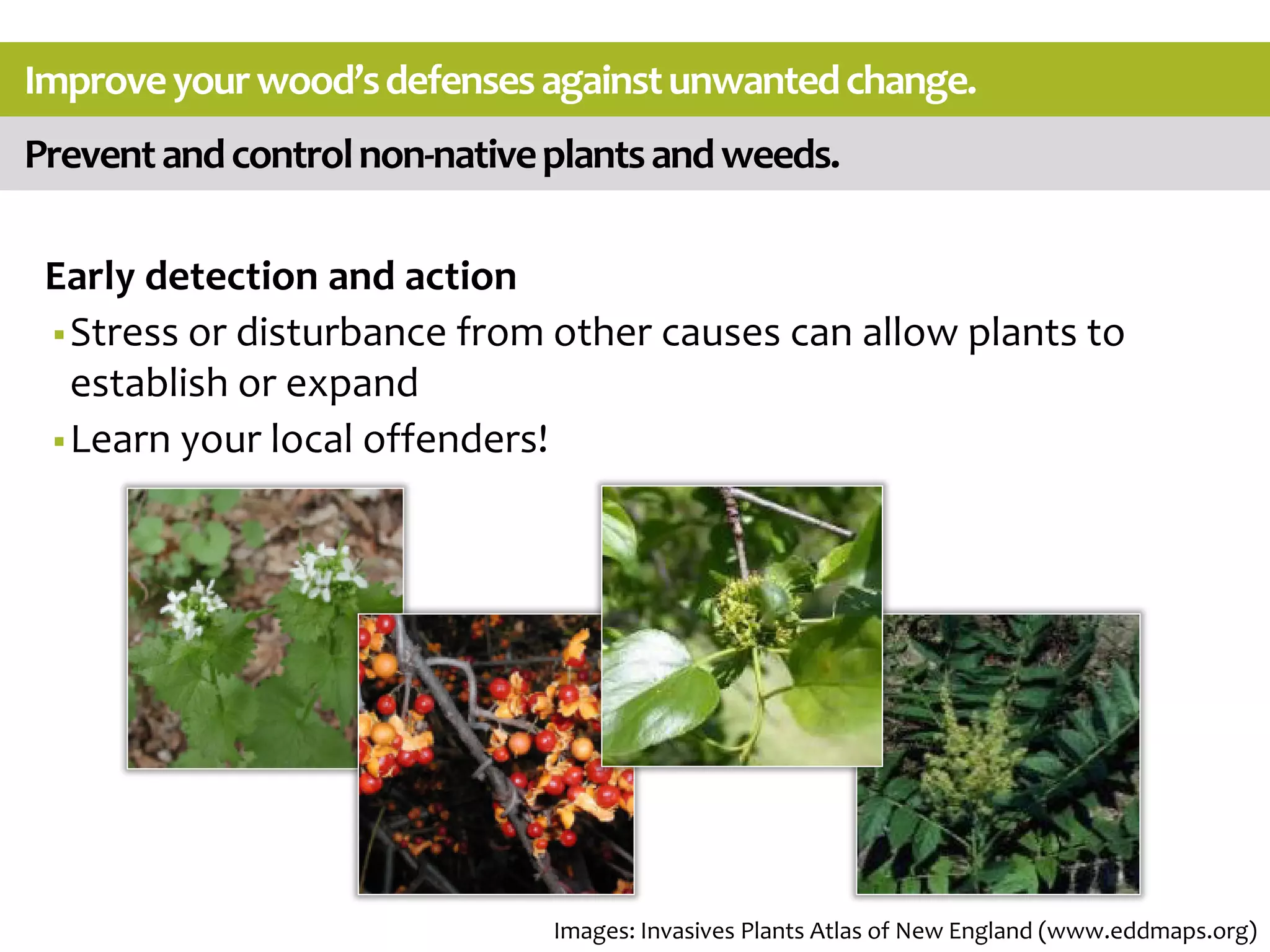
Invasive plants
Images: Invasives Plants Atlas of New England (www.eddmaps.org)
Indirect: Stress or disturbance from
other impacts can affect the potential
for invasion or success
Direct:
 Expanded ranges under warmer
conditions
 Increased competitiveness from ability
of some plants to take advantage of
elevated CO2
Climate change may increase habitat
for many noxious plants.
What changes will
affect your woods?
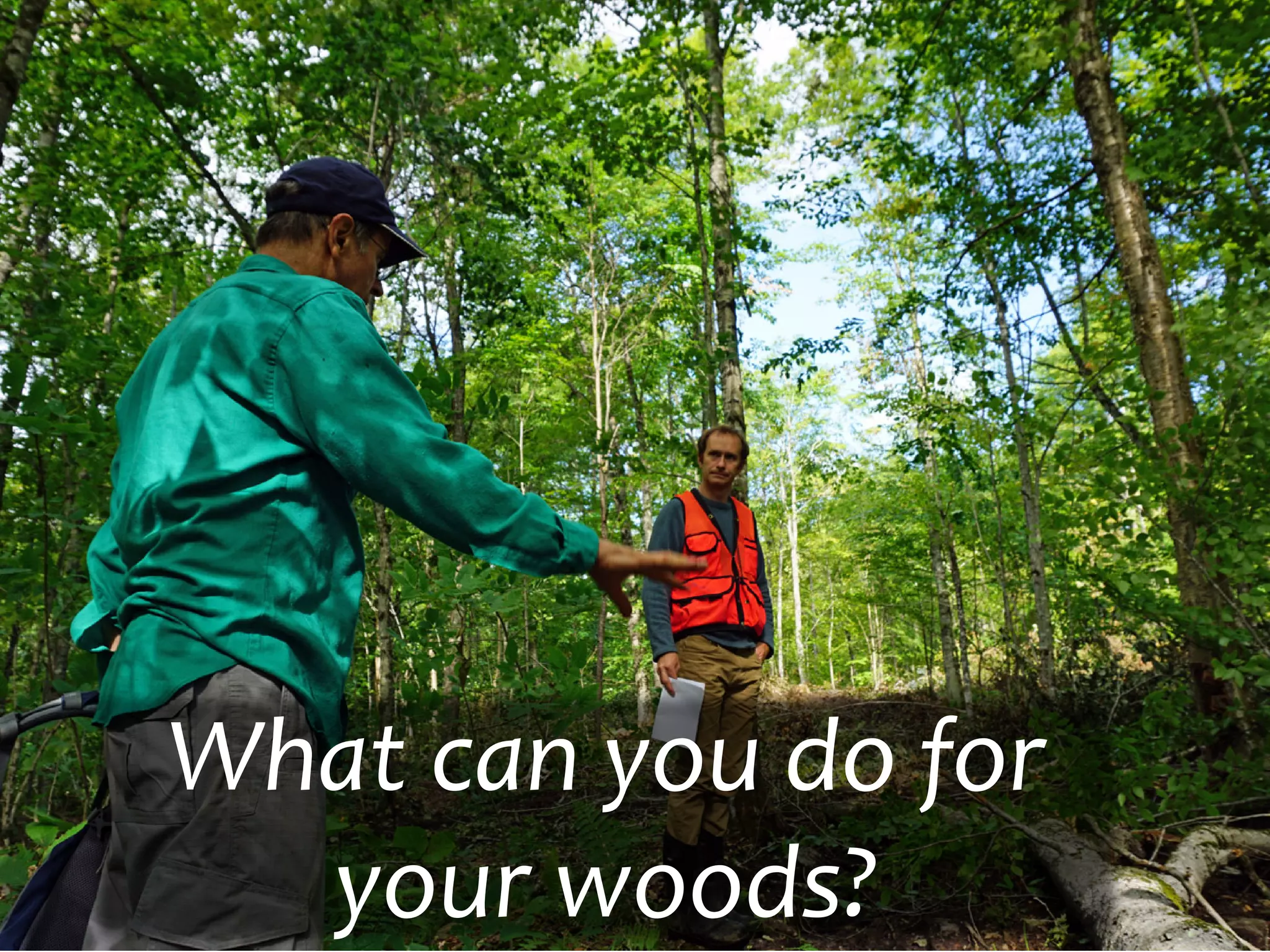
What can you do for
your woods?
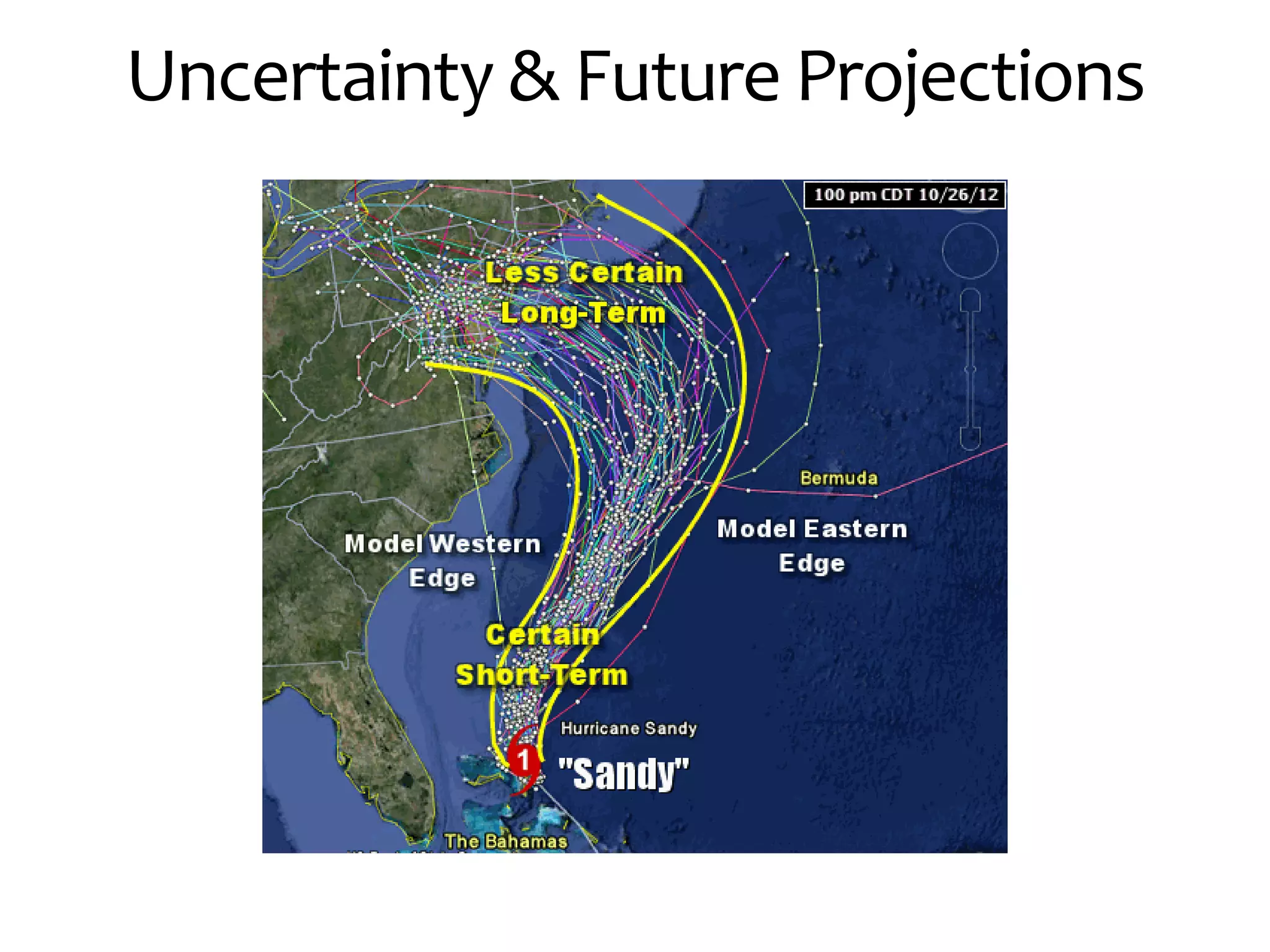
Uncertainty & Future Projections
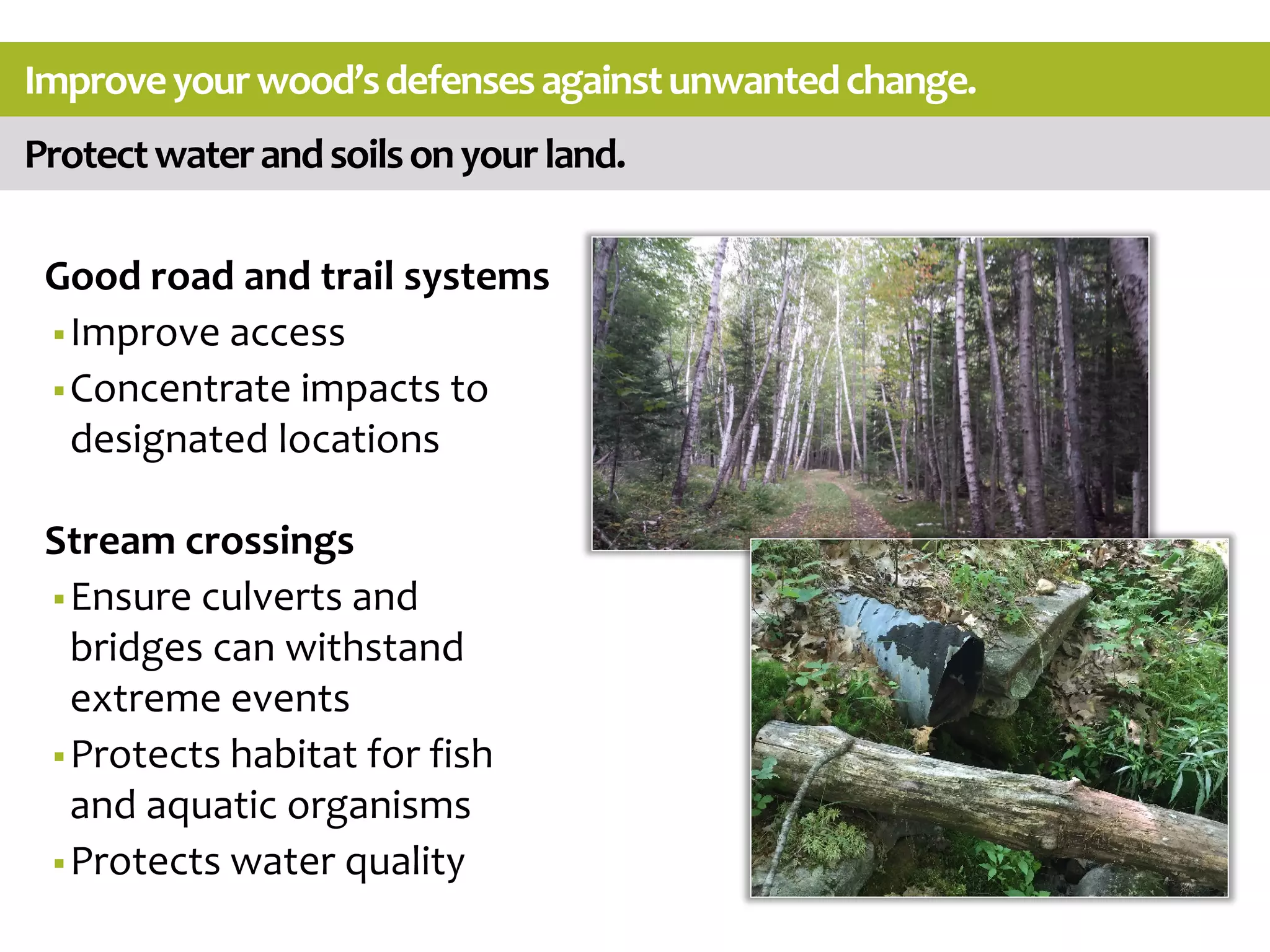
Protectwaterandsoilsonyourland.
Improveyourwood’sdefensesagainstunwantedchange.
Good road and trail systems
Improve access
Concentrate impacts to
designated locations
Stream crossings
Ensure culverts and
bridges can withstand
extreme events
Protects habitat for fish
and aquatic organisms
Protects water quality
Preventandcontrolnon-nativeplantsandweeds.
Improveyourwood’sdefensesagainstunwantedchange.
Early detection and action
Stress or disturbance from other causes can allow plants to
establish or expand
Learn your local offenders!
Images: Invasives Plants Atlas of New England (www.eddmaps.org)
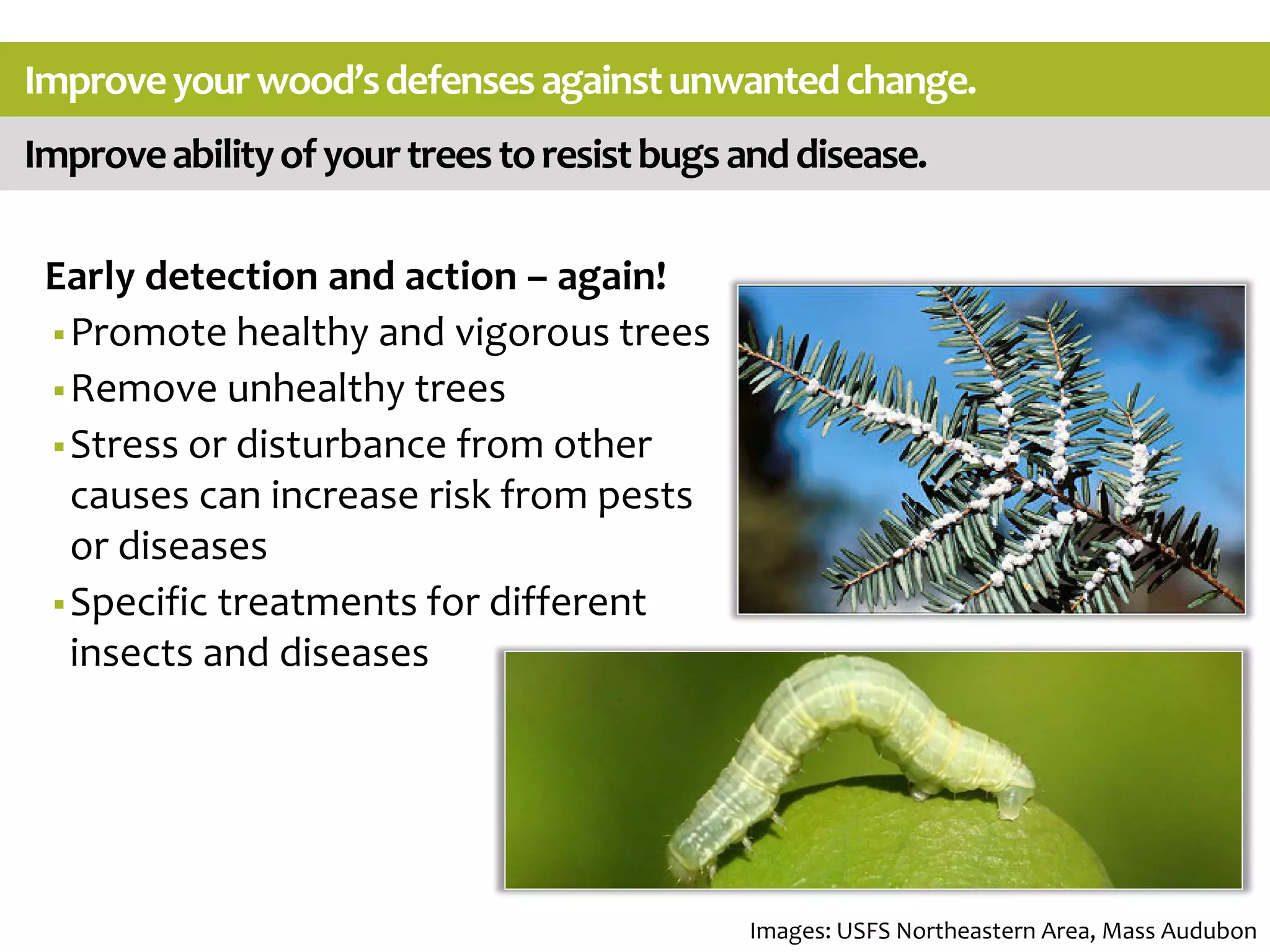
Improveabilityofyourtreestoresistbugsanddisease.
Improveyourwood’sdefensesagainstunwantedchange.
Early detection and action – again!
Promote healthy and vigorous trees
Remove unhealthy trees
Stress or disturbance from other
causes can increase risk from pests
or diseases
Specific treatments for different
insects and diseases
Images: USFS Northeastern Area, Mass Audubon
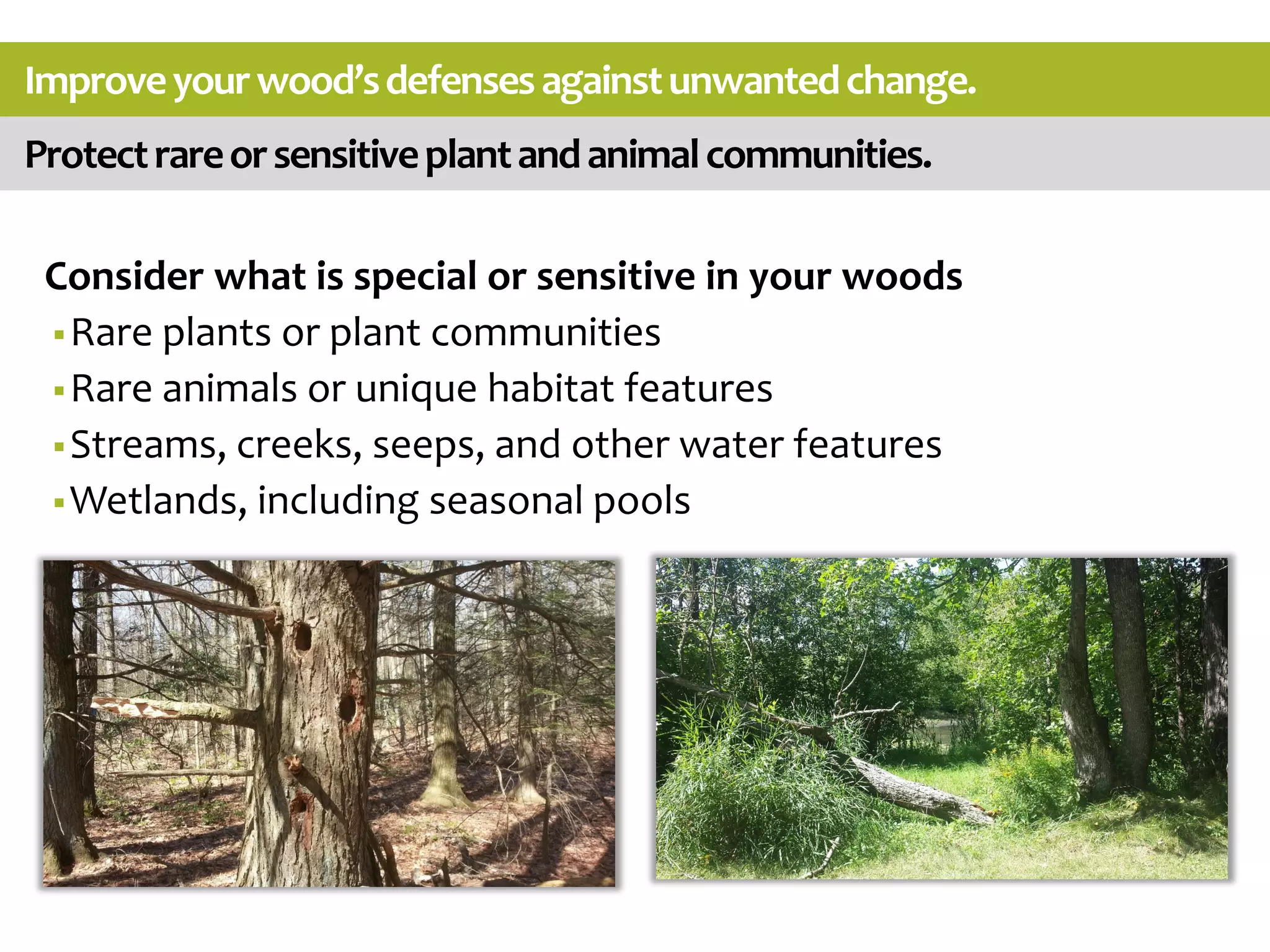
Protectrareorsensitiveplantandanimalcommunities.
Improveyourwood’sdefensesagainstunwantedchange.
Consider what is special or sensitive in your woods
Rare plants or plant communities
Rare animals or unique habitat features
Streams, creeks, seeps, and other water features
Wetlands, including seasonal pools
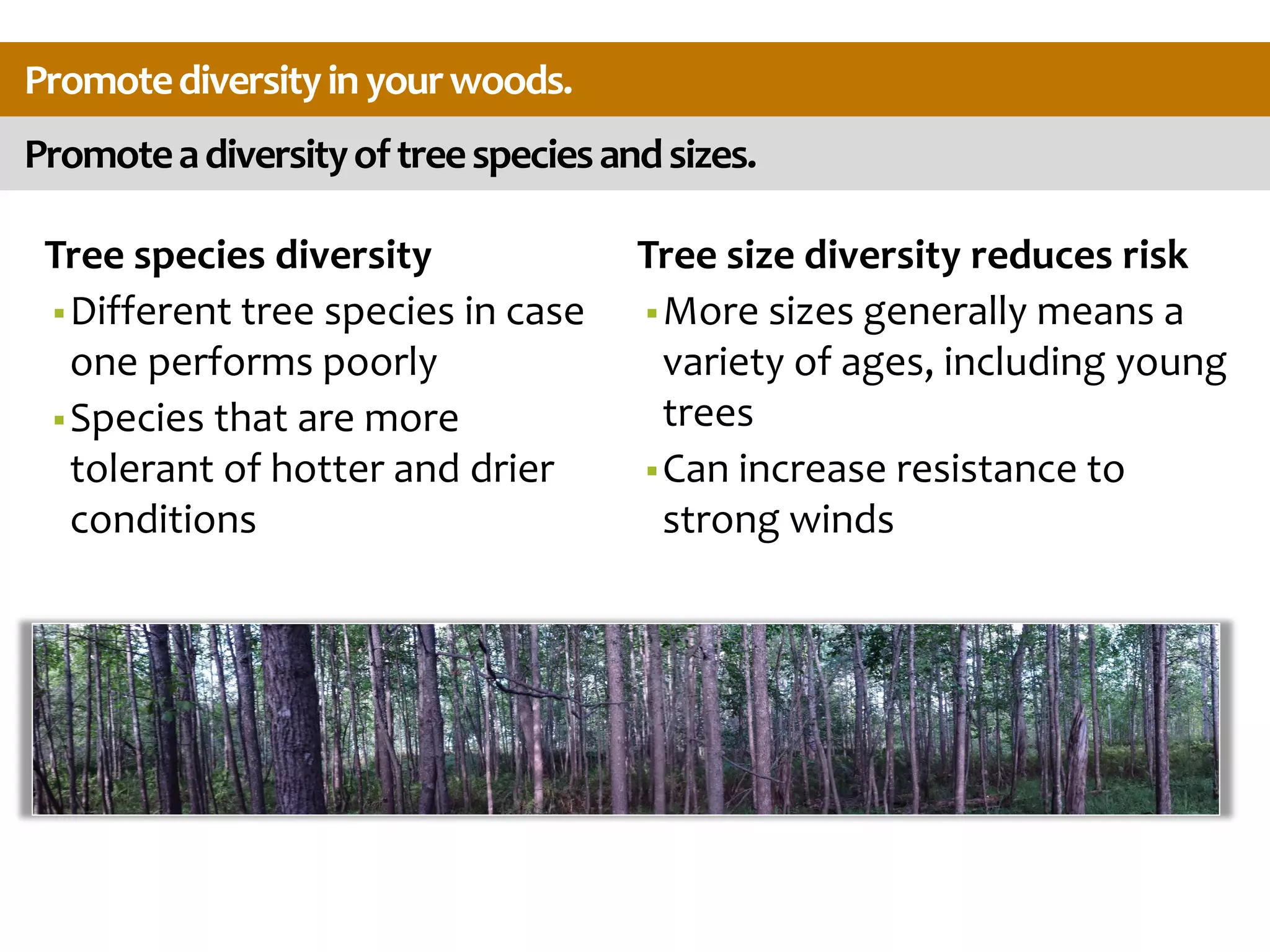
Promoteadiversityoftreespeciesandsizes.
Promotediversityinyourwoods.
Tree species diversity
Different tree species in case
one performs poorly
Species that are more
tolerant of hotter and drier
conditions
Tree size diversity reduces risk
More sizes generally means a
variety of ages, including young
trees
Can increase resistance to
strong winds
Promoteadiversityoftreespeciesandsizes.
Promotediversityinyourwoods.
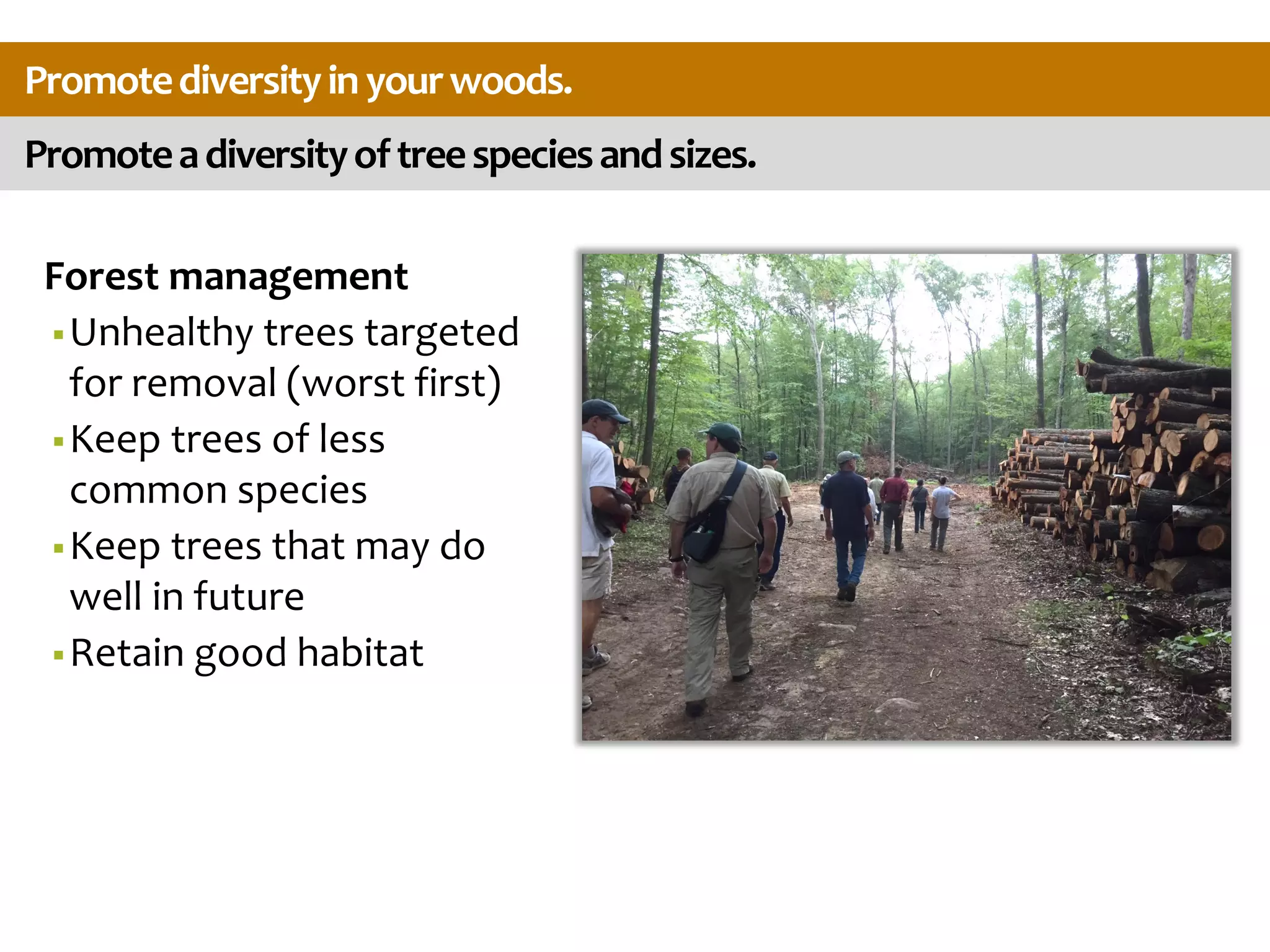
Forest management
Unhealthy trees targeted
for removal (worst first)
Keep trees of less
common species
Keep trees that may do
well in future
Retain good habitat
Promoteadiversityoftreespeciesandsizes.
Promotediversityinyourwoods.
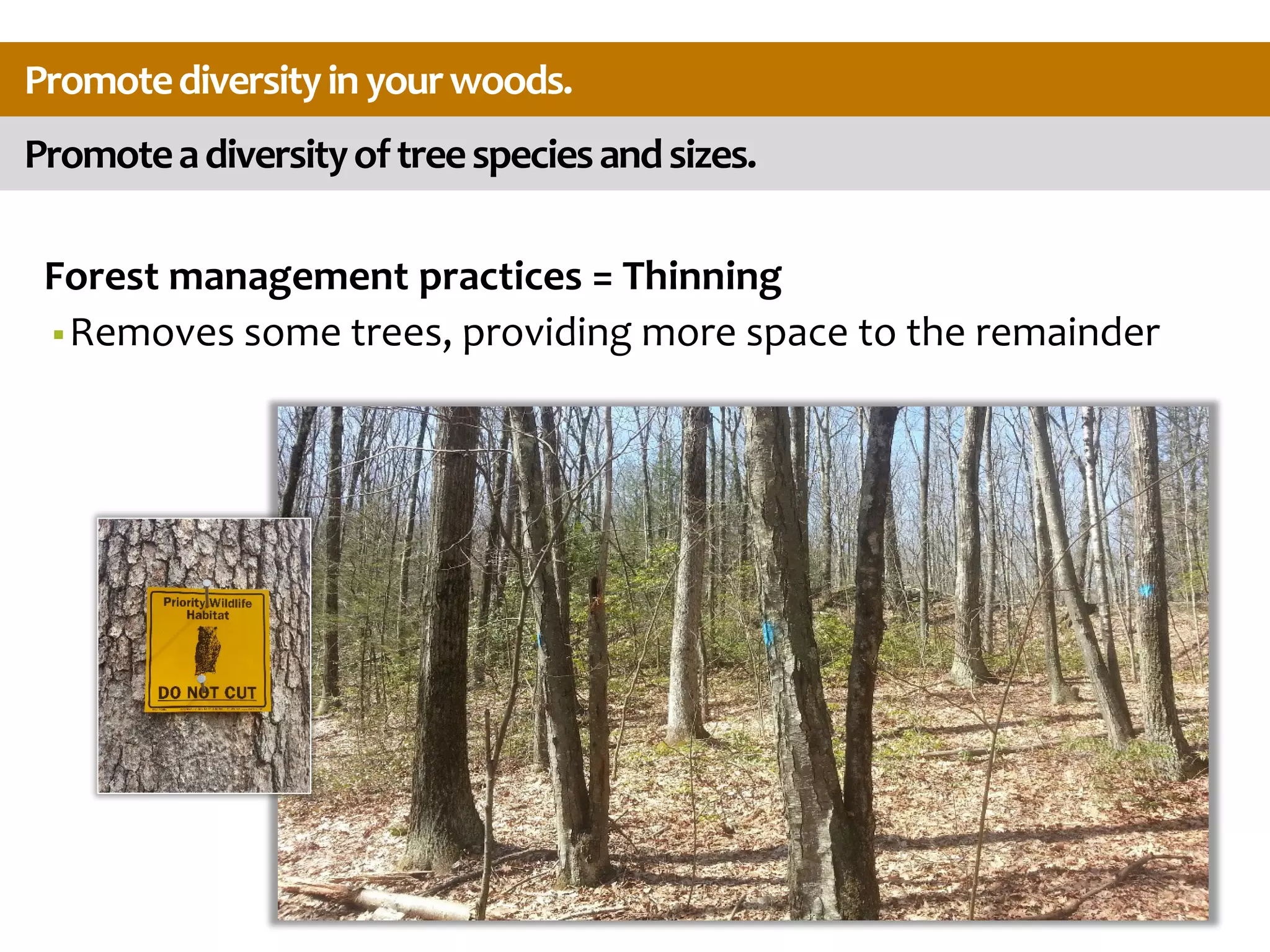
Forest management practices = Thinning
Removes some trees, providing more space to the remainder
Promoteadiversityoftreespeciesandsizes.
Promotediversityinyourwoods.
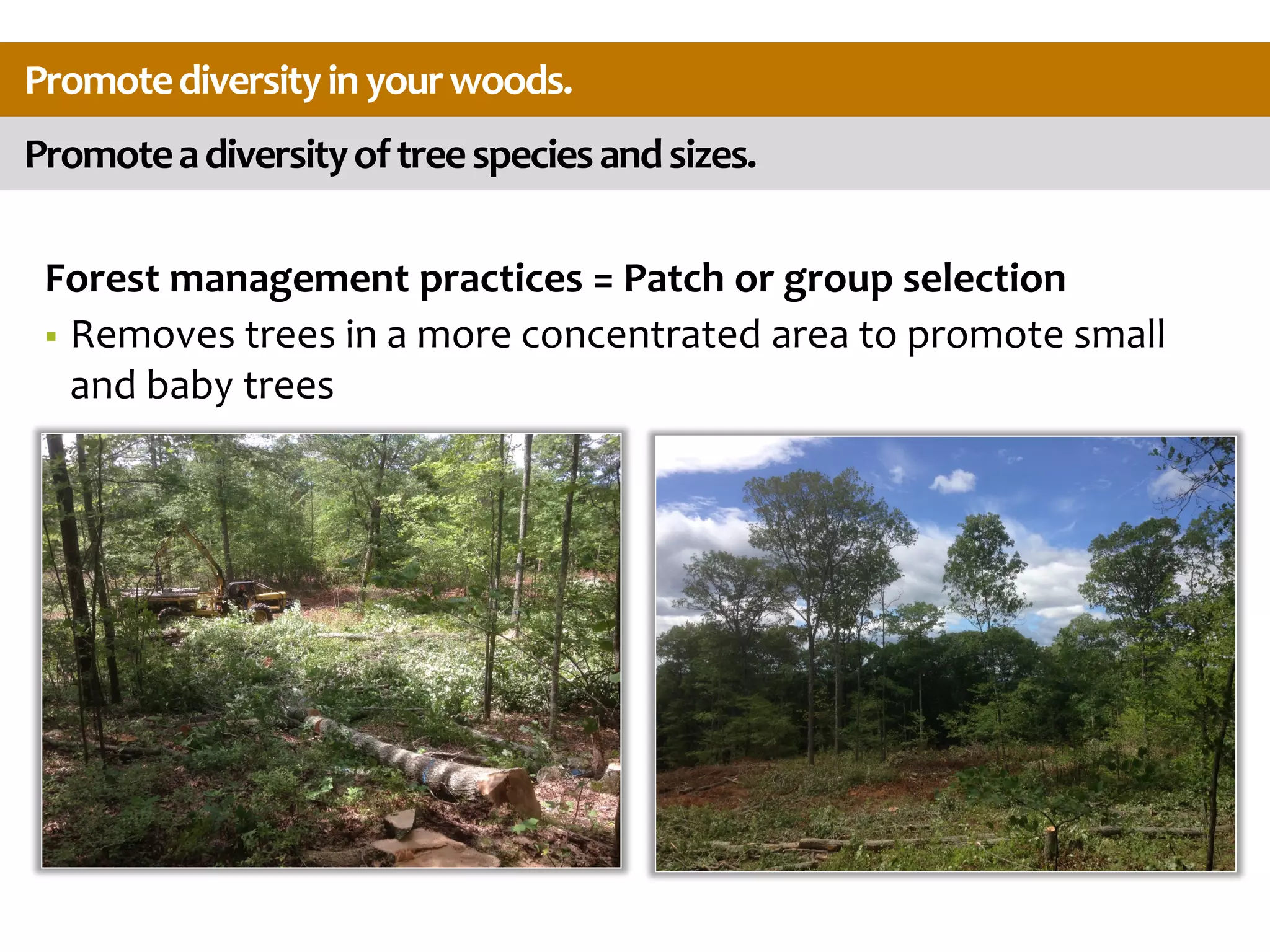
Forest management practices = Patch or group selection
 Removes trees in a more concentrated area to promote small
and baby trees
Considerwhichtreespeciesyoumightwanttopromote.
Bepro-activetoadaptyourwoodstochangingconditions.
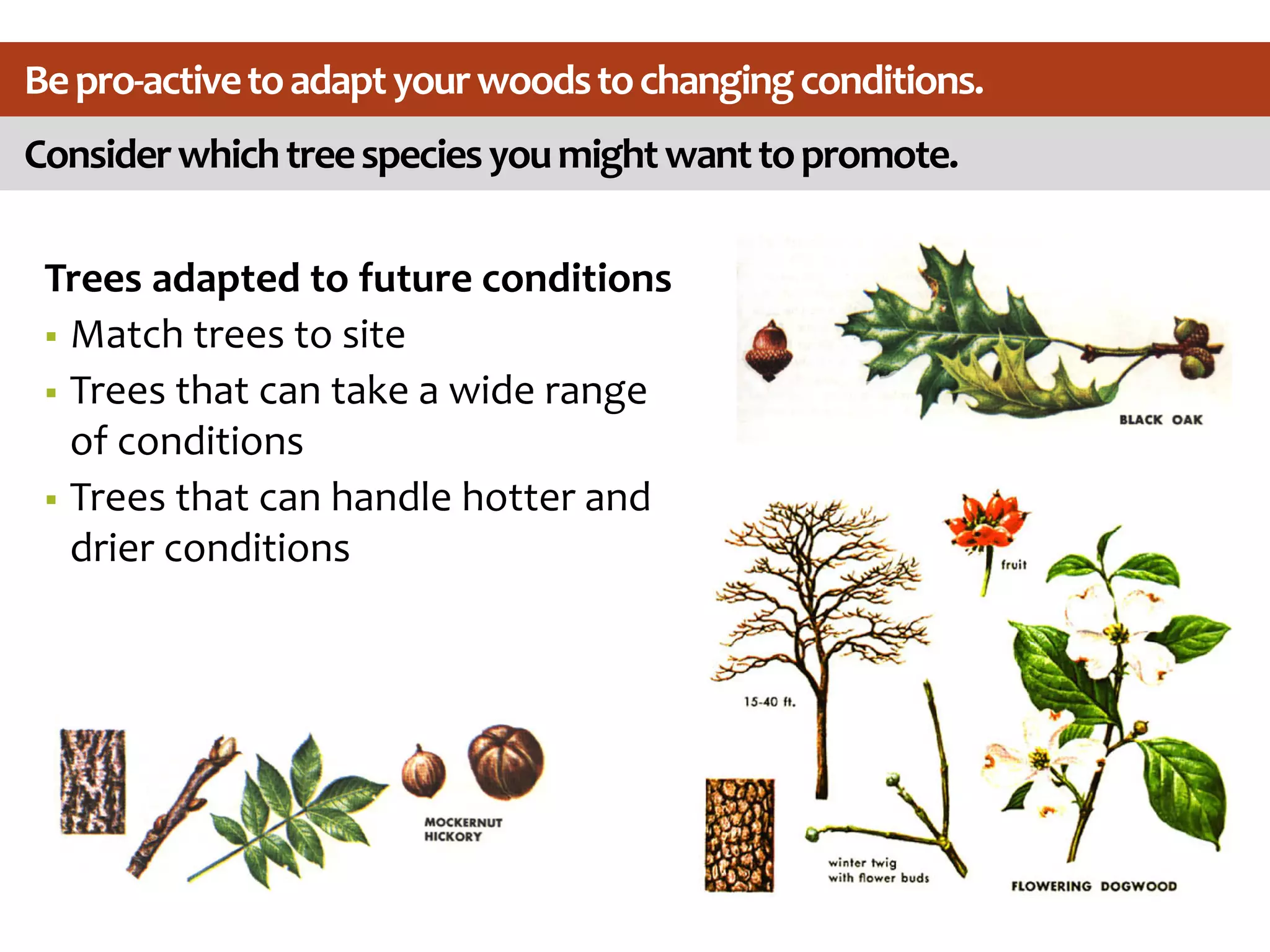
Trees adapted to future conditions
 Match trees to site
 Trees that can take a wide range
of conditions
 Trees that can handle hotter and
drier conditions
Managedamagetoyoungtreesfromexcessivedeerbrowsing.
Bepro-activetoadaptyourwoodstochangingconditions.
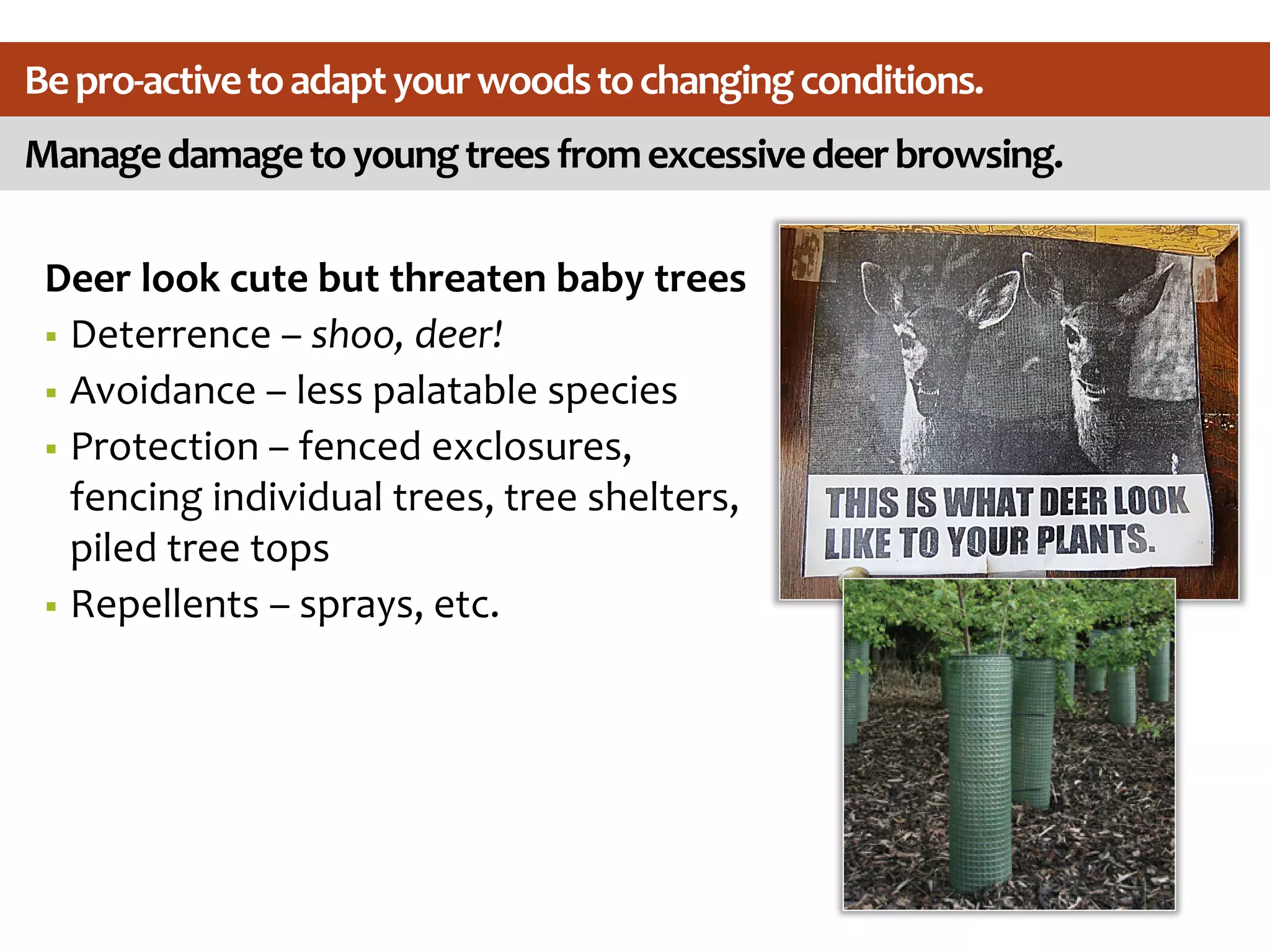
Deer look cute but threaten baby trees
 Deterrence – shoo, deer!
 Avoidance – less palatable species
 Protection – fenced exclosures,
fencing individual trees, tree shelters,
piled tree tops
 Repellents – sprays, etc.
Monitoryourwoodsandtheeffectofdifferentmanagementtactics.
Bepro-activetoadaptyourwoodstochangingconditions.
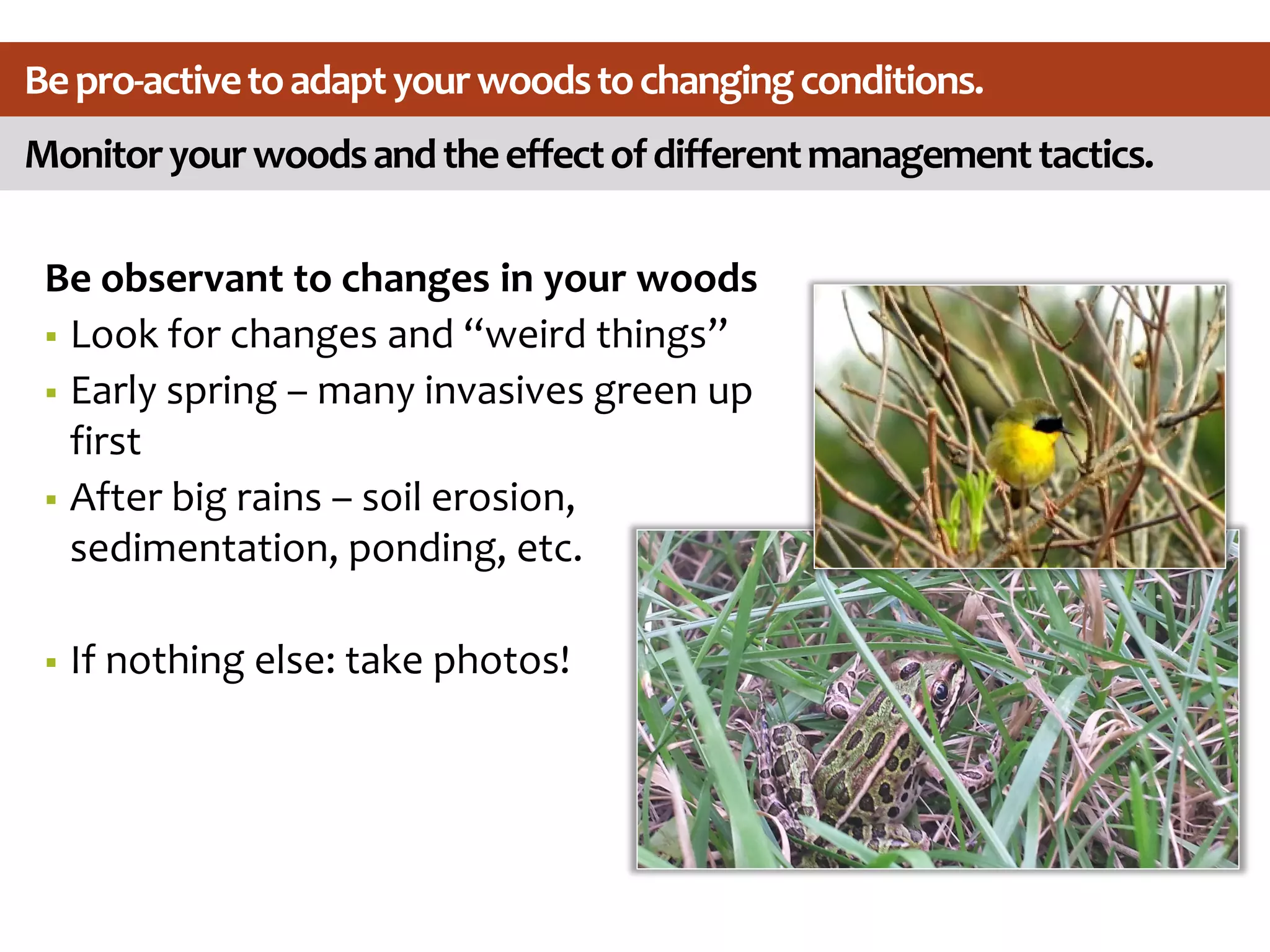
Be observant to changes in your woods
 Look for changes and “weird things”
 Early spring – many invasives green up
first
 After big rains – soil erosion,
sedimentation, ponding, etc.
 If nothing else: take photos!
Getadvicefromprofessionals.
Bepro-activetoadaptyourwoodstochangingconditions.
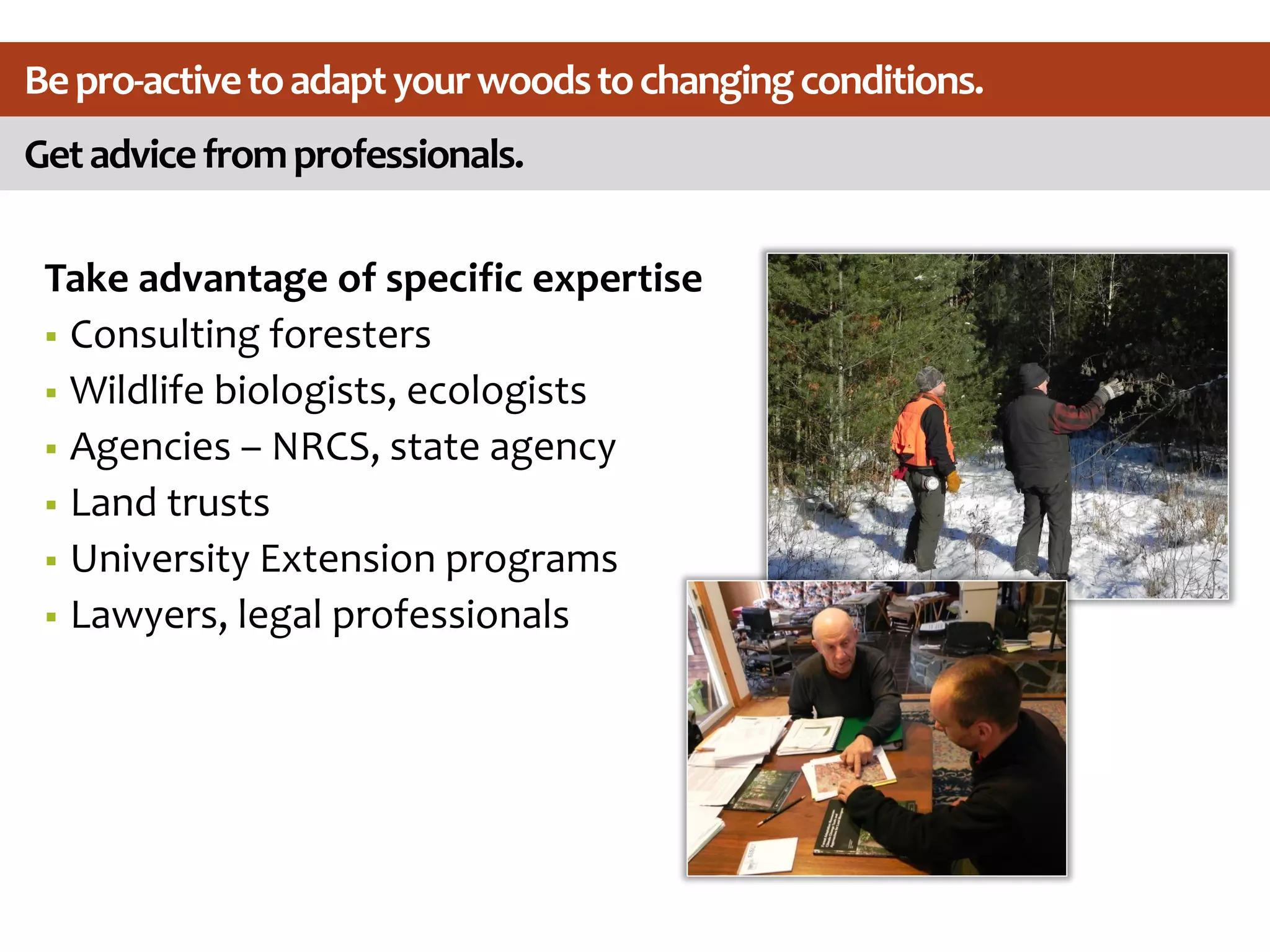
Take advantage of specific expertise
 Consulting foresters
 Wildlife biologists, ecologists
 Agencies – NRCS, state agency
 Land trusts
 University Extension programs
 Lawyers, legal professionals
Questions?

Caring for Our Forests with Climate in Mind