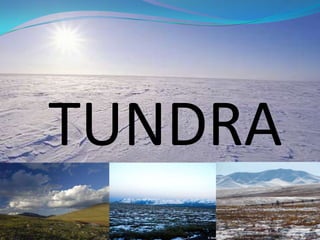
TUNDRA
 tunturi (Finnish) means “a treeless
  plain”
 Coldest of all biomes
 extremely low temperatures
 little precipitation
 poor nutrients
 short growing seasons
 Simple vegetation
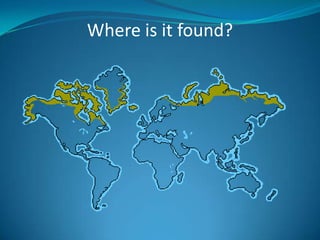
Where is it found?
Tundra is separated into two types:

Arctic tundra
Alpine tundra
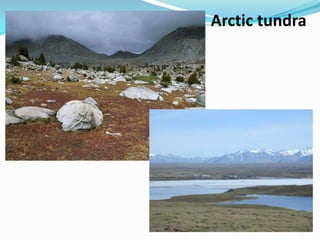
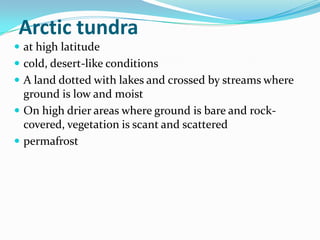
Arctic tundra
Arctic tundra
 at high latitude
 cold, desert-like conditions
 A land dotted with lakes and crossed by streams where
  ground is low and moist
 On high drier areas where ground is bare and rock-
  covered, vegetation is scant and scattered
 permafrost
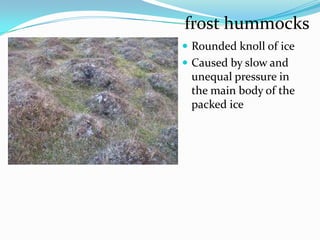
frost hummocks
 Rounded knoll of ice
 Caused by slow and
 unequal pressure in
 the main body of the
 packed ice
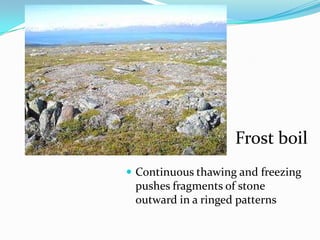
Frost boil
 Continuous thawing and freezing
 pushes fragments of stone
 outward in a ringed patterns
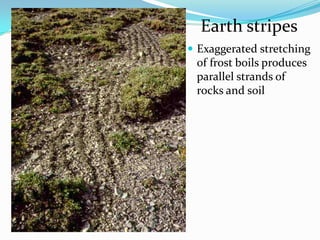
Earth stripes
 Exaggerated stretching
 of frost boils produces
 parallel strands of
 rocks and soil
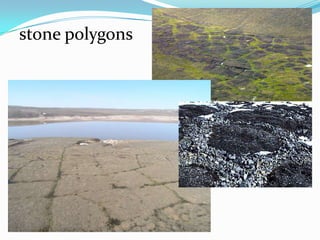
stone polygons
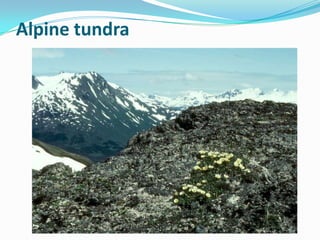
Alpine tundra
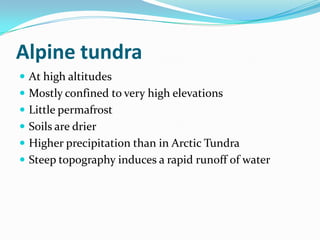
Alpine tundra
 At high altitudes
 Mostly confined to very high elevations
 Little permafrost
 Soils are drier
 Higher precipitation than in Arctic Tundra
 Steep topography induces a rapid runoff of water
Abiotic
Temperature
Soil
Wind and water
Nutrients
Temperature
 short summer days ; very long and cold winters
 The alpine tundra is also cold, but not nearly as cold as
  the arctic.
 Temperatures at night are almost always below
  freezing, but daytime temperatures still permit plant
  growth for about half the year.
 limits the types of species that can live there
Soil

 Inactive layer (permafrost)
    If the permafrost melts, it alters the temperature and
     topography of a region, which threatens the existence of
     many species living in the tundra.
 Active layer (top of the permafrost)
    thaws in the summer months which allows vegetation to
     grow and enables the chemical processes necessary for
     sustaining life to occur.
Wind and water
 extremely windy and have small amounts of rainfall
 high winds make it difficult for any large plant species
  to survive
 Despite the low rainfall, the arctic has high humidity,
  because water is slow to evaporate
Nutrients

 Phosphorous and nitrogen are the major nutrients that
  exist in the tundra biome
 Precipitation produces phosphorous, while a bio-
  chemical process creates nitrogen.
 Through photosynthesis, plants harvest energy from
  the sun, which they use to absorb these key nutrients
  and grow.
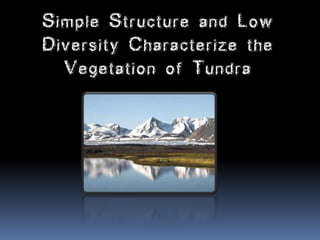
Simple Structure and Low
Diversity Characterize the
  Vegetation of Tundra
•Vegetation – simple; although it appears
homogeneous, the pattern of vegetation is patchy.
The combination of micro relief, snowmelt,
 frost heaving, and aspect, among other conditions,
 produces an endless change in plant associations
 from spot to spot.
•Number of Species – few
•Growth- slow
•Biomass and functional activity are confined
to a few groups.
Arctic
Only those species able to withstand
  constant disturbance of the soil,
       buffeting by the wind,
  and abrasion from wind- carried
          particle of soil
         and ice can survive.
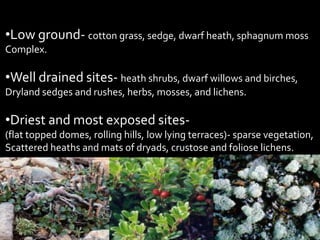
•Low ground- cotton grass, sedge, dwarf heath, sphagnum moss
Complex.

•Well drained sites- heath shrubs, dwarf willows and birches,
Dryland sedges and rushes, herbs, mosses, and lichens.

•Driest and most exposed sites-
(flat topped domes, rolling hills, low lying terraces)- sparse vegetation,
Scattered heaths and mats of dryads, crustose and foliose lichens.
Alpine Tundra
The environment is even MORE severe
  for plants. It is a land of strong
   winds, snow, cold, and widely
     fluctuating temperatures.
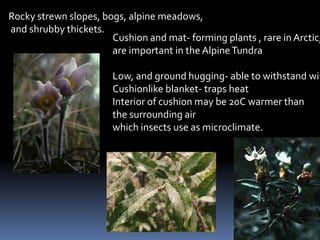
Rocky strewn slopes, bogs, alpine meadows,
and shrubby thickets.
                       Cushion and mat- forming plants , rare in Arctic,
                       are important in the Alpine Tundra

                       Low, and ground hugging- able to withstand win
                       Cushionlike blanket- traps heat
                       Interior of cushion may be 20C warmer than
                       the surrounding air
                       which insects use as microclimate.
Animals
•Segmented whiteworms
•Collembolas
•Flies
•Blackflies
•Deerflies
•Mosquitoes-( scarce in alpine)
•Beetles
•Grasshoppers
•Butterflies


•Butterflies keep close to the ground
•Other insects have short wings or no wings at all
•Insectdevelopment is slow
•Butterflies may take two years to mature
•Grasshoppers three years
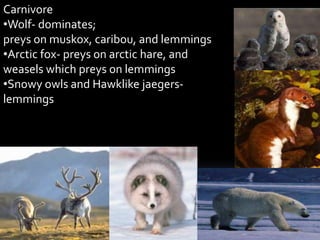
Carnivore
•Wolf- dominates;
preys on muskox, caribou, and lemmings
•Arctic fox- preys on arctic hare, and
weasels which preys on lemmings
•Snowy owls and Hawklike jaegers-
lemmings
Alpine Tundra
•Haycutting pika, marmots, mountain woodchucks-
hibernate over winter
• mountain goats, sheep, elk, voles, and pocket gophers,
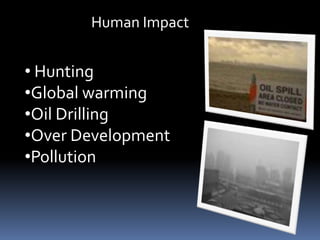
Human Impact


• Hunting
•Global warming
•Oil Drilling
•Over Development
•Pollution

Tundra

  • 1.
  • 2.
     tunturi (Finnish)means “a treeless plain”  Coldest of all biomes  extremely low temperatures  little precipitation  poor nutrients  short growing seasons  Simple vegetation
  • 3.
  • 4.
    Tundra is separatedinto two types: Arctic tundra Alpine tundra
  • 5.
  • 6.
    Arctic tundra  athigh latitude  cold, desert-like conditions  A land dotted with lakes and crossed by streams where ground is low and moist  On high drier areas where ground is bare and rock- covered, vegetation is scant and scattered  permafrost
  • 7.
    frost hummocks  Roundedknoll of ice  Caused by slow and unequal pressure in the main body of the packed ice
  • 8.
    Frost boil  Continuousthawing and freezing pushes fragments of stone outward in a ringed patterns
  • 9.
    Earth stripes  Exaggeratedstretching of frost boils produces parallel strands of rocks and soil
  • 10.
  • 11.
  • 12.
    Alpine tundra  Athigh altitudes  Mostly confined to very high elevations  Little permafrost  Soils are drier  Higher precipitation than in Arctic Tundra  Steep topography induces a rapid runoff of water
  • 13.
  • 14.
    Temperature  short summerdays ; very long and cold winters  The alpine tundra is also cold, but not nearly as cold as the arctic.  Temperatures at night are almost always below freezing, but daytime temperatures still permit plant growth for about half the year.  limits the types of species that can live there
  • 15.
    Soil  Inactive layer(permafrost)  If the permafrost melts, it alters the temperature and topography of a region, which threatens the existence of many species living in the tundra.  Active layer (top of the permafrost)  thaws in the summer months which allows vegetation to grow and enables the chemical processes necessary for sustaining life to occur.
  • 16.
    Wind and water extremely windy and have small amounts of rainfall  high winds make it difficult for any large plant species to survive  Despite the low rainfall, the arctic has high humidity, because water is slow to evaporate
  • 17.
    Nutrients  Phosphorous andnitrogen are the major nutrients that exist in the tundra biome  Precipitation produces phosphorous, while a bio- chemical process creates nitrogen.  Through photosynthesis, plants harvest energy from the sun, which they use to absorb these key nutrients and grow.
  • 18.
    Simple Structure andLow Diversity Characterize the Vegetation of Tundra
  • 19.
    •Vegetation – simple;although it appears homogeneous, the pattern of vegetation is patchy. The combination of micro relief, snowmelt, frost heaving, and aspect, among other conditions, produces an endless change in plant associations from spot to spot. •Number of Species – few •Growth- slow •Biomass and functional activity are confined to a few groups.
  • 20.
    Arctic Only those speciesable to withstand constant disturbance of the soil, buffeting by the wind, and abrasion from wind- carried particle of soil and ice can survive.
  • 21.
    •Low ground- cottongrass, sedge, dwarf heath, sphagnum moss Complex. •Well drained sites- heath shrubs, dwarf willows and birches, Dryland sedges and rushes, herbs, mosses, and lichens. •Driest and most exposed sites- (flat topped domes, rolling hills, low lying terraces)- sparse vegetation, Scattered heaths and mats of dryads, crustose and foliose lichens.
  • 22.
    Alpine Tundra The environmentis even MORE severe for plants. It is a land of strong winds, snow, cold, and widely fluctuating temperatures.
  • 23.
    Rocky strewn slopes,bogs, alpine meadows, and shrubby thickets. Cushion and mat- forming plants , rare in Arctic, are important in the Alpine Tundra Low, and ground hugging- able to withstand win Cushionlike blanket- traps heat Interior of cushion may be 20C warmer than the surrounding air which insects use as microclimate.
  • 24.
  • 25.
    •Segmented whiteworms •Collembolas •Flies •Blackflies •Deerflies •Mosquitoes-( scarcein alpine) •Beetles •Grasshoppers •Butterflies •Butterflies keep close to the ground •Other insects have short wings or no wings at all •Insectdevelopment is slow •Butterflies may take two years to mature •Grasshoppers three years
  • 26.
    Carnivore •Wolf- dominates; preys onmuskox, caribou, and lemmings •Arctic fox- preys on arctic hare, and weasels which preys on lemmings •Snowy owls and Hawklike jaegers- lemmings
  • 27.
    Alpine Tundra •Haycutting pika,marmots, mountain woodchucks- hibernate over winter • mountain goats, sheep, elk, voles, and pocket gophers,
  • 28.
    Human Impact • Hunting •Globalwarming •Oil Drilling •Over Development •Pollution