Freshwater
Ecosystems
Stream and river ecoSyStemS
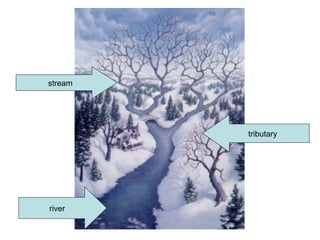
• Water in brooks, streams, and rivers
may flow from meltingmelting ice or snow or
come from a spring
• Each stream of water that joins a
larger stream is called a tributarytributary
• As more tributaries join, the stream
gets strongerstronger and becomes a river
stream
tributary
river
Pond and Lake ecoSyStemS
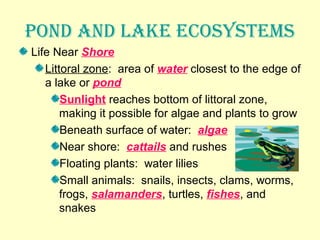
Life Near Shore
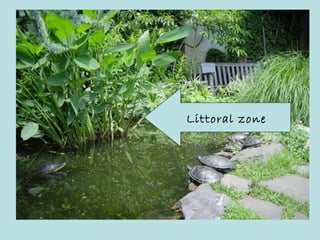
Littoral zone: area of water closest to the edge of
a lake or pond
Sunlight reaches bottom of littoral zone,
making it possible for algae and plants to grow
Beneath surface of water: algae
Near shore: cattails and rushes
Floating plants: water lilies
Small animals: snails, insects, clams, worms,
frogs, salamanders, turtles, fishes, and
snakes
Littoral zone
Life Away from Shore
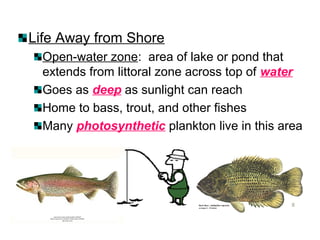
Open-water zone: area of lake or pond that
extends from littoral zone across top of water
Goes as deep as sunlight can reach
Home to bass, trout, and other fishes
Many photosynthetic plankton live in this area
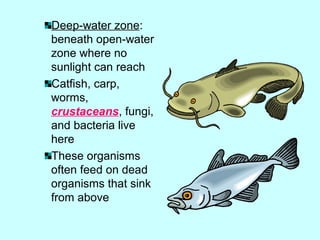
Deep-water zone:
beneath open-water
zone where no
sunlight can reach
Catfish, carp,
worms,
crustaceans, fungi,
and bacteria live
here
These organisms
often feed on dead
organisms that sink
from above
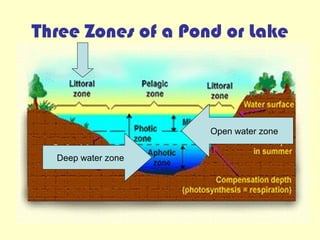
Three Zones of a Pond or Lake
Open water zone
Deep water zone
Wetland Ecosystems
Wetland: area that is sometimes
underwater or whose soil contains a great
deal of moisture
Play important role in flood control—soaks
up large amounts of water during heavy
rains
Water in wetlands moves deeper into
ground, so helps replenish underground
water supplies
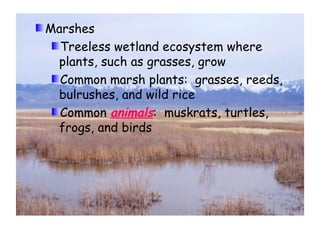
Marshes
Treeless wetland ecosystem where
plants, such as grasses, grow
Common marsh plants: grasses, reeds,
bulrushes, and wild rice
Common animals: muskrats, turtles,
frogs, and birds
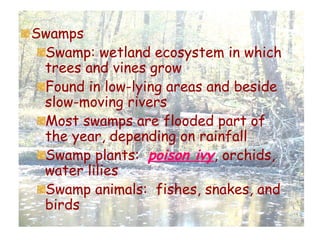
Swamps
Swamp: wetland ecosystem in which
trees and vines grow
Found in low-lying areas and beside
slow-moving rivers
Most swamps are flooded part of
the year, depending on rainfall
Swamp plants: poison ivy, orchids,
water lilies
Swamp animals: fishes, snakes, and
birds
From a Lake to a Forest
Did you know that a lake or pond can
disappear?
Water entering a standing body of
water usually carries nutrients and
sediment—these settle at the bottom
of the lake
Dead leaves and decaying matter
also settle at bottom of pond or lake
Bacteria decomposes this material
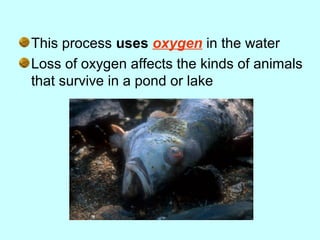
This process uses oxygen in the water
Loss of oxygen affects the kinds of animals
that survive in a pond or lake
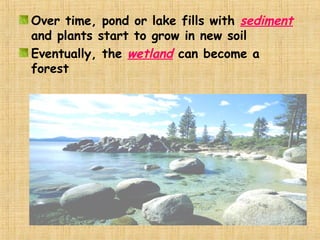
Over time, pond or lake fills with sediment
and plants start to grow in new soil
Eventually, the wetland can become a
forest
Marine ecosysteMs
• Shaped by abiotic factors: water,
temperature, water depth, amount of
sunlight
• Very diverse: ocean contains whales, the
largest animals on Earth
• Tiny plankton form the base of the ocean’s
food chains
• Temperature
– Temperature of ocean water
decreases as depth of water
increases
– Surface zone is warm, top
layer; surface currents mix the
water
– Thermocline in this zone,
temperature decreases with
increased depth
– Deep zone bottom layer of
water; averages a chilling 2
degrees C
Get in the Zone!
• Major ocean
zones: intertidal,
neritic, oceanic,
benthic
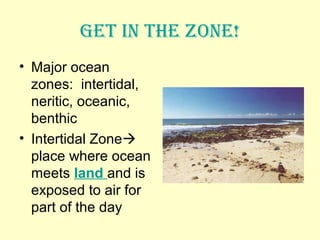
• Intertidal Zone
place where ocean
meets land and is
exposed to air for
part of the day
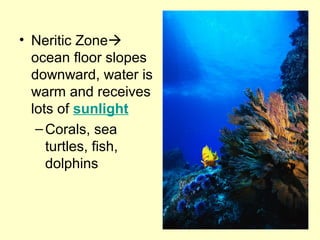
• Neritic Zone
ocean floor slopes
downward, water is
warm and receives
lots of sunlight
–Corals, sea
turtles, fish,
dolphins
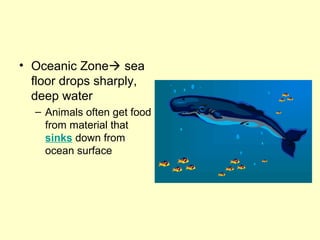
• Oceanic Zone sea
floor drops sharply,
deep water
– Animals often get food
from material that
sinks down from
ocean surface
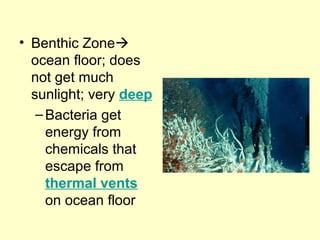
• Benthic Zone
ocean floor; does
not get much
sunlight; very deep
–Bacteria get
energy from
chemicals that
escape from
thermal vents
on ocean floor
A Closer Look
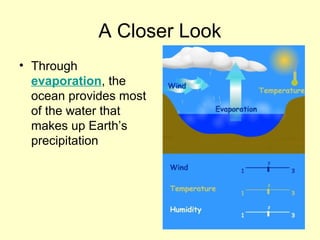
• Through
evaporation, the
ocean provides most
of the water that
makes up Earth’s
precipitation
Intertidal Areas
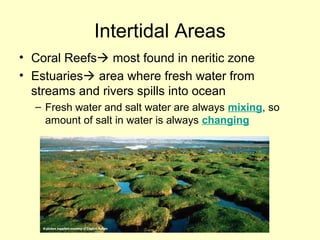
• Coral Reefs most found in neritic zone
• Estuaries area where fresh water from
streams and rivers spills into ocean
– Fresh water and salt water are always mixing, so
amount of salt in water is always changing
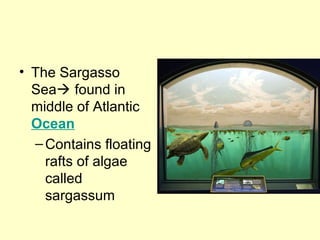
• The Sargasso
Sea found in
middle of Atlantic
Ocean
–Contains floating
rafts of algae
called
sargassum
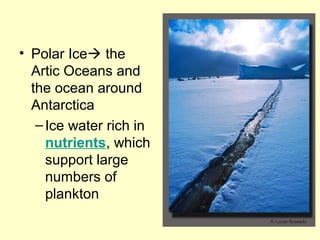
• Polar Ice the
Artic Oceans and
the ocean around
Antarctica
–Ice water rich in
nutrients, which
support large
numbers of
plankton

Freshwater ecosystems

  • 1.
  • 2.
    Stream and riverecoSyStemS • Water in brooks, streams, and rivers may flow from meltingmelting ice or snow or come from a spring • Each stream of water that joins a larger stream is called a tributarytributary • As more tributaries join, the stream gets strongerstronger and becomes a river
  • 3.
  • 4.
    Pond and LakeecoSyStemS Life Near Shore Littoral zone: area of water closest to the edge of a lake or pond Sunlight reaches bottom of littoral zone, making it possible for algae and plants to grow Beneath surface of water: algae Near shore: cattails and rushes Floating plants: water lilies Small animals: snails, insects, clams, worms, frogs, salamanders, turtles, fishes, and snakes
  • 5.
  • 6.
    Life Away fromShore Open-water zone: area of lake or pond that extends from littoral zone across top of water Goes as deep as sunlight can reach Home to bass, trout, and other fishes Many photosynthetic plankton live in this area
  • 7.
    Deep-water zone: beneath open-water zonewhere no sunlight can reach Catfish, carp, worms, crustaceans, fungi, and bacteria live here These organisms often feed on dead organisms that sink from above
  • 8.
    Three Zones ofa Pond or Lake Open water zone Deep water zone
  • 9.
    Wetland Ecosystems Wetland: areathat is sometimes underwater or whose soil contains a great deal of moisture Play important role in flood control—soaks up large amounts of water during heavy rains Water in wetlands moves deeper into ground, so helps replenish underground water supplies
  • 10.
    Marshes Treeless wetland ecosystemwhere plants, such as grasses, grow Common marsh plants: grasses, reeds, bulrushes, and wild rice Common animals: muskrats, turtles, frogs, and birds
  • 11.
    Swamps Swamp: wetland ecosystemin which trees and vines grow Found in low-lying areas and beside slow-moving rivers Most swamps are flooded part of the year, depending on rainfall Swamp plants: poison ivy, orchids, water lilies Swamp animals: fishes, snakes, and birds
  • 12.
    From a Laketo a Forest Did you know that a lake or pond can disappear? Water entering a standing body of water usually carries nutrients and sediment—these settle at the bottom of the lake Dead leaves and decaying matter also settle at bottom of pond or lake Bacteria decomposes this material
  • 13.
    This process usesoxygen in the water Loss of oxygen affects the kinds of animals that survive in a pond or lake
  • 14.
    Over time, pondor lake fills with sediment and plants start to grow in new soil Eventually, the wetland can become a forest
  • 15.
    Marine ecosysteMs • Shapedby abiotic factors: water, temperature, water depth, amount of sunlight • Very diverse: ocean contains whales, the largest animals on Earth • Tiny plankton form the base of the ocean’s food chains
  • 16.
    • Temperature – Temperatureof ocean water decreases as depth of water increases – Surface zone is warm, top layer; surface currents mix the water – Thermocline in this zone, temperature decreases with increased depth – Deep zone bottom layer of water; averages a chilling 2 degrees C
  • 17.
    Get in theZone! • Major ocean zones: intertidal, neritic, oceanic, benthic • Intertidal Zone place where ocean meets land and is exposed to air for part of the day
  • 18.
    • Neritic Zone oceanfloor slopes downward, water is warm and receives lots of sunlight –Corals, sea turtles, fish, dolphins
  • 19.
    • Oceanic Zonesea floor drops sharply, deep water – Animals often get food from material that sinks down from ocean surface
  • 20.
    • Benthic Zone oceanfloor; does not get much sunlight; very deep –Bacteria get energy from chemicals that escape from thermal vents on ocean floor
  • 21.
    A Closer Look •Through evaporation, the ocean provides most of the water that makes up Earth’s precipitation
  • 22.
    Intertidal Areas • CoralReefs most found in neritic zone • Estuaries area where fresh water from streams and rivers spills into ocean – Fresh water and salt water are always mixing, so amount of salt in water is always changing
  • 23.
    • The Sargasso Seafound in middle of Atlantic Ocean –Contains floating rafts of algae called sargassum
  • 24.
    • Polar Icethe Artic Oceans and the ocean around Antarctica –Ice water rich in nutrients, which support large numbers of plankton