Richard Harper Climate change adaptation for forestry: learning from recurrent droughts Alcoa Chair in Sustainable Water Management
Collaborators John McGrath (CRC Future Farm Industries) Keith Smettem (University of WA) Don McGuire (ForestrySA) Tom Baker (University of Melbourne) Brad Evans (Murdoch University)
Overview… Projections of climate change for southern Australia often describe a change in the water balance Region has both had a general drying trend and recurrent droughts with severe effects; the forest industry has adapted Are these droughts analogues of future climate change? How did adaptation occur?  Are the institutional structures in place to allow future adaptation?
Australia’s forests and land use ( State of the Forests Report, 2008, p. 5 ) Total forest area 149x10 6  ha 138x10 6  ha   native  Eucalyptus  &  Acacia  forests 9x10 6  ha native  Eucalyptus  production forests 1x10 6  ha plantation  Pinus 1x10 6  ha plantation  Eucalyptus Key component of carbon mitigation, expansion into new areas
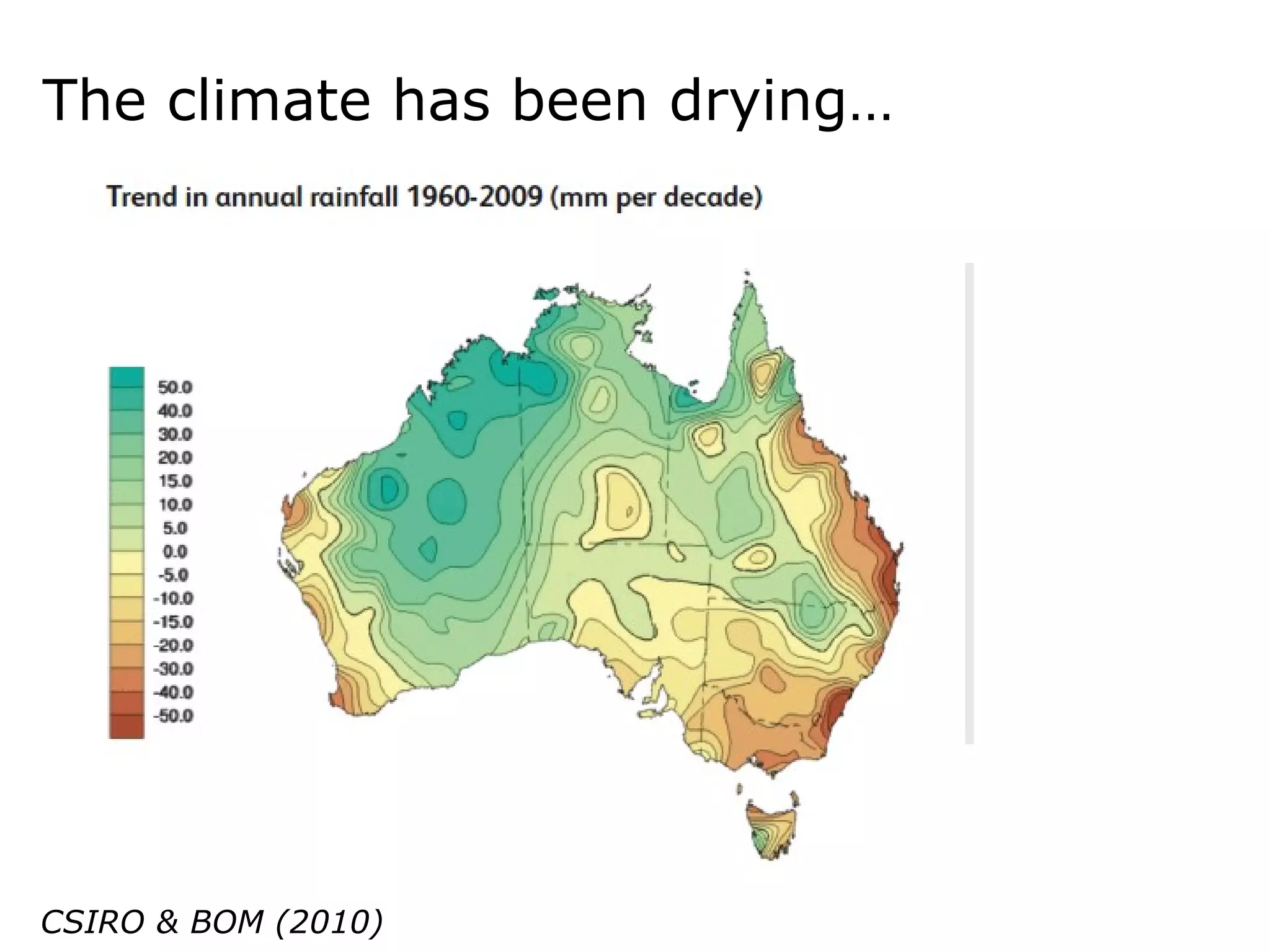
CSIRO & BOM (2010) The climate has been drying…
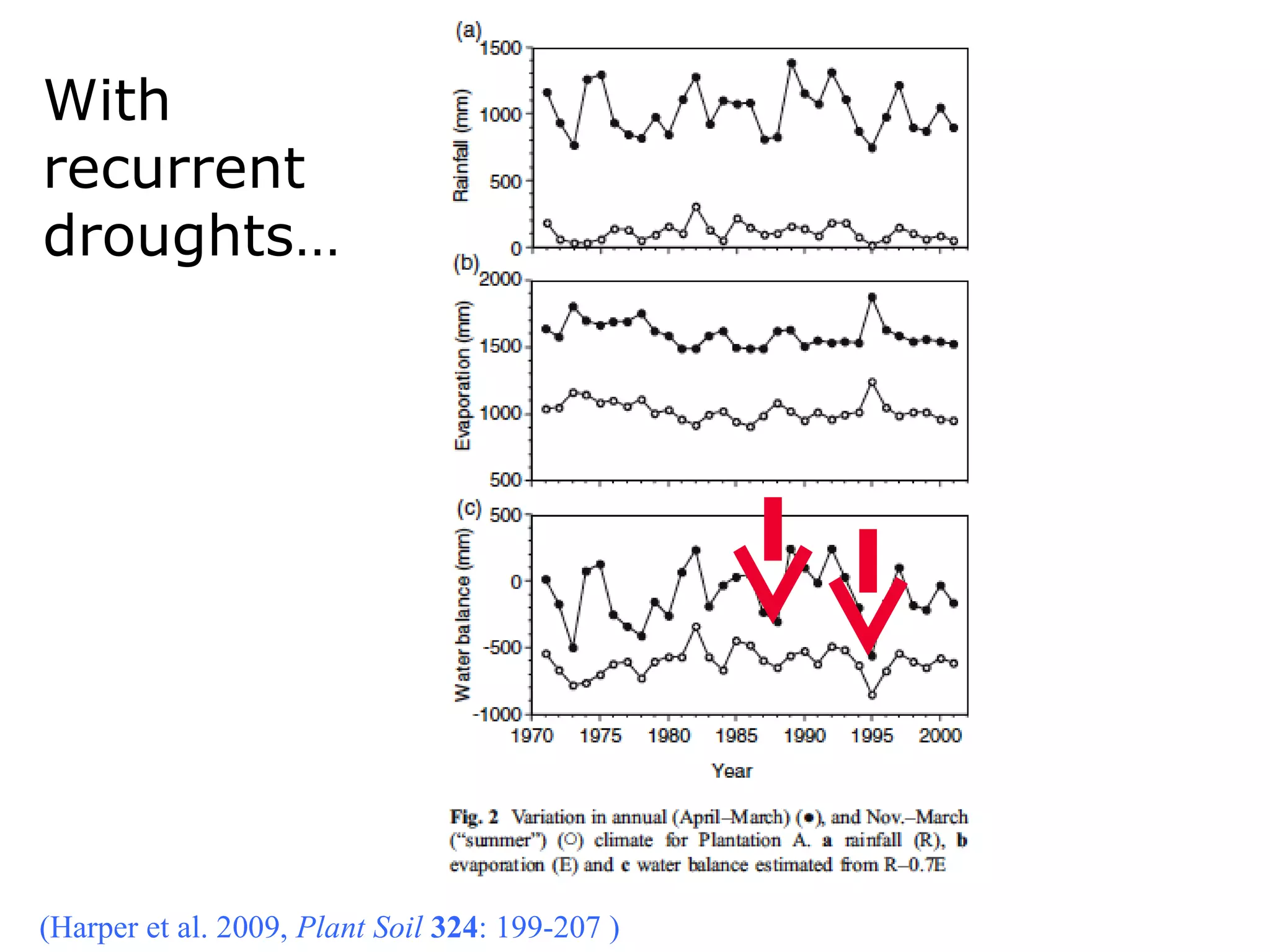
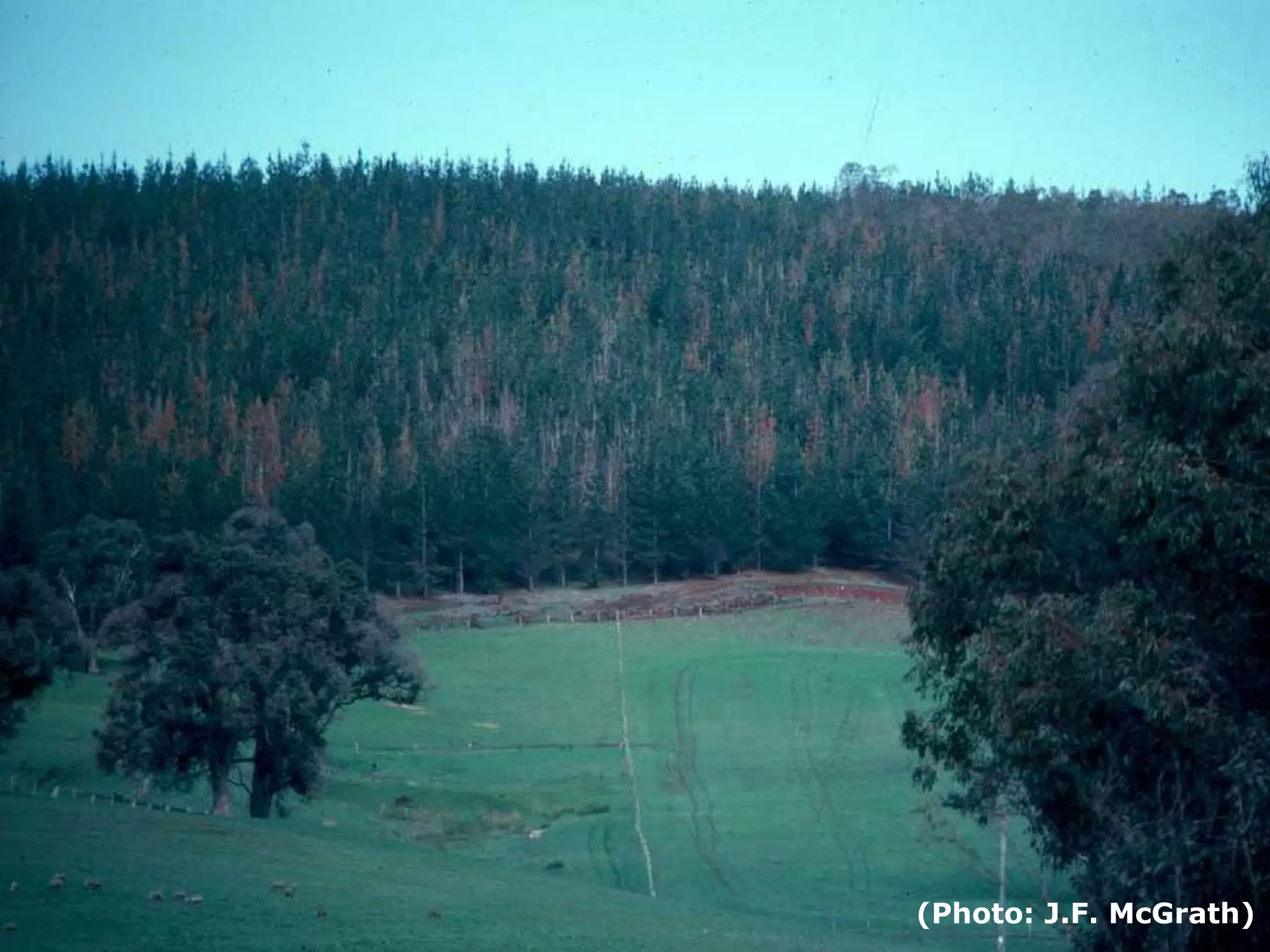
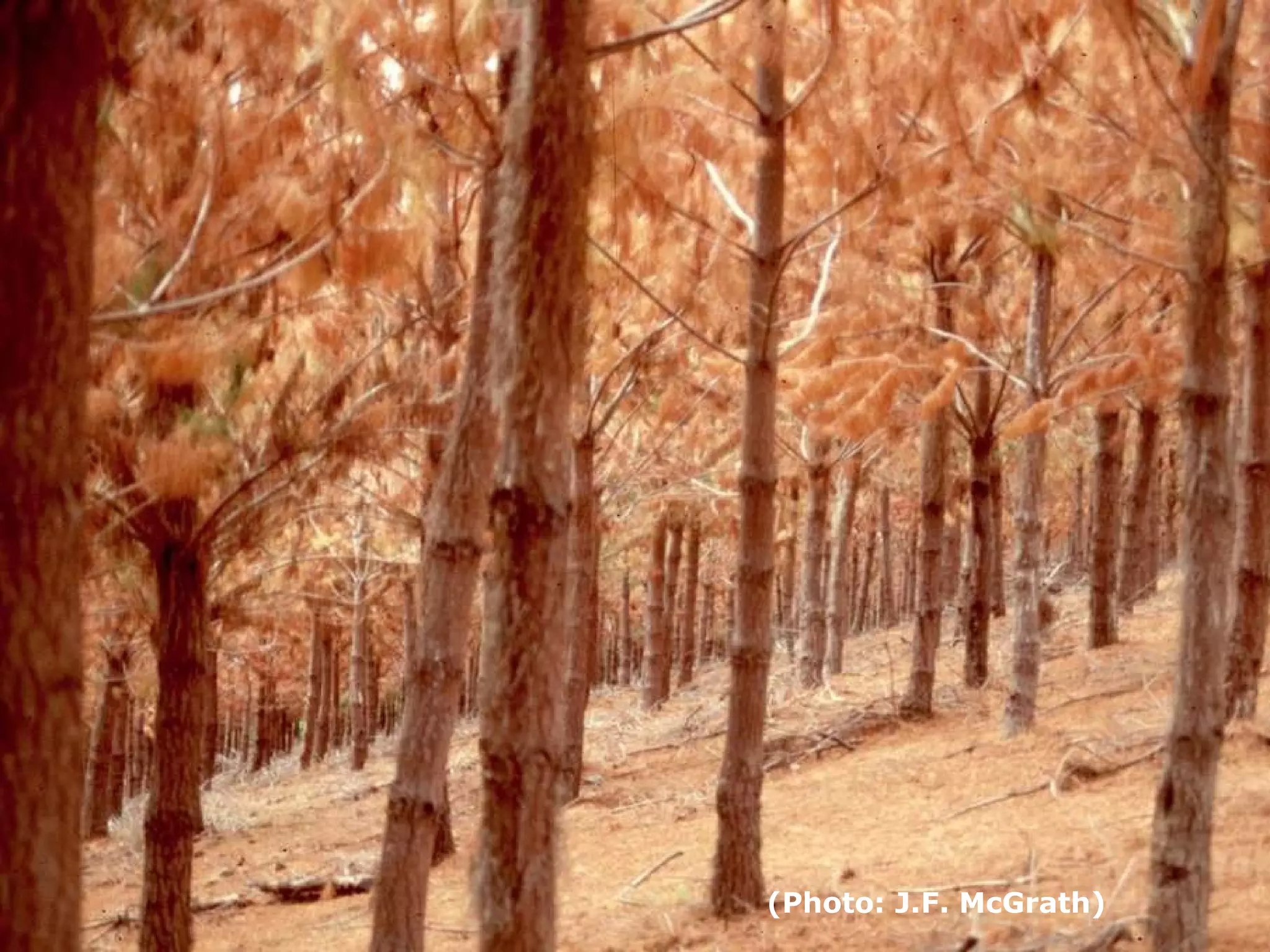
(Harper et al. 2009,  Plant Soil   324 : 199-207 ) With recurrent droughts…
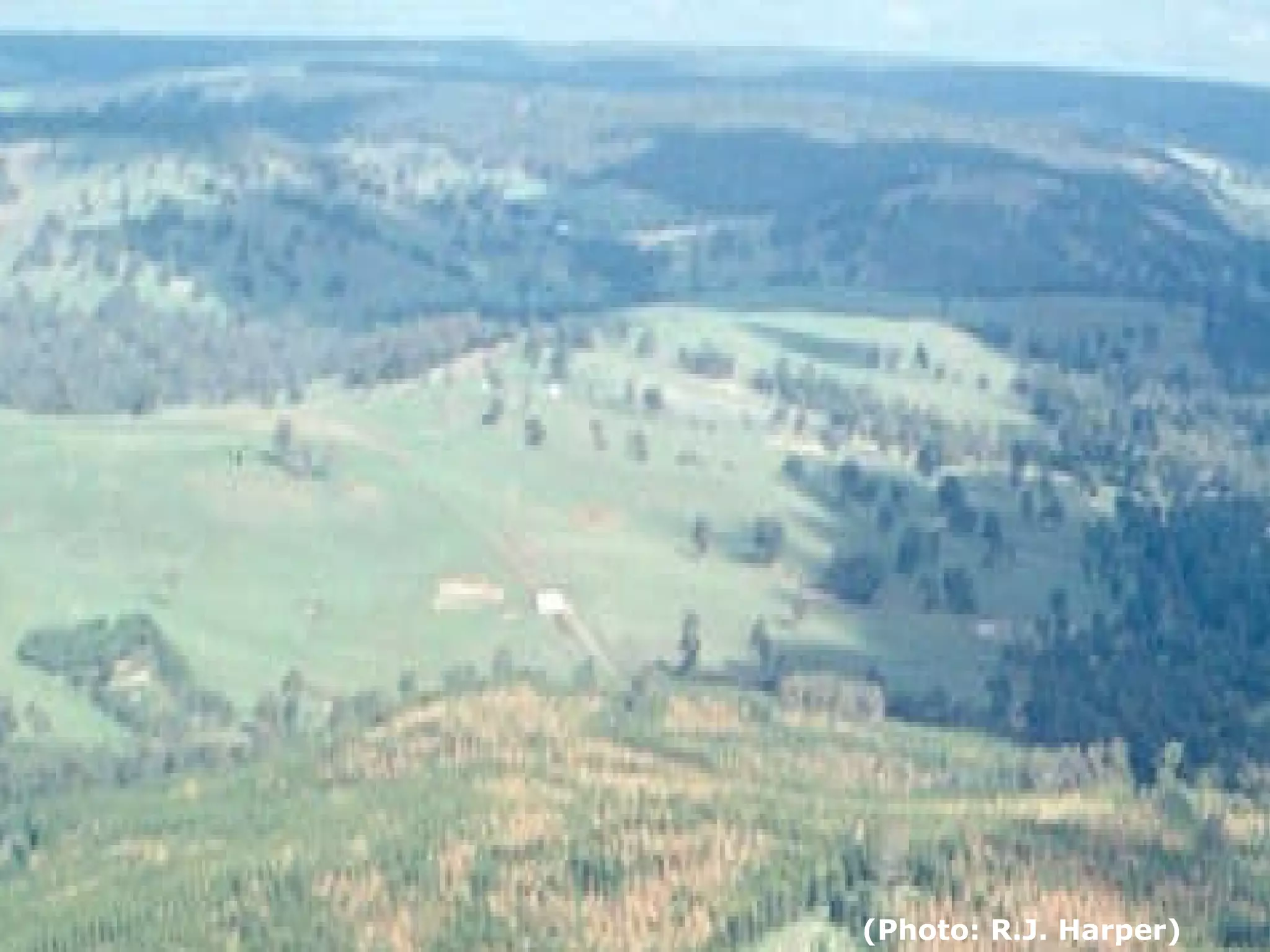
(Photo: R.J. Harper)
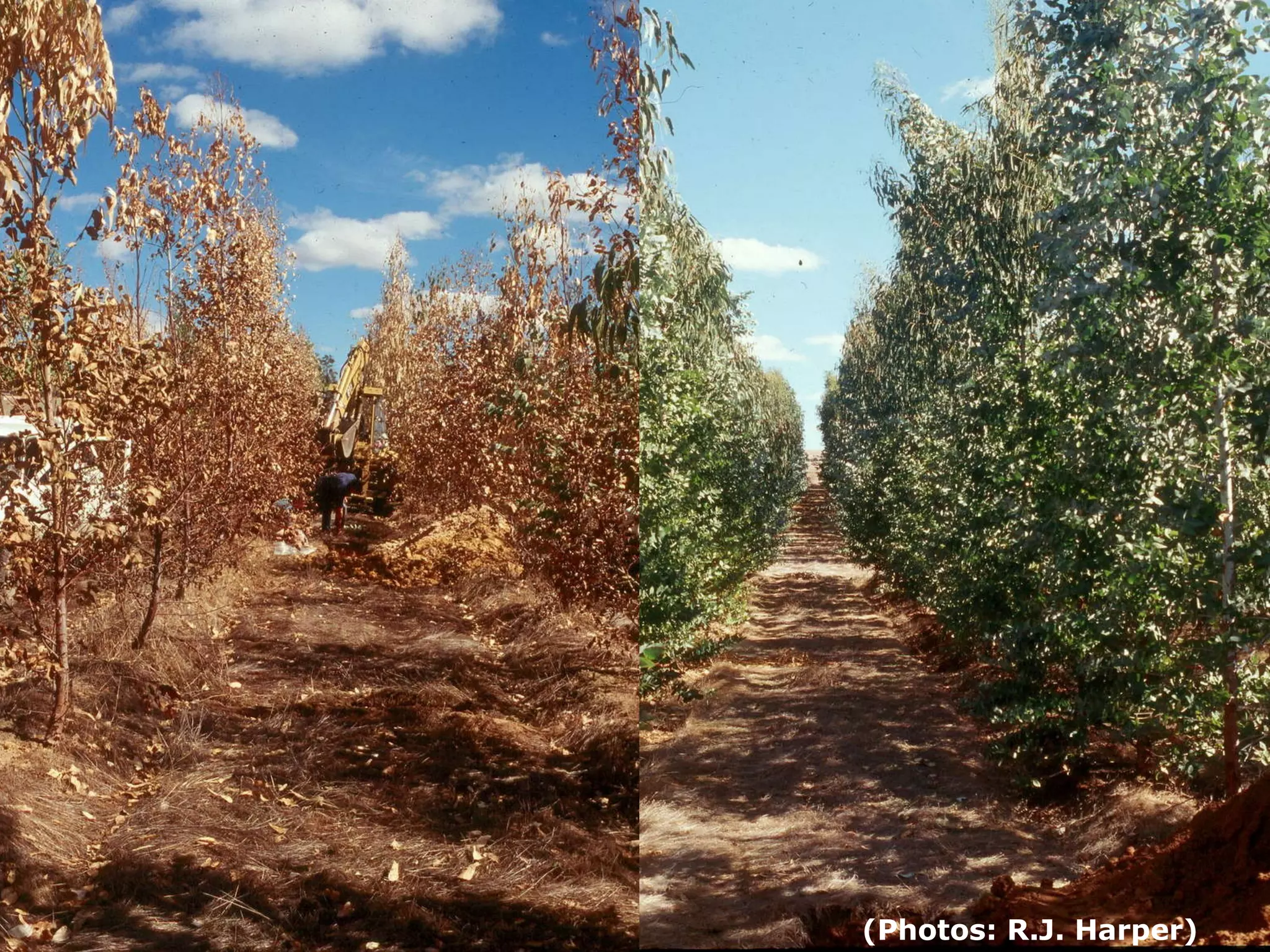
(Photos: R.J. Harper)
(Photo: J.F. McGrath)
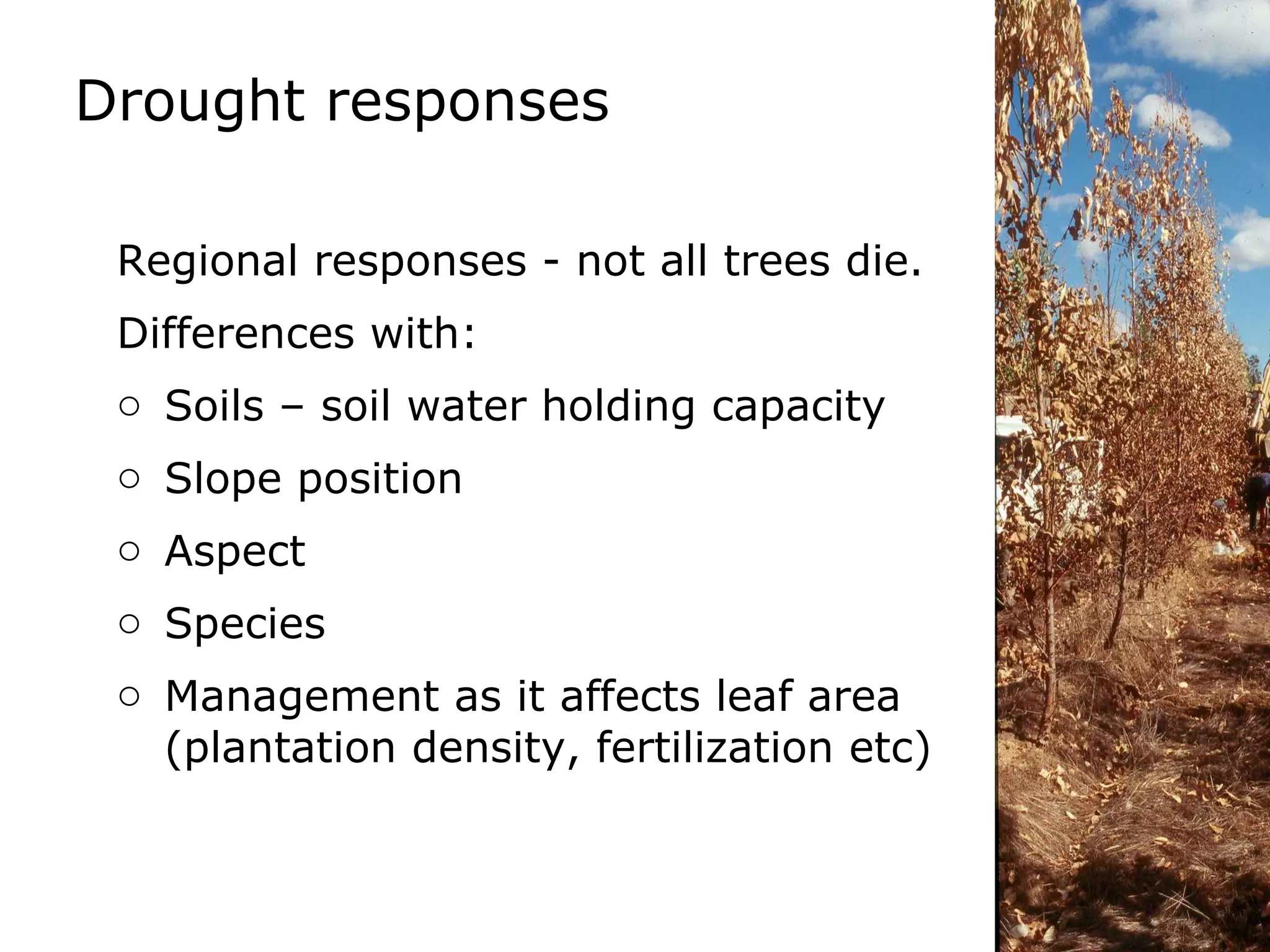
Drought responses Regional responses - not all trees die.  Differences with:  Soils – soil water holding capacity Slope position Aspect Species Management as it affects leaf area (plantation density, fertilization etc)
Responses: Site selection Better definition of climate and species matching Better definition of sites to depths of several metres Maximizing soil water storage; avoid “shallow” sites
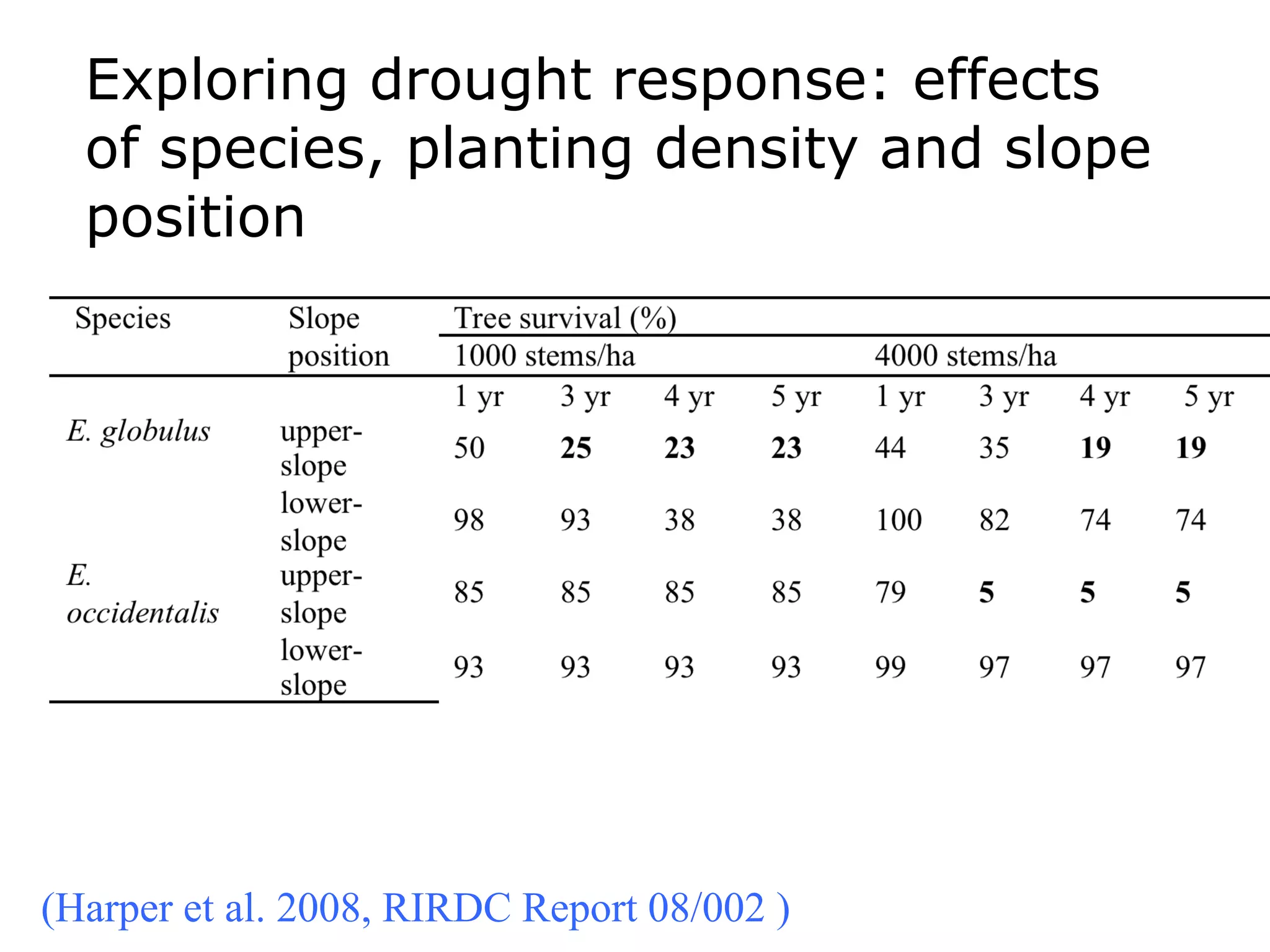
Exploring drought response: effects of species, planting density and slope position (Harper et al. 2008, RIRDC Report 08/002 )
How did responses occur? Plantation research capability – State departments, CSIRO Forestry, industry, universities Organizational expertise: e.g. SA– species trials within same organization over 100 years Memory of previous events and responses Able to respond to changes and devise new systems Does this adaptive capacity remain?
Conclude with some questions… Are droughts an adequate analogue of future climate change? Will current institutional arrangements allow future adaptation?  Is there adequate research infrastructure in place (species, silviculture) to demonstrate alternatives? Will there be adequate expertise to respond to surprises?
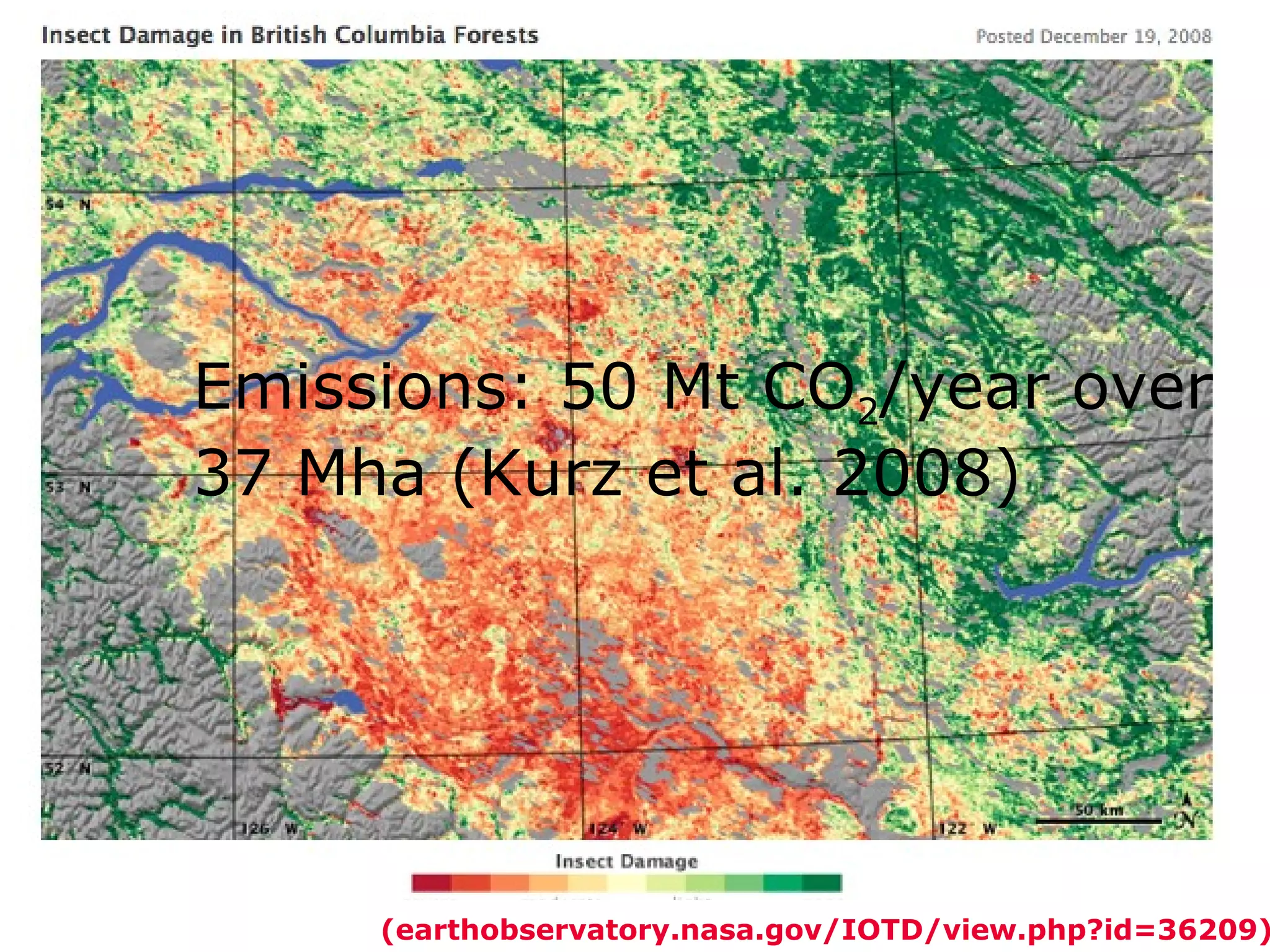
Mountain pine beetle ( earthobservatory.nasa.gov/IOTD/view.php?id=36209 ) Emissions: 50 Mt CO 2 /year over 37 Mha (Kurz et al. 2008)

Climate change adaptation for forestry: learning from recurrent droughts - Richard Harper

  • 1.
    Richard Harper Climatechange adaptation for forestry: learning from recurrent droughts Alcoa Chair in Sustainable Water Management
  • 2.
    Collaborators John McGrath(CRC Future Farm Industries) Keith Smettem (University of WA) Don McGuire (ForestrySA) Tom Baker (University of Melbourne) Brad Evans (Murdoch University)
  • 3.
    Overview… Projections ofclimate change for southern Australia often describe a change in the water balance Region has both had a general drying trend and recurrent droughts with severe effects; the forest industry has adapted Are these droughts analogues of future climate change? How did adaptation occur? Are the institutional structures in place to allow future adaptation?
  • 4.
    Australia’s forests andland use ( State of the Forests Report, 2008, p. 5 ) Total forest area 149x10 6 ha 138x10 6 ha native Eucalyptus & Acacia forests 9x10 6 ha native Eucalyptus production forests 1x10 6 ha plantation Pinus 1x10 6 ha plantation Eucalyptus Key component of carbon mitigation, expansion into new areas
  • 5.
    CSIRO & BOM(2010) The climate has been drying…
  • 6.
    (Harper et al.2009, Plant Soil 324 : 199-207 ) With recurrent droughts…
  • 7.
  • 8.
  • 9.
  • 10.
  • 11.
    Drought responses Regionalresponses - not all trees die. Differences with: Soils – soil water holding capacity Slope position Aspect Species Management as it affects leaf area (plantation density, fertilization etc)
  • 12.
    Responses: Site selectionBetter definition of climate and species matching Better definition of sites to depths of several metres Maximizing soil water storage; avoid “shallow” sites
  • 13.
    Exploring drought response:effects of species, planting density and slope position (Harper et al. 2008, RIRDC Report 08/002 )
  • 14.
    How did responsesoccur? Plantation research capability – State departments, CSIRO Forestry, industry, universities Organizational expertise: e.g. SA– species trials within same organization over 100 years Memory of previous events and responses Able to respond to changes and devise new systems Does this adaptive capacity remain?
  • 15.
    Conclude with somequestions… Are droughts an adequate analogue of future climate change? Will current institutional arrangements allow future adaptation? Is there adequate research infrastructure in place (species, silviculture) to demonstrate alternatives? Will there be adequate expertise to respond to surprises?
  • 16.
    Mountain pine beetle( earthobservatory.nasa.gov/IOTD/view.php?id=36209 ) Emissions: 50 Mt CO 2 /year over 37 Mha (Kurz et al. 2008)