
PUTTING YOUR MIND INTO
ACTION
Media or audio visual materials
 Not a substitute for effective instruction
 Complementary materials
 Could have greatest amount of good teaching and
learning from them
When Media or Av’s are Used
 No specific time
 Depends on the teacher, subject matter the students
and the learning situation
Uses of Media and AV’s
 Introducing of a unit
 Developing a unit
 Interpreting a unit
 Following-up or summarizing the unit
 Correlating bits of information
 Identifying self with a situation
 Transferring to real life situation
 Motivating and arousing of interest
 Providing individual and group therapy
How Media or AV’s are Used?
 Adds much to the art of learning
Basic Plan of Effective
Teaching
1. Prepare yourself
 Consider the value and purpose of the material being
covered
 Consider the needs and interests of the students
 Consider how the medium can best be utilize
 Preview or audit the material to be used
2. Prepare the classroom
 See that all the necessary materials are on hand and
arranged for their best use.
 Be sure that the light can be controlled if needed.
 Check ventilation and seating.
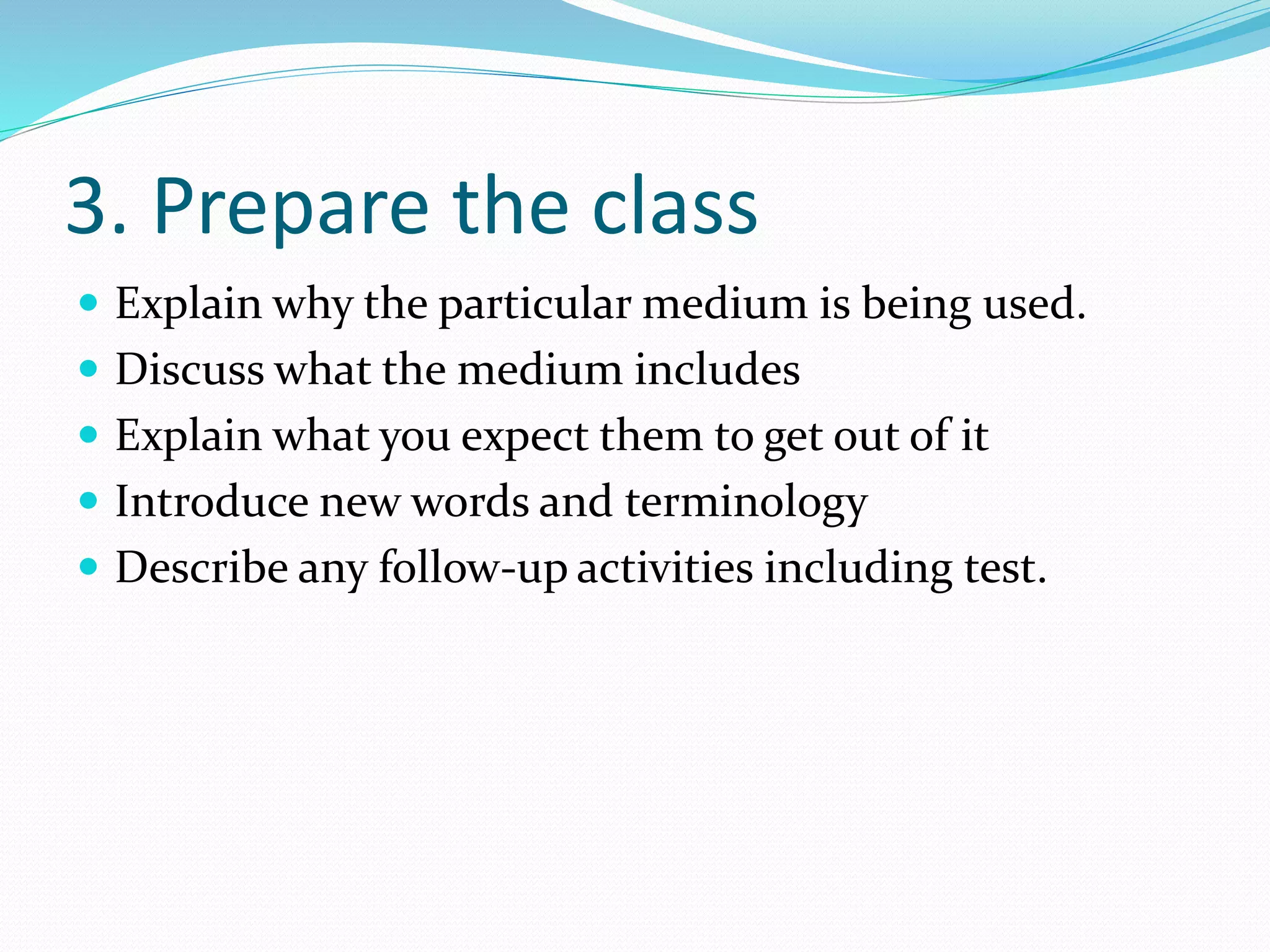
3. Prepare the class
 Explain why the particular medium is being used.
 Discuss what the medium includes
 Explain what you expect them to get out of it
 Introduce new words and terminology
 Describe any follow-up activities including test.
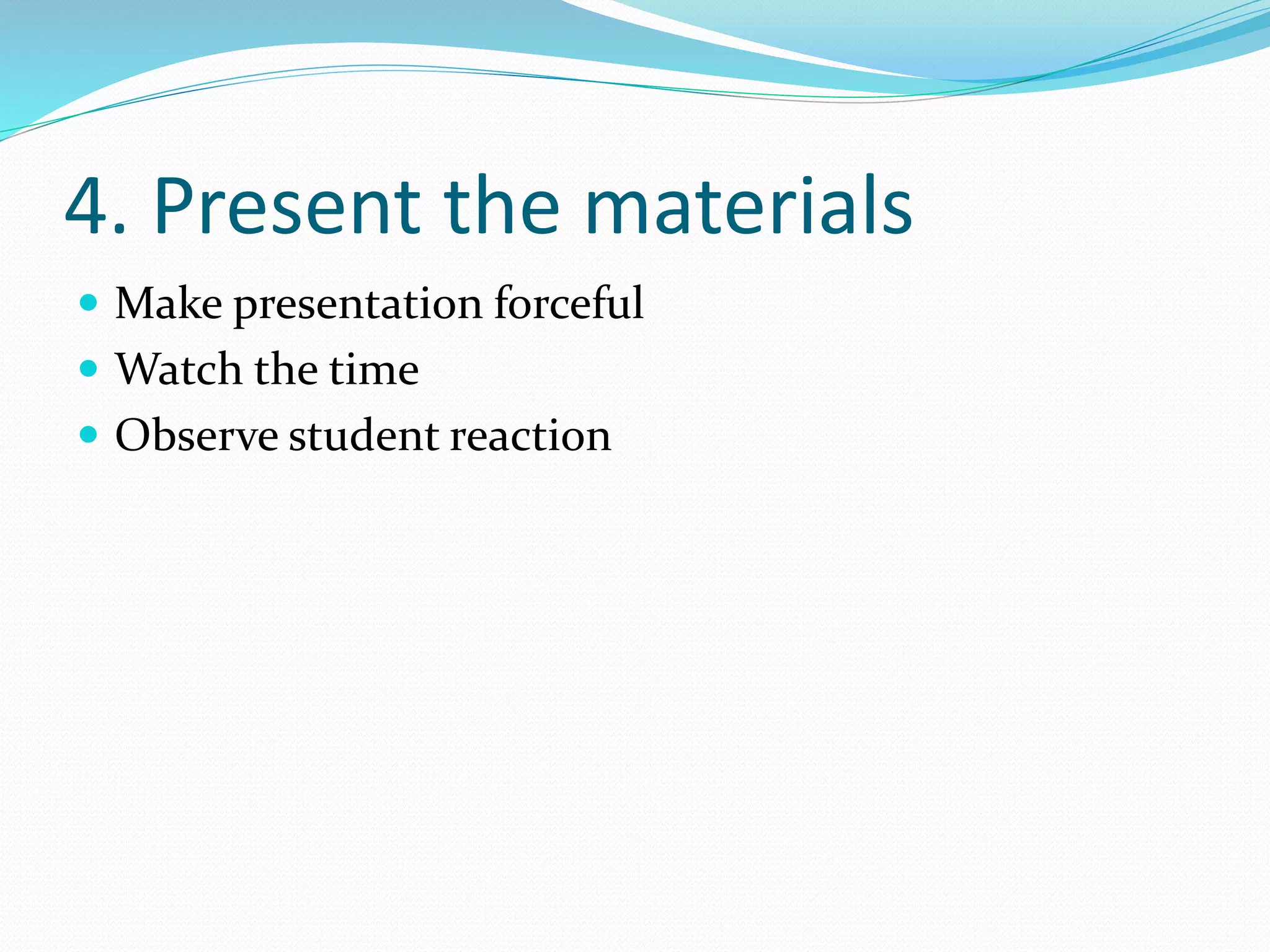
4. Present the materials
 Make presentation forceful
 Watch the time
 Observe student reaction
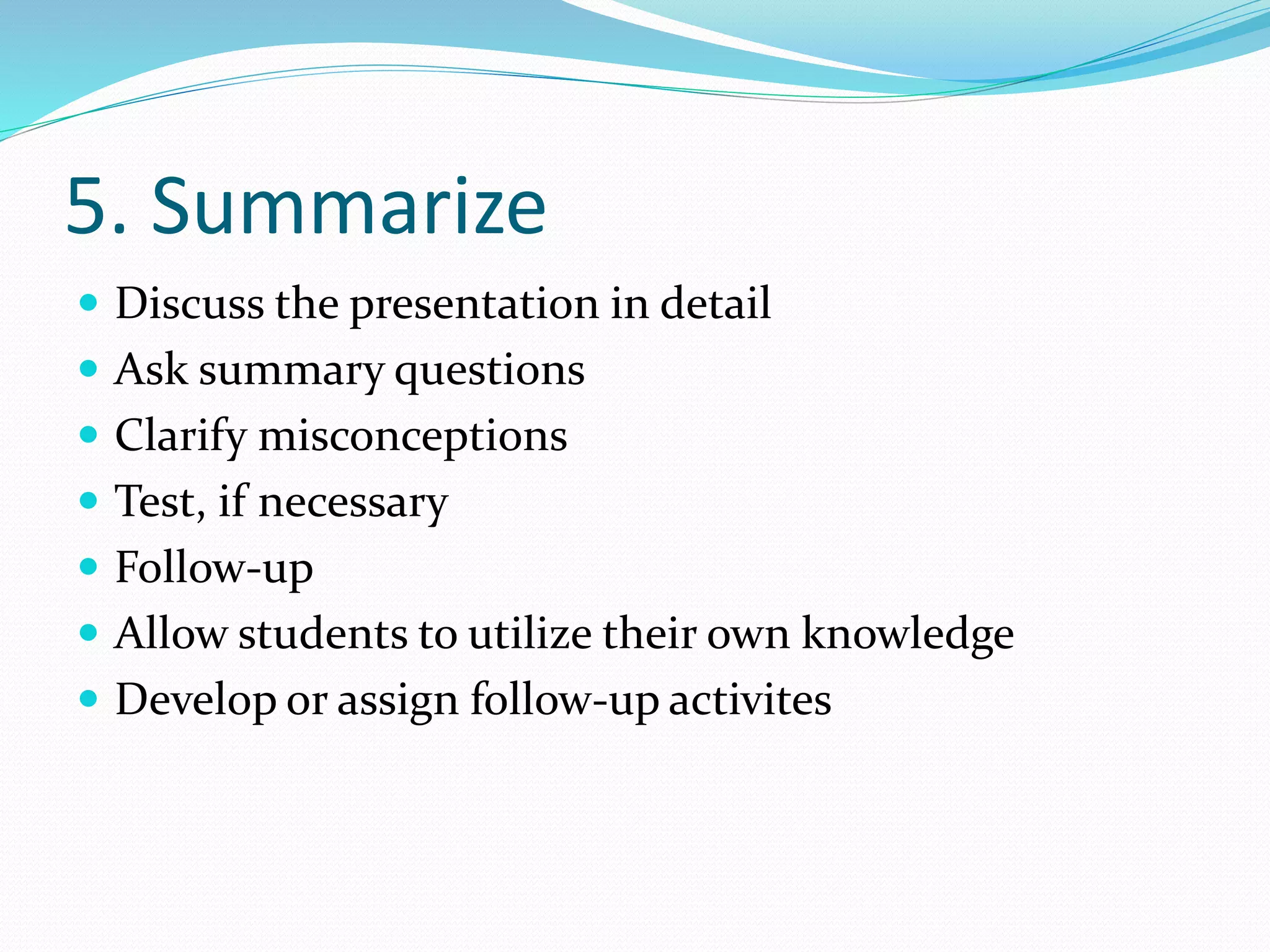
5. Summarize
 Discuss the presentation in detail
 Ask summary questions
 Clarify misconceptions
 Test, if necessary
 Follow-up
 Allow students to utilize their own knowledge
 Develop or assign follow-up activites
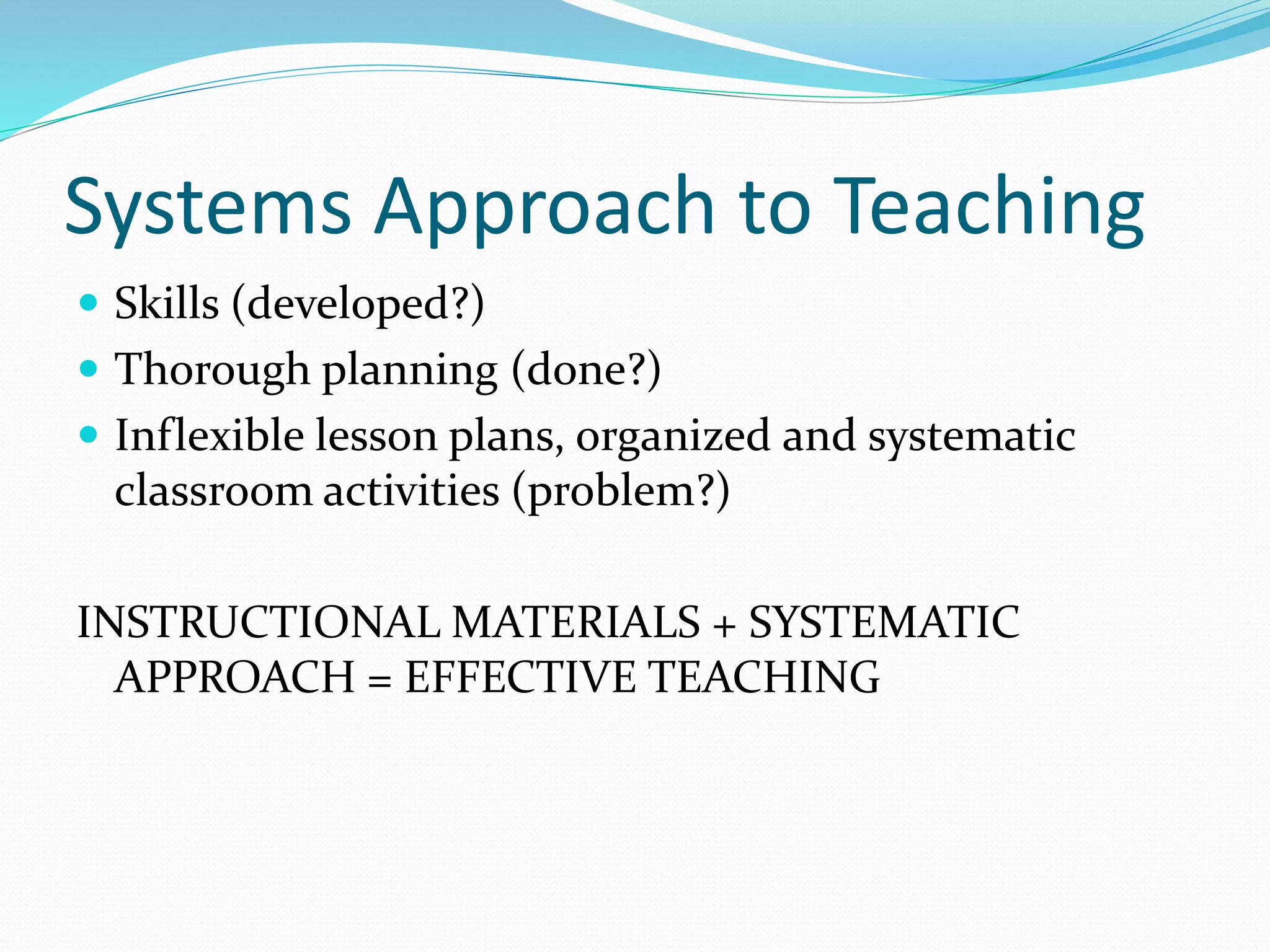
Systems Approach to Teaching
 Skills (developed?)
 Thorough planning (done?)
 Inflexible lesson plans, organized and systematic
classroom activities (problem?)
INSTRUCTIONAL MATERIALS + SYSTEMATIC
APPROACH = EFFECTIVE TEACHING
Systematic Approach to the
Development of Learning Process
Should encompass:
a. The learner
b. The objective and content of the lesson
c. The methods to be used in instruction
d. The instructional materials to be used, including
consideration or unique strengths and weaknesses
e. The facilities or environment
f. The supporting equipment
g. The student and teacher evaluation of results, in
changed behavior and attitudes
Five Phases in a Total System
Instruction
1. Introduction
2. Development
3. Organization
4. Summarizing
5. Evaluation
1. Instruction
 Motivational and exploratory phase
 Use of AV’s can help
1. Instruction
When instructional materials are used,
the teacher must consider the following preparations:
1. Self preparation (preview and evaluate)
2. Preparation of presentation (consider how the media
will be most effective)
1. Showing the materials all the way through.
2. Showing only excerpts/segments/frames
3. Showing materials with recorded narration
4. Showing the material without recorded narration
5. Pausing at specific points for comment/+info
6. Repeating segments
7. Combining two or more media
2. Development Phase
 Involves the location and learning of the required
information by the students
3. Organization Phase
 Time for “pulling together”
 School media center
 Use of pictures, slides, charts, models, maps, graphs
audio and video recording etc.
 Dramatizations, debates, reports, panel discussions,
role-playing are activities which may be planned and
developed
4. Summarizing Phase
 Students may make summary presentation, hand
written reports, scrap book, papers etc.
 Teacher may reshow the audio/visual material of the
topic or closely related to the topic as a review and to
“cement” together all the facets of study. “loose-ends”
are tied together.
5. Evaluation Phase
 Involves 2 areas of evaluation.
 Student and teacher
 Students are made to be aware that they are to be held
accountable for lesson content and ultimately for
changes in behavior. Changes that prepare them to live
and function as contributing citizens in the society.
Evaluation Techniques used in
evaluation
 Written tests
 T or F, multiple choice, fill-in-the blank, matching type,
essay or take-home exams
 Oral discussions, dramatizations, role-playing,
demontrations
 Audiotaped or videotaped responses.
 Written reports, term papers or research paper.
 Student produced instructional materials like maps,
graphs, photographic slides, bulletin board displays,
exhibits.
In critical evaluation of the student’s
performance, the teacher may do the following:
 Suggest revisions or refinement of parts of the
presentation/report.
 Show evidence of faults in the presentation plan,
content, procedures or instructional materials
 Identify problems arising from unclear/inadequate
objectives, evaluation procedures or methods.
 Indicate lack of student readiness
 Show evidence of the need for review or remedial
 Show evidence of too slow/ fast pace.

Lesson 12 EdTech

  • 2.
    PUTTING YOUR MINDINTO ACTION
  • 3.
    Media or audiovisual materials  Not a substitute for effective instruction  Complementary materials  Could have greatest amount of good teaching and learning from them
  • 4.
    When Media orAv’s are Used  No specific time  Depends on the teacher, subject matter the students and the learning situation
  • 5.
    Uses of Mediaand AV’s  Introducing of a unit  Developing a unit  Interpreting a unit  Following-up or summarizing the unit  Correlating bits of information  Identifying self with a situation  Transferring to real life situation  Motivating and arousing of interest  Providing individual and group therapy
  • 6.
    How Media orAV’s are Used?  Adds much to the art of learning
  • 7.
    Basic Plan ofEffective Teaching
  • 8.
    1. Prepare yourself Consider the value and purpose of the material being covered  Consider the needs and interests of the students  Consider how the medium can best be utilize  Preview or audit the material to be used
  • 9.
    2. Prepare theclassroom  See that all the necessary materials are on hand and arranged for their best use.  Be sure that the light can be controlled if needed.  Check ventilation and seating.
  • 10.
    3. Prepare theclass  Explain why the particular medium is being used.  Discuss what the medium includes  Explain what you expect them to get out of it  Introduce new words and terminology  Describe any follow-up activities including test.
  • 11.
    4. Present thematerials  Make presentation forceful  Watch the time  Observe student reaction
  • 12.
    5. Summarize  Discussthe presentation in detail  Ask summary questions  Clarify misconceptions  Test, if necessary  Follow-up  Allow students to utilize their own knowledge  Develop or assign follow-up activites
  • 13.
    Systems Approach toTeaching  Skills (developed?)  Thorough planning (done?)  Inflexible lesson plans, organized and systematic classroom activities (problem?) INSTRUCTIONAL MATERIALS + SYSTEMATIC APPROACH = EFFECTIVE TEACHING
  • 14.
    Systematic Approach tothe Development of Learning Process Should encompass: a. The learner b. The objective and content of the lesson c. The methods to be used in instruction d. The instructional materials to be used, including consideration or unique strengths and weaknesses e. The facilities or environment f. The supporting equipment g. The student and teacher evaluation of results, in changed behavior and attitudes
  • 15.
    Five Phases ina Total System Instruction 1. Introduction 2. Development 3. Organization 4. Summarizing 5. Evaluation
  • 16.
    1. Instruction  Motivationaland exploratory phase  Use of AV’s can help
  • 17.
    1. Instruction When instructionalmaterials are used, the teacher must consider the following preparations: 1. Self preparation (preview and evaluate) 2. Preparation of presentation (consider how the media will be most effective) 1. Showing the materials all the way through. 2. Showing only excerpts/segments/frames 3. Showing materials with recorded narration 4. Showing the material without recorded narration 5. Pausing at specific points for comment/+info 6. Repeating segments 7. Combining two or more media
  • 18.
    2. Development Phase Involves the location and learning of the required information by the students
  • 19.
    3. Organization Phase Time for “pulling together”  School media center  Use of pictures, slides, charts, models, maps, graphs audio and video recording etc.  Dramatizations, debates, reports, panel discussions, role-playing are activities which may be planned and developed
  • 20.
    4. Summarizing Phase Students may make summary presentation, hand written reports, scrap book, papers etc.  Teacher may reshow the audio/visual material of the topic or closely related to the topic as a review and to “cement” together all the facets of study. “loose-ends” are tied together.
  • 21.
    5. Evaluation Phase Involves 2 areas of evaluation.  Student and teacher  Students are made to be aware that they are to be held accountable for lesson content and ultimately for changes in behavior. Changes that prepare them to live and function as contributing citizens in the society.
  • 22.
    Evaluation Techniques usedin evaluation  Written tests  T or F, multiple choice, fill-in-the blank, matching type, essay or take-home exams  Oral discussions, dramatizations, role-playing, demontrations  Audiotaped or videotaped responses.  Written reports, term papers or research paper.  Student produced instructional materials like maps, graphs, photographic slides, bulletin board displays, exhibits.
  • 23.
    In critical evaluationof the student’s performance, the teacher may do the following:  Suggest revisions or refinement of parts of the presentation/report.  Show evidence of faults in the presentation plan, content, procedures or instructional materials  Identify problems arising from unclear/inadequate objectives, evaluation procedures or methods.  Indicate lack of student readiness  Show evidence of the need for review or remedial  Show evidence of too slow/ fast pace.