

Maternal Nutrition
 Concerns about nutrition during pregnancy.
two basic areas:
 Maternal weight gain
 Nutrient intake
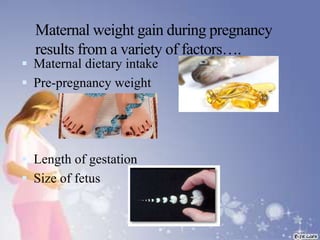
Maternal weight gain during pregnancy
results from a variety of factors….
 Maternal dietary intake
 Pre-pregnancy weight
 Length of gestation
 Size of fetus
Group at risk:
- women voluntarily restricting calorie intake or
dieting.
-pregnant adolescent women w/ low income or
limited food budget.
-women w/ eating patterns or practices that require
balancing food choices.
-smokers
-women w/ poor knowledge of nutrition,&
-women w/ special difficulties in food resource
management.
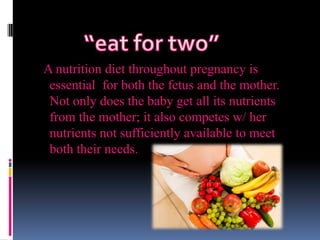
A nutrition diet throughout pregnancy is
essential for both the fetus and the mother.
Not only does the baby get all its nutrients
from the mother; it also competes w/ her
nutrients not sufficiently available to meet
both their needs.
B vitamin & folic acid - to decrease the risk
of neural tube defects.
Folate - is found naturally in leafy green
vegetables, legumes, and citrus fruits.
Avoiding Drugs and
Other Environmental
Hazards
In addition to the food the mother eats, the
drugs she takes and chemicals she is
exposed to affect the fetus. Everything the
mother ingests may eventually reach the
fetus in some proportion.
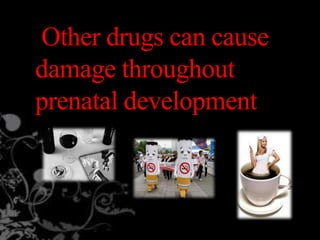
Other drugs can cause
damage throughout
prenatal development
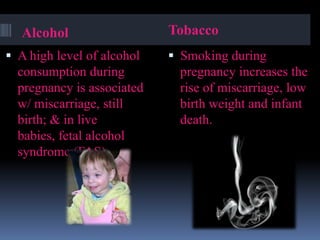
Alcohol
 A high level of alcohol
consumption during
pregnancy is associated
w/ miscarriage, still
birth; & in live
babies, fetal alcohol
syndrome (FAS).
Tobacco
 Smoking during
pregnancy increases the
rise of miscarriage, low
birth weight and infant
death.
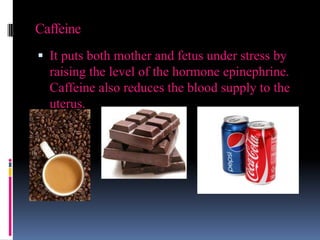
Caffeine
 It puts both mother and fetus under stress by
raising the level of the hormone epinephrine.
Caffeine also reduces the blood supply to the
uterus.
Ged212

Ged212

  • 2.
    Maternal Nutrition  Concernsabout nutrition during pregnancy. two basic areas:  Maternal weight gain  Nutrient intake
  • 3.
    Maternal weight gainduring pregnancy results from a variety of factors….  Maternal dietary intake  Pre-pregnancy weight  Length of gestation  Size of fetus
  • 4.
    Group at risk: -women voluntarily restricting calorie intake or dieting. -pregnant adolescent women w/ low income or limited food budget. -women w/ eating patterns or practices that require balancing food choices. -smokers -women w/ poor knowledge of nutrition,& -women w/ special difficulties in food resource management.
  • 5.
    A nutrition dietthroughout pregnancy is essential for both the fetus and the mother. Not only does the baby get all its nutrients from the mother; it also competes w/ her nutrients not sufficiently available to meet both their needs.
  • 6.
    B vitamin &folic acid - to decrease the risk of neural tube defects. Folate - is found naturally in leafy green vegetables, legumes, and citrus fruits.
  • 7.
    Avoiding Drugs and OtherEnvironmental Hazards
  • 8.
    In addition tothe food the mother eats, the drugs she takes and chemicals she is exposed to affect the fetus. Everything the mother ingests may eventually reach the fetus in some proportion.
  • 9.
    Other drugs cancause damage throughout prenatal development
  • 10.
    Alcohol  A highlevel of alcohol consumption during pregnancy is associated w/ miscarriage, still birth; & in live babies, fetal alcohol syndrome (FAS). Tobacco  Smoking during pregnancy increases the rise of miscarriage, low birth weight and infant death.
  • 11.
    Caffeine  It putsboth mother and fetus under stress by raising the level of the hormone epinephrine. Caffeine also reduces the blood supply to the uterus.