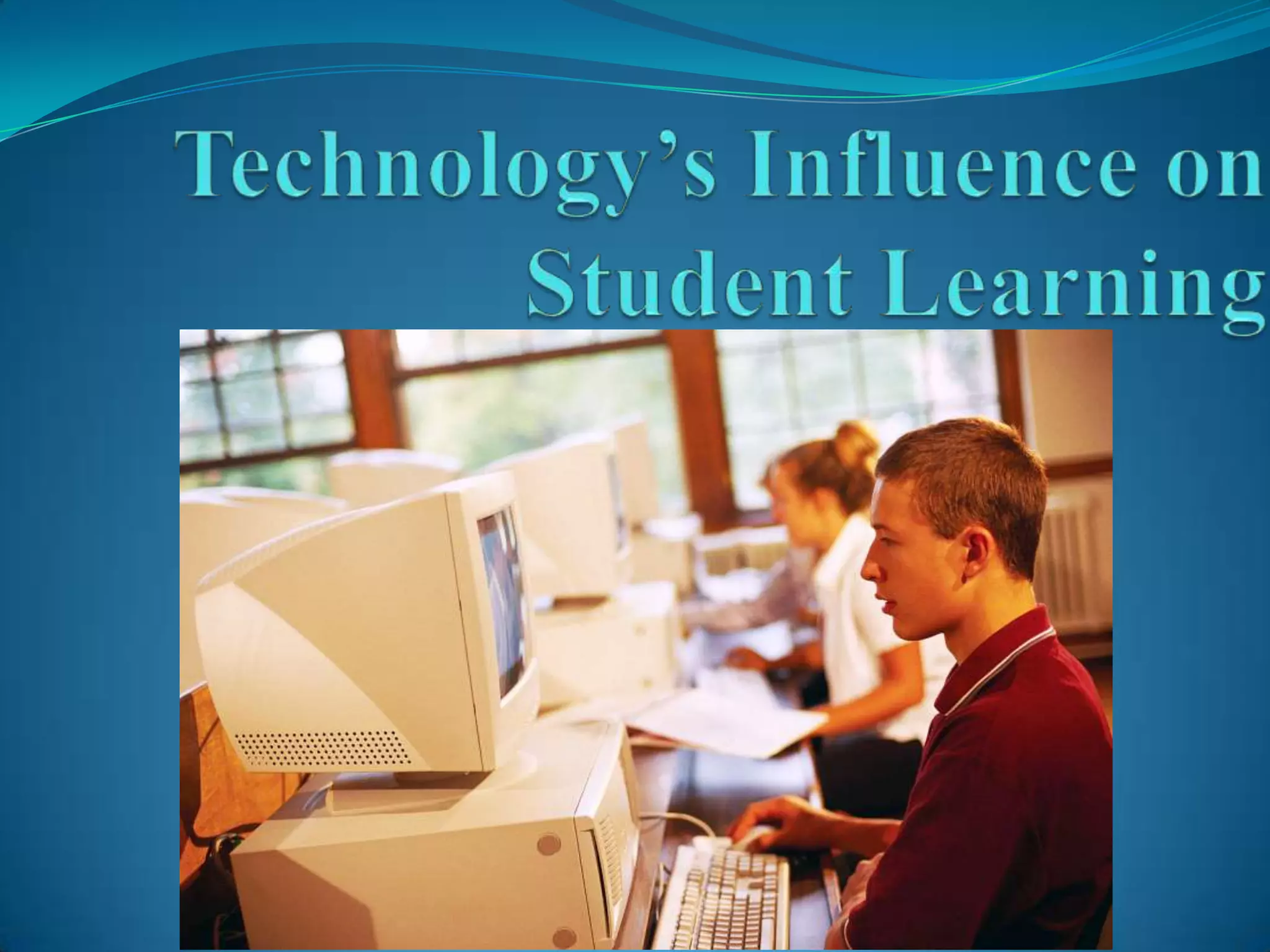
Technology’s Influence on Student
Learning           Let’s take a look


 Slide 3


 Slide 6


 Slide 9
How does technology influence
student learning?
 Three primary goals

   Achievement in content area learning


   Higher order thinking and problem solving skill
    development

   Workforce preparation
How does technology influence
student learning?
 The relationship between instructional technology and
  student achievement

   Vermont Reasoning and Problem Solving Standards


   Dimensions of Learning Model
How does technology influence
student learning?
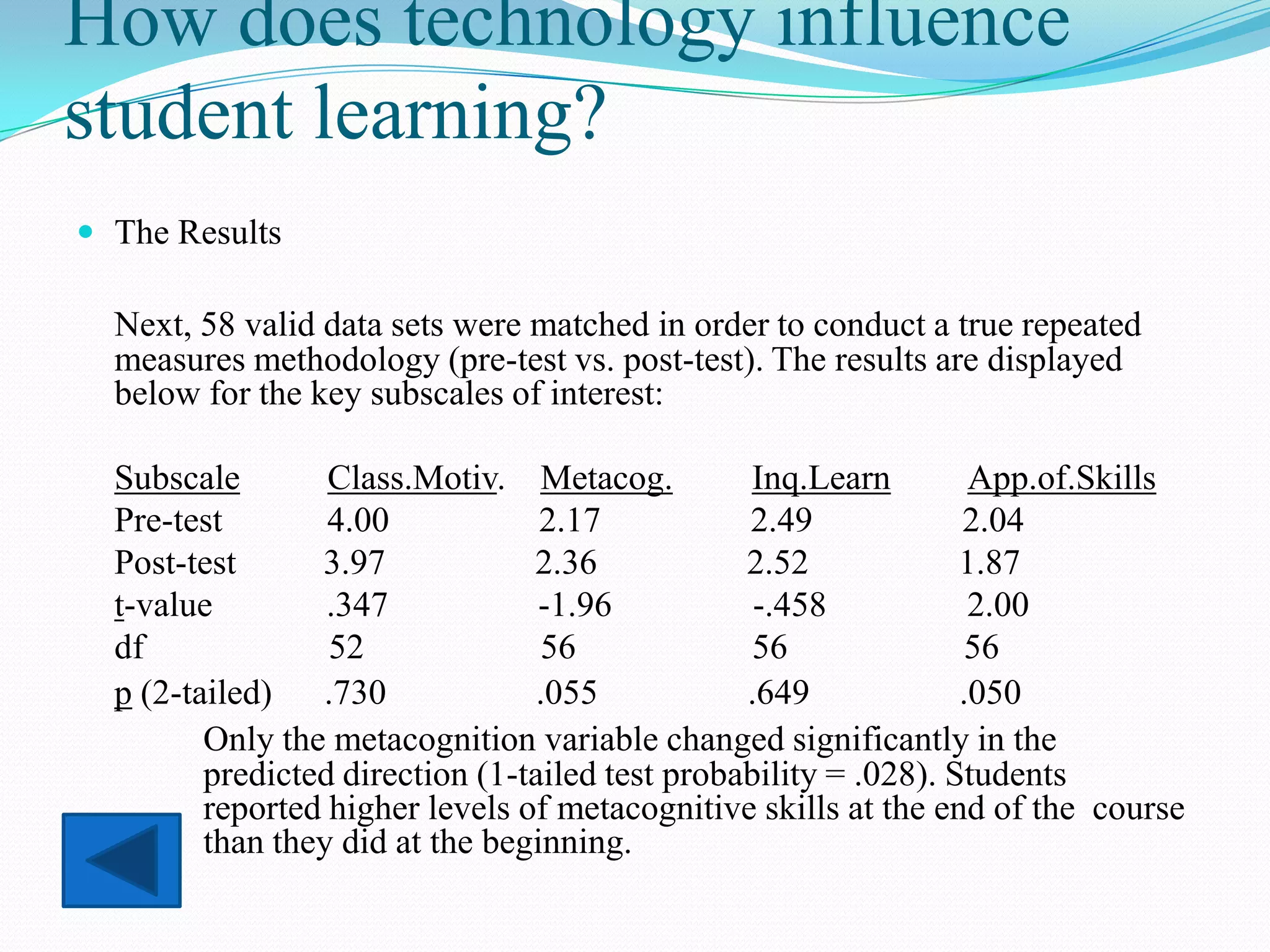
 The Results

  Next, 58 valid data sets were matched in order to conduct a true repeated
  measures methodology (pre-test vs. post-test). The results are displayed
  below for the key subscales of interest:

  Subscale        Class.Motiv. Metacog.           Inq.Learn        App.of.Skills
  Pre-test        4.00            2.17           2.49             2.04
  Post-test      3.97            2.36            2.52             1.87
  t-value         .347            -1.96           -.458            2.00
  df              52               56             56               56
  p (2-tailed) .730               .055           .649             .050
         Only the metacognition variable changed significantly in the
         predicted direction (1-tailed test probability = .028). Students
         reported higher levels of metacognitive skills at the end of the course
         than they did at the beginning.
What and how children can learn
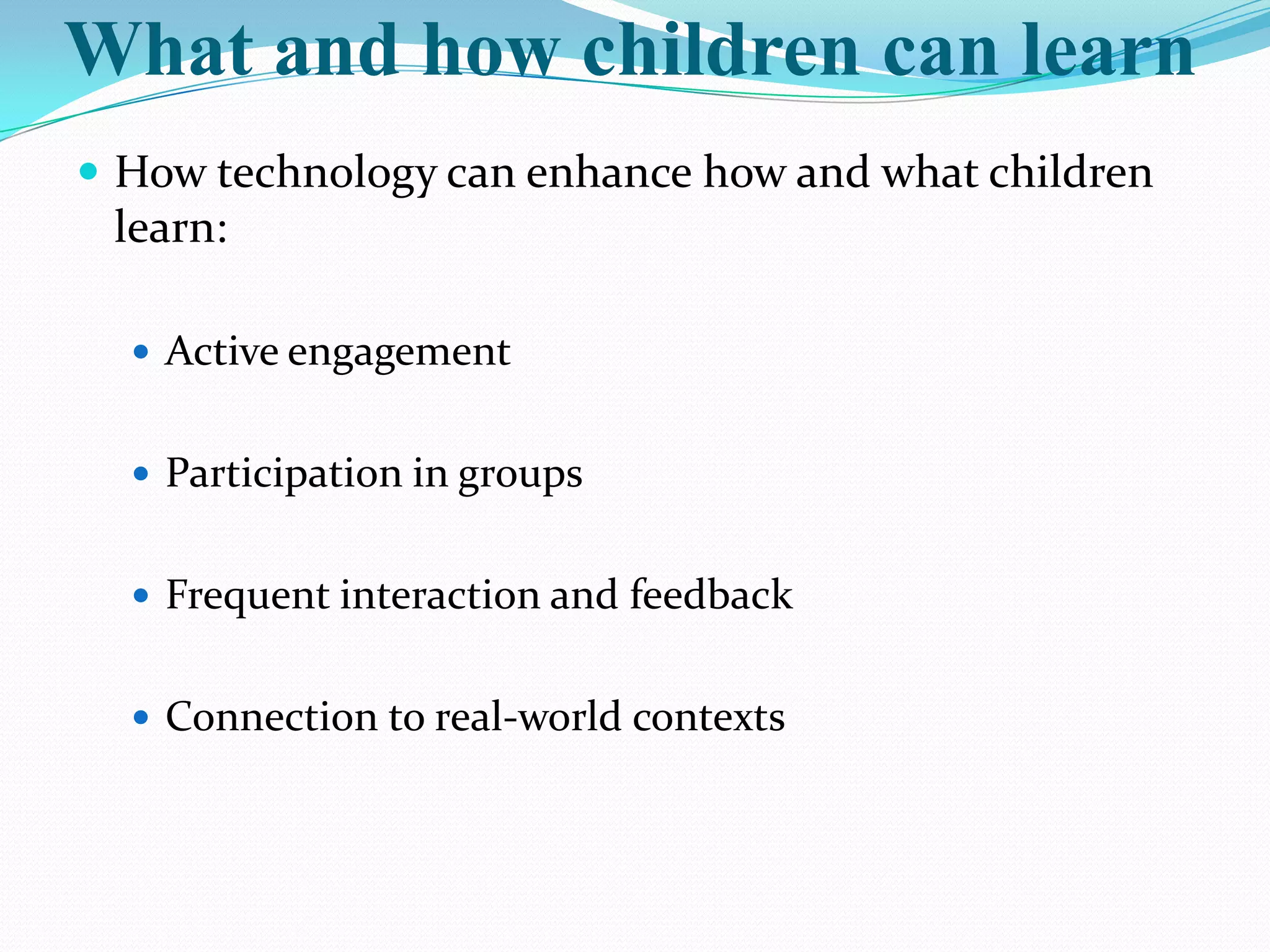
 How technology can enhance how and what children
 learn:

   Active engagement


   Participation in groups


   Frequent interaction and feedback


   Connection to real-world contexts
What and how children can learn
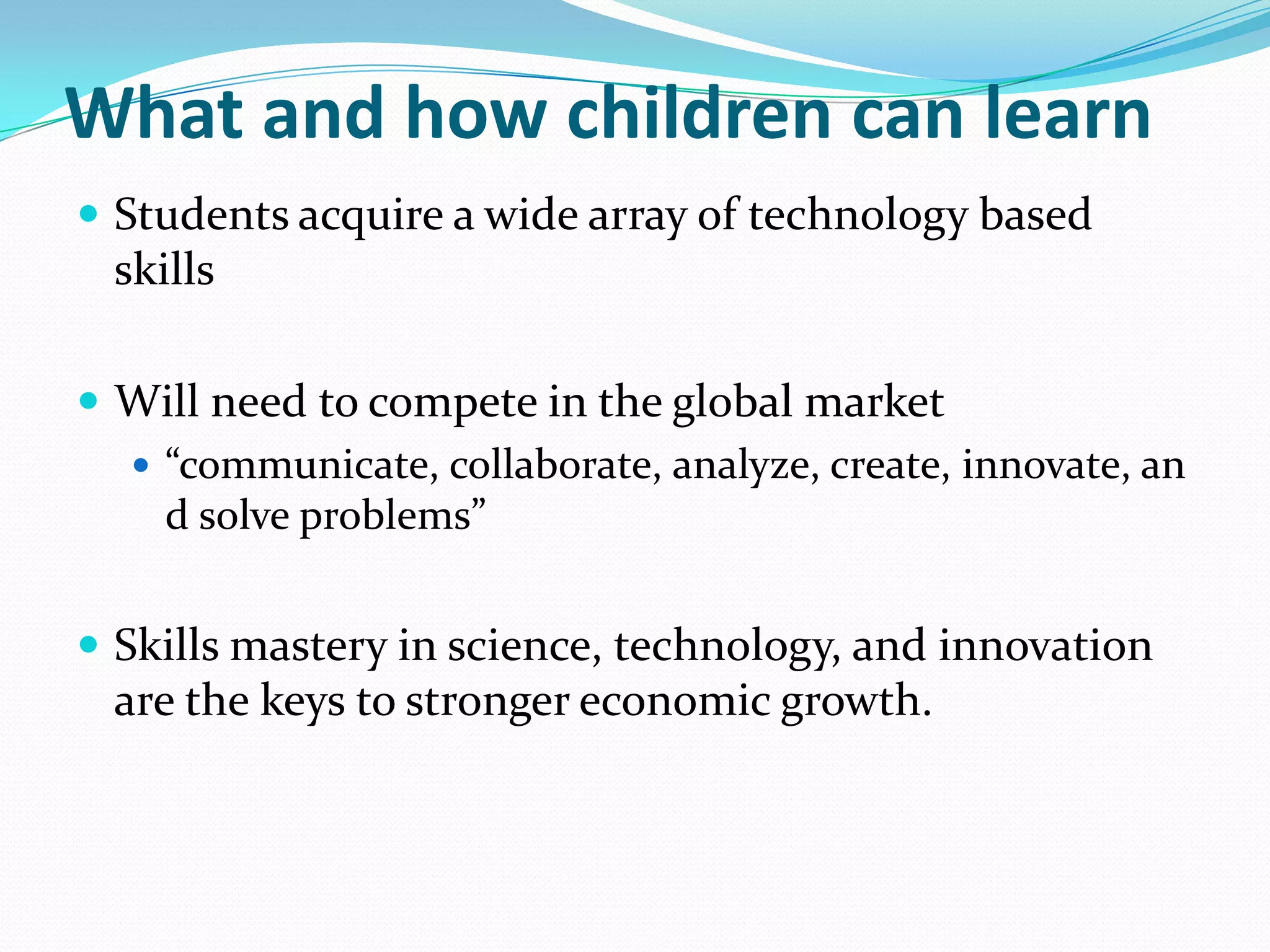
 Students acquire a wide array of technology based
  skills

 Will need to compete in the global market
   “communicate, collaborate, analyze, create, innovate, an
    d solve problems”


 Skills mastery in science, technology, and innovation
  are the keys to stronger economic growth.
What and how children can learn
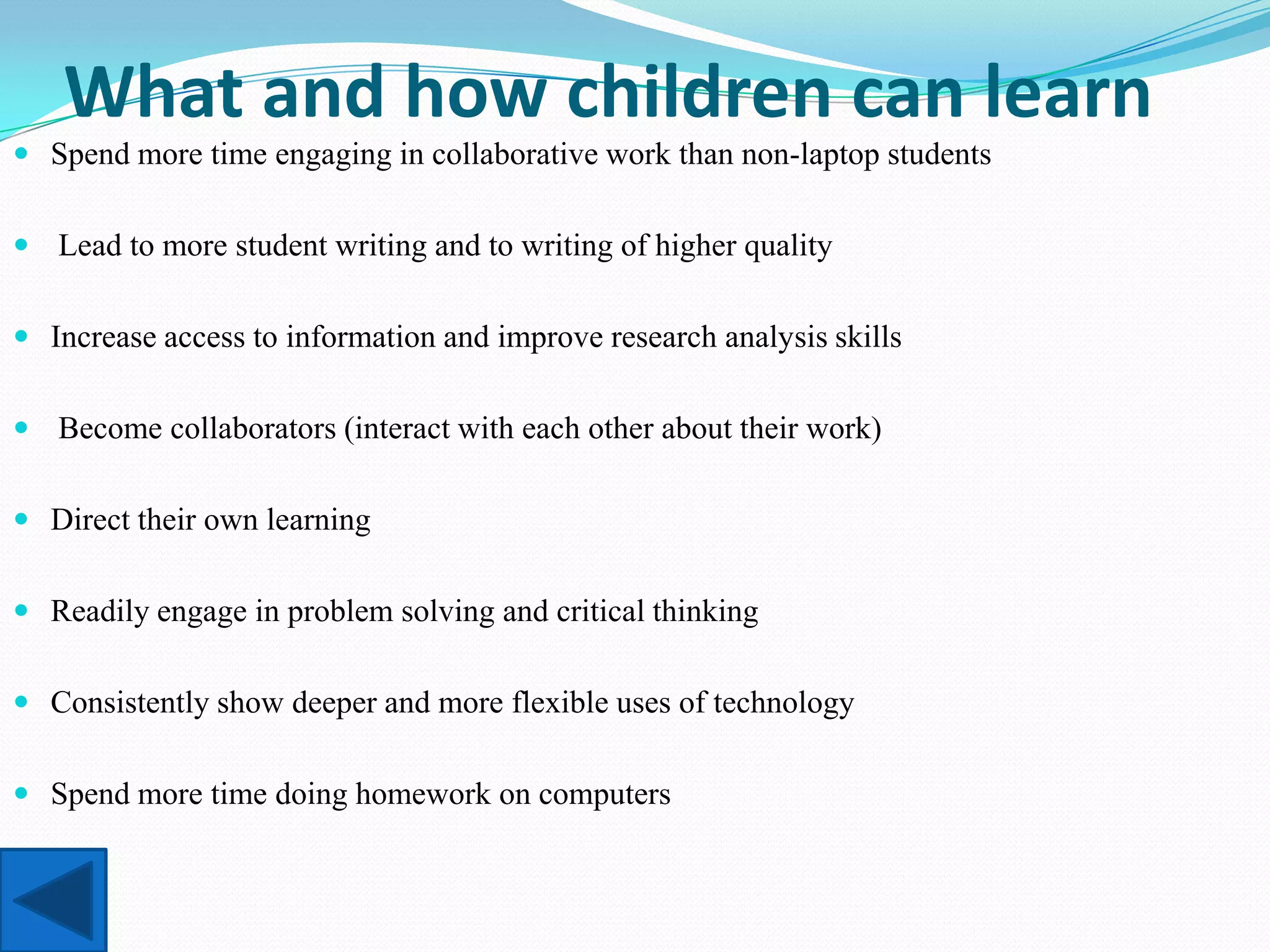
 Spend more time engaging in collaborative work than non-laptop students


 Lead to more student writing and to writing of higher quality


 Increase access to information and improve research analysis skills


 Become collaborators (interact with each other about their work)


 Direct their own learning


 Readily engage in problem solving and critical thinking


 Consistently show deeper and more flexible uses of technology


 Spend more time doing homework on computers
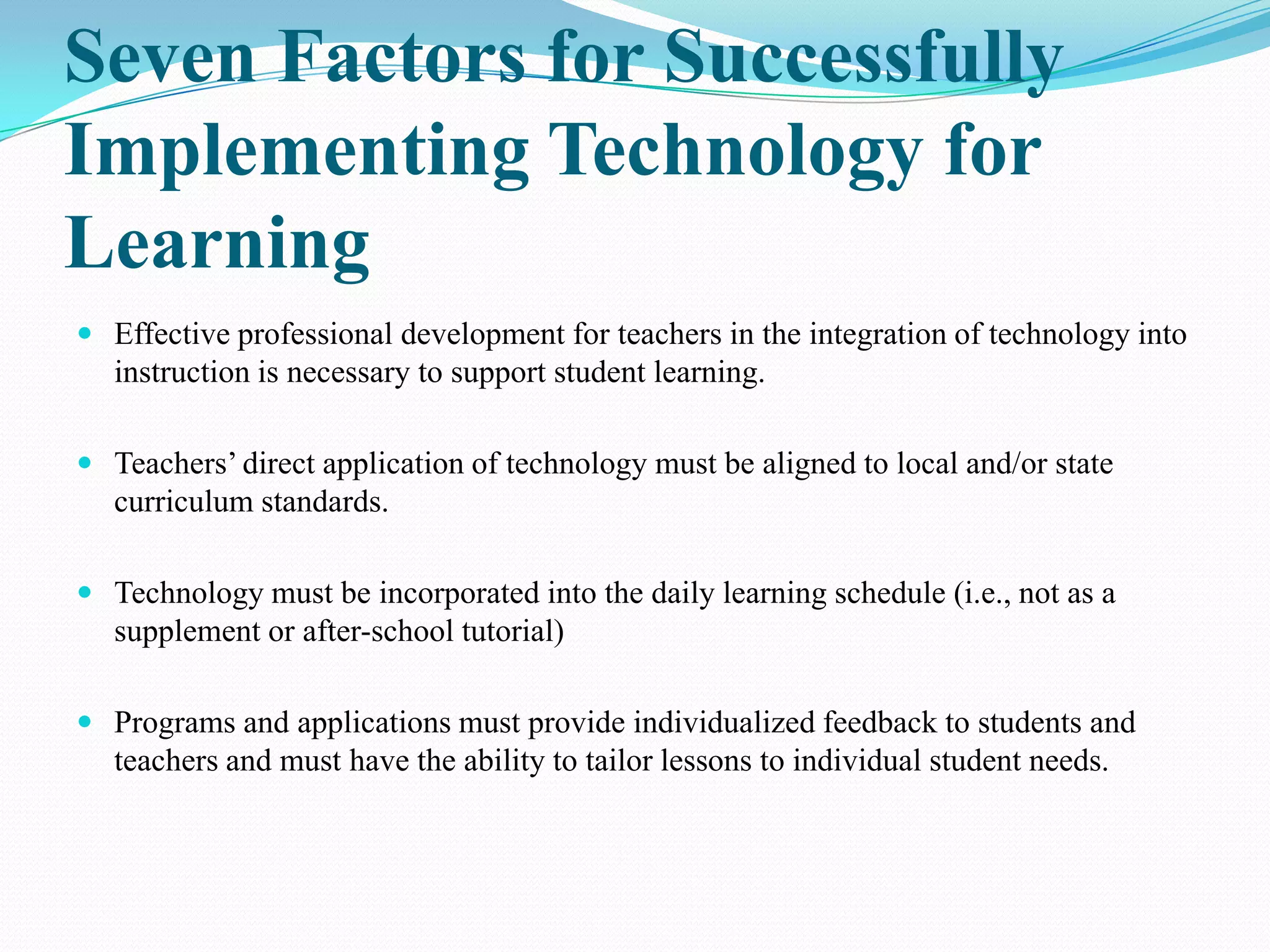
Seven Factors for Successfully
Implementing Technology for
Learning
 Effective professional development for teachers in the integration of technology into
  instruction is necessary to support student learning.

 Teachers’ direct application of technology must be aligned to local and/or state
  curriculum standards.

 Technology must be incorporated into the daily learning schedule (i.e., not as a
  supplement or after-school tutorial)

 Programs and applications must provide individualized feedback to students and
  teachers and must have the ability to tailor lessons to individual student needs.
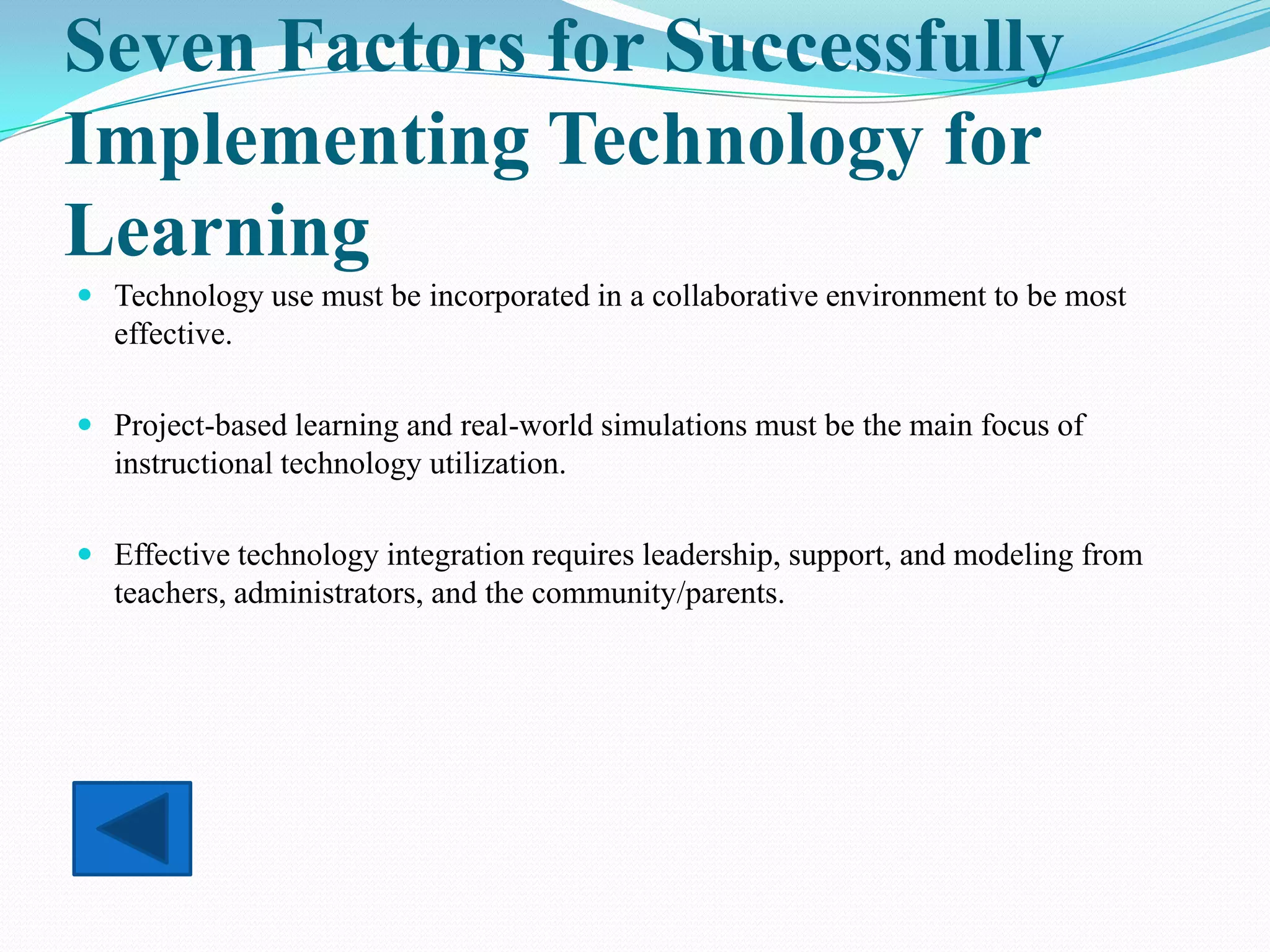
Seven Factors for Successfully
Implementing Technology for
Learning
 Technology use must be incorporated in a collaborative environment to be most
  effective.

 Project-based learning and real-world simulations must be the main focus of
  instructional technology utilization.

 Effective technology integration requires leadership, support, and modeling from
  teachers, administrators, and the community/parents.
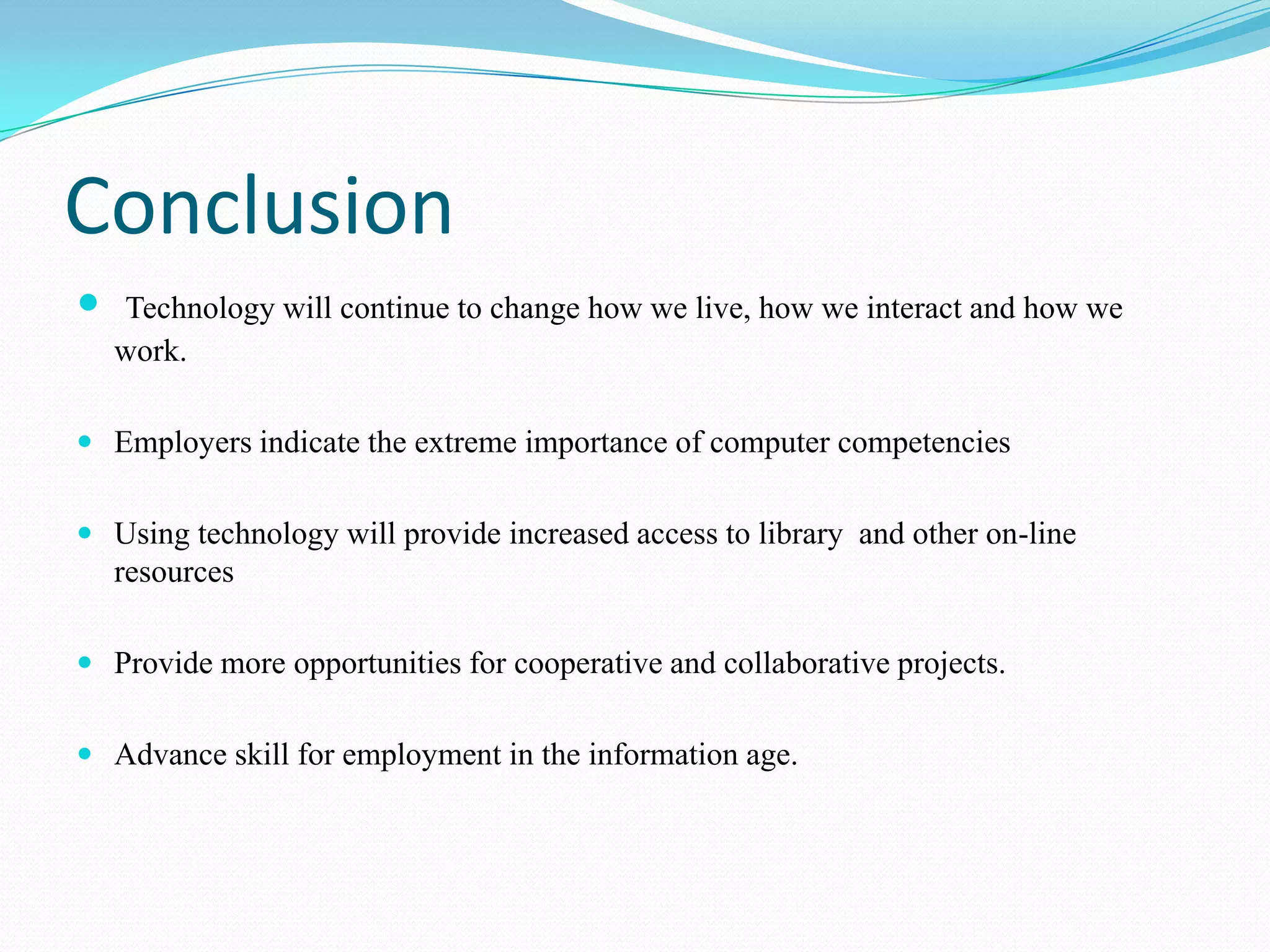
Conclusion
   Technology will continue to change how we live, how we interact and how we
    work.

 Employers indicate the extreme importance of computer competencies


 Using technology will provide increased access to library and other on-line
  resources

 Provide more opportunities for cooperative and collaborative projects.


 Advance skill for employment in the information age.
References
Johnson, B. H. (1996). Minnesota committed to providing technology to all students. Research/Practice [Online], 4(2). Available:
    http://education.umn.edu/carei/Reports/ Rpractice/Summer96/committed.htm.
Bain, A., & Ross, K. (2000). School reengineering and SAT-1 performance: A case study. International Journal of Education Reform, 9(2), 148-
    153.
Bain, A., & Smith, D. (2000). Technology enabling school reform. T.H.E. Journal (Technological Horizons in Education), 28(3), 90.
Tracey and Young 2006, Blok et al. 2002, Batchelder and Rachal 2000 and six studies from the What Works Clearinghouse dated August
    13, 2007b; July30, 2007; July 16, 2007a; July 16, 2007b; July 2, 2007; and March 12, 2007.

Kulik, J. (2003). Effects of using instructional technology in elementary and secondary schools: What controlled evaluation studies say.
    Arlington, VA: SRI International.

Adams, D. & Hamm, M. (2008). Helping students who struggle with math and science: Collaborative approach for elementary and middle
   schools.

Gysbers, N. & Henderson, P. Eds. (2002). Implementing Comprehensive School Guidance Programs: Critical Leadership Issues and Successful
   Responses. Austin, TX: CAPS Press (now Pro-Ed Incorporated).

Penuel, W.R., Kim, D.Y., Michalchik, V., Lewis, S., Means, B., Murphy, R., Korbak, C., Whaley, A., & Allen, J.E. (2002). Using technology to
    enhance connections between home and school: A research synthesis. Washington, DC: Planning and Evaluation Service, U.S. Department of
    Education, DHHS Contract # 282-00-008-Task 1.

Maximizing the Impact: The pivotal role of technology in a 21st century education system. (2007). Eugene, OR: International Society for
   Technology in Education; Glen Burnie, MD: State Educational Technology Directors Association; Tucson, AZ: Partnership for 21st
   Century Skills.

Business Roundtable. (2005). Tapping America’s Potential: The education for innovation initiative. Retrieved May 2008 from
    http://www. businessroundtable.org/pdf/20050803001TAPfinalnb.pdf

Gulek, J. C. & Demirtas, H. (2005). Learning with technology: The impact of laptop use on student achievement. Journal of
    Technology, Learning, and Assessment, 3(2). Available from http://www.jtla.org

Technology’S Influence On Student Learning

  • 2.
    Technology’s Influence onStudent Learning  Let’s take a look Slide 3 Slide 6 Slide 9
  • 3.
    How does technologyinfluence student learning?  Three primary goals  Achievement in content area learning  Higher order thinking and problem solving skill development  Workforce preparation
  • 4.
    How does technologyinfluence student learning?  The relationship between instructional technology and student achievement  Vermont Reasoning and Problem Solving Standards  Dimensions of Learning Model
  • 5.
    How does technologyinfluence student learning?  The Results Next, 58 valid data sets were matched in order to conduct a true repeated measures methodology (pre-test vs. post-test). The results are displayed below for the key subscales of interest: Subscale Class.Motiv. Metacog. Inq.Learn App.of.Skills Pre-test 4.00 2.17 2.49 2.04 Post-test 3.97 2.36 2.52 1.87 t-value .347 -1.96 -.458 2.00 df 52 56 56 56 p (2-tailed) .730 .055 .649 .050 Only the metacognition variable changed significantly in the predicted direction (1-tailed test probability = .028). Students reported higher levels of metacognitive skills at the end of the course than they did at the beginning.
  • 6.
    What and howchildren can learn  How technology can enhance how and what children learn:  Active engagement  Participation in groups  Frequent interaction and feedback  Connection to real-world contexts
  • 7.
    What and howchildren can learn  Students acquire a wide array of technology based skills  Will need to compete in the global market  “communicate, collaborate, analyze, create, innovate, an d solve problems”  Skills mastery in science, technology, and innovation are the keys to stronger economic growth.
  • 8.
    What and howchildren can learn  Spend more time engaging in collaborative work than non-laptop students  Lead to more student writing and to writing of higher quality  Increase access to information and improve research analysis skills  Become collaborators (interact with each other about their work)  Direct their own learning  Readily engage in problem solving and critical thinking  Consistently show deeper and more flexible uses of technology  Spend more time doing homework on computers
  • 9.
    Seven Factors forSuccessfully Implementing Technology for Learning  Effective professional development for teachers in the integration of technology into instruction is necessary to support student learning.  Teachers’ direct application of technology must be aligned to local and/or state curriculum standards.  Technology must be incorporated into the daily learning schedule (i.e., not as a supplement or after-school tutorial)  Programs and applications must provide individualized feedback to students and teachers and must have the ability to tailor lessons to individual student needs.
  • 10.
    Seven Factors forSuccessfully Implementing Technology for Learning  Technology use must be incorporated in a collaborative environment to be most effective.  Project-based learning and real-world simulations must be the main focus of instructional technology utilization.  Effective technology integration requires leadership, support, and modeling from teachers, administrators, and the community/parents.
  • 11.
    Conclusion  Technology will continue to change how we live, how we interact and how we work.  Employers indicate the extreme importance of computer competencies  Using technology will provide increased access to library and other on-line resources  Provide more opportunities for cooperative and collaborative projects.  Advance skill for employment in the information age.
  • 12.
    References Johnson, B. H.(1996). Minnesota committed to providing technology to all students. Research/Practice [Online], 4(2). Available: http://education.umn.edu/carei/Reports/ Rpractice/Summer96/committed.htm. Bain, A., & Ross, K. (2000). School reengineering and SAT-1 performance: A case study. International Journal of Education Reform, 9(2), 148- 153. Bain, A., & Smith, D. (2000). Technology enabling school reform. T.H.E. Journal (Technological Horizons in Education), 28(3), 90. Tracey and Young 2006, Blok et al. 2002, Batchelder and Rachal 2000 and six studies from the What Works Clearinghouse dated August 13, 2007b; July30, 2007; July 16, 2007a; July 16, 2007b; July 2, 2007; and March 12, 2007. Kulik, J. (2003). Effects of using instructional technology in elementary and secondary schools: What controlled evaluation studies say. Arlington, VA: SRI International. Adams, D. & Hamm, M. (2008). Helping students who struggle with math and science: Collaborative approach for elementary and middle schools. Gysbers, N. & Henderson, P. Eds. (2002). Implementing Comprehensive School Guidance Programs: Critical Leadership Issues and Successful Responses. Austin, TX: CAPS Press (now Pro-Ed Incorporated). Penuel, W.R., Kim, D.Y., Michalchik, V., Lewis, S., Means, B., Murphy, R., Korbak, C., Whaley, A., & Allen, J.E. (2002). Using technology to enhance connections between home and school: A research synthesis. Washington, DC: Planning and Evaluation Service, U.S. Department of Education, DHHS Contract # 282-00-008-Task 1. Maximizing the Impact: The pivotal role of technology in a 21st century education system. (2007). Eugene, OR: International Society for Technology in Education; Glen Burnie, MD: State Educational Technology Directors Association; Tucson, AZ: Partnership for 21st Century Skills. Business Roundtable. (2005). Tapping America’s Potential: The education for innovation initiative. Retrieved May 2008 from http://www. businessroundtable.org/pdf/20050803001TAPfinalnb.pdf Gulek, J. C. & Demirtas, H. (2005). Learning with technology: The impact of laptop use on student achievement. Journal of Technology, Learning, and Assessment, 3(2). Available from http://www.jtla.org

Editor's Notes

  • #2 What jobs will not require information technology skills? NONE!
  • #3 It is essential that each of us possess the necessary technology skills since eighty percent of all jobs require a working knowledge of computers and the accumulative scientific and technical information doubles every five years or less. Technology will enable students to acquire those skills highly sought by employers in business and industry while they are becoming proficient in their career field. The use of technology will allow students better access to the Internet, e-mail, perform word processing projects and use software related to their scholastic interests.