The Integrated Approach to
Teaching
Prepared by
Beverly Allen
What is the Integrated Approach to teaching?

The integrated approach is one in which
learners learn by doing in a learnercentred environment in learner-interest
contexts.
What is the value of the Integrated Approach?
• It allows students to engage in purposeful, relevant learning.
• It encourages students to see the interconnectedness and

interrelationships between the curriculum areas.

• Students are able to use their prior experiences to construct learning.
• Because integrated units are child-centred, they provide opportunities for

cross-cultural sharing.

• Opportunities for students to display competence are given rather than

relying on a written or oral test.
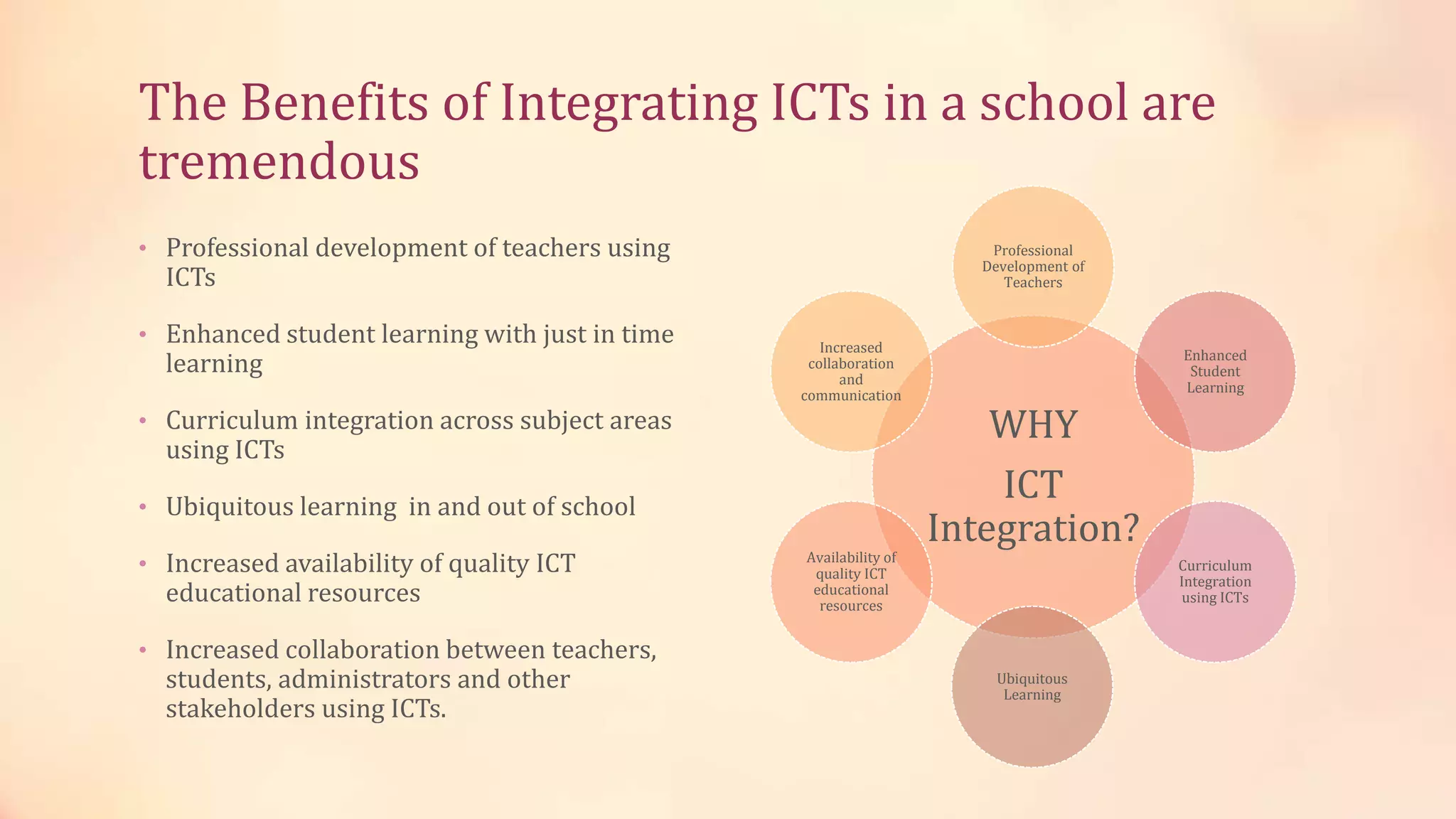
The Benefits of Integrating ICTs in a school are
tremendous
• Professional development of teachers using

Professional
Development of
Teachers

ICTs

• Enhanced student learning with just in time

learning

• Curriculum integration across subject areas

Increased
collaboration
and
communication

using ICTs

• Ubiquitous learning in and out of school
• Increased availability of quality ICT

educational resources

Availability of
quality ICT
educational
resources

Enhanced
Student
Learning

WHY
ICT
Integration?
Curriculum
Integration
using ICTs

• Increased collaboration between teachers,

students, administrators and other
stakeholders using ICTs.

Ubiquitous
Learning
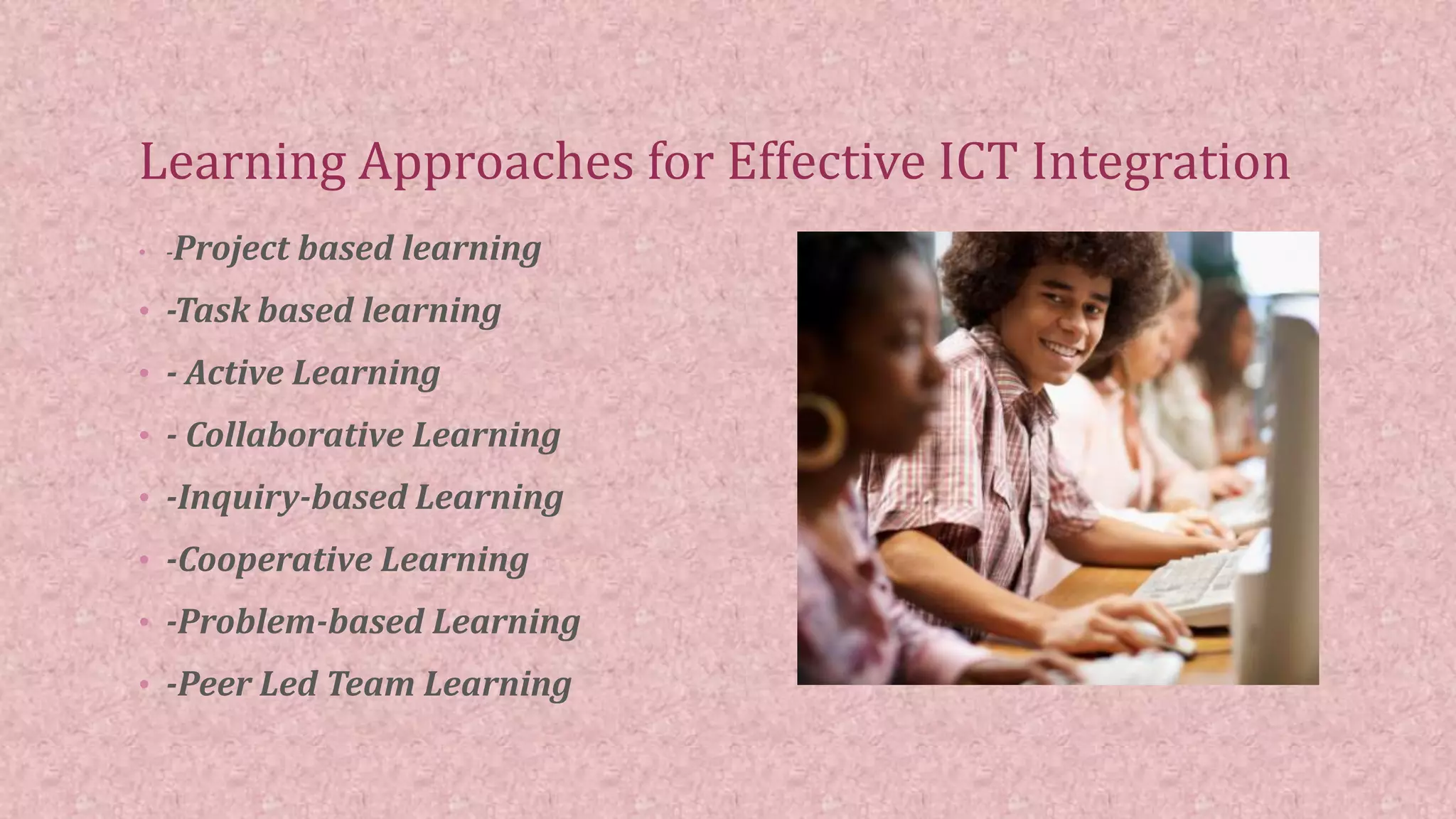
Learning Approaches for Effective ICT Integration
Project based learning

• -

• -Task based learning
• - Active Learning
• - Collaborative Learning

• -Inquiry-based Learning
• -Cooperative Learning
• -Problem-based Learning

• -Peer Led Team Learning
Learning Approaches for Effective ICT Integration
Cont’d
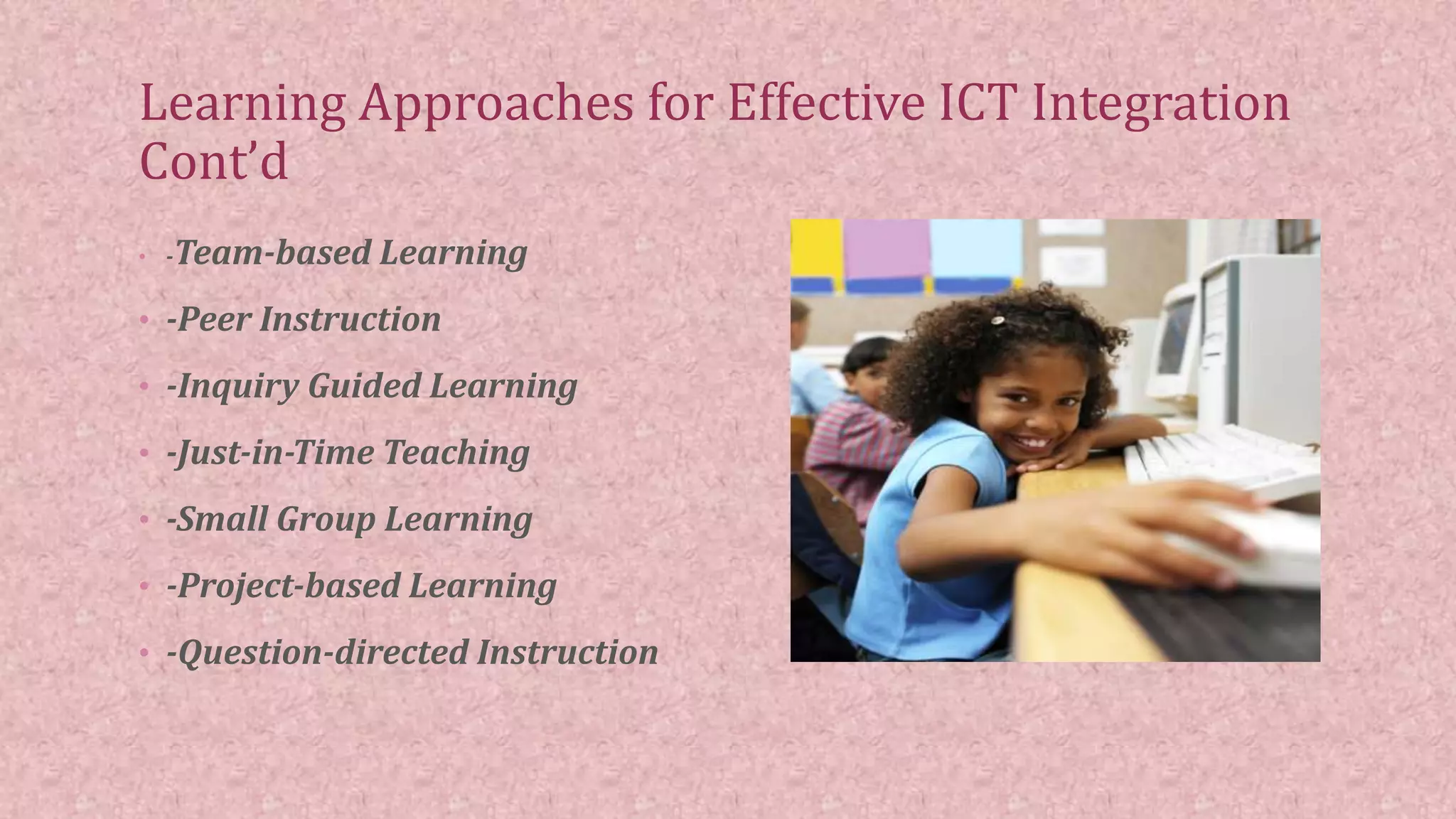
Team-based Learning

• -

• -Peer Instruction
• -Inquiry Guided Learning
• -Just-in-Time Teaching
• -Small Group Learning
• -Project-based Learning
• -Question-directed Instruction
Role of the Teacher in ICT Integration
• A facilitator of learning
• Setting learner-centred curriculum related tasks.
• Setting tasks that are open-ended in order to support problem solving and

critical thinking.

• Developing contextualized activities.
• Setting tasks that develop collaborative group skills.
• Using ICT to enhance and stimulate thinking around the issues presented

in lessons.
A strategy towards curriculum integration with
ICT
1. Conduct an ICT SWOT analysis at the school.
2. Develop an ICT development team to act upon the
of the SWOT analysis which may include:

findings

• Training in pedagogy for teachers
• Use of just in time training for teachers and administrators
• Procurement of ICTs if needed

• Maintenance of ICTs
• Security of ICTs
A strategy towards curriculum integration with
ICT cont’d
3. Establish communities of practice
4. Monitor and assess strategy
Why of ICT integration?
•
•
•
•

Student engagement
Development of higher order thinking skills
Fostering of collaboration and sharing
Learning that is meaningful

st
• 21

century learners

The integrated approach

  • 1.
    The Integrated Approachto Teaching Prepared by Beverly Allen
  • 2.
    What is theIntegrated Approach to teaching? The integrated approach is one in which learners learn by doing in a learnercentred environment in learner-interest contexts.
  • 3.
    What is thevalue of the Integrated Approach? • It allows students to engage in purposeful, relevant learning. • It encourages students to see the interconnectedness and interrelationships between the curriculum areas. • Students are able to use their prior experiences to construct learning. • Because integrated units are child-centred, they provide opportunities for cross-cultural sharing. • Opportunities for students to display competence are given rather than relying on a written or oral test.
  • 4.
    The Benefits ofIntegrating ICTs in a school are tremendous • Professional development of teachers using Professional Development of Teachers ICTs • Enhanced student learning with just in time learning • Curriculum integration across subject areas Increased collaboration and communication using ICTs • Ubiquitous learning in and out of school • Increased availability of quality ICT educational resources Availability of quality ICT educational resources Enhanced Student Learning WHY ICT Integration? Curriculum Integration using ICTs • Increased collaboration between teachers, students, administrators and other stakeholders using ICTs. Ubiquitous Learning
  • 5.
    Learning Approaches forEffective ICT Integration Project based learning • - • -Task based learning • - Active Learning • - Collaborative Learning • -Inquiry-based Learning • -Cooperative Learning • -Problem-based Learning • -Peer Led Team Learning
  • 6.
    Learning Approaches forEffective ICT Integration Cont’d Team-based Learning • - • -Peer Instruction • -Inquiry Guided Learning • -Just-in-Time Teaching • -Small Group Learning • -Project-based Learning • -Question-directed Instruction
  • 7.
    Role of theTeacher in ICT Integration • A facilitator of learning • Setting learner-centred curriculum related tasks. • Setting tasks that are open-ended in order to support problem solving and critical thinking. • Developing contextualized activities. • Setting tasks that develop collaborative group skills. • Using ICT to enhance and stimulate thinking around the issues presented in lessons.
  • 8.
    A strategy towardscurriculum integration with ICT 1. Conduct an ICT SWOT analysis at the school. 2. Develop an ICT development team to act upon the of the SWOT analysis which may include: findings • Training in pedagogy for teachers • Use of just in time training for teachers and administrators • Procurement of ICTs if needed • Maintenance of ICTs • Security of ICTs
  • 9.
    A strategy towardscurriculum integration with ICT cont’d 3. Establish communities of practice 4. Monitor and assess strategy
  • 10.
    Why of ICTintegration? • • • • Student engagement Development of higher order thinking skills Fostering of collaboration and sharing Learning that is meaningful st • 21 century learners