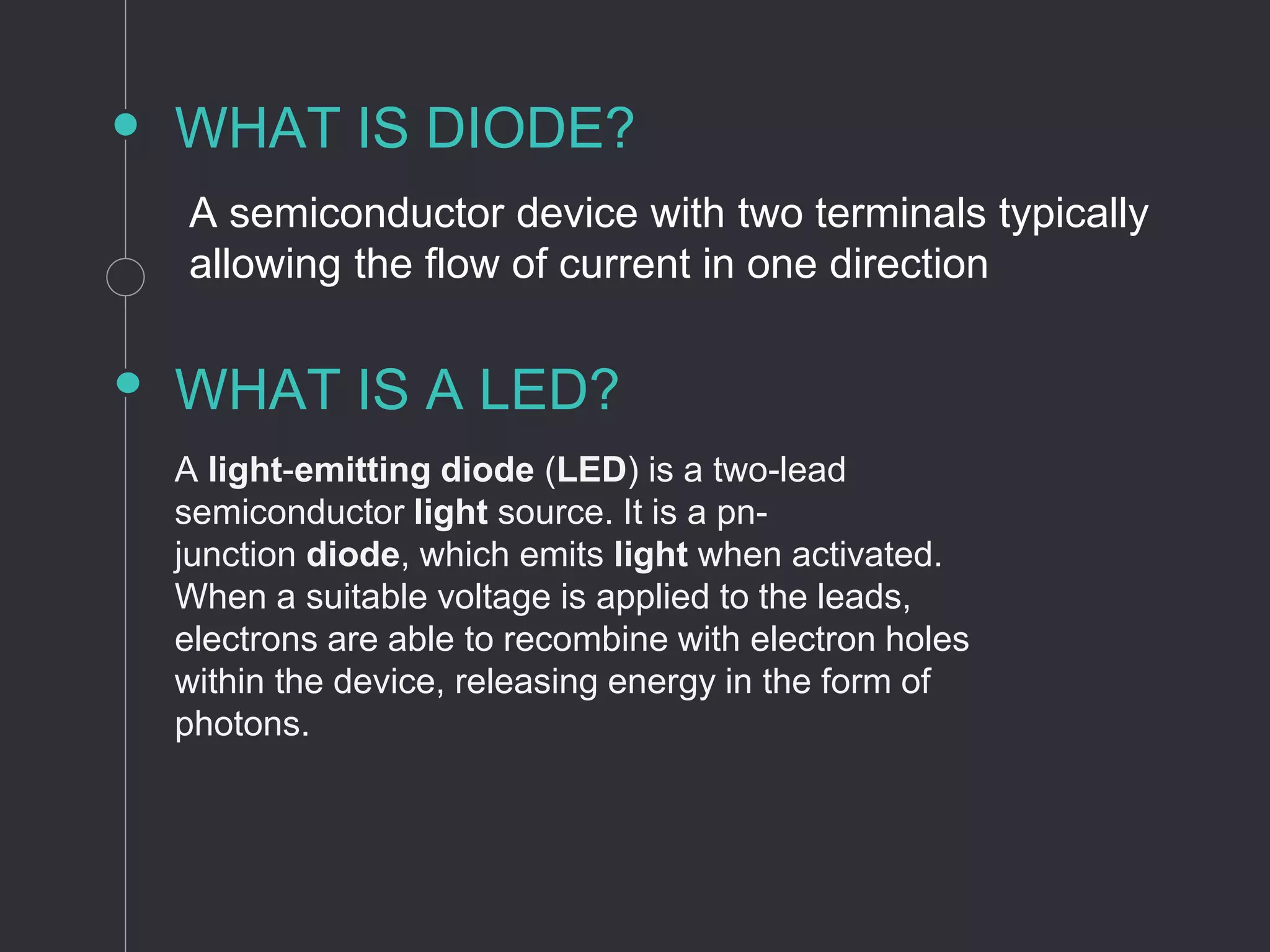
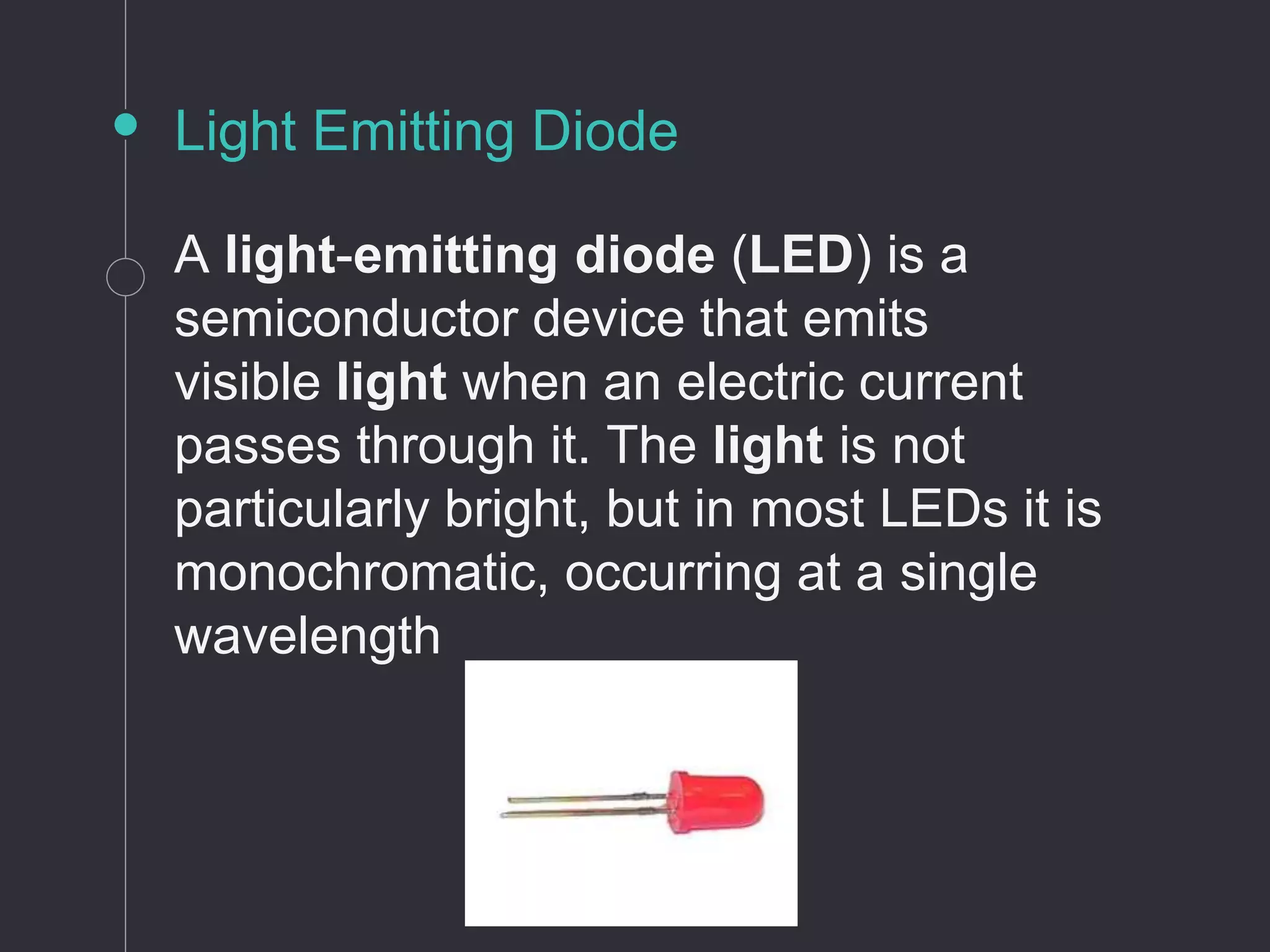
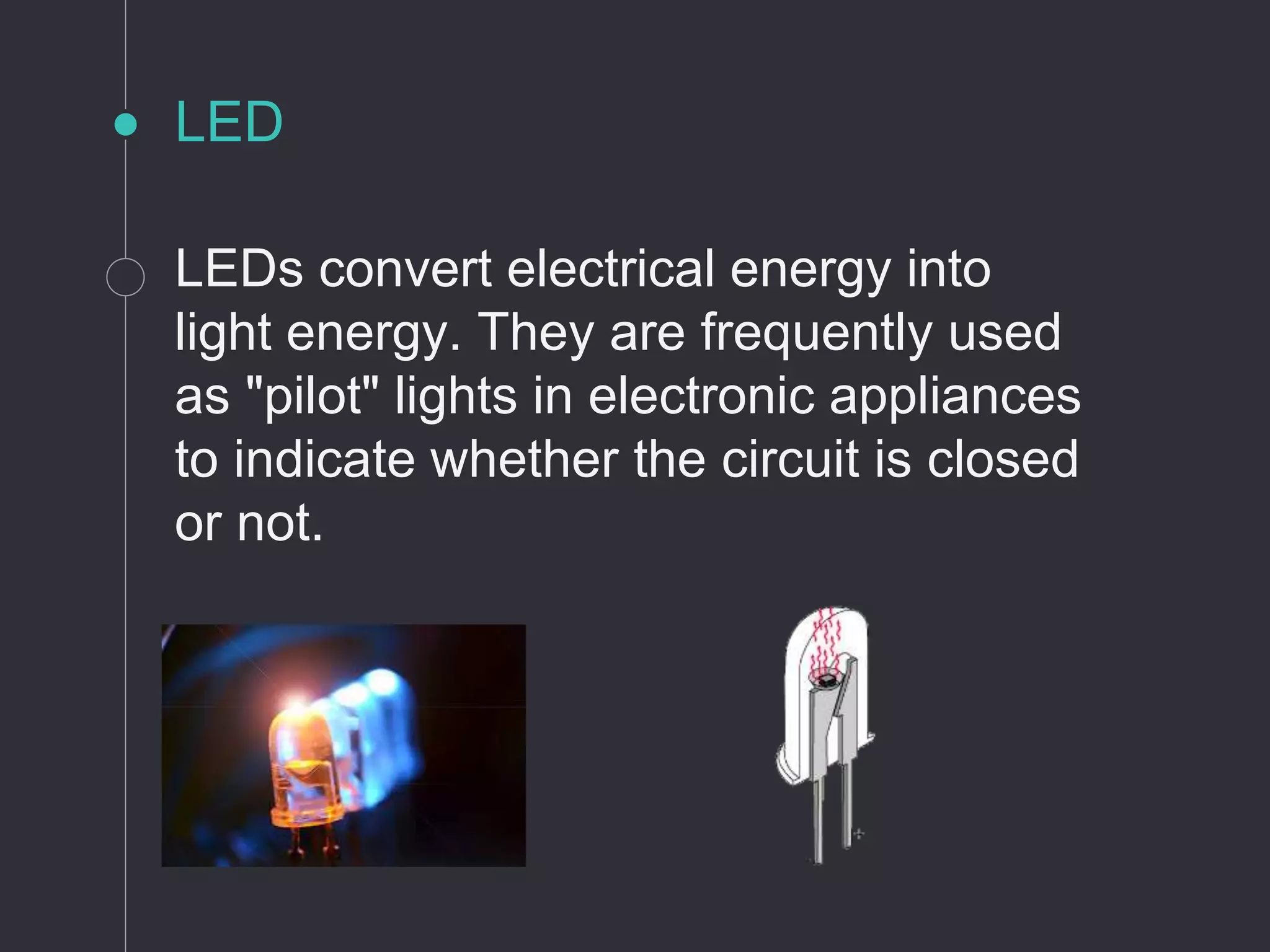
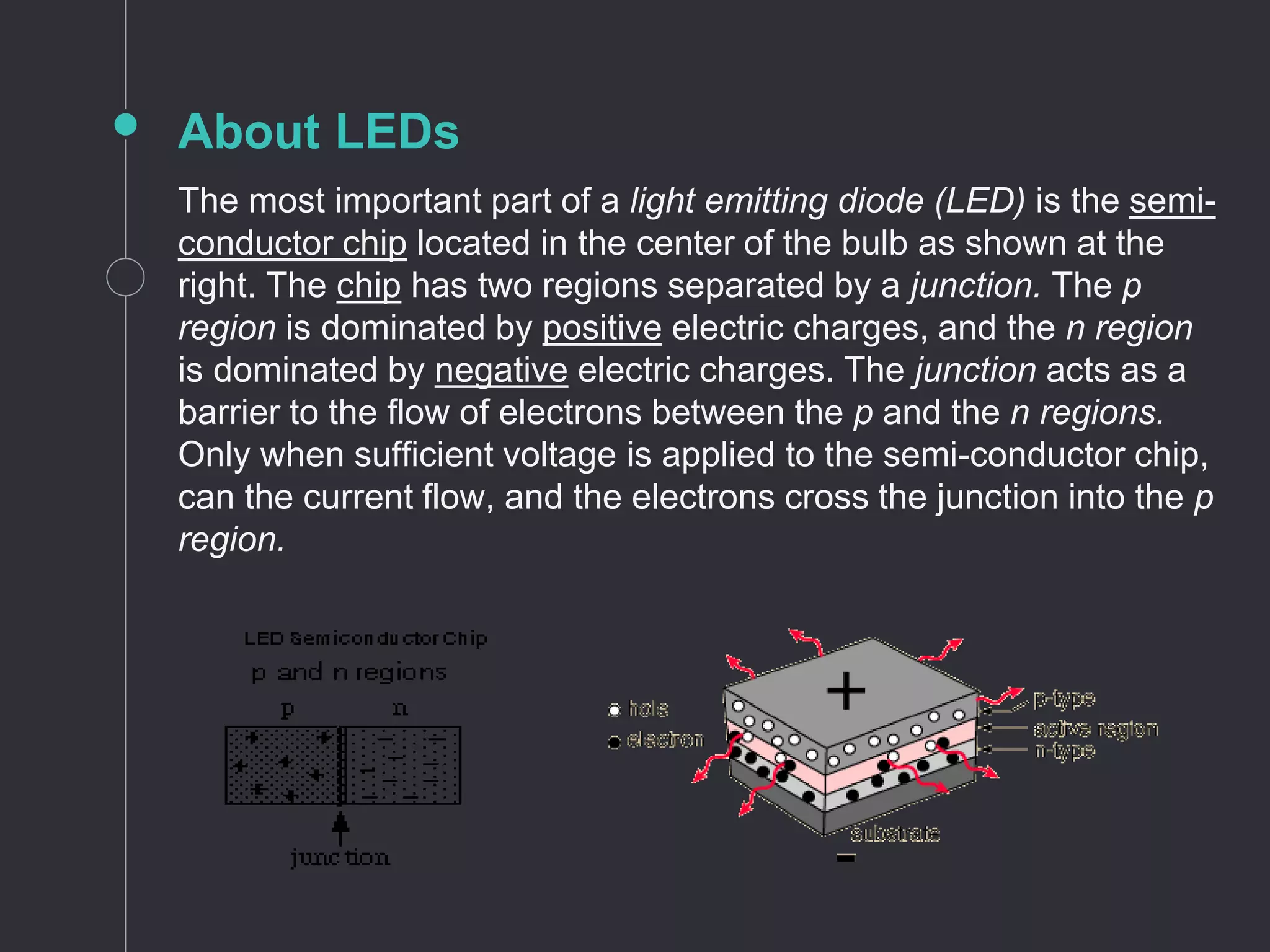
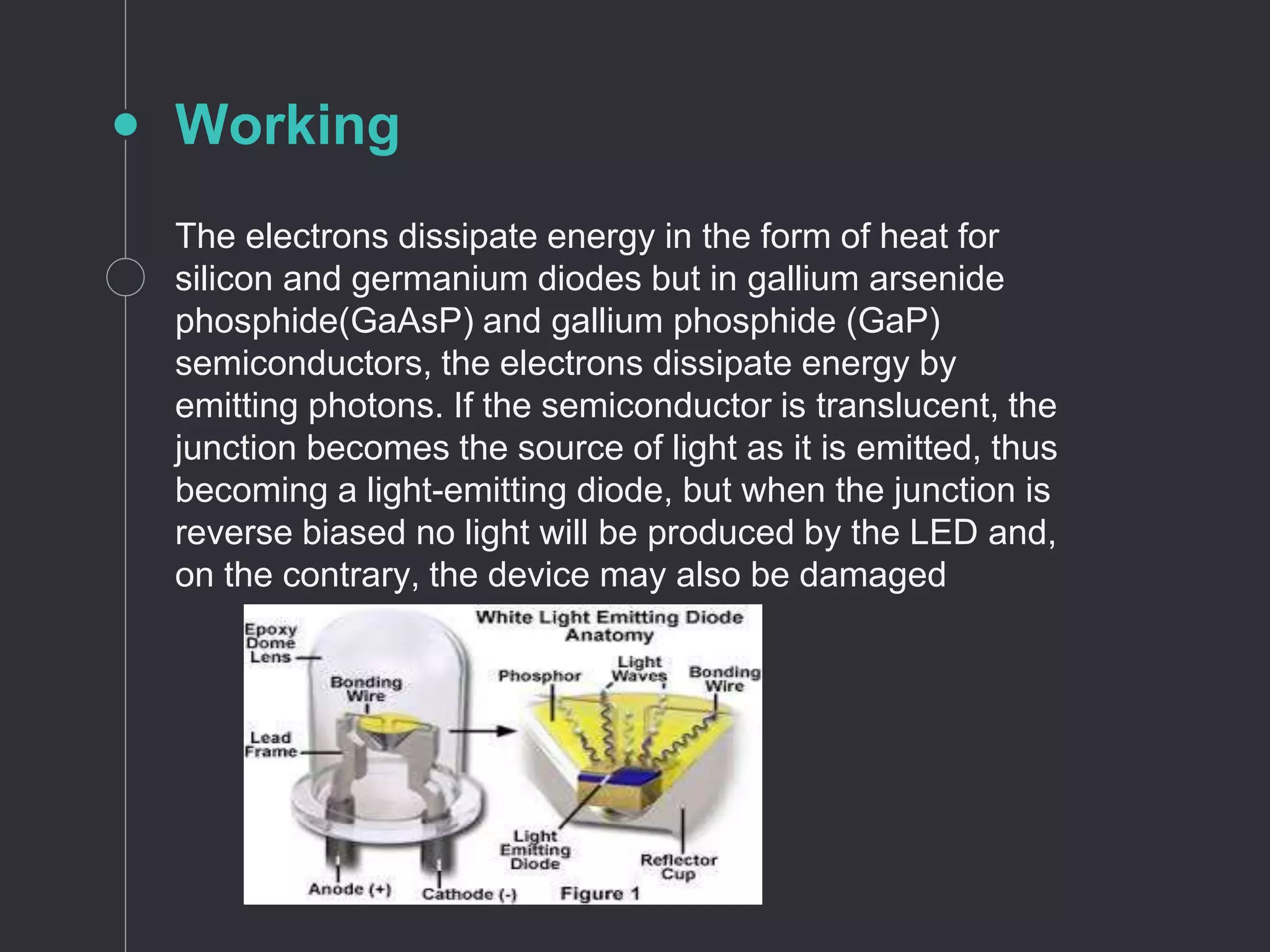
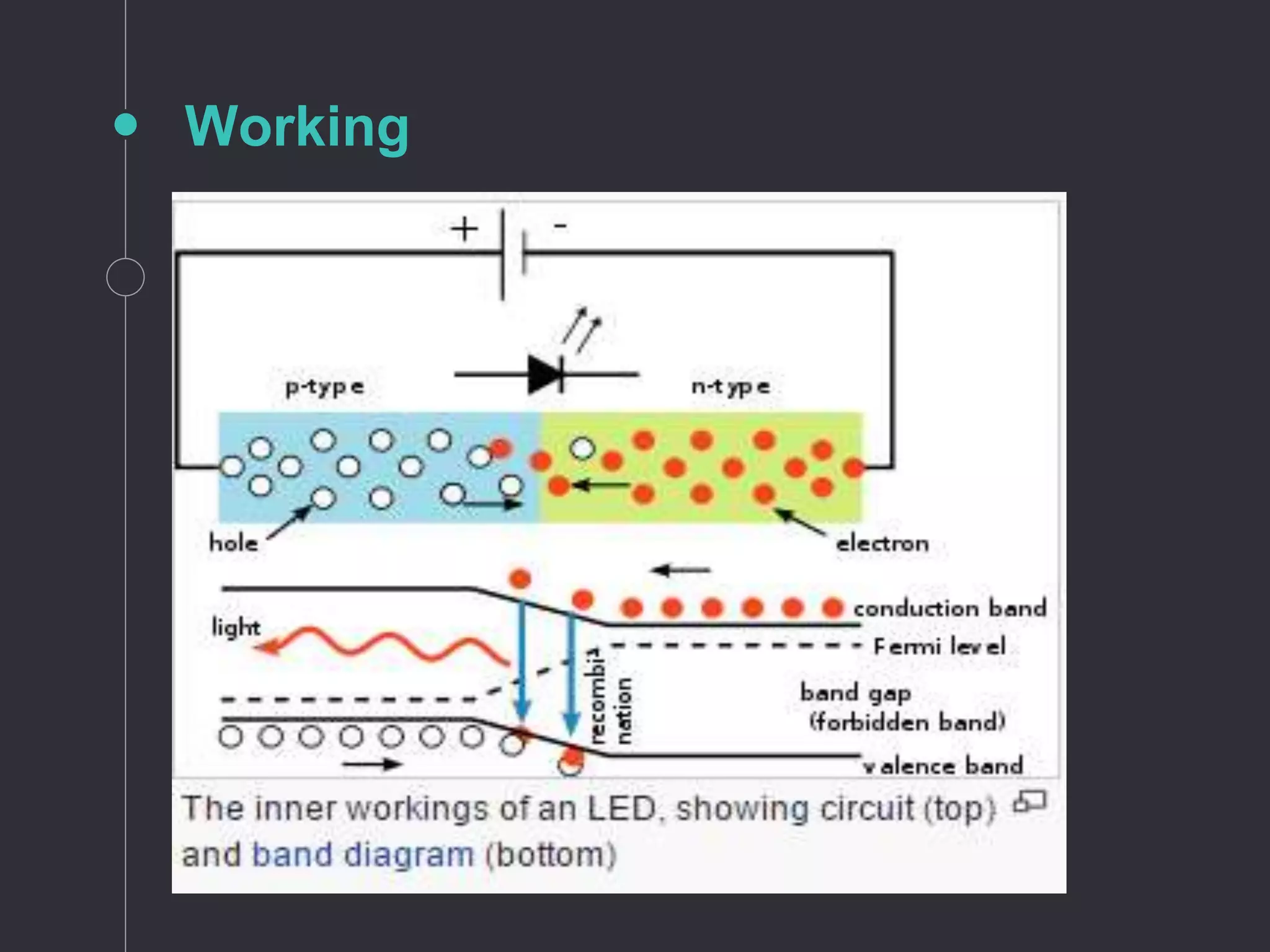
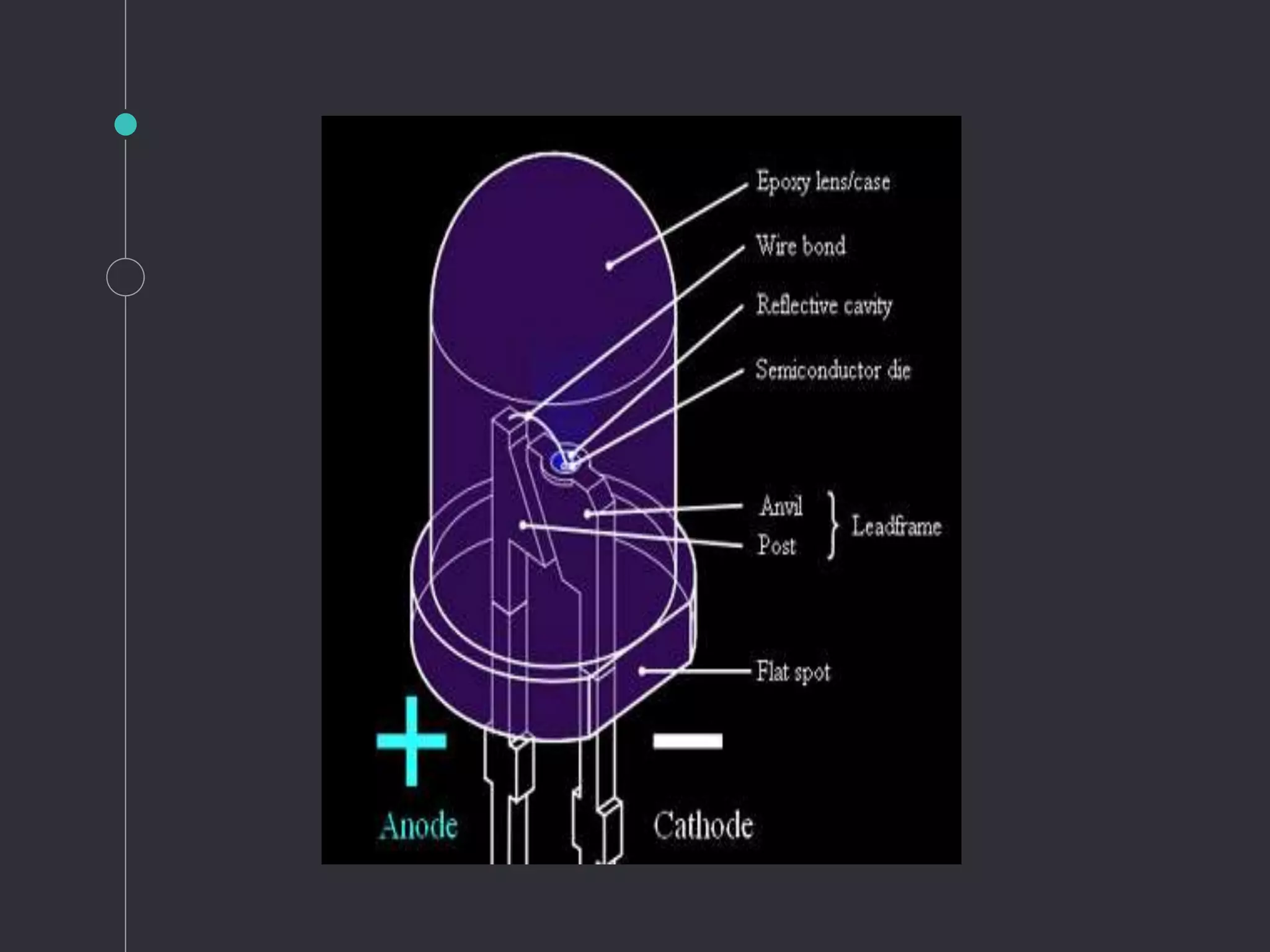
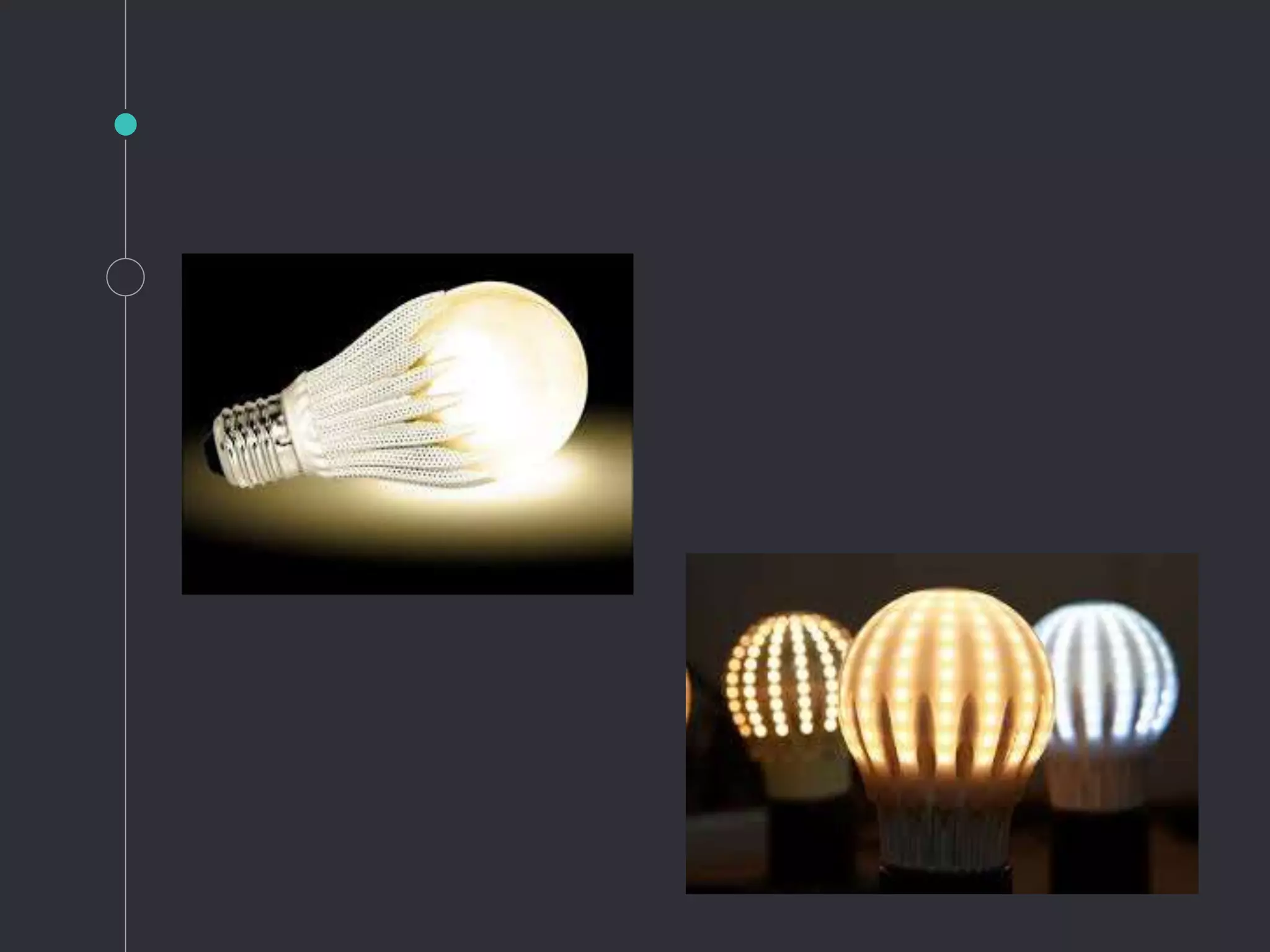
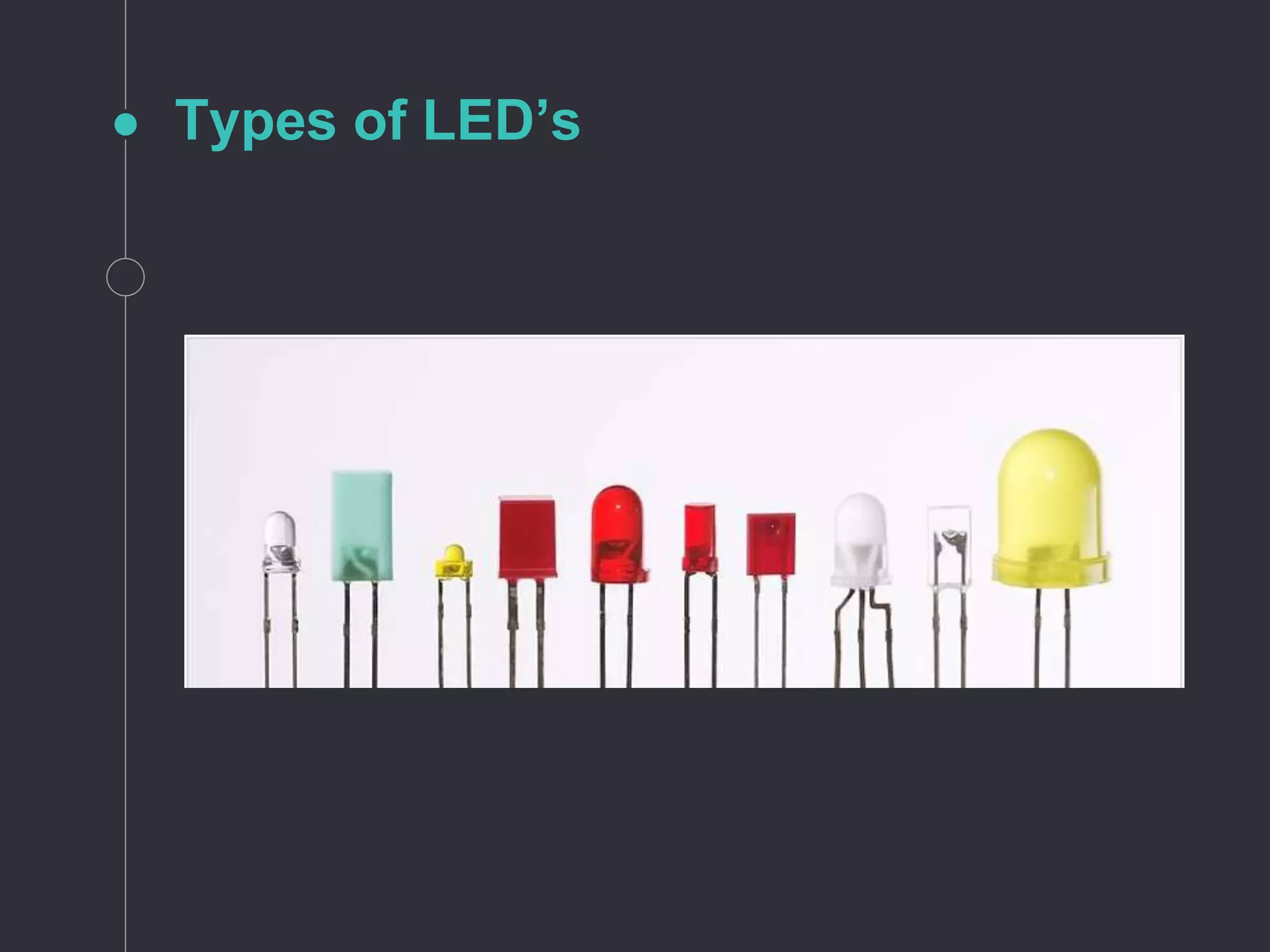
A light-emitting diode (LED) is a semiconductor device that emits visible light when an electric current passes through it. LEDs have several advantages over traditional light sources, including high energy efficiency, long lifetime, improved robustness, and smaller size. They operate by converting electrical energy directly into light through electroluminescence in a very narrow band of wavelengths, producing light in a specific color without using any color filters. However, LEDs also have some disadvantages like higher initial costs and sensitivity to temperature.