Wind energy
Wind is a form of solar energy.
Winds are caused by the uneven heating of the
atmosphere by the sun, the irregularities of the
earth's surface, and rotation of the earth.
Wind flow patterns are modified by the earth's
terrain, bodies of water, and vegetative cover.
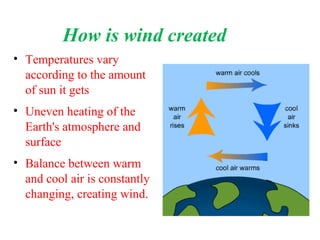
How is wind created?
• Temperatures vary
according to the amount
of sun it gets
• Uneven heating of the
Earth's atmosphere and
surface
• Balance between warm
and cool air is constantly
changing, creating wind.
The terms "wind energy" or "wind power"
describe the process by which the wind is used
to generate mechanical power or electricity.
Wind turbines convert the kinetic energy in the
wind into mechanical power.
Wind power is the conversion of wind energy
into a useful form of energy, such as using:
wind turbines to make electricity,
windmills for mechanical power,
windpumps for water pumping ect.
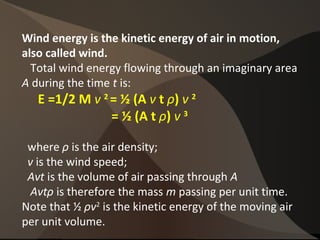
Wind energy is the kinetic energy of air in motion,
also called wind.
Total wind energy flowing through an imaginary area
A during the time t is:
E =1/2 M v 2
= ½ (A v t ρ) v 2
= ½ (A t ρ) v 3
where ρ is the air density;
v is the wind speed;
Avt is the volume of air passing through A
Avtρ is therefore the mass m passing per unit time.
Note that ½ ρv2
is the kinetic energy of the moving air
per unit volume.
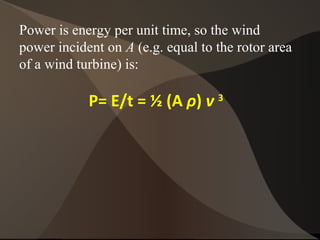
Power is energy per unit time, so the wind
power incident on A (e.g. equal to the rotor area
of a wind turbine) is:
P= E/t = ½ (A ρ) v 3
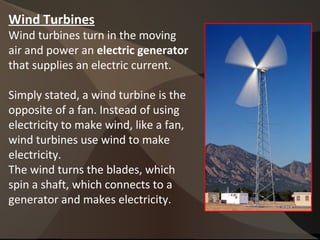
Wind Turbines
Wind turbines turn in the moving
air and power an electric generator
that supplies an electric current.
Simply stated, a wind turbine is the
opposite of a fan. Instead of using
electricity to make wind, like a fan,
wind turbines use wind to make
electricity.
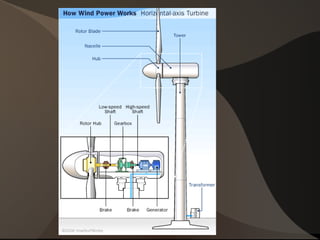
The wind turns the blades, which
spin a shaft, which connects to a
generator and makes electricity.
Common HAWT Construction
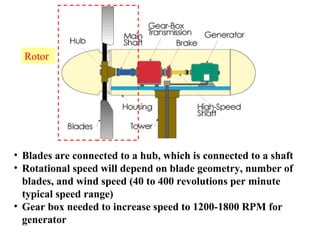
Rotor
• Blades are connected to a hub, which is connected to a shaft
• Rotational speed will depend on blade geometry, number of
blades, and wind speed (40 to 400 revolutions per minute
typical speed range)
• Gear box needed to increase speed to 1200-1800 RPM for
generator
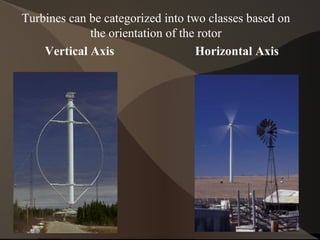
Turbines can be categorized into two classes based on
the orientation of the rotor
Vertical Axis Horizontal Axis
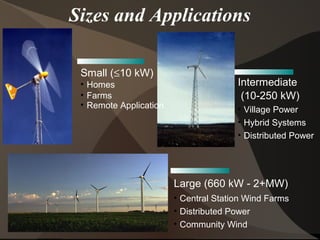
Sizes and Applications
Small (≤10 kW)
• Homes
• Farms
• Remote Application
Intermediate
(10-250 kW)
• Village Power
• Hybrid Systems
• Distributed Power
Large (660 kW - 2+MW)
• Central Station Wind Farms
• Distributed Power
• Community Wind
Advantages of Wind Power
The wind blows day and night, which allows windmills to
produce electricity throughout the day.
Wind power is very low cost (after the initial production
and installation)
Wind power is clean and renewable and sustainable
resource.
Wind energy is a domestic, renewable source of energy
that generates no pollution and has little environmental
impact.
Land used for wind farms can also be used for other
profitable activities including farming and forestry.
Remote areas that are not connected to the electricity
power grid can use wind turbines to produce their own
supply.
Disadvantages of Wind Power
The strength of the wind is not constant and it varies
from zero to storm force. This means that wind turbines
do not produce the same amount of electricity all the
time.
Noise Disturbances : Though wind energy is non
pollution, the turbines may create a lot of noise.
Threat to Wildlife : Due to large scale construction of
wind turbines on remote location, it could be a threat to
wild life near by.
Birds are killed by wind turbines.

Renewable energy - Wind energy

  • 1.
  • 2.
    Wind is aform of solar energy. Winds are caused by the uneven heating of the atmosphere by the sun, the irregularities of the earth's surface, and rotation of the earth. Wind flow patterns are modified by the earth's terrain, bodies of water, and vegetative cover.
  • 3.
    How is windcreated? • Temperatures vary according to the amount of sun it gets • Uneven heating of the Earth's atmosphere and surface • Balance between warm and cool air is constantly changing, creating wind.
  • 4.
    The terms "windenergy" or "wind power" describe the process by which the wind is used to generate mechanical power or electricity. Wind turbines convert the kinetic energy in the wind into mechanical power. Wind power is the conversion of wind energy into a useful form of energy, such as using: wind turbines to make electricity, windmills for mechanical power, windpumps for water pumping ect.
  • 5.
    Wind energy isthe kinetic energy of air in motion, also called wind. Total wind energy flowing through an imaginary area A during the time t is: E =1/2 M v 2 = ½ (A v t ρ) v 2 = ½ (A t ρ) v 3 where ρ is the air density; v is the wind speed; Avt is the volume of air passing through A Avtρ is therefore the mass m passing per unit time. Note that ½ ρv2 is the kinetic energy of the moving air per unit volume.
  • 6.
    Power is energyper unit time, so the wind power incident on A (e.g. equal to the rotor area of a wind turbine) is: P= E/t = ½ (A ρ) v 3
  • 7.
    Wind Turbines Wind turbinesturn in the moving air and power an electric generator that supplies an electric current. Simply stated, a wind turbine is the opposite of a fan. Instead of using electricity to make wind, like a fan, wind turbines use wind to make electricity. The wind turns the blades, which spin a shaft, which connects to a generator and makes electricity.
  • 8.
    Common HAWT Construction Rotor •Blades are connected to a hub, which is connected to a shaft • Rotational speed will depend on blade geometry, number of blades, and wind speed (40 to 400 revolutions per minute typical speed range) • Gear box needed to increase speed to 1200-1800 RPM for generator
  • 11.
    Turbines can becategorized into two classes based on the orientation of the rotor Vertical Axis Horizontal Axis
  • 12.
    Sizes and Applications Small(≤10 kW) • Homes • Farms • Remote Application Intermediate (10-250 kW) • Village Power • Hybrid Systems • Distributed Power Large (660 kW - 2+MW) • Central Station Wind Farms • Distributed Power • Community Wind
  • 13.
    Advantages of WindPower The wind blows day and night, which allows windmills to produce electricity throughout the day. Wind power is very low cost (after the initial production and installation) Wind power is clean and renewable and sustainable resource. Wind energy is a domestic, renewable source of energy that generates no pollution and has little environmental impact. Land used for wind farms can also be used for other profitable activities including farming and forestry. Remote areas that are not connected to the electricity power grid can use wind turbines to produce their own supply.
  • 14.
    Disadvantages of WindPower The strength of the wind is not constant and it varies from zero to storm force. This means that wind turbines do not produce the same amount of electricity all the time. Noise Disturbances : Though wind energy is non pollution, the turbines may create a lot of noise. Threat to Wildlife : Due to large scale construction of wind turbines on remote location, it could be a threat to wild life near by. Birds are killed by wind turbines.