Downloaded 18 times
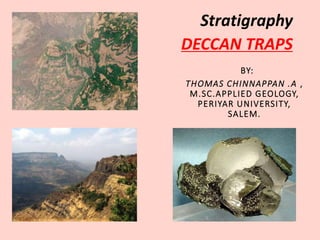
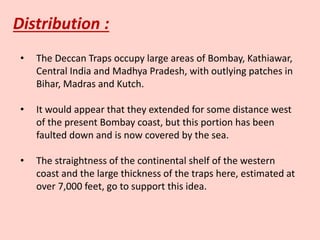
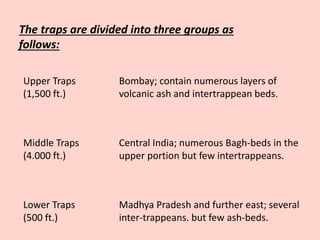
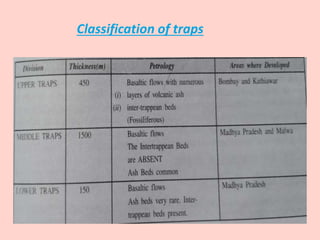
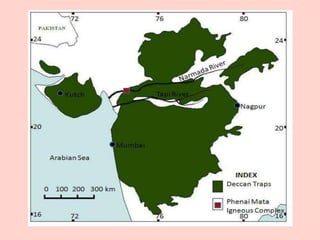


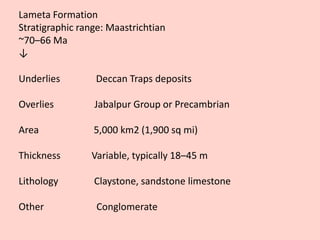


The Deccan Traps represent extensive basaltic lava flows in western and central India, originating around 66 million years ago, and cover an area that was once significantly larger due to erosion and tectonic activities. The stratigraphy of the traps is classified into three units based on thickness and characteristics, with significant fossil findings, including dinosaur remains, in the intertrappean and infratrappean beds. The traps have economic importance due to their use as road metal, building materials, and sources of bauxite and iron.


