‫بسم ا الرحمن الرحيم‬
GENUS: CHLAMYDIA
Prof. Khalifa SifawGhenghesh
 Small Gram-negative bacteria (Stain poorly

with Gram’s stain)
 Like Bacteria


Have both DNA and RNA, Ribosomes, a Cell
wall, and Divide by Binary fission

 Like Viruses
 Obligate intracellular parasites
 Differ from Bacteria




Have no peptidoglycan in their cell wall
Can not produce their own ATP
Require to use host ATP (Energy parasite)
Chlamydia species
 C. trachomatis


3 biovars
 Those causing trachoma and inclusion
conjunctivitis (TRIC)
 Those causing lymphogranuloma
venereum (LGV)


The one causing mouse pneumonitis (MoPn)

 C. psittaci > Infect both mammals and birds
 C. pneumoniae > both humans and animals
 C. pecorum > Some infect mammals
 Trachoma biovars
 14


Serovars: A-K

Serovars A, Ba, B, C
 Classic trachoma



Serovars D-K
 Inclusion conjunctivitis and Genital
infections

 LGV biovars
3

Serovars: L1, L2, L3
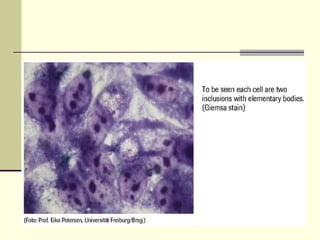
 Can be stained with Giemsa stain
 Elementary body (EB)
 Extracellular,

infectious metabolically
inert form of chlamydiae

 Reticulate body (RB)
 Intracellular,

non-infectious,
metabolically active particle
Infection to Humans
 Ocular infection
 Trachoma > in countries where sanitation
and hygiene standards are poor
 Spread by eye seeking flies, or fingers,
from one patient to another
 Blindness




“Trachoma belt” > North Africa to South-East
Asia

Adult inclusion conjunctivitis
(paratrachoma)



Acute stage >> follicular conjunctivitis
Self-limited
 Chlamydial

ophthalmia neonatrum
(inclusion blennorrhoea)
 5-21 days after birth
 If not treated > after 1 year >
secondary bacterial infection >
ocular damage and even blindness
 Source:
 infected genital tract of the mother
 Genital infection
 C.

trachomatis is the Commonest
cause of non-gonococcal urethritis
in males (30%)
 LGV
 In both males and females in
tropics and subtropics
 In

females

Mucopurulent cervicitis and
urethritis
 Vaginitis and vaginal discharge
 Asymptomatic females if not
treated


 Ascending infection >> Pelvic
inflammatory disease (endometritis
or salpingitis or both)
 Tubal damage >> ectopic pregnancy
and infertility
 Infection in pregnancy
 C.

psittaci

Miscarriage or intra-uterine death
 Patients had contact with sheep


 C.


trachomatis

Isolated from abortion products
 Respiratory infection
 C. pneumoniae
 3rd or 4th cause of pneumonia
 Pharyngitis, bronchitis, otitis and
sinusitis


C. psittaci
 Psittacosis in humans from avian
strains
 Disease ranges from an influenza-like
illness, to severe illness with typhoidal
state ad pneumonia.
 C.

trachomatis
 Pneumonitis in neonates
(infection acquired from the
mother)
Laboratory Diagnosis
 Cultivation
 MacCoy cells treated with
cycloheximide
 Organism detected by staining for
inclusions or EBs
 Detects only living cells
 Antigen detection



Using probes for DNA or mRNA that
identify the infected cells
PCR


Amplification of parts of the genome
Chlamydia trachomatis
from a urethral scrape
 Serology
 Micro-immunofluorescence


Using Ags from all chlamydial
strains to detect species-specific
and serovar-specific Ab

 Complement


test

fixation test

Detecting Ab in serum directed
against group Ag
Chlamydia psittaci
Direct FA stained mouse brain impression smear
Treatment and Control
 Chemotherapy
 Tetracycline in adults and Erythromycin
in babies




For 3 weeks

Azithromycin


Single dose

 Contact tracing
 Partners of index cases (even if
clinically normal)
 Neonatal infection


Both parents should be treated
 Animal contact


Avoidance of contact with sources of
infection (specially pregnant women)




Sheep, milking and shearing

Control of importation of psittacine
birds

 Hygiene

Lecture 29 Chlamydia

  • 1.
    ‫بسم ا الرحمنالرحيم‬ GENUS: CHLAMYDIA Prof. Khalifa SifawGhenghesh
  • 2.
     Small Gram-negativebacteria (Stain poorly with Gram’s stain)  Like Bacteria  Have both DNA and RNA, Ribosomes, a Cell wall, and Divide by Binary fission  Like Viruses  Obligate intracellular parasites  Differ from Bacteria    Have no peptidoglycan in their cell wall Can not produce their own ATP Require to use host ATP (Energy parasite)
  • 3.
    Chlamydia species  C.trachomatis  3 biovars  Those causing trachoma and inclusion conjunctivitis (TRIC)  Those causing lymphogranuloma venereum (LGV)  The one causing mouse pneumonitis (MoPn)  C. psittaci > Infect both mammals and birds  C. pneumoniae > both humans and animals  C. pecorum > Some infect mammals
  • 4.
     Trachoma biovars 14  Serovars: A-K Serovars A, Ba, B, C  Classic trachoma  Serovars D-K  Inclusion conjunctivitis and Genital infections  LGV biovars 3 Serovars: L1, L2, L3
  • 5.
     Can bestained with Giemsa stain  Elementary body (EB)  Extracellular, infectious metabolically inert form of chlamydiae  Reticulate body (RB)  Intracellular, non-infectious, metabolically active particle
  • 7.
    Infection to Humans Ocular infection  Trachoma > in countries where sanitation and hygiene standards are poor  Spread by eye seeking flies, or fingers, from one patient to another  Blindness   “Trachoma belt” > North Africa to South-East Asia Adult inclusion conjunctivitis (paratrachoma)   Acute stage >> follicular conjunctivitis Self-limited
  • 8.
     Chlamydial ophthalmia neonatrum (inclusionblennorrhoea)  5-21 days after birth  If not treated > after 1 year > secondary bacterial infection > ocular damage and even blindness  Source:  infected genital tract of the mother
  • 9.
     Genital infection C. trachomatis is the Commonest cause of non-gonococcal urethritis in males (30%)  LGV  In both males and females in tropics and subtropics
  • 10.
     In females Mucopurulent cervicitisand urethritis  Vaginitis and vaginal discharge  Asymptomatic females if not treated   Ascending infection >> Pelvic inflammatory disease (endometritis or salpingitis or both)  Tubal damage >> ectopic pregnancy and infertility
  • 11.
     Infection inpregnancy  C. psittaci Miscarriage or intra-uterine death  Patients had contact with sheep   C.  trachomatis Isolated from abortion products
  • 12.
     Respiratory infection C. pneumoniae  3rd or 4th cause of pneumonia  Pharyngitis, bronchitis, otitis and sinusitis  C. psittaci  Psittacosis in humans from avian strains  Disease ranges from an influenza-like illness, to severe illness with typhoidal state ad pneumonia.
  • 13.
     C. trachomatis  Pneumonitisin neonates (infection acquired from the mother)
  • 14.
    Laboratory Diagnosis  Cultivation MacCoy cells treated with cycloheximide  Organism detected by staining for inclusions or EBs  Detects only living cells  Antigen detection   Using probes for DNA or mRNA that identify the infected cells PCR  Amplification of parts of the genome
  • 15.
  • 16.
     Serology  Micro-immunofluorescence  UsingAgs from all chlamydial strains to detect species-specific and serovar-specific Ab  Complement  test fixation test Detecting Ab in serum directed against group Ag
  • 17.
    Chlamydia psittaci Direct FAstained mouse brain impression smear
  • 18.
    Treatment and Control Chemotherapy  Tetracycline in adults and Erythromycin in babies   For 3 weeks Azithromycin  Single dose  Contact tracing  Partners of index cases (even if clinically normal)  Neonatal infection  Both parents should be treated
  • 19.
     Animal contact  Avoidanceof contact with sources of infection (specially pregnant women)   Sheep, milking and shearing Control of importation of psittacine birds  Hygiene