RESPIRATION IN
ANIMALS
NITINKUMAR
TGT
Respiration and Breathing
2
BREATHING
 BREATHING MEANS TAKING IN AIR
RICH IN OXYGEN AND GIVING OUT
AIR RICH IN CARBONDIOXIDE.
INHALATION
 TAKING IN OF AIR RICH IN OXYGEN
INTO THE BODYIS CALLED AS
INHALATION.
EXHALATION
 GIVING OUT OF AIR RICH IN
CARBONDIOXIDE IS KNOWN AS
EXHALATION
BREATHING RATE
 THE NUMBER OF TIMES A PERSON
BREATHS IN A MINUTE IS TERMED
AS BREATHING RATE.
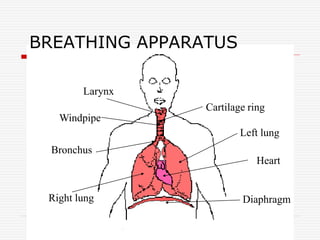
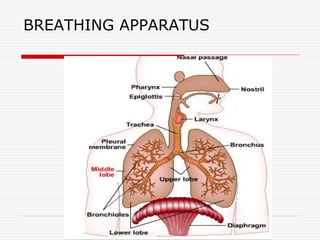
BREATHING APPARATUS
Larynx
Windpipe
Bronchus
Right lung Diaphragm
Heart
Left lung
Cartilage ring
BREATHING APPARATUS
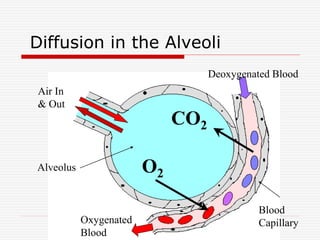
Diffusion in the Alveoli
O2
CO2
Air In
& Out
Alveolus
Oxygenated
Blood
Deoxygenated Blood
Blood
Capillary
Structure and Function of
Alveoli
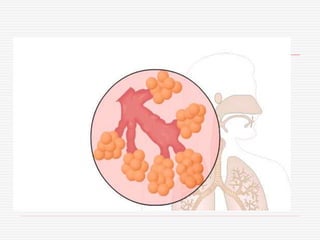
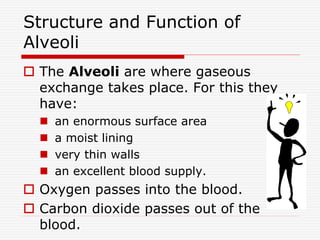
 The Alveoli are where gaseous
exchange takes place. For this they
have:
 an enormous surface area
 a moist lining
 very thin walls
 an excellent blood supply.
 Oxygen passes into the blood.
 Carbon dioxide passes out of the
blood.
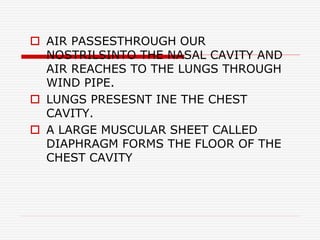
 AIR PASSESTHROUGH OUR
NOSTRILSINTO THE NASAL CAVITY AND
AIR REACHES TO THE LUNGS THROUGH
WIND PIPE.
 LUNGS PRESESNT INE THE CHEST
CAVITY.
 A LARGE MUSCULAR SHEET CALLED
DIAPHRAGM FORMS THE FLOOR OF THE
CHEST CAVITY
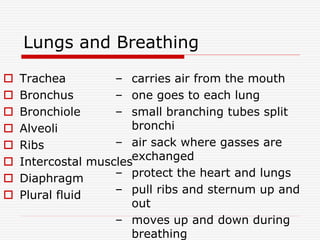
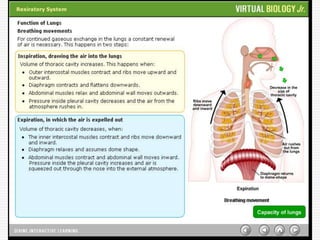
Lungs and Breathing
 Trachea
 Bronchus
 Bronchiole
 Alveoli
 Ribs
 Intercostal muscles
 Diaphragm
 Plural fluid
– carries air from the mouth
– one goes to each lung
– small branching tubes split
bronchi
– air sack where gasses are
exchanged
– protect the heart and lungs
– pull ribs and sternum up and
out
– moves up and down during
breathing
GO BIOLOGY JUNIOR
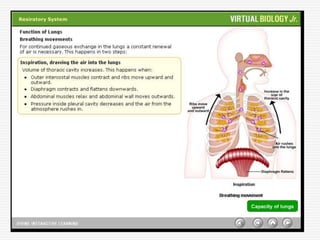
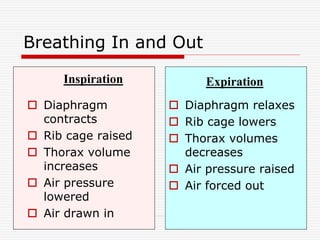
Breathing In and Out
 Diaphragm
contracts
 Rib cage raised
 Thorax volume
increases
 Air pressure
lowered
 Air drawn in
 Diaphragm relaxes
 Rib cage lowers
 Thorax volumes
decreases
 Air pressure raised
 Air forced out
Inspiration Expiration
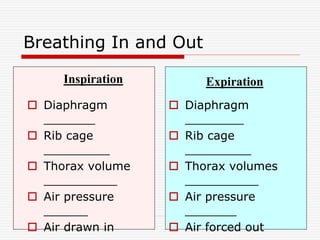
Breathing In and Out
 Diaphragm
_______
 Rib cage
_________
 Thorax volume
__________
 Air pressure
______
 Air drawn in
 Diaphragm
________
 Rib cage
_________
 Thorax volumes
__________
 Air pressure
_______
 Air forced out
Inspiration Expiration
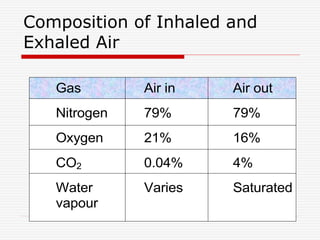
Composition of Inhaled and
Exhaled Air
Gas Air in Air out
Nitrogen 79% 79%
Oxygen 21% 16%
CO2 0.04% 4%
Water
vapour
Varies Saturated
 Tracheal Breathing
 Gills and Gas Exchange
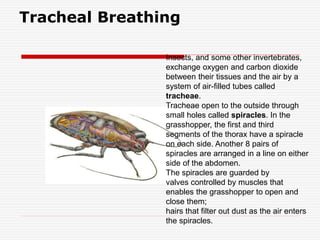
Tracheal Breathing
Insects, and some other invertebrates,
exchange oxygen and carbon dioxide
between their tissues and the air by a
system of air-filled tubes called
tracheae.
Tracheae open to the outside through
small holes called spiracles. In the
grasshopper, the first and third
segments of the thorax have a spiracle
on each side. Another 8 pairs of
spiracles are arranged in a line on either
side of the abdomen.
The spiracles are guarded by
valves controlled by muscles that
enables the grasshopper to open and
close them;
hairs that filter out dust as the air enters
the spiracles.
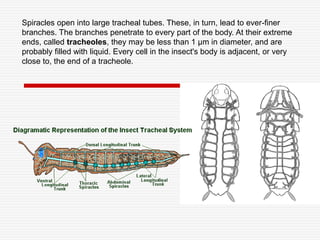
Spiracles open into large tracheal tubes. These, in turn, lead to ever-finer
branches. The branches penetrate to every part of the body. At their extreme
ends, called tracheoles, they may be less than 1 µm in diameter, and are
probably filled with liquid. Every cell in the insect's body is adjacent, or very
close to, the end of a tracheole.
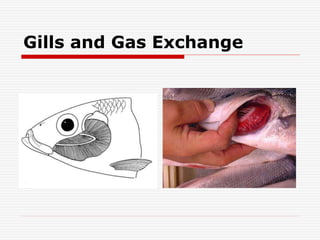
Gills and Gas Exchange
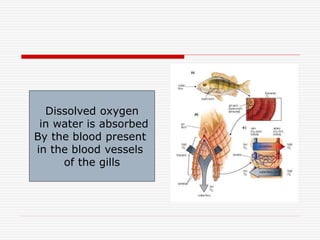
Dissolved oxygen
in water is absorbed
By the blood present
in the blood vessels
of the gills
EVALUATION
 WHAT IS BREATHING
 WHAT IS INHALATION
 WHAT IS EXHALATION
Respiration and breathing nitin

Respiration and breathing nitin

  • 1.
  • 2.
  • 3.
    BREATHING  BREATHING MEANSTAKING IN AIR RICH IN OXYGEN AND GIVING OUT AIR RICH IN CARBONDIOXIDE.
  • 4.
    INHALATION  TAKING INOF AIR RICH IN OXYGEN INTO THE BODYIS CALLED AS INHALATION.
  • 5.
    EXHALATION  GIVING OUTOF AIR RICH IN CARBONDIOXIDE IS KNOWN AS EXHALATION
  • 6.
    BREATHING RATE  THENUMBER OF TIMES A PERSON BREATHS IN A MINUTE IS TERMED AS BREATHING RATE.
  • 7.
    BREATHING APPARATUS Larynx Windpipe Bronchus Right lungDiaphragm Heart Left lung Cartilage ring
  • 8.
  • 10.
    Diffusion in theAlveoli O2 CO2 Air In & Out Alveolus Oxygenated Blood Deoxygenated Blood Blood Capillary
  • 11.
    Structure and Functionof Alveoli  The Alveoli are where gaseous exchange takes place. For this they have:  an enormous surface area  a moist lining  very thin walls  an excellent blood supply.  Oxygen passes into the blood.  Carbon dioxide passes out of the blood.
  • 12.
     AIR PASSESTHROUGHOUR NOSTRILSINTO THE NASAL CAVITY AND AIR REACHES TO THE LUNGS THROUGH WIND PIPE.  LUNGS PRESESNT INE THE CHEST CAVITY.  A LARGE MUSCULAR SHEET CALLED DIAPHRAGM FORMS THE FLOOR OF THE CHEST CAVITY
  • 13.
    Lungs and Breathing Trachea  Bronchus  Bronchiole  Alveoli  Ribs  Intercostal muscles  Diaphragm  Plural fluid – carries air from the mouth – one goes to each lung – small branching tubes split bronchi – air sack where gasses are exchanged – protect the heart and lungs – pull ribs and sternum up and out – moves up and down during breathing
  • 14.
  • 17.
    Breathing In andOut  Diaphragm contracts  Rib cage raised  Thorax volume increases  Air pressure lowered  Air drawn in  Diaphragm relaxes  Rib cage lowers  Thorax volumes decreases  Air pressure raised  Air forced out Inspiration Expiration
  • 18.
    Breathing In andOut  Diaphragm _______  Rib cage _________  Thorax volume __________  Air pressure ______  Air drawn in  Diaphragm ________  Rib cage _________  Thorax volumes __________  Air pressure _______  Air forced out Inspiration Expiration
  • 19.
    Composition of Inhaledand Exhaled Air Gas Air in Air out Nitrogen 79% 79% Oxygen 21% 16% CO2 0.04% 4% Water vapour Varies Saturated
  • 20.
     Tracheal Breathing Gills and Gas Exchange
  • 21.
    Tracheal Breathing Insects, andsome other invertebrates, exchange oxygen and carbon dioxide between their tissues and the air by a system of air-filled tubes called tracheae. Tracheae open to the outside through small holes called spiracles. In the grasshopper, the first and third segments of the thorax have a spiracle on each side. Another 8 pairs of spiracles are arranged in a line on either side of the abdomen. The spiracles are guarded by valves controlled by muscles that enables the grasshopper to open and close them; hairs that filter out dust as the air enters the spiracles.
  • 22.
    Spiracles open intolarge tracheal tubes. These, in turn, lead to ever-finer branches. The branches penetrate to every part of the body. At their extreme ends, called tracheoles, they may be less than 1 µm in diameter, and are probably filled with liquid. Every cell in the insect's body is adjacent, or very close to, the end of a tracheole.
  • 23.
    Gills and GasExchange
  • 24.
    Dissolved oxygen in wateris absorbed By the blood present in the blood vessels of the gills
  • 25.
    EVALUATION  WHAT ISBREATHING  WHAT IS INHALATION  WHAT IS EXHALATION