Irreversible Cell injury
      (Cell Death)
CELLS REACT TO INJURIOUS
            STIMULI

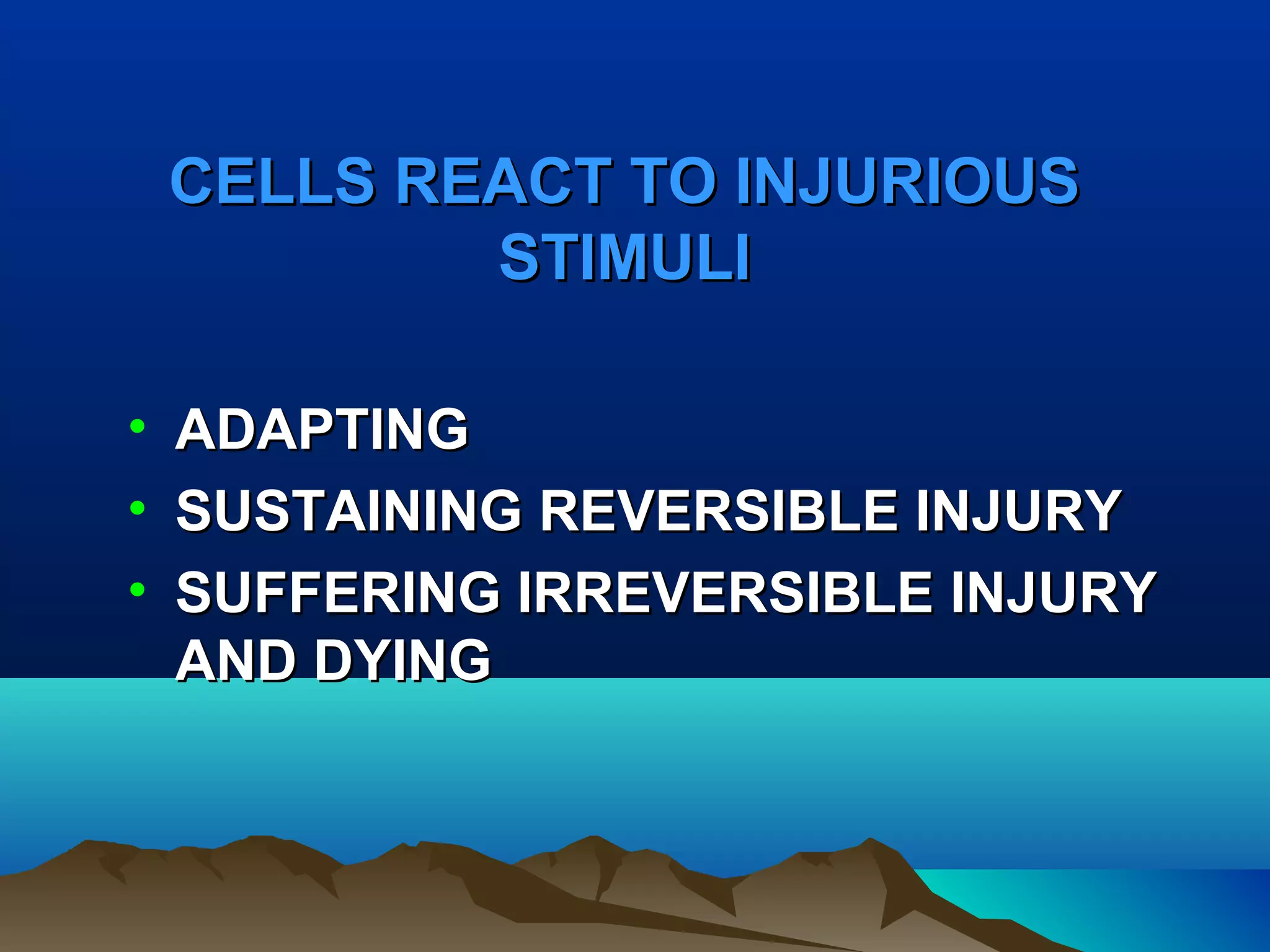
•   ADAPTING
•   SUSTAINING REVERSIBLE INJURY
•   SUFFERING IRREVERSIBLE INJURY
    AND DYING
TYPES OF CELL DEATH
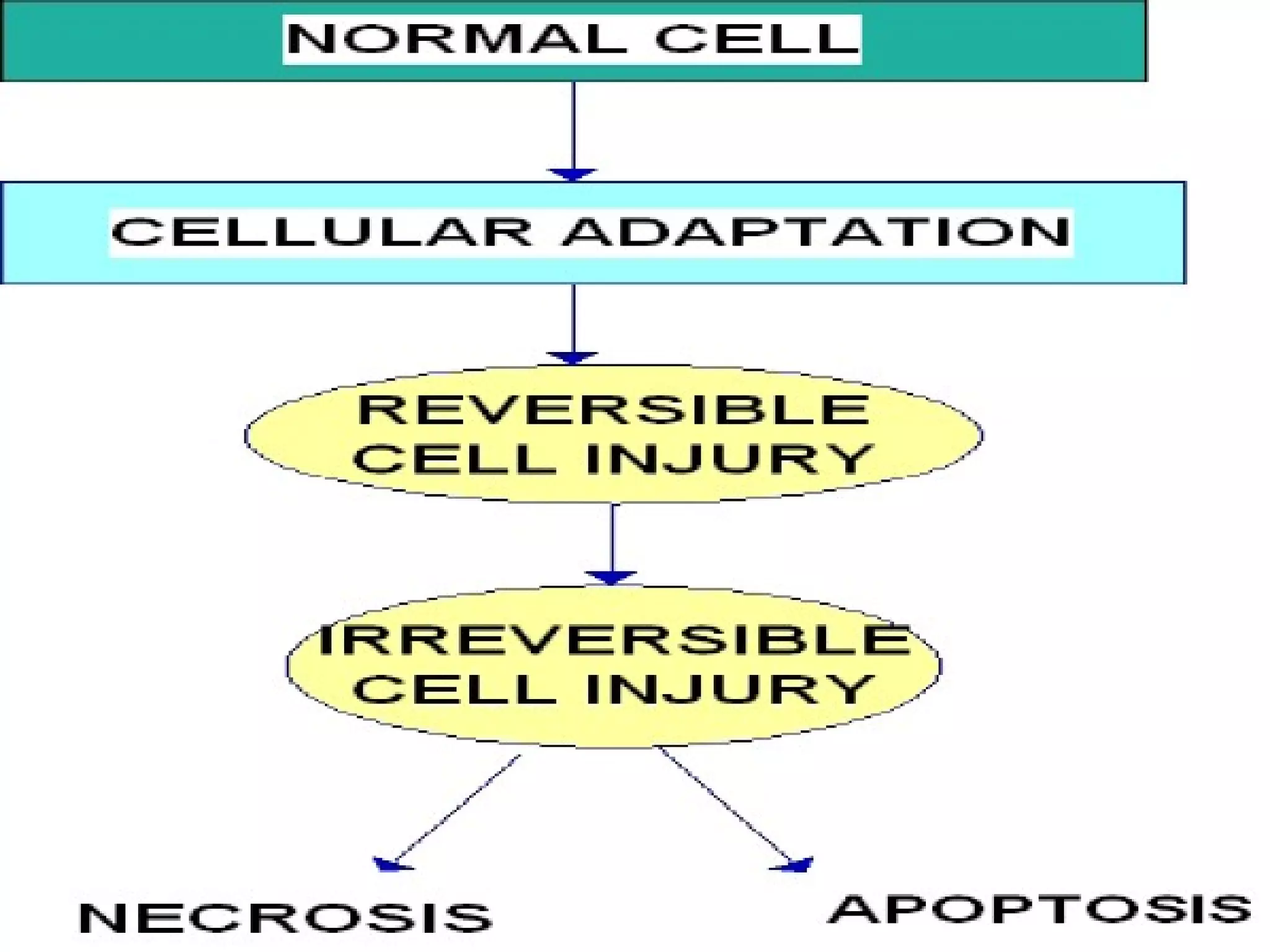
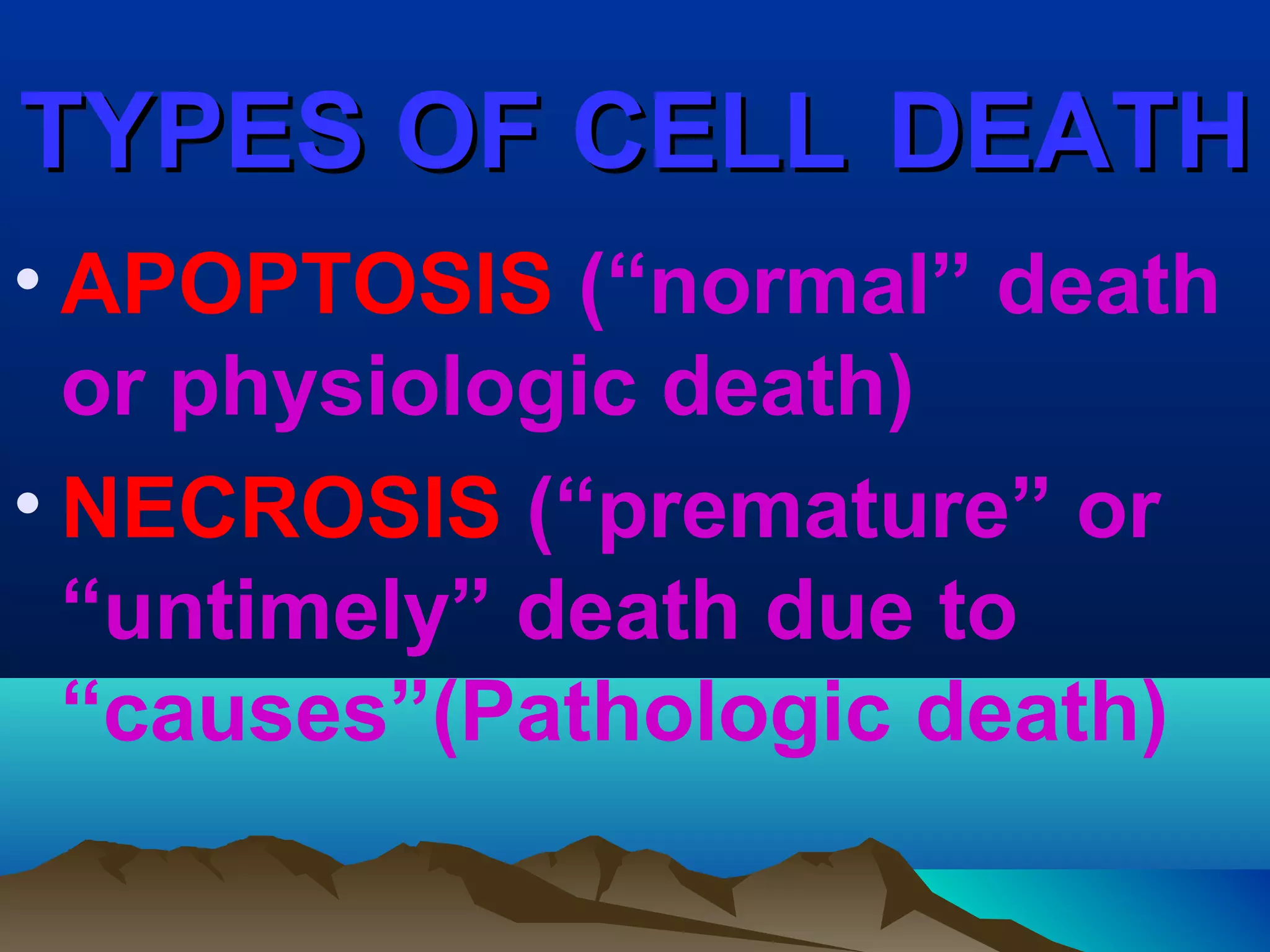
• APOPTOSIS (“normal” death
  or physiologic death)
• NECROSIS (“premature” or
  “untimely” death due to
  “causes”(Pathologic death)
NECROSIS
• It refers to a series of morphologic changes that
  follow cell death in living tissues

• OR is the gross and light-microscopic
  appearances that indicate cell death.
• The surrounding living tissue almost
   always show inflammatory reaction
    • The necrotic cell undergo lysis
 • Autolysis is the dead cell being self-
digested by its lysosomal enzymes, while
 heterolysis is the cell being digested by
       the body's living white cells.
Morphology of Necrotic Cells
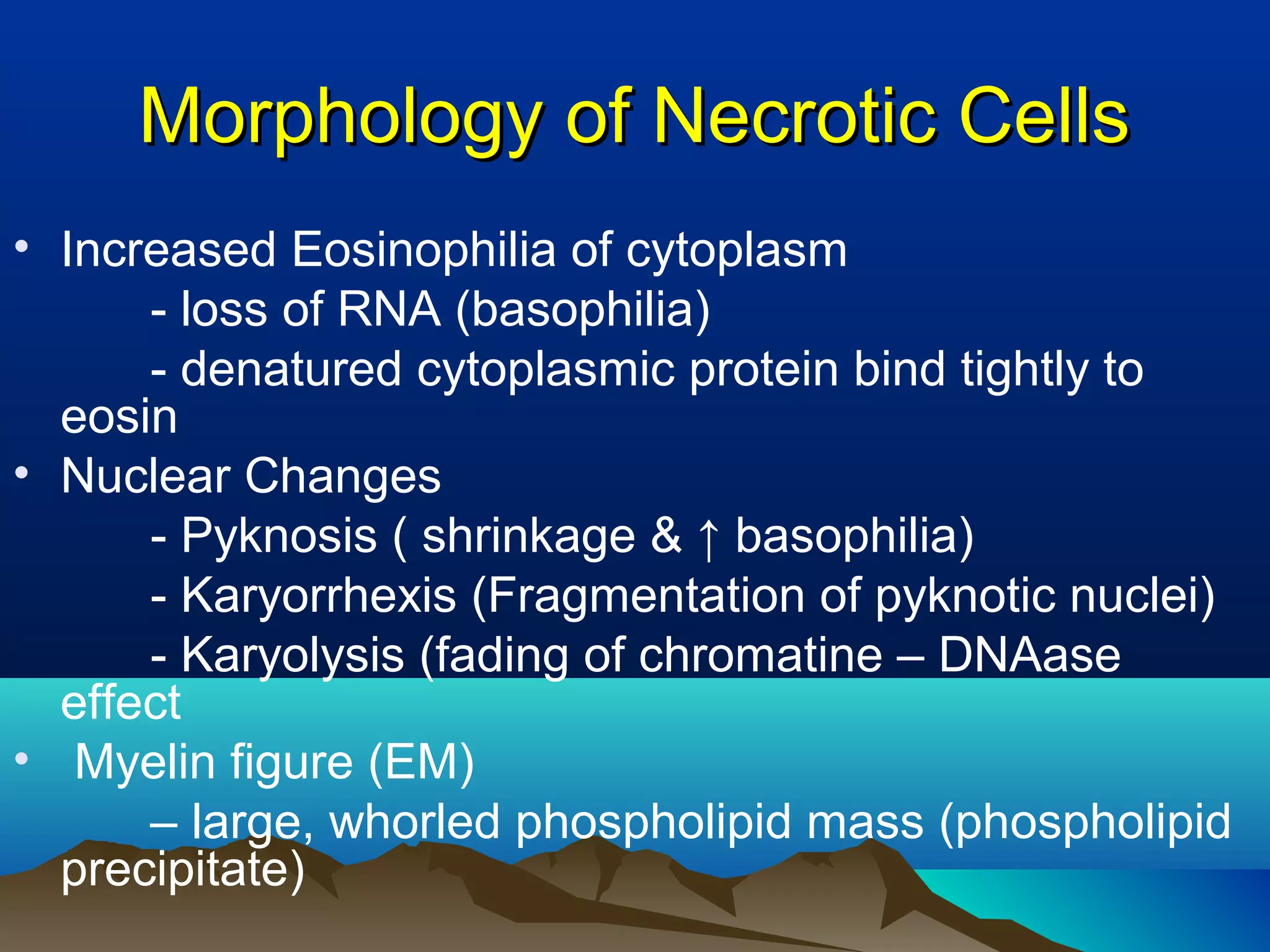
• Increased Eosinophilia of cytoplasm
      - loss of RNA (basophilia)
      - denatured cytoplasmic protein bind tightly to
  eosin
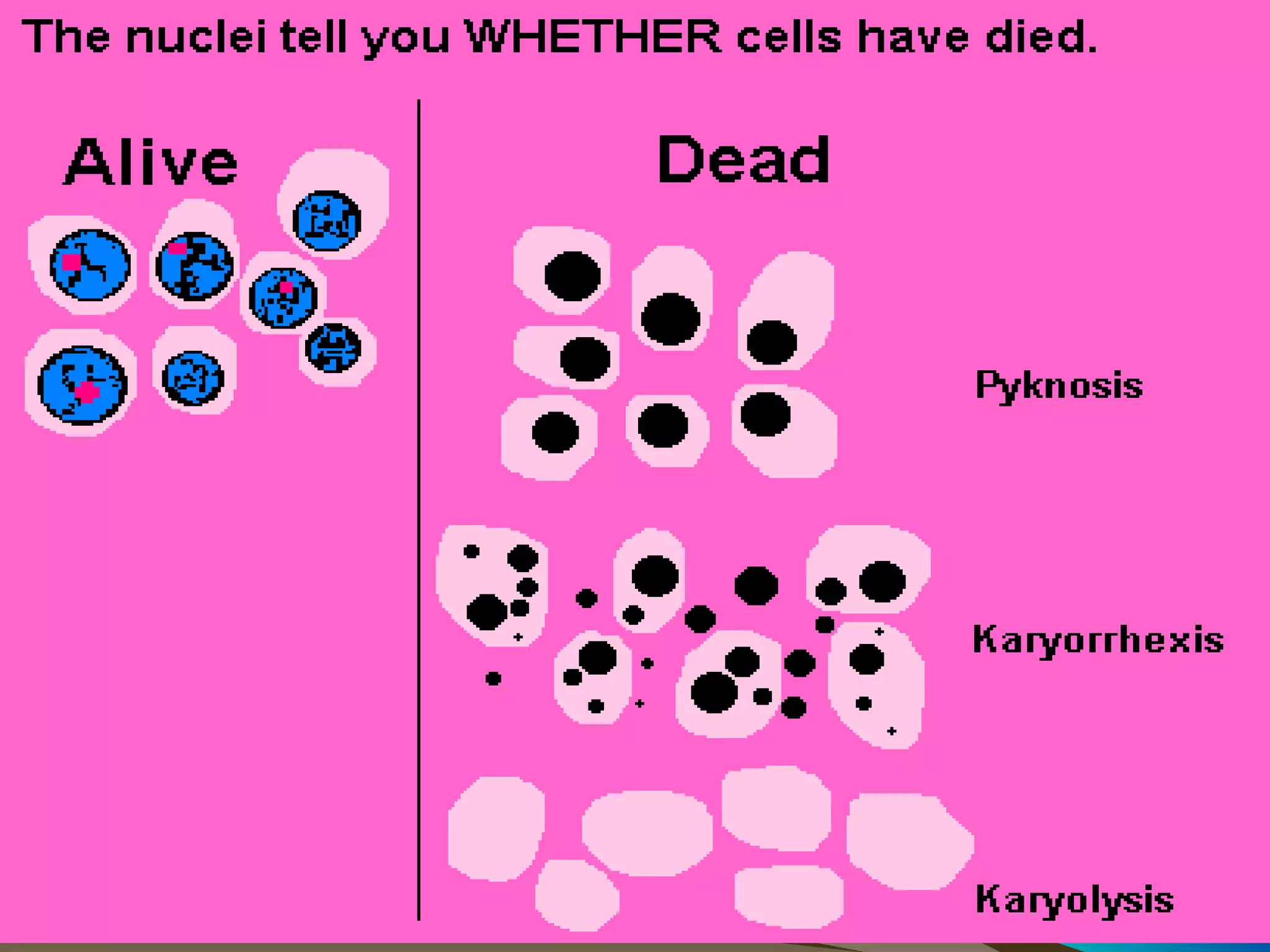
• Nuclear Changes
      - Pyknosis ( shrinkage & ↑ basophilia)
      - Karyorrhexis (Fragmentation of pyknotic nuclei)
      - Karyolysis (fading of chromatine – DNAase
  effect
• Myelin figure (EM)
      – large, whorled phospholipid mass (phospholipid
  precipitate)
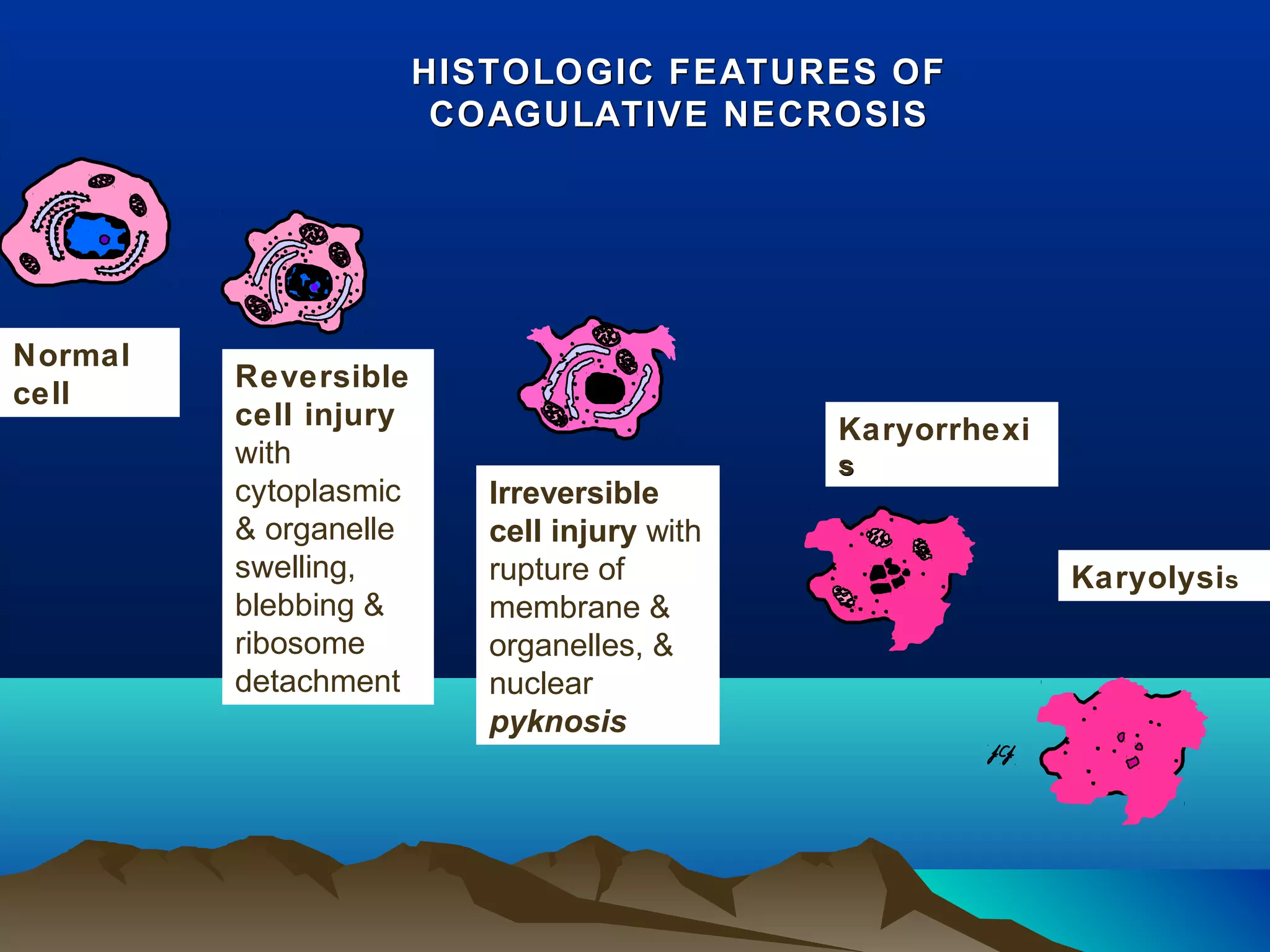
HISTOLOGIC FEATURES OF
                        COAGULATIVE NECROSIS


Normal
         Reversible
cell
         cell injury                         Karyorrhexi
         with                                s
         cytoplasmic      Irreversible
         & organelle      cell injury with
         swelling,        rupture of                       Karyolysis
         blebbing &       membrane &
         ribosome         organelles, &
         detachment       nuclear
                          pyknosis
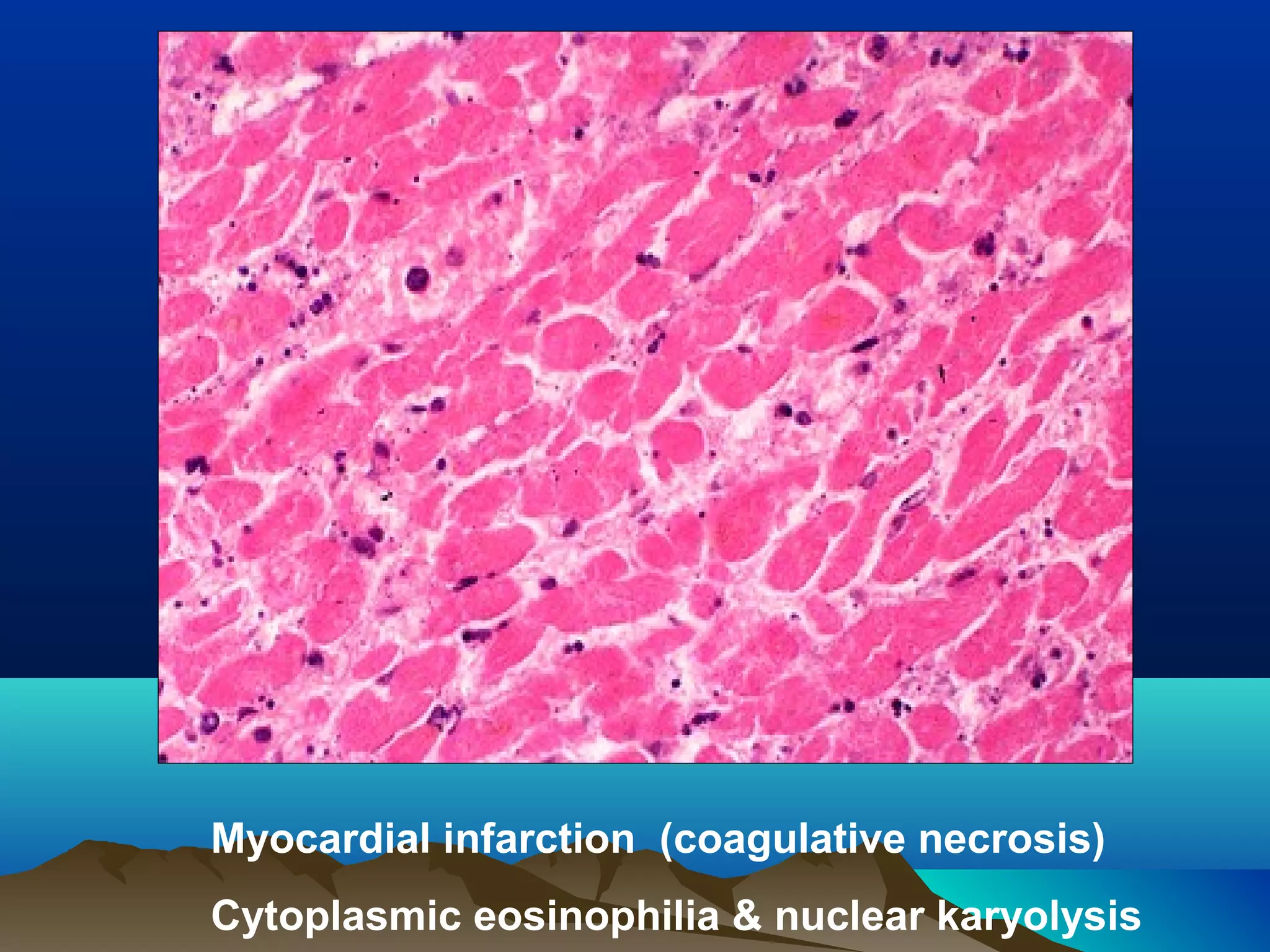
Myocardial infarction (coagulative necrosis)
Cytoplasmic eosinophilia & nuclear karyolysis
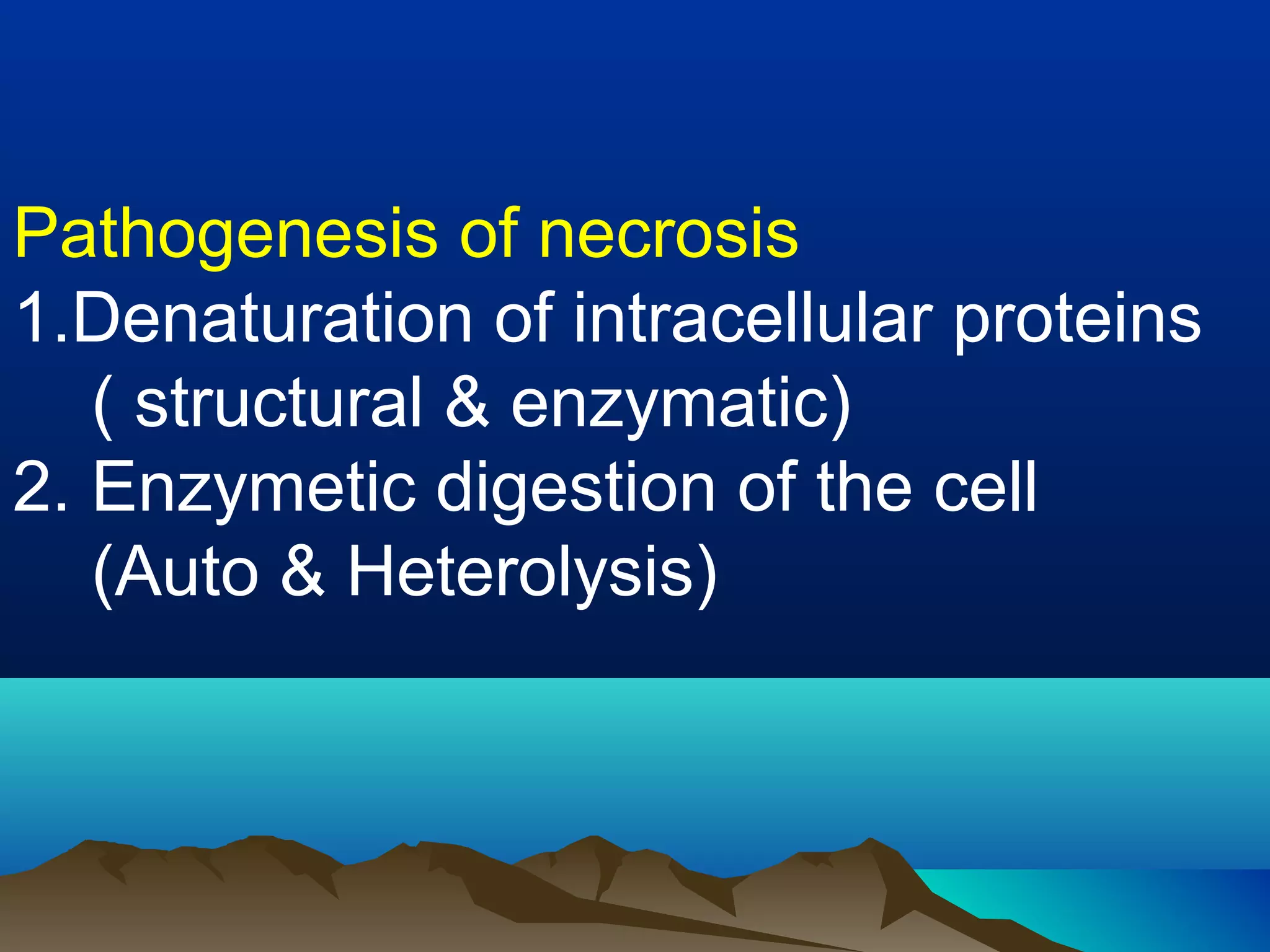
Pathogenesis of necrosis
1.Denaturation of intracellular proteins
   ( structural & enzymatic)
2. Enzymetic digestion of the cell
   (Auto & Heterolysis)
Morphologic Pattern of Necrotic
         Cell mass
   TYPES OF NECROSIS
 •   COAGULATIVE NECROSIS
 •   LIQUEFACTIVE NECROSIS
 •   CASEOUS NECROSIS
 •   FAT NECROSIS
 •   FIBRINOID NECROSIS
 •   GANGRENE
COAGULATIVE NECROSIS
• Death of groups of cells with preservation of
  general tissue architecture-tombstone
  appearance for at least a few days.
• Affected tissue is firm due to denaturation of
  structural & enzymatic proteins(intracellular
  acidosis)
• – Example . Ischemic injury of heart,
  kidney, ,spleen.
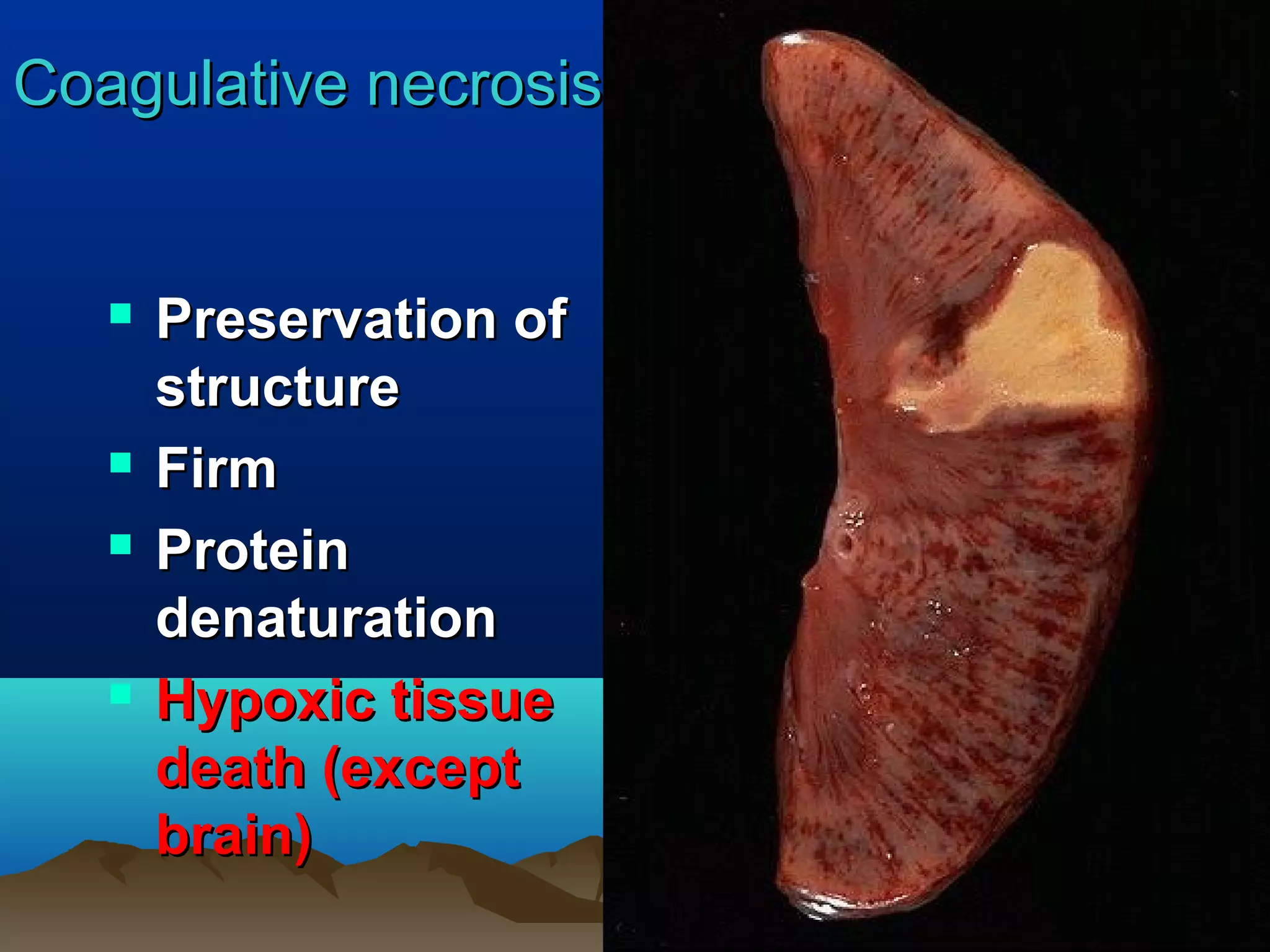
Coagulative necrosis


      Preservation of
       structure
      Firm
      Protein
       denaturation
      Hypoxic tissue
       death (except
       brain)
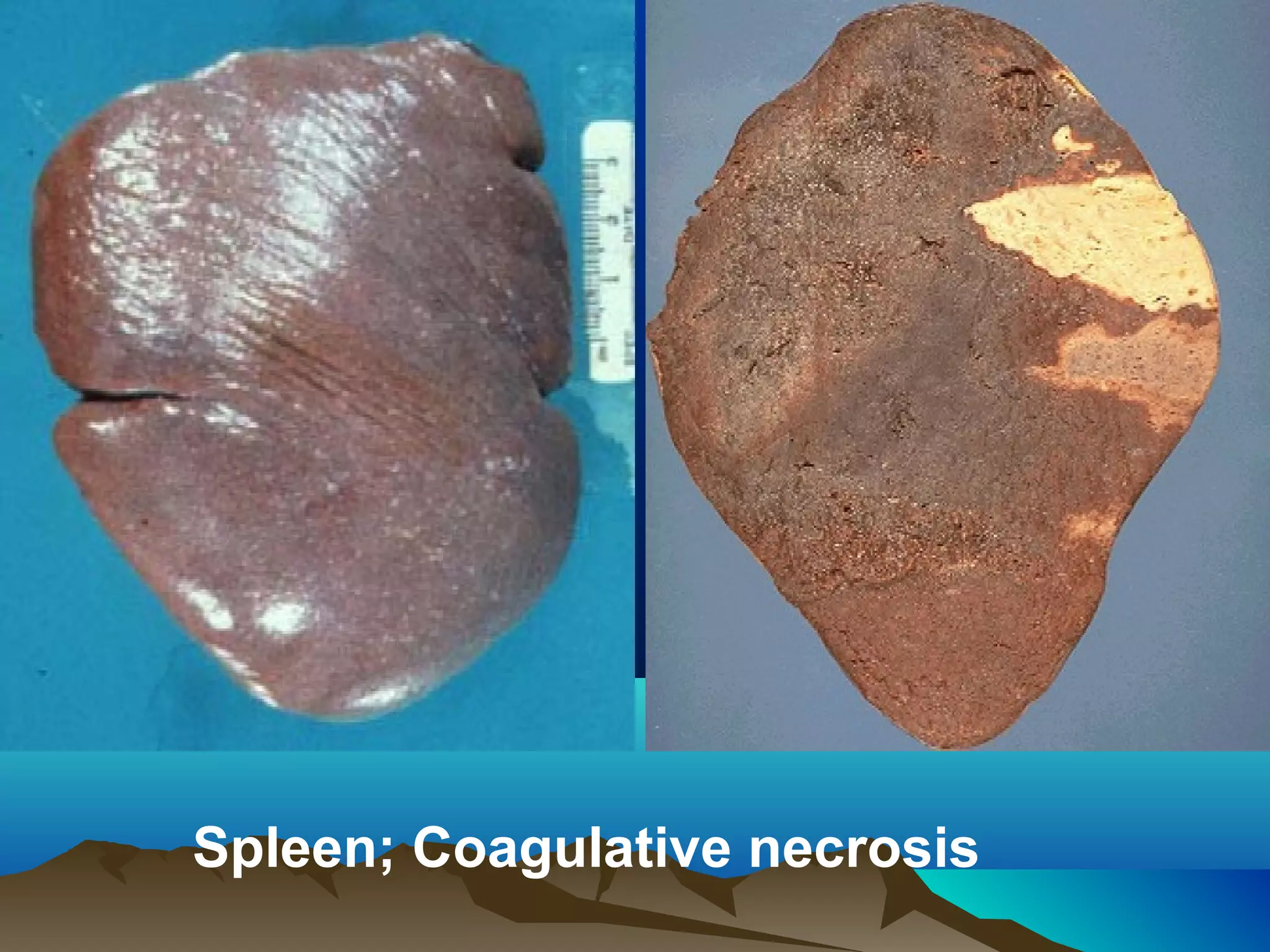
Spleen; Coagulative necrosis
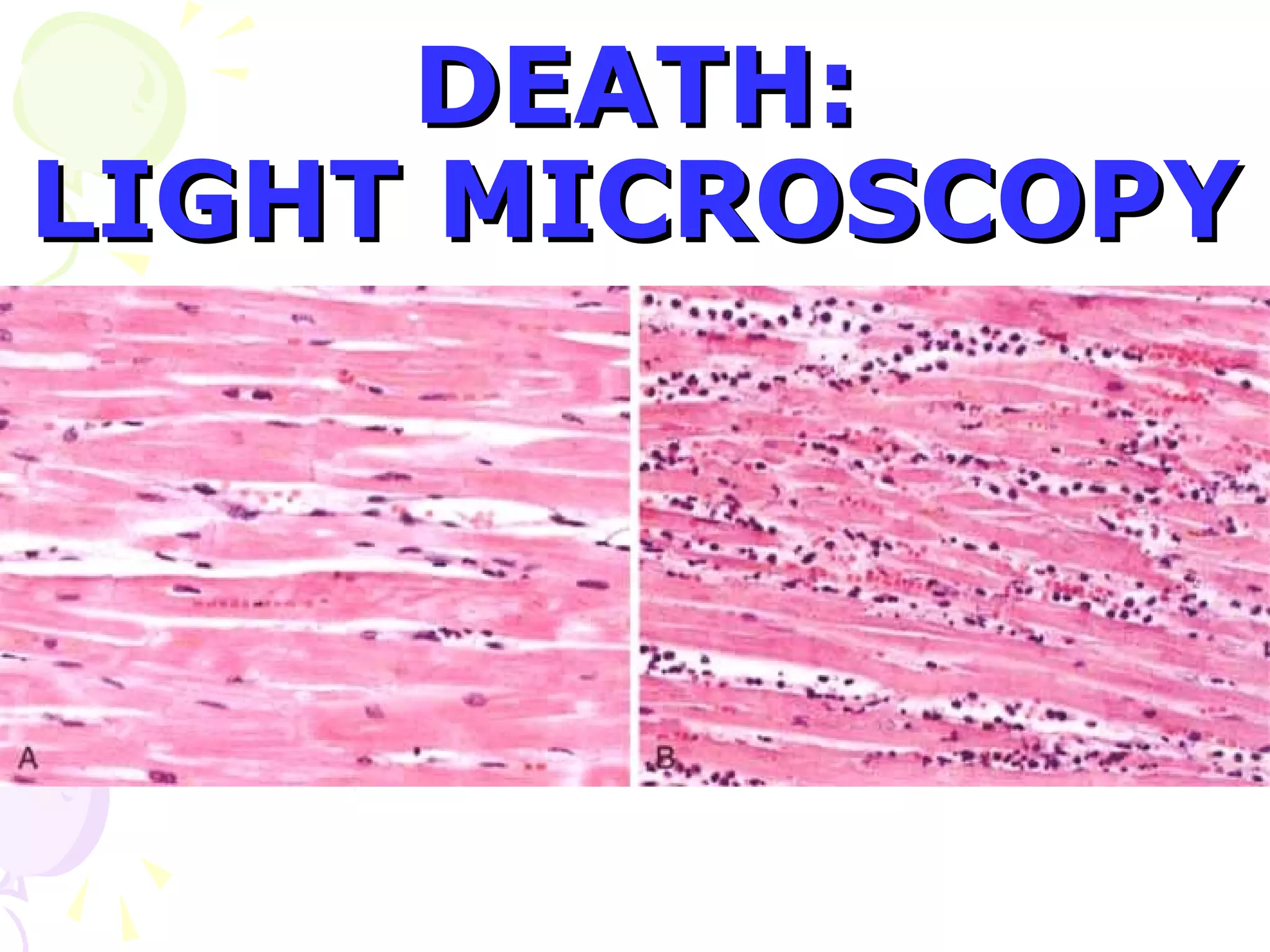
• The microscopy is distinctive. After loss of their
  nuclei, the cytoplasm of the cells remains intact for
  days. The "tombstones" reveal the structure of the
  living tissue. If the patient lives, the edges of the
  necrotic area become inflamed, and eventually the
  dead cells will be removed by white blood cells
• RULE: Unless otherwise specified in this section,
  the death of a group of cells will result in
  coagulation necrosis
• (Ischemic necrosis=Infarction)
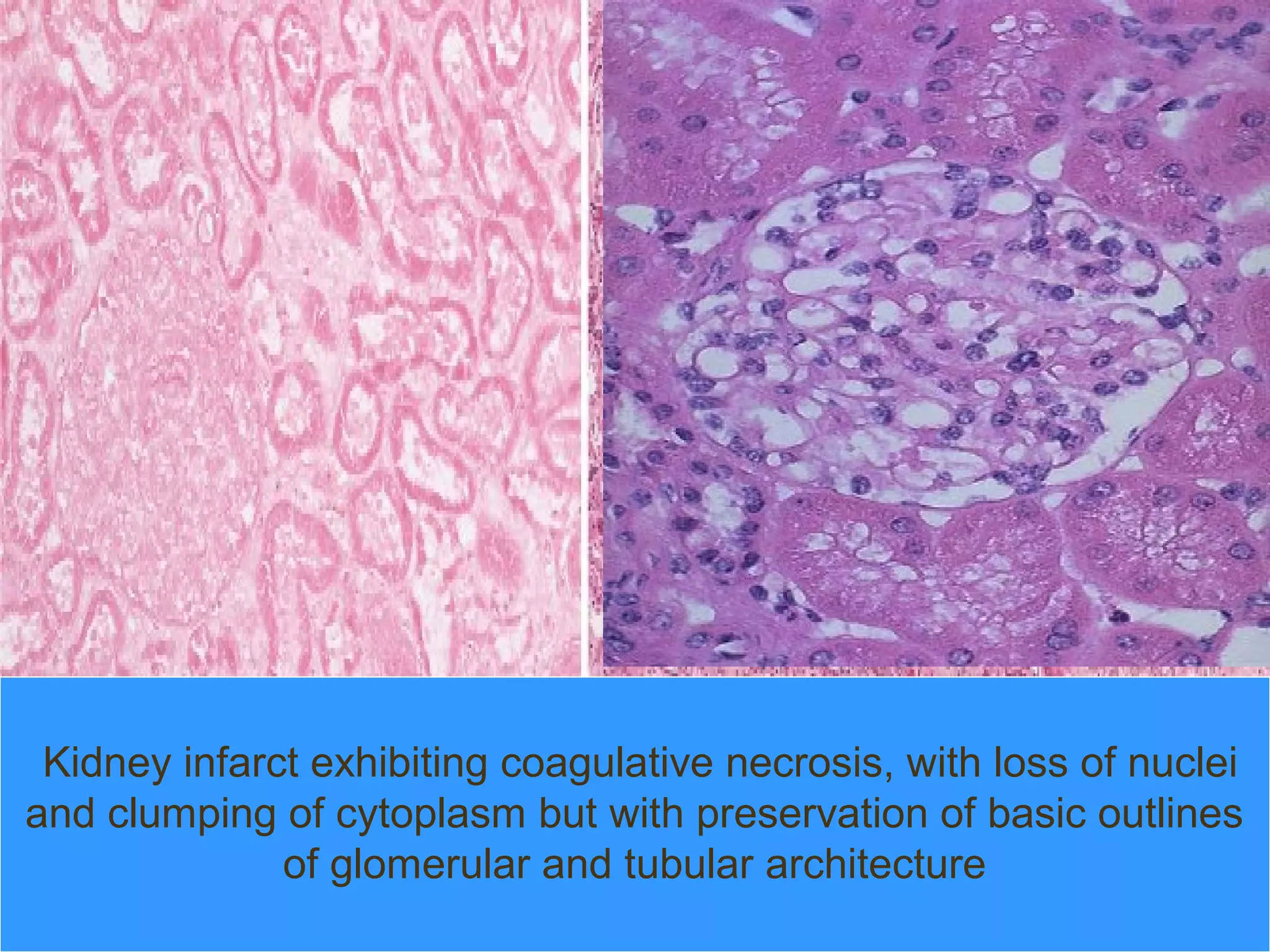
Kidney infarct exhibiting coagulative necrosis, with loss of nuclei
and clumping of cytoplasm but with preservation of basic outlines
              of glomerular and tubular architecture
DEATH:
LIGHT MICROSCOPY
Morphologic pattern of Necrotic
             Cell mass
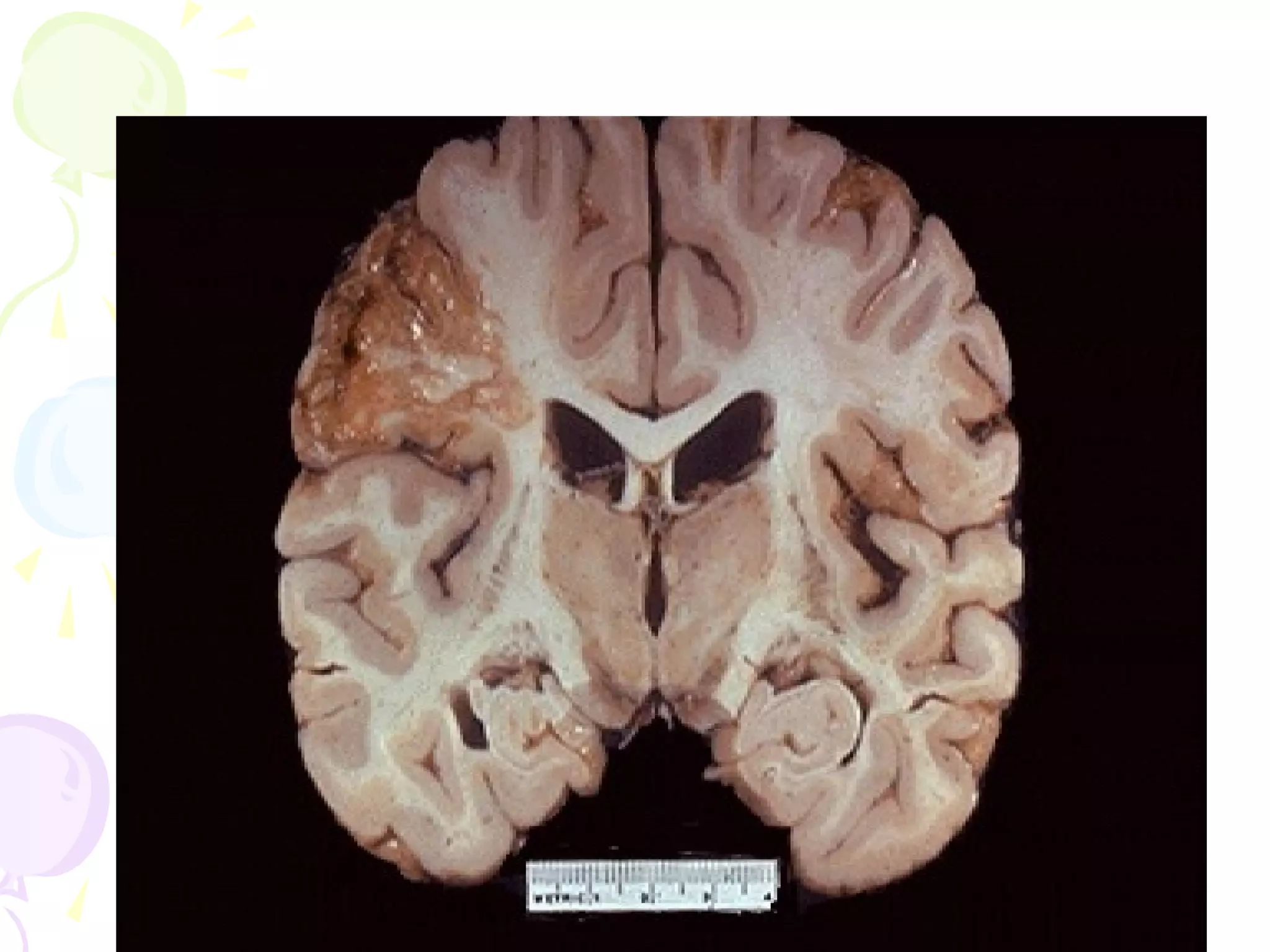
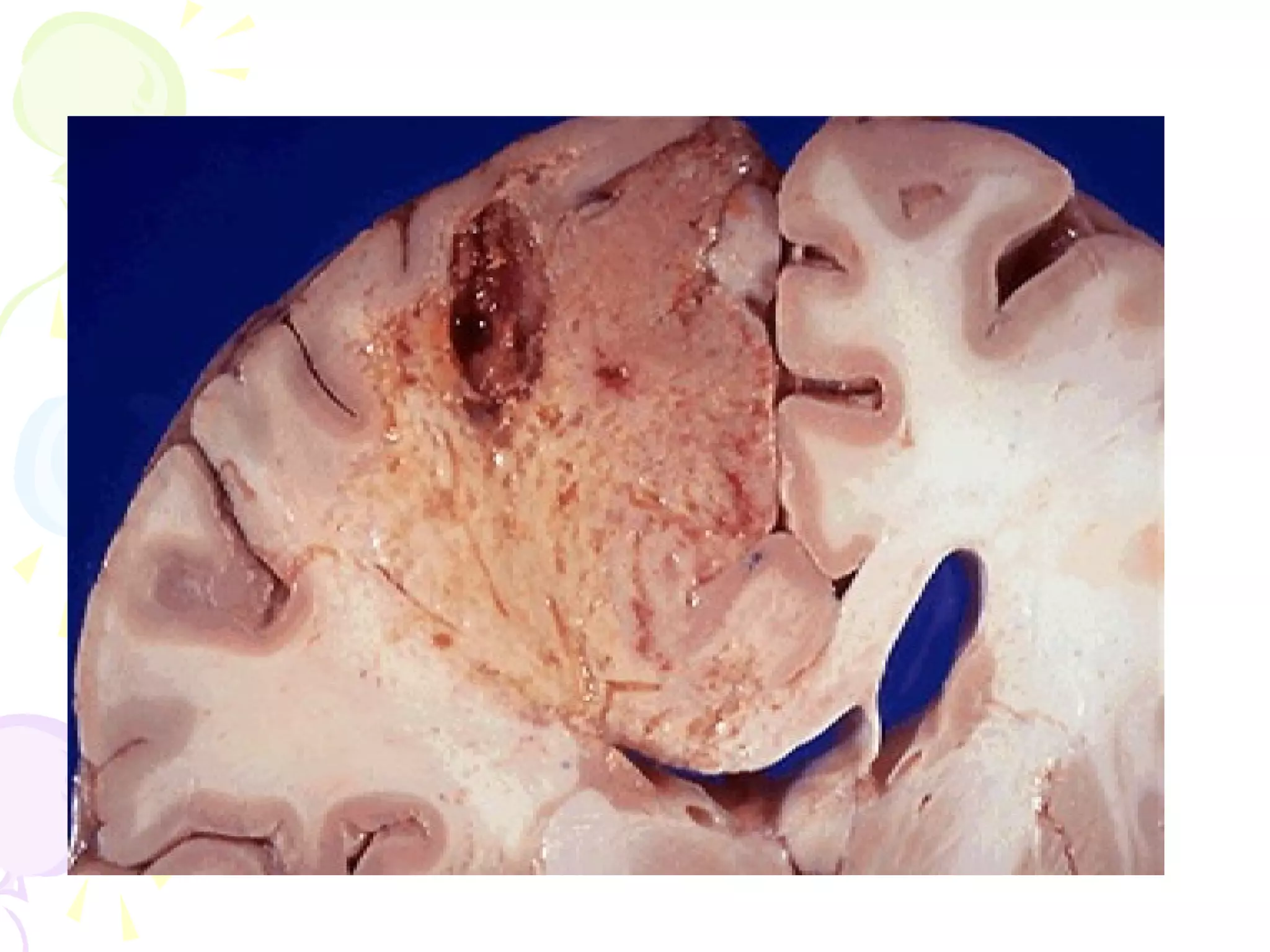
• Liquefactive Necrosis
   - focal bacterial (or fungal) infections
        – accumulation of inflammatory
           cells
   - hypoxic death of cells within CNS
LIQUEFACTIVE NECROSIS
• (* "colliquative necrosis" in Europe): When
  the cells die, they are rapidly destroyed by
  lysosomal enzymes, either their own or
  those from neutrophilic leukocytes
• The tissue becomes liquid viscous mass
• Material is creamy yellow in color
• Seen in ischemia of brain, abscess
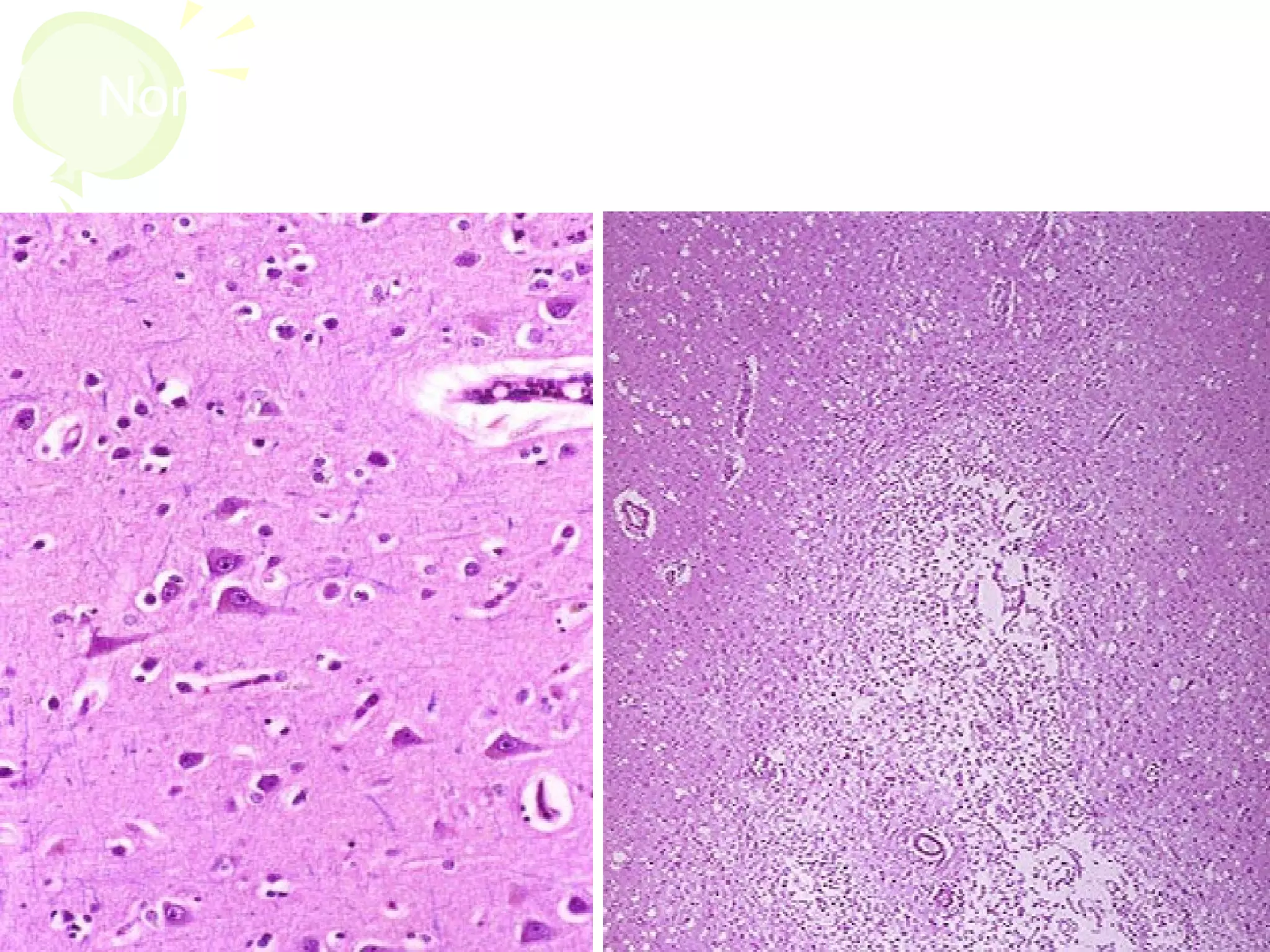
Normal brain   Liquefactive necrosis
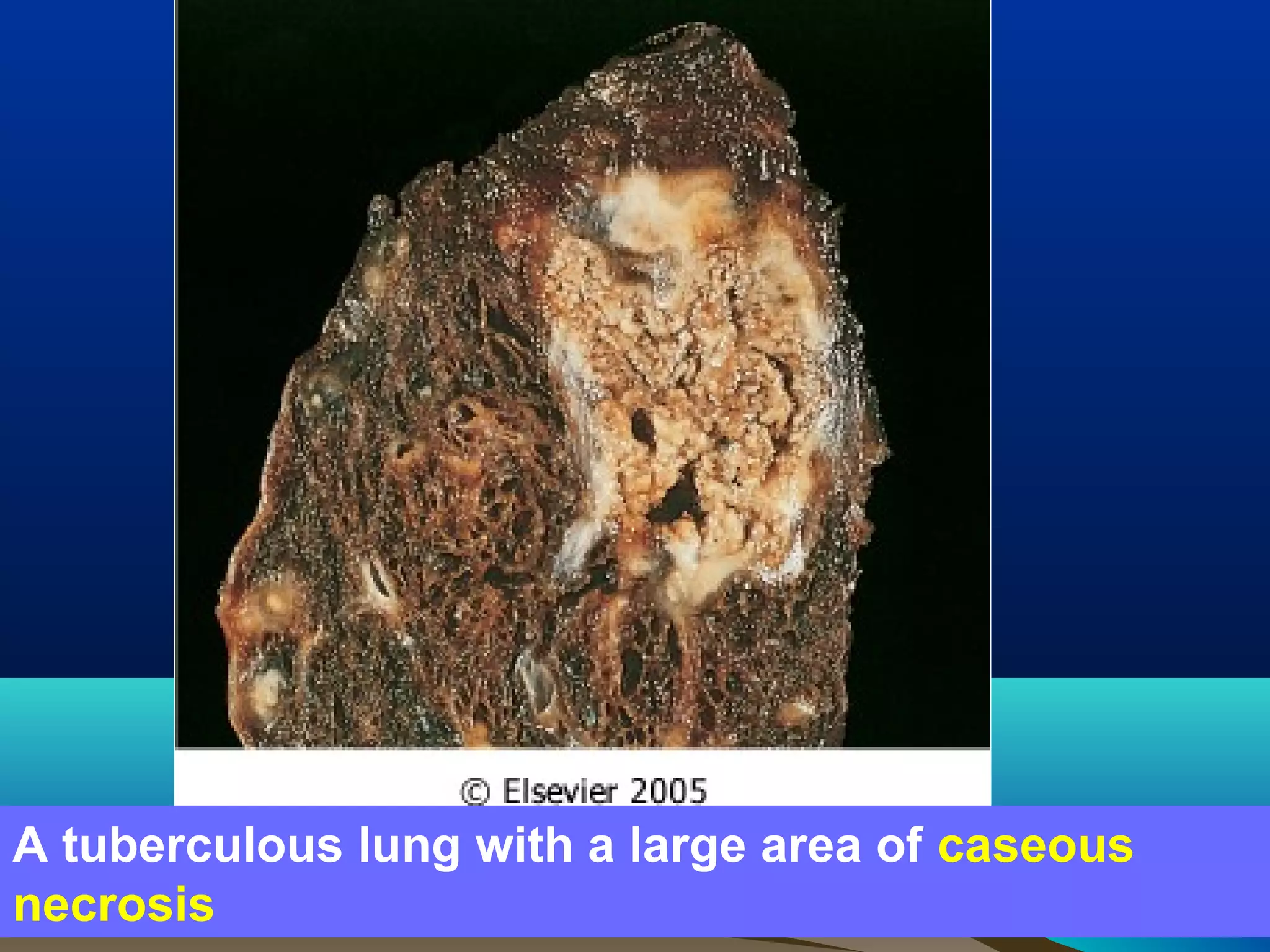
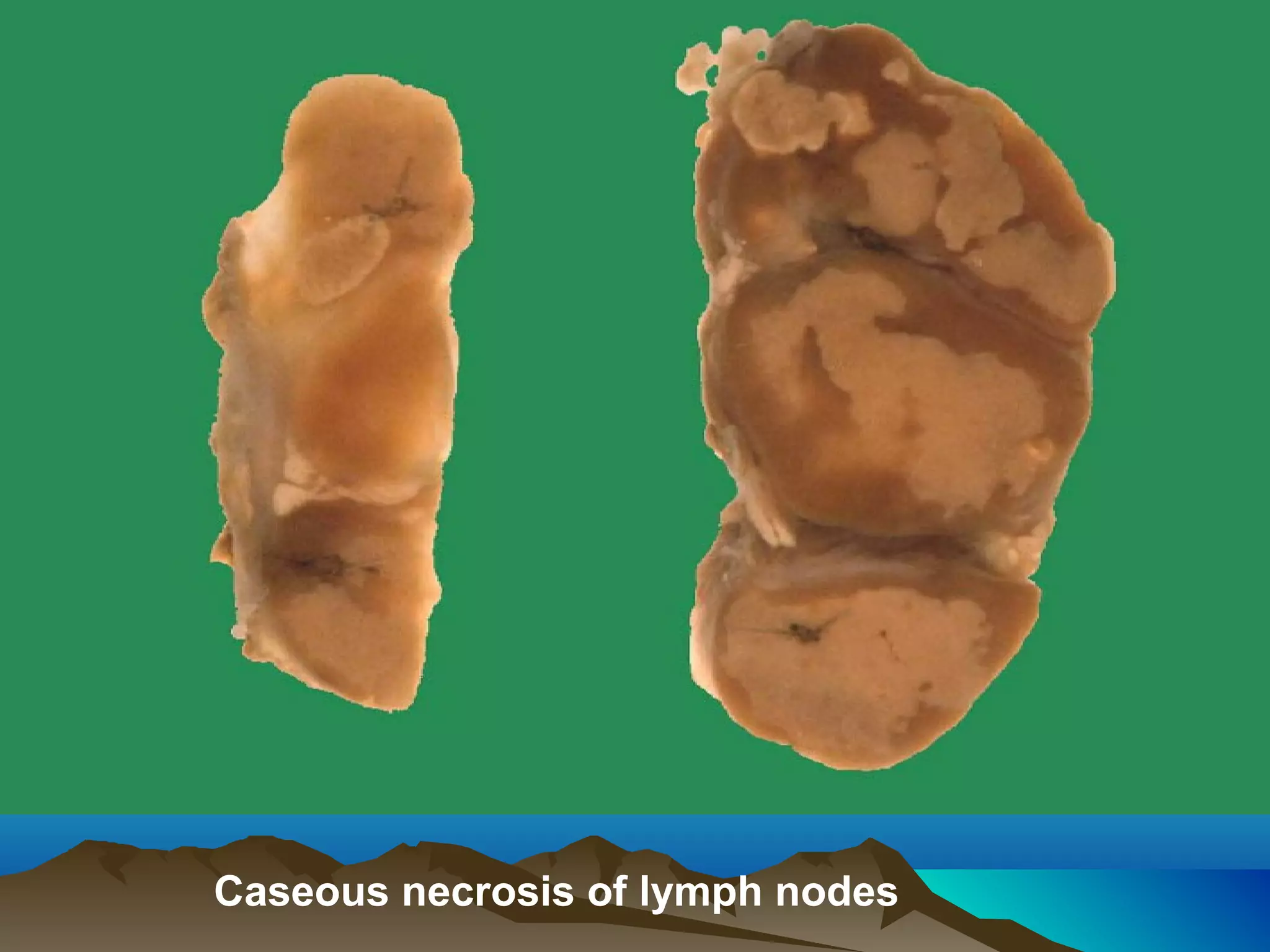
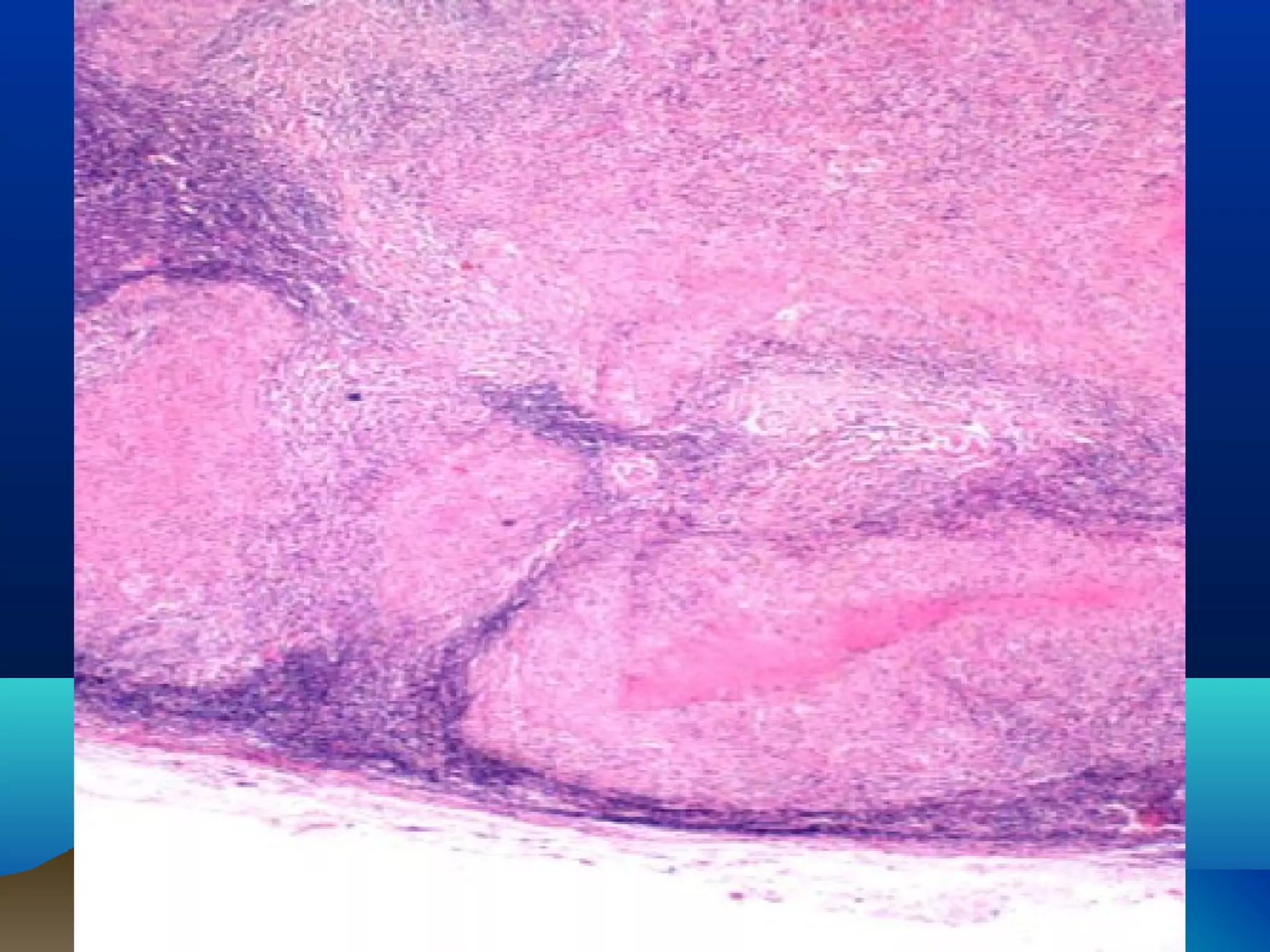
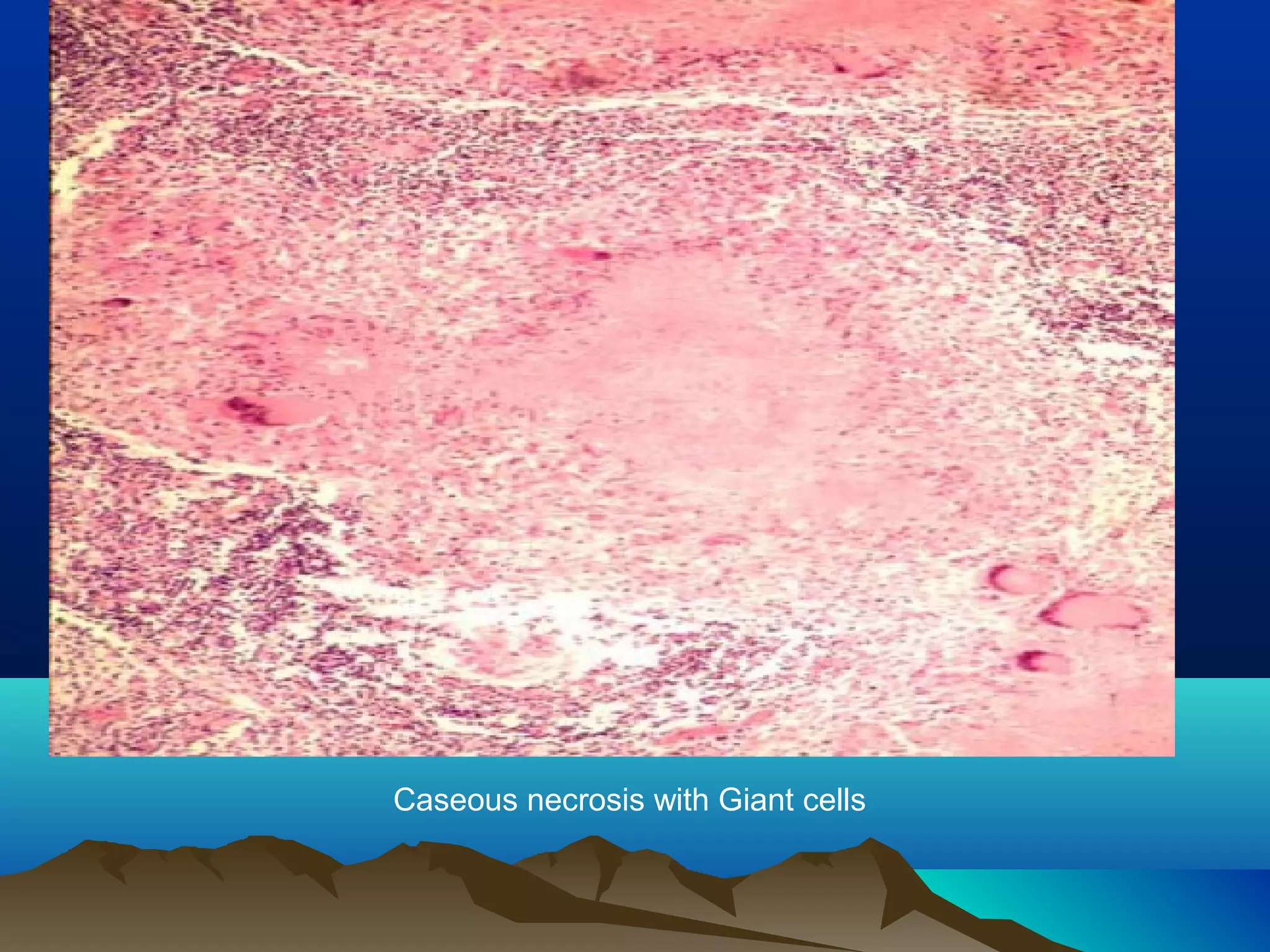
CASEOUS NECROSIS
*Type of coagulative necrosis
*Tissue is cheesy white in appearance
*All the cells in the area die & surrounded by
  inflammatory cells (granulomatous
  inflammation).
*The tissue architecture is completely
  distructed & turn into friable tissue.
*Seen in tuberculous infections &certain
  fungal infections (as Histoplasmosis)
A tuberculous lung with a large area of caseous
necrosis
Caseous necrosis of lymph nodes
Caseous necrosis with Giant cells
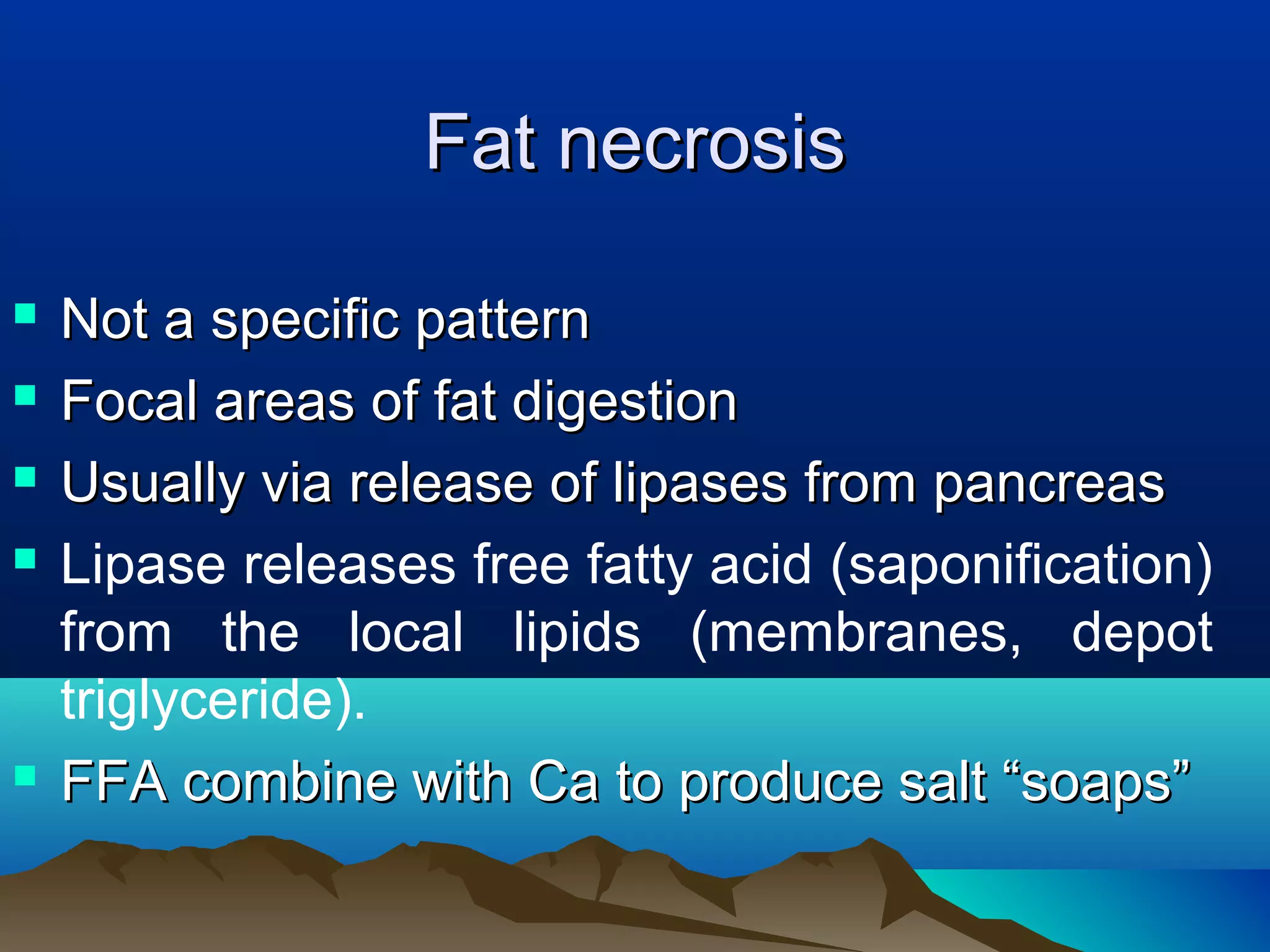
Fat necrosis

   Not a specific pattern
   Focal areas of fat digestion
   Usually via release of lipases from pancreas
   Lipase releases free fatty acid (saponification)
    from the local lipids (membranes, depot
    triglyceride).
   FFA combine with Ca to produce salt “soaps”
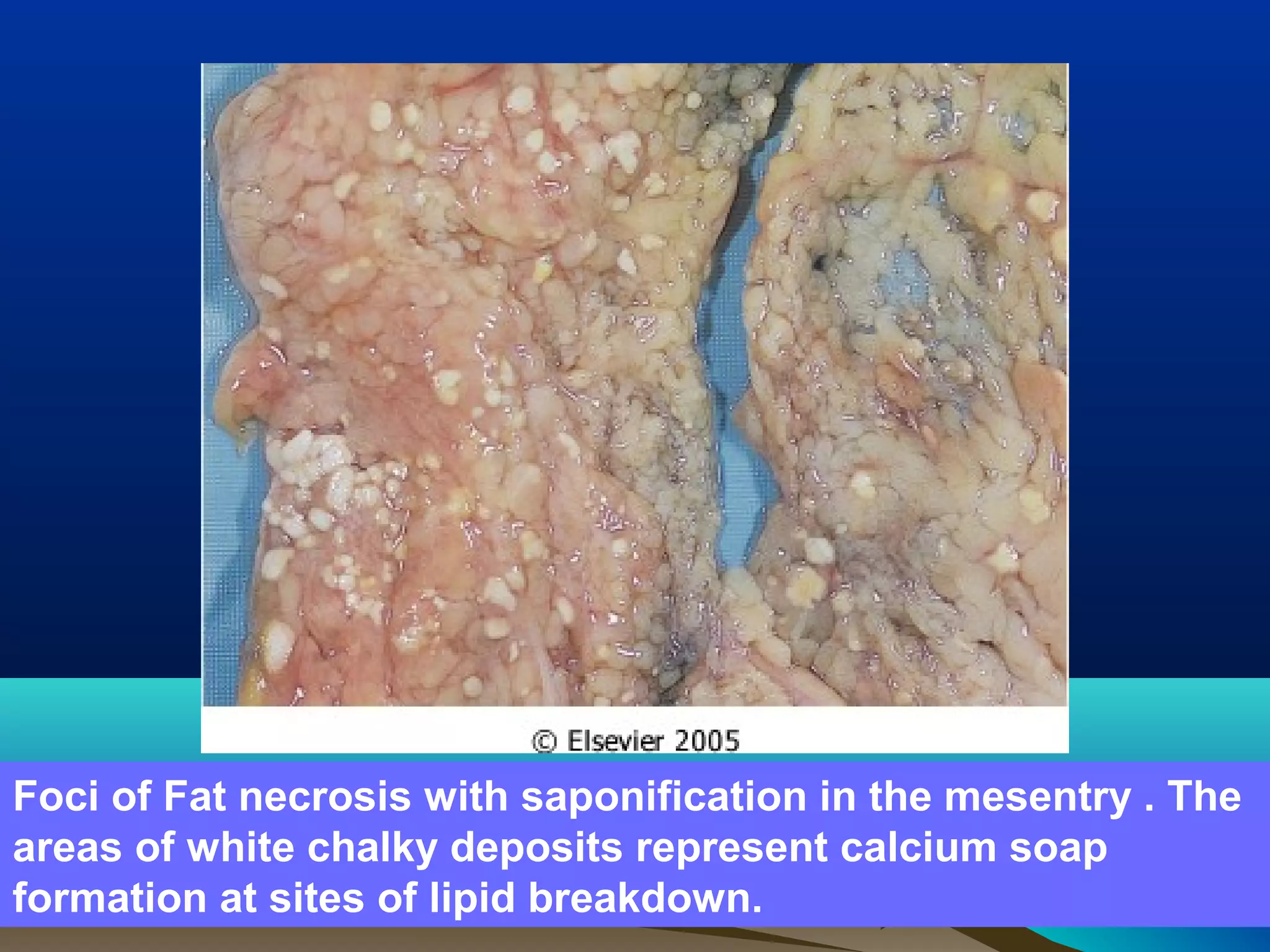
Foci of Fat necrosis with saponification in the mesentry . The
areas of white chalky deposits represent calcium soap
formation at sites of lipid breakdown.
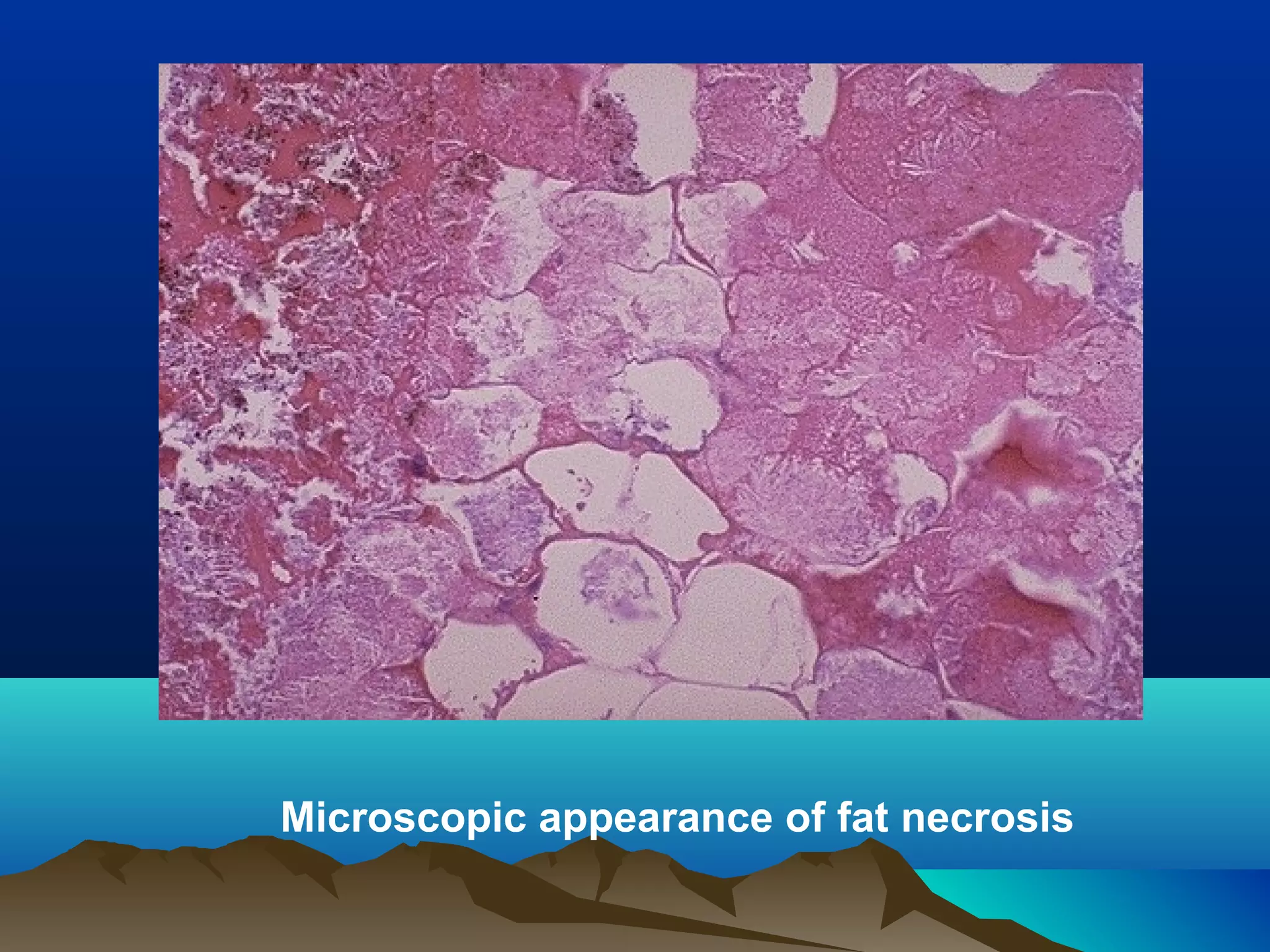
Microscopic appearance of fat necrosis
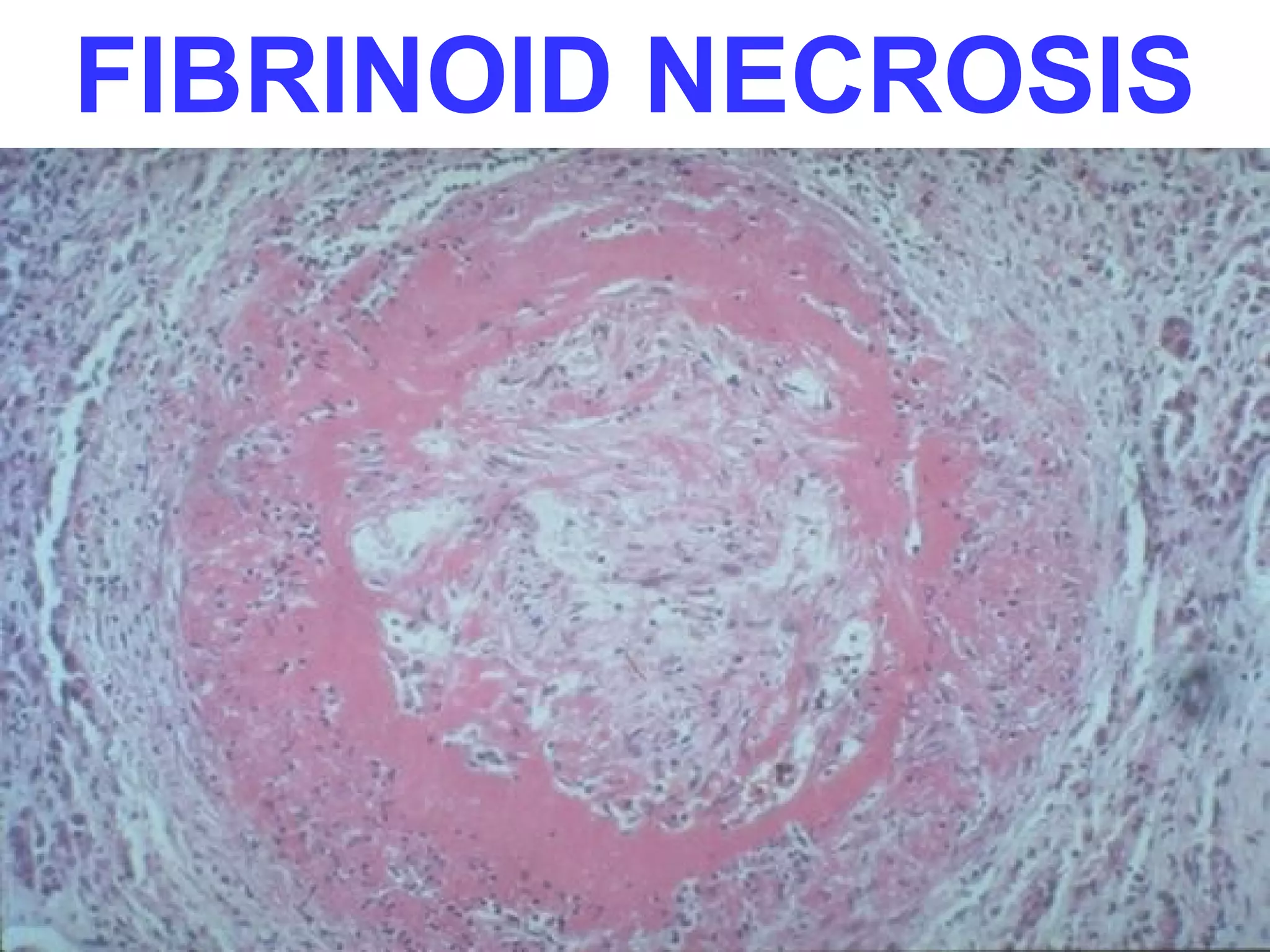
FIBRINOID NECROSIS

• is a term for damage to the walls of
  arteries which allows plasma proteins to
  leak out, and precipitate in, the media
FIBRINOID NECROSIS
GANGRENE
• ("gangrenous necrosis") is not a separate
  kind of necrosis at all, but a term for
  necrosis that is advanced and visible
  grossly. The word gangrene comes from
  the Latin word gangraena, an eating sore.
  Gangrene is death and decay of a body
  part mostly ischemic necrosis of limbs
• Gangrene is defined as the gradual destruction
  of living tissue, due to an obstruction in the
  supply of blood and oxygen to an area of the
  body (Ischemia)
• Gangrene = ischemic necrosis
TYPES OF GANGRENE


   • .DRY GANGRENE
   • .WET GANGRENE
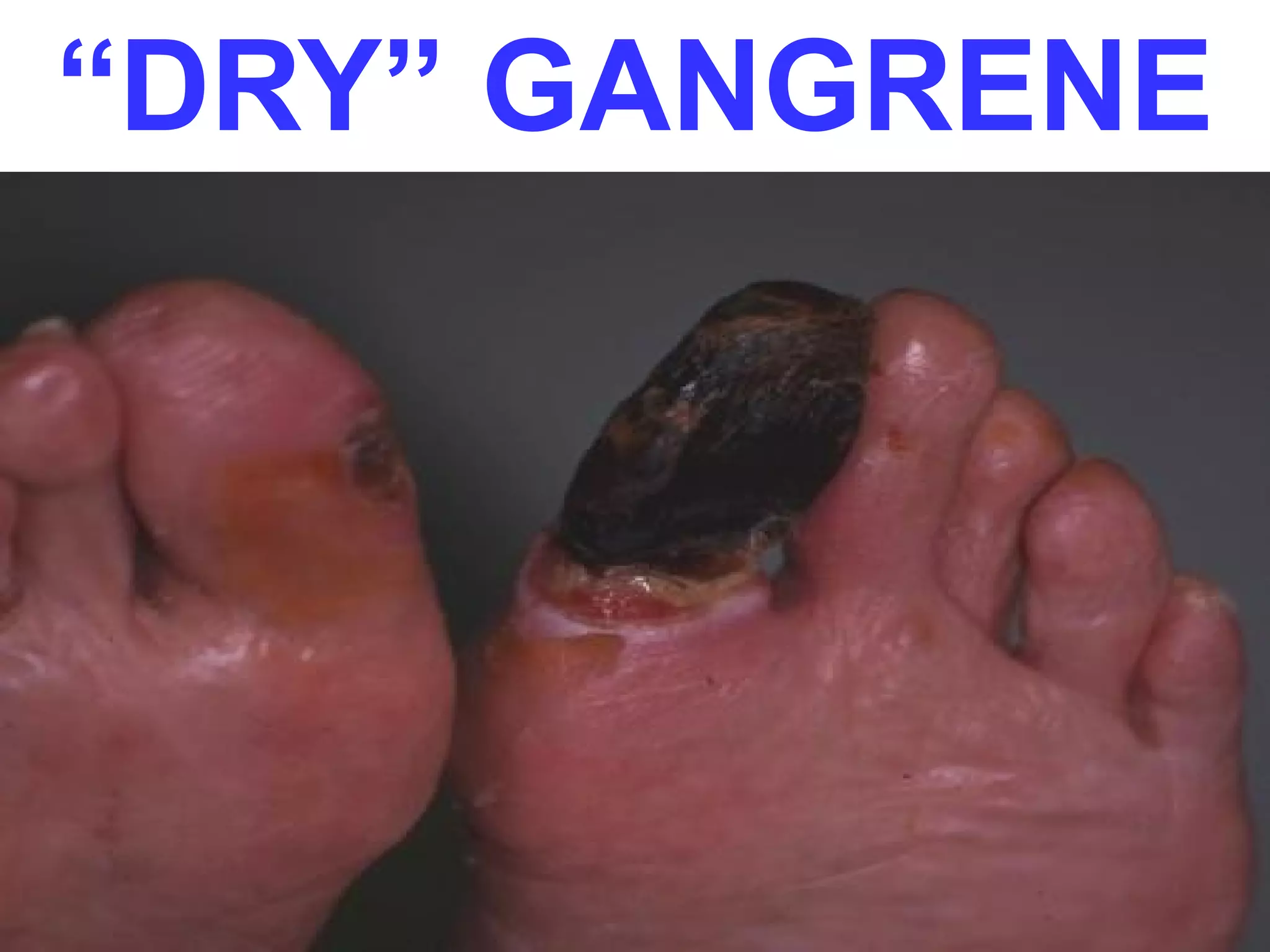
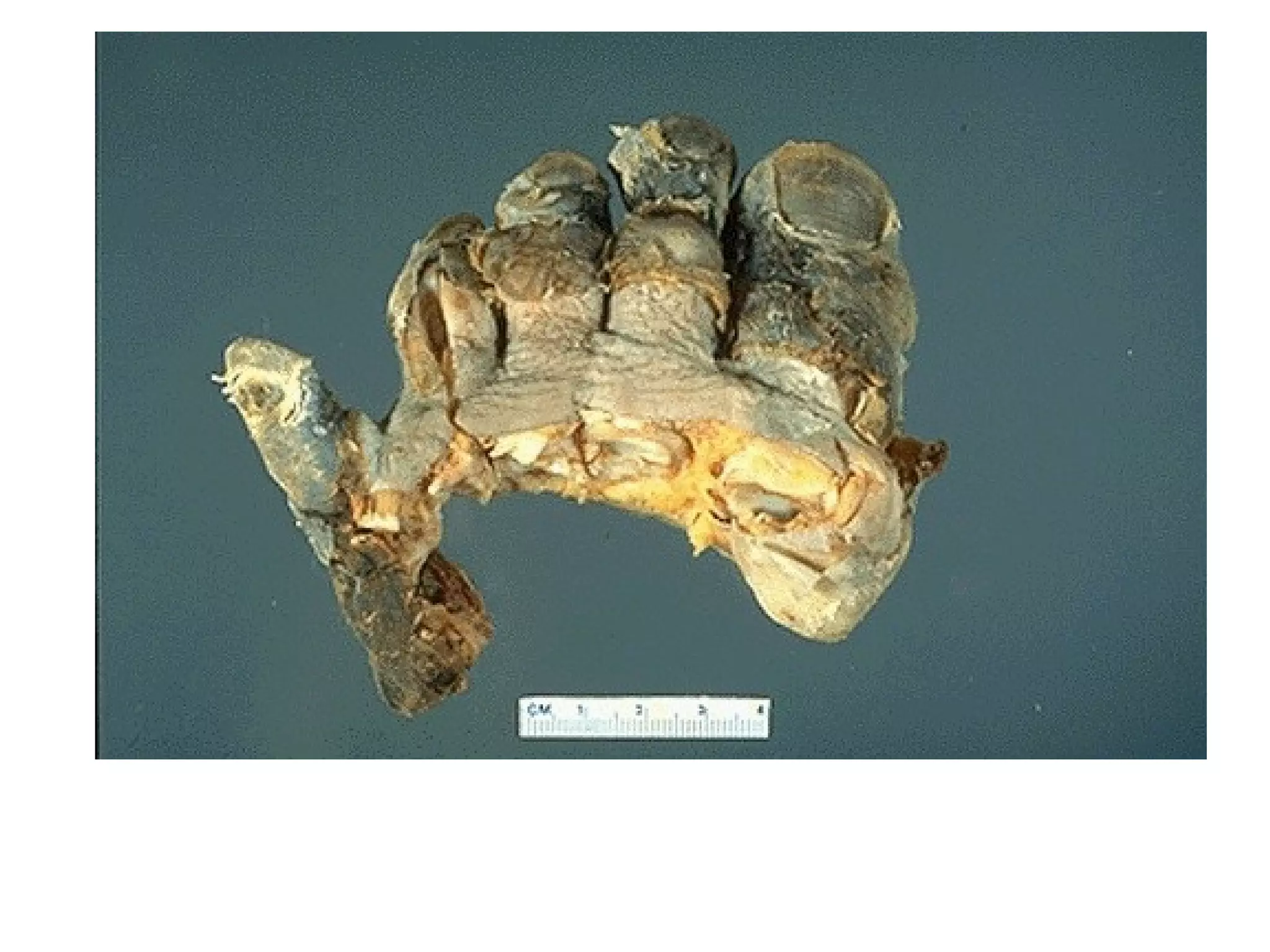
• Dry gangrene
     This is mostly coagulative necrosis
  without infection (free of infection). It is
  usually brought on by frostbite, or poor
  circulation that cause the tissues to
  become dry & black.
“DRY” GANGRENE
dry gangrene (coagulative necrosis)
WET GANGRENE

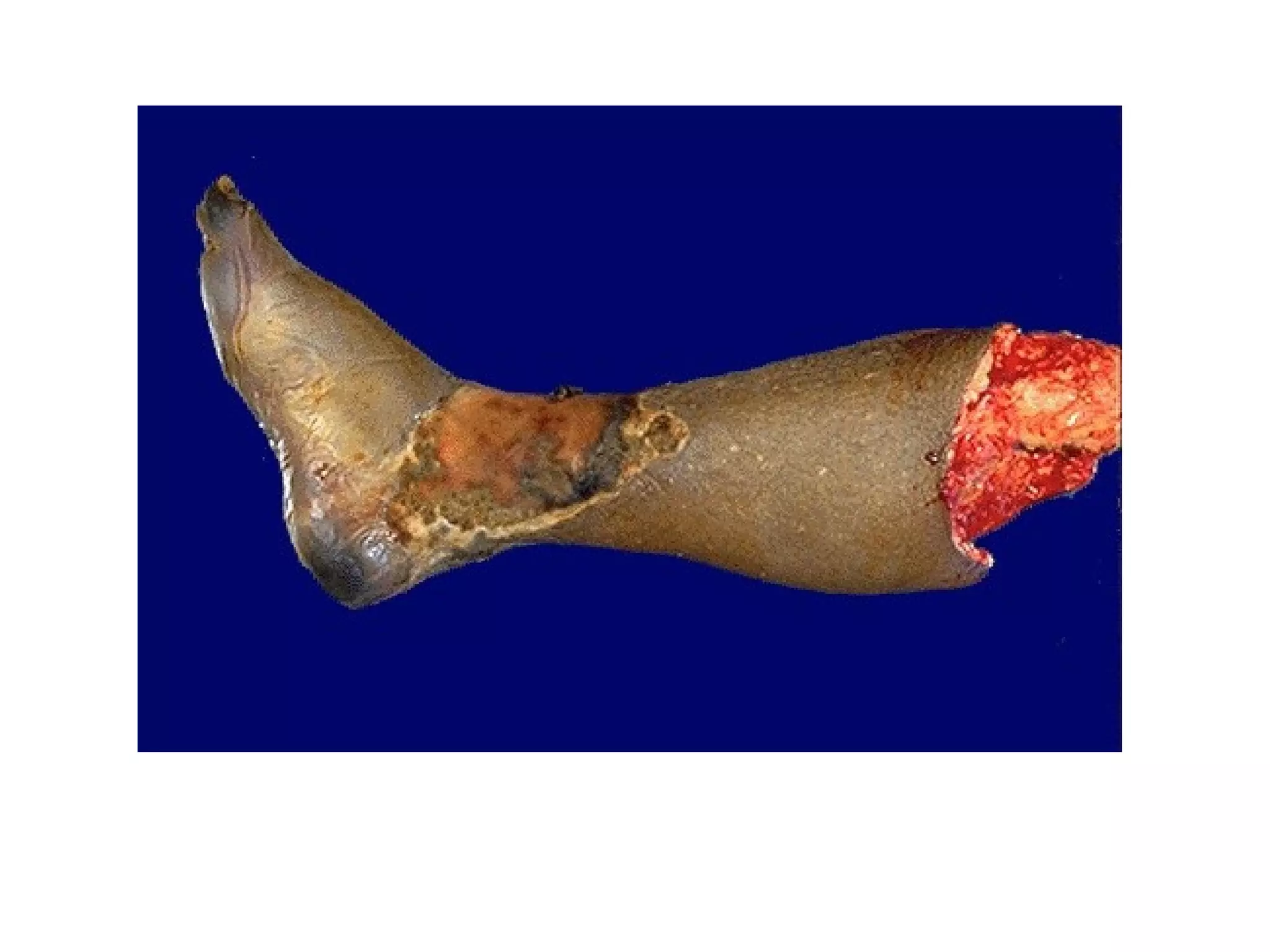
• there's mostly liquefactive necrosis (i.e.,
  the typical foul-smelling, oozing foot
  infected with several different kinds of
  bacteria).
"wet   gangrene in patient with Diabetes
                millitus”
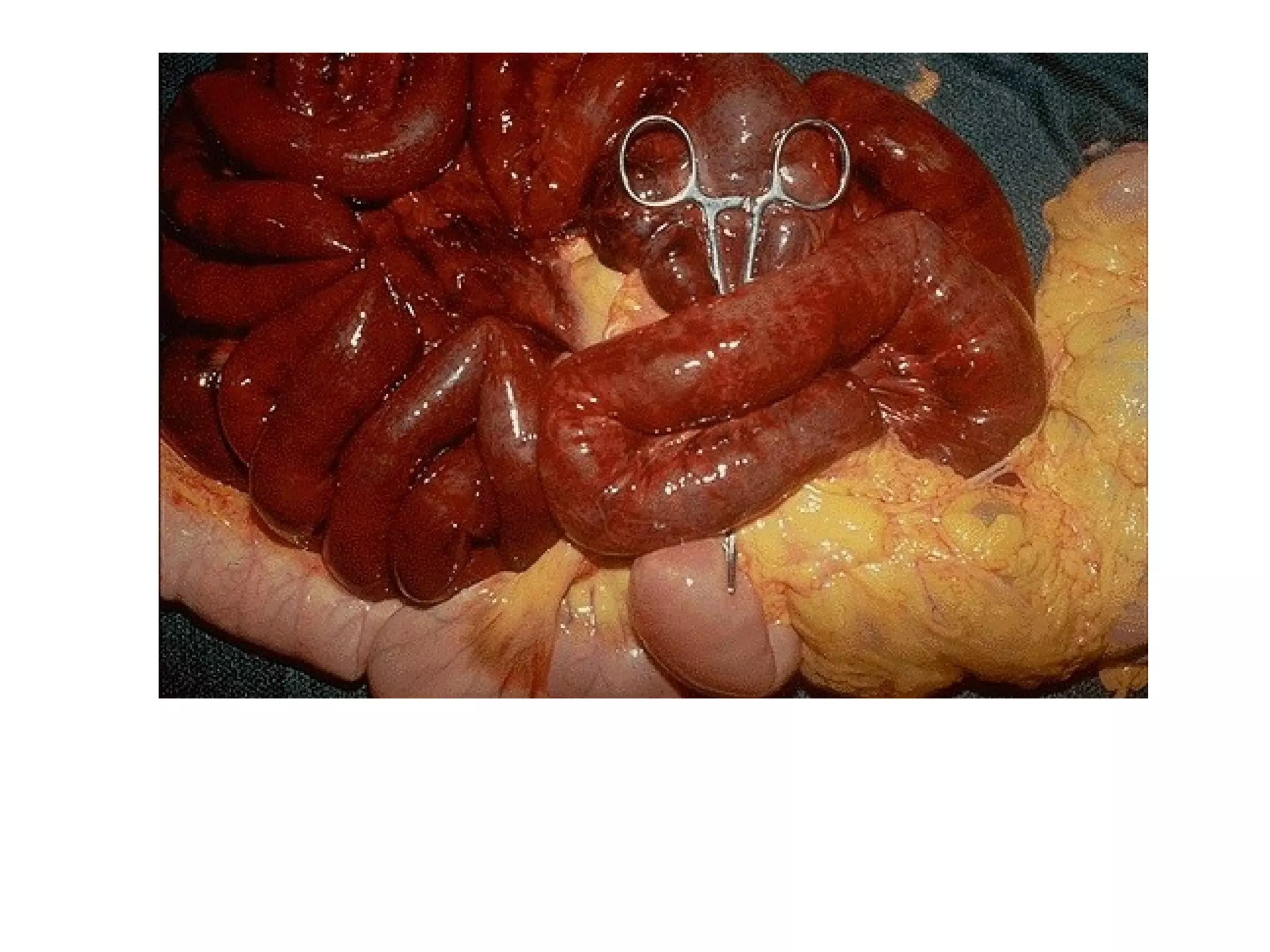
Ischemic necrosis of the bowel (bowel infarction)

Lect.no.4

  • 1.
  • 2.
    CELLS REACT TOINJURIOUS STIMULI • ADAPTING • SUSTAINING REVERSIBLE INJURY • SUFFERING IRREVERSIBLE INJURY AND DYING
  • 4.
    TYPES OF CELLDEATH • APOPTOSIS (“normal” death or physiologic death) • NECROSIS (“premature” or “untimely” death due to “causes”(Pathologic death)
  • 5.
    NECROSIS • It refersto a series of morphologic changes that follow cell death in living tissues • OR is the gross and light-microscopic appearances that indicate cell death.
  • 6.
    • The surroundingliving tissue almost always show inflammatory reaction • The necrotic cell undergo lysis • Autolysis is the dead cell being self- digested by its lysosomal enzymes, while heterolysis is the cell being digested by the body's living white cells.
  • 7.
    Morphology of NecroticCells • Increased Eosinophilia of cytoplasm - loss of RNA (basophilia) - denatured cytoplasmic protein bind tightly to eosin • Nuclear Changes - Pyknosis ( shrinkage & ↑ basophilia) - Karyorrhexis (Fragmentation of pyknotic nuclei) - Karyolysis (fading of chromatine – DNAase effect • Myelin figure (EM) – large, whorled phospholipid mass (phospholipid precipitate)
  • 9.
    HISTOLOGIC FEATURES OF COAGULATIVE NECROSIS Normal Reversible cell cell injury Karyorrhexi with s cytoplasmic Irreversible & organelle cell injury with swelling, rupture of Karyolysis blebbing & membrane & ribosome organelles, & detachment nuclear pyknosis
  • 10.
    Myocardial infarction (coagulativenecrosis) Cytoplasmic eosinophilia & nuclear karyolysis
  • 11.
    Pathogenesis of necrosis 1.Denaturationof intracellular proteins ( structural & enzymatic) 2. Enzymetic digestion of the cell (Auto & Heterolysis)
  • 12.
    Morphologic Pattern ofNecrotic Cell mass TYPES OF NECROSIS • COAGULATIVE NECROSIS • LIQUEFACTIVE NECROSIS • CASEOUS NECROSIS • FAT NECROSIS • FIBRINOID NECROSIS • GANGRENE
  • 13.
    COAGULATIVE NECROSIS • Deathof groups of cells with preservation of general tissue architecture-tombstone appearance for at least a few days. • Affected tissue is firm due to denaturation of structural & enzymatic proteins(intracellular acidosis) • – Example . Ischemic injury of heart, kidney, ,spleen.
  • 14.
    Coagulative necrosis  Preservation of structure  Firm  Protein denaturation  Hypoxic tissue death (except brain)
  • 15.
  • 16.
    • The microscopyis distinctive. After loss of their nuclei, the cytoplasm of the cells remains intact for days. The "tombstones" reveal the structure of the living tissue. If the patient lives, the edges of the necrotic area become inflamed, and eventually the dead cells will be removed by white blood cells • RULE: Unless otherwise specified in this section, the death of a group of cells will result in coagulation necrosis • (Ischemic necrosis=Infarction)
  • 17.
    Kidney infarct exhibitingcoagulative necrosis, with loss of nuclei and clumping of cytoplasm but with preservation of basic outlines of glomerular and tubular architecture
  • 18.
  • 19.
    Morphologic pattern ofNecrotic Cell mass • Liquefactive Necrosis - focal bacterial (or fungal) infections – accumulation of inflammatory cells - hypoxic death of cells within CNS
  • 20.
    LIQUEFACTIVE NECROSIS • (*"colliquative necrosis" in Europe): When the cells die, they are rapidly destroyed by lysosomal enzymes, either their own or those from neutrophilic leukocytes • The tissue becomes liquid viscous mass • Material is creamy yellow in color • Seen in ischemia of brain, abscess
  • 23.
    Normal brain Liquefactive necrosis
  • 24.
    CASEOUS NECROSIS *Type ofcoagulative necrosis *Tissue is cheesy white in appearance *All the cells in the area die & surrounded by inflammatory cells (granulomatous inflammation). *The tissue architecture is completely distructed & turn into friable tissue. *Seen in tuberculous infections &certain fungal infections (as Histoplasmosis)
  • 25.
    A tuberculous lungwith a large area of caseous necrosis
  • 26.
  • 28.
  • 29.
    Fat necrosis  Not a specific pattern  Focal areas of fat digestion  Usually via release of lipases from pancreas  Lipase releases free fatty acid (saponification) from the local lipids (membranes, depot triglyceride).  FFA combine with Ca to produce salt “soaps”
  • 30.
    Foci of Fatnecrosis with saponification in the mesentry . The areas of white chalky deposits represent calcium soap formation at sites of lipid breakdown.
  • 31.
  • 32.
    FIBRINOID NECROSIS • isa term for damage to the walls of arteries which allows plasma proteins to leak out, and precipitate in, the media
  • 33.
  • 34.
    GANGRENE • ("gangrenous necrosis")is not a separate kind of necrosis at all, but a term for necrosis that is advanced and visible grossly. The word gangrene comes from the Latin word gangraena, an eating sore. Gangrene is death and decay of a body part mostly ischemic necrosis of limbs
  • 35.
    • Gangrene isdefined as the gradual destruction of living tissue, due to an obstruction in the supply of blood and oxygen to an area of the body (Ischemia) • Gangrene = ischemic necrosis
  • 36.
    TYPES OF GANGRENE • .DRY GANGRENE • .WET GANGRENE
  • 37.
    • Dry gangrene This is mostly coagulative necrosis without infection (free of infection). It is usually brought on by frostbite, or poor circulation that cause the tissues to become dry & black.
  • 38.
  • 39.
  • 40.
    WET GANGRENE • there'smostly liquefactive necrosis (i.e., the typical foul-smelling, oozing foot infected with several different kinds of bacteria).
  • 41.
    "wet gangrene in patient with Diabetes millitus”
  • 42.
    Ischemic necrosis ofthe bowel (bowel infarction)

Editor's Notes

  • #2 44
  • #3 32
  • #19 In light microscopy inability to recognize nuclei because they broke up (karyorhexis, karyolysis) is a common criterion of cell death.
  • #34 Fibrinoid necrosis looks like fibrin microscopically. In fact, often, it IS fibrin.
  • #39 Dry gangrene is deader, i.e., longer standing, than the death of wet gangrene.