Data presentation
Prepared by
Assis. Prof.
Namir G. Al-Tawil
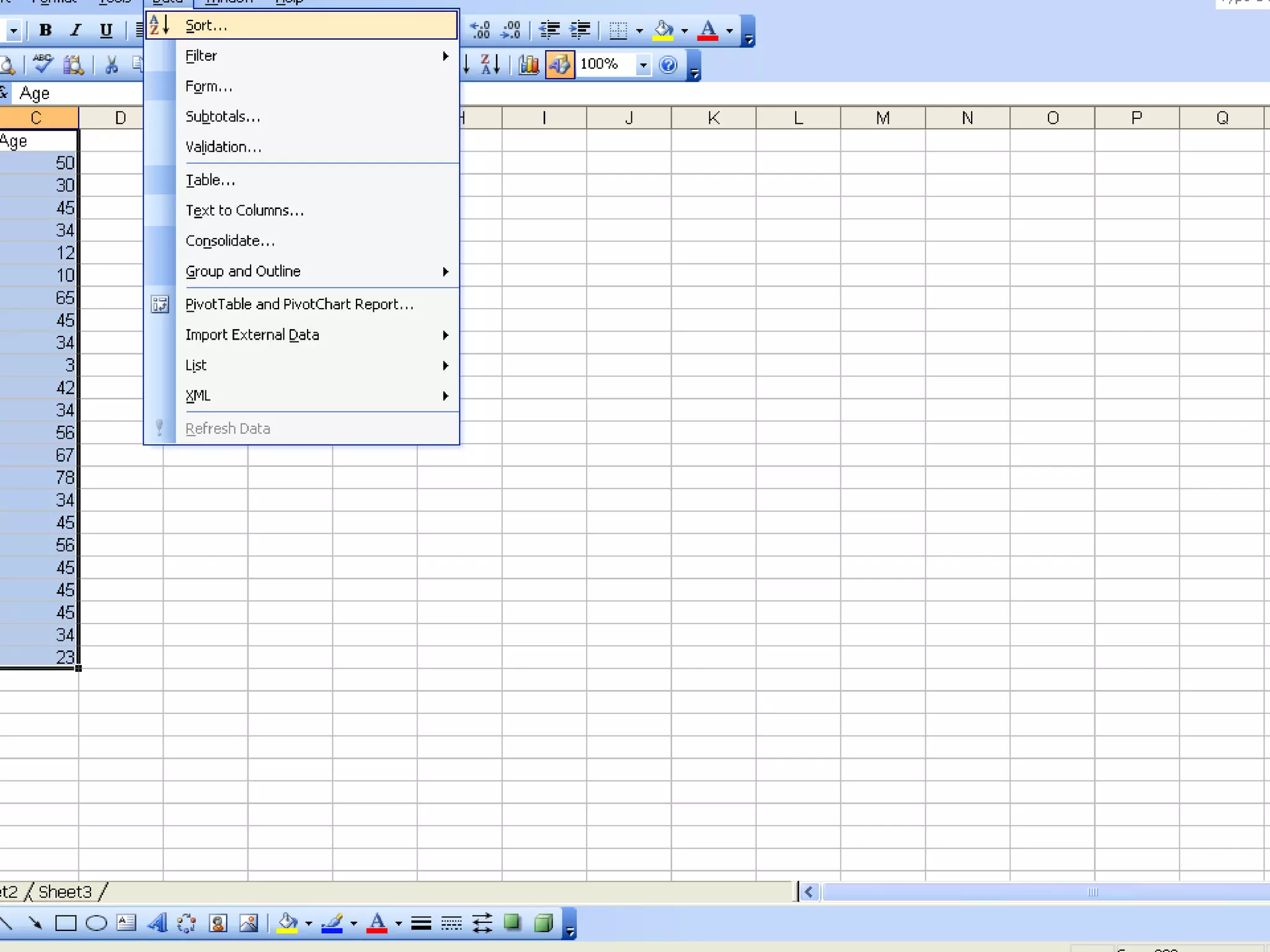
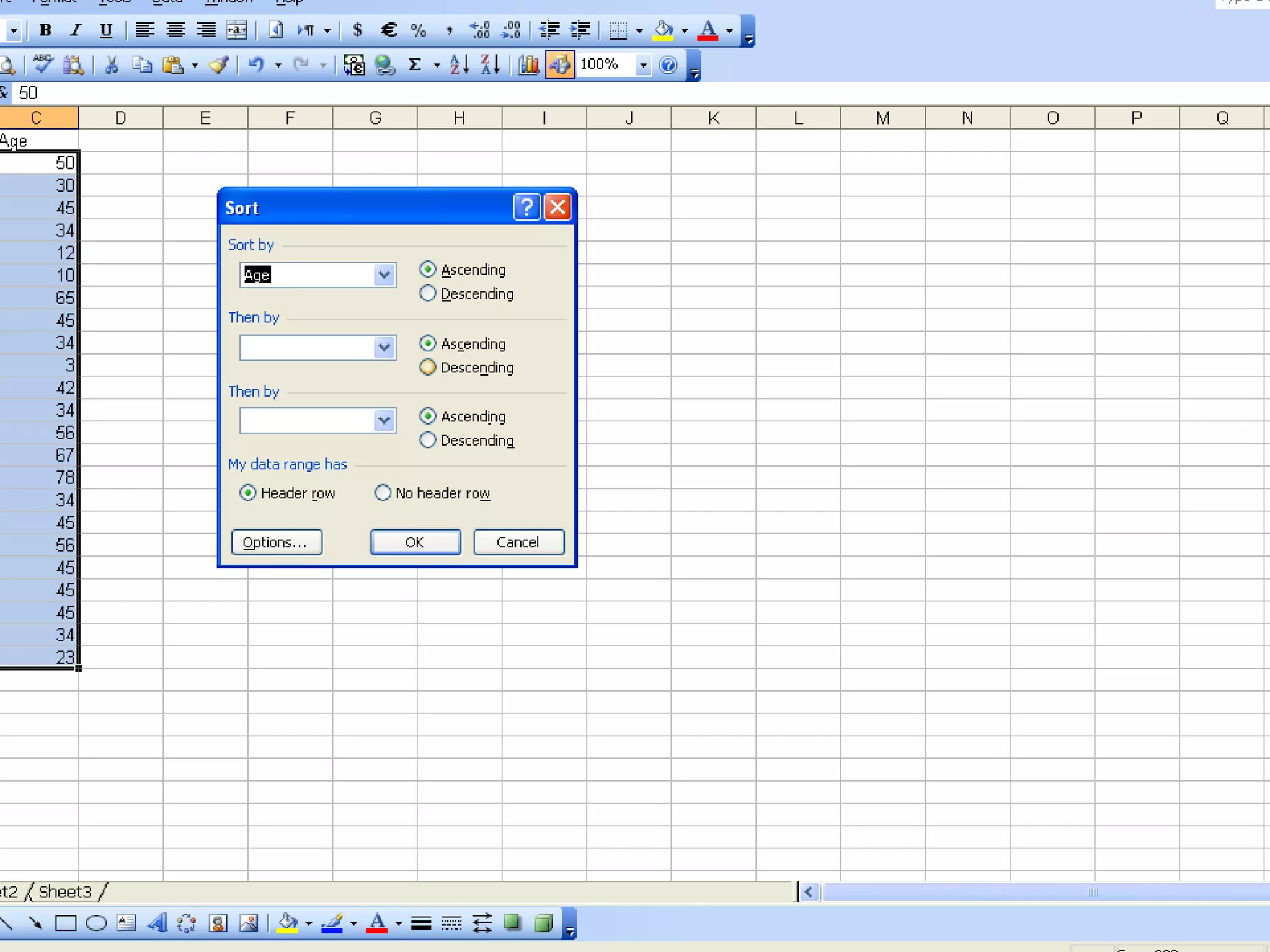
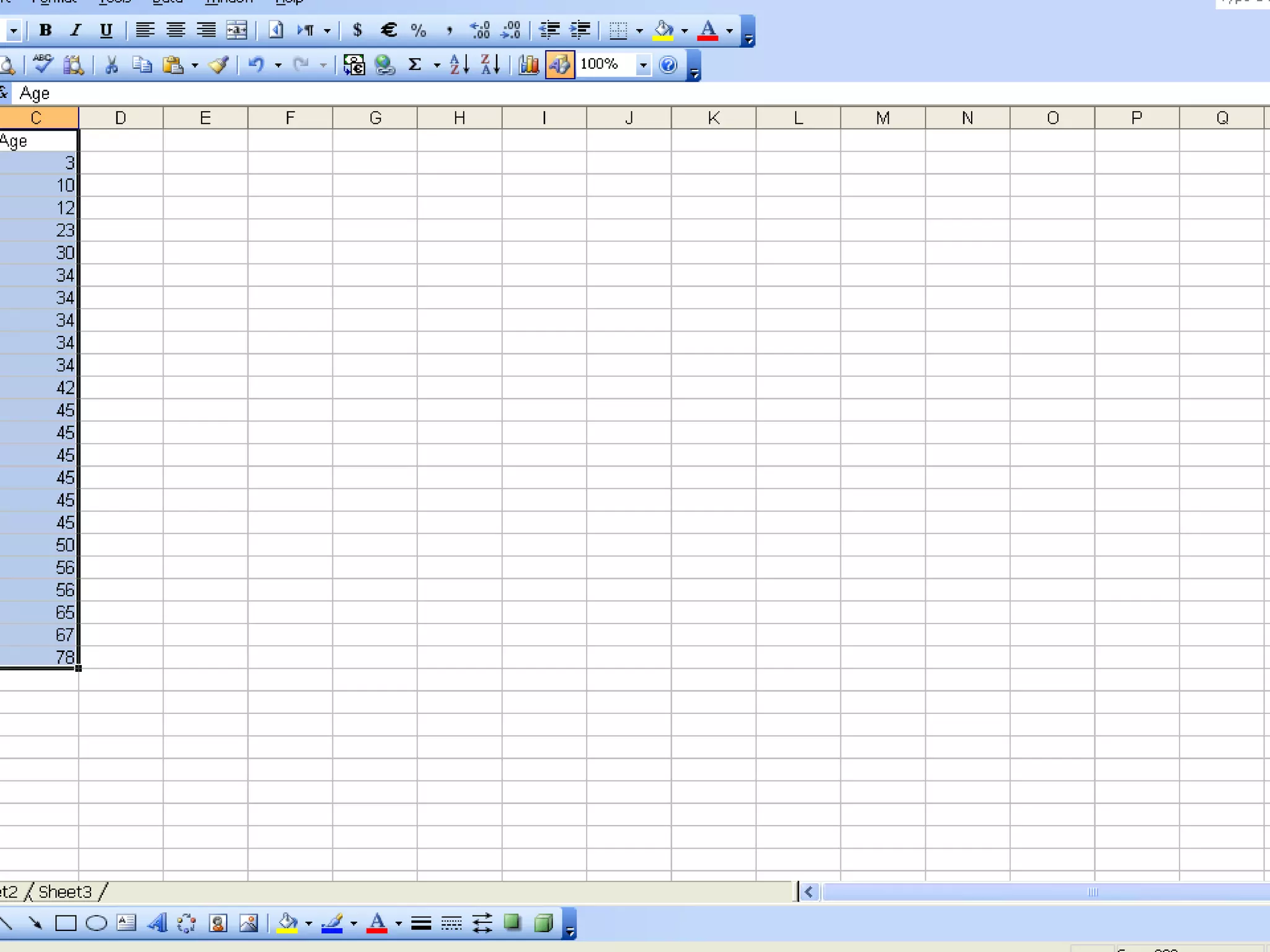
The ordered array
 It is the first step in the process of data
organization.
 An ordered array is a listing of values of a
collection in order of magnitude from the
smallest value to the largest value.
 It enables one to determine quickly the
value of the smallest measurement, and
the value of the largest measurement, and
enable one to determine roughly the
proportion of people lying below or above
certain value.
The frequency distribution
 One of the ways of data summarization.
 To group a set of observations, we
select a set of class intervals. There
must be no overlapping between these
intervals.
 Too few intervals are undesirable
because of the resulting loss of
information. If too many intervals are
used, the objective of summarization
can not be met. The appropriate No. of
class intervals is 6-15.
The frequency distribution, cont.
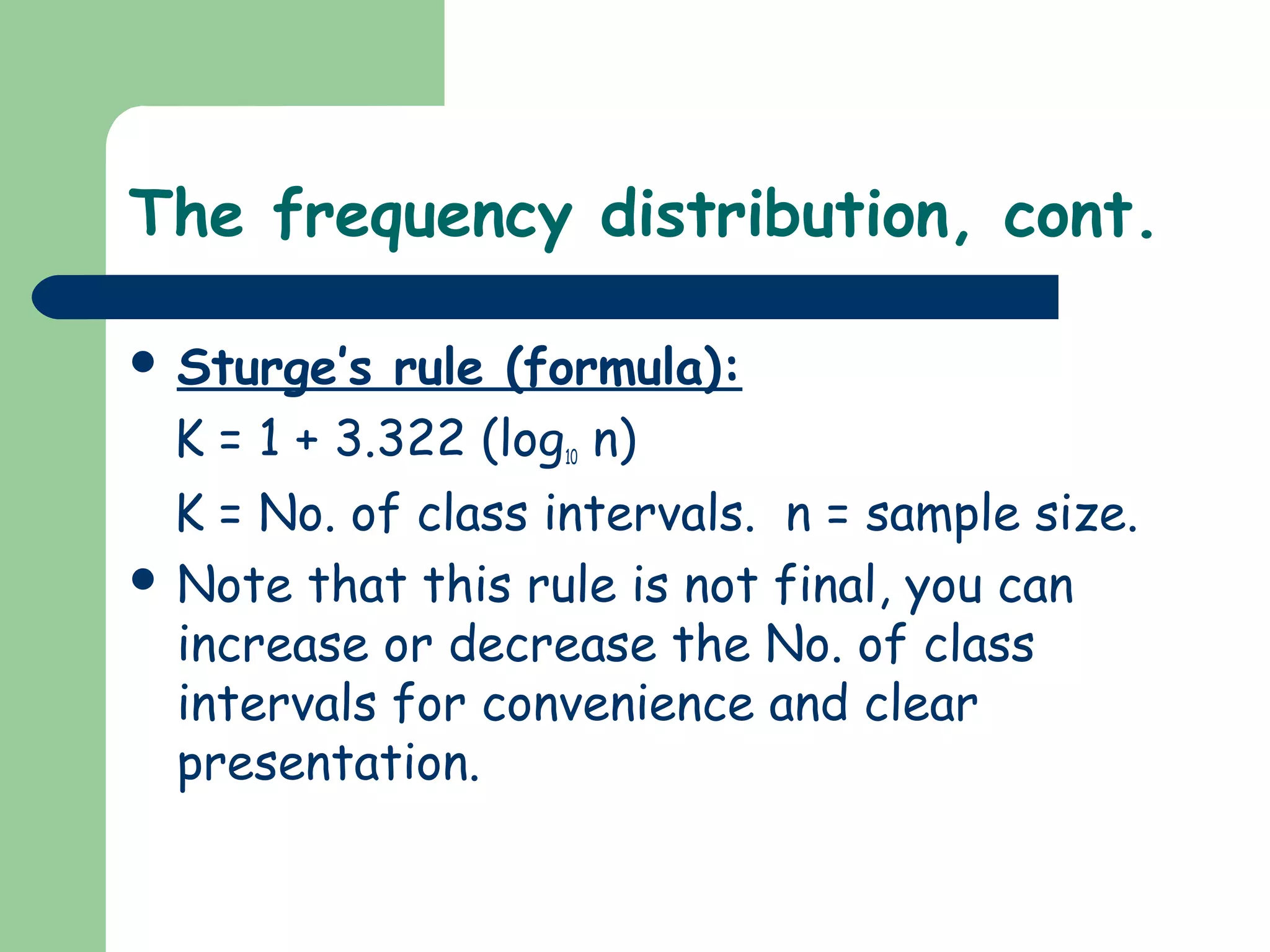
 Sturge’s rule (formula):
K = 1 + 3.322 (log10 n)
K = No. of class intervals. n = sample size.
 Note that this rule is not final, you can
increase or decrease the No. of class
intervals for convenience and clear
presentation.
The frequency distribution, cont.
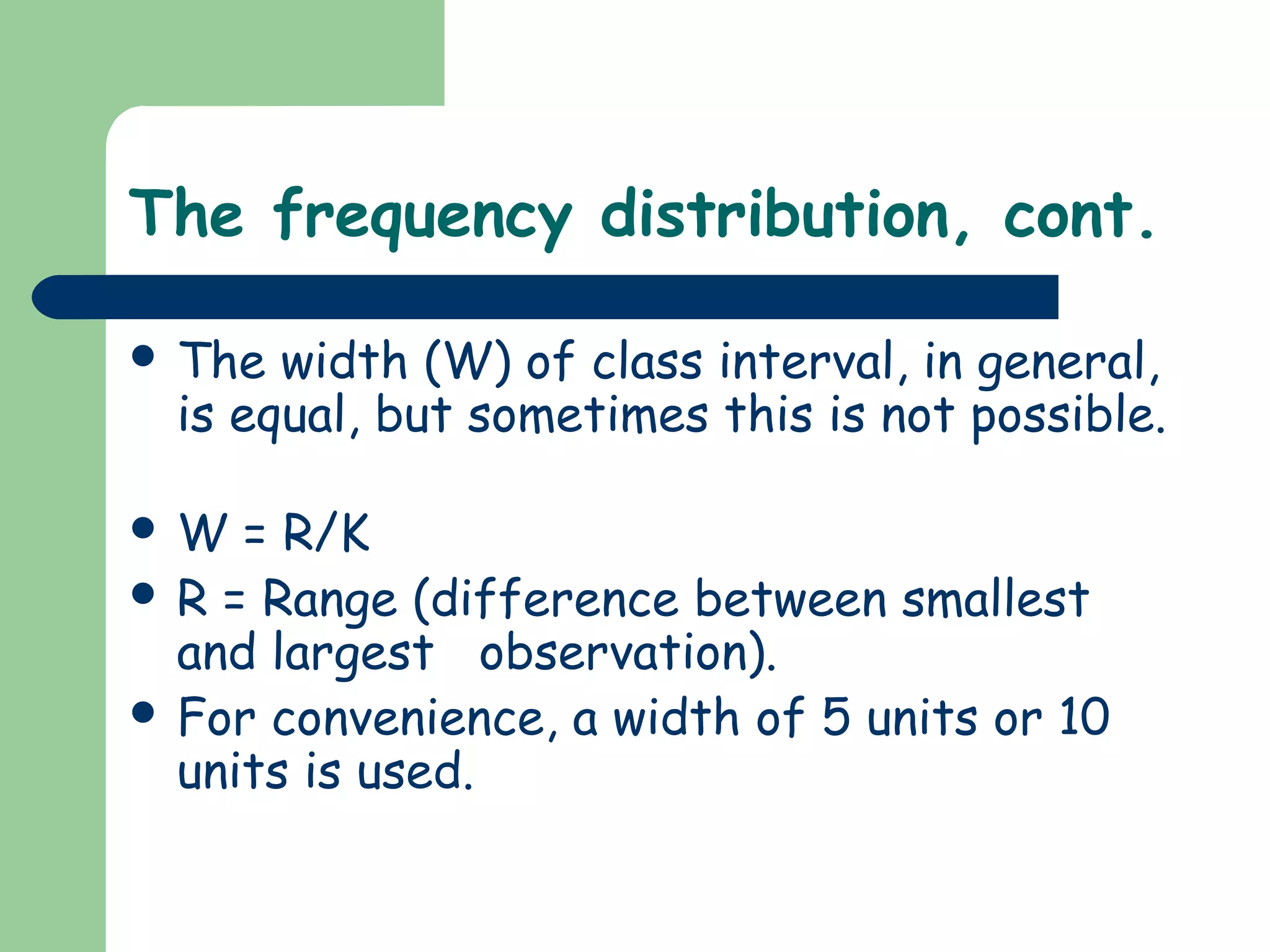
 The width (W) of class interval, in general,
is equal, but sometimes this is not possible.
 W = R/K
 R = Range (difference between smallest
and largest observation).
 For convenience, a width of 5 units or 10
units is used.
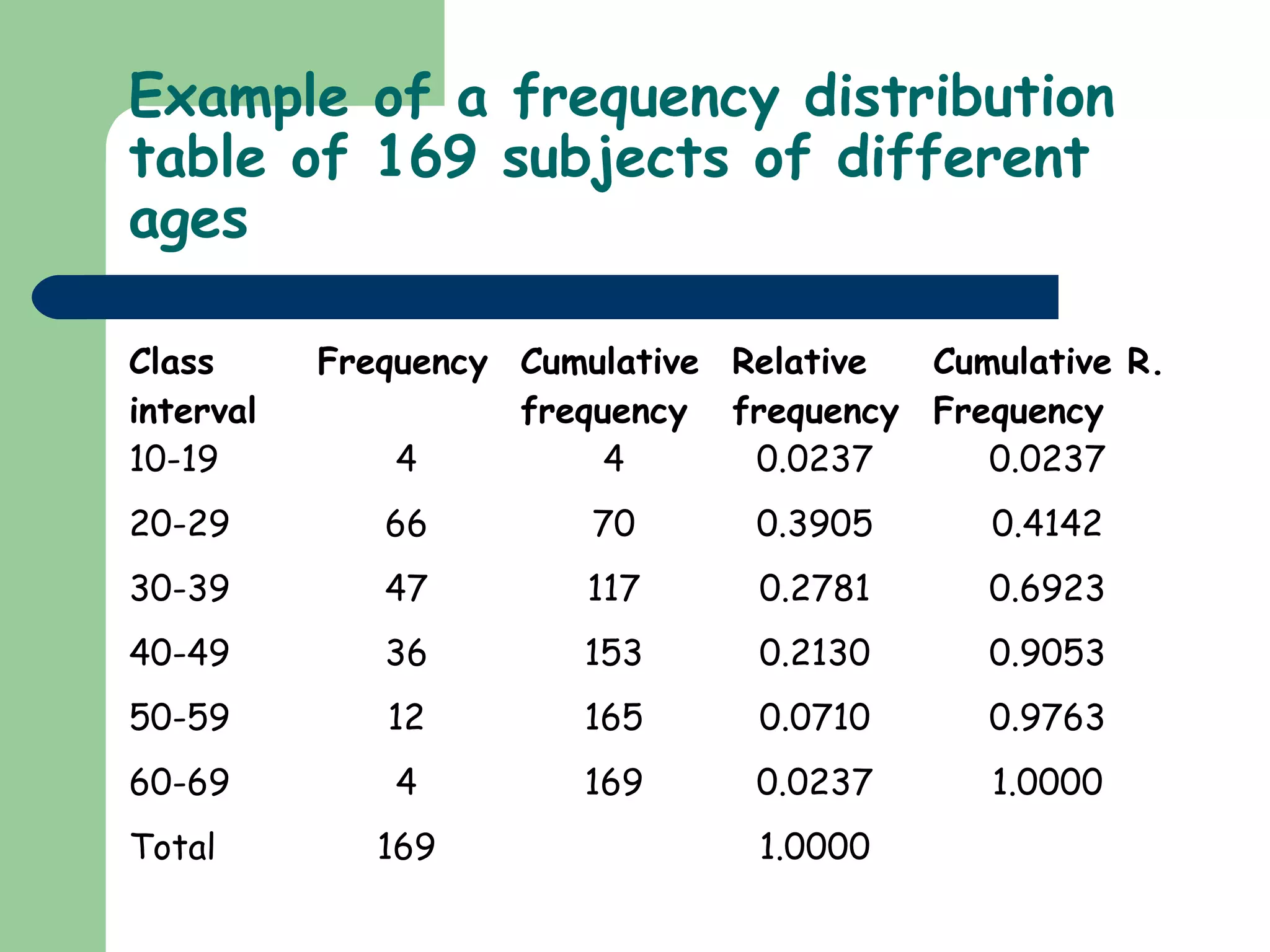
Example of a frequency distribution
table of 169 subjects of different
ages
Class
interval
Frequency Cumulative
frequency
Relative
frequency
Cumulative R.
Frequency
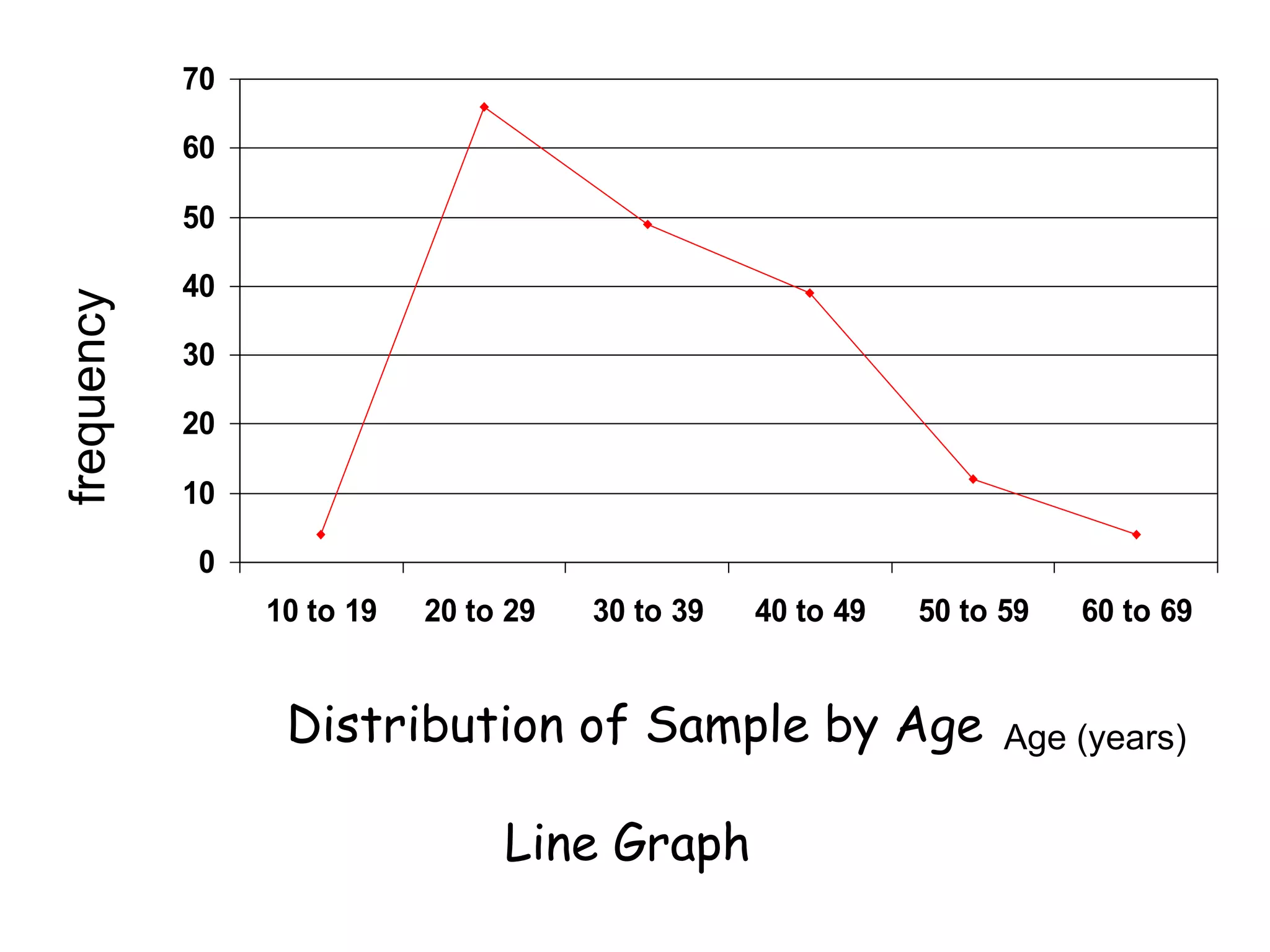
10-19 4 4 0.0237 0.0237
20-29 66 70 0.3905 0.4142
30-39 47 117 0.2781 0.6923
40-49 36 153 0.2130 0.9053
50-59 12 165 0.0710 0.9763
60-69 4 169 0.0237 1.0000
Total 169 1.0000
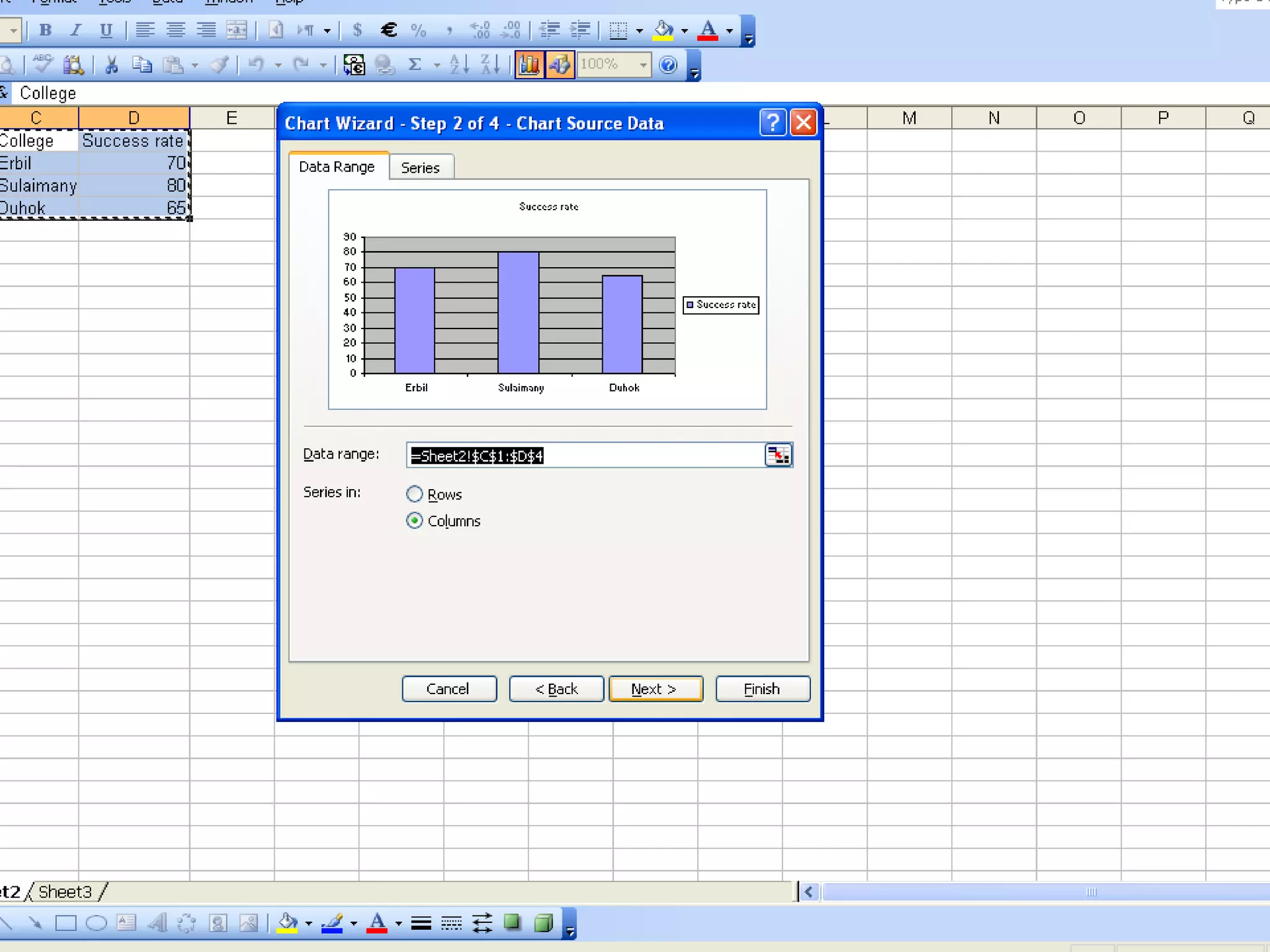
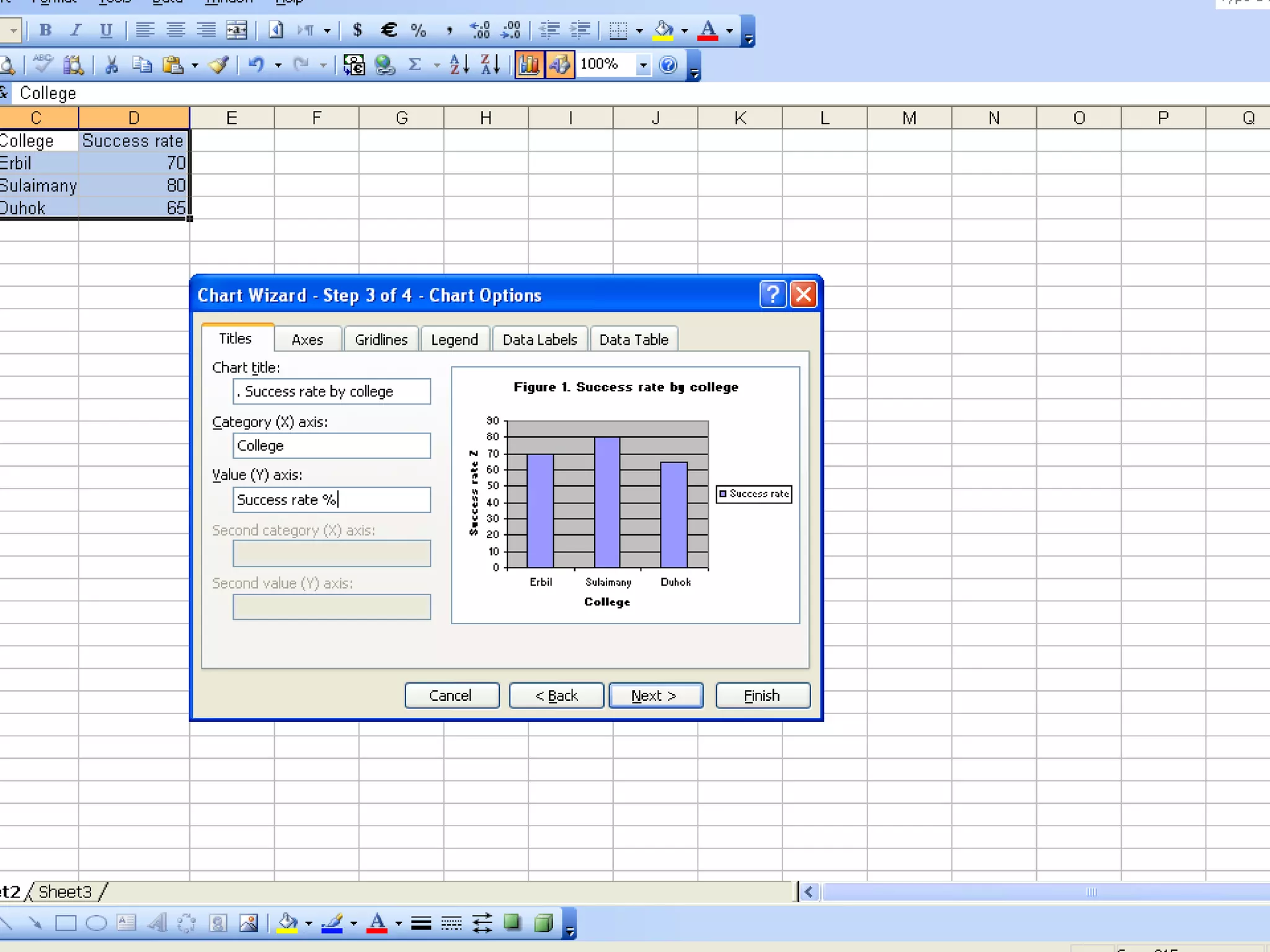
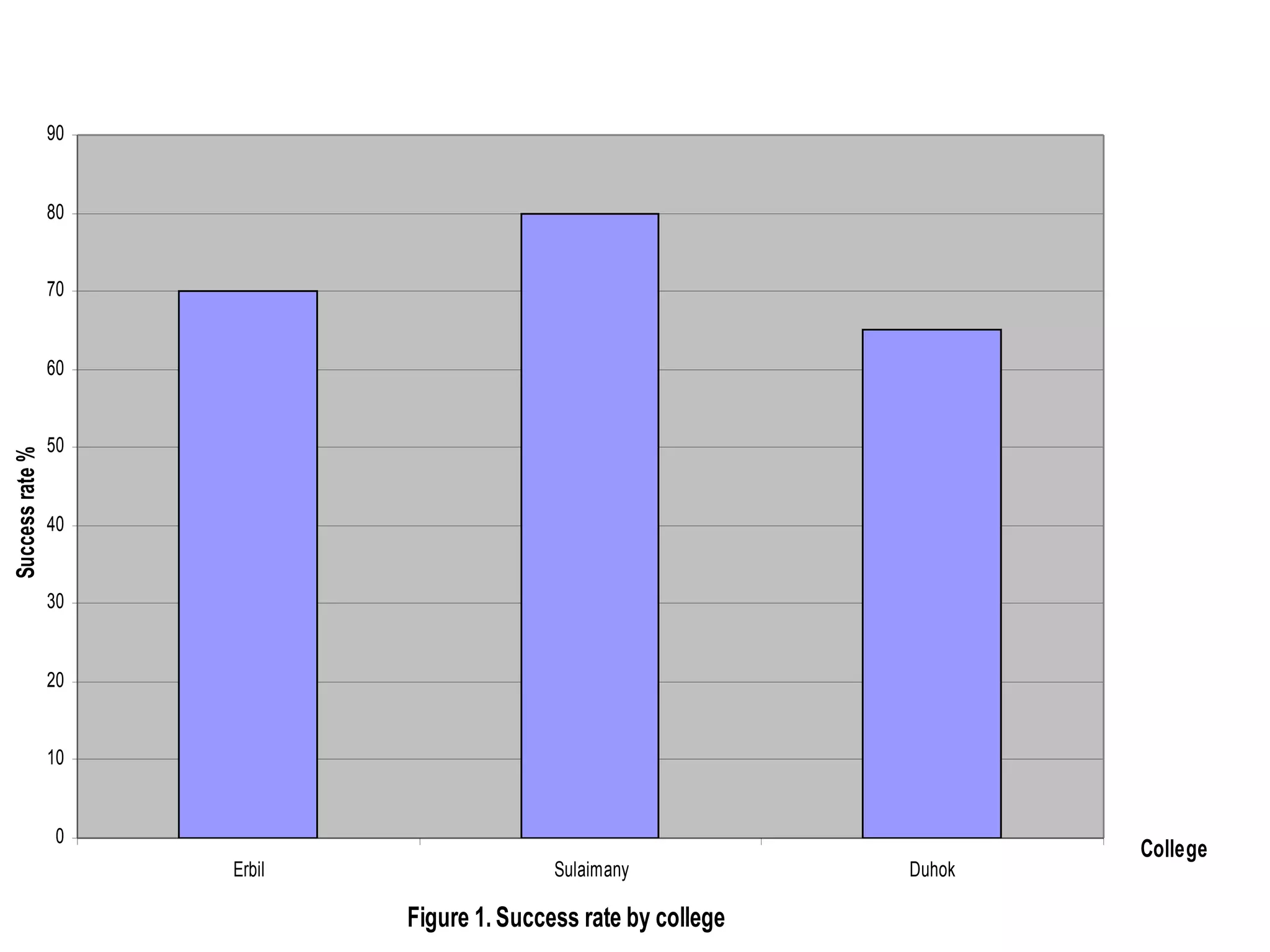
Figure 1. Success rate by college
0
10
20
30
40
50
60
70
80
90
Erbil Sulaimany Duhok
College
Successrate%
Age (years)
0
1
2
3
4
5
6
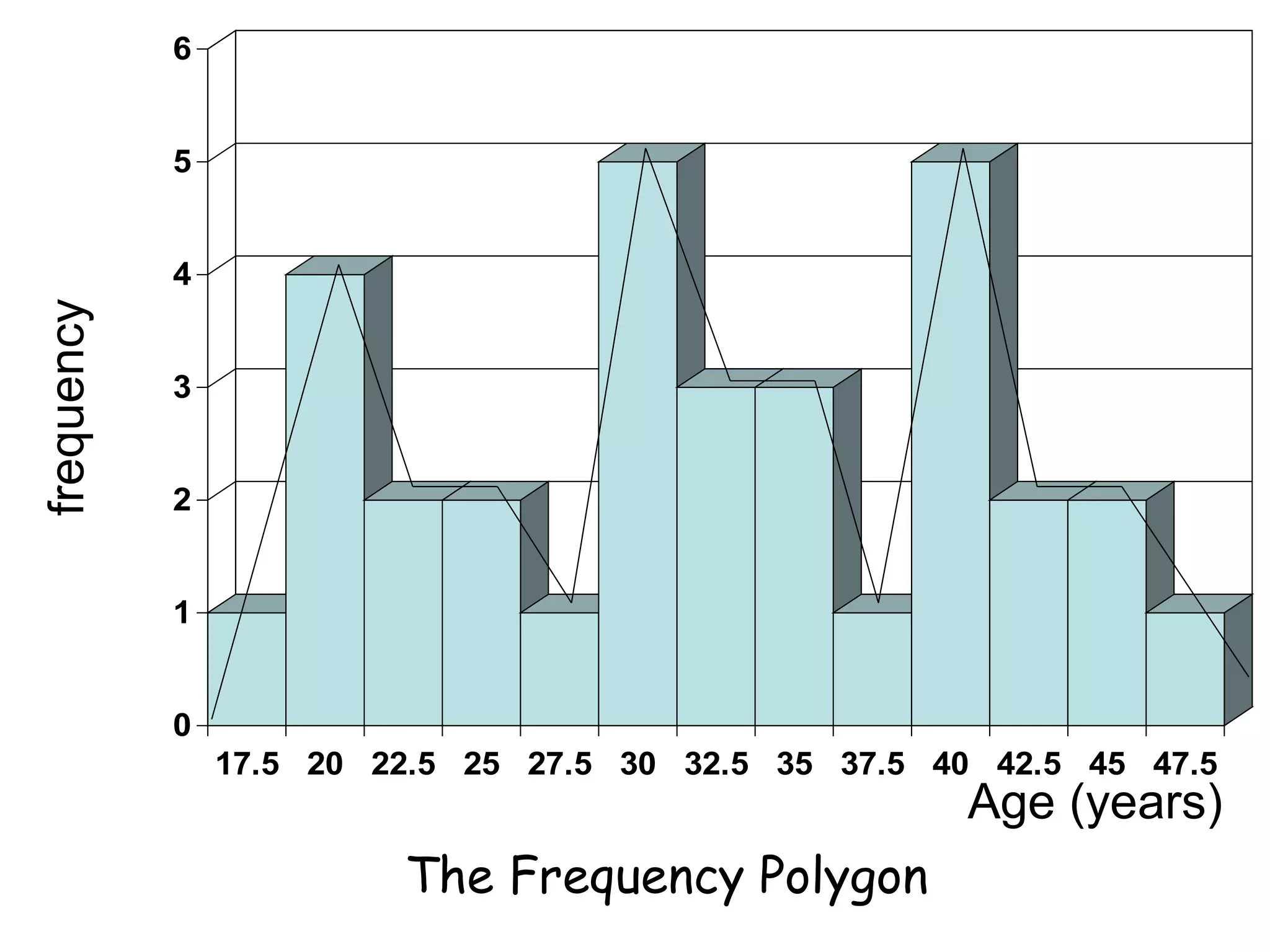
17.5 20 22.5 25 27.5 30 32.5 35 37.5 40 42.5 45 47.5
frequency
The Frequency Polygon
Distribution of Sample by Age
Line Graph
0
10
20
30
40
50
60
70
10 to 19 20 to 29 30 to 39 40 to 49 50 to 59 60 to 69
Age (years)
frequency
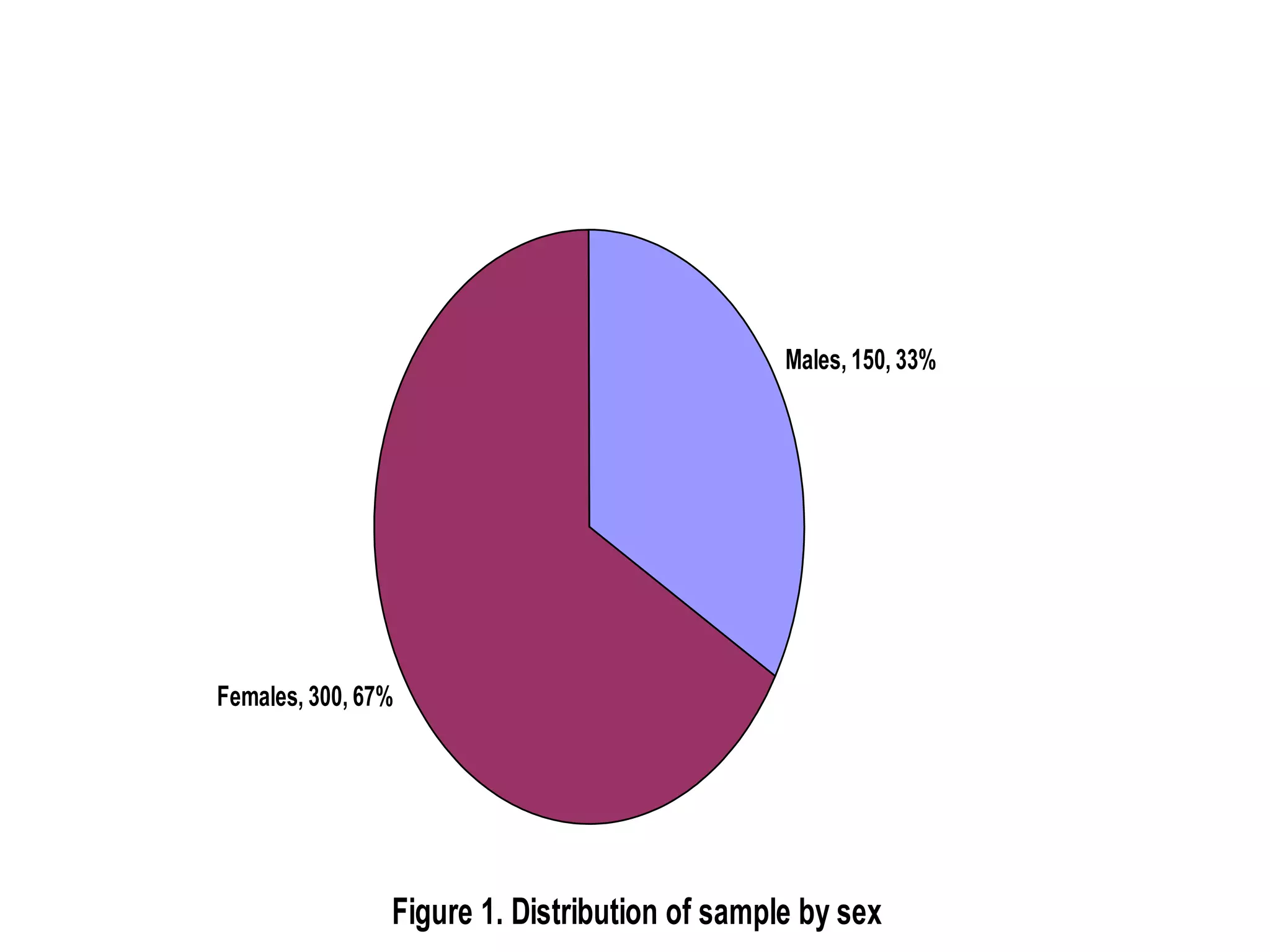
Figure 1. Distribution of sample by sex
Males, 150, 33%
Females, 300, 67%

Stat 2 data presentation2

  • 1.
    Data presentation Prepared by Assis.Prof. Namir G. Al-Tawil
  • 2.
    The ordered array It is the first step in the process of data organization.  An ordered array is a listing of values of a collection in order of magnitude from the smallest value to the largest value.  It enables one to determine quickly the value of the smallest measurement, and the value of the largest measurement, and enable one to determine roughly the proportion of people lying below or above certain value.
  • 6.
    The frequency distribution One of the ways of data summarization.  To group a set of observations, we select a set of class intervals. There must be no overlapping between these intervals.  Too few intervals are undesirable because of the resulting loss of information. If too many intervals are used, the objective of summarization can not be met. The appropriate No. of class intervals is 6-15.
  • 7.
    The frequency distribution,cont.  Sturge’s rule (formula): K = 1 + 3.322 (log10 n) K = No. of class intervals. n = sample size.  Note that this rule is not final, you can increase or decrease the No. of class intervals for convenience and clear presentation.
  • 8.
    The frequency distribution,cont.  The width (W) of class interval, in general, is equal, but sometimes this is not possible.  W = R/K  R = Range (difference between smallest and largest observation).  For convenience, a width of 5 units or 10 units is used.
  • 9.
    Example of afrequency distribution table of 169 subjects of different ages Class interval Frequency Cumulative frequency Relative frequency Cumulative R. Frequency 10-19 4 4 0.0237 0.0237 20-29 66 70 0.3905 0.4142 30-39 47 117 0.2781 0.6923 40-49 36 153 0.2130 0.9053 50-59 12 165 0.0710 0.9763 60-69 4 169 0.0237 1.0000 Total 169 1.0000
  • 14.
    Figure 1. Successrate by college 0 10 20 30 40 50 60 70 80 90 Erbil Sulaimany Duhok College Successrate%
  • 20.
    Age (years) 0 1 2 3 4 5 6 17.5 2022.5 25 27.5 30 32.5 35 37.5 40 42.5 45 47.5 frequency The Frequency Polygon
  • 21.
    Distribution of Sampleby Age Line Graph 0 10 20 30 40 50 60 70 10 to 19 20 to 29 30 to 39 40 to 49 50 to 59 60 to 69 Age (years) frequency
  • 22.
    Figure 1. Distributionof sample by sex Males, 150, 33% Females, 300, 67%