Herpesviruses
• Are a leading cause of human viral diseases;
second only to influenza and cold viruses
• The name herpes comes from the Greek
word herpein which means to creep:
creeping or spreading nature of the skin
lesions
• Can cause active disease or remain silent
lifelong to be reactivated during periods of
immunosuppression
Herpesviruses
1. Alphaherpesviruses
 Herpes simplex virus (HSV-1 & 2)
 Varicella zoster virus (VZV)
2. Betaherpesviruses
 Cytomegalovirus (CMV)
 Human herpes virus-6 (HHV-6 & 7)
3. Gammaherpesviruses
 Epstein bar virus (EBV)
 Human herpes virus-8 (HHV-8)
Herpesviruses: subfamilies
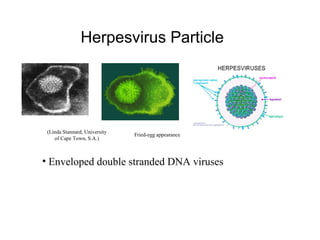
Herpesvirus Particle
• Enveloped double stranded DNA viruses
(Linda Stannard, University
of Cape Town, S.A.)
Fried-egg appearance
Herpes Simplex
Viruses (HSV)
Properties
• Are very large viruses
• Types: HSV-1 & HSV-2
• Man is the only natural host
Epidemiology
• The virus is shed in saliva, tears, genital and
other secretions:
Spreads by:
Kissing
Sexual contact
Use of utensils contaminated with saliva
Mother to child during birth and postnatal
Mother to fetus in utero
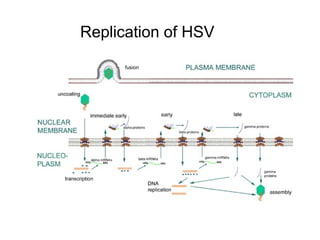
Replication of HSV
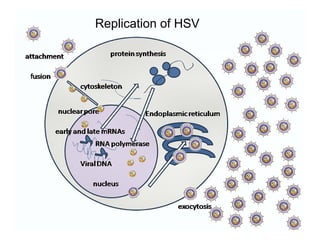
Replication of HSV
Primary infection
• Is usually subclinical in most individuals
• Generally HSV-1 causes infection above
the waist and HSV-2 below the waist
 40% of genital sores are due to HSV-1
 5% of facial herpes are due to HSV-2
• HSV spreads locally and a short-lived
viraemia occurs
Pathogenesis
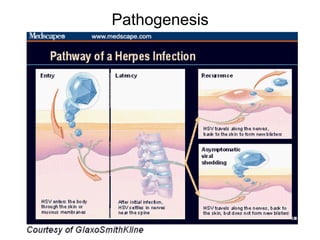
Pathogenesis
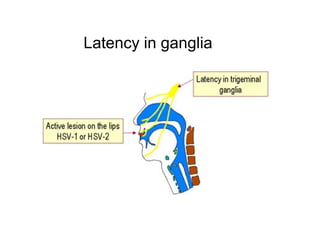
Latency in ganglia
Pathogenesis
Reactivation occurs due to:
Physical or psychological stress
Infection
Fever
Irradiation including sunlight
Menstruation
• 45% of oral lesions
• 60% of genital herpes
Clinical Manifestations
1. Acute gingivostomatitis
2. Herpes Labialis (cold sore)
3. Ocular Herpes
4. Herpes Genitalis
5. Other forms of cutaneous herpes
6. Meningitis
7. Encephalitis
8. Neonatal herpes
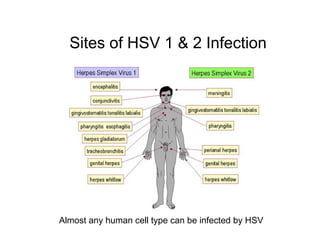
Sites of HSV 1 & 2 Infection
Almost any human cell type can be infected by HSV
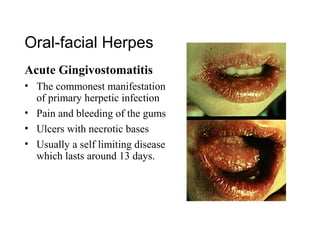
Oral-facial Herpes
Acute Gingivostomatitis
• The commonest manifestation
of primary herpetic infection
• Pain and bleeding of the gums
• Ulcers with necrotic bases
• Usually a self limiting disease
which lasts around 13 days.
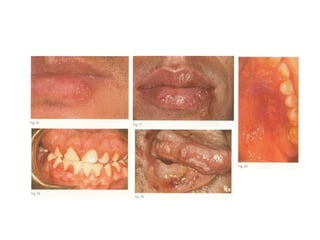
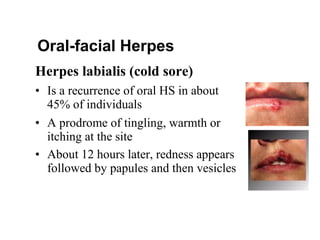
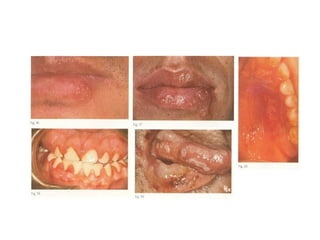
Herpes labialis (cold sore)
• Is a recurrence of oral HS in about
45% of individuals
• A prodrome of tingling, warmth or
itching at the site
• About 12 hours later, redness appears
followed by papules and then vesicles
Oral-facial Herpes
Ocular Herpes
Mild superficial lesions of the external
eye, to severe sight-threatening diseases
of the inner eye.
• Keratitis – dendritic ulcers
• Conjunctivitis
• Iridocyclitis, chorioretinitis
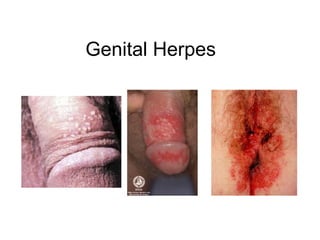
Genital Herpes
• May be primary or recurrent
• Infection sites can be the external genitalia,
vagina, cervix, bladder, the sacral nerve routes
• Redness on the external genitalia followed by
itching papules and then vesicles
• The lesions are prone to secondary infection
e.g. S. aureus, Streptococcus and Candida
albicans
Genital Herpes
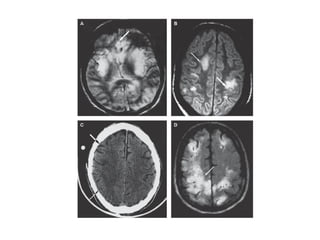
Herpes Simplex Encephalitis (HSE)
A serious complications
• Global involvement of the brain
• The brain is almost liquefied
• The mortality rate approaches 100%
• IV acyclovir is given in all cases of
suspected HSE
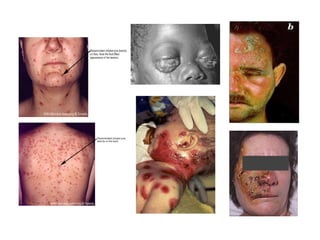
Other Cutaneous
Manifestations
Eczema Herpeticum
• A potentially serious disease that
occurs in patients with eczema
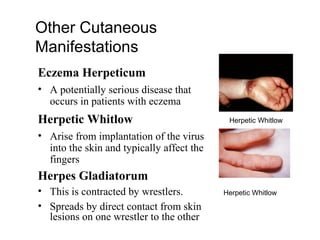
Herpetic Whitlow
• Arise from implantation of the virus
into the skin and typically affect the
fingers
Herpes Gladiatorum
• This is contracted by wrestlers.
• Spreads by direct contact from skin
lesions on one wrestler to the other
Herpetic Whitlow
Herpetic Whitlow
Lab Diagnosis
• Culture: requires a 3-7 days for result; has
limitations
• ELISA & IF to detect virus specific glycoproteins:
same day result; can differentiate between HSV 1 &
HSV 2
• ELISA & IF to detect antibodies: not useful in
recurrent infections
• PCR for HSV-DNA particularly in CSF in herpes
encephalitis
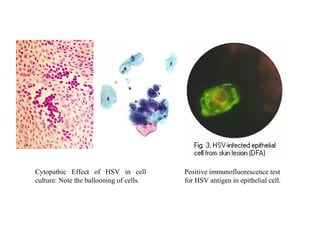
• Tzanck Smear: cells from base of ulcer are
stained with Giemsa stain: Presence of
multinucleated giant cells suggests HSV
Cytopathic Effect of HSV in cell
culture: Note the ballooning of cells.
Positive immunofluorescence test
for HSV antigen in epithelial cell.
Management
Only a few indications of antiviral
chemo­therapy:
 Severe primary infection
 Sight­threatening ocular herpes
 Herpes simplex encephalitis
Acyclovir
• I.V, Oral, Cream, Ophthalmic ointment

Lect 3 - Herpes viruses hsv

  • 1.
  • 4.
    • Are aleading cause of human viral diseases; second only to influenza and cold viruses • The name herpes comes from the Greek word herpein which means to creep: creeping or spreading nature of the skin lesions • Can cause active disease or remain silent lifelong to be reactivated during periods of immunosuppression Herpesviruses
  • 5.
    1. Alphaherpesviruses  Herpessimplex virus (HSV-1 & 2)  Varicella zoster virus (VZV) 2. Betaherpesviruses  Cytomegalovirus (CMV)  Human herpes virus-6 (HHV-6 & 7) 3. Gammaherpesviruses  Epstein bar virus (EBV)  Human herpes virus-8 (HHV-8) Herpesviruses: subfamilies
  • 6.
    Herpesvirus Particle • Envelopeddouble stranded DNA viruses (Linda Stannard, University of Cape Town, S.A.) Fried-egg appearance
  • 7.
  • 8.
    Properties • Are verylarge viruses • Types: HSV-1 & HSV-2 • Man is the only natural host
  • 9.
    Epidemiology • The virusis shed in saliva, tears, genital and other secretions: Spreads by: Kissing Sexual contact Use of utensils contaminated with saliva Mother to child during birth and postnatal Mother to fetus in utero
  • 10.
  • 11.
  • 12.
    Primary infection • Isusually subclinical in most individuals • Generally HSV-1 causes infection above the waist and HSV-2 below the waist  40% of genital sores are due to HSV-1  5% of facial herpes are due to HSV-2 • HSV spreads locally and a short-lived viraemia occurs Pathogenesis
  • 13.
  • 14.
  • 15.
    Pathogenesis Reactivation occurs dueto: Physical or psychological stress Infection Fever Irradiation including sunlight Menstruation • 45% of oral lesions • 60% of genital herpes
  • 16.
    Clinical Manifestations 1. Acutegingivostomatitis 2. Herpes Labialis (cold sore) 3. Ocular Herpes 4. Herpes Genitalis 5. Other forms of cutaneous herpes 6. Meningitis 7. Encephalitis 8. Neonatal herpes
  • 17.
    Sites of HSV1 & 2 Infection Almost any human cell type can be infected by HSV
  • 18.
    Oral-facial Herpes Acute Gingivostomatitis •The commonest manifestation of primary herpetic infection • Pain and bleeding of the gums • Ulcers with necrotic bases • Usually a self limiting disease which lasts around 13 days.
  • 19.
    Herpes labialis (coldsore) • Is a recurrence of oral HS in about 45% of individuals • A prodrome of tingling, warmth or itching at the site • About 12 hours later, redness appears followed by papules and then vesicles Oral-facial Herpes
  • 21.
    Ocular Herpes Mild superficiallesions of the external eye, to severe sight-threatening diseases of the inner eye. • Keratitis – dendritic ulcers • Conjunctivitis • Iridocyclitis, chorioretinitis
  • 22.
    Genital Herpes • Maybe primary or recurrent • Infection sites can be the external genitalia, vagina, cervix, bladder, the sacral nerve routes • Redness on the external genitalia followed by itching papules and then vesicles • The lesions are prone to secondary infection e.g. S. aureus, Streptococcus and Candida albicans
  • 23.
  • 24.
    Herpes Simplex Encephalitis(HSE) A serious complications • Global involvement of the brain • The brain is almost liquefied • The mortality rate approaches 100% • IV acyclovir is given in all cases of suspected HSE
  • 26.
    Other Cutaneous Manifestations Eczema Herpeticum •A potentially serious disease that occurs in patients with eczema Herpetic Whitlow • Arise from implantation of the virus into the skin and typically affect the fingers Herpes Gladiatorum • This is contracted by wrestlers. • Spreads by direct contact from skin lesions on one wrestler to the other Herpetic Whitlow Herpetic Whitlow
  • 27.
    Lab Diagnosis • Culture:requires a 3-7 days for result; has limitations • ELISA & IF to detect virus specific glycoproteins: same day result; can differentiate between HSV 1 & HSV 2 • ELISA & IF to detect antibodies: not useful in recurrent infections • PCR for HSV-DNA particularly in CSF in herpes encephalitis • Tzanck Smear: cells from base of ulcer are stained with Giemsa stain: Presence of multinucleated giant cells suggests HSV
  • 28.
    Cytopathic Effect ofHSV in cell culture: Note the ballooning of cells. Positive immunofluorescence test for HSV antigen in epithelial cell.
  • 29.
    Management Only a fewindications of antiviral chemo­therapy:  Severe primary infection  Sight­threatening ocular herpes  Herpes simplex encephalitis Acyclovir • I.V, Oral, Cream, Ophthalmic ointment