Epstein–Barr
virus
Also called human herpesvirus
4 (HHV-4), is one of eight
known human herpesvirus
types in the herpes family, and
is one of the most common
viruses in humans.
Included in oncogenic viruses
Attribution-NonCommercial-ShareAlike
4.0 International (CC BY-NC-SA 4.0)
Structure
Structure
• The Epstein-Barr virus (EBV) was identified in 1964 by Epstein’s group in a cell
line derived from Burkitt lymphoma
• a human herpesvirus, classified within the gammaherpesviruses subfamily, and
is the prototype of the Lymphocryptovirus genus.
• the first isolated human tumour virus
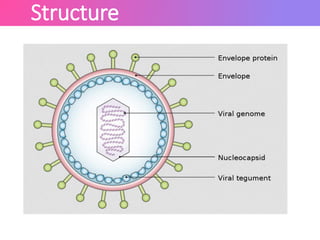
• EBV is a DNA virus with a toroid-shaped protein core that is wrapped with DNA
• a nucleocapsid with 162 capsomers
• a protein tegument between the nucleocapsid and the envelope, and an outer
envelope with external virus-encoded glycoprotein spikes
Replication
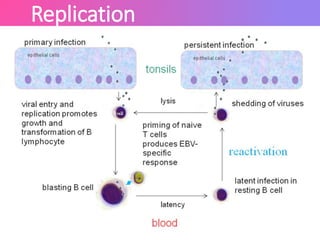
• EBV can infect both B cells and epithelial cells.
• To enter B cells, viral glycoprotein gp350 binds to cellular receptor
CD21 and MHC class II molecule. This is follower y membrane
fusion. In epithelial cells they uses integrins to enter into the cells.
• EBV can undergo lytic replication in both B cells and epithelial cells.
During lytic replication, viral DNA polymerase is responsible for
copying the viral genome. Lytic gene products are produced in
three consecutive stages: immediate-early, early, and late
Replication
• Unlike lytic replication, latency does not result in production of
virions.
• the EBV genome circular DNA resides in the cell nucleus as an
episome and is copied by cellular DNA polymerase.
• Latent EBV in B cells can be reactivated to switch to lytic
replication.
Replication
Mononucleosis
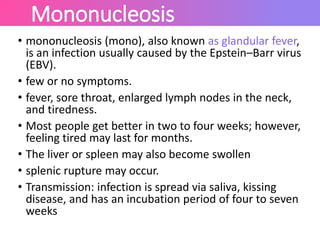
• mononucleosis (mono), also known as glandular fever,
is an infection usually caused by the Epstein–Barr virus
(EBV).
• few or no symptoms.
• fever, sore throat, enlarged lymph nodes in the neck,
and tiredness.
• Most people get better in two to four weeks; however,
feeling tired may last for months.
• The liver or spleen may also become swollen
• splenic rupture may occur.
• Transmission: infection is spread via saliva, kissing
disease, and has an incubation period of four to seven
weeks
Mononucleosis
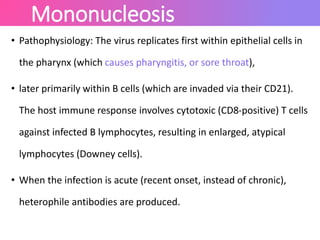
• Pathophysiology: The virus replicates first within epithelial cells in
the pharynx (which causes pharyngitis, or sore throat),
• later primarily within B cells (which are invaded via their CD21).
The host immune response involves cytotoxic (CD8-positive) T cells
against infected B lymphocytes, resulting in enlarged, atypical
lymphocytes (Downey cells).
• When the infection is acute (recent onset, instead of chronic),
heterophile antibodies are produced.
Mononucleosis
• There is no vaccines and no treatment for EBV
• The disease will clear by its own
• Get plenty of rest.
• Drink a lot of water and other liquids to stay hydrated.
• gargle with warm salt water, to make your sore throat feel better.
• Take painkillers like acetaminophen or ibuprofen to bring down
fever and relieve body aches.
Burkitt's lymphoma
• Burkitt's lymphoma (BL) occurs endemically in parts of
Africa(where it is the commonest childhood tumor) and
Papua New Guinea.
• Multiple copies of EBV genome and some EBV antigens
can be found in BL cells and patients with BL have high
titres of antibodies against various EBV antigens.
Burkitt's lymphoma
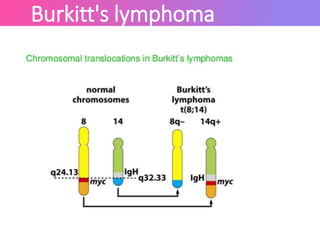
• BL cells show a reciprocal translocation between the long
arm of chromosome 8 and chromosomes 14, 2 or 22.
• This translocation result in the c-myc oncogene being
transferred to the Immunoglobulin gene regions. This
results in the deregulation of the c-myc gene. infection
and is not caused by EBV.
• sporadic cases of BL occur, especially in AIDS patients
which may or may not be associated with EBV.
Burkitt's lymphoma
Other Cancers
• Nasopharyngeal carcinoma (NPC) is a malignant tumor of the
squamous epithelium of the nasopharynx. It is very prevalent in S.
China, where it is the commonest tumor in men and the second
commonest in women.
• Hodgkin's lymphoma (HL) is a type of lymphoma which is generally
believed to result from white blood cells of the lymphocyte kind.
Symptoms may include fever, night sweats, and weight loss. Often
there will be non-painful enlarged lymph nodes in the neck, under the
arm, or in the groin. Those affected may feel tired or be itchy. About
half of cases of Hodgkin's lymphoma are due to Epstein–Barr virus
(EBV)
Diagnosis
• Acute EBV infection is usually made by antibody test and/or
detection of anti-EBV VCA IgM.
• Cases of Burkitt’s lymphoma should be diagnosed by histology. In
over 90% of cases, the cells express IgM at the cell surface.
• Cases of NPC should be diagnosed by histology.
• The determination of the titre of anti-EBV VCA IgA in screening
for early lesions of NPC and also for monitoring treatment.
• A patient with with non-specific ENT symptoms who have elevated
titers of EBV IgA should be given a thorough examination.
• ELISA, PCR can be also emloyed
Treatment
• self-limited illness : not require specific therapy
• Inpatient therapy of medical and surgical complications
may be required
• Acyclovir (10 mg/kg/dose IV q8h for 7-10 d)
• IVIG (400 mg/kg/d IV for 2-5 d)

Epstein–Barr virus

  • 1.
    Epstein–Barr virus Also called humanherpesvirus 4 (HHV-4), is one of eight known human herpesvirus types in the herpes family, and is one of the most common viruses in humans. Included in oncogenic viruses Attribution-NonCommercial-ShareAlike 4.0 International (CC BY-NC-SA 4.0)
  • 2.
  • 3.
    Structure • The Epstein-Barrvirus (EBV) was identified in 1964 by Epstein’s group in a cell line derived from Burkitt lymphoma • a human herpesvirus, classified within the gammaherpesviruses subfamily, and is the prototype of the Lymphocryptovirus genus. • the first isolated human tumour virus • EBV is a DNA virus with a toroid-shaped protein core that is wrapped with DNA • a nucleocapsid with 162 capsomers • a protein tegument between the nucleocapsid and the envelope, and an outer envelope with external virus-encoded glycoprotein spikes
  • 4.
    Replication • EBV caninfect both B cells and epithelial cells. • To enter B cells, viral glycoprotein gp350 binds to cellular receptor CD21 and MHC class II molecule. This is follower y membrane fusion. In epithelial cells they uses integrins to enter into the cells. • EBV can undergo lytic replication in both B cells and epithelial cells. During lytic replication, viral DNA polymerase is responsible for copying the viral genome. Lytic gene products are produced in three consecutive stages: immediate-early, early, and late
  • 5.
    Replication • Unlike lyticreplication, latency does not result in production of virions. • the EBV genome circular DNA resides in the cell nucleus as an episome and is copied by cellular DNA polymerase. • Latent EBV in B cells can be reactivated to switch to lytic replication.
  • 6.
  • 7.
    Mononucleosis • mononucleosis (mono),also known as glandular fever, is an infection usually caused by the Epstein–Barr virus (EBV). • few or no symptoms. • fever, sore throat, enlarged lymph nodes in the neck, and tiredness. • Most people get better in two to four weeks; however, feeling tired may last for months. • The liver or spleen may also become swollen • splenic rupture may occur. • Transmission: infection is spread via saliva, kissing disease, and has an incubation period of four to seven weeks
  • 8.
    Mononucleosis • Pathophysiology: Thevirus replicates first within epithelial cells in the pharynx (which causes pharyngitis, or sore throat), • later primarily within B cells (which are invaded via their CD21). The host immune response involves cytotoxic (CD8-positive) T cells against infected B lymphocytes, resulting in enlarged, atypical lymphocytes (Downey cells). • When the infection is acute (recent onset, instead of chronic), heterophile antibodies are produced.
  • 9.
    Mononucleosis • There isno vaccines and no treatment for EBV • The disease will clear by its own • Get plenty of rest. • Drink a lot of water and other liquids to stay hydrated. • gargle with warm salt water, to make your sore throat feel better. • Take painkillers like acetaminophen or ibuprofen to bring down fever and relieve body aches.
  • 10.
    Burkitt's lymphoma • Burkitt'slymphoma (BL) occurs endemically in parts of Africa(where it is the commonest childhood tumor) and Papua New Guinea. • Multiple copies of EBV genome and some EBV antigens can be found in BL cells and patients with BL have high titres of antibodies against various EBV antigens.
  • 11.
    Burkitt's lymphoma • BLcells show a reciprocal translocation between the long arm of chromosome 8 and chromosomes 14, 2 or 22. • This translocation result in the c-myc oncogene being transferred to the Immunoglobulin gene regions. This results in the deregulation of the c-myc gene. infection and is not caused by EBV. • sporadic cases of BL occur, especially in AIDS patients which may or may not be associated with EBV.
  • 12.
  • 13.
    Other Cancers • Nasopharyngealcarcinoma (NPC) is a malignant tumor of the squamous epithelium of the nasopharynx. It is very prevalent in S. China, where it is the commonest tumor in men and the second commonest in women. • Hodgkin's lymphoma (HL) is a type of lymphoma which is generally believed to result from white blood cells of the lymphocyte kind. Symptoms may include fever, night sweats, and weight loss. Often there will be non-painful enlarged lymph nodes in the neck, under the arm, or in the groin. Those affected may feel tired or be itchy. About half of cases of Hodgkin's lymphoma are due to Epstein–Barr virus (EBV)
  • 14.
    Diagnosis • Acute EBVinfection is usually made by antibody test and/or detection of anti-EBV VCA IgM. • Cases of Burkitt’s lymphoma should be diagnosed by histology. In over 90% of cases, the cells express IgM at the cell surface. • Cases of NPC should be diagnosed by histology. • The determination of the titre of anti-EBV VCA IgA in screening for early lesions of NPC and also for monitoring treatment. • A patient with with non-specific ENT symptoms who have elevated titers of EBV IgA should be given a thorough examination. • ELISA, PCR can be also emloyed
  • 15.
    Treatment • self-limited illness: not require specific therapy • Inpatient therapy of medical and surgical complications may be required • Acyclovir (10 mg/kg/dose IV q8h for 7-10 d) • IVIG (400 mg/kg/d IV for 2-5 d)