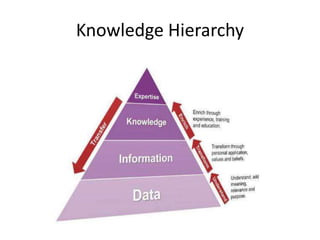
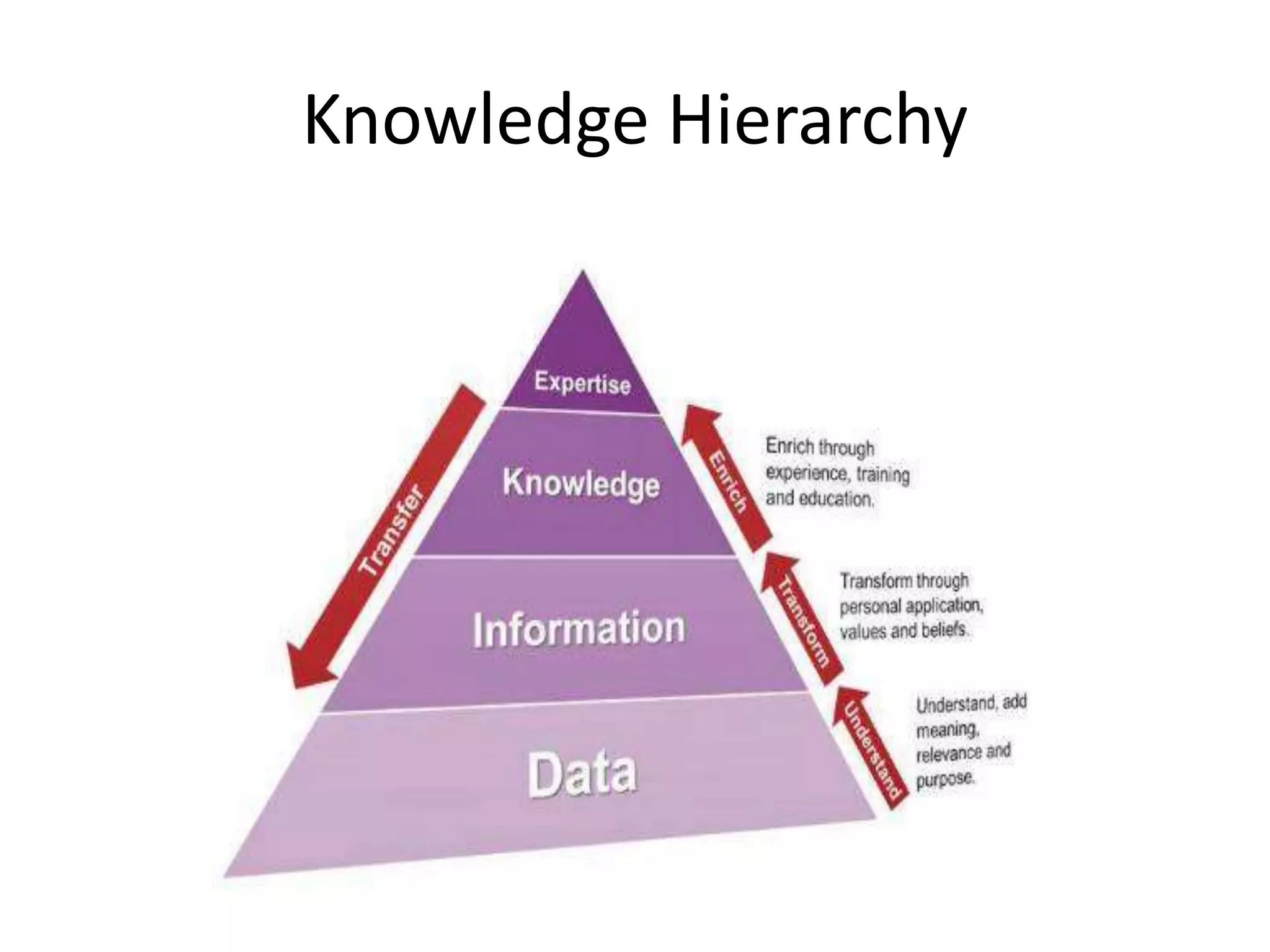
Knowledge Hierarchy
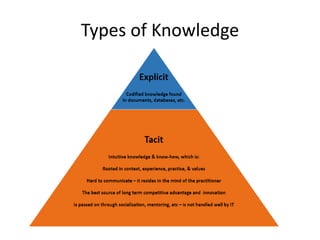
Types of Knowledge
Knowledge Life Cycle
Knowledge Management System
• A knowledge management system (KMS) is an
information system designed particularly to:
• assist the sharing and
• integration of knowledge
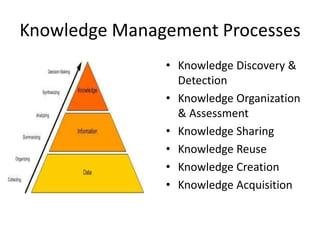
Knowledge Management Processes
• Knowledge Discovery &
Detection
• Knowledge Organization
& Assessment
• Knowledge Sharing
• Knowledge Reuse
• Knowledge Creation
• Knowledge Acquisition
Benefits of KM
• Every person in the company
has access to management
and business knowledge
• Makes it possible for you to
support new technologies
easily and capture new
knowledge for future use
• Due to the existing knowledge
base, the employees can
quickly find all the information
they need
• Create knowledge base
articles using the real-time
HTML editing tools
• Facilitates IT staff members
stay up to date on various,
ever-changing technologies
• Reduces IT costs without
having to compromise quality
service to internal and
external customers
• Improves staff engagement
and communication
• Helps in delivering better
measurement and
accountability
KM Systems Examples
• Feedback database –
– A company may have a database of feedback from
customers and employees
– shares this feedback with their design and
research and development departments
– All members of the organization would be able to
enter feedback into the database
– integrated approach would be taken to
understanding the shared information
• Shared project files –
– An employee team can work collaboratively on a
project
– They have a system of shared files and
information that allows everyone on the team to
upload and comment on work performed by
others.
• Research files –
– A company developing a new product conducts
research on their competitors and what is needed in
their product or market niche
– This information is entered into a database that
contains objective data on market sales potential and
indicates what assets and processes the company has
in place which can be used to meet this sales
potential, meet customer needs and fill gaps within
the marketplace
Key Terms of KM
• Knowledge Architect- staff member who:
– Overseas definitions of knowledge and intellectual processes
– Identifies technological and human requirements to use this
knowledge
• Knowledge Assets- or intellectual capital is:
– Human, structural and other resources available (assets)
– Knowledge is what is in the mind/intellect of these assets
• Knowledge Bridge- a connection between:
– Business processes and different functions of organization
• Knowledge Workers- employees and
managers who:
– Contributes significantly to the intellectual capital of the org
• Knowledge Economy- an economy of
knowledge focused on the:
– Production and management of knowledge
– Within the framework of economic constraints

Knowledge management

  • 1.
  • 2.
  • 3.
  • 4.
    Knowledge Management System •A knowledge management system (KMS) is an information system designed particularly to: • assist the sharing and • integration of knowledge
  • 5.
    Knowledge Management Processes •Knowledge Discovery & Detection • Knowledge Organization & Assessment • Knowledge Sharing • Knowledge Reuse • Knowledge Creation • Knowledge Acquisition
  • 6.
    Benefits of KM •Every person in the company has access to management and business knowledge • Makes it possible for you to support new technologies easily and capture new knowledge for future use • Due to the existing knowledge base, the employees can quickly find all the information they need • Create knowledge base articles using the real-time HTML editing tools • Facilitates IT staff members stay up to date on various, ever-changing technologies • Reduces IT costs without having to compromise quality service to internal and external customers • Improves staff engagement and communication • Helps in delivering better measurement and accountability
  • 7.
    KM Systems Examples •Feedback database – – A company may have a database of feedback from customers and employees – shares this feedback with their design and research and development departments – All members of the organization would be able to enter feedback into the database – integrated approach would be taken to understanding the shared information
  • 8.
    • Shared projectfiles – – An employee team can work collaboratively on a project – They have a system of shared files and information that allows everyone on the team to upload and comment on work performed by others.
  • 9.
    • Research files– – A company developing a new product conducts research on their competitors and what is needed in their product or market niche – This information is entered into a database that contains objective data on market sales potential and indicates what assets and processes the company has in place which can be used to meet this sales potential, meet customer needs and fill gaps within the marketplace
  • 10.
    Key Terms ofKM • Knowledge Architect- staff member who: – Overseas definitions of knowledge and intellectual processes – Identifies technological and human requirements to use this knowledge • Knowledge Assets- or intellectual capital is: – Human, structural and other resources available (assets) – Knowledge is what is in the mind/intellect of these assets • Knowledge Bridge- a connection between: – Business processes and different functions of organization
  • 11.
    • Knowledge Workers-employees and managers who: – Contributes significantly to the intellectual capital of the org • Knowledge Economy- an economy of knowledge focused on the: – Production and management of knowledge – Within the framework of economic constraints