Downloaded 59 times
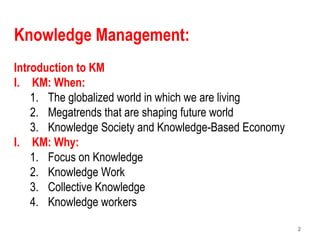
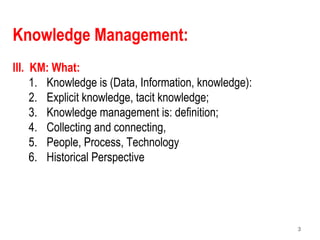
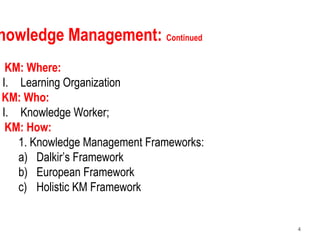
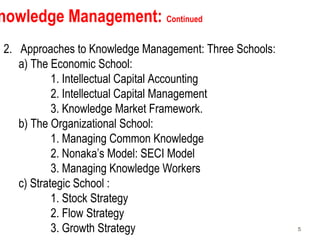
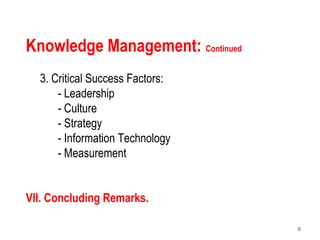
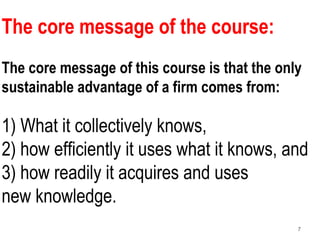






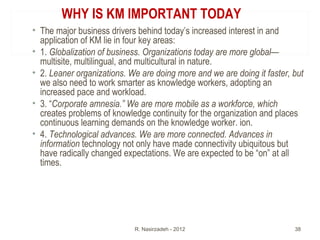
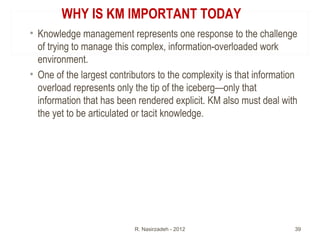
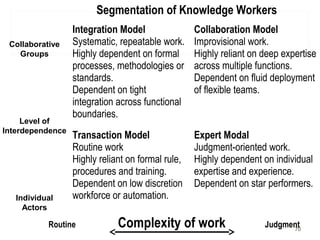


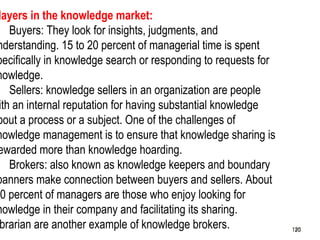
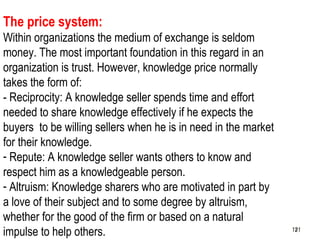
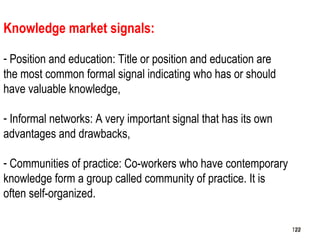
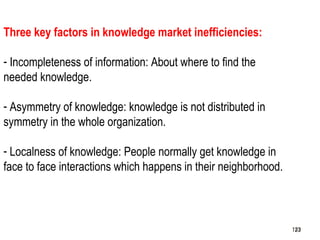
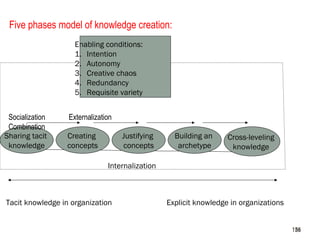

The document discusses knowledge management, including: 1) It defines the types of knowledge as explicit, tacit, old, and new. Explicit knowledge can be documented while tacit knowledge resides in people's minds and is harder to articulate. Old knowledge refers to what an organization already knows while new knowledge is created. 2) Knowledge transforms from data to information as it is contextualized, categorized, calculated, corrected, and condensed. It further transforms to knowledge through comparison, examining consequences, making connections, and conversation. 3) Knowledge management strategies focus on better utilizing existing or "old" knowledge within an organization as well as creating new knowledge. Often the first step is identifying what an organization already knows that resides in different


