Downloaded 275 times


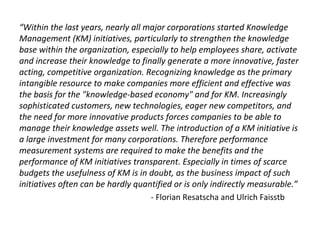
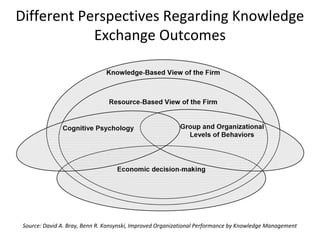
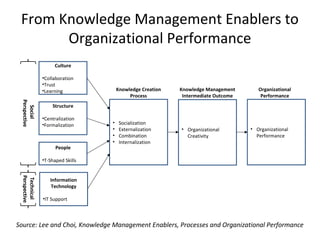
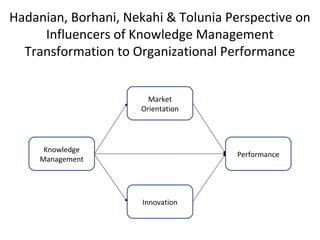
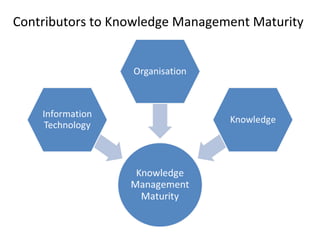
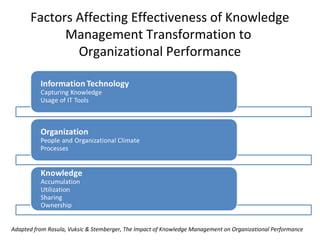
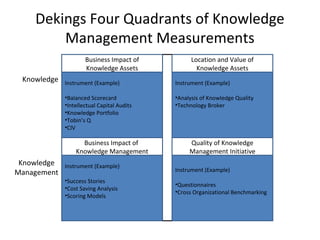
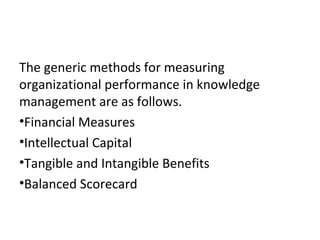
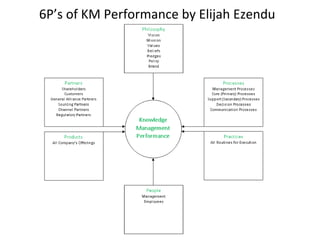
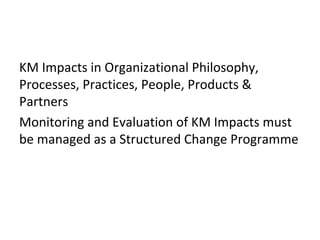
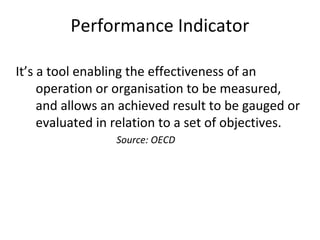
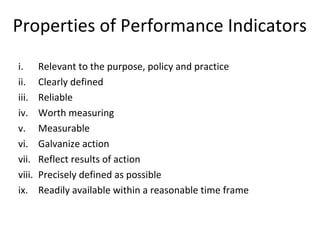
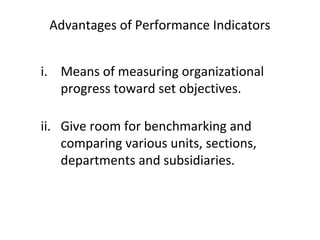
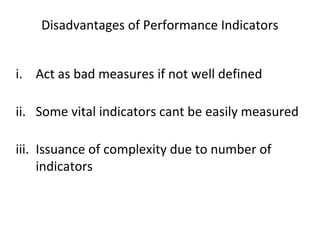
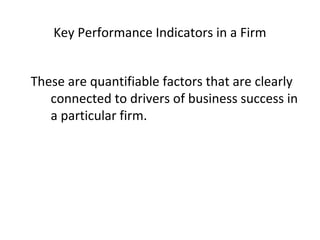
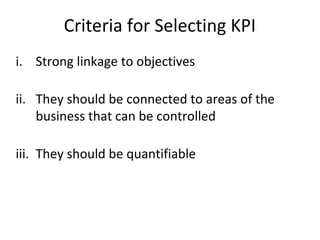
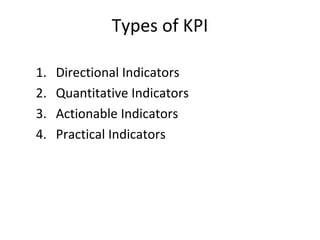
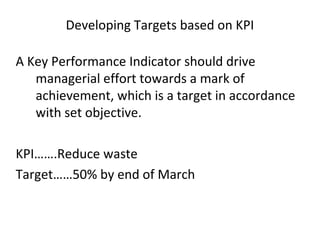
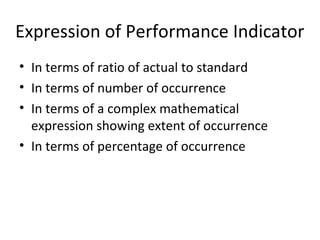
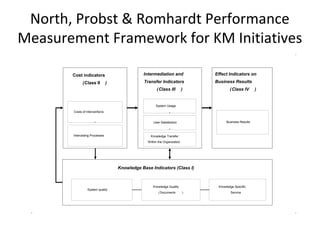
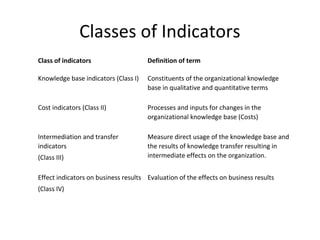
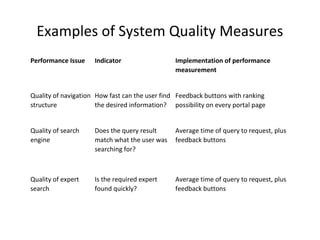
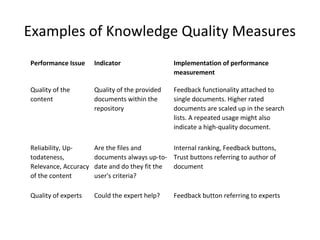
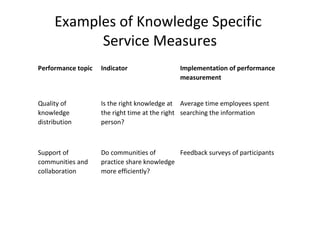
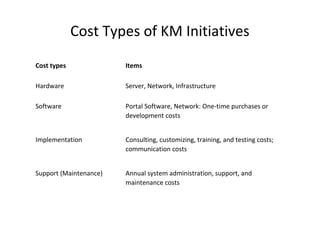
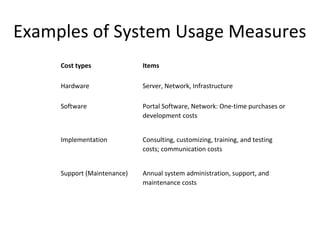
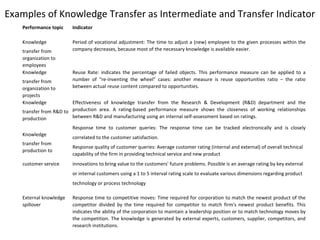
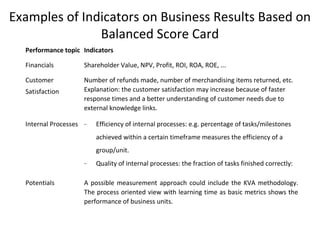
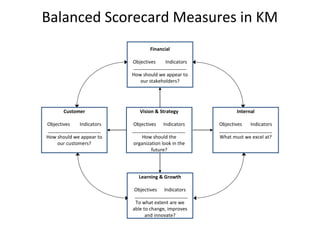
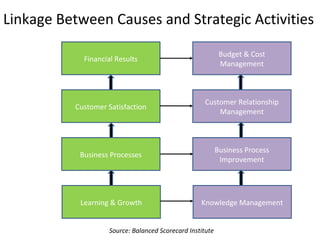
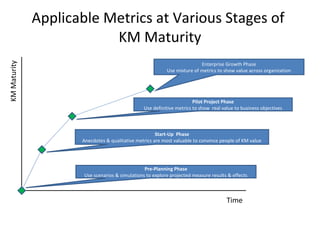
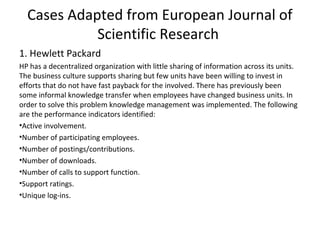
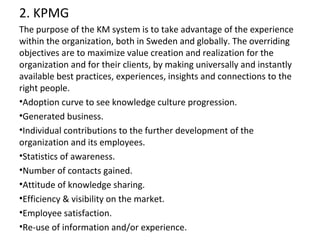
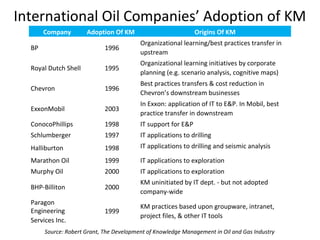
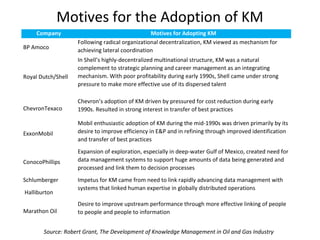



The document discusses various perspectives and frameworks for measuring the performance and impact of knowledge management (KM) initiatives in organizations. It provides examples of different types of KM performance indicators, including: - Financial measures, intellectual capital measures, and identification of tangible and intangible benefits. - Metrics related to the knowledge base, costs of KM interventions, knowledge transfer and usage, and effects on business results. - Specific metrics for system quality, knowledge quality, knowledge sharing and reuse, knowledge transfer outcomes, and costs. The document advocates for using a balanced set of leading and lagging indicators to evaluate KM programs from different levels of the organization and over time.


![[HR601] 003. KM Strategy & Implementation](https://cdn.slidesharecdn.com/ss_thumbnails/003-190422041742-thumbnail.jpg?width=640&height=640&fit=bounds)


