Knowledge Management Strategy & Roadmap
Dorothy Ortale
Ricardo Chavira
February 2013

1
Knowledge Management Strategy & Roadmap

Agenda
• What is Knowledge Management
• Knowledge Maturity Model
• Our Vision
• What’s in it for me?
• Strategy & Roadmap
– Where we are today
– Path to maturity

• Defining Success with Metrics
• Questions
2
What is Knowledge Management

Definition of Knowledge Management
Knowledge Management is responsible for
gathering, analyzing, storing and sharing
knowledge and information within the
organization. The primary purpose of
Knowledge Management is to improve efficiency
by reducing the need to rediscover knowledge

3
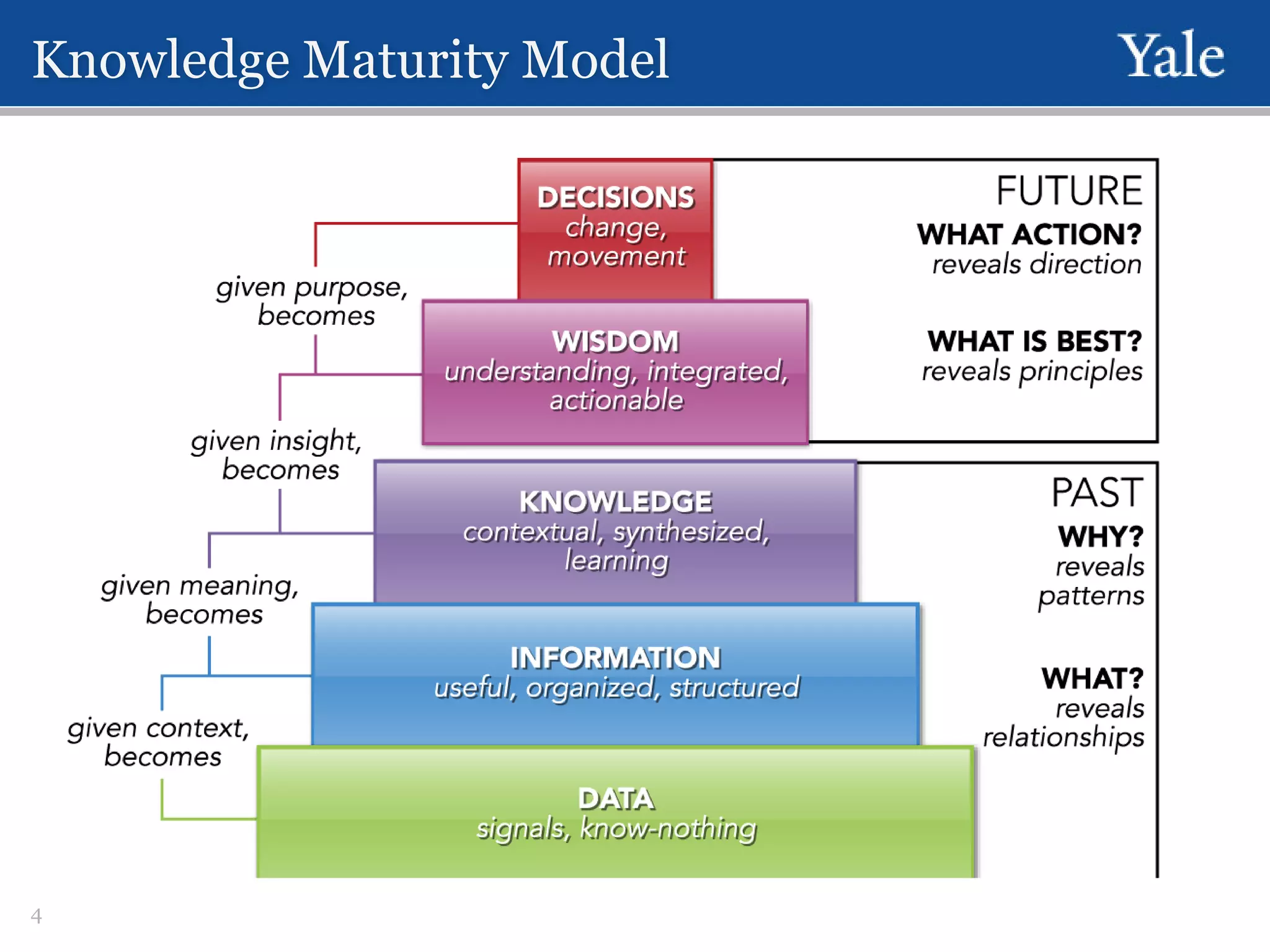
Knowledge Maturity Model

4
Our Vision

 Develop a Knowledge-Centered Support (KCS)
culture in which KM is integrated with all aspects of
service delivery, including documentation, issue
resolution, support provider tools, and self-service
options
 To build a creditable Knowledge Management system
that will be incorporated in all processes to deliver
rock solid service

5
What in it for Me?
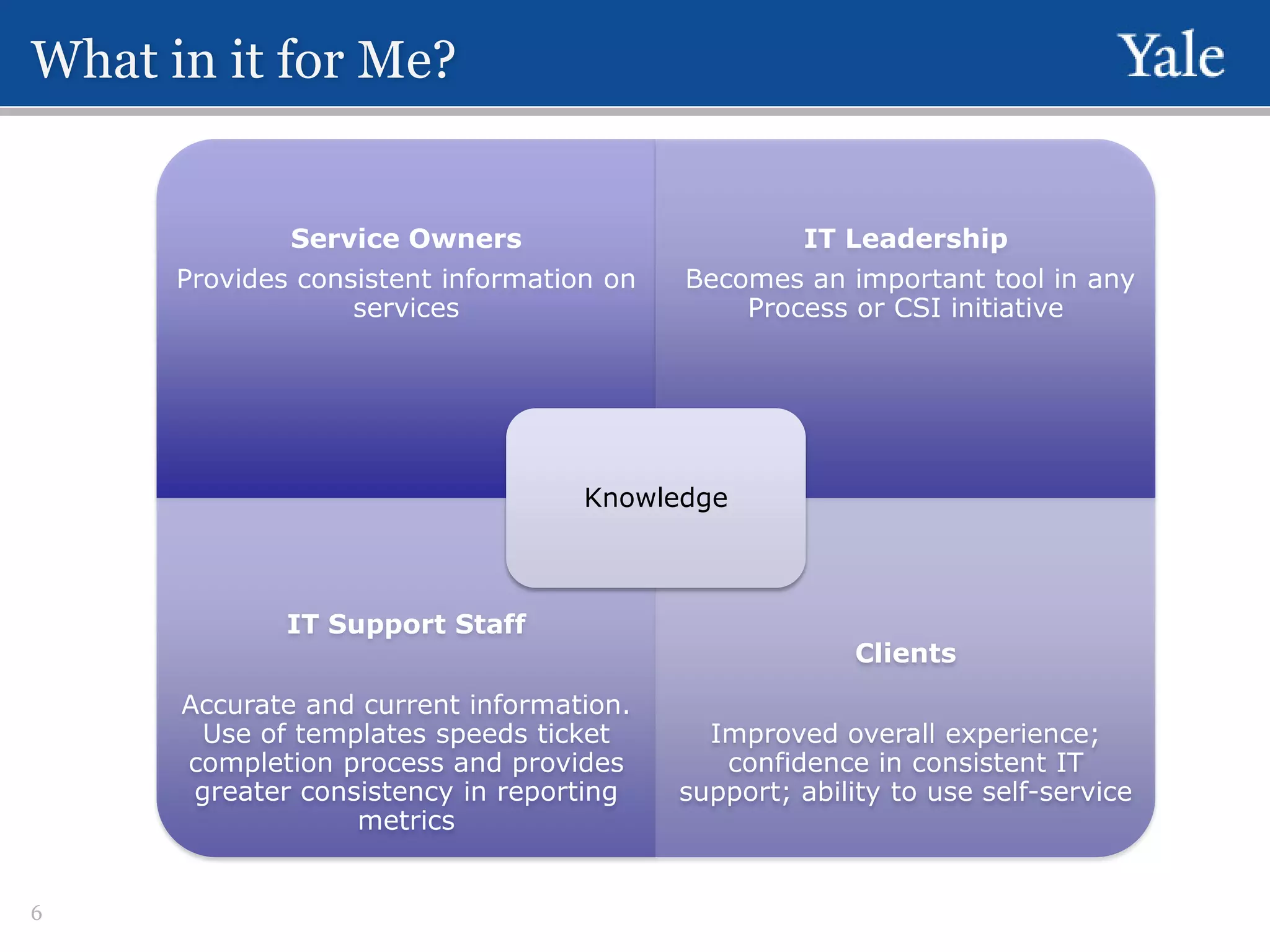
Service Owners

IT Leadership

Provides consistent information on
services

Becomes an important tool in any
Process or CSI initiative

Knowledge

IT Support Staff
Accurate and current information.
Use of templates speeds ticket
completion process and provides
greater consistency in reporting
metrics
6

Clients

Improved overall experience;
confidence in consistent IT
support; ability to use self-service
Strategy and Roadmap - Where we are today
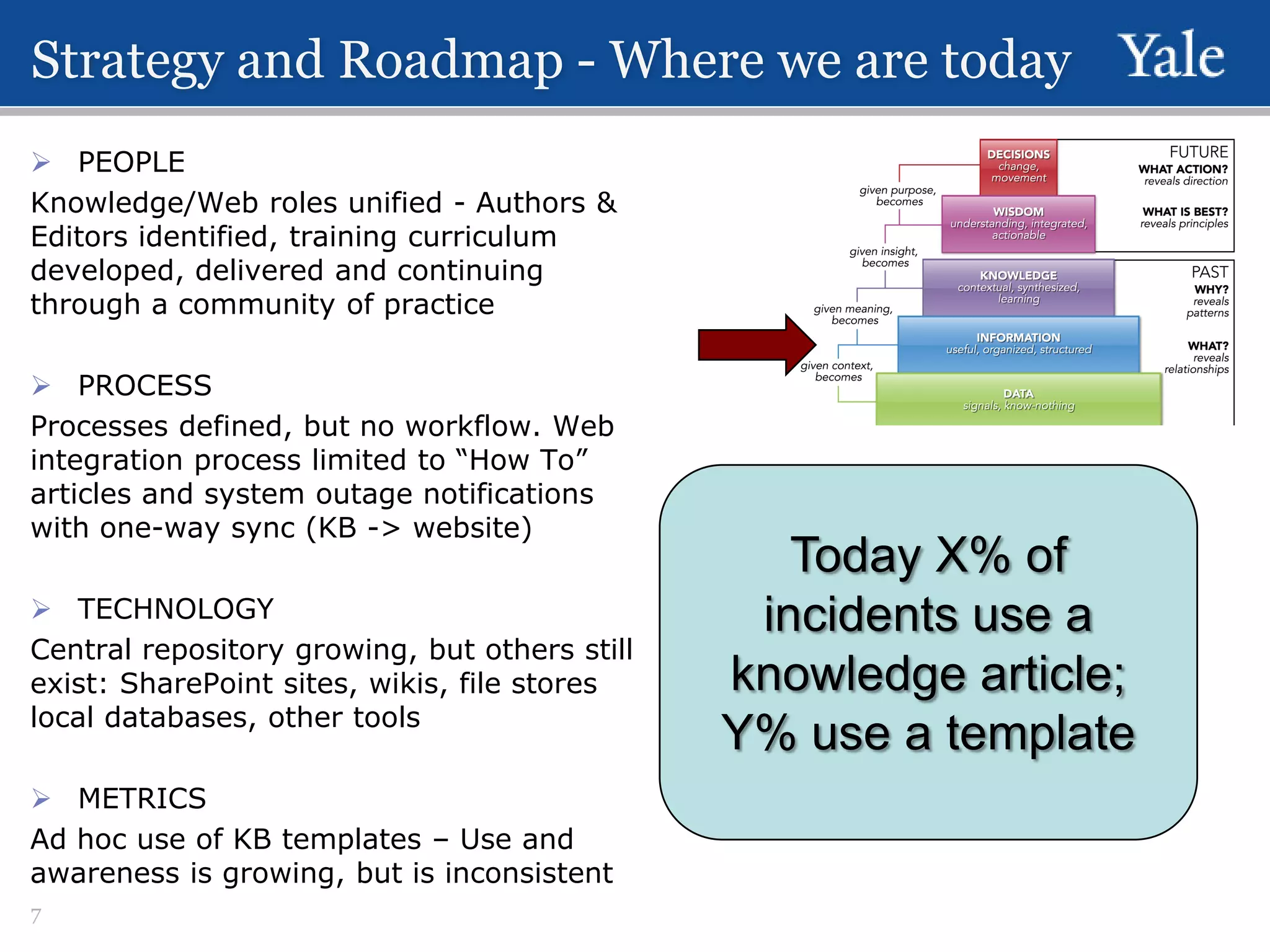
 PEOPLE
Knowledge/Web roles unified - Authors &
Editors identified, training curriculum
developed, delivered and continuing
through a community of practice
 PROCESS
Processes defined, but no workflow. Web
integration process limited to “How To”
articles and system outage notifications
with one-way sync (KB -> website)
 TECHNOLOGY
Central repository growing, but others still
exist: SharePoint sites, wikis, file stores
local databases, other tools
 METRICS
Ad hoc use of KB templates – Use and
awareness is growing, but is inconsistent
7

Today X% of
incidents use a
knowledge article;
Y% use a template
Path to Maturity

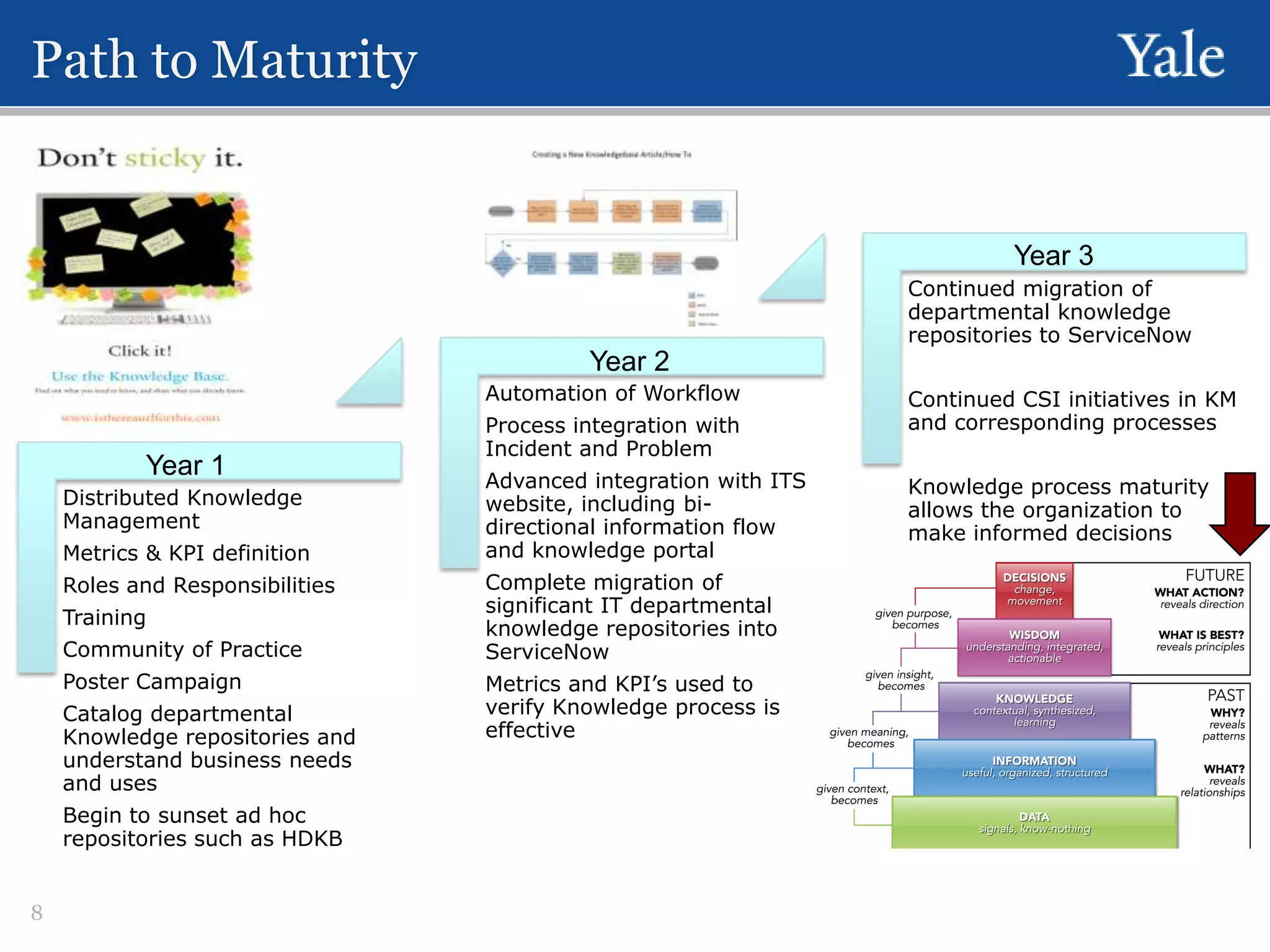
Year 3
Continued migration of
departmental knowledge
repositories to ServiceNow

Year 2
Automation of Workflow

Year 1
Distributed Knowledge
Management
Metrics & KPI definition
Roles and Responsibilities
Training
Community of Practice
Poster Campaign
Catalog departmental
Knowledge repositories and
understand business needs
and uses

Begin to sunset ad hoc
repositories such as HDKB
8

Process integration with
Incident and Problem
Advanced integration with ITS
website, including bidirectional information flow
and knowledge portal

Complete migration of
significant IT departmental
knowledge repositories into
ServiceNow
Metrics and KPI’s used to
verify Knowledge process is
effective

Continued CSI initiatives in KM
and corresponding processes
Knowledge process maturity
allows the organization to
make informed decisions
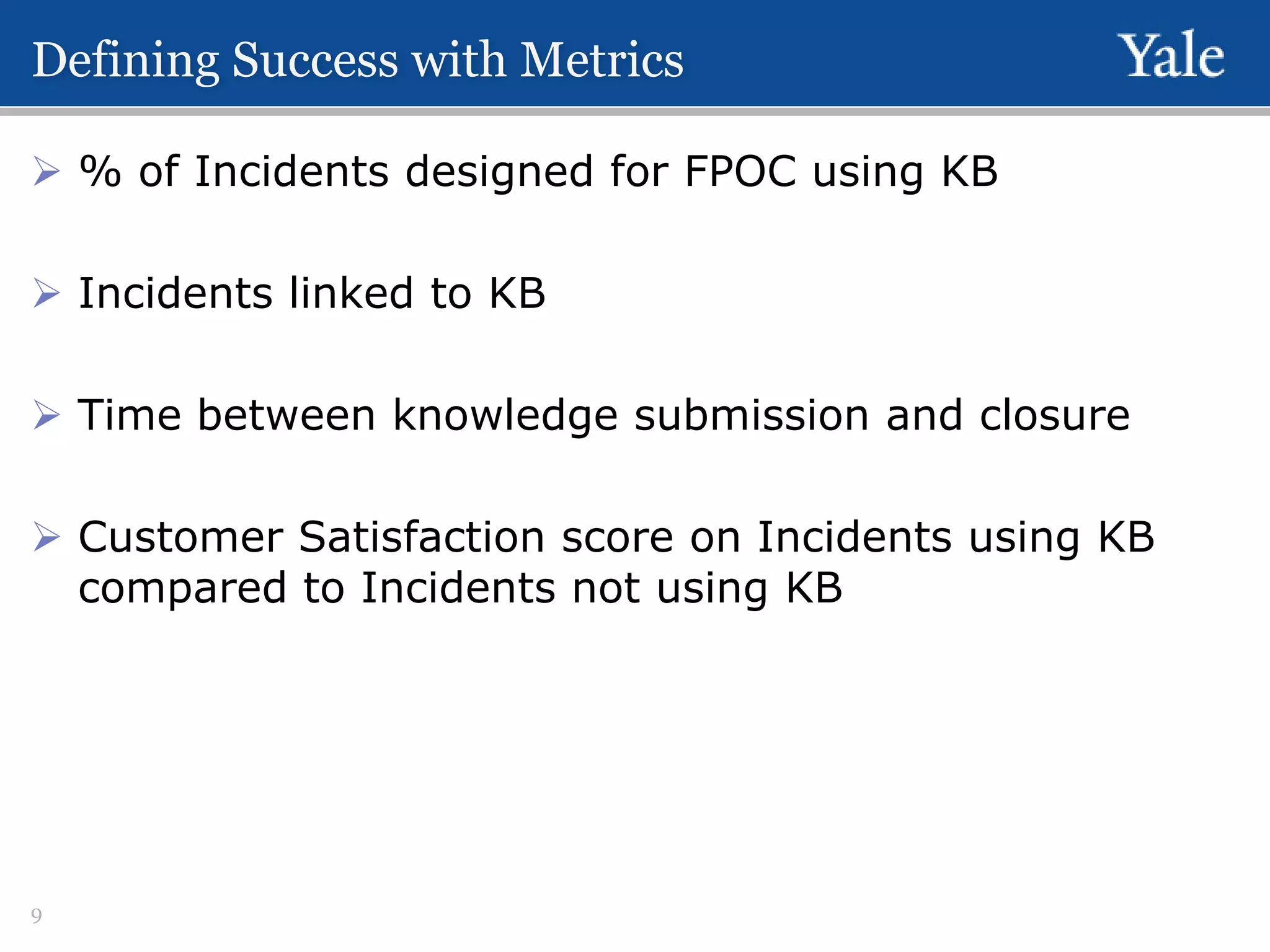
Defining Success with Metrics
 % of Incidents designed for FPOC using KB
 Incidents linked to KB
 Time between knowledge submission and closure

 Customer Satisfaction score on Incidents using KB
compared to Incidents not using KB

9
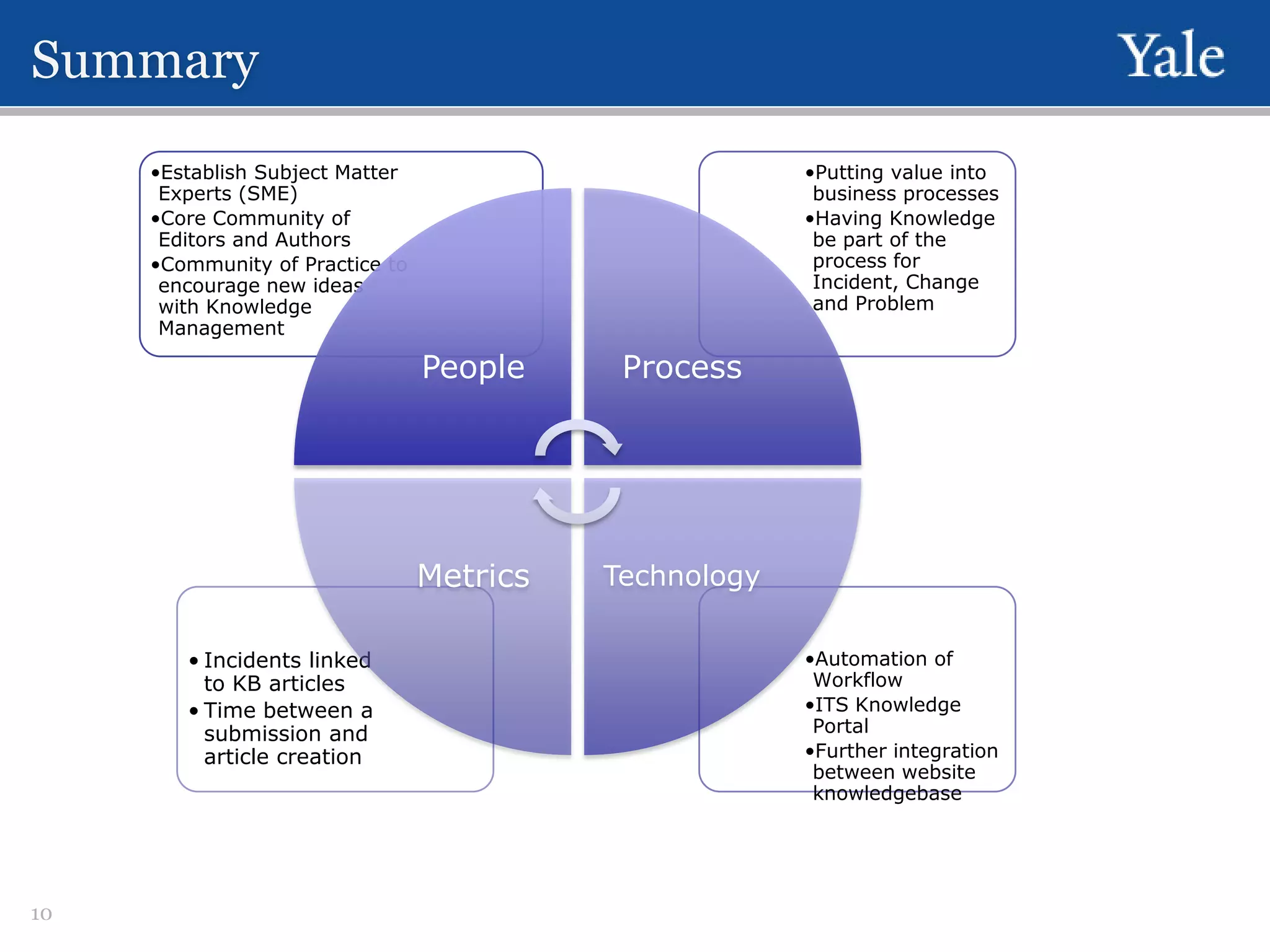
Summary
•Establish Subject Matter
Experts (SME)
•Core Community of
Editors and Authors
•Community of Practice to
encourage new ideas
with Knowledge
Management

•Putting value into
business processes
•Having Knowledge
be part of the
process for
Incident, Change
and Problem

People

Metrics
• Incidents linked
to KB articles
• Time between a
submission and
article creation

10

Process

Technology
•Automation of
Workflow
•ITS Knowledge
Portal
•Further integration
between website
knowledgebase
Questions?
Dorothy Ortale
dorothy.ortale@yale.edu

11

Itsm knowledge roadmap ar updates

  • 1.
    Knowledge Management Strategy& Roadmap Dorothy Ortale Ricardo Chavira February 2013 1
  • 2.
    Knowledge Management Strategy& Roadmap Agenda • What is Knowledge Management • Knowledge Maturity Model • Our Vision • What’s in it for me? • Strategy & Roadmap – Where we are today – Path to maturity • Defining Success with Metrics • Questions 2
  • 3.
    What is KnowledgeManagement Definition of Knowledge Management Knowledge Management is responsible for gathering, analyzing, storing and sharing knowledge and information within the organization. The primary purpose of Knowledge Management is to improve efficiency by reducing the need to rediscover knowledge 3
  • 4.
  • 5.
    Our Vision  Developa Knowledge-Centered Support (KCS) culture in which KM is integrated with all aspects of service delivery, including documentation, issue resolution, support provider tools, and self-service options  To build a creditable Knowledge Management system that will be incorporated in all processes to deliver rock solid service 5
  • 6.
    What in itfor Me? Service Owners IT Leadership Provides consistent information on services Becomes an important tool in any Process or CSI initiative Knowledge IT Support Staff Accurate and current information. Use of templates speeds ticket completion process and provides greater consistency in reporting metrics 6 Clients Improved overall experience; confidence in consistent IT support; ability to use self-service
  • 7.
    Strategy and Roadmap- Where we are today  PEOPLE Knowledge/Web roles unified - Authors & Editors identified, training curriculum developed, delivered and continuing through a community of practice  PROCESS Processes defined, but no workflow. Web integration process limited to “How To” articles and system outage notifications with one-way sync (KB -> website)  TECHNOLOGY Central repository growing, but others still exist: SharePoint sites, wikis, file stores local databases, other tools  METRICS Ad hoc use of KB templates – Use and awareness is growing, but is inconsistent 7 Today X% of incidents use a knowledge article; Y% use a template
  • 8.
    Path to Maturity Year3 Continued migration of departmental knowledge repositories to ServiceNow Year 2 Automation of Workflow Year 1 Distributed Knowledge Management Metrics & KPI definition Roles and Responsibilities Training Community of Practice Poster Campaign Catalog departmental Knowledge repositories and understand business needs and uses Begin to sunset ad hoc repositories such as HDKB 8 Process integration with Incident and Problem Advanced integration with ITS website, including bidirectional information flow and knowledge portal Complete migration of significant IT departmental knowledge repositories into ServiceNow Metrics and KPI’s used to verify Knowledge process is effective Continued CSI initiatives in KM and corresponding processes Knowledge process maturity allows the organization to make informed decisions
  • 9.
    Defining Success withMetrics  % of Incidents designed for FPOC using KB  Incidents linked to KB  Time between knowledge submission and closure  Customer Satisfaction score on Incidents using KB compared to Incidents not using KB 9
  • 10.
    Summary •Establish Subject Matter Experts(SME) •Core Community of Editors and Authors •Community of Practice to encourage new ideas with Knowledge Management •Putting value into business processes •Having Knowledge be part of the process for Incident, Change and Problem People Metrics • Incidents linked to KB articles • Time between a submission and article creation 10 Process Technology •Automation of Workflow •ITS Knowledge Portal •Further integration between website knowledgebase
  • 11.

Editor's Notes

  • #4 Knowledge Management is not:Full document management toolCollaboration toolRepository for 3-lock data (currently)
  • #5 THE KNOWLEDGE STORY – Imagine that we are a mature organization… effective self-service and first line support, consistent client experience. Problems solved more rapidly because we refer to past knowledge, and we begin to see actionable and proactive patterns, heading off future problems. In a mature environment all our service management information is fully integrated and begin to rely on this to make decisions. We can get there!
  • #6 Develop a knowledge-based culture where the use, creation, sharing, and maintaining of knowledge is part of everyone's job.Change in culture entails change in behavior.Need to know something? Check the KB. Need to document something? Add it to the KB.Our knowledge repositories need to be the go-to place for answers!
  • #8 I mentioned that Len wanted to ask about metrics, have a few up your sleeve
  • #9 Focus on:PeopleProcessTechnology
  • #11 Tighten up the words on this slide