Immunity: Part IV 
Acquired Immunity
Remember: Types of Immunity 
• Innate 
• Acquired 
– Is the body’s second major kind of defense 
– Involves the activity of lymphocytes 
Copyright © 2005 Pearson Education, Inc. publishing as Benjamin Cummings
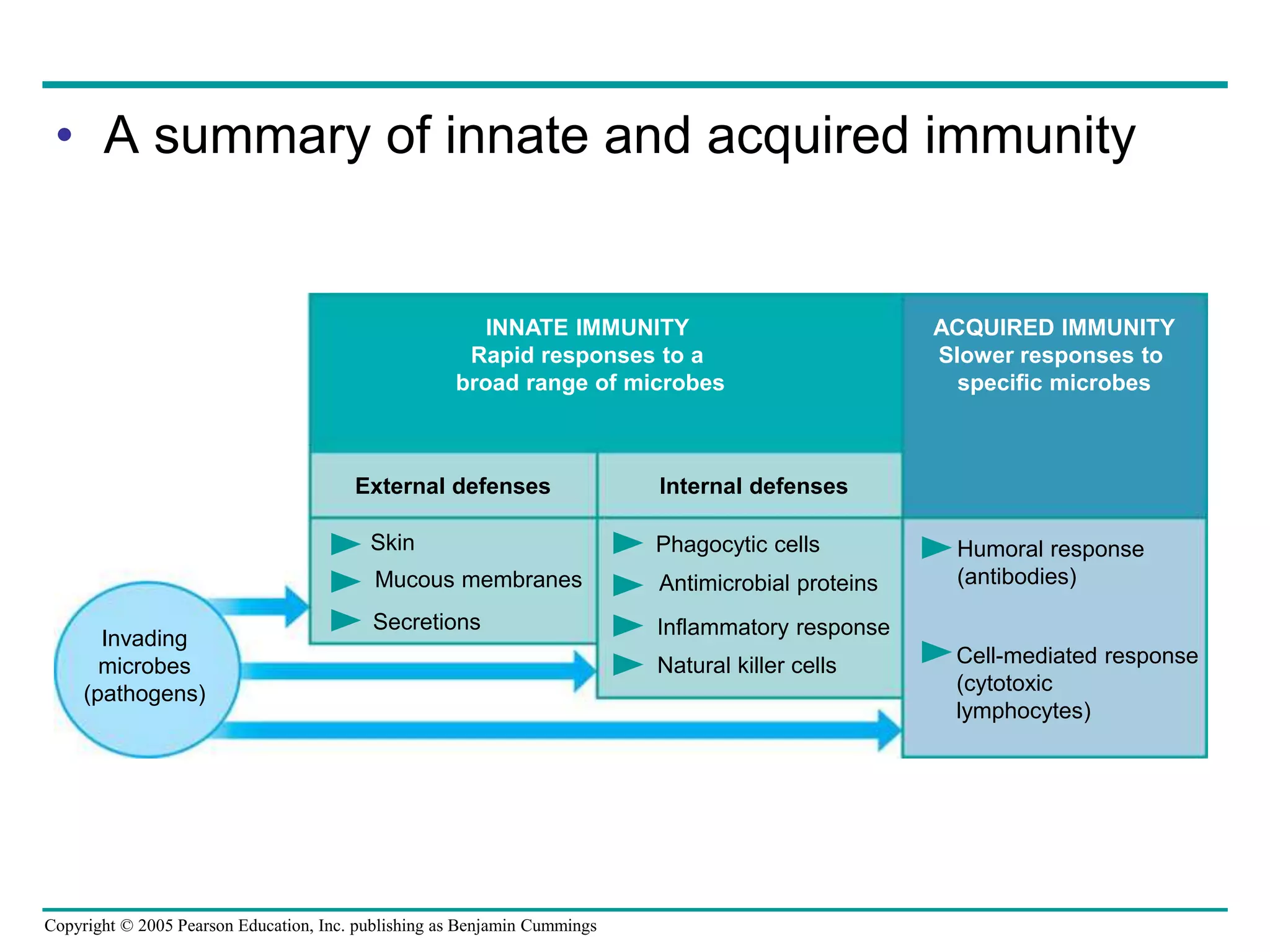
• A summary of innate and acquired immunity 
INNATE IMMUNITY 
Rapid responses to a 
broad range of microbes 
Copyright © 2005 Pearson Education, Inc. publishing as Benjamin Cummings 
ACQUIRED IMMUNITY 
Slower responses to 
specific microbes 
External defenses Internal defenses 
Skin 
Mucous membranes 
Secretions 
Phagocytic cells 
Antimicrobial proteins 
Inflammatory response 
Natural killer cells 
Humoral response 
(antibodies) 
Cell-mediated response 
(cytotoxic 
lymphocytes) 
Invading 
microbes 
(pathogens)
Notes Handout
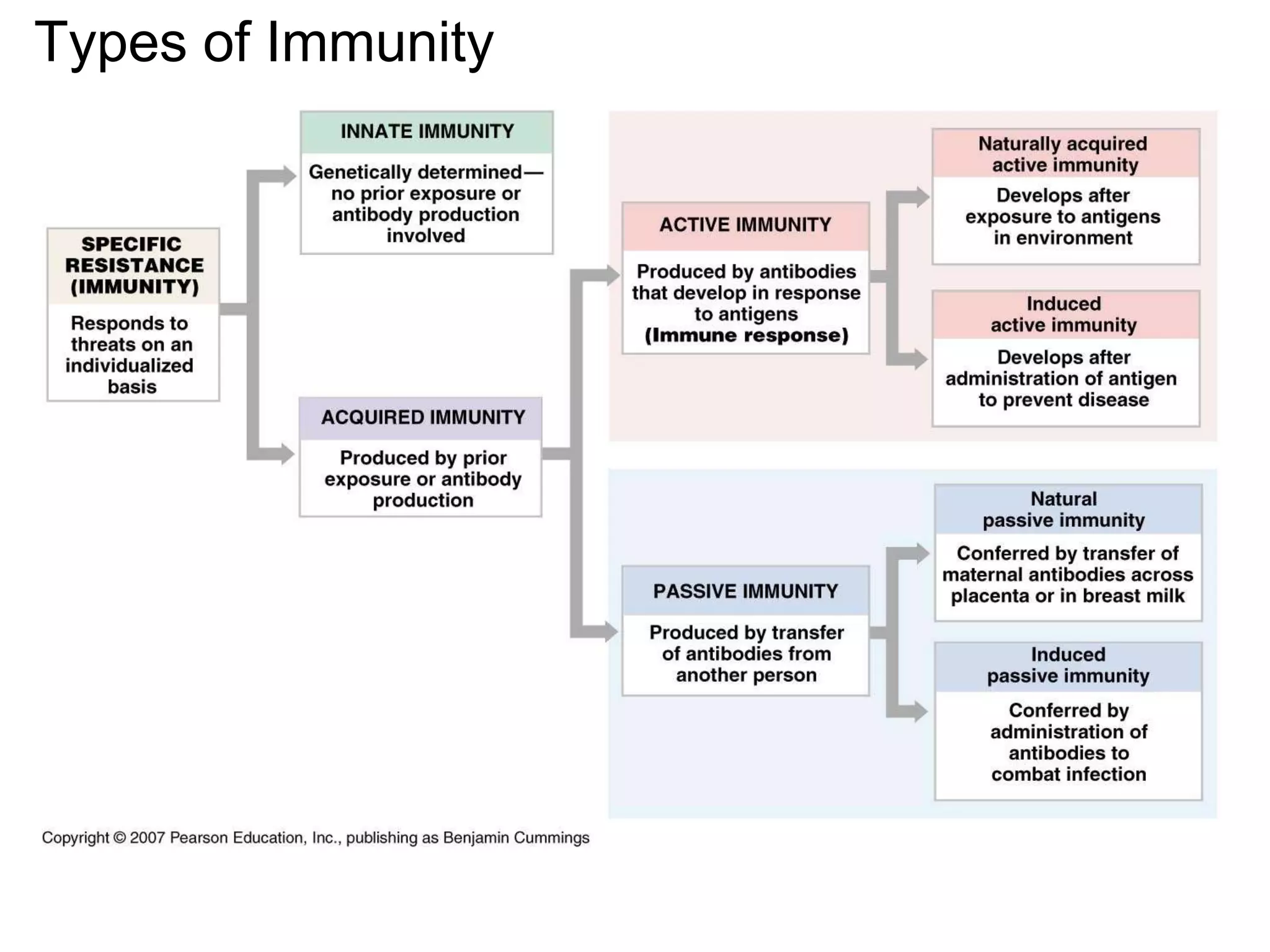
Types of Immunity
Properties of Immunity 
1.Specificity 
2.Versatility 
3.Memory 
4.Tolerance
Notes Handout
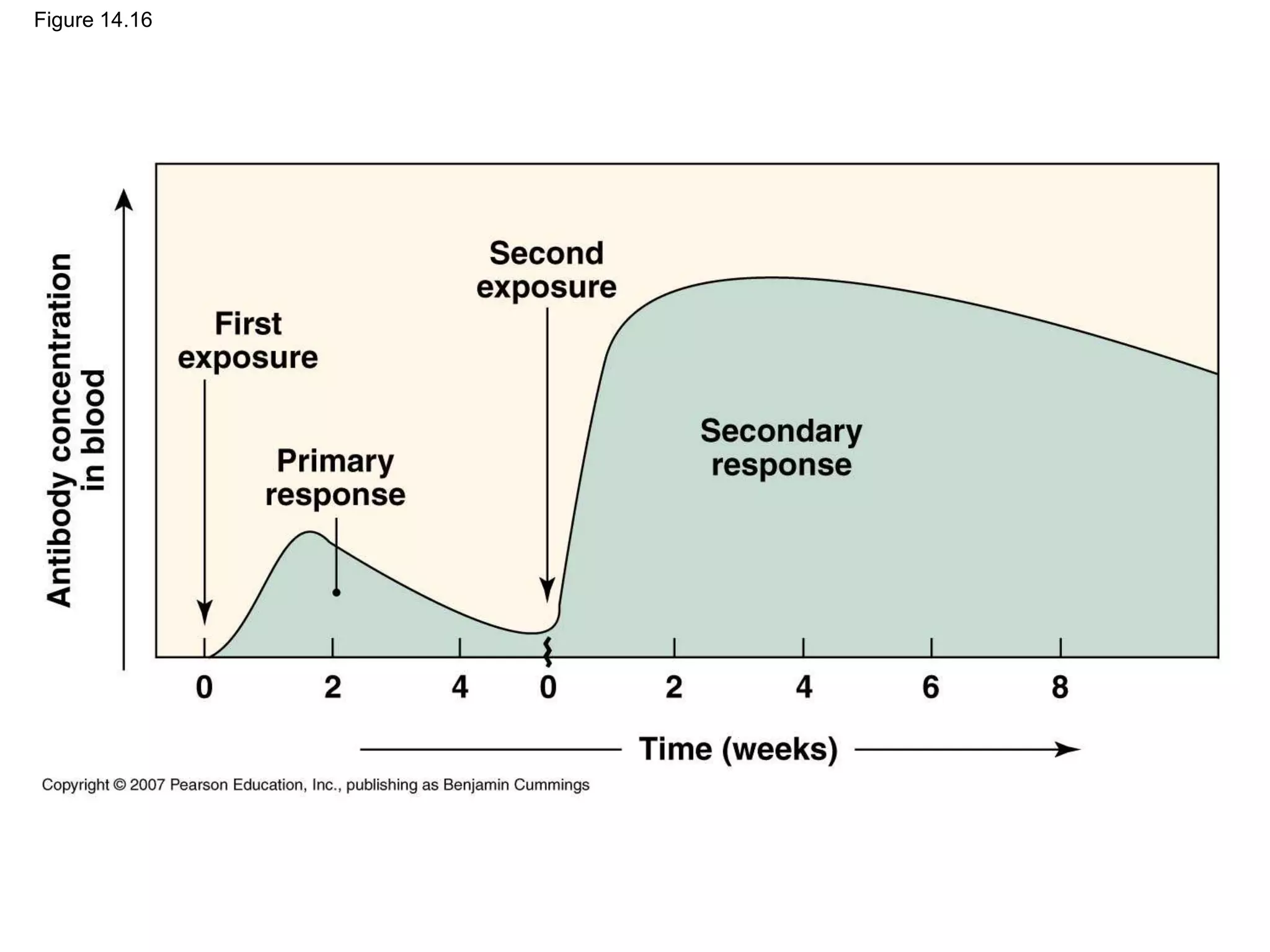
Figure 14.16
Notes Handout
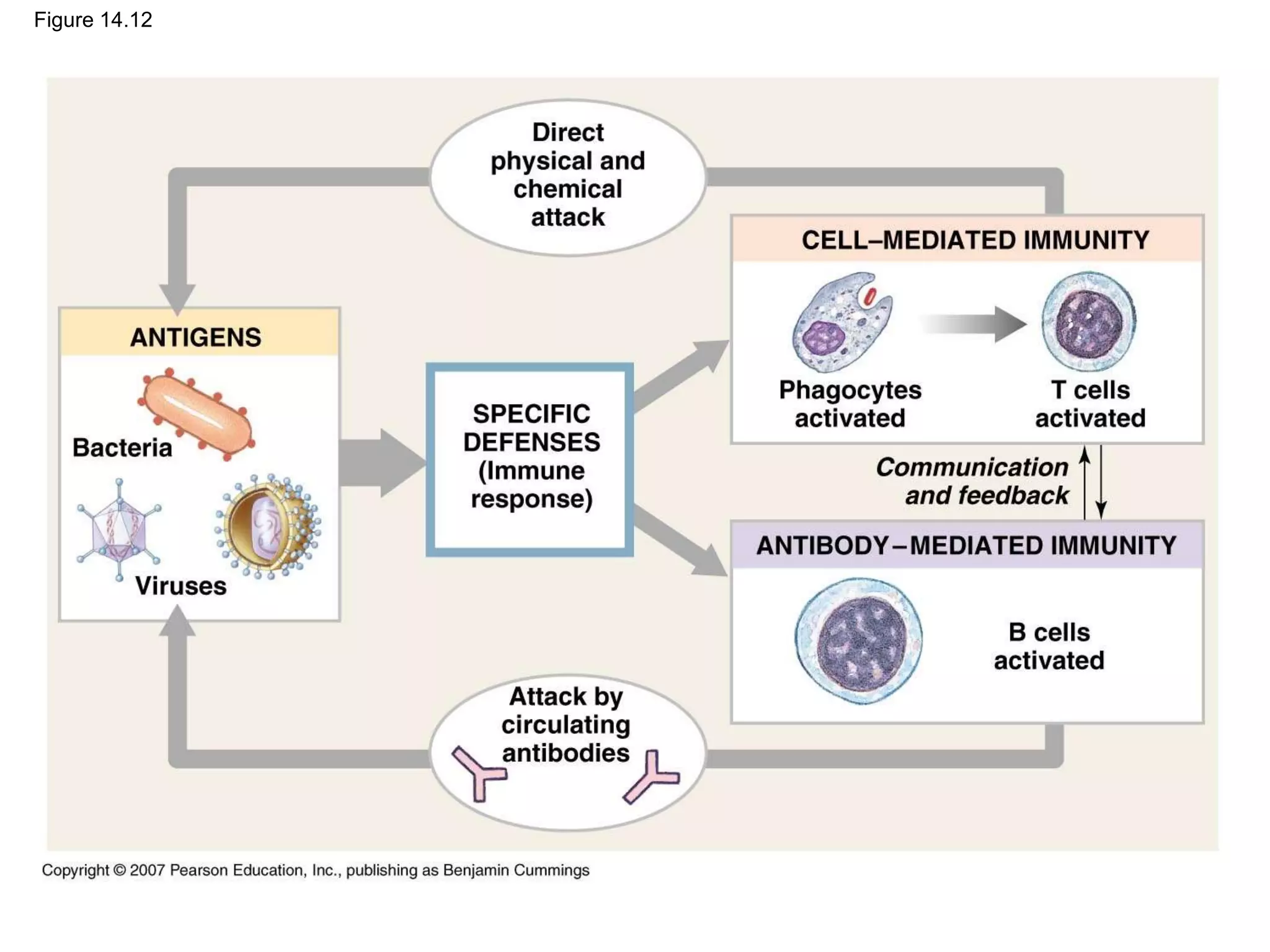
Figure 14.12
T Cells & Cell-Mediated Immunity 
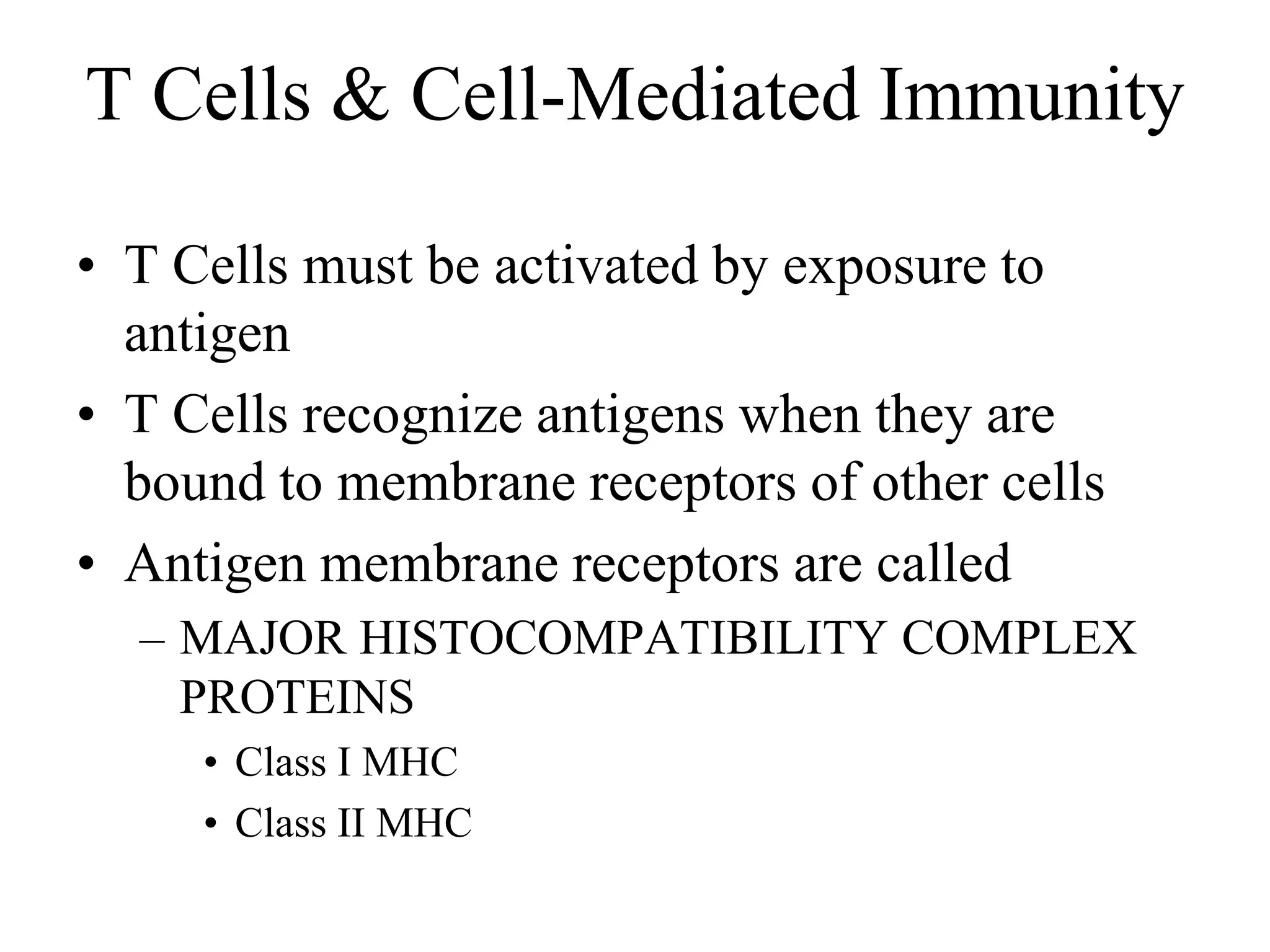
• T Cells must be activated by exposure to 
antigen 
• T Cells recognize antigens when they are 
bound to membrane receptors of other cells 
• Antigen membrane receptors are called 
– MAJOR HISTOCOMPATIBILITY COMPLEX 
PROTEINS 
• Class I MHC 
• Class II MHC
T Cells & Cell-Mediated Immunity 
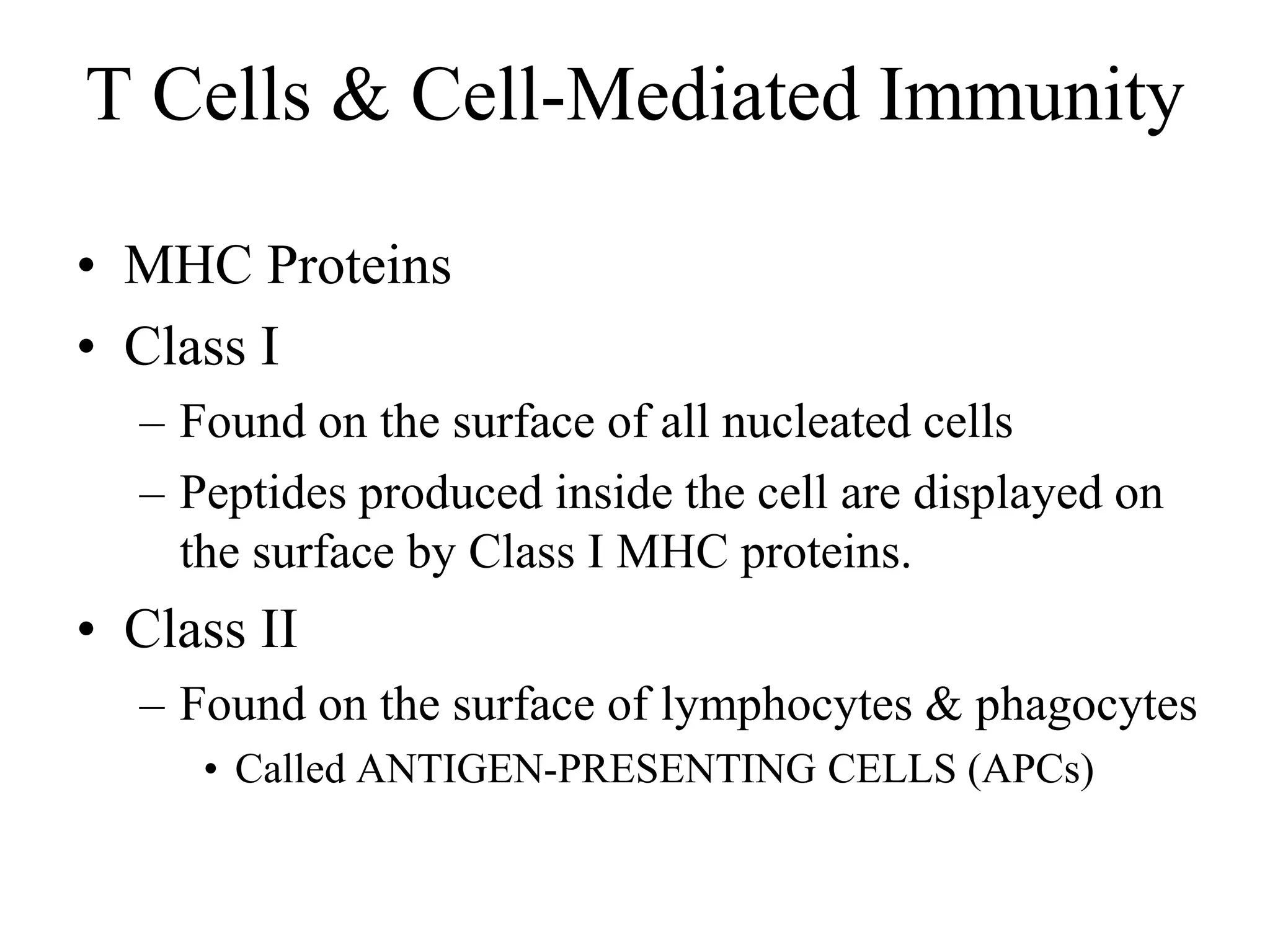
• MHC Proteins 
• Class I 
– Found on the surface of all nucleated cells 
– Peptides produced inside the cell are displayed on 
the surface by Class I MHC proteins. 
• Class II 
– Found on the surface of lymphocytes & phagocytes 
• Called ANTIGEN-PRESENTING CELLS (APCs)
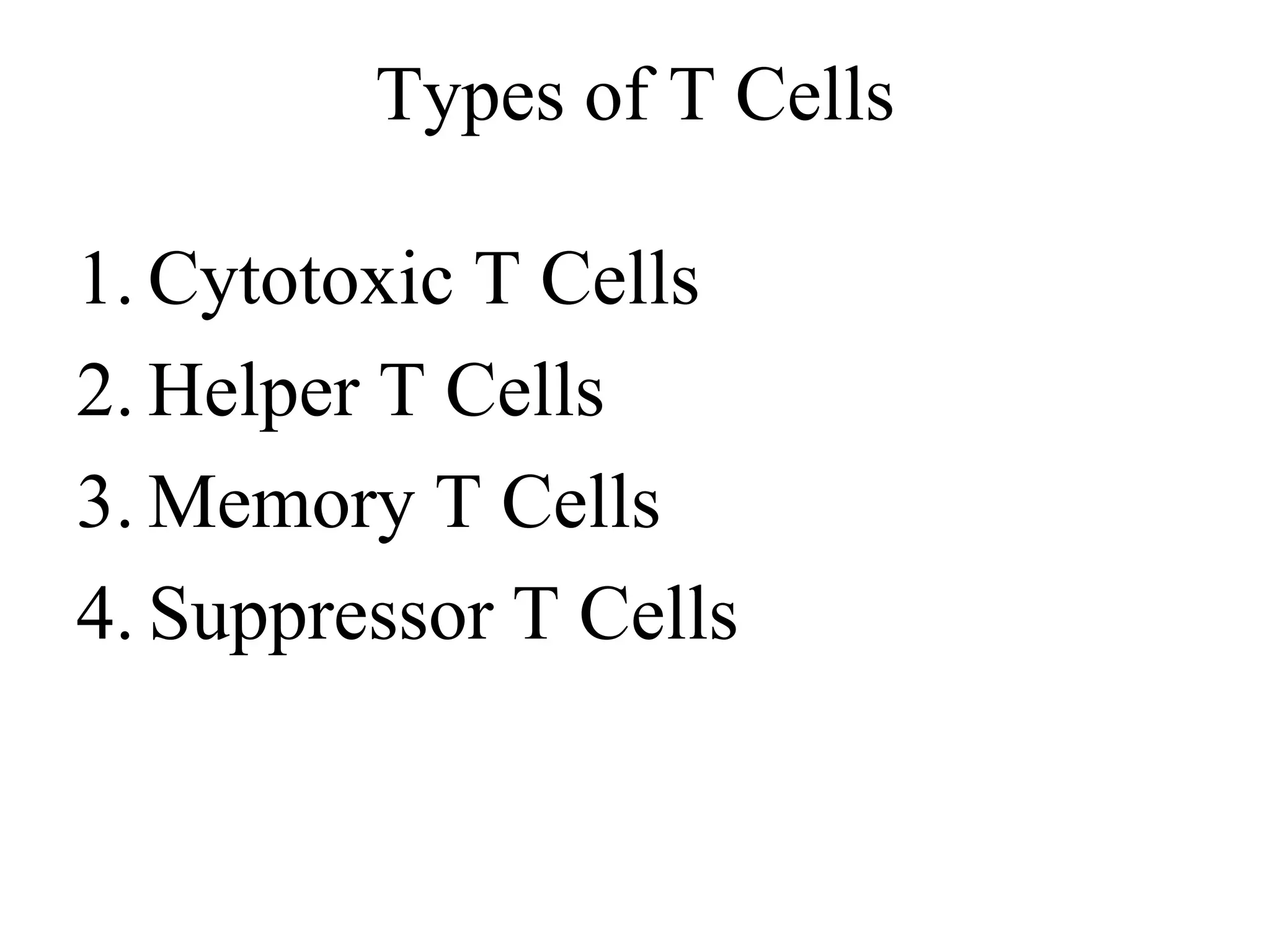
Types of T Cells 
1. Cytotoxic T Cells 
2. Helper T Cells 
3. Memory T Cells 
4. Suppressor T Cells
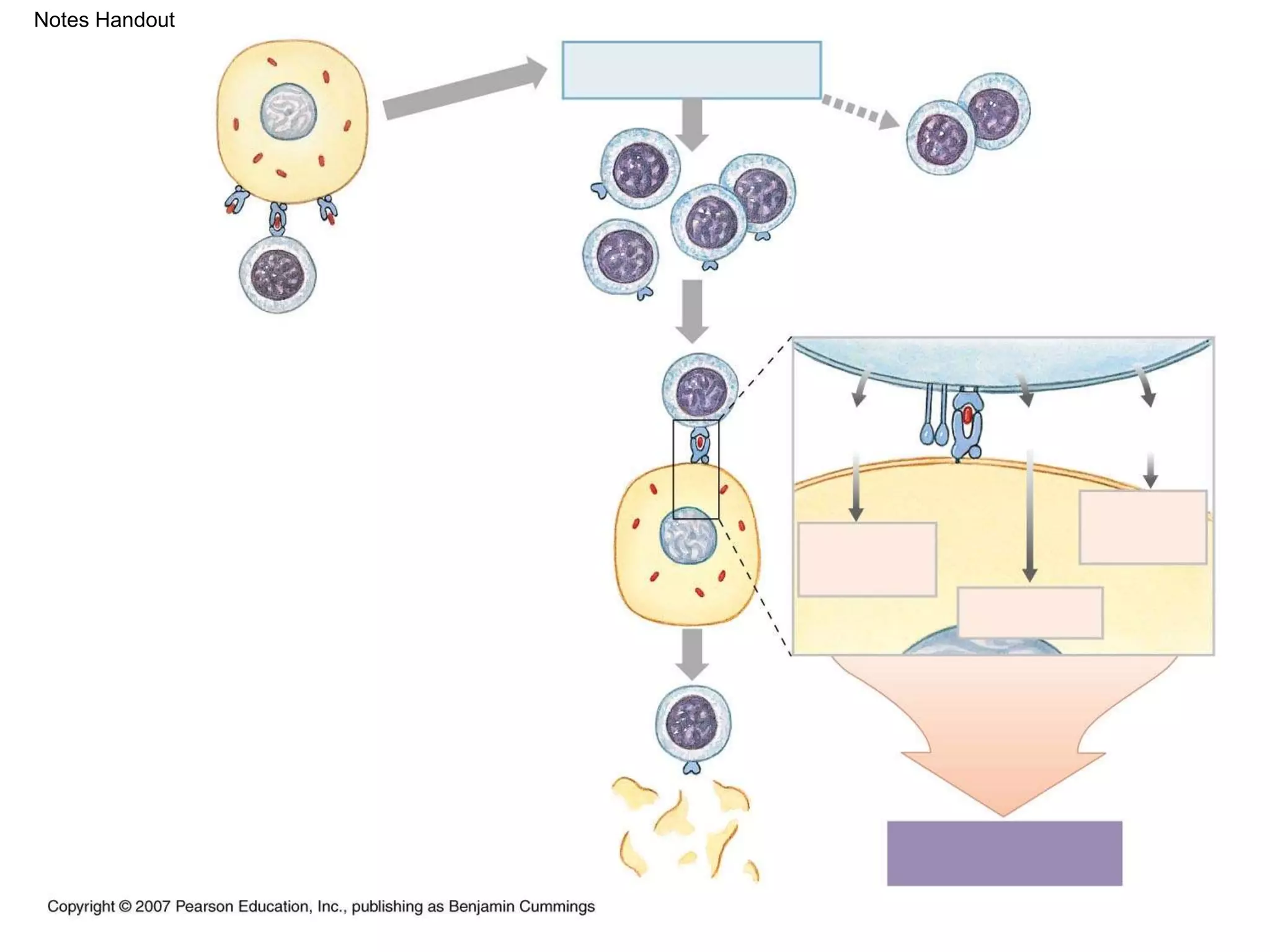
Notes Handout
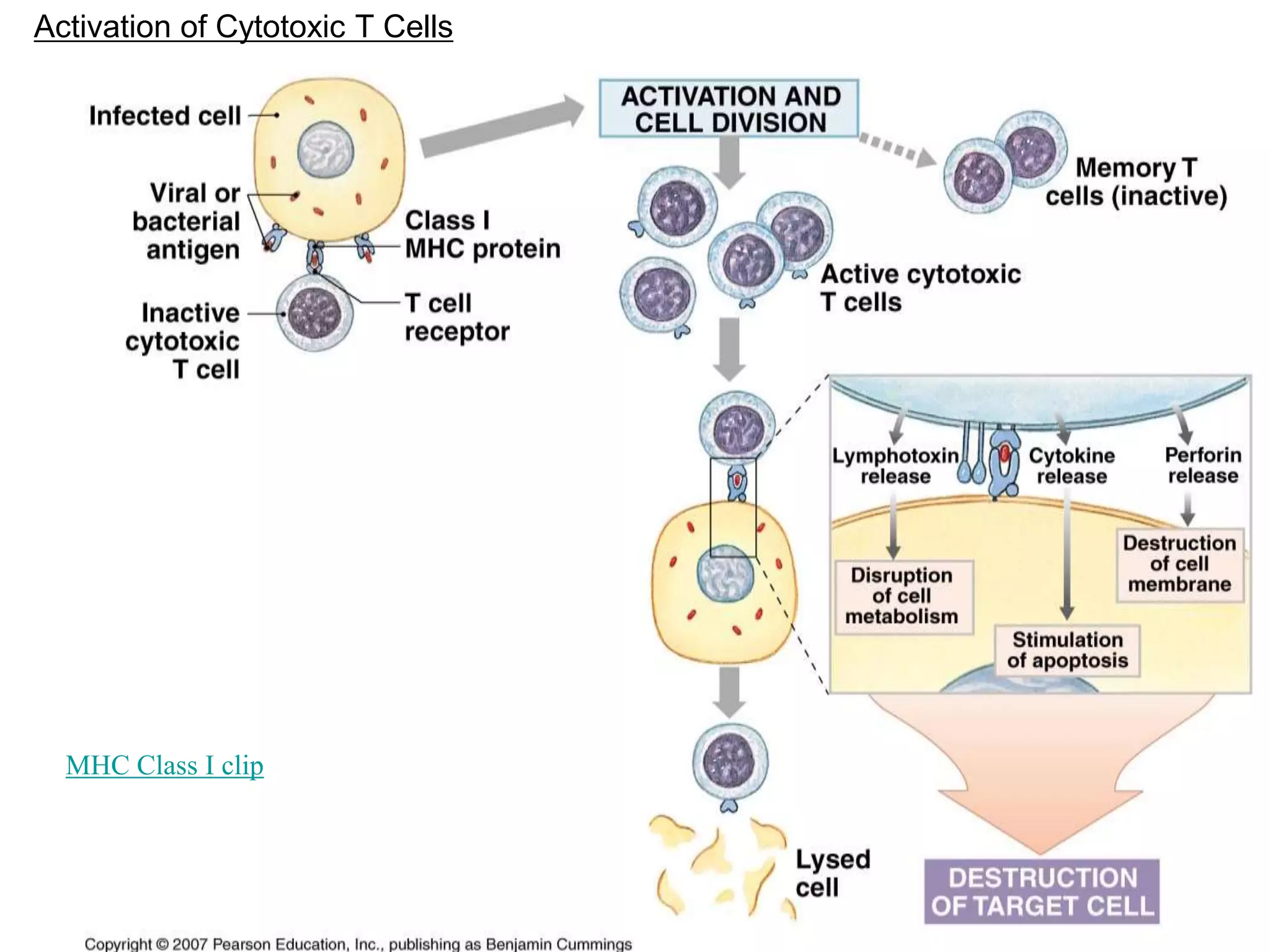
Activation of Cytotoxic T Cells 
MHC Class I clip
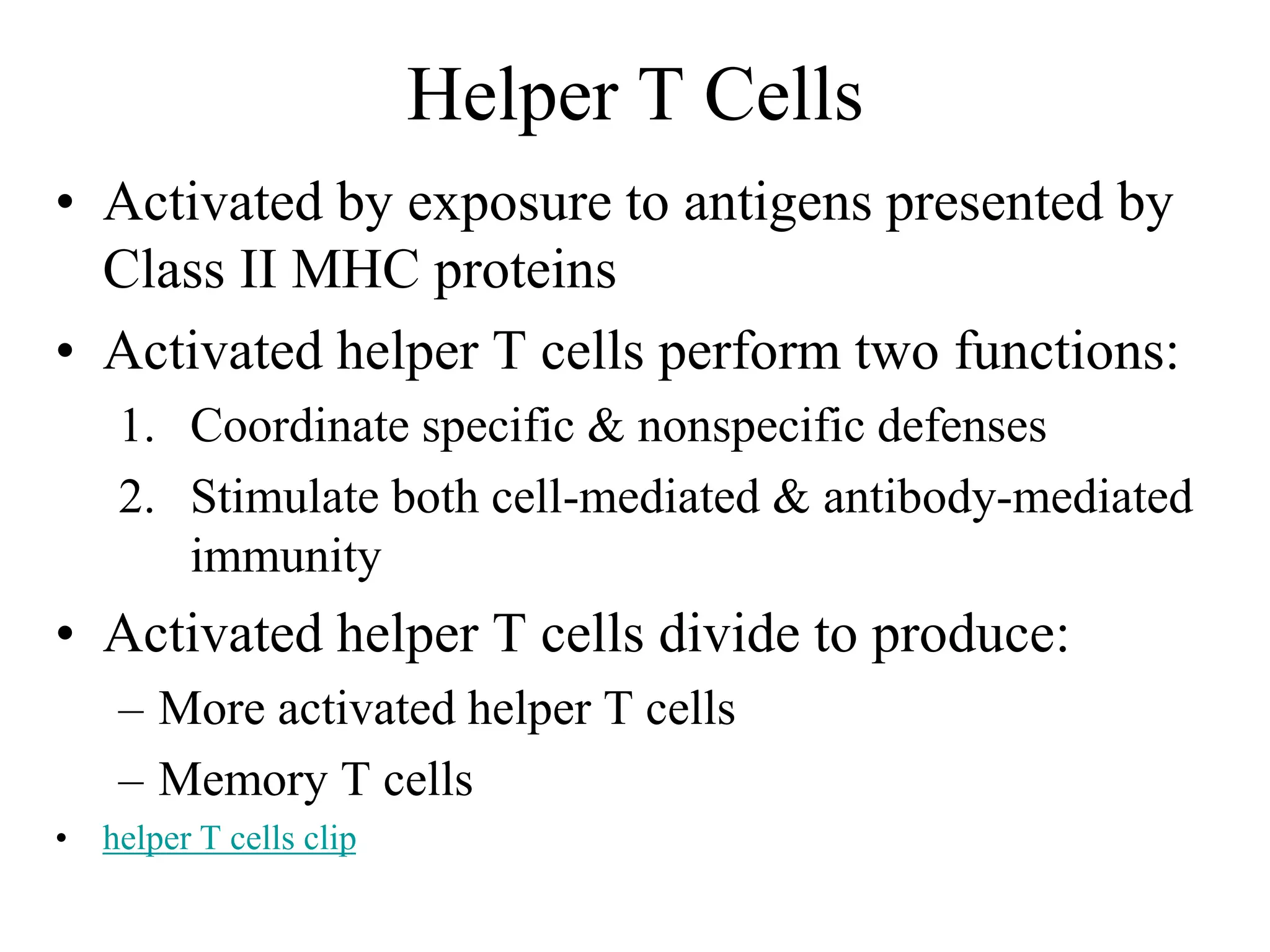
Helper T Cells 
• Activated by exposure to antigens presented by 
Class II MHC proteins 
• Activated helper T cells perform two functions: 
1. Coordinate specific & nonspecific defenses 
2. Stimulate both cell-mediated & antibody-mediated 
immunity 
• Activated helper T cells divide to produce: 
– More activated helper T cells 
– Memory T cells 
• helper T cells clip
Memory T Cells 
• Produced upon initial exposure to antigen, but 
do not respond to the antigen at that time. 
• Provide a no-delay response to any FUTURE 
exposure to the same antigen 
– Immediate differentiation into cytotoxic T cells 
and helper T cells
Suppressor T Cells 
• Activated suppressor T cells dampen the 
responses of other T cells and B cells 
– Secrete suppression factors 
• Act after the initial immune response
Notes Handout
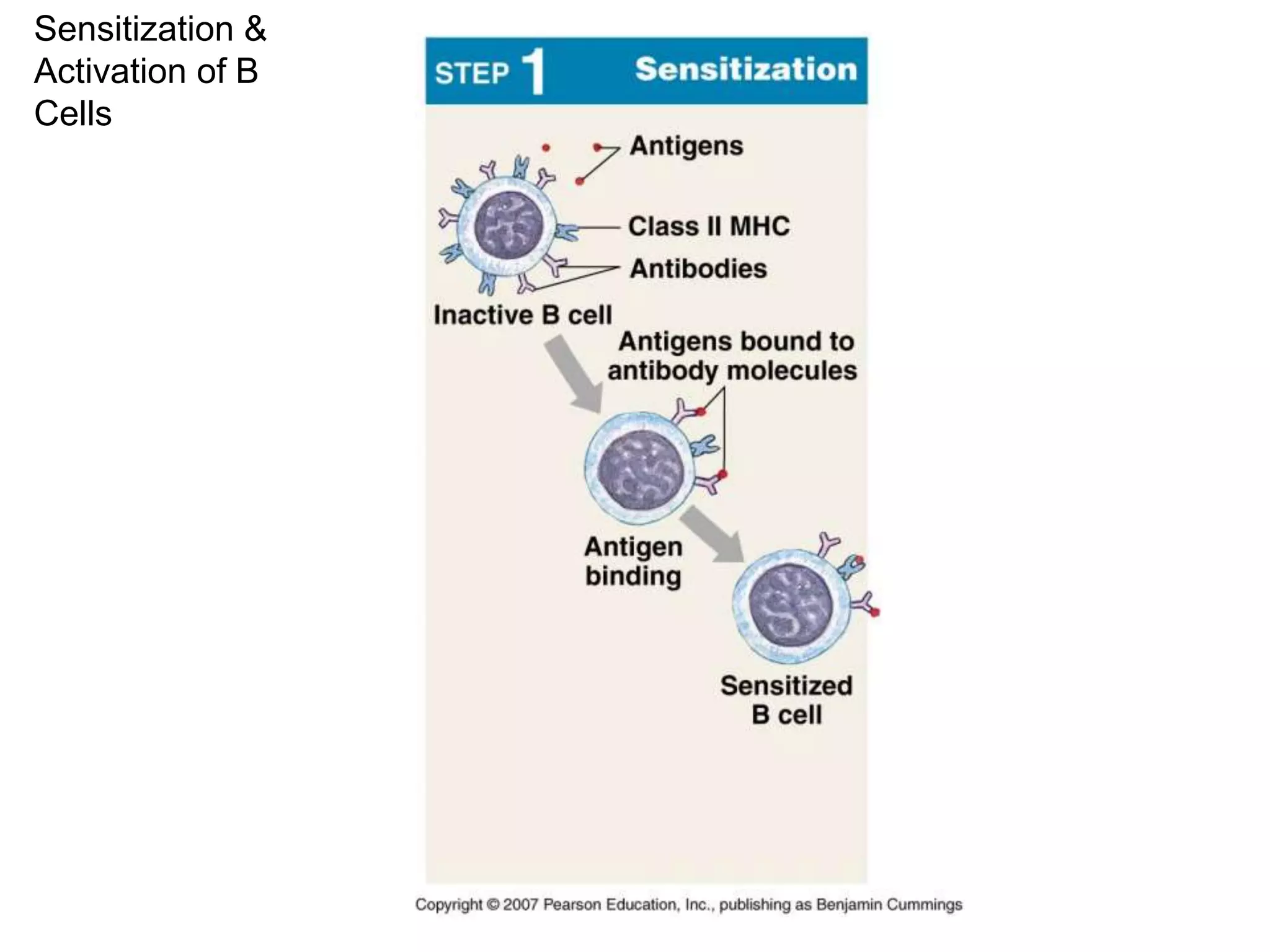
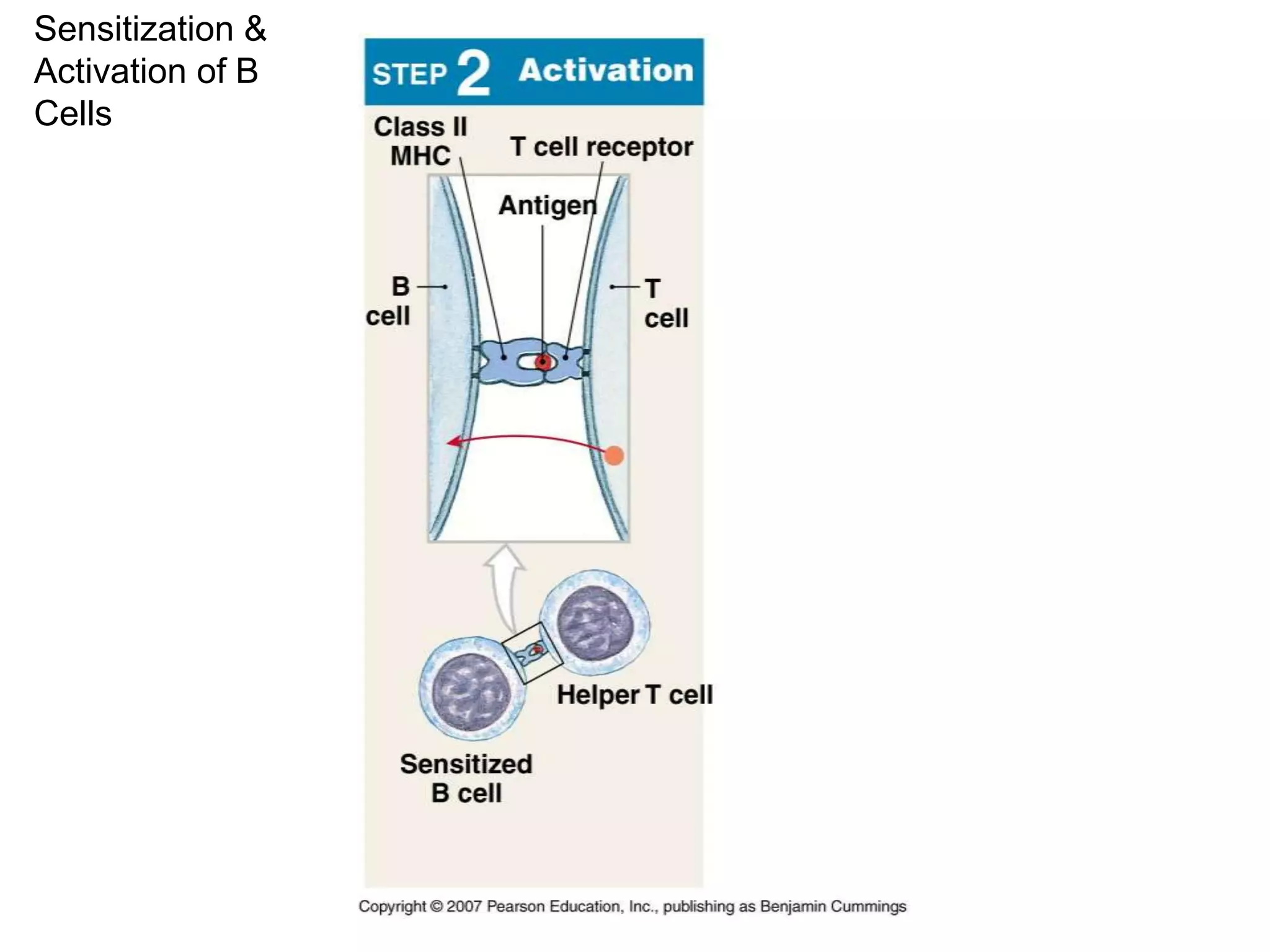
Sensitization & 
Activation of B 
Cells
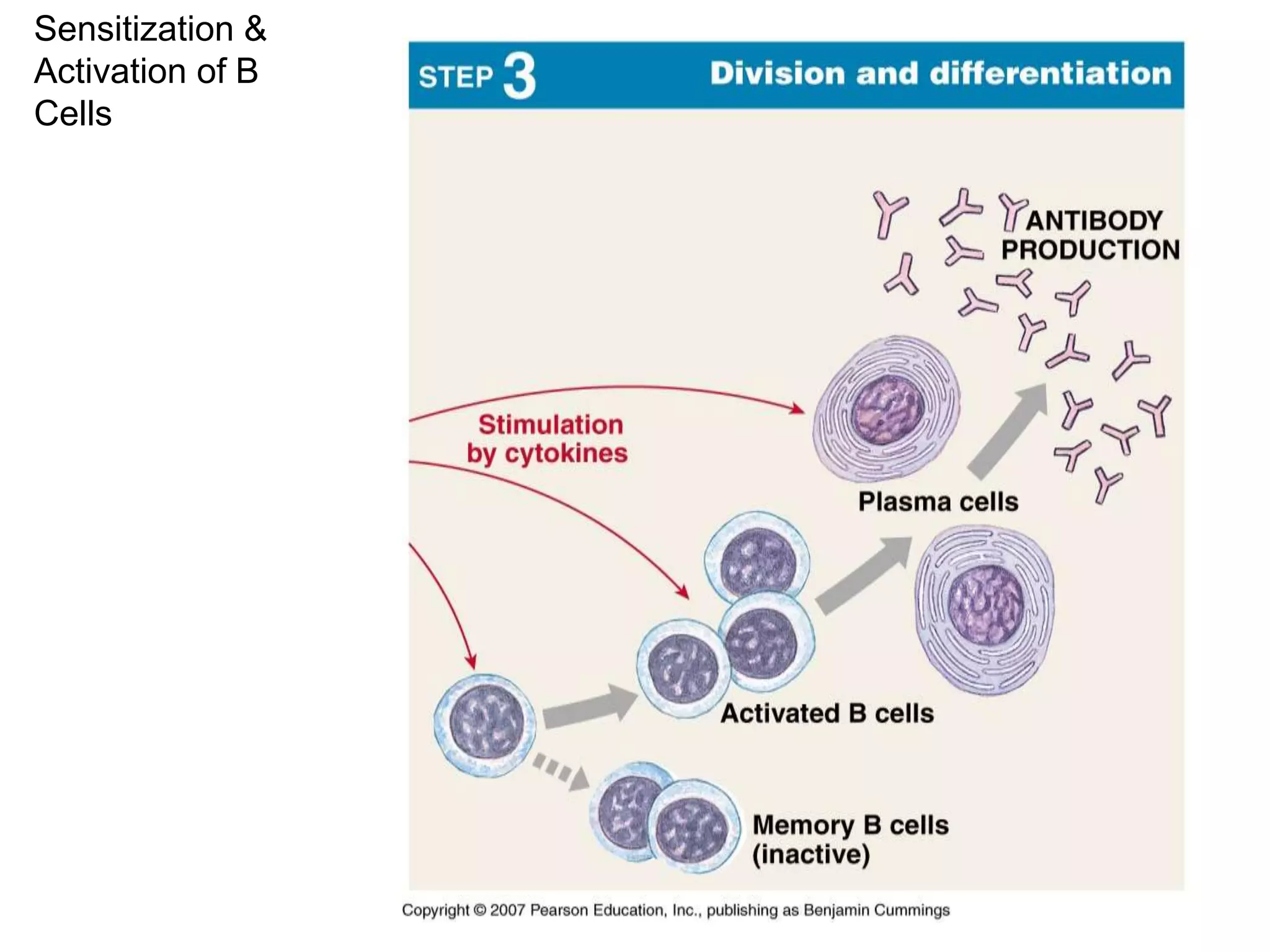
Sensitization & 
Activation of B 
Cells
Sensitization & 
Activation of B 
Cells
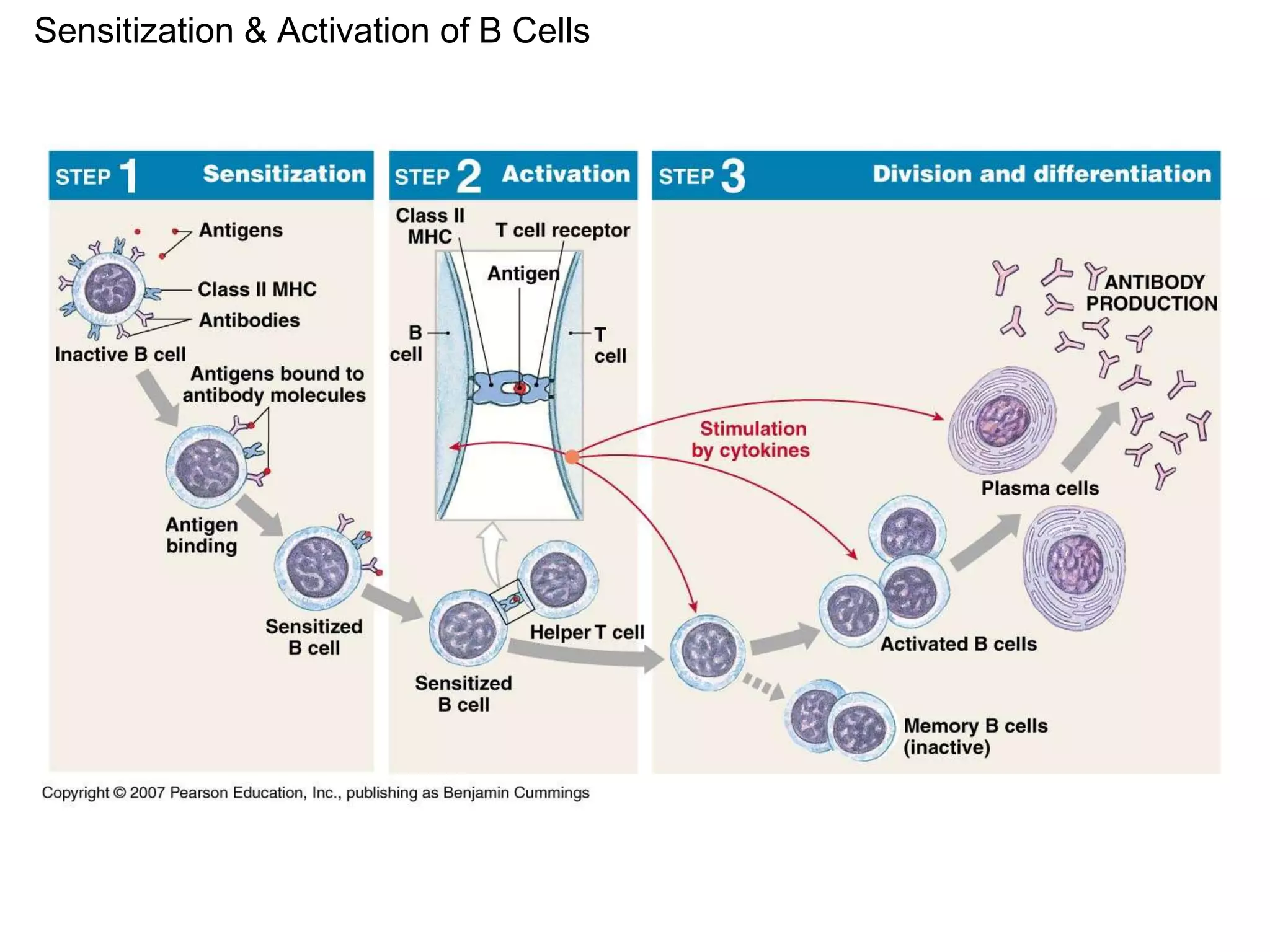
Sensitization & Activation of B Cells
Notes Handout
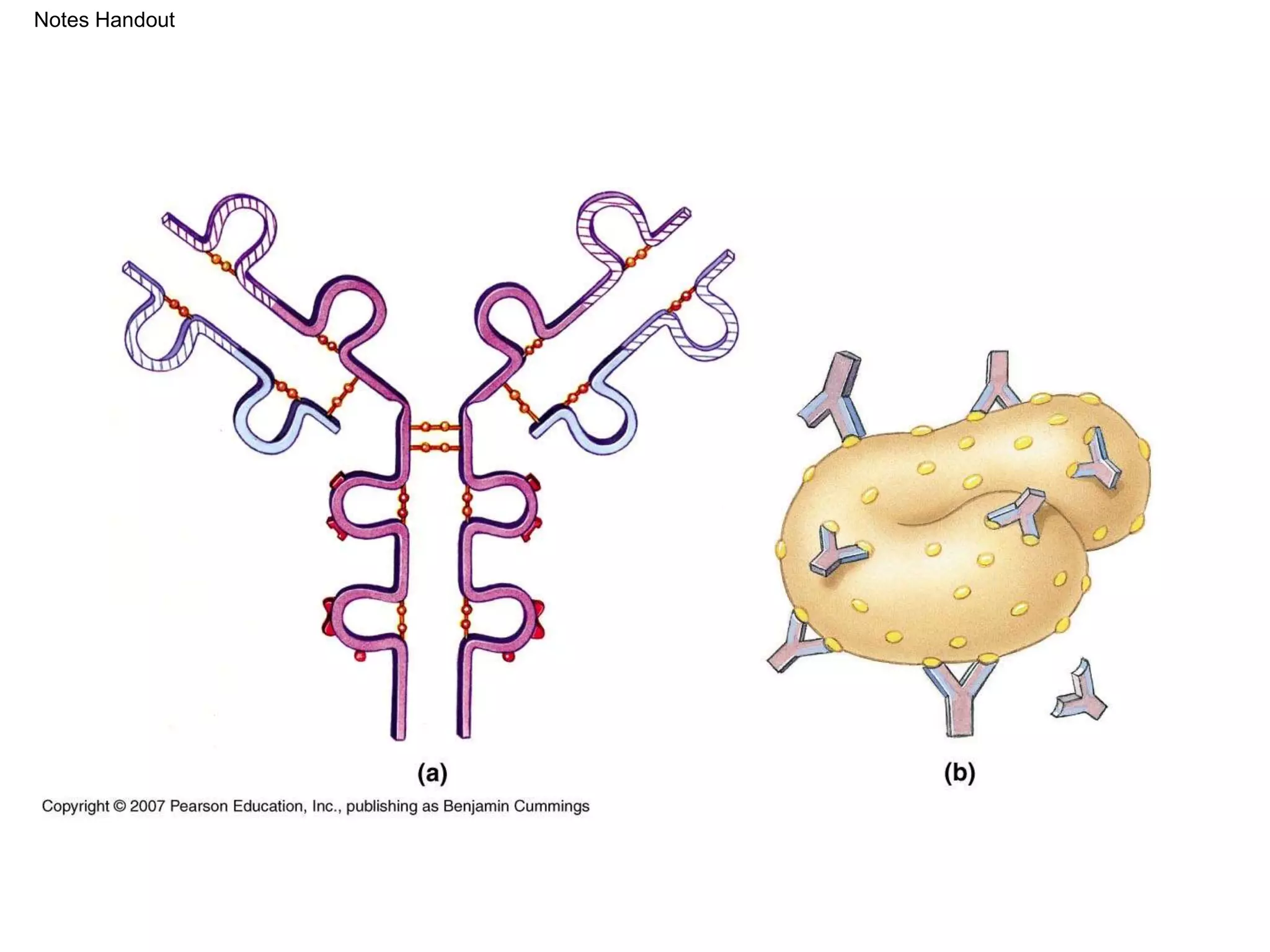
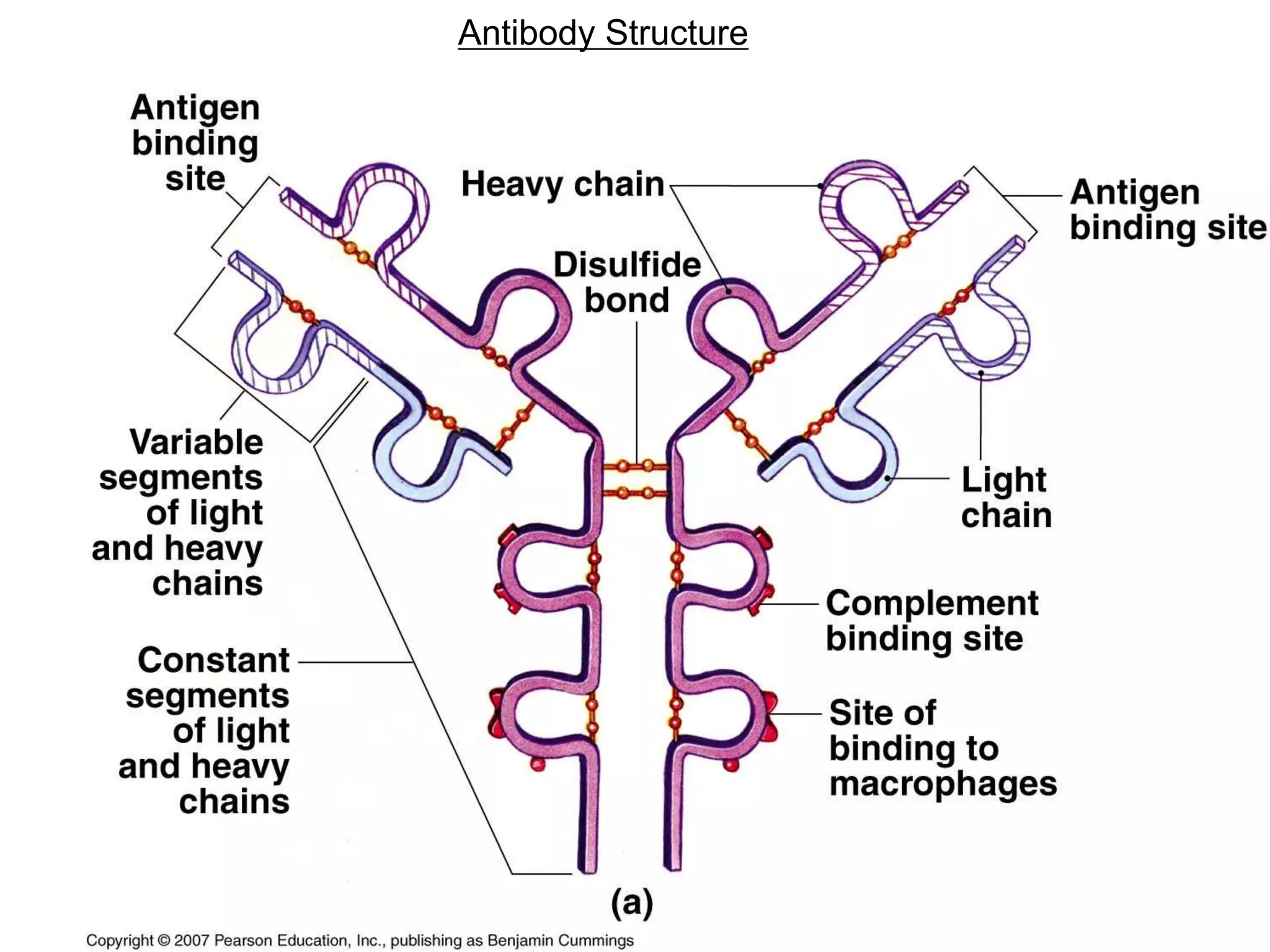
Antibody Structure
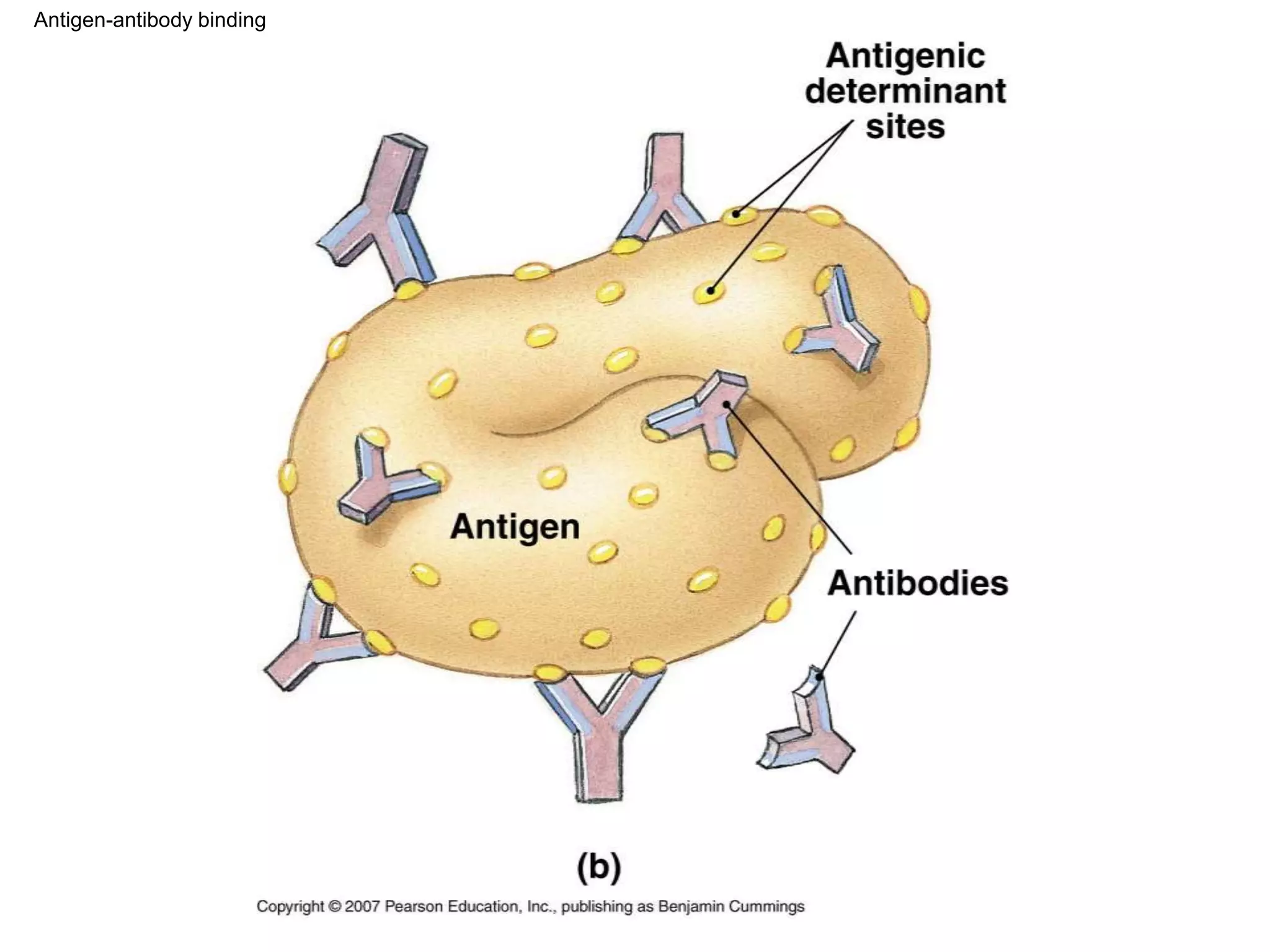
Antigen-antibody binding
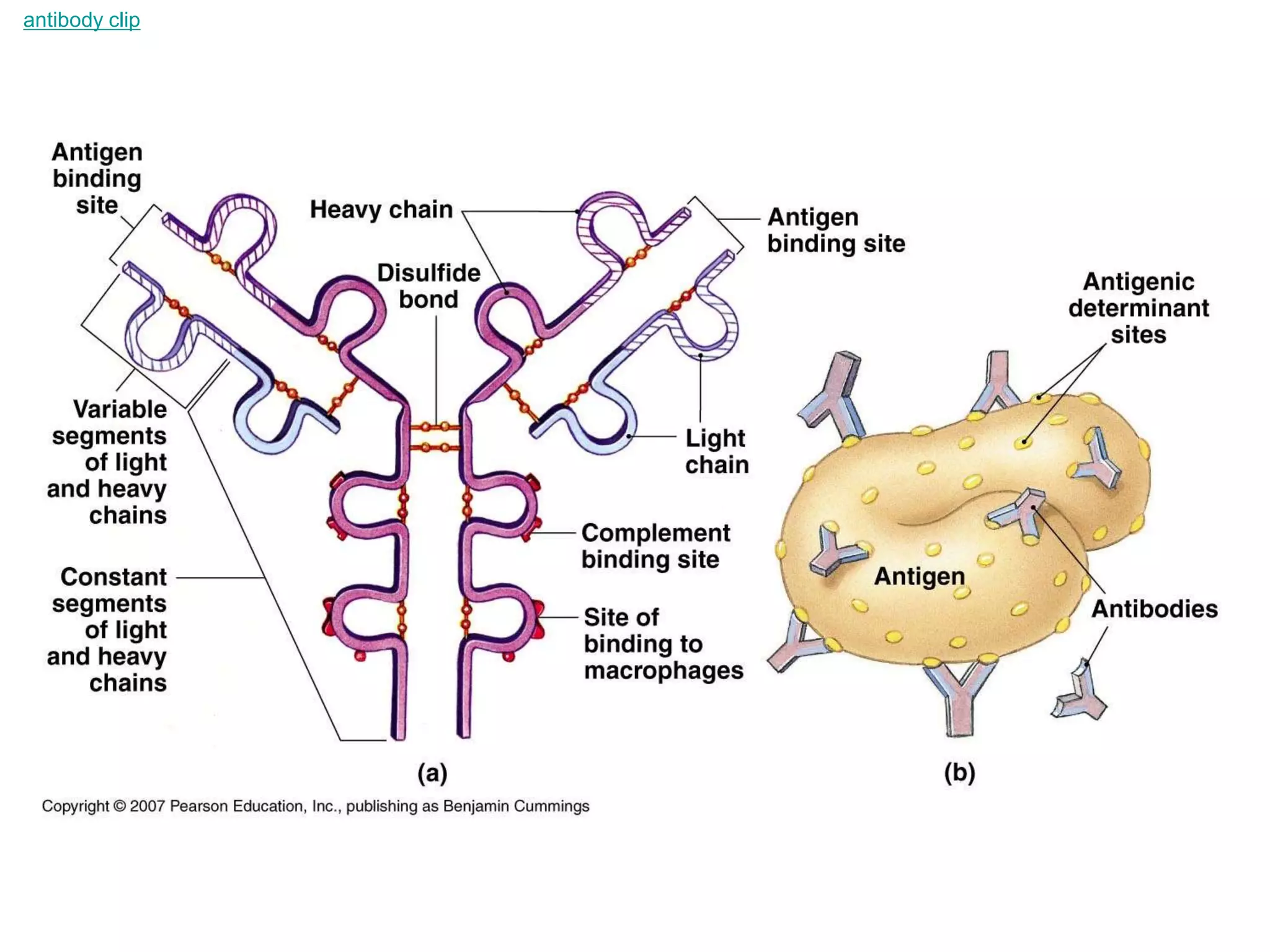
antibody clip
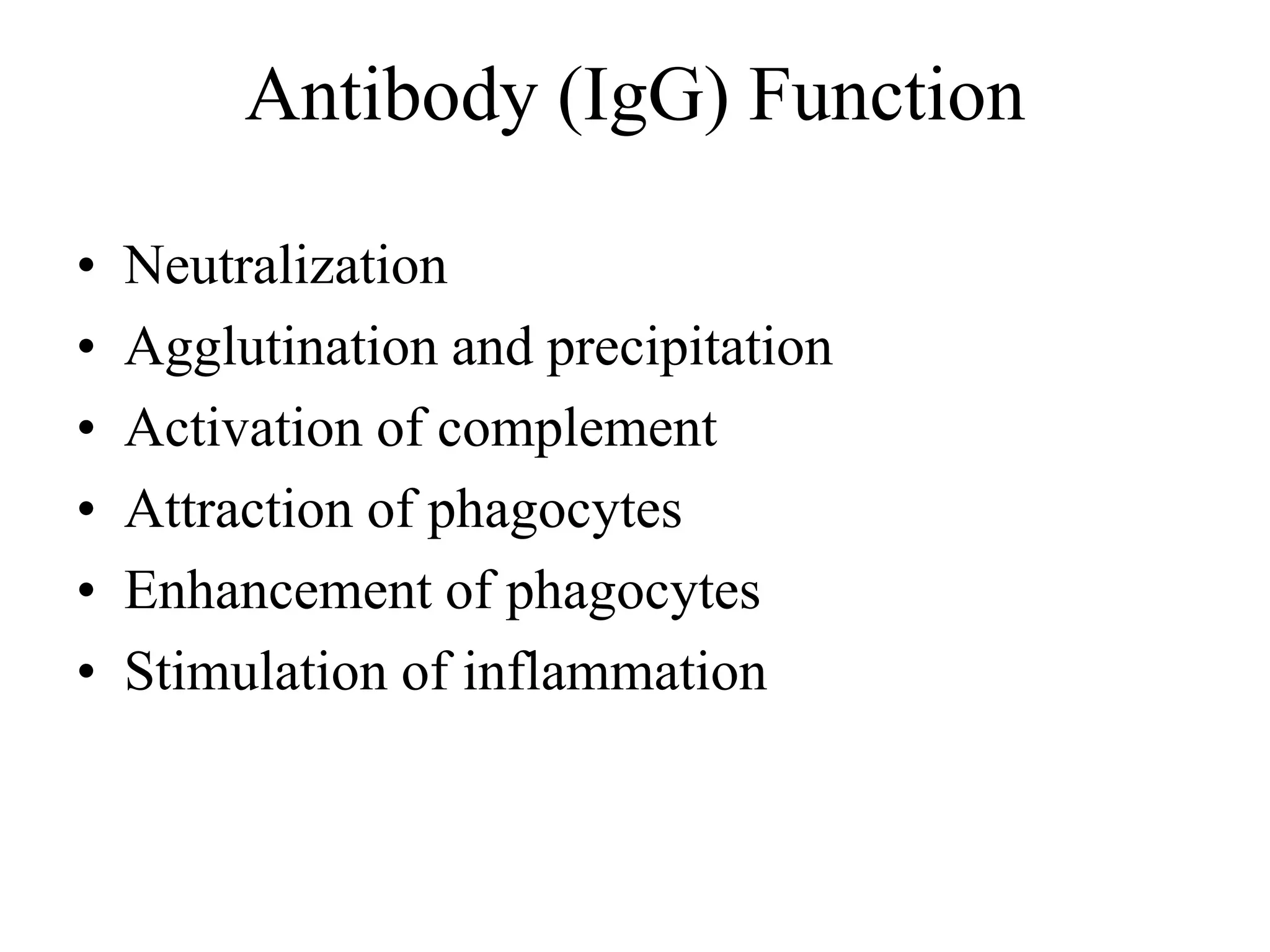
Antibody (IgG) Function 
• Neutralization 
• Agglutination and precipitation 
• Activation of complement 
• Attraction of phagocytes 
• Enhancement of phagocytes 
• Stimulation of inflammation
Notes Handout
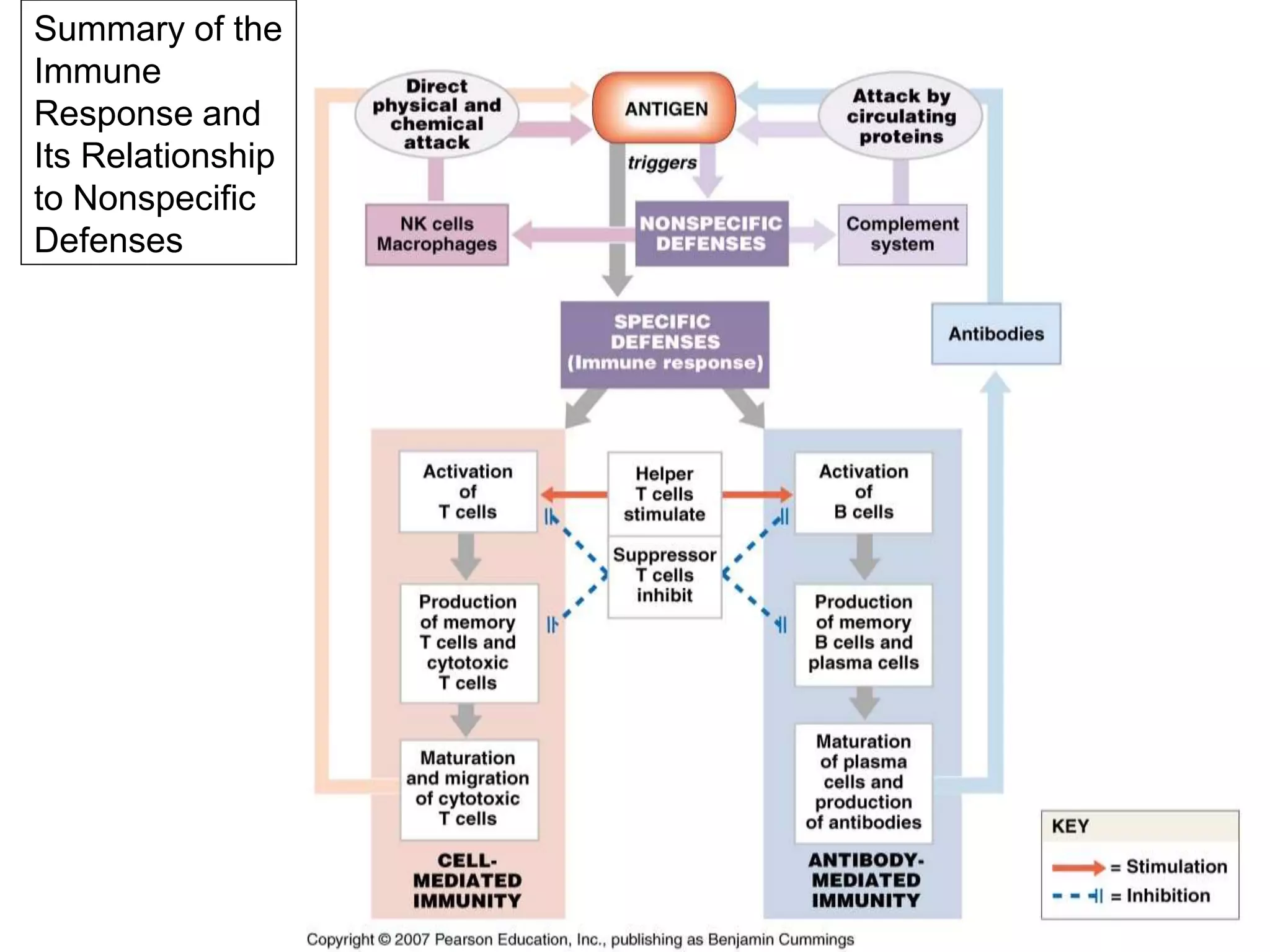
Summary of the 
Immune 
Response and 
Its Relationship 
to Nonspecific 
Defenses
Notes Handout
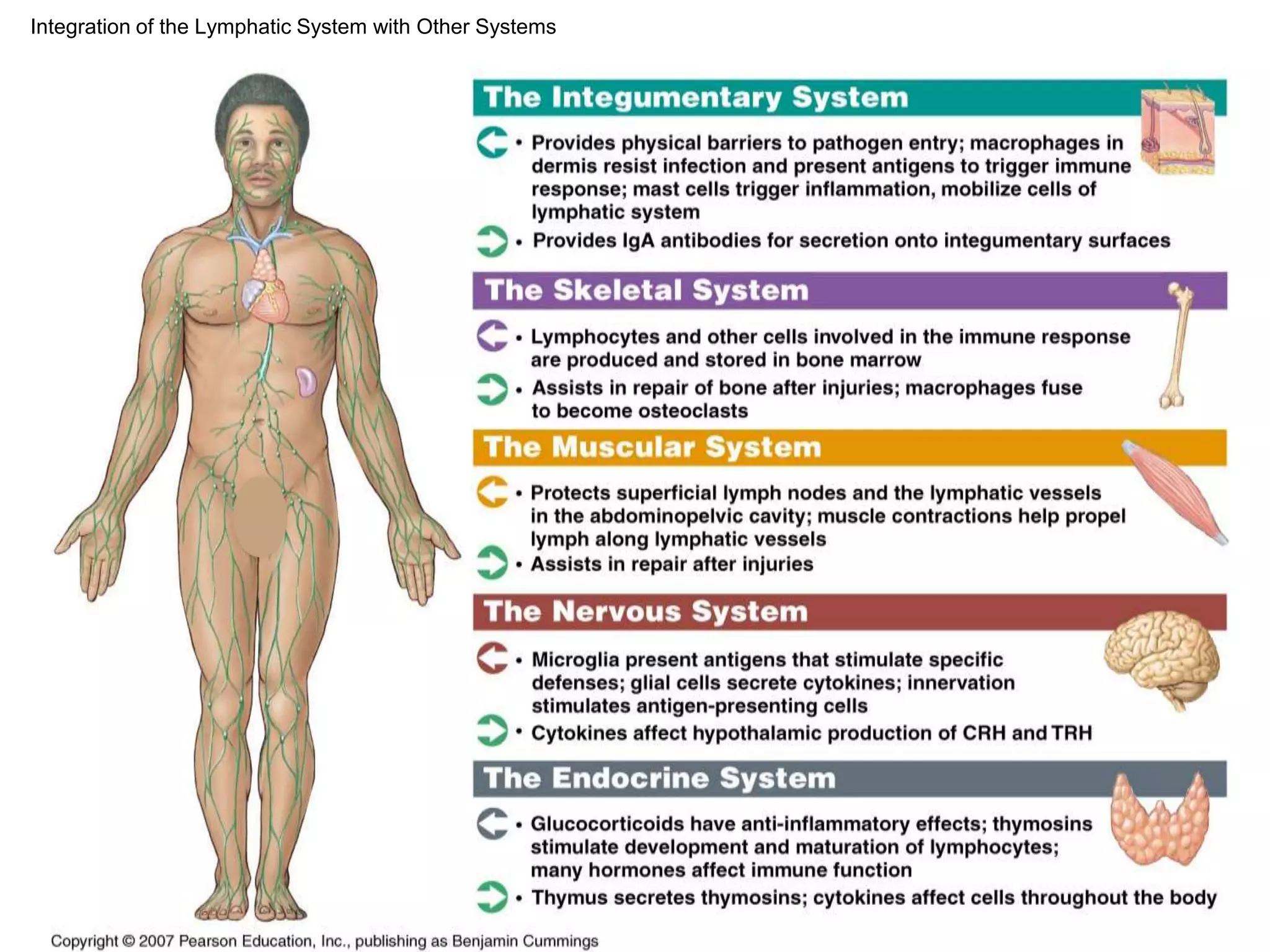
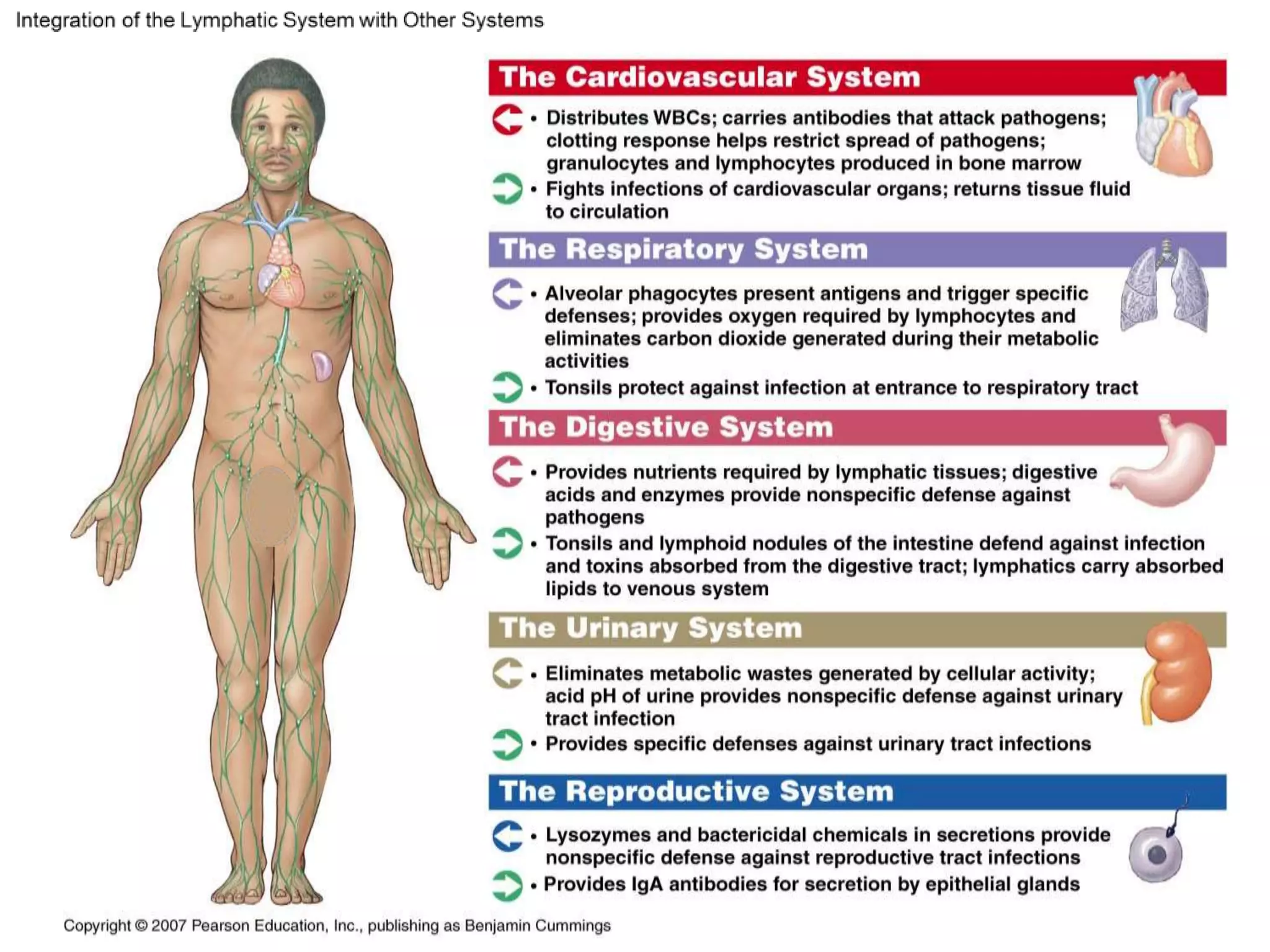
Integration of the Lymphatic System with Other Systems
Immunity part iv acquired immunity

Immunity part iv acquired immunity

  • 1.
    Immunity: Part IV Acquired Immunity
  • 2.
    Remember: Types ofImmunity • Innate • Acquired – Is the body’s second major kind of defense – Involves the activity of lymphocytes Copyright © 2005 Pearson Education, Inc. publishing as Benjamin Cummings
  • 3.
    • A summaryof innate and acquired immunity INNATE IMMUNITY Rapid responses to a broad range of microbes Copyright © 2005 Pearson Education, Inc. publishing as Benjamin Cummings ACQUIRED IMMUNITY Slower responses to specific microbes External defenses Internal defenses Skin Mucous membranes Secretions Phagocytic cells Antimicrobial proteins Inflammatory response Natural killer cells Humoral response (antibodies) Cell-mediated response (cytotoxic lymphocytes) Invading microbes (pathogens)
  • 4.
  • 5.
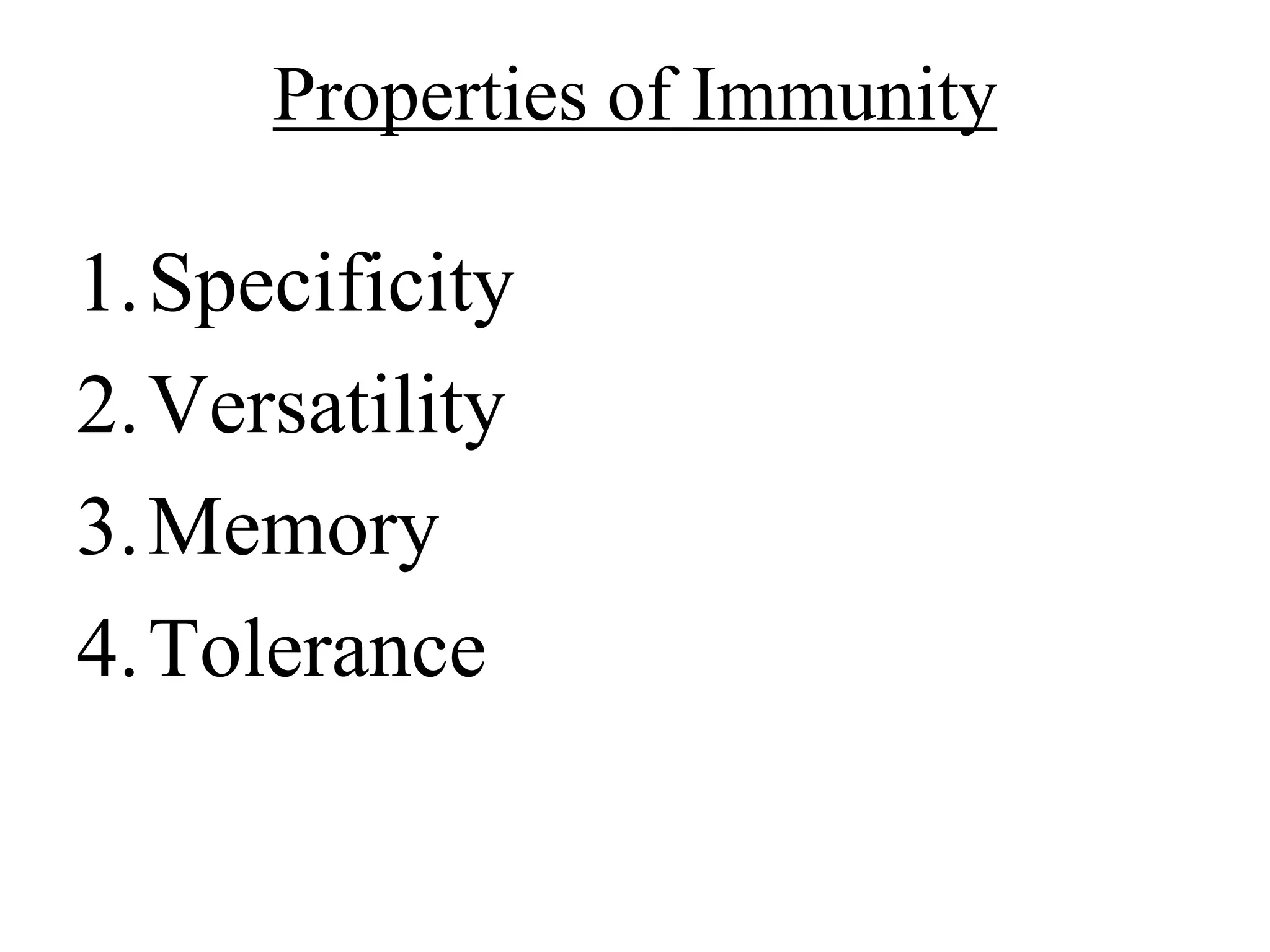
  • 6.
    Properties of Immunity 1.Specificity 2.Versatility 3.Memory 4.Tolerance
  • 7.
  • 8.
  • 9.
  • 10.
  • 11.
    T Cells &Cell-Mediated Immunity • T Cells must be activated by exposure to antigen • T Cells recognize antigens when they are bound to membrane receptors of other cells • Antigen membrane receptors are called – MAJOR HISTOCOMPATIBILITY COMPLEX PROTEINS • Class I MHC • Class II MHC
  • 12.
    T Cells &Cell-Mediated Immunity • MHC Proteins • Class I – Found on the surface of all nucleated cells – Peptides produced inside the cell are displayed on the surface by Class I MHC proteins. • Class II – Found on the surface of lymphocytes & phagocytes • Called ANTIGEN-PRESENTING CELLS (APCs)
  • 13.
    Types of TCells 1. Cytotoxic T Cells 2. Helper T Cells 3. Memory T Cells 4. Suppressor T Cells
  • 14.
  • 15.
    Activation of CytotoxicT Cells MHC Class I clip
  • 16.
    Helper T Cells • Activated by exposure to antigens presented by Class II MHC proteins • Activated helper T cells perform two functions: 1. Coordinate specific & nonspecific defenses 2. Stimulate both cell-mediated & antibody-mediated immunity • Activated helper T cells divide to produce: – More activated helper T cells – Memory T cells • helper T cells clip
  • 17.
    Memory T Cells • Produced upon initial exposure to antigen, but do not respond to the antigen at that time. • Provide a no-delay response to any FUTURE exposure to the same antigen – Immediate differentiation into cytotoxic T cells and helper T cells
  • 18.
    Suppressor T Cells • Activated suppressor T cells dampen the responses of other T cells and B cells – Secrete suppression factors • Act after the initial immune response
  • 19.
  • 20.
  • 21.
  • 22.
  • 23.
  • 24.
  • 25.
  • 26.
  • 27.
  • 28.
    Antibody (IgG) Function • Neutralization • Agglutination and precipitation • Activation of complement • Attraction of phagocytes • Enhancement of phagocytes • Stimulation of inflammation
  • 29.
  • 30.
    Summary of the Immune Response and Its Relationship to Nonspecific Defenses
  • 31.
  • 32.
    Integration of theLymphatic System with Other Systems

Editor's Notes

  • #3 Innate Immunity Genetically determined Present at birth Independent of previous exposure to antigens Acquired Immunity Not present at birth Appears after exposure to an antigen Can be passive or actived
  • #12 T Cell activation does not usually result from direct lymphocyte-antigen interaction. T Cells are seldom activated by the mere presence of antigens alone.** **T Cells recognize antigens when those antigens are bound to membrane receptors of other cells. MHC Proteins Class I Class II

  • #16 Cytotoxic T Cells = Killer T Cells
  • #18 Among the many T cells produced upon initial exposure to an antigen. Do not respond to the antigen during initial exposure. Remain on reserve until subsequent exposure. Immediately differentiate into killer T cells upon subsequent exposure. This rapid response generally destroys invading pathogens before they can cause the body to produce signs and symptoms of disease.
  • #19 Suppression does not occur immediately bc suppressor T cells are activated more slowly than other types of T cells.
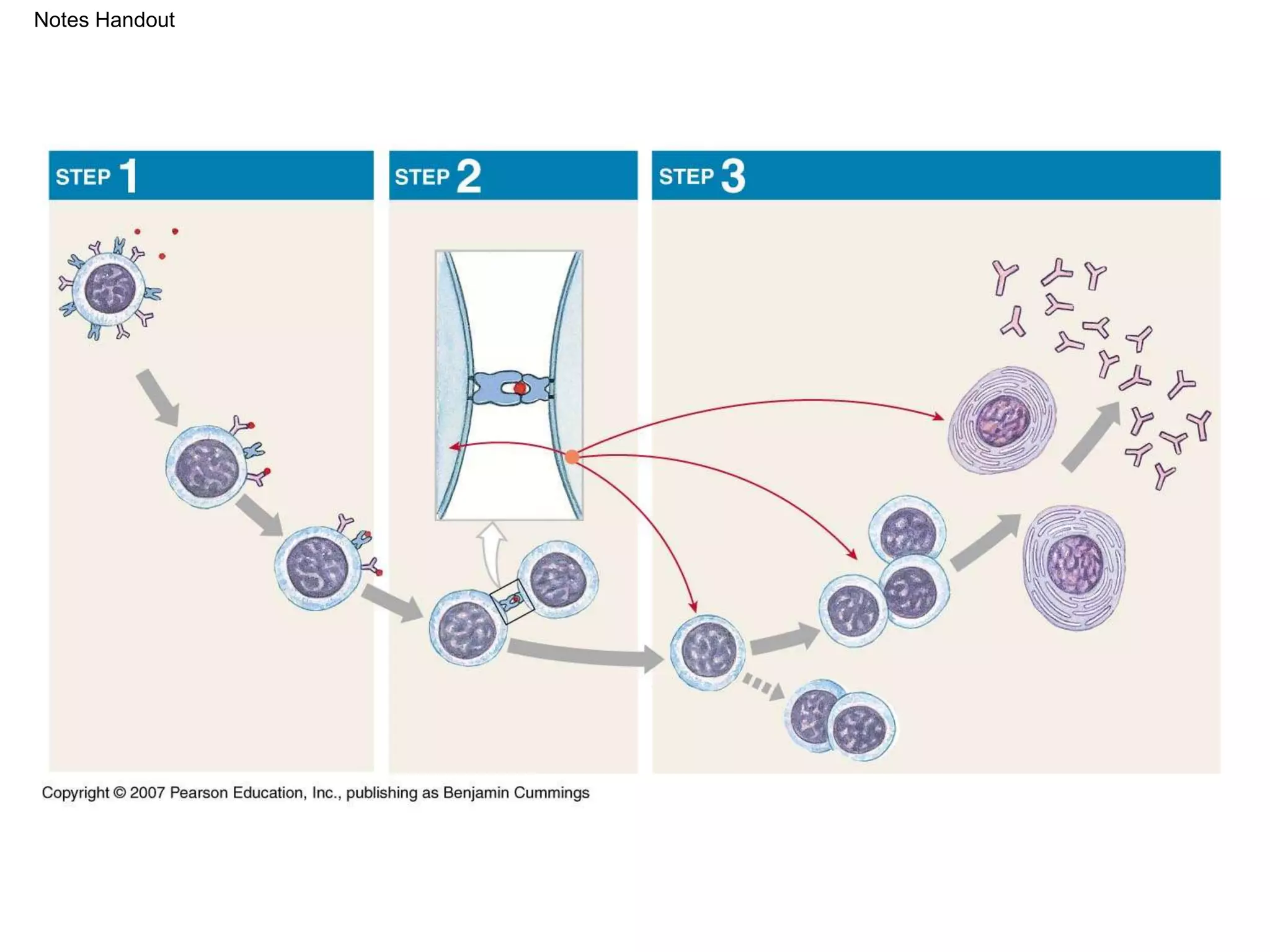
  • #24 A B Cell is sensitized by exposure to antigens (step 1). Once antigens are bound to antibodies in the B cell membrane, the B cell displays those antigens in its cell membrane. Activated helper T cells encountering the antigens on the sensitized B cell membrane then release cytokines that trigger the activation of the B cell (step 2). The activated B cell then divides, producing memory B cells and plasma cells that secrete antibodies (step 3).
  • #26 Antibody aka IMMUNOGLOBIN (IgG).
  • #27 antigen-antibody complex Antibodies do not bind to the entire antigen as a whole. They bind to certain portions of its exposed surface, regions called ANTIGENIC DETERMINANT SITES. The specificity of that binding depends on the 3D “fit” between variable segments of the antibody molecule and the corresponding sites of the antigen. A complete antigen has at least two antigenic determinant sites, one for each arm of the antibody molecule. Exposure to a complete antigen can lead to B cell sensitization and an immune response. Most environmental antigens have multiple antigenic determinant sites; entire microorganisms may have thousands.