
Immunity
Dr. TAREK NASRALA
AL AZHAR
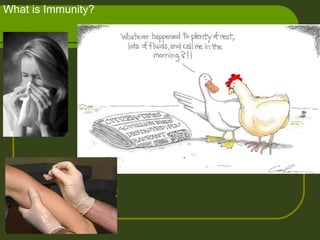
What is Immunity?
The Immune System
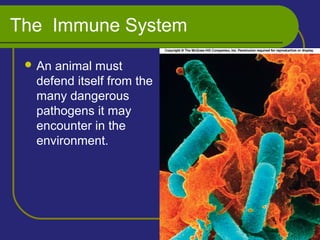
 An animal must
defend itself from the
many dangerous
pathogens it may
encounter in the
environment.
The Immune System
A host is susceptible to a parasite if it
can’t eliminate a parasite before it
becomes established.
The parasite is infective.
The host is resistant if it is able to
prevent establishment of the parasite.
The parasite is noninfective.
The Immune System
 Immune cells,
red blood
cells, and
other white
blood cells are
derived from
multipotential
stem cells in
the bone
marrow.
The Immune System
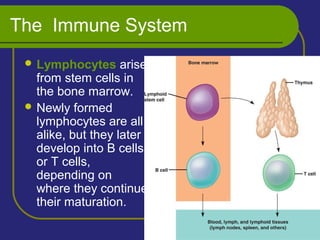
 Lymphocytes arise
from stem cells in
the bone marrow.
 Newly formed
lymphocytes are all
alike, but they later
develop into B cells
or T cells,
depending on
where they continue
their maturation.
The Immune System
As B and T cells are maturing in the
bone marrow and thymus, their antigen
receptors are tested for possible self-
reactivity.
Lymphocytes bearing receptors for
antigens already present in the body are
destroyed by apoptosis or rendered
nonfunctional.
The Immune System
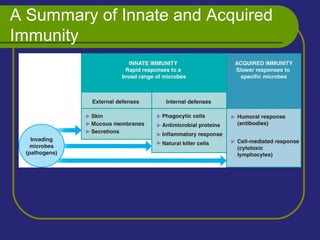
Two major kinds of immunity have
evolved that counter these invaders:
Innate immunity
Acquired immunity
Innate Immunity
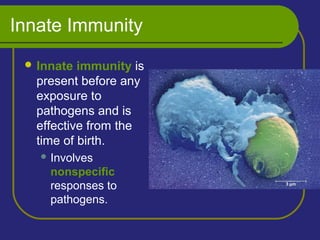
 Innate immunity is
present before any
exposure to
pathogens and is
effective from the
time of birth.
 Involves
nonspecific
responses to
pathogens.
Acquired Immunity
Acquired immunity develops only after
exposure to inducing agents such as
microbes, toxins, or other foreign
substances.
 Involves a very specific response to
pathogens.
A Summary of Innate and Acquired
Immunity
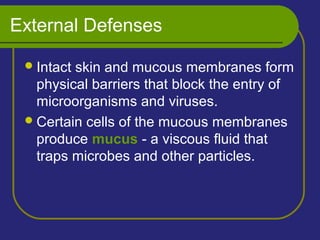
External Defenses
Intact skin and mucous membranes form
physical barriers that block the entry of
microorganisms and viruses.
Certain cells of the mucous membranes
produce mucus - a viscous fluid that
traps microbes and other particles.
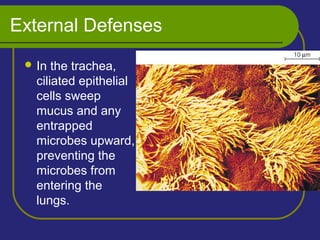
External Defenses
 In the trachea,
ciliated epithelial
cells sweep
mucus and any
entrapped
microbes upward,
preventing the
microbes from
entering the
lungs.
External Defenses
Secretions from the skin give the skin a
pH between 3 and 5, which is acidic
enough to prevent colonization of many
microbes.
Also include proteins such as lysozyme, an
enzyme that digests the cell walls of many
bacteria.
Internal Cellular and Chemical
Defenses
Internal cellular defenses depend mainly
on phagocytosis.
Phagocytes are types of white blood
cells that:
Ingest invading microorganisms.
Initiate the inflammatory response.
Phagocytic Cells
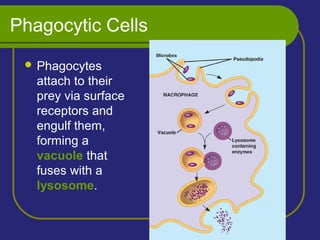
 Phagocytes
attach to their
prey via surface
receptors and
engulf them,
forming a
vacuole that
fuses with a
lysosome.
Phagocytic Cells
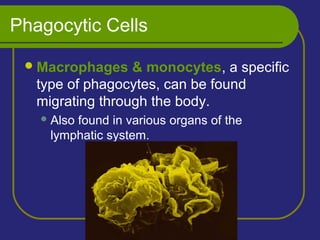
Macrophages & monocytes, a specific
type of phagocytes, can be found
migrating through the body.
Also found in various organs of the
lymphatic system.
The Lymphatic System
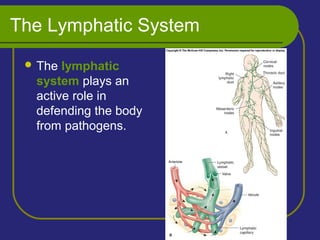
 The lymphatic
system plays an
active role in
defending the body
from pathogens.
Antimicrobial Proteins
Numerous proteins function in innate
defense by attacking microbes directly or
by impeding their reproduction.
Antimicrobial Proteins
About 30 proteins make up the
complement system, which can cause
lysis of invading cells and help trigger
inflammation.
Interferons provide innate defense
against viruses and help activate
macrophages.
Inflammatory Response
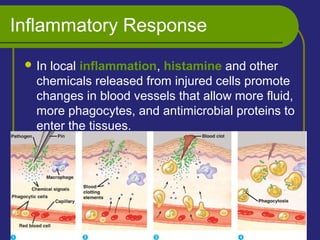
 In local inflammation, histamine and other
chemicals released from injured cells promote
changes in blood vessels that allow more fluid,
more phagocytes, and antimicrobial proteins to
enter the tissues.
Natural Killer Cells
Natural killer (NK) cells patrol the body
and attack virus-infected body cells and
cancer cells.
Trigger apoptosis (programmed cell death)
in the cells they attack.
Acquired Immunity
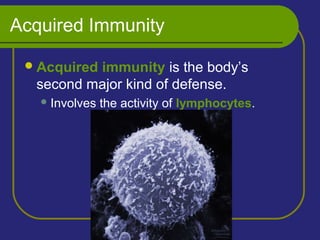
Acquired immunity is the body’s
second major kind of defense.
Involves the activity of lymphocytes.
Acquired Immunity
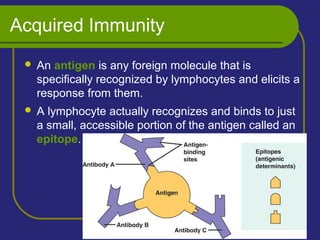
 An antigen is any foreign molecule that is
specifically recognized by lymphocytes and elicits a
response from them.
 A lymphocyte actually recognizes and binds to just
a small, accessible portion of the antigen called an
epitope.
Antigen Recognition by
Lymphocytes
The vertebrate body is populated by two
main types of lymphocytes which
circulate through the blood:
B lymphocytes (B cells)
T lymphocytes (T cells)
B Cell Receptors for Antigens
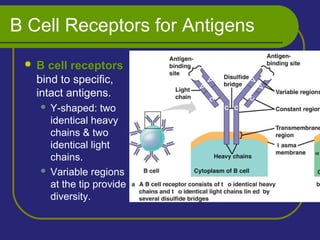
 B cell receptors
bind to specific,
intact antigens.
 Y-shaped: two
identical heavy
chains & two
identical light
chains.
 Variable regions
at the tip provide
diversity.
T Cell Receptors for Antigens and the
Role of the MHC
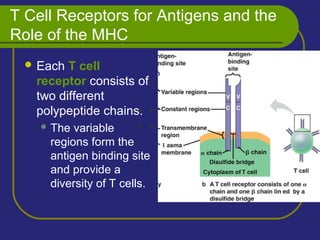
 Each T cell
receptor consists of
two different
polypeptide chains.
 The variable
regions form the
antigen binding site
and provide a
diversity of T cells.
V V
C C
T Cell Receptors for Antigens and the
Role of the MHC
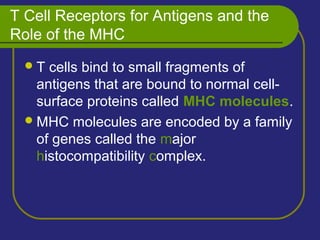
T cells bind to small fragments of
antigens that are bound to normal cell-
surface proteins called MHC molecules.
MHC molecules are encoded by a family
of genes called the major
histocompatibility complex.
T Cell Receptors for Antigens and the
Role of the MHC
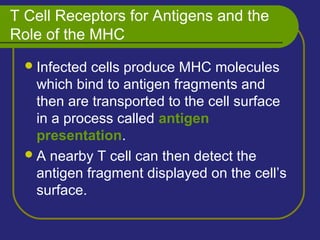
Infected cells produce MHC molecules
which bind to antigen fragments and
then are transported to the cell surface
in a process called antigen
presentation.
A nearby T cell can then detect the
antigen fragment displayed on the cell’s
surface.
T Cell Receptors for Antigens and the
Role of the MHC
Depending on their source, peptide
antigens are handled by different
classes of MHC molecules.
T Cell Receptors for Antigens and the
Role of the MHC
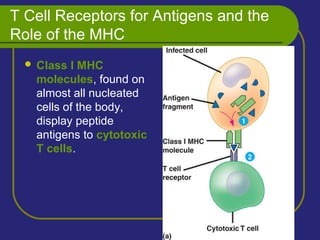
 Class I MHC
molecules, found on
almost all nucleated
cells of the body,
display peptide
antigens to cytotoxic
T cells.
T Cell Receptors for Antigens and the
Role of the MHC
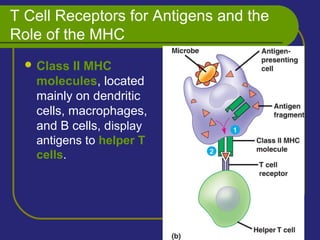
 Class II MHC
molecules, located
mainly on dendritic
cells, macrophages,
and B cells, display
antigens to helper T
cells.
Clonal Selection of Lymphocytes
In a primary immune response,
binding of an antigen to a mature
lymphocyte induces the lymphocyte’s
proliferation and differentiation, a
process called clonal selection.
Clonal Selection of Lymphocytes
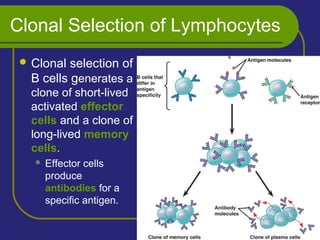
 Clonal selection of
B cells generates a
clone of short-lived
activated effector
cells and a clone of
long-lived memory
cells.
 Effector cells
produce
antibodies for a
specific antigen.
Clonal Selection of Lymphocytes
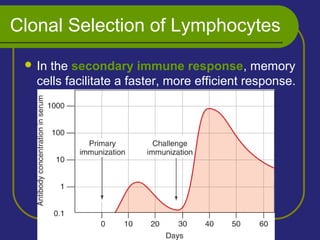
 In the secondary immune response, memory
cells facilitate a faster, more efficient response.
Humoral vs. Cell-Mediated
Response
Acquired immunity includes two
branches:
The humoral immune response involves
the activation and clonal selection of B cells,
resulting in the production of secreted
antibodies.
The cell-mediated immune response
involves the activation and clonal selection
of cytotoxic T cells.
Humoral vs. Cell-Mediated
Response
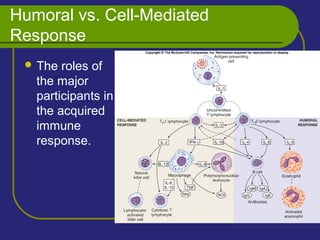
 The roles of
the major
participants in
the acquired
immune
response.
Helper T Cells: A Response to
Nearly All Antigens
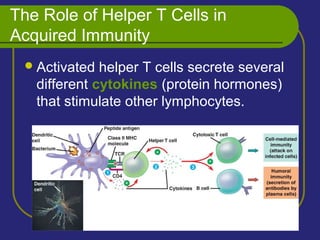
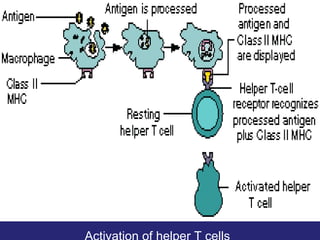
Helper T cells produce CD4, a surface
protein that enhances their binding to
class II MHC molecule–antigen
complexes on antigen-presenting cells.
Activation of the helper T cell then
occurs.
The Role of Helper T Cells in
Acquired Immunity
Activated helper T cells secrete several
different cytokines (protein hormones)
that stimulate other lymphocytes.
Cytotoxic T Cells: A Response to
Infected Cells and Cancer Cells
Cytotoxic T cells make CD8 - a surface
protein that greatly enhances the
interaction between a target cell and a
cytotoxic T cell.
The Role of Helper T Cells in
Acquired Immunity
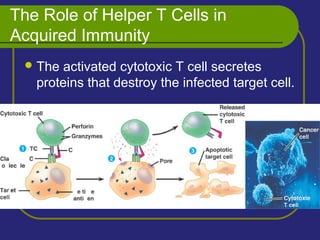
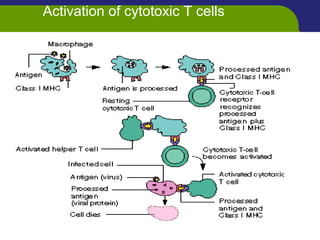
Cytotoxic T cells bind to infected cells,
cancer cells, and transplanted tissues.
Binding to a class I MHC complex on an
infected body cell activates a cytotoxic T
cell and differentiates it into an active
killer.
The Role of Helper T Cells in
Acquired Immunity
The activated cytotoxic T cell secretes
proteins that destroy the infected target cell.
B Cells: A Response to
Extracellular Pathogens
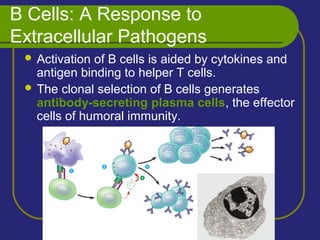
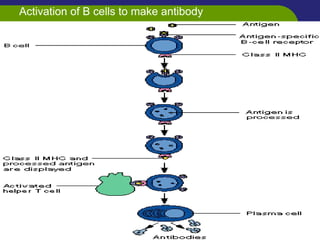
 Activation of B cells is aided by cytokines and
antigen binding to helper T cells.
 The clonal selection of B cells generates
antibody-secreting plasma cells, the effector
cells of humoral immunity.
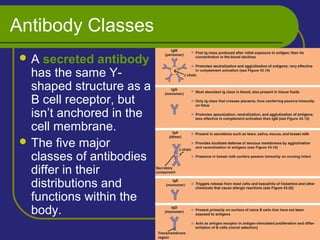
Antibody Classes
 A secreted antibody
has the same Y-
shaped structure as a
B cell receptor, but
isn’t anchored in the
cell membrane.
 The five major
classes of antibodies
differ in their
distributions and
functions within the
body.
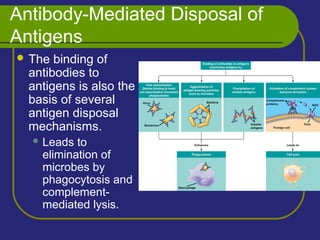
Antibody-Mediated Disposal of
Antigens
 The binding of
antibodies to
antigens is also the
basis of several
antigen disposal
mechanisms.
 Leads to
elimination of
microbes by
phagocytosis and
complement-
mediated lysis.
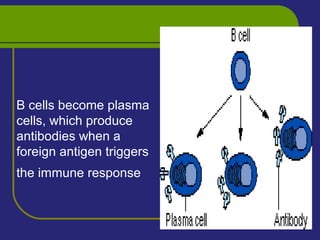
B cells become plasma
cells, which produce
antibodies when a
foreign antigen triggers
the immune response
B-lymphocytes
in bon marrow
The lymphoid stem cells differentiate into B cells
B-cells precursors mature, differentiate into
immunocomptent B-cells with a single antigen
specificity
Immature B-cells that express high affinity receptors
for self antigens, die or fail to mature
i.e negative selection or clonal deletion
This process induces central self tolerance and
reduces autoimmune diseases
B - lymphocytes
Immature B cells express IgM receptors on the
surface
Mature B cells express IgM, IgD molecules on
surfaces
IgM and IgD molecules serve as receptors for
antigens
Memory B-cells express IgG or IgA or IgE on the
surface
B-cells bear receptors for Fc portion of IgG and a
receptor for C3 component of the complement
They express an array of molecules on their surfaces
that are important in B-cells interactions with other
cells such as MHC II, B7 and CD40
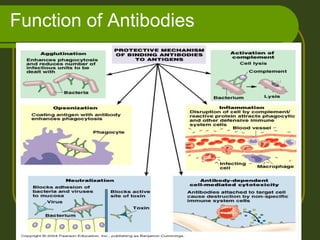
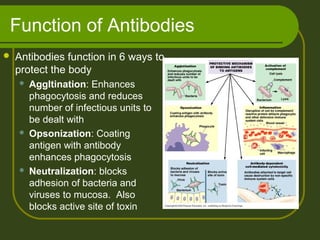
Function of Antibodies
 Antibodies function in 6 ways to
protect the body
 Aggltination: Enhances
phagocytosis and reduces
number of infectious units to
be dealt with
 Opsonization: Coating
antigen with antibody
enhances phagocytosis
 Neutralization: blocks
adhesion of bacteria and
viruses to mucosa. Also
blocks active site of toxin
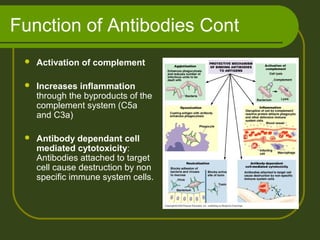
Function of Antibodies Cont
 Activation of complement
 Increases inflammation
through the byproducts of the
complement system (C5a
and C3a)
 Antibody dependant cell
mediated cytotoxicity:
Antibodies attached to target
cell cause destruction by non
specific immune system cells.
Mechanism of Humoral immunity
Antibodies induce resistance through:
1) Antitoxin neutralize bacterial toxins
(diphtheria , tetanus)
Antitoxin are developed actively as a result of:
a- Previous infection
b- Artificial immunization
c- Transferred passively as antiserum
Neutralization of toxin with antitoxin prevents a
combination with tissue cells
Mechanism of Humoral immunity
2) Antibodies attach to the surface of bacteria and
a- act as opsonins and enhance phagocytosisd
b- prevent the adherence of microorganisms to
their target cells, e.g. IgA in the gut
c- Activate the complement and lead to bacterial
lysis
d- Clump bacteria (agglutination) leading to
phagocytosis
Activation of B cells to make antibody
T-Lmphocytes
T- lmphocytes migrate from bon marrow to enter
thymus
1) In the outer cortex of thymus:
- T-lymphocytes acquire specific receptors (TCRs)
- This receptor commit lymphocyte to a single
antigen
specificity
- Responding by proliferation and production of a
clone of cells (clonal selection)
- They differentiate to express CD3, both CD4 and
CD8 co receptors (double positive cells)
* T lymphocytes
become CD4+ (helper T
cells)
or
* CD8+ cells (which in
turn can become killer T
cells)
also called cytotoxic T
cells
T- Lymphocytes
2) In the medulla of thymus:
- TCRs recognize MHC molecules, loaded with
normal self-peptides (p-MHC)
- TCRs capable of binding with low affinity to p-
MHC will receive positive selection signals to
divide and establish clones
- TCRs that bind too strongly to p-MHC undergo
(negative selection)
- This selection process will eliminate the
potentially most harmful self reactive T-cells
(central self tolerance)
T-Lmphocytes
3)Immature T-cells express both CD4 and CD8 (DP)
As they mature
* T-cell with TCRs that have affinity to bind to MHC
class II will become helper T-cells with CD4
molecule only
* T-cell with TCRs that have affinity to bind with
MHC class I will become cytotoxic T-cells with CD8
molecule only
T-Lmphocytes
4) Mature positively selected T-cells are MHC
restricted
* CD4 T-cells are MHC II restricted and only
recognize specific foreign peptide only when they
are presented in association with specific MHC II
molecules
* CD8 T-cells are MHC I restricted and recognize
specific foreign peptides only when they are
presented in association with specific MHC I
molecules
T-cell surface markers
These are molecules that by witch we can identify
T-cells and divide them to
subsets
They are required to for interactions between T-cells
and APC and for antigen recognition
These are TCRs, CD3, CD4, CD8, CD2, CD28,and
CD40 on activated T-cells
T-cell subpopulation
1) CD4 T helper lymphocytes (TH)
- TH lymphocytes recognize antigen on the surface of
APC in association with class II MHC molecules
- They are activated and secrete several cytokines
- There are two main subsets of TH cells (THI and
TH2)
- The two subsets are differentiated on basis of the
cytokine they produce
1) CD4 T helper lymphocytes Subsets
Th1 produce mainly :
- Cytokines of CMI and inflammation
e.g. IFN-γ, TNF- β, IL-3 and IL-2
TH2 produce mainly:
- Cytokines that stimulate B-cells
- Suppressor cytokines
e.g. Il-4, IL-5, IL-6 and IL-10
2) CD8 Cytotoxic T-lymphocytes
(CTLs)
* They constitute 35% of peripheral T-cells
* CTLs recognize antigen on surface of target
cells (infected APC or other infected
nucleotide cell) in association with MHC-I
* They are activated and kill the virus infected
cell or tumour cell
Professional APCs
Dendritic cells, macrophages, and B-lymphocytes
Dendritic cells:
- They are the most efficient APCs
- They are the main inducers of primary immune
response
- Presenting antigen to and activating native T-cells in
- the recognition phase
- They express class I and class II MHC molecules
- Dendritic cells are primarily located under skin and
mucosa of most organs
- They capture foreign antigens and transport them to
- local lymph nods
Macrophages
* Derived from myeloid stem cells in bon marrow
* They exist as free cells in blood e.g.
monocytes and fixed cells in tissues e.g.
Kupffer cells of liver
* They are important link between innate and
aquired immune responses
* They are activated and attracted to the site of
foreign material by action of different cytokines
e.g IFN-γ , C5a
Functions of Macrophages
1) Phagocytosis
2) Opsonization
3) APCs: they ingest foreign material, process it, and
fragments of antigen are presented on its surface
(in association with MHC molecules) for interaction
with T-cells
4) Macrophages may kill antibody coated infected cells
or tumour cells through release of lytic enzymes
5) They produce IL-1, IL-6, IL-12, IL-15, TNF-alpha
6) They secret prostaglandins and synthesize
complement components
Natural killer (NK) Cells
* Large granular lymphocytes which lack most surface
markers of B and T-cells
* They comprise 5-10% of the peripheral lymphocytes
* They function mainly in innate immunity
* They have spontaneous non-specific cytotoxic activity
on virus infected cells, tumour cells and graft cells
* They are not MHC restricted and MHC I inhibits their
killing functions
* The mechanism of NK mediated cytolysis is as that of
CTLs
NK cells differ from CTLs in
1) They are non-specific
2) They act spontaneously without prior
recognition or activation
3) They do not require antigen presentation by
MHC
4) They destroy cells coated with antibodies,
a mechanism called antibody dependant
cellular cytotoxicity (ADDCC)
Antibodies produced by B-cells of the immune system
recognize foreign antigens and mark them for destruction
Activation of cytotoxic T cells
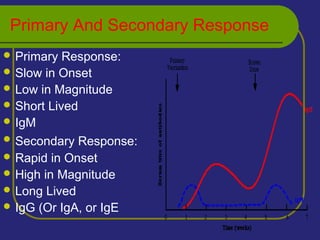
Primary And Secondary Response
 Primary Response:
 Slow in Onset
 Low in Magnitude
 Short Lived
 IgM
 Secondary Response:
 Rapid in Onset
 High in Magnitude
 Long Lived
 IgG (Or IgA, or IgE
Thanks

Dr tarek nasrala immunity

  • 1.
  • 2.
  • 3.
    The Immune System An animal must defend itself from the many dangerous pathogens it may encounter in the environment.
  • 4.
    The Immune System Ahost is susceptible to a parasite if it can’t eliminate a parasite before it becomes established. The parasite is infective. The host is resistant if it is able to prevent establishment of the parasite. The parasite is noninfective.
  • 5.
    The Immune System Immune cells, red blood cells, and other white blood cells are derived from multipotential stem cells in the bone marrow.
  • 6.
    The Immune System Lymphocytes arise from stem cells in the bone marrow.  Newly formed lymphocytes are all alike, but they later develop into B cells or T cells, depending on where they continue their maturation.
  • 7.
    The Immune System AsB and T cells are maturing in the bone marrow and thymus, their antigen receptors are tested for possible self- reactivity. Lymphocytes bearing receptors for antigens already present in the body are destroyed by apoptosis or rendered nonfunctional.
  • 8.
    The Immune System Twomajor kinds of immunity have evolved that counter these invaders: Innate immunity Acquired immunity
  • 9.
    Innate Immunity  Innateimmunity is present before any exposure to pathogens and is effective from the time of birth.  Involves nonspecific responses to pathogens.
  • 10.
    Acquired Immunity Acquired immunitydevelops only after exposure to inducing agents such as microbes, toxins, or other foreign substances.  Involves a very specific response to pathogens.
  • 11.
    A Summary ofInnate and Acquired Immunity
  • 12.
    External Defenses Intact skinand mucous membranes form physical barriers that block the entry of microorganisms and viruses. Certain cells of the mucous membranes produce mucus - a viscous fluid that traps microbes and other particles.
  • 13.
    External Defenses  Inthe trachea, ciliated epithelial cells sweep mucus and any entrapped microbes upward, preventing the microbes from entering the lungs.
  • 14.
    External Defenses Secretions fromthe skin give the skin a pH between 3 and 5, which is acidic enough to prevent colonization of many microbes. Also include proteins such as lysozyme, an enzyme that digests the cell walls of many bacteria.
  • 15.
    Internal Cellular andChemical Defenses Internal cellular defenses depend mainly on phagocytosis. Phagocytes are types of white blood cells that: Ingest invading microorganisms. Initiate the inflammatory response.
  • 16.
    Phagocytic Cells  Phagocytes attachto their prey via surface receptors and engulf them, forming a vacuole that fuses with a lysosome.
  • 17.
    Phagocytic Cells Macrophages &monocytes, a specific type of phagocytes, can be found migrating through the body. Also found in various organs of the lymphatic system.
  • 18.
    The Lymphatic System The lymphatic system plays an active role in defending the body from pathogens.
  • 19.
    Antimicrobial Proteins Numerous proteinsfunction in innate defense by attacking microbes directly or by impeding their reproduction.
  • 20.
    Antimicrobial Proteins About 30proteins make up the complement system, which can cause lysis of invading cells and help trigger inflammation. Interferons provide innate defense against viruses and help activate macrophages.
  • 21.
    Inflammatory Response  Inlocal inflammation, histamine and other chemicals released from injured cells promote changes in blood vessels that allow more fluid, more phagocytes, and antimicrobial proteins to enter the tissues.
  • 22.
    Natural Killer Cells Naturalkiller (NK) cells patrol the body and attack virus-infected body cells and cancer cells. Trigger apoptosis (programmed cell death) in the cells they attack.
  • 23.
    Acquired Immunity Acquired immunityis the body’s second major kind of defense. Involves the activity of lymphocytes.
  • 24.
    Acquired Immunity  Anantigen is any foreign molecule that is specifically recognized by lymphocytes and elicits a response from them.  A lymphocyte actually recognizes and binds to just a small, accessible portion of the antigen called an epitope.
  • 25.
    Antigen Recognition by Lymphocytes Thevertebrate body is populated by two main types of lymphocytes which circulate through the blood: B lymphocytes (B cells) T lymphocytes (T cells)
  • 26.
    B Cell Receptorsfor Antigens  B cell receptors bind to specific, intact antigens.  Y-shaped: two identical heavy chains & two identical light chains.  Variable regions at the tip provide diversity.
  • 27.
    T Cell Receptorsfor Antigens and the Role of the MHC  Each T cell receptor consists of two different polypeptide chains.  The variable regions form the antigen binding site and provide a diversity of T cells. V V C C
  • 28.
    T Cell Receptorsfor Antigens and the Role of the MHC T cells bind to small fragments of antigens that are bound to normal cell- surface proteins called MHC molecules. MHC molecules are encoded by a family of genes called the major histocompatibility complex.
  • 29.
    T Cell Receptorsfor Antigens and the Role of the MHC Infected cells produce MHC molecules which bind to antigen fragments and then are transported to the cell surface in a process called antigen presentation. A nearby T cell can then detect the antigen fragment displayed on the cell’s surface.
  • 30.
    T Cell Receptorsfor Antigens and the Role of the MHC Depending on their source, peptide antigens are handled by different classes of MHC molecules.
  • 31.
    T Cell Receptorsfor Antigens and the Role of the MHC  Class I MHC molecules, found on almost all nucleated cells of the body, display peptide antigens to cytotoxic T cells.
  • 32.
    T Cell Receptorsfor Antigens and the Role of the MHC  Class II MHC molecules, located mainly on dendritic cells, macrophages, and B cells, display antigens to helper T cells.
  • 33.
    Clonal Selection ofLymphocytes In a primary immune response, binding of an antigen to a mature lymphocyte induces the lymphocyte’s proliferation and differentiation, a process called clonal selection.
  • 34.
    Clonal Selection ofLymphocytes  Clonal selection of B cells generates a clone of short-lived activated effector cells and a clone of long-lived memory cells.  Effector cells produce antibodies for a specific antigen.
  • 35.
    Clonal Selection ofLymphocytes  In the secondary immune response, memory cells facilitate a faster, more efficient response.
  • 36.
    Humoral vs. Cell-Mediated Response Acquiredimmunity includes two branches: The humoral immune response involves the activation and clonal selection of B cells, resulting in the production of secreted antibodies. The cell-mediated immune response involves the activation and clonal selection of cytotoxic T cells.
  • 37.
    Humoral vs. Cell-Mediated Response The roles of the major participants in the acquired immune response.
  • 38.
    Helper T Cells:A Response to Nearly All Antigens Helper T cells produce CD4, a surface protein that enhances their binding to class II MHC molecule–antigen complexes on antigen-presenting cells. Activation of the helper T cell then occurs.
  • 39.
    The Role ofHelper T Cells in Acquired Immunity Activated helper T cells secrete several different cytokines (protein hormones) that stimulate other lymphocytes.
  • 40.
    Cytotoxic T Cells:A Response to Infected Cells and Cancer Cells Cytotoxic T cells make CD8 - a surface protein that greatly enhances the interaction between a target cell and a cytotoxic T cell.
  • 41.
    The Role ofHelper T Cells in Acquired Immunity Cytotoxic T cells bind to infected cells, cancer cells, and transplanted tissues. Binding to a class I MHC complex on an infected body cell activates a cytotoxic T cell and differentiates it into an active killer.
  • 42.
    The Role ofHelper T Cells in Acquired Immunity The activated cytotoxic T cell secretes proteins that destroy the infected target cell.
  • 43.
    B Cells: AResponse to Extracellular Pathogens  Activation of B cells is aided by cytokines and antigen binding to helper T cells.  The clonal selection of B cells generates antibody-secreting plasma cells, the effector cells of humoral immunity.
  • 44.
    Antibody Classes  Asecreted antibody has the same Y- shaped structure as a B cell receptor, but isn’t anchored in the cell membrane.  The five major classes of antibodies differ in their distributions and functions within the body.
  • 45.
    Antibody-Mediated Disposal of Antigens The binding of antibodies to antigens is also the basis of several antigen disposal mechanisms.  Leads to elimination of microbes by phagocytosis and complement- mediated lysis.
  • 46.
    B cells becomeplasma cells, which produce antibodies when a foreign antigen triggers the immune response
  • 47.
    B-lymphocytes in bon marrow Thelymphoid stem cells differentiate into B cells B-cells precursors mature, differentiate into immunocomptent B-cells with a single antigen specificity Immature B-cells that express high affinity receptors for self antigens, die or fail to mature i.e negative selection or clonal deletion This process induces central self tolerance and reduces autoimmune diseases
  • 48.
    B - lymphocytes ImmatureB cells express IgM receptors on the surface Mature B cells express IgM, IgD molecules on surfaces IgM and IgD molecules serve as receptors for antigens Memory B-cells express IgG or IgA or IgE on the surface B-cells bear receptors for Fc portion of IgG and a receptor for C3 component of the complement They express an array of molecules on their surfaces that are important in B-cells interactions with other cells such as MHC II, B7 and CD40
  • 49.
  • 50.
    Function of Antibodies Antibodies function in 6 ways to protect the body  Aggltination: Enhances phagocytosis and reduces number of infectious units to be dealt with  Opsonization: Coating antigen with antibody enhances phagocytosis  Neutralization: blocks adhesion of bacteria and viruses to mucosa. Also blocks active site of toxin
  • 51.
    Function of AntibodiesCont  Activation of complement  Increases inflammation through the byproducts of the complement system (C5a and C3a)  Antibody dependant cell mediated cytotoxicity: Antibodies attached to target cell cause destruction by non specific immune system cells.
  • 52.
    Mechanism of Humoralimmunity Antibodies induce resistance through: 1) Antitoxin neutralize bacterial toxins (diphtheria , tetanus) Antitoxin are developed actively as a result of: a- Previous infection b- Artificial immunization c- Transferred passively as antiserum Neutralization of toxin with antitoxin prevents a combination with tissue cells
  • 53.
    Mechanism of Humoralimmunity 2) Antibodies attach to the surface of bacteria and a- act as opsonins and enhance phagocytosisd b- prevent the adherence of microorganisms to their target cells, e.g. IgA in the gut c- Activate the complement and lead to bacterial lysis d- Clump bacteria (agglutination) leading to phagocytosis
  • 54.
    Activation of Bcells to make antibody
  • 55.
    T-Lmphocytes T- lmphocytes migratefrom bon marrow to enter thymus 1) In the outer cortex of thymus: - T-lymphocytes acquire specific receptors (TCRs) - This receptor commit lymphocyte to a single antigen specificity - Responding by proliferation and production of a clone of cells (clonal selection) - They differentiate to express CD3, both CD4 and CD8 co receptors (double positive cells)
  • 56.
    * T lymphocytes becomeCD4+ (helper T cells) or * CD8+ cells (which in turn can become killer T cells) also called cytotoxic T cells
  • 57.
    T- Lymphocytes 2) Inthe medulla of thymus: - TCRs recognize MHC molecules, loaded with normal self-peptides (p-MHC) - TCRs capable of binding with low affinity to p- MHC will receive positive selection signals to divide and establish clones - TCRs that bind too strongly to p-MHC undergo (negative selection) - This selection process will eliminate the potentially most harmful self reactive T-cells (central self tolerance)
  • 58.
    T-Lmphocytes 3)Immature T-cells expressboth CD4 and CD8 (DP) As they mature * T-cell with TCRs that have affinity to bind to MHC class II will become helper T-cells with CD4 molecule only * T-cell with TCRs that have affinity to bind with MHC class I will become cytotoxic T-cells with CD8 molecule only
  • 59.
    T-Lmphocytes 4) Mature positivelyselected T-cells are MHC restricted * CD4 T-cells are MHC II restricted and only recognize specific foreign peptide only when they are presented in association with specific MHC II molecules * CD8 T-cells are MHC I restricted and recognize specific foreign peptides only when they are presented in association with specific MHC I molecules
  • 60.
    T-cell surface markers Theseare molecules that by witch we can identify T-cells and divide them to subsets They are required to for interactions between T-cells and APC and for antigen recognition These are TCRs, CD3, CD4, CD8, CD2, CD28,and CD40 on activated T-cells
  • 61.
    T-cell subpopulation 1) CD4T helper lymphocytes (TH) - TH lymphocytes recognize antigen on the surface of APC in association with class II MHC molecules - They are activated and secrete several cytokines - There are two main subsets of TH cells (THI and TH2) - The two subsets are differentiated on basis of the cytokine they produce
  • 62.
    1) CD4 Thelper lymphocytes Subsets Th1 produce mainly : - Cytokines of CMI and inflammation e.g. IFN-γ, TNF- β, IL-3 and IL-2 TH2 produce mainly: - Cytokines that stimulate B-cells - Suppressor cytokines e.g. Il-4, IL-5, IL-6 and IL-10
  • 63.
    2) CD8 CytotoxicT-lymphocytes (CTLs) * They constitute 35% of peripheral T-cells * CTLs recognize antigen on surface of target cells (infected APC or other infected nucleotide cell) in association with MHC-I * They are activated and kill the virus infected cell or tumour cell
  • 64.
    Professional APCs Dendritic cells,macrophages, and B-lymphocytes Dendritic cells: - They are the most efficient APCs - They are the main inducers of primary immune response - Presenting antigen to and activating native T-cells in - the recognition phase - They express class I and class II MHC molecules - Dendritic cells are primarily located under skin and mucosa of most organs - They capture foreign antigens and transport them to - local lymph nods
  • 65.
    Macrophages * Derived frommyeloid stem cells in bon marrow * They exist as free cells in blood e.g. monocytes and fixed cells in tissues e.g. Kupffer cells of liver * They are important link between innate and aquired immune responses * They are activated and attracted to the site of foreign material by action of different cytokines e.g IFN-γ , C5a
  • 66.
    Functions of Macrophages 1)Phagocytosis 2) Opsonization 3) APCs: they ingest foreign material, process it, and fragments of antigen are presented on its surface (in association with MHC molecules) for interaction with T-cells 4) Macrophages may kill antibody coated infected cells or tumour cells through release of lytic enzymes 5) They produce IL-1, IL-6, IL-12, IL-15, TNF-alpha 6) They secret prostaglandins and synthesize complement components
  • 67.
    Natural killer (NK)Cells * Large granular lymphocytes which lack most surface markers of B and T-cells * They comprise 5-10% of the peripheral lymphocytes * They function mainly in innate immunity * They have spontaneous non-specific cytotoxic activity on virus infected cells, tumour cells and graft cells * They are not MHC restricted and MHC I inhibits their killing functions * The mechanism of NK mediated cytolysis is as that of CTLs
  • 68.
    NK cells differfrom CTLs in 1) They are non-specific 2) They act spontaneously without prior recognition or activation 3) They do not require antigen presentation by MHC 4) They destroy cells coated with antibodies, a mechanism called antibody dependant cellular cytotoxicity (ADDCC)
  • 69.
    Antibodies produced byB-cells of the immune system recognize foreign antigens and mark them for destruction
  • 71.
  • 72.
    Primary And SecondaryResponse  Primary Response:  Slow in Onset  Low in Magnitude  Short Lived  IgM  Secondary Response:  Rapid in Onset  High in Magnitude  Long Lived  IgG (Or IgA, or IgE
  • 73.