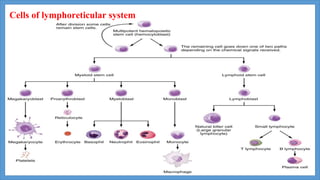
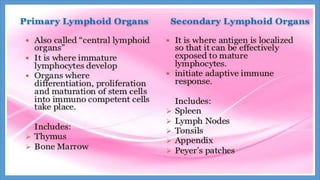
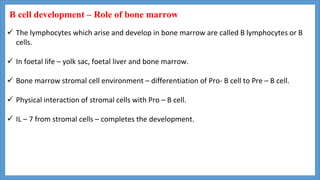
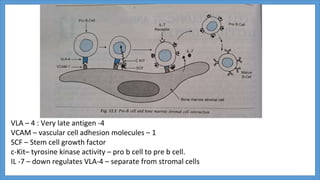
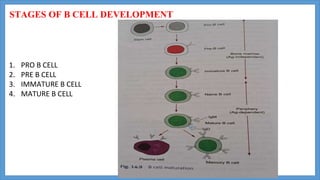
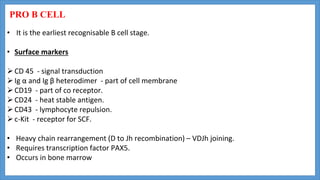
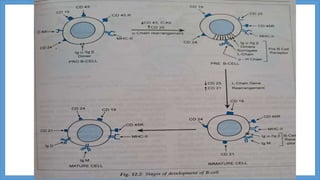
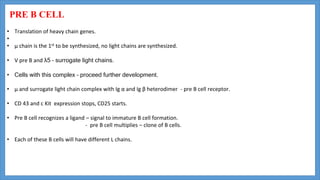
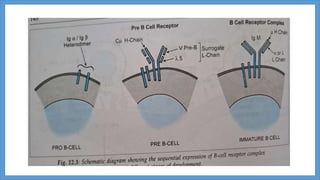
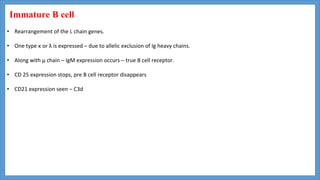
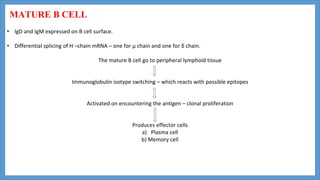
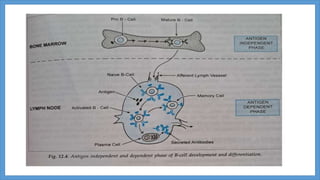
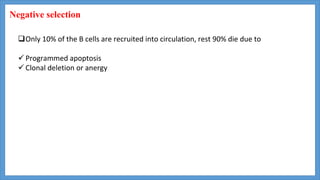
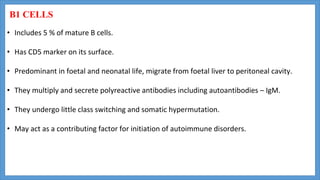
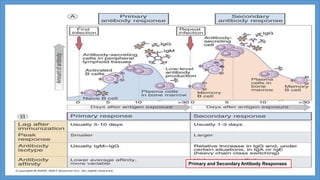
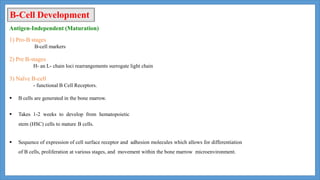
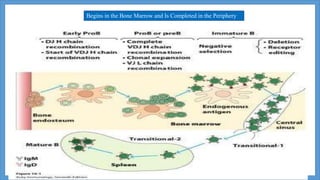
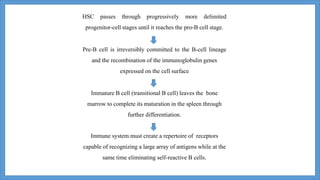
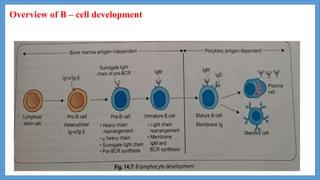
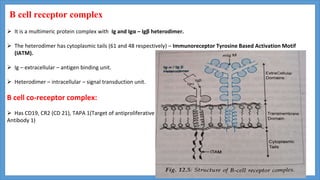
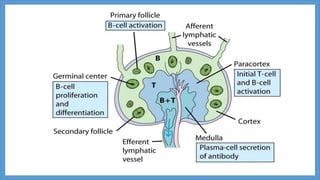
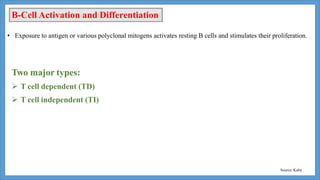
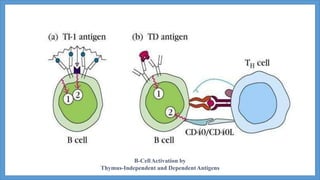
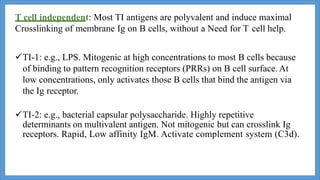
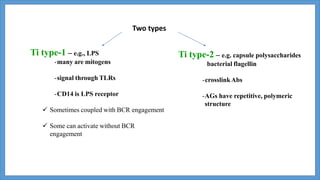
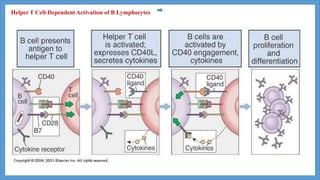
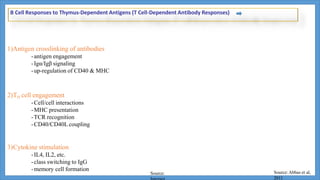
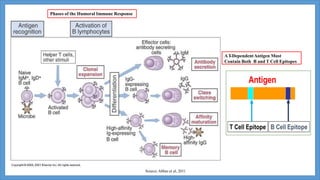
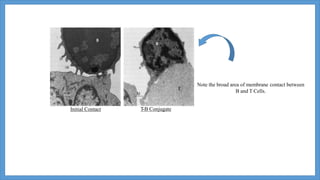
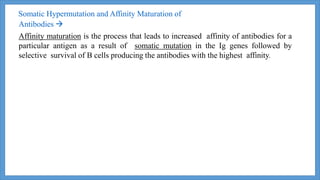
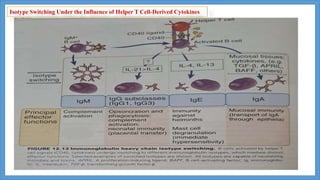
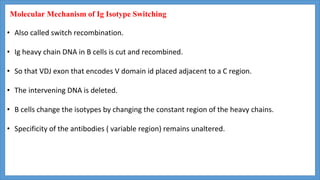
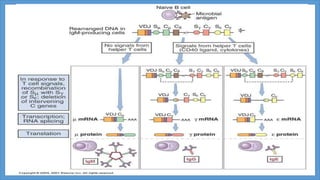
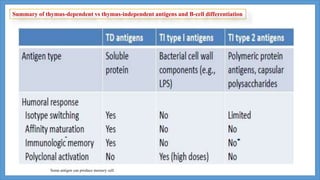
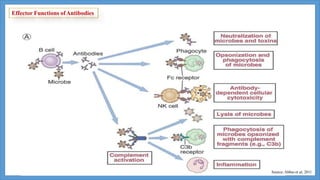
B-cell maturation begins with hematopoietic stem cells in the bone marrow, where they develop through pro-B cell, pre-B cell, and immature B cell stages. During this process, immunoglobulin genes undergo rearrangement and expression of B cell receptors occurs. Immature B cells then migrate to secondary lymphoid tissues to complete maturation. Mature B cells circulate and are activated by antigen to proliferate and differentiate into plasma cells or memory B cells through T cell dependent or independent pathways. T cell dependent activation induces affinity maturation, class switching, and generation of long-lived memory B cells.





![Overview of Fungal Infections[1].ppt pptx](https://cdn.slidesharecdn.com/ss_thumbnails/overviewoffungalinfections1-250811070114-3c4fbad5-thumbnail.jpg?width=640&height=640&fit=bounds)


![Gas gangrene [Autosaved].pptxGas gangrene [Autosaved].pptx](https://cdn.slidesharecdn.com/ss_thumbnails/gasgangreneautosaved-250608063811-c85a18a4-thumbnail.jpg?width=640&height=640&fit=bounds)


