Resistance and the Immune System: Innate Immunity Chapter 19
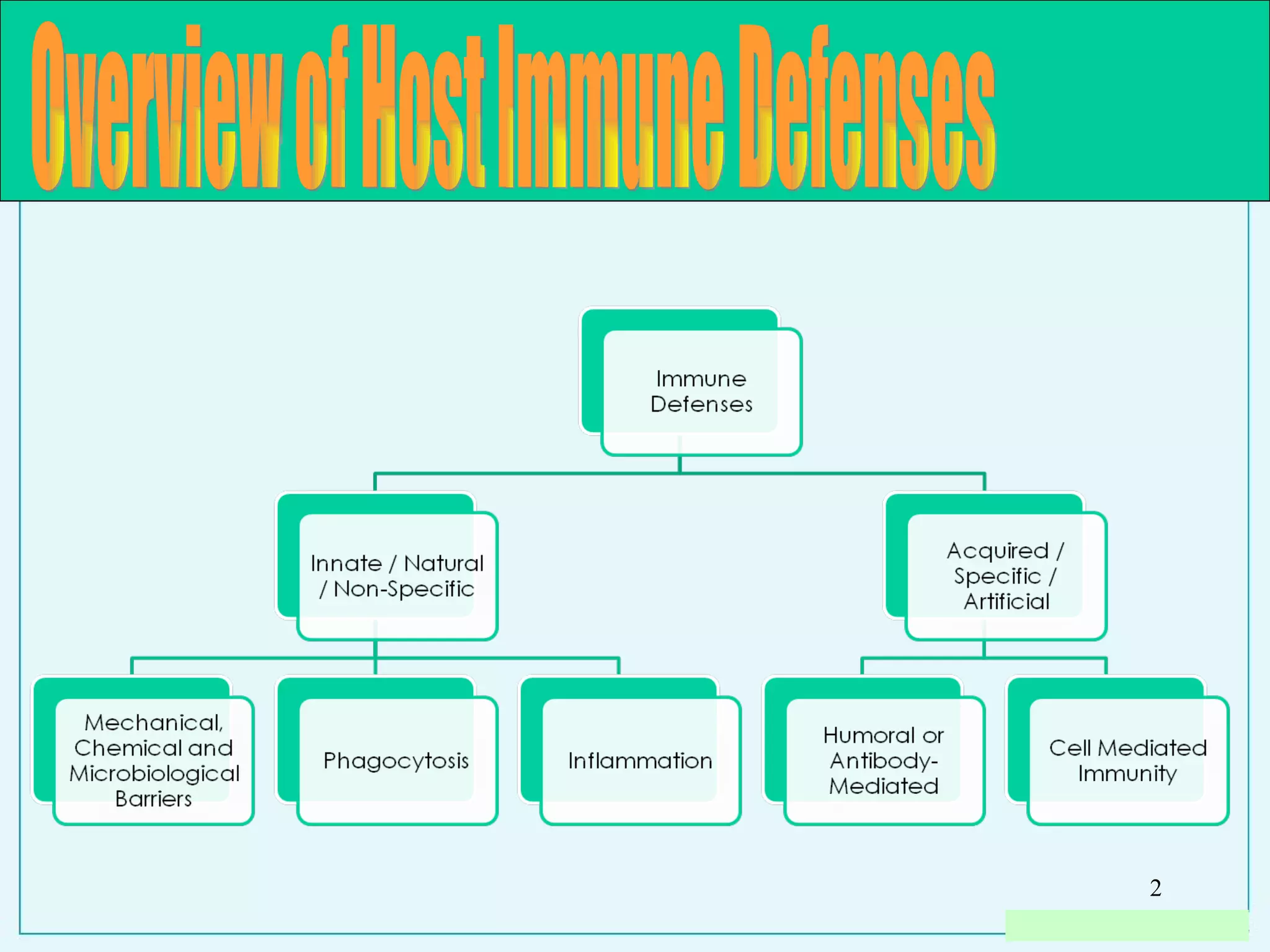
Overview of Host Immune Defenses
Blood Cells Form an Important Defense for Innate and Acquired Immunity Major Components Serum is the fluid part of blood, containing: Minerals, salts, proteins, etc. Plasma is serum that contains clotting agents Cells RBC Platelets Leukocytes (white blood cells) Overview of Host Immune Defenses
Leukocytes (white blood cells) are produced in the bone marrow Neutrophils (polymorphonuclear leukocytes [PMNs]) are phagocytes Eosinophils contain toxic compounds to defend against multicellular parasites Basophils are similar to mast cells, acting in allergic reactions Overview of Host Immune Defenses
Monocytes are phagocytes that mature into macrophages in tissue Lymphocytes  move to the lymph nodes after maturation Natural killer (NK) cells destroy virus-infected and abnormal cells B lymphocytes and T lymphocytes are involved in acquired immunity Dendritic cells are found in the skin and other points of pathogen origin They are involved in acquired immunity Overview of Host Immune Defenses
Lymphoid organs are the site of maturation, development and proliferation of lymphocytes The primary lymphoid tissues are the thymus and bone marrow The secondary lymphoid tissues are the spleen and lymph nodes The spleen contains cells that monitor and fight infectious microbes The lymph nodes contain phagocytes and lymphocytes Overview of Host Immune Defenses
The interactions between innate and acquired immunity make infections and disease establishments difficult Innate immunity  (nonspecific resistance) is  genetically-encoded  to recognize common pathogenic features and foreign substances; host’s “early-warning system” Skin, interferon, lysozyme, phagocytes Cytokines  are chemical signals sent by many immune cells to tissues involved with initiating acquired immunity; released by defensive cells in response to an activating substance (pathogen) Acquired immunity  (specific resistance) involves production of: Antibodies, action of complement System, Cellular immunity, Killer T-lymphocytes Innate and Acquired Immunity
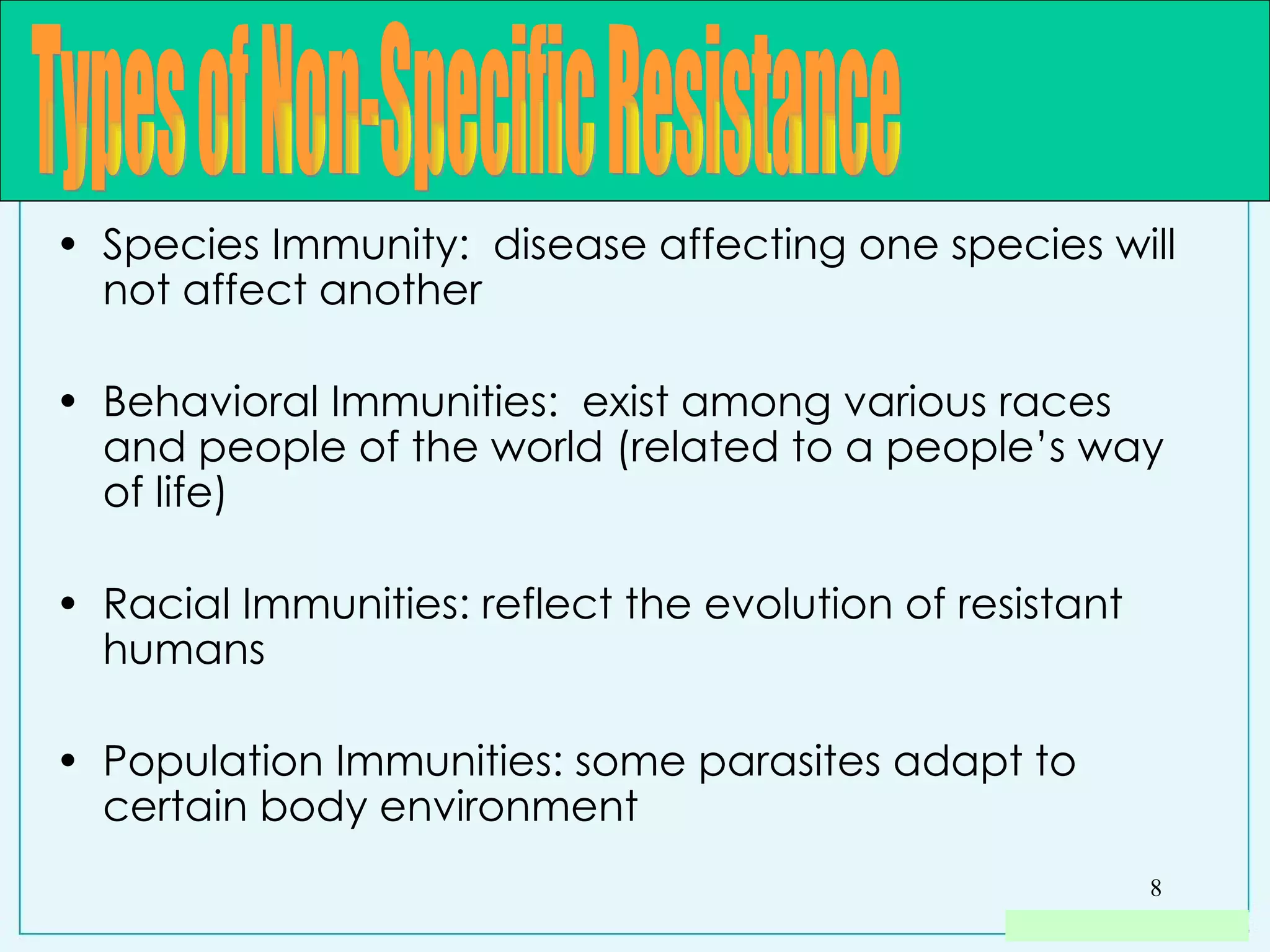
Species Immunity:  disease affecting one species will not affect another Behavioral Immunities:  exist among various races and people of the world (related to a people’s way of life) Racial Immunities: reflect the evolution of resistant humans Population Immunities: some parasites adapt to certain body environment  Types of Non-Specific Resistance
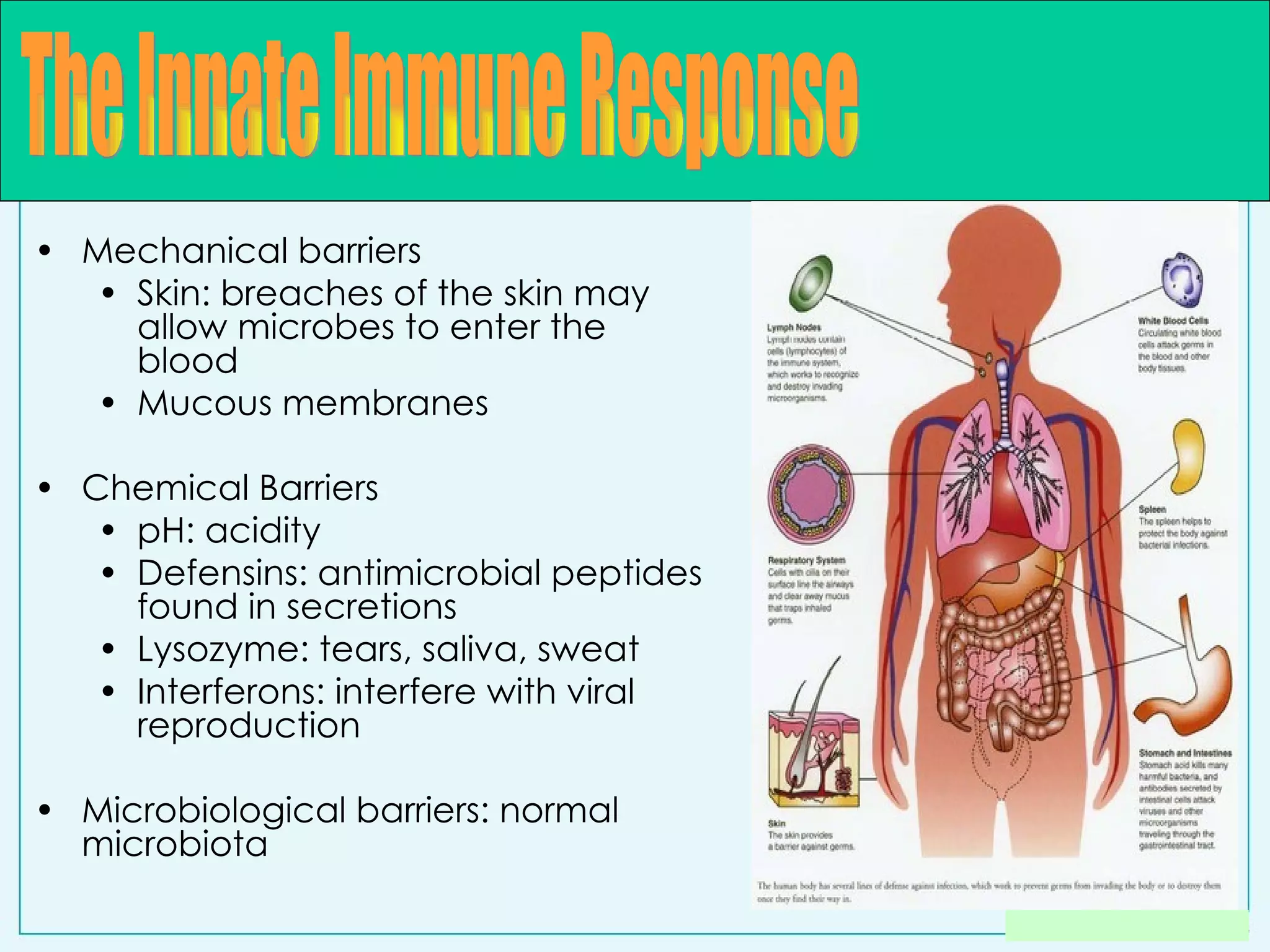
Mechanical barriers Skin: breaches of the skin may allow microbes to enter the blood Mucous membranes Chemical Barriers pH: acidity Defensins: antimicrobial peptides found in secretions Lysozyme: tears, saliva, sweat Interferons: interfere with viral reproduction Microbiological barriers: normal microbiota The Innate Immune Response
Phagocytosis is the capture and digestion of foreign particles Chemokines are cytokines that attract macrophages and neutrophils to infected tissues Opsonins attach to microbes to increase the ability of phagocytes to adhere (opsonization) Phagocytosis
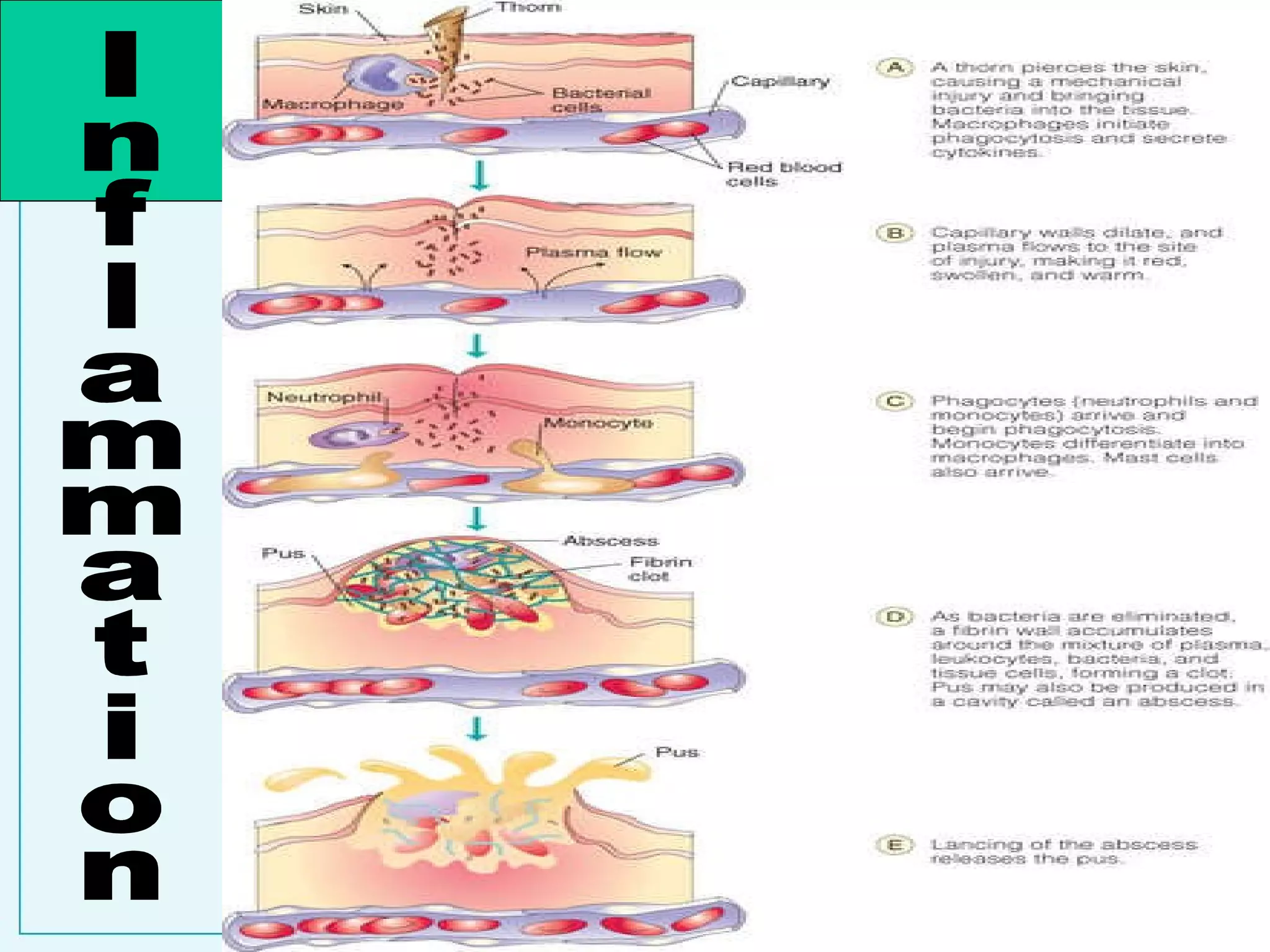
Inflammation
Low to moderate fever supports the immune system by: inhibiting rapid microbial growth encouraging rapid tissue repair heightening phagocytosis Pyrogens are cytokines produced by: some leukocytes fragments from pathogens They affect the hypothalamus, causing elevated body temperature If a temperature rises above 40°C in an adult, host metabolic inhibition can occur This can cause convulsions and death Fever
NK cells are formed in the bone marrow, and migrate to: tonsils, lymph nodes and spleen When activated, they produce cytokines that trigger response by macrophages and other cells They move into blood and lymph where they kill cancer cells and virus-infected cells Not phagocytic, contain on their surfaces special receptors capable of forming cell-to-cell interactions with a target cell Cytolytic mediators: perforins, granzymes Natural Killer Cells
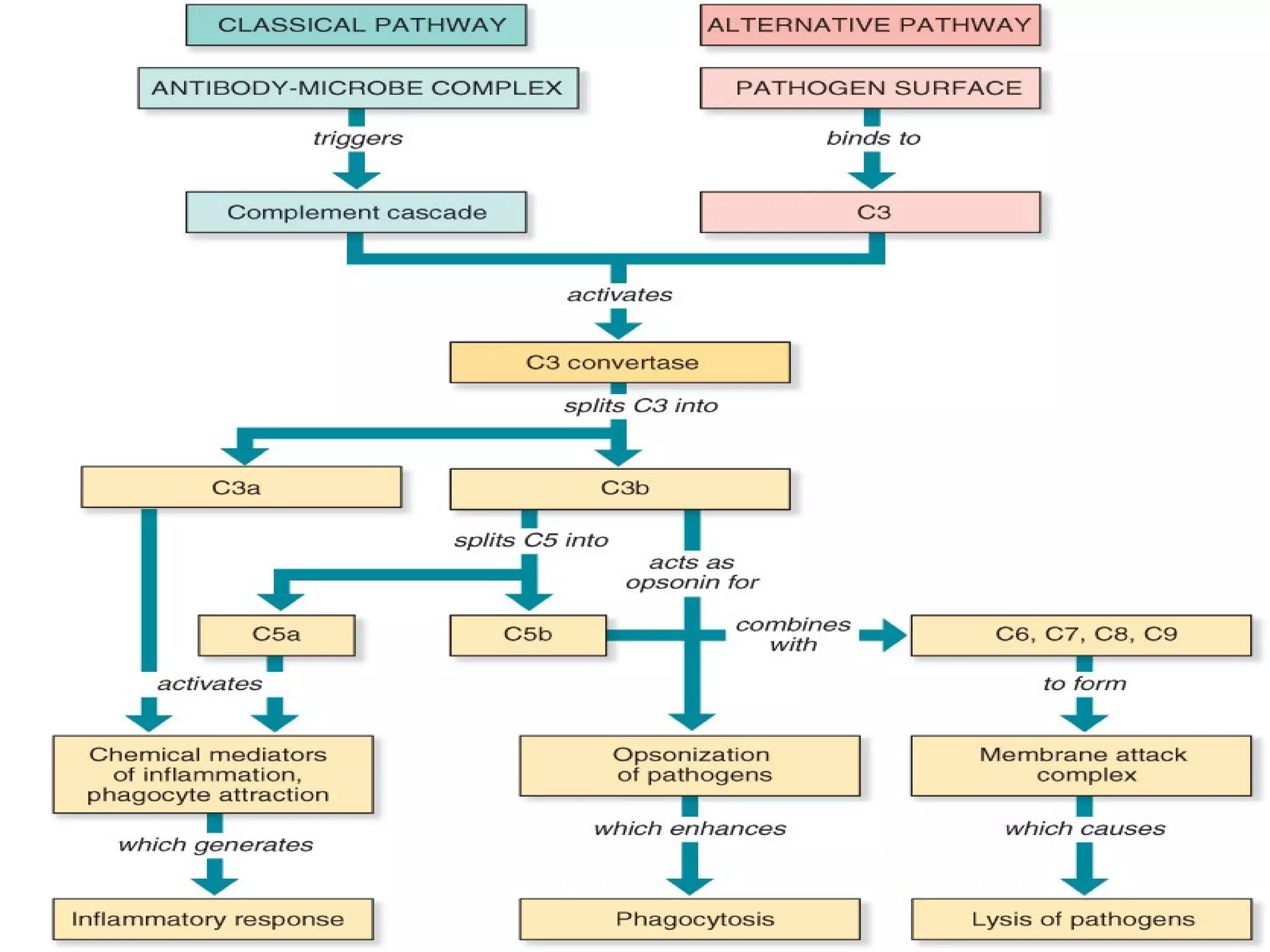
Complement is a series of proteins that circulate in the bloodstream that represents another innate defense to disease. They activate in the presence of microbes in a cascade of steps that assist inflammatory response and phagocytosis. In the  classical pathway , antibody-microbe complexes activate complement proteins that activate C3 convertase In the  alternative pathway , the complement protein C3 binds to the pathogen cell surface to activate C3 convertase Complement System
The immune system responds to pathogens by rapid immune response followed by development of antibodies and lymphocytes to generate acquired immune response. Pathogen-associated molecular patterns (PAMPs)  help the innate immune system recognize pathogens by identifying unique microbial molecular sequences not found on host cells. Toll-like receptors (TLRs)  are signaling receptors on: macrophages, dendritic cells and endothelial cells Innate Immunity and Receptor Recognition
TLRs mediate a specific response to distinct PAMPs They stimulate the secretion of cytokines,  For example, those that stimulate production of acute phase proteins The TLR response must be regulated to prevent infection and immune disorders

Innate Immunity

  • 1.
    Resistance and theImmune System: Innate Immunity Chapter 19
  • 2.
    Overview of HostImmune Defenses
  • 3.
    Blood Cells Forman Important Defense for Innate and Acquired Immunity Major Components Serum is the fluid part of blood, containing: Minerals, salts, proteins, etc. Plasma is serum that contains clotting agents Cells RBC Platelets Leukocytes (white blood cells) Overview of Host Immune Defenses
  • 4.
    Leukocytes (white bloodcells) are produced in the bone marrow Neutrophils (polymorphonuclear leukocytes [PMNs]) are phagocytes Eosinophils contain toxic compounds to defend against multicellular parasites Basophils are similar to mast cells, acting in allergic reactions Overview of Host Immune Defenses
  • 5.
    Monocytes are phagocytesthat mature into macrophages in tissue Lymphocytes move to the lymph nodes after maturation Natural killer (NK) cells destroy virus-infected and abnormal cells B lymphocytes and T lymphocytes are involved in acquired immunity Dendritic cells are found in the skin and other points of pathogen origin They are involved in acquired immunity Overview of Host Immune Defenses
  • 6.
    Lymphoid organs arethe site of maturation, development and proliferation of lymphocytes The primary lymphoid tissues are the thymus and bone marrow The secondary lymphoid tissues are the spleen and lymph nodes The spleen contains cells that monitor and fight infectious microbes The lymph nodes contain phagocytes and lymphocytes Overview of Host Immune Defenses
  • 7.
    The interactions betweeninnate and acquired immunity make infections and disease establishments difficult Innate immunity (nonspecific resistance) is genetically-encoded to recognize common pathogenic features and foreign substances; host’s “early-warning system” Skin, interferon, lysozyme, phagocytes Cytokines are chemical signals sent by many immune cells to tissues involved with initiating acquired immunity; released by defensive cells in response to an activating substance (pathogen) Acquired immunity (specific resistance) involves production of: Antibodies, action of complement System, Cellular immunity, Killer T-lymphocytes Innate and Acquired Immunity
  • 8.
    Species Immunity: disease affecting one species will not affect another Behavioral Immunities: exist among various races and people of the world (related to a people’s way of life) Racial Immunities: reflect the evolution of resistant humans Population Immunities: some parasites adapt to certain body environment Types of Non-Specific Resistance
  • 9.
    Mechanical barriers Skin:breaches of the skin may allow microbes to enter the blood Mucous membranes Chemical Barriers pH: acidity Defensins: antimicrobial peptides found in secretions Lysozyme: tears, saliva, sweat Interferons: interfere with viral reproduction Microbiological barriers: normal microbiota The Innate Immune Response
  • 10.
    Phagocytosis is thecapture and digestion of foreign particles Chemokines are cytokines that attract macrophages and neutrophils to infected tissues Opsonins attach to microbes to increase the ability of phagocytes to adhere (opsonization) Phagocytosis
  • 12.
  • 13.
    Low to moderatefever supports the immune system by: inhibiting rapid microbial growth encouraging rapid tissue repair heightening phagocytosis Pyrogens are cytokines produced by: some leukocytes fragments from pathogens They affect the hypothalamus, causing elevated body temperature If a temperature rises above 40°C in an adult, host metabolic inhibition can occur This can cause convulsions and death Fever
  • 14.
    NK cells areformed in the bone marrow, and migrate to: tonsils, lymph nodes and spleen When activated, they produce cytokines that trigger response by macrophages and other cells They move into blood and lymph where they kill cancer cells and virus-infected cells Not phagocytic, contain on their surfaces special receptors capable of forming cell-to-cell interactions with a target cell Cytolytic mediators: perforins, granzymes Natural Killer Cells
  • 16.
    Complement is aseries of proteins that circulate in the bloodstream that represents another innate defense to disease. They activate in the presence of microbes in a cascade of steps that assist inflammatory response and phagocytosis. In the classical pathway , antibody-microbe complexes activate complement proteins that activate C3 convertase In the alternative pathway , the complement protein C3 binds to the pathogen cell surface to activate C3 convertase Complement System
  • 18.
    The immune systemresponds to pathogens by rapid immune response followed by development of antibodies and lymphocytes to generate acquired immune response. Pathogen-associated molecular patterns (PAMPs) help the innate immune system recognize pathogens by identifying unique microbial molecular sequences not found on host cells. Toll-like receptors (TLRs) are signaling receptors on: macrophages, dendritic cells and endothelial cells Innate Immunity and Receptor Recognition
  • 19.
    TLRs mediate aspecific response to distinct PAMPs They stimulate the secretion of cytokines, For example, those that stimulate production of acute phase proteins The TLR response must be regulated to prevent infection and immune disorders