Immunity to microbes
Submitted to
Dr.Devinder kaur
Submitted by
Gaurav
19mslsbf03
Learning Objectives
• Understand the mechanism used by
the immune system to fight with:-
 Extracellular bacteria
 Intracellular bacteria
 Viruses
General features of Immune
response to microbes
 Responses always involve innate and adaptive
immunity.
 The immune system responds in distinct and
specialized ways to different type of microbes
to be most effective.
 Microbes evade or resist the effector
mechanism of immunity.
 Many microbes establish latent, or persistent
infections-immune response controls but does
not eliminate the microbe and the microbe
survives without propagating the infection.
Immune responses are
specialized for :
 Extracellular bacteria
 Intracellular bacteria
 Viruses
 Fungi
 Parasites
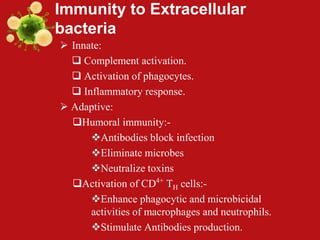
Immunity to Extracellular
bacteria
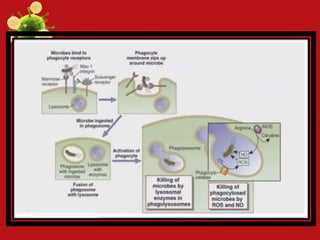
 Innate:
 Complement activation.
 Activation of phagocytes.
 Inflammatory response.
 Adaptive:
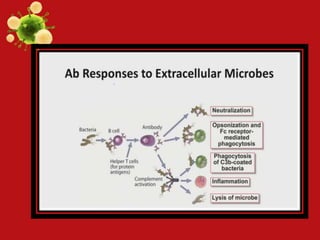
Humoral immunity:-
Antibodies block infection
Eliminate microbes
Neutralize toxins
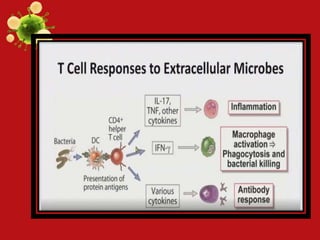
Activation of CD4+
TH cells:-
Enhance phagocytic and microbicidal
activities of macrophages and neutrophils.
Stimulate Antibodies production.
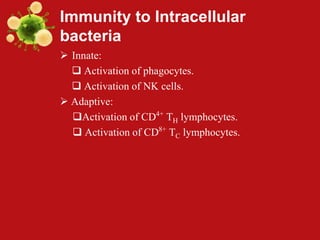
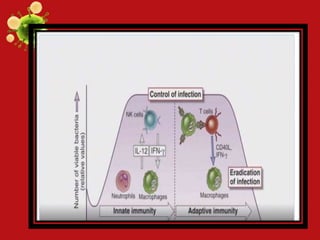
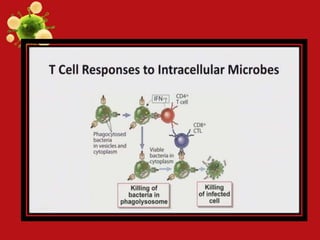
Immunity to Intracellular
bacteria
 Innate:
 Activation of phagocytes.
 Activation of NK cells.
 Adaptive:
Activation of CD4+
TH lymphocytes.
 Activation of CD8+
TC lymphocytes.
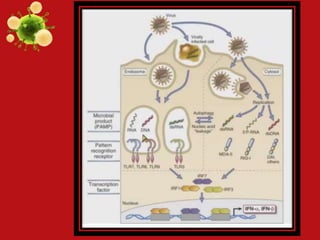
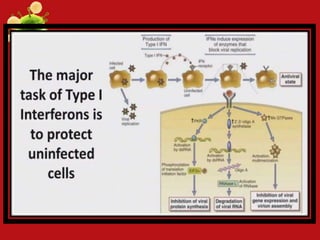
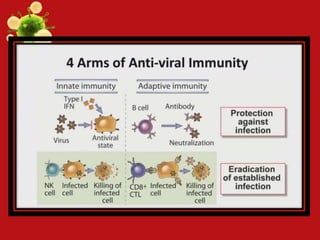
Immunity to Viruses
 Innate:
 Activation of Complement system.
 Activation of NK cells.
Production of Type 1 Interferons(IFN)
 Adaptive:
Humoral Immunity.
 Activation of CD8+
TC lymphocytes (Kill
virus infected cells).
Latest Research
• CDC Grows SARS-CoV-2, the virus
that causes COVID-19, in Cell
Culture.
• A Systematic Review on the Efficacy
and Safety of Chloroquine for the
Treatment of COVID-19.
• The Trial of Chloroquine in the
Treatment of Corona Virus Disease
2019 (COVID-19) and Its
Research Progress in Forensic
Toxicology
MCQs
Q1.Which of the following substances
will not stimulate an immune
response unless they are bound to a
larger molecule?
a. Antigen
b. Virus
c. Hapten
d. Miligen
e. Antibody
A.Hapten is a small molecule; they can
act as antigen if it binds to a larger
protein molecule. So the answer
is “c”
Q2. Which of the following immune
cells/molecules are most effective at
destroying intracellular pathogens?
a. T helper cells
b. B cells
c. Antibodies
d. Complement
e. T cytolytic cells
A. cytolytic cell Tc cells and Natural
killer cells kill infected host cells
which are harboring intracellular
pathogen. So answer is option “e”
References:-
(1)
https://web.duke.edu/vaps/BodyDisease/Immunity_to_Mic
robes_Host-Pathogen_Interactions/index5.html
(2)
Kuby Immunology, 8th edition.
(3)
K. Girish., “Microorganisms and their interaction with the
immune system”, Journal of leukocyte biology,1997(62):
415-429.
(4)
https://www.cdc.gov/coronavirus/2019-ncov/about/grows-
virus-cell-culture.html
(5)
https://pubmed.ncbi.nlm.nih.gov/32173110/
(6)
https://pubmed.ncbi.nlm.nih.gov/32212513/

Immunity to microbes

  • 1.
    Immunity to microbes Submittedto Dr.Devinder kaur Submitted by Gaurav 19mslsbf03
  • 2.
    Learning Objectives • Understandthe mechanism used by the immune system to fight with:-  Extracellular bacteria  Intracellular bacteria  Viruses
  • 3.
    General features ofImmune response to microbes  Responses always involve innate and adaptive immunity.  The immune system responds in distinct and specialized ways to different type of microbes to be most effective.  Microbes evade or resist the effector mechanism of immunity.  Many microbes establish latent, or persistent infections-immune response controls but does not eliminate the microbe and the microbe survives without propagating the infection.
  • 4.
    Immune responses are specializedfor :  Extracellular bacteria  Intracellular bacteria  Viruses  Fungi  Parasites
  • 5.
    Immunity to Extracellular bacteria Innate:  Complement activation.  Activation of phagocytes.  Inflammatory response.  Adaptive: Humoral immunity:- Antibodies block infection Eliminate microbes Neutralize toxins Activation of CD4+ TH cells:- Enhance phagocytic and microbicidal activities of macrophages and neutrophils. Stimulate Antibodies production.
  • 8.
    Immunity to Intracellular bacteria Innate:  Activation of phagocytes.  Activation of NK cells.  Adaptive: Activation of CD4+ TH lymphocytes.  Activation of CD8+ TC lymphocytes.
  • 12.
    Immunity to Viruses Innate:  Activation of Complement system.  Activation of NK cells. Production of Type 1 Interferons(IFN)  Adaptive: Humoral Immunity.  Activation of CD8+ TC lymphocytes (Kill virus infected cells).
  • 16.
    Latest Research • CDCGrows SARS-CoV-2, the virus that causes COVID-19, in Cell Culture. • A Systematic Review on the Efficacy and Safety of Chloroquine for the Treatment of COVID-19. • The Trial of Chloroquine in the Treatment of Corona Virus Disease 2019 (COVID-19) and Its Research Progress in Forensic Toxicology
  • 17.
    MCQs Q1.Which of thefollowing substances will not stimulate an immune response unless they are bound to a larger molecule? a. Antigen b. Virus c. Hapten d. Miligen e. Antibody A.Hapten is a small molecule; they can act as antigen if it binds to a larger protein molecule. So the answer is “c”
  • 18.
    Q2. Which ofthe following immune cells/molecules are most effective at destroying intracellular pathogens? a. T helper cells b. B cells c. Antibodies d. Complement e. T cytolytic cells A. cytolytic cell Tc cells and Natural killer cells kill infected host cells which are harboring intracellular pathogen. So answer is option “e”
  • 19.
    References:- (1) https://web.duke.edu/vaps/BodyDisease/Immunity_to_Mic robes_Host-Pathogen_Interactions/index5.html (2) Kuby Immunology, 8thedition. (3) K. Girish., “Microorganisms and their interaction with the immune system”, Journal of leukocyte biology,1997(62): 415-429. (4) https://www.cdc.gov/coronavirus/2019-ncov/about/grows- virus-cell-culture.html (5) https://pubmed.ncbi.nlm.nih.gov/32173110/ (6) https://pubmed.ncbi.nlm.nih.gov/32212513/