
Gluconeogenesis
The formation of glucose from non-
carbohydrate precursors is called
gluconeogenesis.
Definition
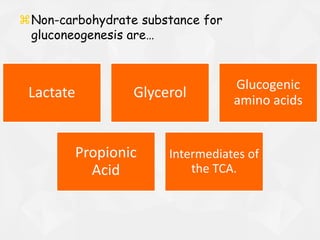
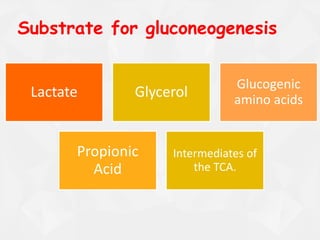
Non-carbohydrate substance for
gluconeogenesis are…
Lactate Glycerol
Glucogenic
amino acids
Propionic
Acid
Intermediates of
the TCA.
Cytosol (although some precursors are produced
in the mitochondria)
Liver is the major tissue
Kidney (during starvation)
Location
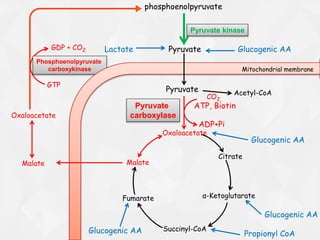
Oxaloacetate
Citrate
α-Ketoglutarate
Succinyl-CoA
Fumarate
MalateMalate
Acetyl-CoA
Pyruvate
Pyruvate
carboxylaseOxaloacetate
phosphoenolpyruvate
Pyruvate kinase
GTP
GDP + CO2
Phosphoenolpyruvate
carboxykinase
CO2,
ATP, Biotin
ADP+Pi
Lactate Glucogenic AA
Glucogenic AA
Glucogenic AA Propionyl CoA
Glucogenic AA
Pyruvate
Mitochondrial membrane
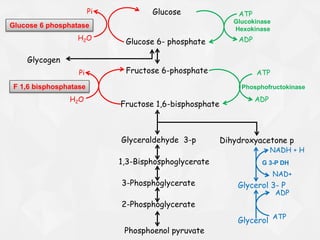
Glucose
Glucose 6- phosphate
Fructose 6-phosphate
Fructose 1,6-bisphosphate
1,3-Bisphosphoglycerate
3-Phosphoglycerate
2-Phosphoglycerate
Phosphoenol pyruvate
Glyceraldehyde 3-p Dihydroxyacetone p
ADP
ATP
Phosphofructokinase
ADP
ATP
Glucokinase
Hexokinase
F 1,6 bisphosphatase
Pi
H2O
Glucose 6 phosphatase
Pi
H2O
Glycogen
Glycerol
Glycerol 3- P
ADP
NAD+
NADH + H
G 3-P DH
ATP
Substrate for gluconeogenesis
Lactate Glycerol
Glucogenic
amino acids
Propionic
Acid
Intermediates of
the TCA.
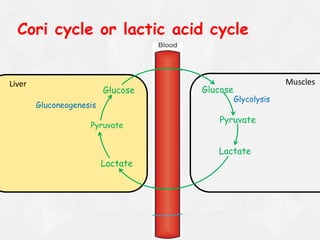
Cori cycle or lactic acid cycle
Glucose
Pyruvate
Lactate
Lactate
Pyruvate
Glucose
Gluconeogenesis
Liver Muscles
Glycolysis
Liver Muscles
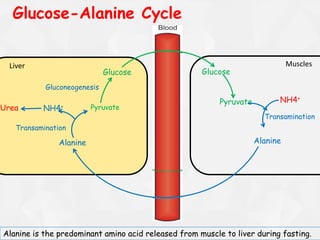
Glucose-Alanine Cycle
Glucose
Pyruvate
Pyruvate
NH4+
Alanine
Transamination
Glucose
Alanine
Transamination
NH4+Urea
Gluconeogenesis
Alanine is the predominant amino acid released from muscle to liver during fasting.
Liver Muscles
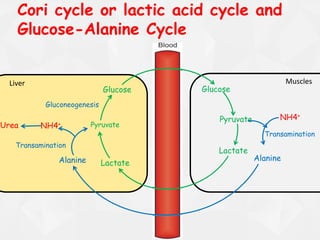
Cori cycle or lactic acid cycle and
Glucose-Alanine Cycle
Glucose
Pyruvate
Lactate
Lactate
Pyruvate
NH4+
Alanine
Transamination
Glucose
Alanine
Transamination
NH4+Urea
Gluconeogenesis
Regulation of gluconeogenesis
Since glycolysis & gluconeogenesis share the same
pathway but in opposite direction, they may
regulated reciprocally.
The rate of gluconeogenesis depends on the
Availability of substrate i.e substrate level regulation.
Change in the activity of certain key enzymes, i.e.
enzymatic regulation .
Gluconeogenesis is stimulated by the flow of its
major substrate from peripheral tissues to liver.
Lactate, produced by muscle during exrecise
Glycerol released from adipose tissue
Amino acids are released from muscle
Thus, gluconeogenesis is stimulated during,
Fasting
Prolonged exercise
By high protein diet, and
Under stress conditions (due to increased epinephrine)
Substrate Level Regulation
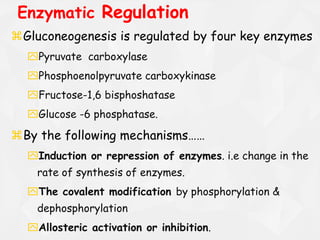
Gluconeogenesis is regulated by four key enzymes
Pyruvate carboxylase
Phosphoenolpyruvate carboxykinase
Fructose-1,6 bisphoshatase
Glucose -6 phosphatase.
By the following mechanisms……
Induction or repression of enzymes. i.e change in the
rate of synthesis of enzymes.
The covalent modification by phosphorylation &
dephosphorylation
Allosteric activation or inhibition.
Enzymatic Regulation
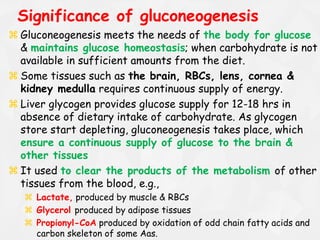
Significance of gluconeogenesis
 Gluconeogenesis meets the needs of the body for glucose
& maintains glucose homeostasis; when carbohydrate is not
available in sufficient amounts from the diet.
 Some tissues such as the brain, RBCs, lens, cornea &
kidney medulla requires continuous supply of energy.
 Liver glycogen provides glucose supply for 12-18 hrs in
absence of dietary intake of carbohydrate. As glycogen
store start depleting, gluconeogenesis takes place, which
ensure a continuous supply of glucose to the brain &
other tissues
 It used to clear the products of the metabolism of other
tissues from the blood, e.g.,
 Lactate, produced by muscle & RBCs
 Glycerol produced by adipose tissues
 Propionyl-CoA produced by oxidation of odd chain fatty acids and
carbon skeleton of some Aas.
Gluconeogenesis -

Gluconeogenesis -

  • 1.
  • 2.
    The formation ofglucose from non- carbohydrate precursors is called gluconeogenesis. Definition
  • 3.
    Non-carbohydrate substance for gluconeogenesisare… Lactate Glycerol Glucogenic amino acids Propionic Acid Intermediates of the TCA.
  • 4.
    Cytosol (although someprecursors are produced in the mitochondria) Liver is the major tissue Kidney (during starvation) Location
  • 5.
    Oxaloacetate Citrate α-Ketoglutarate Succinyl-CoA Fumarate MalateMalate Acetyl-CoA Pyruvate Pyruvate carboxylaseOxaloacetate phosphoenolpyruvate Pyruvate kinase GTP GDP +CO2 Phosphoenolpyruvate carboxykinase CO2, ATP, Biotin ADP+Pi Lactate Glucogenic AA Glucogenic AA Glucogenic AA Propionyl CoA Glucogenic AA Pyruvate Mitochondrial membrane
  • 6.
    Glucose Glucose 6- phosphate Fructose6-phosphate Fructose 1,6-bisphosphate 1,3-Bisphosphoglycerate 3-Phosphoglycerate 2-Phosphoglycerate Phosphoenol pyruvate Glyceraldehyde 3-p Dihydroxyacetone p ADP ATP Phosphofructokinase ADP ATP Glucokinase Hexokinase F 1,6 bisphosphatase Pi H2O Glucose 6 phosphatase Pi H2O Glycogen Glycerol Glycerol 3- P ADP NAD+ NADH + H G 3-P DH ATP
  • 7.
    Substrate for gluconeogenesis LactateGlycerol Glucogenic amino acids Propionic Acid Intermediates of the TCA.
  • 8.
    Cori cycle orlactic acid cycle Glucose Pyruvate Lactate Lactate Pyruvate Glucose Gluconeogenesis Liver Muscles Glycolysis
  • 9.
  • 10.
    Liver Muscles Cori cycleor lactic acid cycle and Glucose-Alanine Cycle Glucose Pyruvate Lactate Lactate Pyruvate NH4+ Alanine Transamination Glucose Alanine Transamination NH4+Urea Gluconeogenesis
  • 11.
    Regulation of gluconeogenesis Sinceglycolysis & gluconeogenesis share the same pathway but in opposite direction, they may regulated reciprocally. The rate of gluconeogenesis depends on the Availability of substrate i.e substrate level regulation. Change in the activity of certain key enzymes, i.e. enzymatic regulation .
  • 12.
    Gluconeogenesis is stimulatedby the flow of its major substrate from peripheral tissues to liver. Lactate, produced by muscle during exrecise Glycerol released from adipose tissue Amino acids are released from muscle Thus, gluconeogenesis is stimulated during, Fasting Prolonged exercise By high protein diet, and Under stress conditions (due to increased epinephrine) Substrate Level Regulation
  • 13.
    Gluconeogenesis is regulatedby four key enzymes Pyruvate carboxylase Phosphoenolpyruvate carboxykinase Fructose-1,6 bisphoshatase Glucose -6 phosphatase. By the following mechanisms…… Induction or repression of enzymes. i.e change in the rate of synthesis of enzymes. The covalent modification by phosphorylation & dephosphorylation Allosteric activation or inhibition. Enzymatic Regulation
  • 14.
    Significance of gluconeogenesis Gluconeogenesis meets the needs of the body for glucose & maintains glucose homeostasis; when carbohydrate is not available in sufficient amounts from the diet.  Some tissues such as the brain, RBCs, lens, cornea & kidney medulla requires continuous supply of energy.  Liver glycogen provides glucose supply for 12-18 hrs in absence of dietary intake of carbohydrate. As glycogen store start depleting, gluconeogenesis takes place, which ensure a continuous supply of glucose to the brain & other tissues  It used to clear the products of the metabolism of other tissues from the blood, e.g.,  Lactate, produced by muscle & RBCs  Glycerol produced by adipose tissues  Propionyl-CoA produced by oxidation of odd chain fatty acids and carbon skeleton of some Aas.