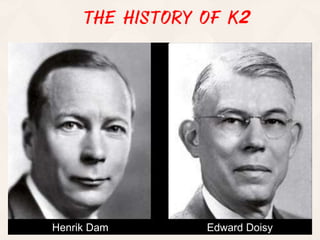

Henrik Dam Edward Doisy
Vitamin K
Vitamin K
Anti-hemorrhagic factor
Specific coenzyme function
Required for coagulation
Chemistry
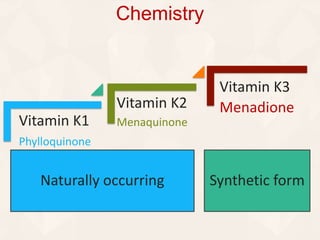
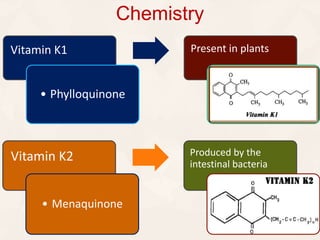
Vitamin K1
Phylloquinone
Vitamin K2
Menaquinone
Vitamin K3
Menadione
Naturally occurring Synthetic form
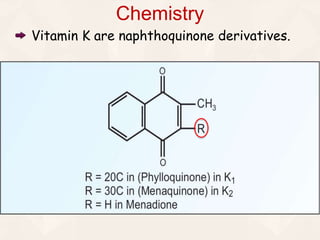
Vitamin K are naphthoquinone derivatives.
Chemistry
Chemistry
Vitamin K2
• Menaquinone
Produced by the
intestinal bacteria
Vitamin K1
• Phylloquinone
Present in plants
Chemistry
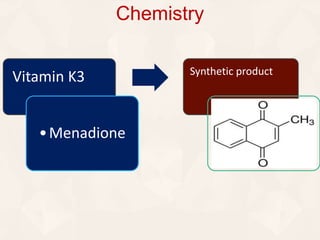
Vitamin K3
•Menadione
Synthetic product
Sources
RDA for Vitamin K is…
Nutritional Requirement
70–140 μg of vitamin K per day
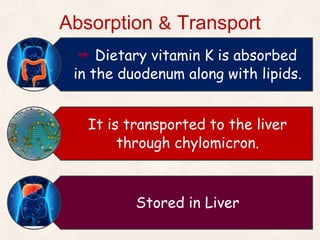
Absorption & Transport
Dietary vitamin K is absorbed
in the duodenum along with lipids.
It is transported to the liver
through chylomicron.
Stored in Liver
Functions of Vitamin K
Role in blood
Coagulation
Role in Bone
Functions of Vitamin K cont…blood
coagulation
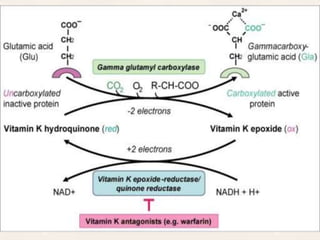
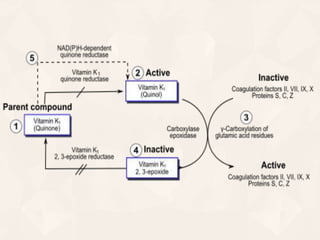
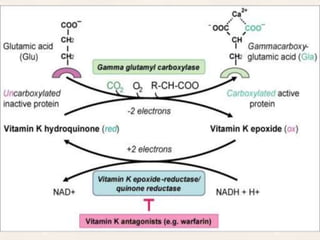
• It is necessary for coagulation.
• It brings about the post translational
modification of certain blood clotting
factors. (factor II, VII, IX & X)
• They all are synthesized as inactive
zymogen form in the liver.
• Gamma carboxylation of glutamic acid
residues.
• These are the binding sites for calcium ions.
Functions of Vitamin K
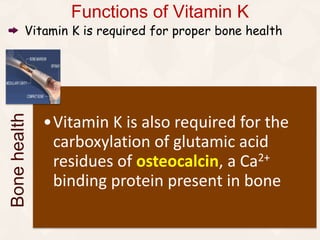
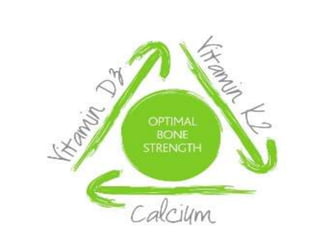
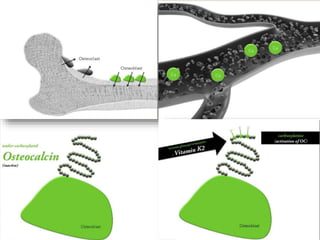
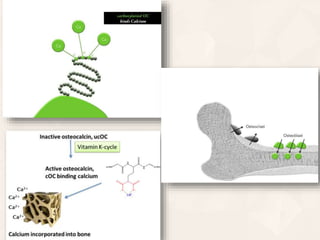
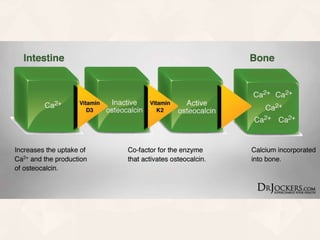
Vitamin K is required for proper bone health
Bonehealth
•Vitamin K is also required for the
carboxylation of glutamic acid
residues of osteocalcin, a Ca2+
binding protein present in bone
Vitamin K Deficiency
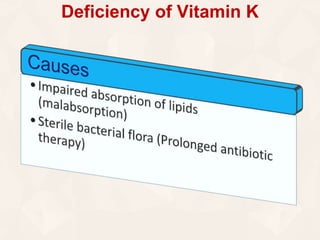
Deficiency of Vitamin K
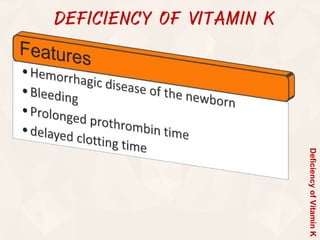
DeficiencyofVitaminK
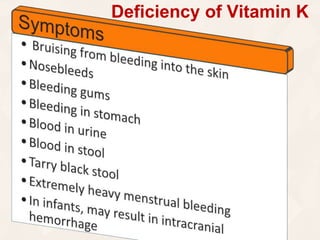
Deficiency of Vitamin K
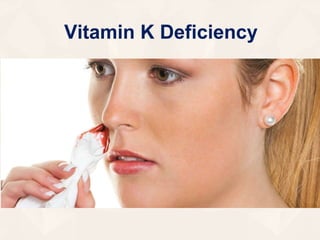
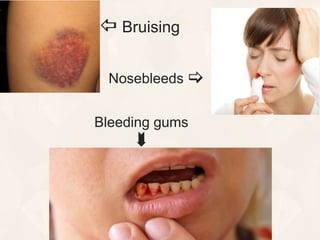
Nosebleeds 
 Bruising
Bleeding gums

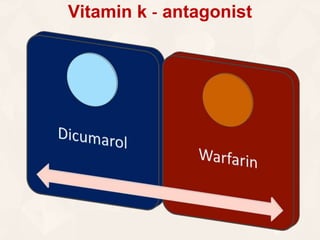
Vitamin k - antagonist
….

Vitamin K .

Editor's Notes

  • #3 Henrik Dam isolated vitamin K1 in 1929, while Edward Doisy isolated vitamin K2 in 1939. Both of them were awarded Nobel prize in 1943. In 1935 Danish scientist Henrik Dam described a fat-soluble factor that reduced bleeding in chicks fed an extremely low-fat diet. He named this factor vitamin K
  • #4 is the only fat soluble vitamin with a specific coenzyme function
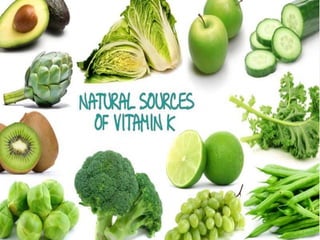
  • #9 Green leafy vegetables are good dietary sources. Even if the diet does not contain the vitamin, intestinal bacterial synthesis will meet the daily requirements, as long as absorption is normal.
  • #13 Factor II (prothrombin); Factor VII (SPCA); Factor IX (Christmas factor); Factor X (Stuart Prower factor).
  • #22 In normal adults dietary deficiency will not occurs since the intestinal bacterial synthesis is sufficient to meet the needs of the body. This can result from obstructive jaundice, chronic pancreatitis, sprue, etc.
  • #23 The newborns, premature infants have relative vitamin K deficiency. This is due to lack of hepatic stores, limited oral intake And absence of intestinal bacterial flora.
  • #24 The newborns, premature infants have relative vitamin K deficiency. This is due to lack of hepatic stores, limited oral intake And absence of intestinal bacterial flora.
  • #26 Warfarin and dicoumarol will competitively inhibit the gamma carboxylation system due to structural similarity with vitamin K. Hence they are widely used as anticoagulants for therapeutic purposes.