Sijo.A
B.sc.Botany & Biotechnology
Mar ivanios college
Tvm, Kerala
Pentose phosphate pathway/ HMP
SHUNT
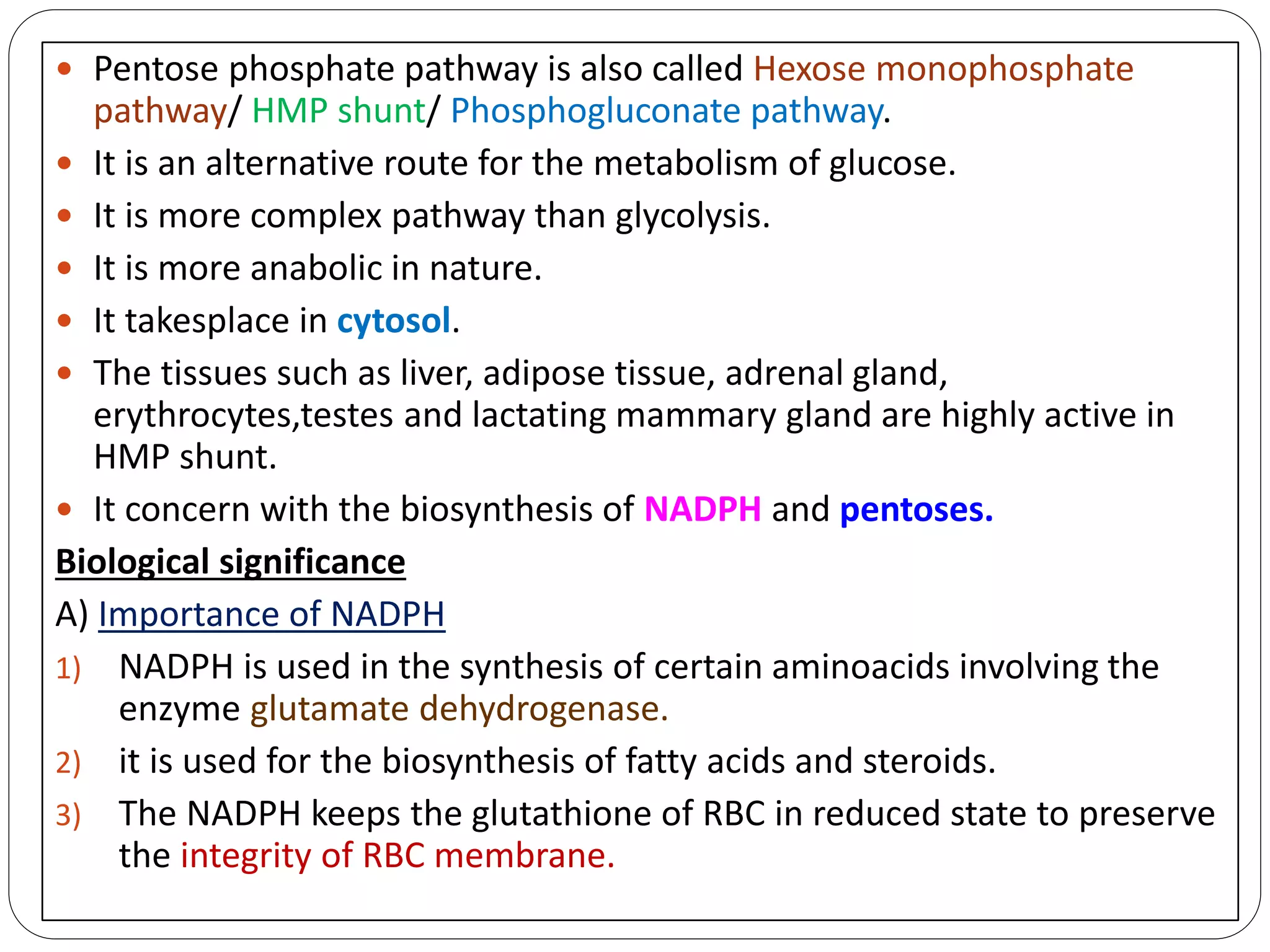
 Pentose phosphate pathway is also called Hexose monophosphate
pathway/ HMP shunt/ Phosphogluconate pathway.
 It is an alternative route for the metabolism of glucose.
 It is more complex pathway than glycolysis.
 It is more anabolic in nature.
 It takesplace in cytosol.
 The tissues such as liver, adipose tissue, adrenal gland,
erythrocytes,testes and lactating mammary gland are highly active in
HMP shunt.
 It concern with the biosynthesis of NADPH and pentoses.
Biological significance
A) Importance of NADPH
1) NADPH is used in the synthesis of certain aminoacids involving the
enzyme glutamate dehydrogenase.
2) it is used for the biosynthesis of fatty acids and steroids.
3) The NADPH keeps the glutathione of RBC in reduced state to preserve
the integrity of RBC membrane.
4) The NADPH keeps the ferrous(Fe2+) iron of hemoglobin in reduced
state.
5) The process phagocytosis requires NADPH.
6) It is required for the detoxification of drugs.
B) Importance of pentoses
1) The pentose and its derivatives are used for the synthesis of nucleic
acids(DNA, RNA) & many nucleotides(ATP, NAD+, coA).
2) When an organism growing on pentose sugar(5c),this pathway is
used to produce carbohydrates for cell wall synthesis.
Reactions of the pathway
 The sequence of reactions of HMP shunt is divided into two phases-
oxidative and non-oxidative phase.
1) Oxidative phase
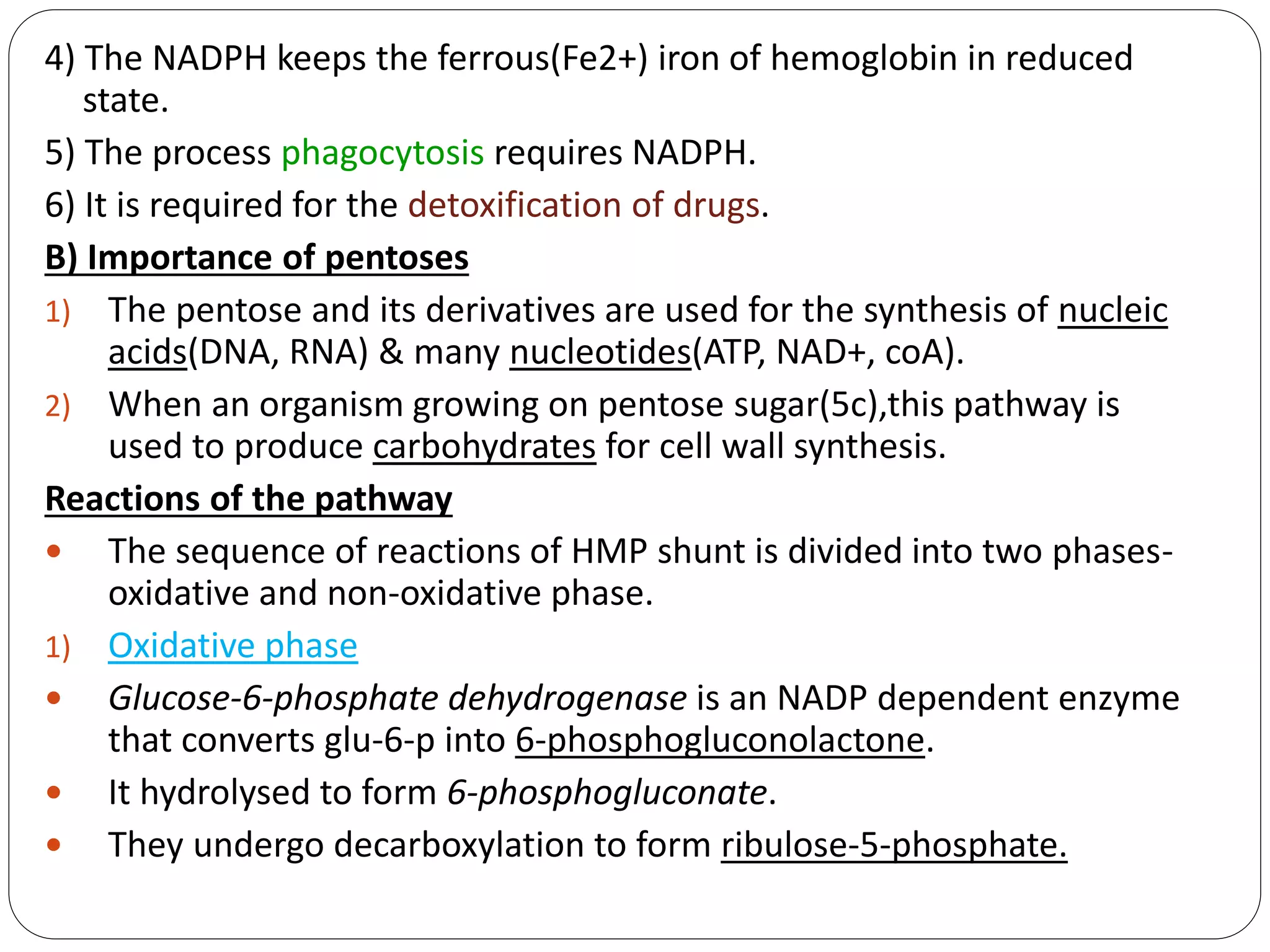
 Glucose-6-phosphate dehydrogenase is an NADP dependent enzyme
that converts glu-6-p into 6-phosphogluconolactone.
 It hydrolysed to form 6-phosphogluconate.
 They undergo decarboxylation to form ribulose-5-phosphate.
 Non-oxidative phase
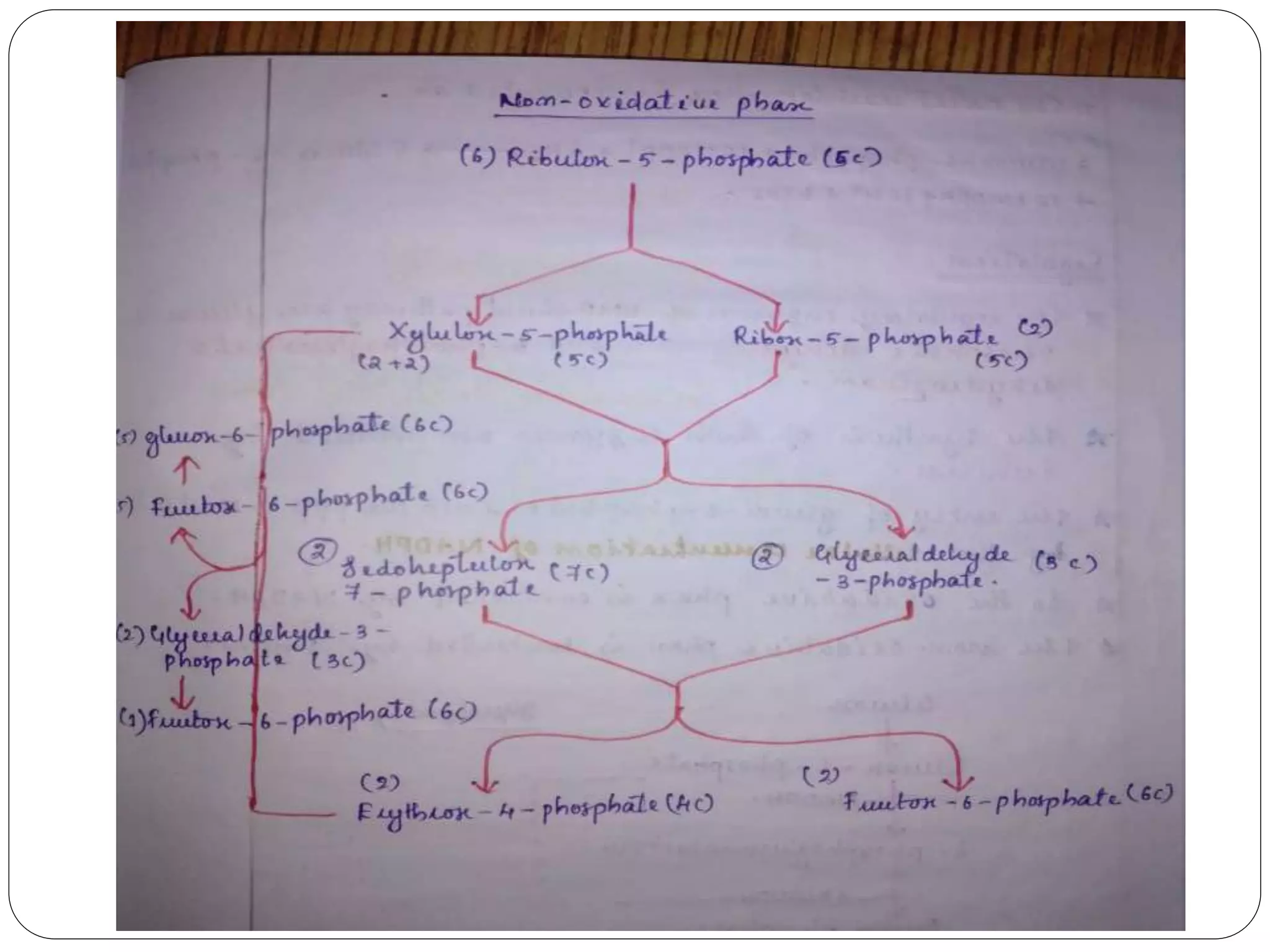
 The enzyme epimerase converts ribulose-5-p into xylulose-5-p.
 The enzyme ketoisomerase converts ribulose-5-p into ribose-5-p.
 The enzyme transketolase catalyses the transfer of 2 carbon moiety
from Xylulose-5-phosphate and ribose-5-phosphate to give a
glyceraldehyde-3-phosphate and sedoheptulose-7-phosphate.
 Transketolase is dependent on the coenzyme thiamine
pyrophosphate(TPP) & Mg2+ ions.
 The overall reaction may be represented as
 6Glucose-6-phosphate + 12NADP+ + 6H2O5Glucose-6-phosphate +
12NADPH + 12H+ +6CO2.
Regulation
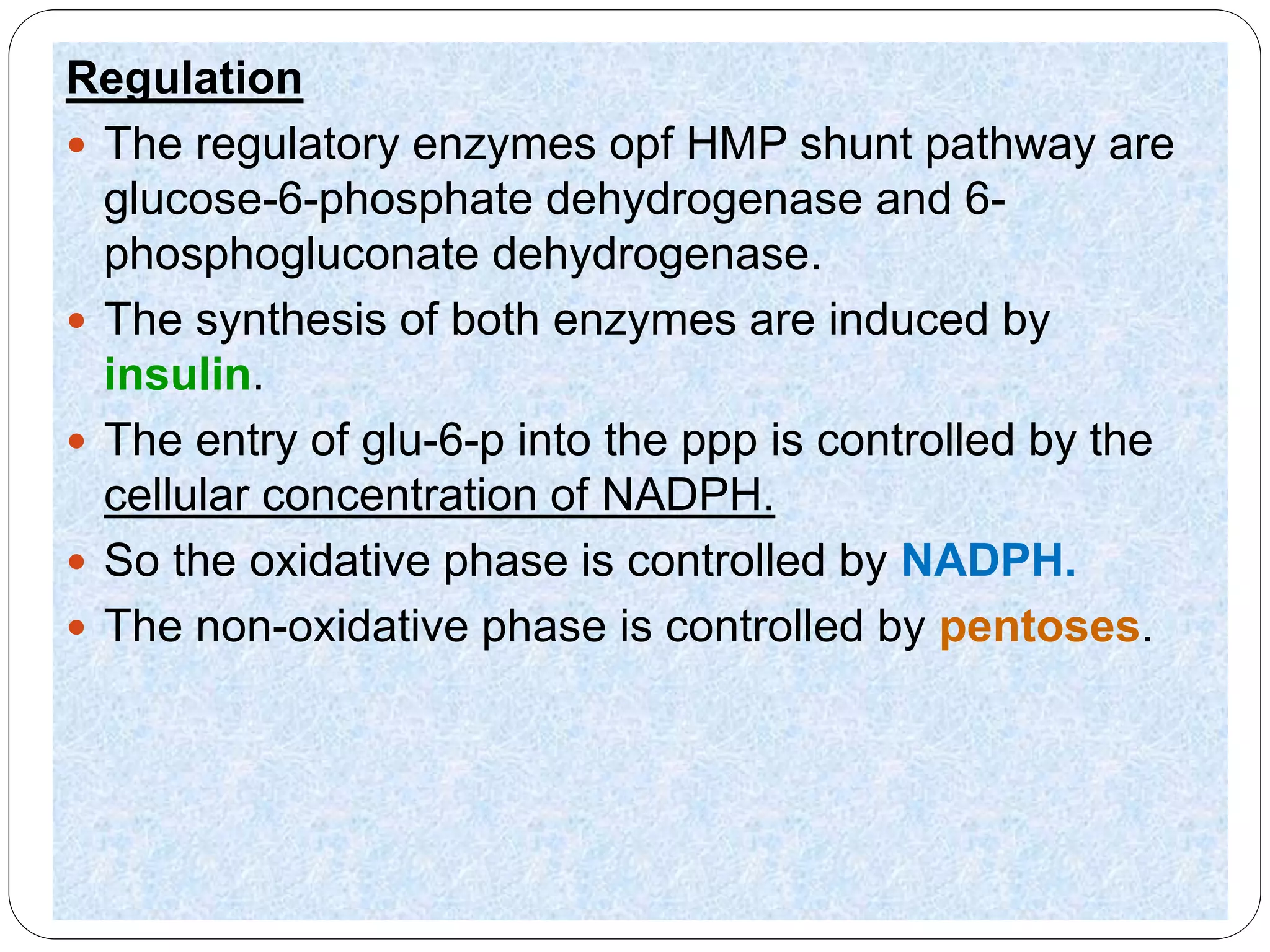
 The regulatory enzymes opf HMP shunt pathway are
glucose-6-phosphate dehydrogenase and 6-
phosphogluconate dehydrogenase.
 The synthesis of both enzymes are induced by
insulin.
 The entry of glu-6-p into the ppp is controlled by the
cellular concentration of NADPH.
 So the oxidative phase is controlled by NADPH.
 The non-oxidative phase is controlled by pentoses.
 Thank you….

Pentose phosphate pathway,hmp shunt

  • 1.
    Sijo.A B.sc.Botany & Biotechnology Marivanios college Tvm, Kerala Pentose phosphate pathway/ HMP SHUNT
  • 2.
     Pentose phosphatepathway is also called Hexose monophosphate pathway/ HMP shunt/ Phosphogluconate pathway.  It is an alternative route for the metabolism of glucose.  It is more complex pathway than glycolysis.  It is more anabolic in nature.  It takesplace in cytosol.  The tissues such as liver, adipose tissue, adrenal gland, erythrocytes,testes and lactating mammary gland are highly active in HMP shunt.  It concern with the biosynthesis of NADPH and pentoses. Biological significance A) Importance of NADPH 1) NADPH is used in the synthesis of certain aminoacids involving the enzyme glutamate dehydrogenase. 2) it is used for the biosynthesis of fatty acids and steroids. 3) The NADPH keeps the glutathione of RBC in reduced state to preserve the integrity of RBC membrane.
  • 3.
    4) The NADPHkeeps the ferrous(Fe2+) iron of hemoglobin in reduced state. 5) The process phagocytosis requires NADPH. 6) It is required for the detoxification of drugs. B) Importance of pentoses 1) The pentose and its derivatives are used for the synthesis of nucleic acids(DNA, RNA) & many nucleotides(ATP, NAD+, coA). 2) When an organism growing on pentose sugar(5c),this pathway is used to produce carbohydrates for cell wall synthesis. Reactions of the pathway  The sequence of reactions of HMP shunt is divided into two phases- oxidative and non-oxidative phase. 1) Oxidative phase  Glucose-6-phosphate dehydrogenase is an NADP dependent enzyme that converts glu-6-p into 6-phosphogluconolactone.  It hydrolysed to form 6-phosphogluconate.  They undergo decarboxylation to form ribulose-5-phosphate.
  • 5.
     Non-oxidative phase The enzyme epimerase converts ribulose-5-p into xylulose-5-p.  The enzyme ketoisomerase converts ribulose-5-p into ribose-5-p.  The enzyme transketolase catalyses the transfer of 2 carbon moiety from Xylulose-5-phosphate and ribose-5-phosphate to give a glyceraldehyde-3-phosphate and sedoheptulose-7-phosphate.  Transketolase is dependent on the coenzyme thiamine pyrophosphate(TPP) & Mg2+ ions.  The overall reaction may be represented as  6Glucose-6-phosphate + 12NADP+ + 6H2O5Glucose-6-phosphate + 12NADPH + 12H+ +6CO2.
  • 7.
    Regulation  The regulatoryenzymes opf HMP shunt pathway are glucose-6-phosphate dehydrogenase and 6- phosphogluconate dehydrogenase.  The synthesis of both enzymes are induced by insulin.  The entry of glu-6-p into the ppp is controlled by the cellular concentration of NADPH.  So the oxidative phase is controlled by NADPH.  The non-oxidative phase is controlled by pentoses.
  • 8.