SUBMITTED TO:- MISS ANANYA
SUBMIT TED BY :-MOIN KHAN HUSSAIN
UID:-14BBT1129
TRIGLYCERIDES
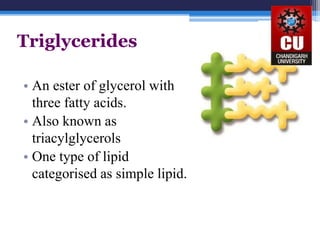
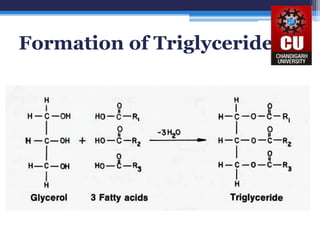
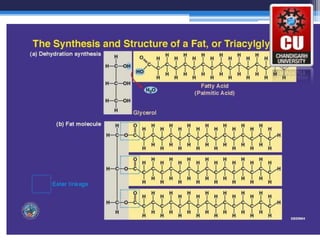
• An ester of glycerol with
three fatty acids.
• Also known as
triacylglycerols
• One type of lipid
categorised as simple lipid.
Triglycerides
Structure of Triglycerides
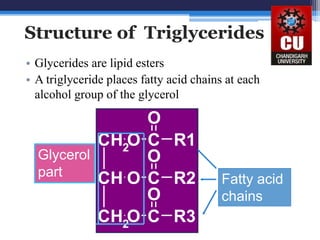
• Glycerides are lipid esters
• A triglyceride places fatty acid chains at each
alcohol group of the glycerol
CH2
CH
CH2
O
O
O C
O
C
O
C
O
R1
R2
R3
Glycerol
part
Fatty acid
chains
Glycerol
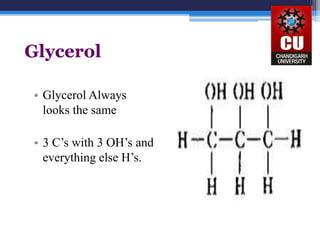
• Glycerol Always
looks the same
• 3 C’s with 3 OH’s and
everything else H’s.
Formation of Triglycerides
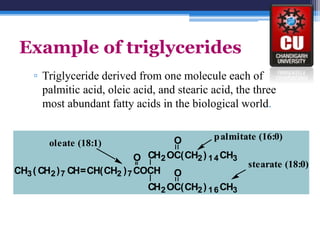
Example of triglycerides
▫ Triglyceride derived from one molecule each of
palmitic acid, oleic acid, and stearic acid, the three
most abundant fatty acids in the biological world.
CH2OC(CH2) 14CH3
CH2OC(CH2) 16CH3
CH3( CH2)7 CH=CH(CH2 )7COCH
O
O
O
oleate (18:1)
stearate (18:0)
palmitate (16:0)
Physical properties of triglycerides
• Physical properties depend on the fatty acid
components.
▫ Melting point increases as the number of carbons in
its hydrocarbon chains increases and as the number
of double bonds decreases.
▫ Oils: Triglycerides rich in unsaturated fatty acids
are generally liquid at room.
▫ Fats: Triglycerides rich in saturated fatty acids are
generally semisolids or solids at room temperature.
Physical properties of triglycerides
▫ Hydrocarbon chains of saturated fatty acids can lie
parallel with strong dispersion forces between their
chains; they pack into well-ordered, compact
crystalline forms and melt above room temperature.
▫ Because of the cis configuration of the double bonds in
unsaturated fatty acids, their hydrocarbon chains have
a less ordered structure and dispersion forces between
them are weaker; these triglycerides have melting
points below room temperature.
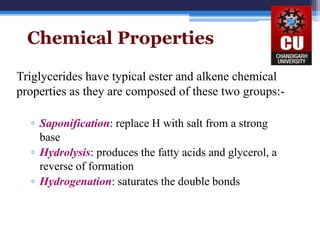
Chemical Properties
Triglycerides have typical ester and alkene chemical
properties as they are composed of these two groups:-
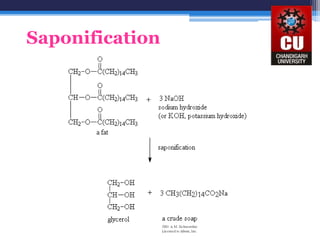
▫ Saponification: replace H with salt from a strong
base
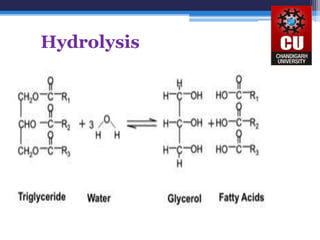
▫ Hydrolysis: produces the fatty acids and glycerol, a
reverse of formation
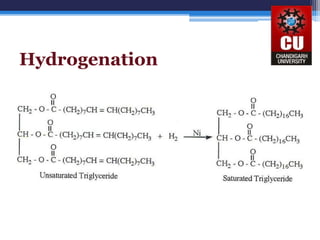
▫ Hydrogenation: saturates the double bonds
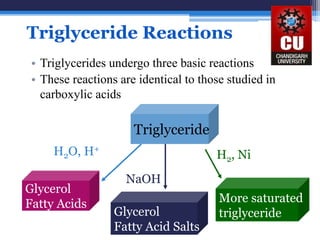
Triglyceride Reactions
• Triglycerides undergo three basic reactions
• These reactions are identical to those studied in
carboxylic acids
Triglyceride
Glycerol
Fatty Acids
Glycerol
Fatty Acid Salts
More saturated
triglyceride
H2O, H+
NaOH
H2, Ni
Hydrolysis
Saponification
Hydrogenation
TRIGLYCERIDES

TRIGLYCERIDES

  • 1.
    SUBMITTED TO:- MISSANANYA SUBMIT TED BY :-MOIN KHAN HUSSAIN UID:-14BBT1129
  • 2.
  • 3.
    • An esterof glycerol with three fatty acids. • Also known as triacylglycerols • One type of lipid categorised as simple lipid. Triglycerides
  • 4.
    Structure of Triglycerides •Glycerides are lipid esters • A triglyceride places fatty acid chains at each alcohol group of the glycerol CH2 CH CH2 O O O C O C O C O R1 R2 R3 Glycerol part Fatty acid chains
  • 5.
    Glycerol • Glycerol Always looksthe same • 3 C’s with 3 OH’s and everything else H’s.
  • 6.
  • 8.
    Example of triglycerides ▫Triglyceride derived from one molecule each of palmitic acid, oleic acid, and stearic acid, the three most abundant fatty acids in the biological world. CH2OC(CH2) 14CH3 CH2OC(CH2) 16CH3 CH3( CH2)7 CH=CH(CH2 )7COCH O O O oleate (18:1) stearate (18:0) palmitate (16:0)
  • 9.
    Physical properties oftriglycerides • Physical properties depend on the fatty acid components. ▫ Melting point increases as the number of carbons in its hydrocarbon chains increases and as the number of double bonds decreases. ▫ Oils: Triglycerides rich in unsaturated fatty acids are generally liquid at room. ▫ Fats: Triglycerides rich in saturated fatty acids are generally semisolids or solids at room temperature.
  • 10.
    Physical properties oftriglycerides ▫ Hydrocarbon chains of saturated fatty acids can lie parallel with strong dispersion forces between their chains; they pack into well-ordered, compact crystalline forms and melt above room temperature. ▫ Because of the cis configuration of the double bonds in unsaturated fatty acids, their hydrocarbon chains have a less ordered structure and dispersion forces between them are weaker; these triglycerides have melting points below room temperature.
  • 11.
    Chemical Properties Triglycerides havetypical ester and alkene chemical properties as they are composed of these two groups:- ▫ Saponification: replace H with salt from a strong base ▫ Hydrolysis: produces the fatty acids and glycerol, a reverse of formation ▫ Hydrogenation: saturates the double bonds
  • 12.
    Triglyceride Reactions • Triglyceridesundergo three basic reactions • These reactions are identical to those studied in carboxylic acids Triglyceride Glycerol Fatty Acids Glycerol Fatty Acid Salts More saturated triglyceride H2O, H+ NaOH H2, Ni
  • 13.
  • 14.
  • 15.