

![The daily requirement of vitamin A is expressed
as retinol equivalents [RE]
1000 RE
MEN
800 RE
WOMEN
1RE =
1 μg retinol,
2 μg of β-carotene in oil,
12 μg of "dietary" β- carotene
3.3 IU of retinol](https://image.slidesharecdn.com/56-180129094733/85/Vitamin-A-12-320.jpg)
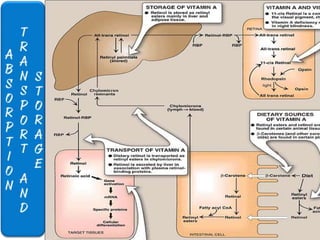
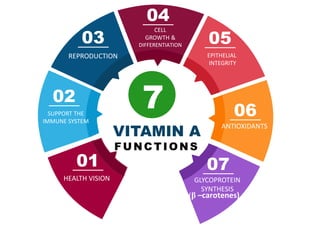

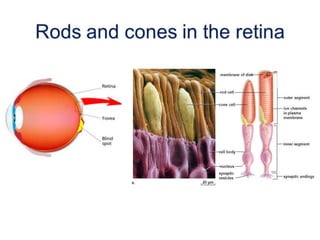
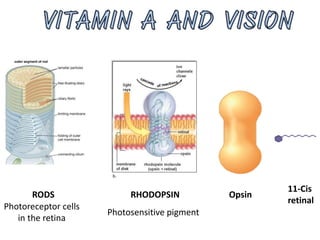
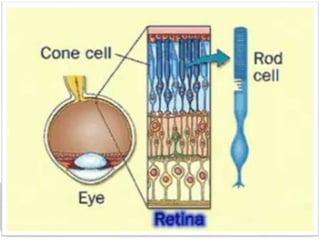
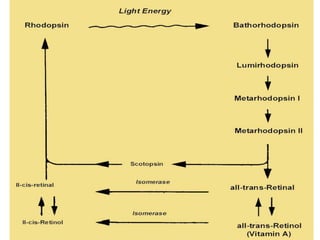
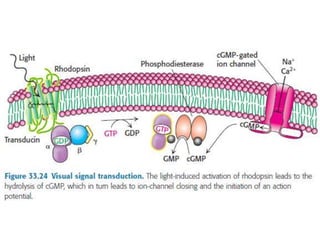
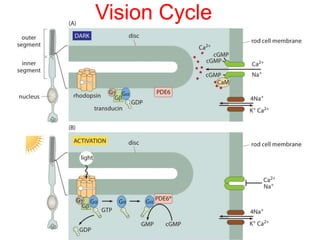
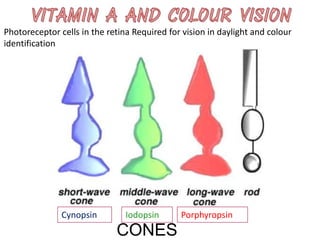
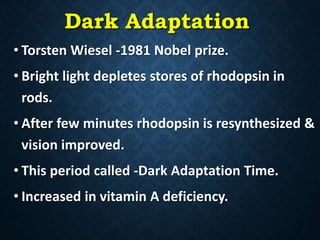
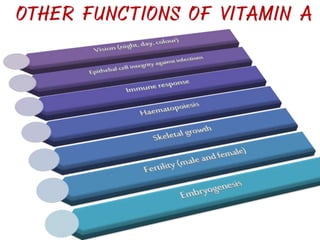
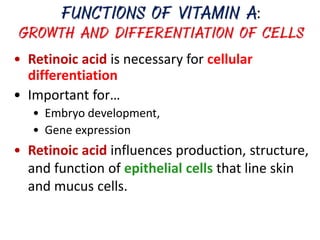

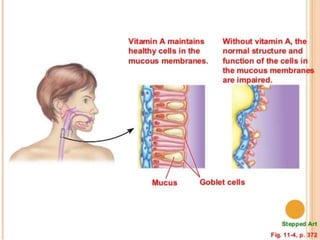
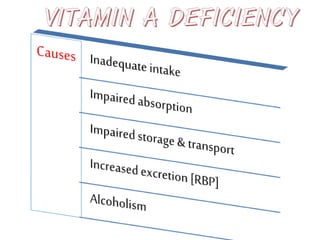
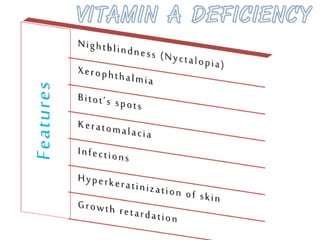
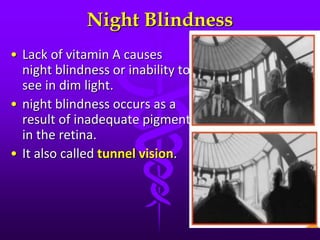







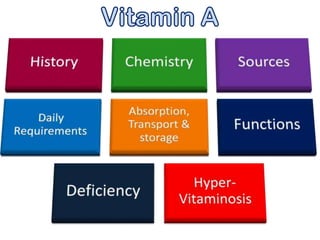
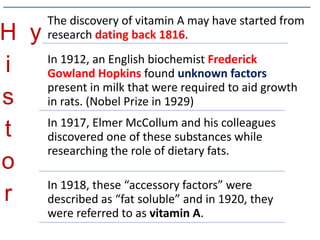
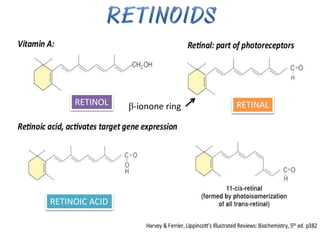
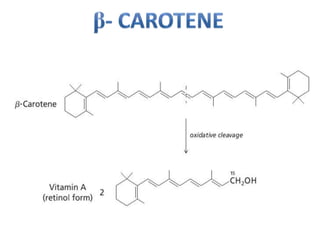
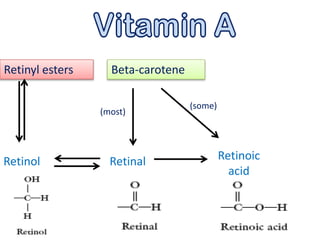
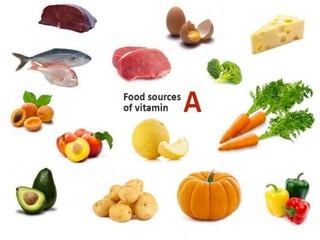
Vitamin A was discovered in the early 20th century through research on the essential dietary factors required for growth. In 1912, Frederick Gowland Hopkins discovered unknown factors in milk that aided rat growth, and in 1917 Elmer McCollum isolated one of these substances, which was later referred to as vitamin A in 1920. Vitamin A occurs in foods as retinoids and carotenoids like beta-carotene, and plays critical roles in vision, cell growth and differentiation, epithelial integrity, immune function, and as an antioxidant. Deficiency of vitamin A can cause night blindness, dry eyes, increased susceptibility to infection, and even blindness.


