
De Novo Synthesis of Pyrimidine Synthesis
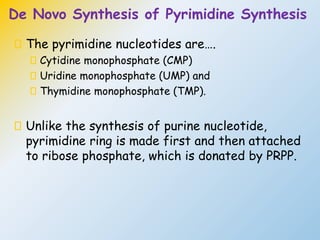
The pyrimidine nucleotides are….
Cytidine monophosphate (CMP)
Uridine monophosphate (UMP) and
Thymidine monophosphate (TMP).
Unlike the synthesis of purine nucleotide,
pyrimidine ring is made first and then attached
to ribose phosphate, which is donated by PRPP.
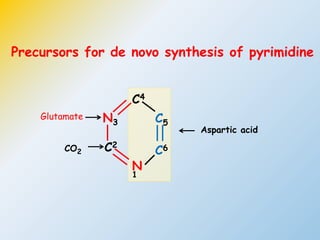
Precursors for de novo synthesis of pyrimidine
C2
C4
N3
N
1
C5
C6
Glutamate
CO2
Aspartic acid
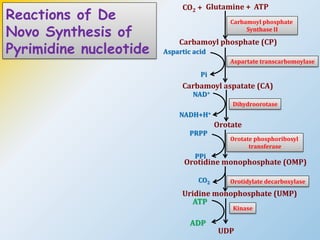
Reactions of De
Novo Synthesis of
Pyrimidine nucleotide
CO2 +
Carbamoyl phosphate
Synthase II
Carbamoyl phosphate (CP)
Aspartate transcarbomoylase
Aspartic acid
Pi
Carbamoyl aspatate (CA)
Dihydroorotase
NAD+
NADH+H+
Orotate
Orotate phosphoribosyl
transferase
PRPP
PPi
Orotidine monophosphate (OMP)
Orotidylate decarboxylaseCO2
Uridine monophosphate (UMP)
Kinase
ATP
Glutamine + ATP
ADP
UDP
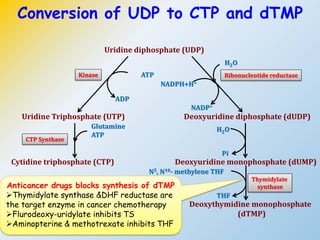
Conversion of UDP to CTP and dTMP
Uridine diphosphate (UDP)
Kinase ATP
ADP
Uridine Triphosphate (UTP)
Cytidine triphosphate (CTP)
Glutamine
ATP
CTP Synthase
Ribonucleotide reductase
NADPH+H+
NADP+
H2O
Deoxyuridine diphosphate (dUDP)
H2O
Pi
Deoxyuridine monophosphate (dUMP)
N5, N10- methylene THF
THF
Thymidylate
synthase
Deoxythymidine monophosphate
(dTMP)
Anticancer drugs blocks synthesis of dTMP
➢Thymidylate synthase &DHF reductase are
the target enzyme in cancer chemotherapy
➢Flurodeoxy-uridylate inhibits TS
➢Aminopterine & methotrexate inhibits THF
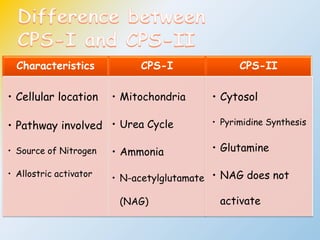
Characteristics CPS-I CPS-II
• Cellular location
• Pathway involved
• Source of Nitrogen
• Allostric activator
• Mitochondria
• Urea Cycle
• Ammonia
• N-acetylglutamate
(NAG)
• Cytosol
• Pyrimidine Synthesis
• Glutamine
• NAG does not
activate
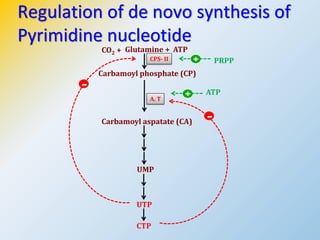
Regulation of de novo synthesis of
Pyrimidine nucleotide
CO2 +
CPS- II
Carbamoyl phosphate (CP)
A. T
Carbamoyl aspatate (CA)
Glutamine + ATP
UMP
UTP
CTP
-
-
+
+
PRPP
ATP
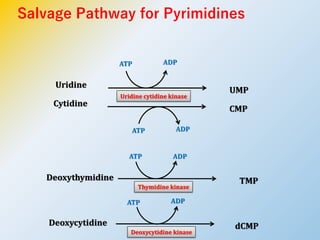
Salvage Pathway for Pyrimidines
Uridine cytidine kinase
ATP ADP
Uridine
UMP
ATP ADP
Cytidine
CMP
Thymidine kinase
ATP ADP
Deoxythymidine TMP
Deoxycytidine kinase
ATP ADP
Deoxycytidine dCMP
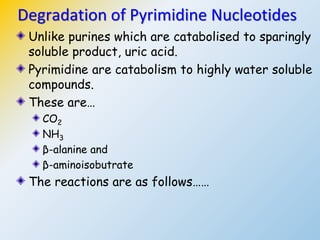
Unlike purines which are catabolised to sparingly
soluble product, uric acid.
Pyrimidine are catabolism to highly water soluble
compounds.
These are…
CO2
NH3
β-alanine and
β-aminoisobutrate
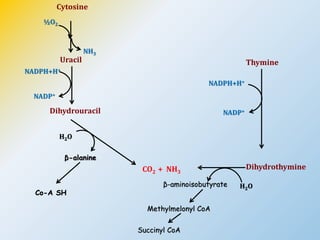
The reactions are as follows……
Degradation of Pyrimidine Nucleotides
Cytosine
½O2
Uracil
NADPH+H+
NADP+
Dihydrouracil
CO2 + NH3
H2O
NH3
Thymine
β-alanine
NADPH+H+
NADP+
Dihydrothymine
H2Oβ-aminoisobutyrate
Co-A SH
Methylmelonyl CoA
Succinyl CoA
Since the end product of pyrimidine catabolism are highly
water soluble, overproduction of pyrimidine catabolites is
rarely associated with clinically significant abnormalities.
Disorder Associated with Pyrimidine
Metabolism
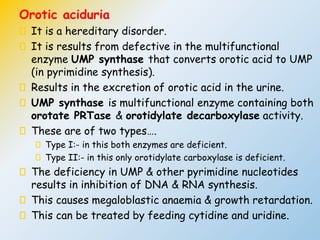
Orotic aciduria
It is a hereditary disorder.
It is results from defective in the multifunctional
enzyme UMP synthase that converts orotic acid to UMP
(in pyrimidine synthesis).
Results in the excretion of orotic acid in the urine.
UMP synthase is multifunctional enzyme containing both
orotate PRTase & orotidylate decarboxylase activity.
These are of two types….
Type I:- in this both enzymes are deficient.
Type II:- in this only orotidylate carboxylase is deficient.
The deficiency in UMP & other pyrimidine nucleotides
results in inhibition of DNA & RNA synthesis.
This causes megaloblastic anaemia & growth retardation.
This can be treated by feeding cytidine and uridine.
Case study
A 50 year old female patient complains of
pain and swelling in the joints and shows
hyperuricemia.
Name the probable disease.
Name the enzyme defect.
What is normal value of serum uric acid?
Suggest nutritional therapy.
.
“THANK U”

Pyrimidine Synthesis and Degradation

  • 2.
    De Novo Synthesisof Pyrimidine Synthesis The pyrimidine nucleotides are…. Cytidine monophosphate (CMP) Uridine monophosphate (UMP) and Thymidine monophosphate (TMP). Unlike the synthesis of purine nucleotide, pyrimidine ring is made first and then attached to ribose phosphate, which is donated by PRPP.
  • 3.
    Precursors for denovo synthesis of pyrimidine C2 C4 N3 N 1 C5 C6 Glutamate CO2 Aspartic acid
  • 4.
    Reactions of De NovoSynthesis of Pyrimidine nucleotide CO2 + Carbamoyl phosphate Synthase II Carbamoyl phosphate (CP) Aspartate transcarbomoylase Aspartic acid Pi Carbamoyl aspatate (CA) Dihydroorotase NAD+ NADH+H+ Orotate Orotate phosphoribosyl transferase PRPP PPi Orotidine monophosphate (OMP) Orotidylate decarboxylaseCO2 Uridine monophosphate (UMP) Kinase ATP Glutamine + ATP ADP UDP
  • 5.
    Conversion of UDPto CTP and dTMP Uridine diphosphate (UDP) Kinase ATP ADP Uridine Triphosphate (UTP) Cytidine triphosphate (CTP) Glutamine ATP CTP Synthase Ribonucleotide reductase NADPH+H+ NADP+ H2O Deoxyuridine diphosphate (dUDP) H2O Pi Deoxyuridine monophosphate (dUMP) N5, N10- methylene THF THF Thymidylate synthase Deoxythymidine monophosphate (dTMP) Anticancer drugs blocks synthesis of dTMP ➢Thymidylate synthase &DHF reductase are the target enzyme in cancer chemotherapy ➢Flurodeoxy-uridylate inhibits TS ➢Aminopterine & methotrexate inhibits THF
  • 6.
    Characteristics CPS-I CPS-II •Cellular location • Pathway involved • Source of Nitrogen • Allostric activator • Mitochondria • Urea Cycle • Ammonia • N-acetylglutamate (NAG) • Cytosol • Pyrimidine Synthesis • Glutamine • NAG does not activate
  • 7.
    Regulation of denovo synthesis of Pyrimidine nucleotide CO2 + CPS- II Carbamoyl phosphate (CP) A. T Carbamoyl aspatate (CA) Glutamine + ATP UMP UTP CTP - - + + PRPP ATP
  • 8.
    Salvage Pathway forPyrimidines Uridine cytidine kinase ATP ADP Uridine UMP ATP ADP Cytidine CMP Thymidine kinase ATP ADP Deoxythymidine TMP Deoxycytidine kinase ATP ADP Deoxycytidine dCMP
  • 9.
    Unlike purines whichare catabolised to sparingly soluble product, uric acid. Pyrimidine are catabolism to highly water soluble compounds. These are… CO2 NH3 β-alanine and β-aminoisobutrate The reactions are as follows…… Degradation of Pyrimidine Nucleotides
  • 10.
  • 11.
    Since the endproduct of pyrimidine catabolism are highly water soluble, overproduction of pyrimidine catabolites is rarely associated with clinically significant abnormalities. Disorder Associated with Pyrimidine Metabolism
  • 12.
    Orotic aciduria It isa hereditary disorder. It is results from defective in the multifunctional enzyme UMP synthase that converts orotic acid to UMP (in pyrimidine synthesis). Results in the excretion of orotic acid in the urine. UMP synthase is multifunctional enzyme containing both orotate PRTase & orotidylate decarboxylase activity. These are of two types…. Type I:- in this both enzymes are deficient. Type II:- in this only orotidylate carboxylase is deficient. The deficiency in UMP & other pyrimidine nucleotides results in inhibition of DNA & RNA synthesis. This causes megaloblastic anaemia & growth retardation. This can be treated by feeding cytidine and uridine.
  • 13.
    Case study A 50year old female patient complains of pain and swelling in the joints and shows hyperuricemia. Name the probable disease. Name the enzyme defect. What is normal value of serum uric acid? Suggest nutritional therapy.
  • 14.